Rafael Cruz Didn’t Do It

It’s after 7 pm Eastern and we’re still waiting for the long delayed JFK assassination files to be released. Maybe this evening; maybe not. It appears that some of the files (roughly 200 out of 3000) will be held back for six months due to redaction requests from the CIA and FBI. All this delay, all these decades and they couldn’t get things ready for the deadline. Slackers. Foot-draggers.

Jefferson Morley‘s jfkfacts.org and maryferrell.org are two of the most respected JFK assassination sites around. In a 10.25 piece for Alternet, Morley stated that “the most significant story in the new JFK files will be details of the CIA’s pre-assassination monitoring of Oswald,” which were allegedly known to and under the control of CIA spook James J. Angleton. If Trump approves CIA and FBI requests to withhold some records, the JFK files that Trump keeps secret will be more important than the ones he releases.”

Grim Muddy

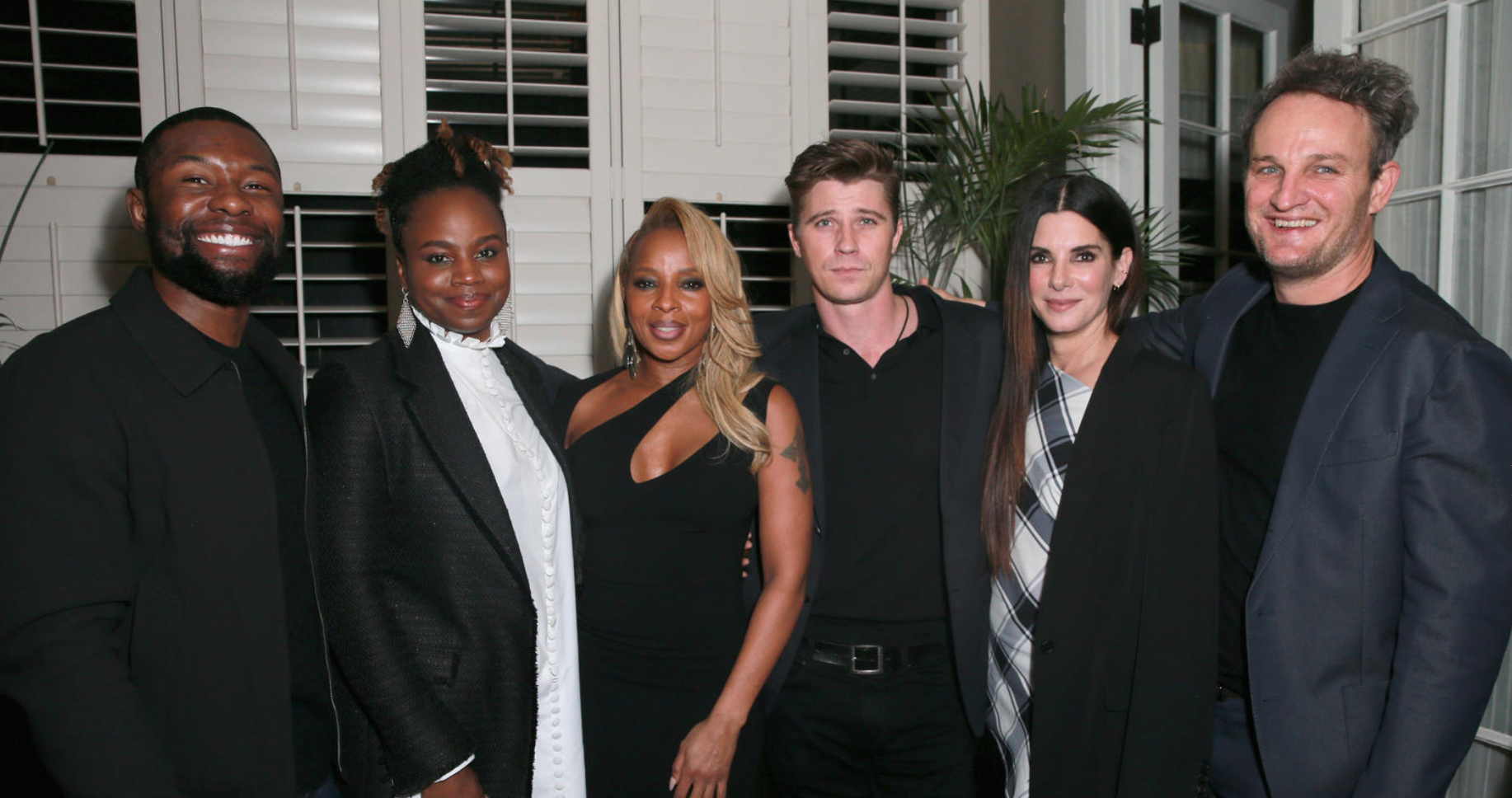
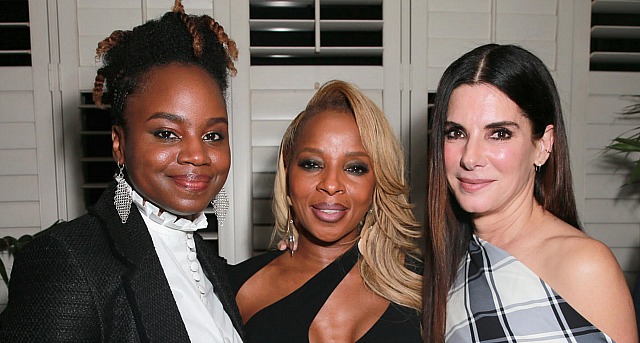
Dee ReesMudbound (Netflix, 11.17), a ’40s period piece about racial relations amid cotton farmers toiling in the hardscrabble South, is a heart movie. It’s about community values, hard work, compassion or a lack of, racial resentment on both sides and the eternal struggle to survive among the dirt-poor.

As such it bears more than a few resemblances to Robert Benton‘s Places In the Heart (’84). The Benton is far, far superior — better story, more skillfully written, more emotionally affecting. But three Mudbound performances — given by Mary J. Blige, Jason Mitchell and Carey Mulligan — are quite special and almost redeeming.

Based on Hillary Jordan‘s 2008 novel, Mudbound (adapted by TV writer-producer Virgil Williams) is about the relations between the white McAllans, owners of a shithole cotton farm (no plumbing or electricity) in the muddy Mississippi delta, and their black tenant-farmer neighbors, the Jacksons, in the immediate aftermath of World War II.

The McAllans are composed of paterfamilias Henry McAllan (a sullen, beefy-looking Jason Clarke), his city-bred wife Laura (Mulligan), their two kids, Henry’s racist dad (Jonathan Banks) and Henry’s younger brother, Jamie (Garrett Hedlund), who recently served as a bombardier during the war in Europe.

The Jackson principals are Hap (Rob Morgan), his wife Florence (Blige) and their oldest son Ronsel (Mitchell), also a recently returned WWII veteran.

Read more

Rockwell’s Moment

Three Billboards costar and likely Best Supporting Actor nominee Sam Rockwell to Variety‘s Kris Tapley [4:20]: “I couldn’t survive El Lay as a struggling actor so I had to go back to New York. I say to actors there are two El Lays. There’s El Lay when you’re successful, which is fabulous. And then there’s El Lay when you’re not, and that’s not a good El Lay. So New York was a little easier [or at least] it was back [in the ’90s].”

I’ve been a Sam Rockwell fan for ages. He’s primarily known for playing loopy eccentrics or crazy fucks. He plays a somewhat more interesting character in Three Billboards outside of Ebbing, Missouri — Jason Dixon, a small-town, none-too-bright deputy who screws his life up with violence and stupidity, and then actually self-reflects and grows out of a place of despair and self-loathing. And you admire him for that. This is why, I suspect, Rockwell is looking at a likely Oscar nomination.

But his two most likable performances, for me, were variations of droll — Owen, a droll father figure type, in Nat Faxon and Jim Rash‘s The Way, Way Back (’13), and Craig, a droll single dad and a possible romantic attachment for Keira Knightley, in Lynn Shelton‘s Laggies (’14). And he was even more winning as the perversely droll Mervyn in Martin McDonagh‘s A Behanding in Spokane, a B’way play that happened in 2010.

So in my mind Rockwell’s forthcoming nomination is about Jason, Owen, Craig and Mervyn all rolled into one. Plus the dancing thing.

By the way: New York City is a better place to be if you’re in a marginal, existentially gloomy place. The mass-man density of it all — the skyscrapers, asphalt canyons, grubby subways, churning swarms of humanity everywhere you look — allows you to dissolve into the crowd, to bury yourself in solitude and despair. But you still need a lot of money to get around. Too damn much. I’ll never live there again.

Then again there’s nothing like a lonely life in Los Angeles to make you think despondent thoughts and truly embrace the gloom. I think I can definitely say that any place in the world is better if you have a good income, and that almost any place sucks if you’re under-employed and struggling.

If I didn’t have this daily column to bang out and I had a flush fixed income, I could be very happy living in Paris, Rome, London, Munich, Berlin, Hanoi or Prague.

“Me Too” Snowball Effect

Harvey Weinstein followed by former President George H.W. Bush, MSNBC contributor Mark Halperin, celebrity chef John Besh, photographer Terry Richardson, Nickleodeon guy Chris Cevino, Artforum magazine publisher Knight Landesman, Amazon executive Roy Price, New Republic editor Leon Wieseltier, etc.

Read more

Solemn Regrets

George Clooney‘s Suburbicon (Paramount, 10.27) is no Fargo. But it should have resembled Joel and Ethan Coen‘s 1996 classic at least somewhat. The original Suburbicon script, written by the Coens in ’86 and set in the mid ’50s, was their first stab at a Fargo-like middle class crime noir. Nine or ten years later the Coens went back to the same James M.Cain well and created Fargo, and the rest is history.

In Suburbicon, Clooney and producer and co-screenwriter Grant Heslov have reworked things, keeping the Fargo noir stuff but also, it seems, diluting or ignoring that sardonic deadpan wit that we all associate with the Coens, and deciding to paint the whole thing with a broad, bloody brush.

When it comes to tales about greed, murder and doomed deception, there’s nothing duller than watching a series of unsympathetic, unwitting characters (including the two leads, played by Matt Damon and Julianne Moore) play their cards like boobs and then die for their trouble. There’s just no caring for any of them.

Most significantly, Clooney and Heslov have added a side-plot about how Eisenhower-era white suburbanites were racist and venal to the core, and how things really aren’t much different today.

The Suburbicon victims are the just-arrived Meyer clan (Karimah Westbrook, Leith M. Burke, Tony Espinosa), and from the moment they move into their new, ranch-style home in a same-titled fictitious hamlet (i.e., an idyllic real-estate development right out of Martin Ritt‘s No Down Payment) their cappuccino skin shade incites ugly pushback from just about everyone. But the situation doesn’t develop or progress in any way. The Meyers keep absorbing the ugly, and that’s pretty much it.

Remember how those small-town citizens greeted the arrival of Cleavon Little in Blazing Saddles? Nearly the same broad-as-fuck tone prevails here. There isn’t a single non-racist white adult in Suburbicon. With the exception of Noah Jupe‘s Danny, who’s about ten, and the Meyers clan everyone in Clooney’s film has horns, hooved feet and a tail.

Read more

Time To Take Stock

I’m behind in my noteworthy foreign-film viewings, but what else is new? Here’s a rundown of the allegedly hot titles that I’ve seen (listed in order of preference) and haven’t seen. If there’s an exceptional foreign-language title that I need to catch, please advise.

Seen:

1. Andrey Zvyagintsev‘s Loveless (Russia). HE’s 5.17.17 review.
2. Sebastian Lelio‘s A Fantastic Woman (Chile) — Haven’t seen it, planning to.
3. Angelina Jolie‘s First They Killed My Father (Cambodia) — Obviously focused on recent Cambodian history (Khmer Rouge brutality) but can a film made by Angelina Jolie really be called “Cambodian”? Here’s my brief Telluride Film Festival review.
4. Samuel Maoz‘s Foxtrot (Israel)
5. Fatih Akin‘s In The Fade (Germany) HE’s 10.4.17 review.
6. Robin Campillo‘s BPM: Beats Per Minute (France) — HE’s May 2017 (Cannes Film Festival) review.
7. Michael Haneke‘s Happy End (Austria) — HE’s 5.22.17 review.

Unseen:

8. Petra Biondina Volpe‘s The Divine Order (Switzerland)
9. Hussein Hassan‘s The Dark Wind (Iraq) https://en.wikipedia.org/wiki/Reseba:_The_Dark_Wind
10. Ildiko Enyedi‘s On Body and Soul (Hungary)
11. Michael R. Roskam‘s Racer and the Jailbird (Belgium)
12. Agnieszka Holland‘s Spoor (Poland)
13. Jang Hoon‘s A Taxi Driver (South Korea)
14. Joachim Trier‘s Thelma (Norway)
15. Hafsteinn Gunnar Sigurðsson‘s Under The Tree (Iceland)
16. Ziad Doueiri’s The Insult (Lebanese)

Read more

“You’re Tearing Me Apart, Lisa!”

Last night I finally saw James Franco‘s The Disaster Artist (A24, 12.1), which has generated pseudo-hip excitement since debuting at last March’s South by Southwest. It’s basically an amusing-but-never-hilarious thing — it never bored me but it never quite lifts off the ground either. But it’s worth catching, I’d say. It falls under the heading of “necessary viewing.”

On the other hand a lot of cognoscenti who should know better have gone apeshit over The Disaster Artist (what award-season handicapper suggested it might even be worthy of inclusion on a best-of-2017 list?), and I’m telling you right now that it’s time to calm down. It’s fine for what it is, but take it easy.

It’s basically a flat but unaffected true-life saga of the making of a notoriously awful indie-level film called The Room, which, after opening in ’03, gradually acquired a rep of being so bad it’s hilarious and perhaps even brilliant in a twisted-pretzel, ice-cream-cone-slammed-into-the-forehead kind of way.

Based on Greg Sistero‘s same-titled memoir about the making of The Room and his bromance with the film’s vampirish director-writer-star, Tommy Wiseau, The Disaster Artist is basically a curio, a diversion. It generates a kind of chuckly vibe on a scene-by-scene basis, but that’s all.

Why? Because watching a clueless asshole behave like a clueless asshole isn’t all that funny if you’re watching what that’s like on a line-by-line, incident-by-incident, humiliation-by-humiliation basis from a comfy seat in a screening room.

It might seem a bit funnier if you’re watching it ripped or better yet ripped with your friends during a midnight show somewhere. Or if you’re watching it ripped with producer-costar Seth Rogen and producer Evan Goldberg in a private screening room. I wouldn’t know. I haven’t been high in a long time, but I bet it would help. All I can tell you is that the Academy fuddy-duds I saw it with last night at the London Hotel screening room were chortling from time to time, but no one was howling with laughter or rolling in the aisles.

The Disaster Artist is basically a one-joke thing that says over and over that having no talent and being a total moron is no hindrance to making an attention-getting film if — a really big “if” here — you’ve got a few million to throw around and you’re willing to spend it freely on production and marketing and so on. It also says that if you’re a profoundly stupid actor and generally beyond redemption in terms of knowing how to produce, direct and write it can be “funny” for people to watch you struggle and fail in your attempt to make a shitty little indie drama that no one will pay to see, etc.

But if your film turns out to be “so awful it’s astounding,” the film says, you might have a shot at a certain kind of notoriety.

Read more

Dirty Old Man

In the old days the notion of an old man in a wheelchair pawing a young nurse was regarded as a comic cliche. This behavior is actually glimpsed during a scene in a Mar Vista retirement home in Roman Polanski‘s Chinatown…oh, wait! But in today’s environment, such behavior falls under the heading of sexual assault, and is therefore regarded with gravity and alarm, especially when the dirty old man in question is former President George H.W. Bush, who’s now 93.

Yesterday Heather Lind, a 34 year-old actress, reported that Bush, 90 at the time, “touched” her twice during a 2014 photo op. “He didn’t shake my hand,” Lind wrote in an now-deleted Instagram post. “He touched me from behind from his wheelchair with his wife Barbara Bush by his side. He told me a dirty joke. And then, all the while being photographed, touched me again. Barbara rolled her eyes as if to say ‘not again.’ His security guard told me I shouldn’t have stood next to him for the photo.”

A Bush spokesperson apologized for the former Commander in Chief while adding that Bush “would never, under any circumstance, intentionally cause anyone distress.” The word “intentionally” was apparently used because Bush 41 allegedly suffers from Vascular Parkinsonism, a condition which “often necessitates use of Levadopa/carbidopa, a drug with side-effects that include gambling addiction, sexual misconduct, and other impulse control issues.” I don’t know how reliable this information is, but it appears on Lind’s Wikipedia page.

Read more

Eastwood Calculation

Deadline‘s Anthony D’Allesandro is reporting that the wide commercial release of Clint Eastwood’s The 15:17 to Paris will happen on 2.9.18. This apparently doesn’t mean it won’t open in some limited way in December, and thereby become eligible for award consideration. A late ’17 platform release (or one at the forthcoming AFI Fest) is “yet to be determined.” It would certainly be unusual for an Eastwood film to bypass award-season qualification.

In a statement, Warner Bros. worldwide marketing chief Sue Kroll called The 15:17 to Paris “both a touching story of three lifelong friends and a compelling tale of patriotism and heroism, and we felt this” — the early February release — “would be a great window for audiences everywhere to experience this uplifting true story.” I guess, but not giving it a limited award-season debut will send a dispiriting message, given that Eastwood films are rarely positioned as straight commercial releases. The award potential is almost always a marketing factor.

Read more

Miles Teller Is Waiting

I think it’s fair to say that Miles Teller needs a break. I don’t honestly like the guy, but he’s a gifted actor who could be Robert De Niro in the ’70s. Alas, something’s not working for him. People respect Teller, I think, for being a grade-A talent who chooses well and always pushes himself to the limit or beyond, but in the four years since Whiplash none of Teller’s films have combusted critically or commercially. He was happening in the immediate wake of The Spectacular Now and Whiplash, but not lately.

The reviews of Teller’s latest film, Thank You For Your Service, are mixed so far, but Variety‘s Owen Glieberman is a fan, and so is The Village Voice‘s Alan Scherstuhl.

Teller to HE on Hollywood-Highland escalator: “Don’t be a pervert, man.” That alienating April ’15 Esquire interview. Not getting the La La Land lead role that went to Ryan Gosling, allegedly for being “too demanding.” Hiring “no” publicist Susan Patricola to represent him. (Patricola isn’t exactly a crisis publicist but she seems to be popular with clients who want the press kept away.)

2013’s The Spectacular Now (alcoholic teen) plus Whiplash (great drumming, his best performance yet) started things off well, but then came a trio of paycheck fantasy films that weren’t so hot — Divergent, Divergent: Insurgent, Fantastic Four. Then a trio of respectable, hard-driving performances in films that made the grade in my book but which didn’t connect with reviewers or at the box-office — War Dogs, Bleed For This and Only The Brave. Thank You For Your Service, which I won’t see until Thursday evening, probably isn’t going to make any money either.

Review-wise Teller has done himself proud in the last four, as noted, but that’s still seven tanks in a row if you count TYFYS.

Critic friend: “He was not only in one bomb after another, but seemed like one of those flaky young-fuck narcissists on a star trip who was destined to flame out. But the dude is fucking talented. I don’t have much commercial expectation for Thank You For Your Service, because no one — no one! — wants to see a movie about Iraq War vets. It just sounds like medicine. But I think his very strong and heartfelt performance (the opposite of flaky/narcissistic, etc.) will help bend the curve back his way.”

No Best Picture Frontrunners? There Are Four.

In a 10.24 column, Variety‘s award-season columnist Kris Tapley notes that nearly 1500 new members have been invited to join the Motion Picture Academy over the last two years. The current membership is somewhere close to 8000, according to Tapley. (A 2.13.17 Gold Derby piece said the tally was 6687). Accordingly, Tapley reasons, the classic definition of a Best Picture Oscar winner is probably undergoing a sea change.

Moonlight beat La La Land, of course, because a significant number of Academy members wanted to refute the “Oscars So White” pejorative that had taken hold a year before. (This, at least, was what happened according to director Spike Lee.) This year, Tapley allows, a pair of films that would normally be relegated to film critic trophies and the Gotham/Spirit Awards — Luca Guadagnino‘s Call Me By Your Name and Jordan Peele‘s “bold sociological satire” Get Out — are definitely in the Best Picture Oscar mix.

And yet, Tapley observes, right now “there is no frontrunner to speak of.” In fact there are four.

There’s Chris Nolan‘s strikingly arty (no lead characters, no conventional story arcs, a sprawling God’s-eye view of warfare) but chilly Dunkirk, which has been at the top of most handicappers’ Best Picture lists since last July.

There’s Call Me By Your Name, which is the only serious “see me, feel me” movie in the Best Picture pack — a palpably emotional dream trip that really washes over and sinks in, and at the same time feels like a sun-kissed Rohmer flick.

There’s Steven Spielberg‘s The Post, which has the earmarks of being the only traditional, “important”-sounding drama aimed at the 50-plus crowd — two big boomer-aged stars (Meryl Streep, Tom Hanks), a political film with an obvious echo that applies to the press-disparaging Trump administration, a serving of journalistic realism in the tradition of Spotlight and All The President’s Men.

And there’s also Greta Gerwig‘s Lady Bird. It was the toast of Telluride, Toronto and the New York Film Festival, and it definitely works on its own personal-recollection terms — an autobiographical tale set in 2002, from a female director-writer in her mid ’30s, about a high-school senior going through trying times with her family (especially her mom) and peers. There’s no question that Lady Bird hits the bull’s-eye with excellent, heartfelt writing and acting, and it’s been shot, cut and designed to near perfection. What more can a relationship film possibly deliver?

The other contenders aren’t happening. It’s only these four, and given my previously stated concerns about two-thirds of Liz Hannah‘s screenplay for The Post being about the reluctance of Washington Post publisher Katharine Graham (Streep) to stand up against the Nixon administration and fight for the publication of the Pentagon Papers, it might only be three. Who knows?