Balthazar Girl

Poor Anne Wiazemsky, the maiden of Au Hasard, Balthazar and star of Jean-Luc Godard‘s La Chinoise and Weekend, has died of cancer at age 70. She was married to the extremely thorny and difficult Godard for 12 years and went on to write 13 books, from “Mon beau navire” (’89) to “Un saint homme” (’17).

Wizaemsky was portrayed by Stacy Martin in Michel Hazanavicius‘s Redoubtable, which I panned after catching it at last May’s Cannes Film Festival.

It’s been reported that Wiazemsky was 17 when her affair with Godard began. I’m figuring more like 19. She was born in ’47, and was 18 when Au Hasard, Balthazar (released on 5.25.66) was shot in the summer or fall of ’65. In her book “Jeune Fille” Wiazemsky wrote that Bresson was obsessed with her and never let her out of her sight, so it seems unlikely that Godard was circling her then. The timetable indicates that the Godard coupling began in late ’65 or ’66.

Pay-for-Play Massages, Payoffs, Messy Behavior

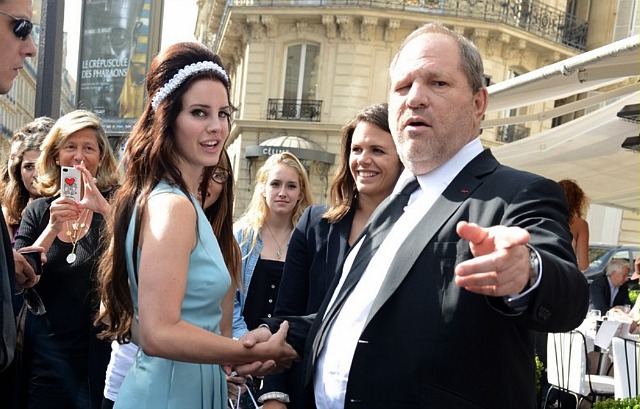
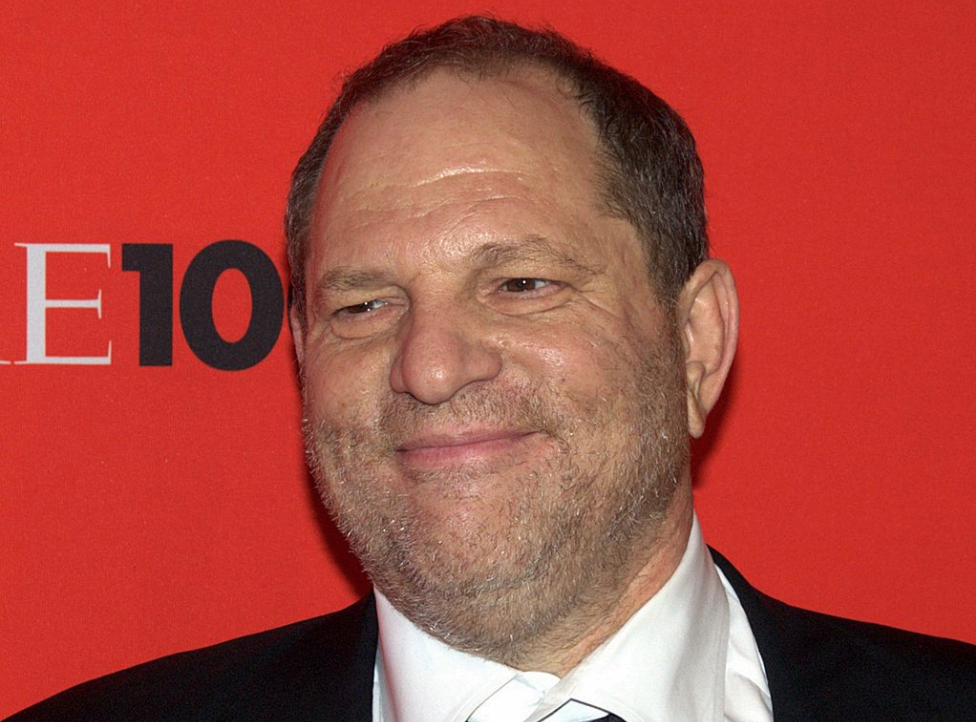
In response to a N.Y. Times story cataloguing almost three decades worth of unsavory sexual intimidation and offers of pay-for-play sexual favoritism, Weinstein Co. honcho Harvey Weinstein has announced he’ll be stepping down from his perch in order to “learn about myself and conquer my demons…I know I have a long way to go but this is my commitment…I cannot be more remorseful about the people I hurt, and I plan to do right by all of them.”

Weinstein was not accused in the article of being a masher or a groper or of any kind of physically threatening, Roman Polanski-in-the-’70s behavior. The allegations basically boil down to various women having received unwanted icky attention and intimidation in hotel rooms (including nude-massage requests) plus corresponding payoffs or freeze-outs for women who refused or complained or threatened to go public.

All in all, for Miramax and Weinstein Co. female executives, interns, actresses and many others in between, Harvey’s unfortunate behavior resulted in “a toxic environment for women at this company,” as Lauren O’Connor, a former Weinstein Co. “creative executive” and book scout”, explained in a reported 2015 memo.

Paragraph #5: “An investigation by The New York Times found previously undisclosed allegations against Mr. Weinstein stretching over nearly three decades, documented through interviews with current and former employees and film industry workers, as well as legal records, emails and internal documents from the businesses he has run, Miramax and the Weinstein Company.”

This is the most damning portion of the piece: “’From the outside, it seemed golden — the Oscars, the success, the remarkable cultural impact,’ said Mark Gill, former president of Miramax Los Angeles, which was then owned by Disney. ‘But behind the scenes, it was a mess, and this was the biggest mess of all,’ he added, referring to Mr. Weinstein’s treatment of women.”

Perspective: The article claims that Weinstein was a sexually abusive boss in the ’90s, but nobody said anything back then. The piece lays out several allegations about his abusive ways having continued into the 21st Century, or roughly over the last 15 years. But nothing of serious force or blowback happened until today.

There are two reasons why. One, the power of the financially struggling Weinstein Co. has diminished to the point that people aren’t as afraid of Harvey now as they used to be. And two, a journalistic fuse has recently been lit about identifying sexual abusers and harassers and making them face the music, and today’s Harvey takedown piece is but the latest. More will presumably follow.

Is it appropriate for sexual harassers and abusers to be dragged before the court of public opinion and beaten with a cane? If they’re guilty, yes. What’s wrong is wrong, and cruel and/or abusive actions have consequences. But Harvey Weinstein is paying the current piper because he isn’t the economic titan he used to be, and because a general journalistic hunger for revenge is afoot right now, and it won’t be stilled any time soon.

Here’s Harvey’s response to the Times piece.

Read more

The Ending Broke My Heart

Dan Gilroy‘s Roman J. Israel, Esq. is “a whipsmart, cunningly performed, immensely satisfying film in so many ways. Such a skillful job of character-building on Gilroy’s part, layer upon layer and bit upon bit, and such a finely contoured performance by the great Denzel Washington. My only hang-up is that I wanted a different ending. Gilroy’s ending isn’t ‘bad’, per se, but I didn’t agree with it — I didn’t want it.

“Otherwise this is such a brilliant, invigorating and fully believable film for over-30s — milieu-wise, legal minutiae-wise, Asperger’s-wise. It’s my idea of pound cake topped with whipped cream and strawberries…give it to me. You can take a terrific bath in this film and never feel unsatisfied that the story isn’t quite delivering the way you want it to. Until the last 25 or 30 minutes, that is, but even then it’s not a fatal problem, just an air-escaping-the-balloon one.” — posted on 9.10.17 from the Toronto Film Festival.

Punch Me In The Face

As I noted last May, Robin Campillo‘s BPM (Beats Per Minute) (The Orchard, 10.20) is an impassioned, oppressively didactic period film (i.e., early ’90s) about Parisian ACT UP members battling bureaucratic indifference and/or foot-dragging in the battle against AIDS. It’s a tough, well-made, humanist thumbs-upper, but at the same time the relentless political-talking-points dialogue gradually numbs you out, and then drains you of your will to live.

At the risk of sounding insensitive or uncaring, Campillo’s hammer-focus on the French medical establishment’s slow-to-act response to the AIDS scourge is airless — it doesn’t breathe. BPM is a 144-minute gay agenda movie that says the right things, feels the right things and clobbers you over the head with its social-activist compassion and sense of life-or-death urgency. I for one staggered out of the Grand Lumiere theatre when it ended, gasping for breath and overjoyed that the lecture had finally ended.

I like my gay movies to feel swoony and speak softly — I want them to feel mellow and cultured and graced with the aroma of fine wine, fresh peaches and tall grass on a warm summer’s day. No offense but BPM is on the other side of the canyon, enraged and odorous and generally obnoxious. Thanks but no thanks.

Hackman Chaser

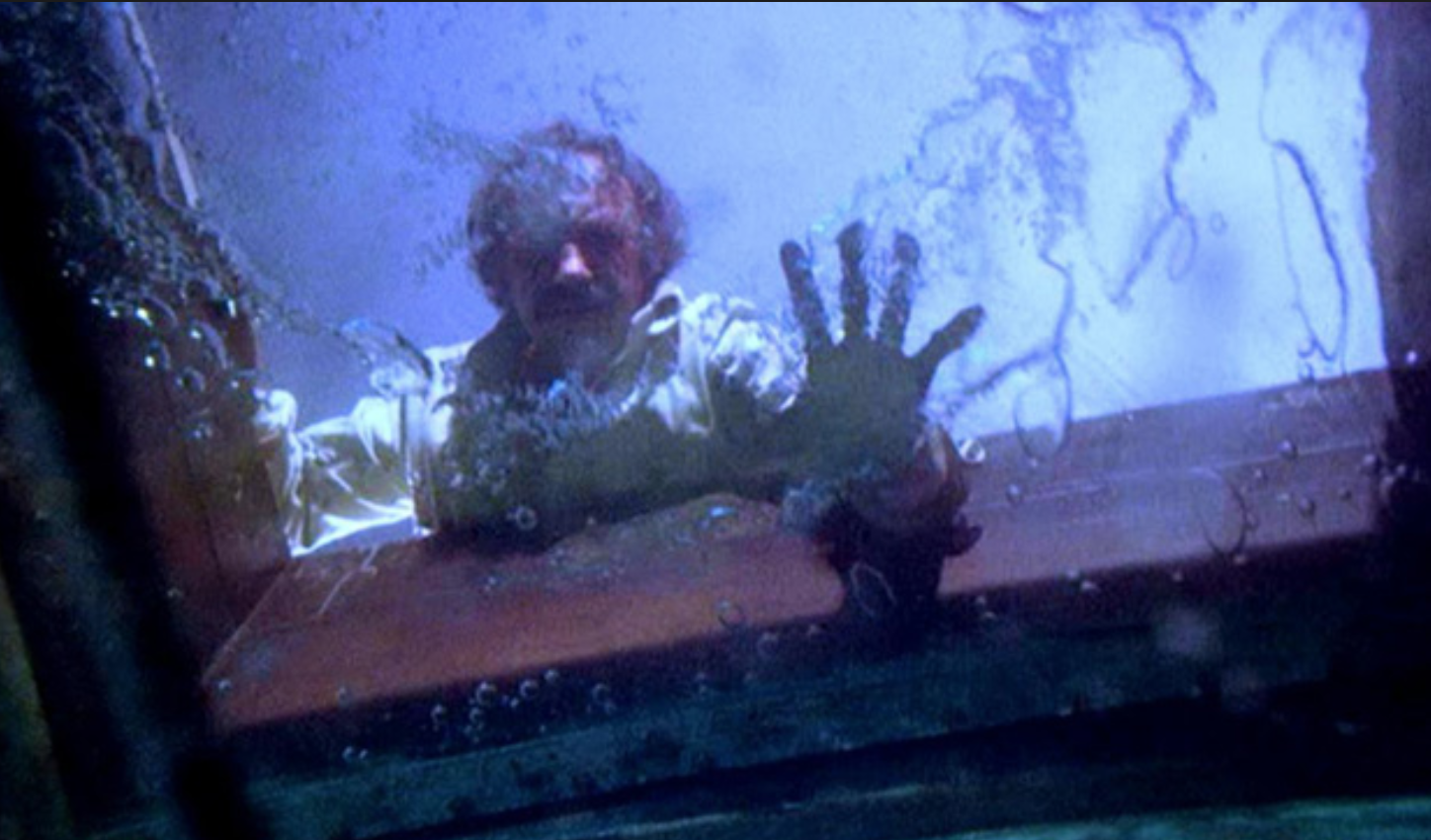
Everyone knew that the recently released Bluray for Arthur Penn‘s Night Moves (’75) wouldn’t be all that spellbinding. Bruce Surtees‘ 35mm cinematography was never intended to be anything more than professionally presentable in a workmanlike fashion, and that was fine. But the Bluray definitely looks better than the various versions I’ve been watching for the last 35 years or so, including the ones offered on DVD and Amazon SD streaming. And that’s all I wanted anyway.

Read more

They’re Coming For Harvey

Devin Faraci, Cinefamily’s Shadie Elnashai and Hadrian Belove, Ain’t It Cool‘s Harry Knowles have walked the plank for alleged sexual assault and/or harassment…and now Harvey Weinstein, the swaggering king of the indie world in the ’90s and most of the aughts until ’13 or thereabouts, is being threatened along similar lines.

Variety‘s Brent Lang, Gene Maddaus and Ramin Setoodeh reported earlier this afternoon that the Weinstein Co. honcho “has hired a high-powered team of attorneys to push back on soon-to-be-published bombshell stories from the New York Times and the New Yorker detailing sexual allegations and improper workplace behavior against him.”

Variety says that “some women making the charges are believed to be on the record.”

“Multiple individuals with knowledge of the situation” have told Variety that Jodi Kantor and Megan Twohey are the authors of the Times story, and that former MSNBC host and Woody Allen accuser Ronan Farrow is penning the New Yorker piece. One of the stories could appear as early as this week, the article says.

In a brief interview with Variety, Weinstein “declined to comment on the charges.”

I just flashed on the finale of Brian DePalma‘s Scarface with Harvey as Tony Montana and Kantor, Twohey, Farrow and Harvey’s alleged accusers as the Columbians scaling the fence of the Montana estate.

Late To In The Fade

I don’t understand how anyone can dismiss Fatih Akin‘s In The Fade (Magnolia, 12.27), a traumatic-loss-and-revenge drama starring Diane Kruger, whose performance won the Cannes Film Festival’s Best Actress award last May. You can criticize the film, I suppose, for what it doesn’t address (i.e., European Islamic terrorism) but taken on its own terms, it’s close to unassailable.

In The Fade dispenses chilly, carefully measured hardball realism, and does so in a gripping, emotionally jarring way that I believed top to bottom. It’s now the official German entry for the Best Foreign Language Film Oscar at next March’s Academy Awards telecast (3.4.18).

Set mostly in Hamburg, Fade starts with Katja (Kruger), her clean-living Kurdish/Turkish husband Nuri (Numan Acar) with a drug-dealing past, and their young son Rocco in happy-family mode. That lasts less than ten minutes. A home-made nail bomb outside Nuri’s office explodes, and Katja is suddenly a child-less widow. She wilts under agonizing pain and a near-total emotional meltdown, and understandably decides to temporarily medicate with drugs, and then nearly ends it all by slitting her wrists.

But a suspicion she’d shared with her attorney, Danilo (Denis Moschitto), about anti-immigrant Nazis having planted the bomb turns out to be accurate. Katja learns that evidence she had given the police has led to the arrest of Andre and Edda Moller (Ulrich Brandhoff, Hanna Hilsdorf), a pair of young neo-Nazis with international connections. There’s no doubt these two are the culprits — Katja had seen Edda leave a bicycle near her husband’s office two or three hours before the blast.

Then comes a second-act portion dealing with a trial of the accused that doesn’t end satisfactorily, and finally a third act in which the acutely frustrated Katja travels to Greece to carry out her own form of revenge-justice.

Read more

We Know He’s A Moron

Back in the days of print and paper, or roughly 27 years ago, I was talking…okay, arguing with a guy who was in charge of printing Prime, a Music-Plus contract monthly about music and movies that I was the senior editor of. He got off the line for a bit, and a second or two later I murmured to a friend nearby that the guy I was squabbling with was a moron. The printer heard me. Our conversation proceeded as follows:

Printer: You just called me a moron.
Me: I did?
Printer: I heard you! You just said “he’s a moron.”
Me: Well, okay, but I wasn’t describing you in an altogether sense. What I meant — I’m sure you’ve done this yourself — was that my impression of you at that particular point in time was that you were a moron. A moment in time. Two minutes later you could say or do something that would totally change my mind. Just a figure of speech.
Printer: Well, here’s another figure of speech. You’re a judgmental shit.
Me: Not really. I’m apologizing and trying to build bridges here.
Printer: You’re apologizing?
Me: Well, yeah. I mean, I said it, okay, but it was like I said, a brief, transitional impression. Speaking here and now in the present tense, I’m not calling you a moron. I’m just trying to work with you.

Same thing with Secretary of State Rex Tillerson. I don’t think he mutters “Donald Trump is a moron, Donald Trump is a moron” on a 24/7 basis. He said it once in a meeting last July. It slipped out because he was thinking that at the time, but once he’d said it he moved on to other things. And that was that.

Marshall Moment

Last night I spoke briefly with Chadwick Boseman following the TCL Chinese premiere screening of Reginald Hudlin‘s Marshall. Apart from offering congratulations for his having portrayed Thurgood Marshall with conviction and pizazz, all I could talk about was about how big Ryan Coogler‘s Black Panther (Marvel/Disney, 2.18) might be. I asked “is it mostly done?” and “have you seen it yet?” and to both Chad said, “No, not yet, we’re still doing it.” I told him that my insect antennae are sensing something really special.  (Maybe.)  He hopes so, he said, smiling softly and clearly cranked about the possibility. Four and a half months.


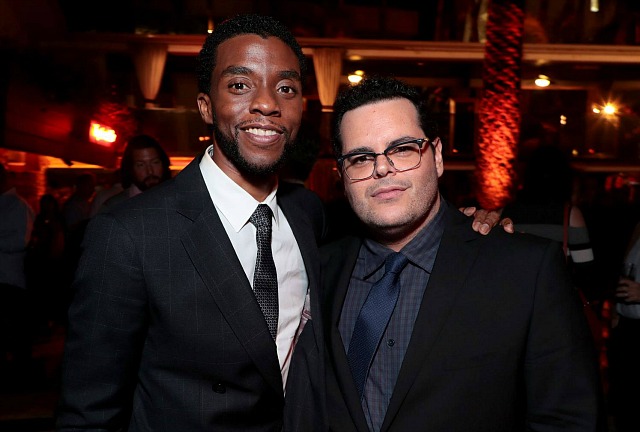
Marshall costars Chadwich Boseman, Josh Gad during last night’s Roosevelt hotel after-party following premiere screening at TCL Chinese.


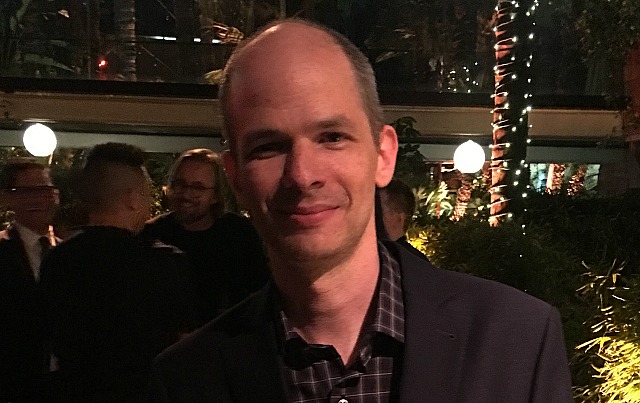
Marshall co-screenwriter Jacob Koskoff, who partnered with his father, civil-rights attorney Michael Koskoff.
 

Stench of Military Comedies

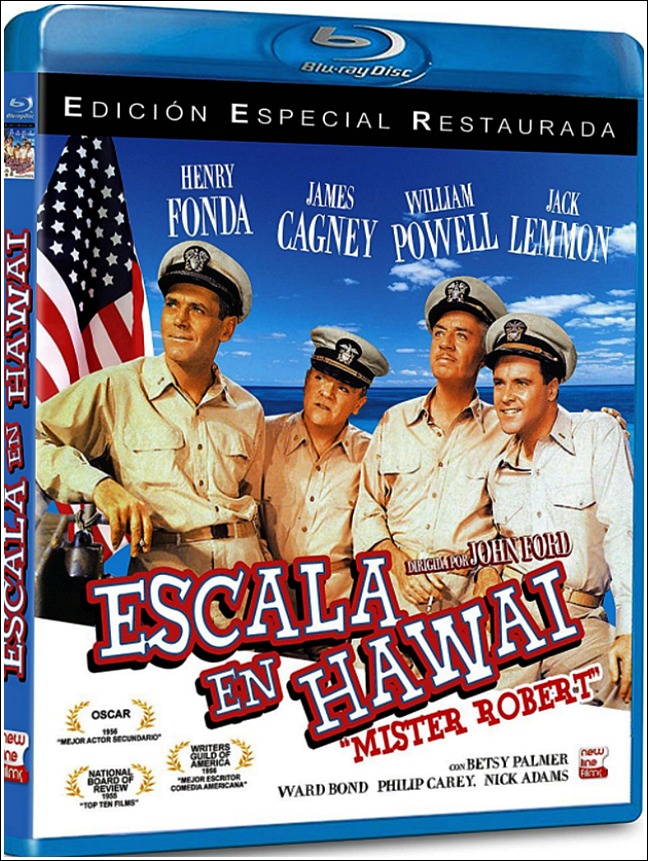
This morning I happened to stumble upon a Spanish Bluray of Mister Roberts (Escala en Hawaii), and I was instantly reminded how much I despise this painfully sentimental and simple-minded 1955 film. None of it is funny. It just lies there like a dead fish. Okay, there’s one amusing moment, when James Cagney rants about how he loathes upper-crust college boys, and how he once felt humiliated by a couple of them while working as a bus boy…”Oh, bus boy? It seems my friend has thrown up all over the table…clean up the mess, bus boy…will ya?”

With very few exceptions military service comedies of the ’50s and ’60s have aged very, very badly, especially those influenced by Mister Roberts. That starchy vibe of official conservatism and sexual repression, the tone of adolescent idiocy, the constant emphasis on stupid frat-boy attitudes and anti-authoritarian behavior, and most of them painful as fuck to sit through.

Operation Petticoat, Kiss Them For Me, Onionhead, Rally Round The Flag Boys, Ensign Pulver, A Private’s Affair, The Wackiest Ship In The Army, Soldier in the Rain, The Honeymoon Machine, The Last Time I Saw Archie, etc. Every last one a stinker.

Even P.T. 109, that mediocre Cliff Robertson war drama that was produced in tribute to President Kennedy, adopted the tone of these awful service comedies because it seemed like a commercial way to go. Doing so made it seem even worse.

Decent military comedies: Operation Mad Ball, What Did you Do In the War, Daddy? MASH, The Last Detail, No Time for Sergeants, King of Hearts. Others?