My Hands On Their Collective Throat

Some of the most miserable moments of my life have been spent on the phone with tech support. Not to mention the angriest. Some tech support calls have turned me into a saliva-spitting werewolf. I’m not saying I’d literally like to see a cross-section of tech-support personnel crucified along the Appian Way, but I’ve definitely fantasized about this. Most tech support people are stupid, protocol-following sadists. They know they’re driving you crazy, and they kind of enjoy it. Just once before I die I want to run into one of these guys. Just once.
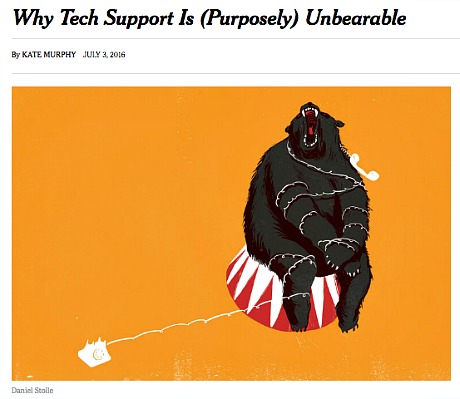
And now comes a 7.3. N.Y. Times piece by Kate Murphy about tech support rage (“Why Tech Support Is (Purposely) Unbearable”). I don’t know the name of this tune. I’ve sung it, lived it. I carry the scars on my psyche.

Murphy quotes a 2015 survey by the industry group International Customer Management Institute, to wit: “92 percent of customer service managers said their agents could be more effective and 74 percent said their company procedures prevented agents from providing satisfactory experiences.”
Read more

Smug Destroyer, Arrogant Christian

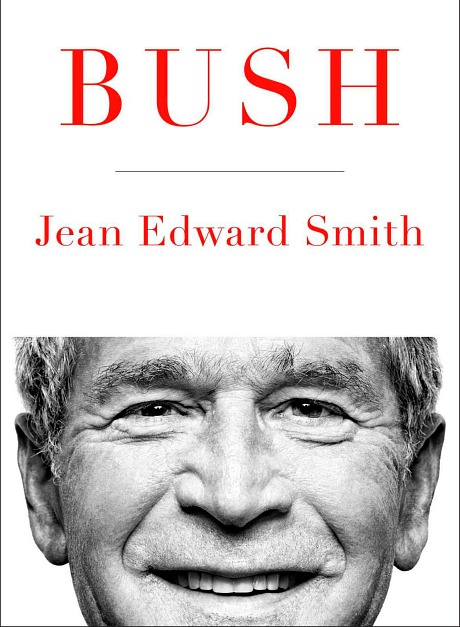
Bush” (Simon & Schuster, 7.5) is a new assessment by respected historian and academic Jean Edward Smith. The first sentence: “Rarely in the history of the United States has the nation been so ill-served as during the presidency of George W. Bush.” The last: “Whether George W. Bush was the worst president in American history will be long debated, but his decision to invade Iraq is easily the worst foreign policy decision ever made by an American president.”

Smith, 84, is a longtime academic and finalist for the Pulitzer Prize, and has published stellar biographies of Dwight D. Eisenhower, Ulysses S. Grant and Franklin D. Roosevelt.

Listen to this mp3 excerpt.

Here are critiques of “Bush” by N.Y. Times reviewer Peter Baker and The New Yorker‘s Thomas Mallons.

Read more

A Proper, 4K-Scanned Domestic Bluray of El Cid Is Way Overdue

I don’t know why I’ve never bought the 2009 German Bluray of Anthony Mann‘s El Cid (’61), but I finally did this morning — $20something including shipping. An August ’09 DVD Beaver review says that the Koch Media Bluray (a) delivers essentially the same package contained in the January 2008 Miriam (i.e., Miramax) two-disc DVD, (b) reps an improvement over the DVD version but (c) could look better.”

And that was by 2009 standards. Seven years have passed, 4K renderings are commonplace and an early ’60s large-format film looking pretty good no longer cuts the mustard.

If Universal can pop for luscious 4K remasterings of Spartacus and One-Eyed Jacks, somebody should stand up and create a 4K-scanned domestic Bluray of El Cid. Martin Scorsese pushed for a restoration of this 1961 costumer way back in ’93, and yet nothing has resulted on these shores aside from the 480p Miriam two-disc DVD, which popped in January 2008.

El Cid needs a domestic 4K rebirth. Like Spartacus, El Cid was shot in 35mm 8-perf Technirama. The materials were upgraded to 70mm for roadshow engagements. A quality-level remastering would look like $100 million bucks. If it were my call I would get restoration guru Robert Harris, who delivered that immaculate Spartacus restoration Bluray along with the Godfather restorations of a few years back, to do the job. Who better?

I’m told that El Cid was shot on Eastman 5250 or 5251, and that the materials shouldn’t have significant fade issues.

Scorsese’s Film Foundation partnered with Uni on the One-Eyed Jacks restoration. A proper El Cid Bluray seems like a natural for the Film Foundation, especially given Scorsese’s ardent support for restoring this historical epic 23 years ago.

Read more

Actors Can Have All The “Work” Done That They Want, But They Have to Keep It Subtle

Surgical touch-ups have become as common as visits to tanning salons. This or that actor having had a little “work” done is certainly nothing to write home about. But a year and a half ago Renee Zellweger‘s appearance sparked unusual interest. The before-and-after photos indicated that the “work” had violated the general rule, which is to make sure the changes are difficult to spot or at least not glaringly noticable.

Three days ago a piece by Variety‘s Owen Gleiberman noted that in a trailer for the forthcoming Bridget Jones’ Baby (Universal/Miramax, 9.16.16), Zellweger’s features seemed markedly different compared to how she looked in Bridget Jones Diary (’01). I agree — Zellweger looks good today but somehow upgraded. She could be the slightly tonier twin sister of the woman she played in Jerry Maguire.

“Watching the trailer, I didn’t stare at the actress and think: She doesn’t look like Renée Zellweger,” Gleiberman wrote. “I thought: She doesn’t look like Bridget Jones! Oddly, that made it matter more. Celebrities have the right to look however they want, but the characters they play become part of us. I suddenly felt like something had been taken away.”

Soon after Gleiberman’s piece was accused of being sexist by Rose McGowan, Christina Applegate and other online voices. I’m still trying to figure out what the beef is. The McGowan-Applegate rule seems to be that (a) if someone has had work done, you can’t mention it, and (b) if you do you’re a sexist asshole. But Owen’s point wasn’t that Zellweger had gone under the knife, but that she’d apparently tried to change herself. She was a somewhat idiosyncratic-looking person in the ’90s and early aughts, but then she went to a surgeon and said “I want to look less idiosyncratic, and more like a fashion model.”

My view is that Owen was saying that the work wasn’t subtle enough. I think that’s a reasonable thing to observe. You can have all the work done that you want, but you can’t allow it to become a topic of conversation.

Imagine if Harrison Ford decided to recreate himself along the lines of what Michael Cimino had done in the ’90s. Playing Indiana Jones again would be difficult under this circumstance. If Gleiberman had taken note of Ford’s appearance and asked “hold on, what’s happened to good old Indiana?”, would McGowan-Applegate be screaming about how unfair Owen was being? I somehow doubt it.

Read more

BFG DOA

“The weekend’s biggest disaster was Disney’s The BFG, Steven Spielberg’s $140 million adaptation of Roald Dahl’s children’s classic. The story of a friendly giant (Mark Rylance) who befriends an orphan (Ruby Barnhill), got solid reviews, but was overshadowed by Finding Dory. It collapsed at the box office, eking out $19.6 million over the weekend and should earn a paltry $23.6 million over the four day holiday for a fourth-place finish. It will rank as one of the biggest flops of the summer and of Spielberg’s career, raising questions about his drawing power after a decade spent making historical dramas such as Lincoln that are geared at older crowds.” — from 7.3 Variety report by Brent Lang.

Night of the Living Longshoremen


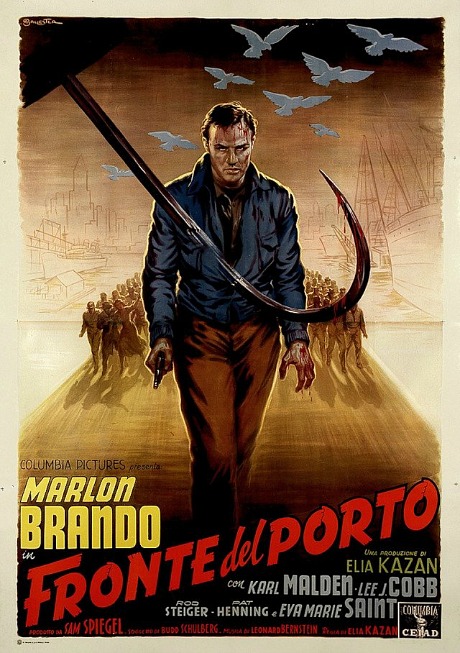
At first glance this looks like an Italian zombie movie. Something involving rage, stalking, death, fear, a bloodthirsty mob. The only thing that doesn’t belong is the handgun. Zombies don’t use or carry them as a rule.

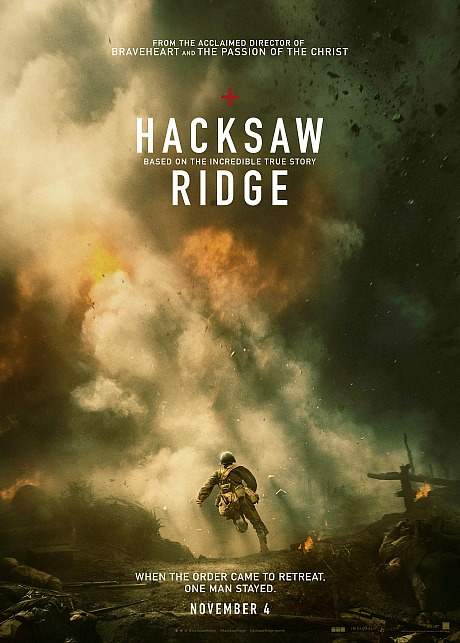
Exceptional values in the smoke and clouds. It obviously suggests feeling and commitment on the part of the director.

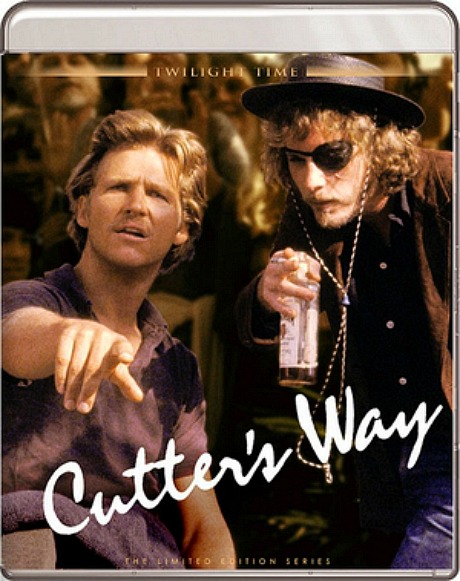
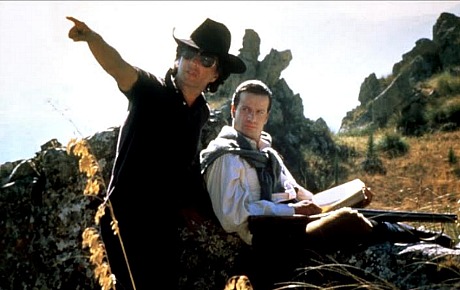
I haven’t watched Cutters’ Way since ’81. I’ve been flirting with re-viewing it. I remember two things — one, that John Heard’s performance was intense and pissy but a little relentless with the rage, and two, that the story didn’t amount to much — a lot of plotting and yelling that led to a pit of futility.

“Why Should We Be Afraid?”

“In The Hit, Stephen Frears eschewed car chases, gunfights and sex, [and] blurred the traditional roles of captive and captor, [and] poeticized a story that germinates in baseness, and focused on a hero who finally lets down the audience. In manipulating the tenets of the gangster film, the western, the road movie and even film noir, Frears questioned their validity. And although The Hit is full of incident, it dwells on the internal life rather than the external. This lifts The Hit into a metaphysical realm where bullets have no reach.” — from a Graham Fuller essay, “The Hit: Road to Nowhere,” which is included in the Criterion DVD package.

Compensation Factor

I’ve read a lot about Michael Cimino over the years. I’ve heard many stories about him. Last August I read Anne Thompson‘s piece, “Six Reasons Why Michael Cimino Will Never Work in Hollywood Again,” which was fairly tough on the guy. I’ve read Stephen Bach‘s “Final Cut” twice. Everybody said he could be pugnacious and even rude at times. Not always but now and then. But to the best of my recollection nobody and I mean nobody ever mentioned a very basic fact, which is that Cimino was a little guy — only 5’5″.

Not every short guy is contentious or pushy or intractable, but omitting the fact that a guy was modestly proportioned is a curious thing. 5’5″ is Randy Newman short. Two or three inches taller than Mickey Rooney, okay, but one inch shorter than Alan Ladd, and I’ve read that Ladd always felt a little fucked up about his height. It seems to me that anyone assessing the character of a short guy would have to at least mention that he’s short. (And therefore may have felt motivated to compensate by being a bit tougher.) But no one mentioned this about Cimino. Because no one wants to me called a size-ist.

Read more

Irish Lament For A Friend

Respected critic and screenwriter F.X. Feeney was the gentlest, kindest and most ardent journalist ally the late Michael Cimino ever had. Feeney was the principle voice of the revisionist reappraisal of Heaven’s Gate, for one thing — a reappraisal that led to Criterion remastering the original three hour and 39 minute cut on Bluray. Feeney so cared about Cimino’s vision that in 1987 he flew to Paris on his own dime to catch the 146-minute director’s cut of The Sicilian. (A 115-minute version played in the U.S.). Feeney and Cimino were also personal pals.

When news of Cimino’s death hit yesterday afternoon, I asked F.X. if he wanted to post some kind of tribute or appraisal. He sent the following late last night:


Michael Cimino, Chris Lambert during filming of The Sicilian.

Michael Cimino [1939 – 2016]

Imagine my astonishment, bracketing his name with these dates. The world has lost a great artist, and I’ve lost a great friend.

First, let’s define “a great artist.” Michael Cimino made films like nobody else. He never imitated. His first loyalty was never to any movie tradition, but to the life and lives of whatever human beings were under his scrutiny. Time and again, he had the courage –indeed the steely backbone and gambler’s bravery — to take his time with any given scene or sequence, confident that audiences are interested in human beings, first and last.

What movie compares on any level with The Deer Hunter? Its first hour is taken up with a wedding and a hunt. The Vietnam War is a lightning parenthesis. That prison scene is a shock from which no audience recovers – and the film’s epic power is in its silences, particularly as embodied by the three men who return from war, each bearing within themselves an experience that they can’t communicate, not to their beloved townsfolk, not even to one another. Each is individually scarred.

The hymn “God Bless America” has never been rendered in such delicate, fragile yet indelible affirmation as it is in The Deer Hunter’s final moments.

Read more

Cimino Is Gone, Although He “Died” Decades Ago

Director Michael Cimino has died of an unannounced cause. He was probably 77. He was respected for his directorial command and tenacity (certainly by the F.X. Feeney-led revisionists) and if nothing else was clearly an exacting visual composer. But his rep was compromised by two things. Well, one thing really — Heaven’s Gate, the ruinous 1980 epic that bombed at the box-office, all but murdered Cimino’s career, destroyed United Artists and brought about a seismic change in Hollywood culture — the death of the auteurist era that had begun in the late ’60s/early ’70s.

The other compromising thing was more of a curiosity, which was Cimino’s decision to completely transform himself in the ’90s from the slightly heavyset, jowly-looking New York guy he was in the ’70s and ’80s into an androgynous, rail-thin, plastic-surgerized life form that seemed even more extreme than what Michael Jackson eventually did to himself.

Say what you will about The Deer Hunter or Year of the Dragon or The Sicilian or Thunderbolt or Lightfoot, but there’s one thing you have to admit about Cimino, who made them all. The failure of Heaven’s Gate, which had been an albatross around Cimino’s neck for the last 35 years of his life, pretty much destroyed the mystique of the great, bowed-down-to Hollywood director.

Before Heaven’s Gate, brand-name directors had real power. After Heaven’s Gate, they had less or a lot less. It brought about the near-total collapse of a general belief that movies were mainly about directorial vision, at least in the hands of a celebrated few, and it emboldened the corporate guys and led to a mindset by which movies began to be seen as top-down, kid-friendly, high-concept product.

Read more

Spitballing The Best Quality-Level Films of 2016’s Second Half (Part 1)

Three or four days ago The Cinemaholic posted a checklist piece called “The 25 Most Awaited Movies of the Second Half of 2016.” I’ve been meaning to get into this but putting it off. Here are seven reactions, starting at the back at the line. I won’t finish the whole thing until tonight or more likely tomorrow morning, especially in lieu of the death of Michael Cimino:

25. John Cameron Mitchell‘s How to Talk to Girls at Parties (A24). Featuring: Elle Fanning, Nicole Kidman, Ruth Wilson. Synopsis: Female alien (presumably Fanning) hooks up with two earthling girls in London suburb of Croydon. HE suspicion/presumption: 21st Century Earth Girls Are Easy without the music? Bottom line: Iffy, don’t count your chickens.

24. Alexandros AvranasTrue Crimes. Brett Ratner‘s RatPac among the producers. Featuring: Jim Carrey, Kasia Koleczek, Charlotte Gainsbourg, Marton Csokas. HE suspicion/presumption: Shot late last year in Krakow (i.e., November and December) and based on a 2008 New Yorker article by David Grann, film turns on a crime novel offering clues to a real-life murder of a businessman. I’m not saying I’m hugely concerned about a Ratpac film costarring Csokas, but I am a little bit. Bottom line: I’m not saying “forget it” but at the same time I’m not feeling the right kind of vibes.

23. Scott Derrickson‘s Doctor Strange(Disney, 11.4). Featuring: Benedict Cumberbatch, Chiwetel Ejiofor, Rachel McAdams, Michael Stuhlbarg, Mads Mikkelsen, Tilda Swinton. HE suspicion/presumption: Same old Marvel bag of tricks. No, thanks. Bottom line: I’m sure it’ll be hugely popular, but this list isn’t about popcorn films.

Read more