Redford’s Santa Barbara Hurrah

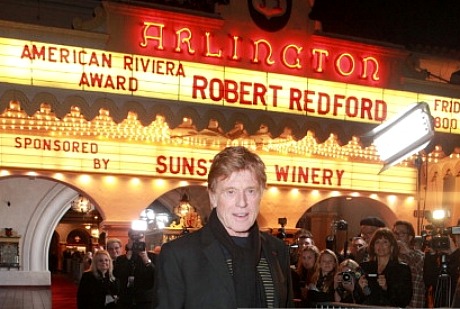
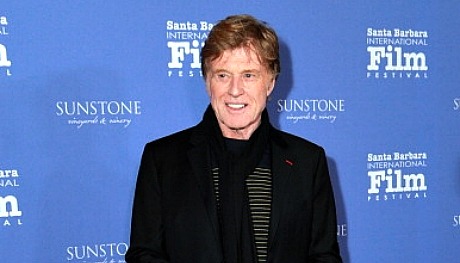
Last night in Santa Barbara Robert Redford had his final All Is Lost moment in the sun. After a stellar and industrious career of 50-plus years Redford gave the finest performance of his career, a performance that seems all the more skillful and affecting because of its deftness and spareness and near-silence. And yet he was blown off by SAG colleagues and Academy members because…okay, because he didn’t campaign that much (certainly not to the extent that Bruce Dern did) but mainly because they couldn’t be bothered to watch All Is Lost. Why? Because they’re lazy but also, I suspect, because they didn’t want to see a film about a resourceful old guy struggling to survive against nature’s merciless persistence. Nature will get us all sooner or later, and they didn’t to grapple with that — too close to the bone.


SBIBB photos copied/stolen from Getty Images.

Read more

My Feelings Exactly

It’s 6:15 am in Berlin. An hour or so ago, a sensible-sounding New Jerseyan named Richard Luettgen posted the following on the N.Y. Times website in response to Woody Allen’s just-posted statement about Dylan Farrow‘s allegation of child molestation: “In the end, there’s sufficient circumstantial evidence to believe Mr. Allen’s account of the matter [although] suspicion always will persist so long as Dylan maintains her version of events, even based on the memories of a seven-year-old. For my own part, it always seemed to me unlikely that he molested a seven-year-old daughter, as perversion of that intensity seems likely to have manifested itself either before or after in his life; and, as he writes, there’s been no evidence brought to light of such pathology.

“But both sides can’t be right on such an issue and, short of an admission by one of them, we’ll never know the truth. Yet a court saw the matter his way, after what one must assume was fairly serious examination of all the available facts. In any event, it’s always struck me as very sad that a career as brilliant as his, and a genius that has given me and many millions of others all over the world such immense entertainment, should go to his eventual grave with an asterisk next to his name, even if there’s a question mark after the asterisk.”

Allen’s letter lays out his side of the story clearly and persuasively, but he’s not sharing every shred and morsel of what the precise nature of his paternal closeness and affection might have been. Which he needn’t do. I don’t remember every last last hug, cheek-peck, hair-caress and shoulder-rub I gave my two sons when they were little, but there was a lot of this on a constant basis and I know I never crossed any lines. This whole thing is so sordid. To give Dylan her due, I suspect there’s probably some kind of gray area, some kind of conflicting overlap between Allen’s recollection of his closeness with her and Dylan’s memory imprint. Allen has chosen not to expose or fill in every last crevasse, but I’ve always basically believed him and I believe him now.

It’s really, really time to let this go and for everyone to move on. The circus needs to pull up stakes, the canvas tent needs to be folded and packed in a Bekins truck, and the elephants and tigers need to be led back into their cages.

Read more

Where’s Woody’s Retort?

Four days ago Woody Allen declared through a rep that Dylan Farrow‘s allegations were “untrue and disgraceful.” Soon after it was reported that he would “very soon” be submitting a written response that the N.Y. Times will probably publish. So where is it? I don’t mean to sound cavalier about this matter but the Woody-Dylan-Mia machine is an ongoing media concern and cash cow, and it needs to be fed. Has anyone launched a website devoted solely to this sordid matter? My favorite riff of the day was from New York Post columnist Andrea Peyser, whom I expected to come down on Dylan, Mia and Ronan’s side of the argument. But she’s more or less siding with Woody. Excerpt: “[During the child-custody battle of ’93] I expected to see Mia as the victim of a degenerate. Instead, the woman who sauntered into the courtroom in a prim, pleated skirt and starched blouse was detached and emotionless. She seemed to be acting. I concluded Mia was as nutty as Woody.”

5781 Miles Away

Right after my first viewing of The Wolf of Wall Street Jonah Hill told me and a couple of others that he and Leonardo DiCaprio prepared for the film’s classic quaalude overdose scene by taking a kind of quaalude class with some woman who had taken (i.e., presumably abused) Lemmon 714s back in the day. But during last night’s Santa Barbara Int’l Film Festival tribute to DiCaprio and Wolf director Martin Scorsese, Leo told moderator Todd McCarthy that “his inspiration for the scene was not Charlie Chaplin or Jerry Lewis, but rather the star of ‘Drunkest Guy in the World,’ a hilarious clip he encountered on YouTube.” Here’s an mp3 of a good portion of the Scorsese-DiCaprio discussion, courtesy of Awards Daily‘s Sasha Stone.

Read more

Adlon Discussions

What did I learn from this morning’s round-table interviews with Grand Budapest Hotel director-writer Wes Anderson, star Ralph Fiennes and costars Bill Murray, Willem Dafoe and Jeff Goldblum? (Not to mention costars Saoirse Ronan and Tony Revolori, whose mp3 has mysteriously vaporized?) One, that everyone agrees that the film, while obviously engaging on a story, acting and production-design levels, is about a gentle drip-drip-drip of lament for a civilization that has all but disappeared. Two, that Anderson was told by “German cameramen” (and presumably also by dp Robert Yeoman) that he “really must stop saying 1.33″ — the actual aspect ratio of 90% of this film is 1.37:1. Three, that one night Murray and others decided to visit Poland, which is a hop, skip and a jump from Gorlitz, the German village where they shot much of the film, but “it was closed.” Four, that Dafoe’s darkly dyed hair is an element in his portrayal of legendary director Pier Paolo Pasolini, whose last day on earth is being dramatized by director Abel Ferrara. Five, that Goldblum eats cockatoo and works out fairly often — he’s getting up there but has the body of a 30 year-old. And six, that Ronan thinks I resemble Christopher Walken…but I get that all the time. Again, here are the mp3s — Anderson, Dafoe, Murray, Goldblum and Fiennes.


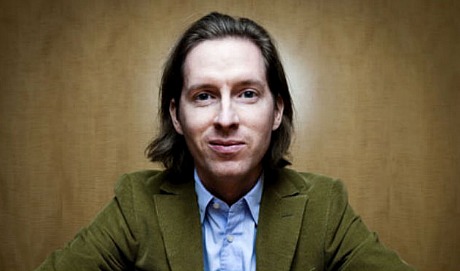
Grand Budapest Hotel director-writer Wes Anderson.

Damp Streets of Berlin


Mendl’s is a gourmet dessert shop located in a medieval village near the Grand Budapest Hotel in Wes Anderson’s new film, which currently has a 93% Rotten Tomatoes rating. This Mendl’s cart is sitting in front of the Hotel Adlon as we speak. Mendl’s boxes were all over the upper lobby area during this morning’s round-table interviews.

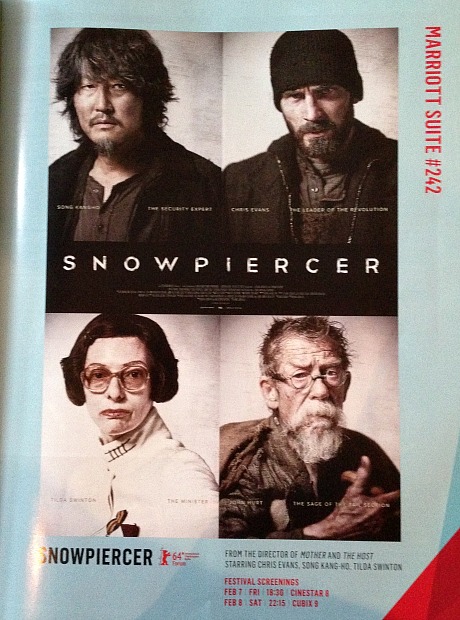
Journos with geek-leaning tastes are trying to get into the Berlinale screenings of Joon-ho Bong‘s Snowpiercer. I know it’s not going to do it for me so I couldn’t care less. I concluded after seeing Mother that Joon-ho Bong is basically a Brian De Palma pretender. He might not be as “bad” as Park Chan-wook (Stoker) but he’ll do until the next Chan-wook film comes along.

Read more

On The Trail of Johnny McQueen

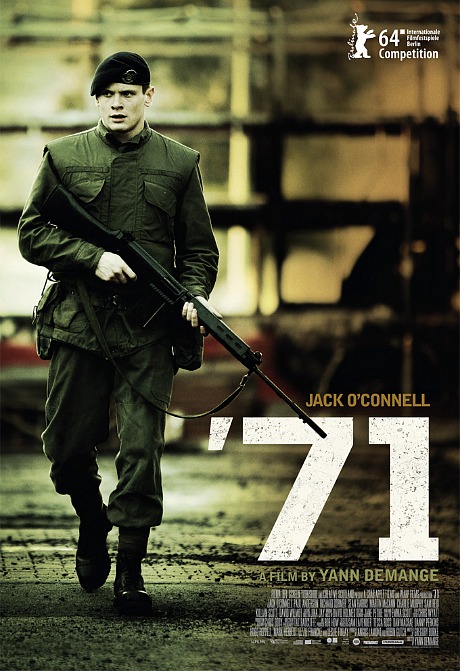
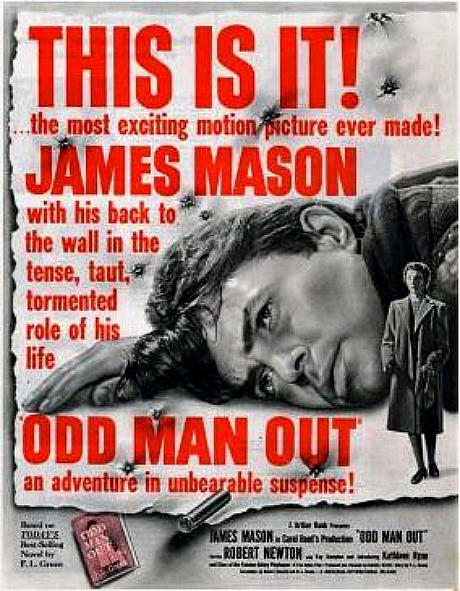
I caught a 3:30 pm screening today of Yann Demange‘s ’71, a Belfast-set action melodrama set during “the troubles” of that titular annum. It’s a gripping, fast-paced thriller about a young and inexperienced British soldier named Gary (Jack O’Connell) who gets separated from his unit during a violent confrontation with an angry Catholic mob, and before you know it he’s more or less James Mason in Odd Man Out — a marked man behind enemy lines, weak and bleeding and trying like hell not to get plugged by IRA assassins, and forced to depend on the unlikely kindness of strangers.

But Gary’s odyssey isn’t just about hiding out and dodging capture with the help of this and that Good Samaritan (including a spirited young boy and a kindly Catholic doctor and his wife who risk brutal reprisals from the IRA by saving his life). There’s also a double-agent/undercover game going on that pushes tensions to the brink.

The emphasis here is on menace and fear and thrills and adrenaline. It’s not trying for the dreamy, melancholy fatalism of Carol Reed’s 1947 classic. There’s no pulsing undercurrent except for similarities and associations with other films about the “troubles.” But ’71 delivers exceptional verisimilitude and throttling realism. In some ways reminiscent of Paul Greengrass‘s Bloody Sunday, this is a jolt-cola movie.

Obviously you could call ’71 an anti-war drama but what honest film about violent conflict could possibly be pro-war? Obviously a film that shows humane acts being punished and innocent people getting blown up or shot down is delivering a form of tragedy and inviting contemplation about the brutality of armed conflict in a civilian area.

I don’t know Demange but he definitely knows how to handle this kind of material. Gregory Burke‘s pared-down screenplay deserves a tip of the hat. And cheers to every one of O’Connell’s costars — Sean Harris, Paul Anderson, Sam Reid, Sam Hazeldine, Charlie Murphy and Richard Dormer are the stand-outs.

I wish I wasn’t fighting jet-lag fatigue all through ’71 — I’d like to see it again tomorrow but it’s too hot of a ticket. Perhaps in Cannes.

Herding Instinct

There are 12 or 13 movie journalists (including MCN’s David Poland, Thelma Adams, First Showing‘s Alex Billington, The Playlist‘s Rodrigo Perez, Collider‘s Steve Weintraub, Coming Soon‘s Ed Douglas) staying at the Grand Windham Berlin. A slightly earlier time has been set for tomorrow’s round-table interviews of the Grand Budapest Hotel guys at the Hotel Adlon, and so earlier today Weintraub asked Fox Searchlight publicists, “What time should we meet in the lobby for the shuttle now?” The instant I read that I quietly harumphed and shook my head.

The Adlon is about a 20-minute walk from the Windham. (Okay, maybe 25.) It’s not that cold out and it’s a pleasant and scenic stroll. And Lord knows writers need all the exercise they can get. But Weintraub wants to be driven over in a van, surrounded by warm friendly bodies and relieved of the responsibility of using his smartphone GPS to find the Adlon on his own. We were all included in his email so I sent this response: “Or…you know, some of us could face scary Berlin all by our lonesomes and walk over to the Hotel Adlon. I mean, there’s that option.”

Read more

Paychecks All Around

Non-Stop (Universal, 2.28) isn’t just the latest high-concept action flick starring Liam “Paycheck” Neeson. A new kind of “Die Hard on a jet airplane”, it has a dopey-sounding plot in which Neeson (playing a brawny air marshall) is not only trying to stop a blackmailing psychopath from icing a passenger every 20 mintues but clear himself of suspicion while doing so. Also collecting a check is 12 Years A Slave‘s Lupita Nyong’o (no — I don’t think this is Nyong’os Norbit). Ditto Julianne Moore, Michelle Dockery, Nate Parker (who was so great in Arbitrage), Linus Roache, Scoot McNairy and Corey Stoll.

Berlinale Is A Crowded, Complicated Zoo

You can’t glide your way through the Berlin Film Festival. Cannes is a breeze compared to this place. You have to put on your learning cap, screw down your focus and study the paperwork and submit to a lot of crowding and lines and trying to figure out how the fuck this and that works. The wifi around the Berlin Hyatt, which is only a block from the Berlinale Palast, is so overburdened that you learn quickly to just put your phone away and not even try. There were two midday press screenings today for The Grand Budapest Hotel, and I for one felt like a steer in an over-packed stockyard. In Cannes those with a pink badge with a yellow pastille can just slip right in, and even those with lesser badges wait in well-organized lines. There wasn’t even a line to get into Budapest this morning. It was a mob scene. At least I learned how things work around here.

Boxy Budapest Is Anderson’s Best Since Rushmore

A combination of (a) zonking out for four hours late this afternoon (2 pm to 6 pm) and (b) the nostril wifi agony that was injected into my life by the Grand Wyndham Berlin Hotel has delayed my review of Wes Anderson‘s The Grand Budapest Hotel, which I’ve seen twice now — in Los Angeles last Monday afternoon and again today at Berlin’s CineMAX plex. Rest assured that while Budapest is a full-out “Wes Anderson film” (archly stylized, deadpan humor, anally designed) it also delights with flourishy performances and a pizazzy, loquacious script that feels like Ernst Lubitsch back from the dead, and particularly with unexpected feeling — robust affection for its characters mixed with a melancholy lament for an early-to-mid 20th Century realm that no longer exists.

Budapest (Fox Searchlight, 3.7) is a dryly fashioned experience but a sublime one. It feels like a valentine to old-world European atmosphere and ways and cultural climes that began to breath their last about…what, a half-century ago if not earlier? This is easily Wes’s deepest, sharpest and most layered film since Rushmore, which, believe it or not, came out 15 years ago.

Read more