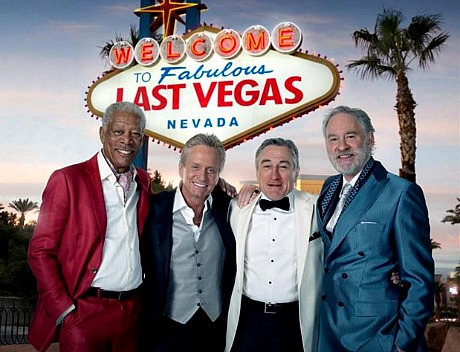
“I think that you can’t start to pick apart anything out of the Bill of Rights without thinking that it’s all going to become undone. If you take one out or change one law, then why wouldn’t they take all your rights away from you?” — Bruce Willis speaking to an Associated Press reporter about…what’s he talking about? Because banning assault rifles and high-capacity magazines and instituting tougher background checks in no way weakens or even faintly challenges the Second Amendment.
Moderately Funny
Say you’re Seth Rogen or Paul Rudd and you’ve been invited by a Samsung exec to come to Century City to talk about an endorsement deal. And once you sit down the Samsung guy says “pitch me something”? I’d pitch him something, sure. I’d stand up and pitch a nice clean stream of warm yellow liquid onto his conference-room rug before, you know, politely excusing myself.
Draw Your Own Conclusions
I’m posting this without comment, but this morning Buzzfeed’s Adam B. Vary posted “The Complete Annotated Oscar Nominees Class Photo,” which provided some commentary about some of the Oscar nominees who posed for a big wide group shot on Monday, 2.4, following the Oscar nominees luncheon. Vary was either there or he had a source who was. In any event he reports the following:
“Getting all the nominees onto the risers [i.e., six bleacher-seating amphitheatre platforms] was a long, long process. One by one their names were called out, and the room applauded as they came forward, shook Academy President Hawk Koch‘s hand, and took their places. The risers were loaded in roughly from the top to the bottom, meaning those placed on the top had to stand in place for around a half-hour while the full class assembled.
“There was one man who did not have to stand in place, however: The penultimate name called was that of Lincoln producer and director Steven Spielberg, the closest thing Hollywood has to a godfather these days, who gamely rose from the comfort of his table and was squeezed in on the end of the second row.
“A big theme of this Oscar season, which of late has been dominated by the Argo comeback, is how director Ben Affleck has come across as modest, self-effacing, and gracious, compared with Spielberg, access to whom is strictly controlled and whose operation smacks to some of high-handedness. In the case of the Oscar class photo, it should be noted that Affleck, in comparison to Spielberg’s last minute walk-on, was one of the very first called and stood in position the entire half-hour at the top of the bleachers, smiling happily.”
‘Nuff said?
Grim February
There are only three February releases that I’ve seen and am certain are worth the price of admission. They are (a) Steven Soderbergh‘s Side Effects (Open Road, 2.8), which I’ve been too distracted to run a review of thus far); (b) Abbas Kiarostami‘s Like Someone In Love (IFCFilms, 2.15), which I praised last May in Cannes; and (c) Pablo Larrain‘s No (Sony Classics, 2.15), which I also went apeshit over in Cannes and would win the Best Foreign Language Feature Oscar if it wasn’t for Amour.
A Good Die To Day Hard (20th Century Fox, 2.13) looks to me and everyone else on the planet like another slick empty corporate-crap franchise action flick. I wasn’t able to catch last night’s all-media screening of Identity Thief — apologies. I’ve been marginally impressed by the trailer for Scott Stewart’s Dark Skies (Weinstein Co., 2.22) so here’s hoping.
So maybe there are five or six films worth a tumble before March comes along. But only three for sure. That’s February for you — always a sucky month.
Late Monday Night

Before Midnight costar and cowriter Julie Delpy at last night’s after-party for A Glimpse Inside The Mind of Charles Swan III. In my Sundance 2013 review I said that Before Midnight, directed and cowritten by Richard Linklater, is “not only the finest film of the 2013 Sundance Film Festival, but the crowning achievement of one of the richest and most ambitious filmed trilogies ever made….an all-but-guaranteed contender for writing and acting awards a year from now.”
Tearjerker
Alejandro Gonzalez Inarritu‘s “Best Job” commercial has been up since December, and I only just watched it today. AGI won a DGA award for the Procter and Gamble spot three nights ago. Parents supporting kids, Olympic victories, emotion pours out. I had heard it gets you and so I watched it skeptically. It does.
Time Tunnel
I sincerely apologize for posting a YouTube song with loathsome ’60s graphics, but I haven’t listened to the 16-minute version of the Chambers Brothers‘ “Love, Peace and Happiness” for centuries, but I just did and Brian Keenan‘s drumming is really amazing, especially starting at the 7-minute mark and especially if you listen with headphones with the volume way up. I like the primitive analog quality. It sounds so ancient it’s cool. I have an idea that Barack Obama has danced to this track alone in the Oval Office.
Dingleberry Doo-Dabs
Last night I attended the L.A. premiere of Roman Coppola‘s A Glimpse Inside The Mind of Charles Swan III (A24, limited on 2.8, VOD everywhere). I wish I could say it’s more than a mild little me-and-my-jaded-fantasies riff, but it really isn’t. I’d like to say it’s a half-decent tribute to the lore of Federico Fellini‘s 8 1/2, but I’m afraid of what Fellini’s ghost might do to me. I’d like to…I don’t know what I’d like. I don’t know anything. I’m lost.
Swan is an episodic diddly-doodle and a cherry-chocolate dingleberry, and I really don’t understand why Coppola made it to begin with. He has a lot of industry pallies and he definitely knows how to shoot and design but…why?
Design is clearly where Coppola’s passion lies. At times Swan is a slick-looking dessert film in a sort of retro glossy-Hollywood way. The bulk of it is jizz-whiz, but let’s at least acknowledge that the extended crane shot used for the finale — a fourth-wall breaker on the beach — is very smoothly composed. I honestly said to myself, “Hey, that wasn’t half bad…if only the rest of the film had the same pizazz.”
On the other hand Coppola has gone on record as saying he loves gold-toe socks, and that should tell you that something in the mechanism isn’t quite right.
Paul Mazursky‘s Alex in Wonderland (’70) was also inspired by 8 1/2. It was regarded as a failure when it opened, but Mazursky’s film is a stone masterpiece compared to A Gimpse Inside The Mind of Charles Swan III.
Swan gives you a feeling that Coppola and his friends probably had fun making it. But it’s basically a stiff and a wank, and all Coppola has accomplished in slapping it together is to inform the industry that he’s a gifted production designer who lacks the discipline and the drive to make a film (in either a narrative or impressionistic vein) that adds up to anything solid, and that he isn’t good enough to make another 8 and 1/2 so….why?
Set in either mid ’70s Los Angeles or a dream-realm version of same, Swan is about a smug, financially flush, poon-obsessed party hound (Charlie Sheen) who’s a successful designer and…you’re bored already, right? I wanted to duck this libertine smoothie from the get-go, and I didn’t give two shits about his being morose about having lost his girlfriend (Kathryn Winnick). If Sheen had been shot or stabbed to death halfway through I wouldn’t have blinked. In fact, I’m almost sorry this didn’t happen because if it had Swan would at least be a meditation about death and the after-realm.
I don’t want to open up a can of death beans, but Sheen playing a character based on his own private madness of sex-and-drugs-and-indulgence is ludicrous. I didn’t care for his alter-ego at all, and I don’t think Coppola does either.
The movie is about Swan wandering around inside his head, indulging in this and that memory or fantasy and sniffing some blah-dee-blah asswind.
“If you’ve ever been through a bad break-up, all you want to do is think about it and process,” Coppola has said about the film. “That’s kind of what the project is. A character study of a guy in this state of mind with Charlie as a very dynamic and imaginative character, so there’s a lot of fantasy sequences and crazy shit.”
The costars include Jason Schwartzman, Bill Murray, Patricia Arquette, Aubrey Plaza, Mary Elizabeth Winstead and Colleen Camp. They’ve all taken themselves down a notch or two.
I thought it was odd that Sheen didn’t even show up for his own premiere last night. He lives here, right?
As long as we’re talking about wank movies that are basically about drinking and sex and heartbreak, I would love to see a dark comedic farce about the day-to-day management of a New York singles bar called Dingleberry’s.
Corncob Pipe
In the view of Hollywood Reporter critic David Rooney, Peter Webber‘s Emperor (Roadside, 3.8) is “an earnest retelling of the deliberation over the fate of Emperor Hirohito following his country’s World War II surrender…honorably intentioned but stodgy, and padded out with a wan romantic subplot that struggles to generate emotional heat.”
All in all, says Rooney, it’s “a didactic compressed epic.”
Pic’s main draw “will be a wily depiction by Tommy Lee Jones of General Douglas MacArthur as a vainglorious tactician who tosses about the title of Supreme Commander with relish. Never one to miss a photo opportunity, his underlying political ambitions give the flinty character an intriguing veiled agenda while maintaining a core fiber of integrity.
“Not so interesting, unfortunately, is Matthew Fox‘s Gen. Fellers, a real-life military intelligence officer and Japanese specialist, saddled for too much of David Klass and Vera Blasi‘s plodding script with the onerous role of exposition bitch.
“The physical trappings often suggest an attempt to muster the old-fashioned sweep of, say, David Lean‘s historical dramas, with ceremonial grace notes that ape classic Japanese cinema. But slathered atop almost every scene, along with Alex Heffe’s solemn orchestral score, is [a] dour voiceover, a film-noirish device that stretches Emperor in one stylistic direction too many.
“With Washington still fuming over the bombing of Pearl Harbor and the people of American-occupied Japan living among death and rubble but fiercely loyal to Hirohito, the question of what to do with the country’s self-professed deity is a delicate one. Mindful of this, while overseeing the restoration of order to the devastated nation, MacArthur assigns Fellers to conduct an urgent investigation into the Emperor’s culpability.”
Mosquitoes in February
That 2.2 Bluray.com review of Criterion’s On The Waterfront Bluray (2.19) doesn’t exaggerate. It’s quite beautiful and detailed and appropriately raw and grainy and Hoboken-ish. I’ve never seen it look so robustly film-like. This movie was never intended to look pretty — it’s supposed to look grim and gritty and anti-Hollywood. This is what the Criterion Bluray looks like, and that’s the right way to go.
This is truly the gold standard, the finest version of this 1954 classic ever prepared for home viewing. If you care about this film, you have to buy it.
And yet — I’m sorry but this has to be said — it’s grainy as hell at times, especially in scenes with lots of natural sunlight and or any kind of brightness, really. (The courtroom testimony scene, for example, looks like a bug shitstorm flew in the window.) For better or worse this is a Criterion trait. You can see it on their Twelve Angry Men Bluray also. They always deliver the grain that comes with the natural constitution of any celluloid image, but they always deliver it big-time, and by that I mean in a fairly pronounced, in-your-face way that makes you more aware of the stuff than ever before.
I’ve seen Waterfront in many formats over many years. I’ve seen it via 35mm celluloid projection in theatres and digital projection in a Sony screening room, the 1.85 version on the iPad3, via numerous TV viewings, that 2001 special-edition DVD. And none of them look as grain-covered as the Criterion Bluray does from time to time.
I realize the completed film delivers all this grain on its own and it hasn’t been “added” by Criterion, but in a sense it has been. It’s an undisputed, incontestable fact that grain always looks more vivid and particular on Bluray, and I think — please don’t hate me for this — Criterion should have tastefully DNR’ed On The Waterfront just a little tiny bit in order to balance things out. They should have tweaked it just enough so that the grain would be suppressed to the extent that it wouldn’t interfere with the enjoyment of the film itself, at least to an extent that Marlon Brando wouldn’t look soulfully into Eva Marie Saint‘s eyes and say, “Edie, I’d like to help but there’s nothin’ I can do, and I mean especially with all these bugs which are drivin’ me nuts…almost as much as that conscience stuff.”
All I know is that now and then I’m watching the film and I’m thinking, “Wow, this is a new version, all right…it’s January or February in Hoboken and cold as a witch’s tit, and every now and then Brando appears to be engulfed by hundreds of billions of digital mosquitoes. Saint and Karl Malden and Lee J. Cobb too, choking on billions and billions of the little buggers.”
And don’t give me any of that “turn your sharpness down” crap. I did turn it down, way down, and the grain is still intense every so often. Not always, not even frequently, but in this and that scene it’s almost oppressive. I felt as if I was swallowing mosquitoes and at times spitting them out. If you want to watch this movie without this feeling of being in an Egyptian mosquito storm, you’ll have get out your old 32″ analog TV and watch the 2001 DVD, which doesn’t deliver grain to any significant extent.
I want to be clear that I’m not complaining about the Criterion Bluray. I’m saying this is as exacting and particular a rendering of Elia Kazan‘s film as you’ll ever see, and most of it is truly wonderful. But you might want to keep a can of bug spray nearby and spray it around the room every so often. You’ll only need it occasionally so it’s not that bad.
Harvey’s Stump Speech
Prior to yesterday afternoon’s Robert De Niro appearance at Santa Monica’s Aero Theatre, Weinstein Co. honcho Harvey Weinstein introduced DeNiro to the packed house. They had just watched a 2 pm screening of Silver Linings Playbook, and just before I began recording Harvey asked how many had just seen David O. Russell‘s film for the first time. About 85% raised their hands. SLP is now expected to top $100 million, but sometimes it takes Joe Popcorn weeks and weeks to wake up and smell the coffee.