What Killed War Horse’s Oscar Hope?

War Horse is far from a dead animal. It may be “on its way to the Oscar glue factory”, as an Oscar wag remarked earlier today. But it’s a solid commercial hit with the middle-American family crowd (almost $56 million after two weeks in theatres) and it’s even possible that it’ll land a Best Picture nomination, and that director Steven Spielberg might pull off a Best Director Oscar nomination, despite his having been excluded from the DGA’s list of Best Director nominees.

But given this morning’s DGA announcement and other recent indicators listed today by Hollywood Reporter columnist Scott Feinberg, the likelihood of its winning the Best Picture Oscar is now almost nil. And the chances of Spielberg being nominated for a Best Director Oscar are clearly diminished, although, as noted, it could still happen.

“I sensed a bit of a bump in the road for War Horse, as reflected in my 1.8 Oscar forecast,” Feinberg wrote today. “Although the film was one of the Producers Guild of America’s 10 nominees, it was also snubbed by the Screen Actors Guild (despite featuring a huge international cast that seemed like a strong option for the best ensemble category), the Writers Guild of America (despite the fact that many of its chief rivals in the adapted screenplay category had been deemed ineligible), and the Art Directors Guild (despite the fact that the film’s production design, coordinated by Oscar winner Rick Carter, is one of its greatest strengths).”

So what were the factors that decisively killed War Horse‘s Oscar chances? Was there a Norbit factor (or two or three) that took it down?

My own oft-repeated view is fact that anyone with a smidgen of taste or perspective knew from the get-go that Spielberg’s film didn’t have the internals that would make it go all the way, and that the only thing it had going for it was the fact that many respectable professionals (including Indiewire columnist Anne Thompson and Fox publicity honcho Bumble Ward) admitted it had made them cry.

I have an odd theory. I could be off-base, but I believe that a particular line of dialogue did a lot to stop War Horse. That’s right — one line.

It was spoken during the no-man’s-land, barbed-wire scene when the British and the German soldier are cutting through the wire that has totally entangled Joey. And they start talking about this and that, and the British soldier says (I’m paraphrasing from memory), “You know, here we are…soldiers from opposing sides, standing in a muddy no-man’s-land at night and helping this poor beast get free of the wire. Heh…you know something? I think we should give him a name. But what could we reasonably call him, given that he’s a horse and we’re in the middle of a war? Wait…I know! I think we could call him ‘war horse.’ It kinda fits, you know?”

I was already slumping in my seat when that scene began. But after the British soldier said it I muttered to myself, “Holey moley! All right, that’s it…no way this thing wins the Best Picture Oscar. In fact, it may not even be nominated.”

I was going to call this article “Joey Goes Down,” but I didn’t want to sound smug or snide.

Refrain

12 days after Huffington Post contributor Robert Reich suggested an Obama-Clinton ticket with Joe Biden taking over as Secretary of State. N.Y. Times editor-contributor Bill Keller has advocated the same.

“It’s time to take it seriously,” Keller writes.

“I know the arguments against this scenario, and we’ll get to those. But the arguments in favor are as simple as one-two-three. One: it does more to guarantee Obama’s re-election than anything else the Democrats can do. Two: it improves the chances that, come next January, he will not be a lame duck with a gridlocked Congress but a rejuvenated president with a mandate and a Congress that may be a little less forbidding. Three: it makes Hillary the party’s heir apparent in 2016. If she sits out politics for the next four years, other Democrats (yes, Governor Cuomo, we see your hand up) will fill the void.”

My 12.28 comment stands:”It’s a good idea all around. It makes fundamental sense. It would make the Obama ticket seem like a greater sum of its parts than if Biden ran again as vp. Obama needs to upspin things in his favor as much as possible if he’s going to squeak through to victory. Even against empty-haircut Romney.”

Listen To This Guy

Rotten TomatoesMatt Atchity sounds right on the money to me about the big award contenders, and in particular about The Artist. He kinda thinks it’s fading, or starting to fade, and his Best Picture money is on The Descendants. The basic idea that Gold Derby‘s Tom O’Neil was looking to explore was whether or not Rotten Tomatoes’ critics scores help to predict winners.

The only regrettable thing about this video is that it’s out of focus. What the eff, Tom?

DGA Stamps Spielberg’s Ticket

War Horse is all but finished as a Best Picture contender. This was confirmed this morning, I believe, when the Directors Guild of America stood up like persons of principle and backbone and declined to nominate Steven Spielberg for Best Director. That’s it, game over, throw in the towel.

“The biggest snub on today’s list has to be Steven Spielberg who was overlooked for Dreamworks’ War Horse, an expected Oscar power player that may be slipping back in the pack a bit during the crucial stretch run,” Deadline‘s Pete Hammond wrote a few minutes ago. “Spielberg’s ommission is a crushing blow.”

At the same time there’s something seriously corroded and rotten in the minds of DGA members when they decide to nominate The Artist‘s Michel Hazanavicius for delivering an emotionally simplistic and second-hand silver bauble, and at the same time deny a Best Director nomination to Moneyball‘s Bennett Miller and The Tree of Life‘s Terrence Malick. Ludicrous!

I don’t know about the DGA eligibility rules, but in any kind of fair and just universe A Separation‘s Asghar Farhadi would easily warrant a nomination…easily!

The nominees are Midnight in Paris‘s Woody Allen, The Girl With The Dragon Tattoo‘s David Fincher, Hazanavicius, The DescendantsAlexander Payne, and Hugo‘s Martin Scorsese (great overspending, Marty!…and good on that 127-minute length!)

I suspect that the Fincher nom is basically an admission of guilt and regret by DGA members for their having given their Best Director award last year to The King’s Speech‘s Tom Hooper instead of to Fincher for The Social Network. They know that was a ludicrous call, and they feel badly about it, and they want Fincher to know that they’re sorry.

The DGA winners will be named at the 64th Annual DGA Awards Dinner on Saturday, 1.28,12, at the Grand Ballroom at Hollywood & Highland.

Novak vs. The Artist

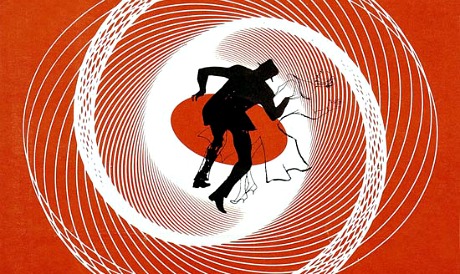
Kim Novak‘s complaint about The Artist having used a long segment of Bernard Herrmann‘s Vertigo score in its final act is understandable, but she’s not saying anything startling. The basic strategy of The Artist is “sampling” elements from the past — primarily the aura of silent black-and-white cinema, and plots from A Star Is Born and Singin’ in the Rain — and re-packaging them. So using Herrmann’s Vertigo score falls right into line.

Mike Fleming‘s Deadline story quotes Novak’s manager Sue Cameron as follows: “[Kim] was sitting in her living room, she put the DVD in, and then went into an absolute state of shock and devastation…she is very, very upset.”

Novak has taken out a trade out that reads, in part, “My body of work has been violated by The Artist. Even though they did given Bernard Herrmann a small credit at the end, I believe this kind of filmmaking trick to be cheating. Shame on them! This kind of ‘borrowing’ could portend a dangerous future for all artists in film. It is morally wrong of people in our industry to use and abuse famous pieces of work to gain attention and applause for other than what the original work was intended.”

I have no argument with Novak, but I’m a bit surprised by two things written by Fleming in his report.

One, he says that “I don’t think I’ve heard a complaint quite like this one before…how many will recognize music from a film released in 1958?” WHAT? If you’re any kind of a genuine Film Catholic, which is what Academy members should ideally be (and what the best of them are), Herrmann’s Vertigo score is one of the most legendary and immediately recognizable film scores of all time — right up there with Max Steiner‘s Gone With The Wind theme and John Williams‘ bum-buhm-buhm-buhm shark them in Jaws. I’ll bet that even casual film dilletantes know Herrmann’s Vertigo score like the back of their hand, and yet Fleming is wondering “how many will recognize [it]”??

And two, Fleming writes that “one looming question is whether Novak has jeopardized her status as a voter, and violated the rules by publicly maligning a movie that is a frontrunner for Best Picture.” Apparently there’s an Academy rule found in Oscars.org that says an Academy member can’t take out an ad that trashes a film in contention for Best Picture. As far as I can discern that rule doesn’t especially or particularly apply if the film being maligned “is a fronturnner for Best Picture.”

Gingrich’s…I Mean, Adelson’s Anti-Romney Attack Ad

A pro-Newt Gingrich but more precisely anti-Mitt Romney attack infomercial called King of Bain: When Mitt Romney Came To Town will be shown to South Carolina voters this week. Producer Barry Bennett has told N.Y. Times reporters Trip Gabriel and Nicholas Confessorre that the Obama campaign “is going to have a heyday with this, and Republicans need to know this story before we nominate [Romney].”

The doc was funded by Sheldon Adelson, “a billionaire casino owner in Las Vegas who has long supported Mr. Gingrich.” The operational engine is a Gingrich-supporting Super PAC called Winning Our Future.

The rap against Romney is that Bain Capital, a private equity firm that he once ran, bought companies and dumped employees and then re-sold them. Bain was co-founded in 1984 by Romney ands two others. “In 1983, Bill Bain offered Romney the chance to head a new venture that would invest in companies and apply Bain’s consulting techniques” — i.e., rape and pillage — “to improve operations,” one account says. Romney led the business from 1984 to 1990 and then 1992 to 1999.”

Capitalism often enforces a harsh Darwinian process. It’s not about the playing of tiddly-winks by choir boys and Boy Scouts with merit badges. Not in the big leagues, it isn’t.

Why are all of Romney’s alleged victims in this clip old and pudgy and rednecky, and mostly female? Remember the toothless woman in the third-act dinner scene in Deliverance, the one who told a story about a cucumber or an ear of corn (or some other kind of vegetable) being “twelve inches long”?

PBR

I can say definitively that Pabst Blue Ribbon is a big favorite among 20something Brooklyn hipsters (my son Jett included) because it’s cheap. You see it everywhere in Williamsburg bars. “PBR, PBR, PBR…” When I first heard the acronym I thought it was a reference to “PBR street gang,” a code term for Martin Sheen‘s watercraft heading upriver in Apocalypse Now.

“Monumental Mouse”

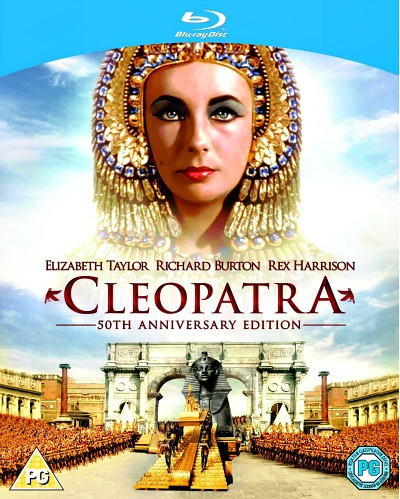
An all-region British Bluray of Joseph L. Mankiewicz‘s tediously talky Cleopatra (’63) will be available in three weeks. The 20th Century Fox release opened in June ’63 so where do they get off calling it a 50th anniversary edition?

I hate to admit it but I’ll be buying this damn thing because it was shot by Leon Shamroy in 70mm Todd-AO and will therefore almost certainly look immaculate on Bluray. I can watch stodgy big-studio films if they were shot by seasoned pros on expensive large-format stock. I have that skill, that knack. I shut my mind off and meditate on the resolution and the tonalities and push the other stuff aside.

Update: It turns out the British version is good for regions A, B and C. The Amazon page says it’s only Region 2.

http://www.amazon.co.uk/Cleopatra-Blu-ray-Elizabeth-Taylor/dp/B005QV2OV6/ref=sr_1_1?s=dvd&ie=UTF8&qid=1326079675&sr=1-1

Here’s my best Cleopatra piece, called “20 Brilliant Seconds.”

What New York critic called Cleopatra a “monumental mouse” in her review? Not Kael.

In Padilha’s Words

After watching and really enjoying Jose Padilha‘s Elite Squad: The Enemy Within last night at the Palm Springs Film Festival, I’m convinced that (a) it should definitely be considered as one of the top Best Foreign Film Oscar nominees because good is good regardless of genre, and (b) Padilha’s U.S.-funded Robocop remake, which he’s now working on in Los Angeles, has an excellent shot at being fantastic.

I don’t have any excuse for ignoring this exceptional socio-political action thriller when it opened in the U.S. last November. No excuse whatsoever. I apologize. It was lazy and wrong.

I also apologize for the murky sound in the two videos posted within this story. I shot them during last night’s post-screening q & a at Palm Springs’ Regal plex. I was sitting only ten feet from Padilha, but the iPhone 4S simply isn’t as sensitive as my Canon Elph, which I left back in West Hollywood.

While Padilha’s Elite Squad (’07) took heat in some quarters for seeming to favor hard-ass paramilitary “skull” assaults against Brazilian “favela” drug gangsters, this superior sequel has the first film’s tough-guy hero Nascimento (Wagner Moura) getting promoted out of the skulls and into Brazil’s wiretap king, which eventually leads to a pitched battle against corrupt cops and sociopathic government slimeballs.

It’s a highly-charged, super-thrilling, ultra-violent ride from stat to finish. It’s mainly about pacing and velocity and less about character, but there’s sufficient enough attention paid to the things that any good action film needs — motivation, personality, one thing leading to another out of necessity, etc.

I’m going to sit down with Padilha in Beverly Hills tomorrow. I’ll run our chat in mp3 and video form.

Lazybones

N.Y. Times reporter Michael Cieply has broken the news that the Academy of Motion Picture Arts and Sciences’ documentary branch members are basically looking to cut down the number of films they’ll have to watch in a given year, and so they’re about to announce a rule that a doc has to be reviewed by The New York Times or The Los Angeles Times to qualify for a Best Feature-Length Doc Oscar.

When the new rule goes into effect the non-theatrical riff-raff can be ignored like Semper Fi and the doc committee guys won’t have to watch as many films. Which indirectly means they’ll have more time to play tennis and eat long brunches and take walks with their wives and/or girlfriends and get to hang with their grandchildren in a more leisurely, open-ended way.

Ric Robertson, the Academy’s chief operating officer, confirmed to Cieply that the new rule “would be made public this week and would apply to films qualifying for the 2013 ceremony.”

“No Lassie…No Roger Rabbit”

Will SAG members understand and perhaps be swayed by James Franco‘s plea for respect and recognition (i.e., a Best Supporting Actor nomination) for Rise of the Planet of the ApesAndy Serkis? Franco’s thoughts appeared earlier this afternoon on Deadline.com, and they’re very well-composed. Franco sounds like an actor talking straight to other actors, explaining the technological facts without any b.s.


Andy Serkis, James Franco in Rise of the Planet of the Apes.

“I, as much as anyone, can get anxious when I think about the future of movies and the possibility of the obsolescence of actors, or at least actors as we know them,” Franco states. “But after making Apes I realize that this is backward thinking.

“Performance Capture is here, like it or not, but it also doesn’t mean that old-fashioned acting will go the way of silent film actors. Performance Capture actually allows actors to work opposite each other in more traditional ways, meaning that the actors get to interact with each other and look into each other’s eyes.

“For years computer technology forced actors to act opposite tennis balls if a movie wanted to have CG creatures, but now the process has come full circle so that actors playing CG creatures can perform in practical sets, just like the ‘human’ actors. In acting school I was taught to work off my co-stars, not to act but react and that was how I would achieve unexpected results, not by planning a performance, but by allowing it to arise from the dynamic between actors.

“On Rise of the Planet of the Apes that’s exactly what I was able to do opposite Andy as Caesar. And Andy got to do the same because every gesture, every facial expression, every sound he made was captured. His performance was captured. Then what the Weta effects team did was to essentially ‘paint’ the look of Caesar over Andy’s performance. This is not animation as much as it’s digital make-up.”