Sweet Sorrow

George Clooney and Elisabetta Canalis have parted ways, most likely because two weeks ago Canalis said in Italy’s Chi magazine that “for the time being I am happy” but “I am a firm believer in marriage” and “in the future I will be married.”

When Canalis said “for the time being” what she really meant was “I’m getting fed up with this shit, if you really want to know” and “the time is fucking nigh.” And one way or another this came out in private discussions with George and that was all she wrote.

Sooner or later all stunningly beautiful, high-maintenance girlfriends going out with rich and famous boyfriends get dumped or take a hike if the marriage thing is pushed off the table. 98% or 99% are looking to seal the deal, sign the contract, lock things down and create some kind of fortified nest. They’re genetically wired to do this in the same way guys like Clooney are wired to be tomcats. Only 1% or 2% are Isadora Duncan types who are cool with just existentially floating along on a come-what-may, live-and-let-live basis.

The legend of Clooney is that his “I’ll never get married” rule has led to a life of total hound-dogging. But he’s only had three serious girlfriends since his ’93 divorce from Talia Balsam — off-and-on with Lisa Snowdon from ’00 to ’05, steady with Sarah Larson from ’07 to ’08 and then Canalis from ’09 until a week or two ago. He’s only 50 so I’m figuring he’s got another five to seven years of catting around…okay, maybe eight or ten. But by the time he’s 60 mortality will be knocking loudly on his door and he’ll eventually relent.

Tougher Oscar Game

It’s generally agreed that the Academy’s new Best Picture tabulation system (i.e., a film must earn at least 5% of the first-place votes to earn a Best Picture nomination) does no favors for those “very good but not quite creme de la creme” contenders that might have landed Best Picture nominations in ’09 and ’10 as one of the “lower five,” so to speak. Movies like A Serious Man or Blue Valentine or The Kids Are All Right or Up In The Air.

TheWrap‘s Steve Pond has now proven the point by measuring the strength of various Best Picture nominees from ’09 and ’10 within the new rules framework. The smaller, less mainstreamy films that might have become one of the bottom-five Best Picture contenders under the “old rules” are now facing a tougher situation. You could even call it a stacked deck. According to Pond, a bit less than 30% of all the 2011 Best Picture nomination ballots won’t even count because their first-choice picks probably won’t result in a 5% tally.

“Using the old system, my 2010 simulation” — using critics votes from Movie City News — “took 11 rounds to produce 10 Best Picture nominees,” Pond writes. “At the end of those 11 rounds, only 10 ballots (six percent of the total) had been discarded, because those critics opted entirely for films that ended up out of the running. The new system, though, uses just one round of counting and redistribution to come up with the nominees. Using that system, a full 43 ballots, representing almost 28 percent of the total vote, ended up having no impact on the slate of nominees.

“Critics who voted for The King’s Speech or The Social Network [in the simulated vote] helped their top choices get nominated. Ones who went for Biutiful or Shutter Island had their ballots redistributed to help out another pick. But the ballots of critics whose top picks were True Grit, Blue Valentine, The Kids Are All Right and 17 other films were left sitting on the table. That’s because they voted for the 21 films that fell into the gap between one and five percent of the vote.

In other words, “Because they voted for films that narrowly missed being nominated, they were unable to influence the outcome the way they would have under the old process, when those films would eventually have been eliminated and the ballots redistributed to help each voter’s other selections.

Pond did the same kind of simulation with MCN’s 2009 critics’ lists “and the results were similar,” he says, “with the number of unused ballots going from well under 10 percent to more than 25 percent.

“Certainly, you can’t draw direct comparisons between tallying 156 critics lists and 5,000 Oscar ballots; the critics, for one thing, are more likely to champion obscure films than Academy members, which might well lead to higher levels of unused ballots. And Davis insisted that Academy figures place their number of unused ballots at less than 10 percent under the new system. But my demonstration makes it clear that stopping after one round will increase the number of Academy voters whose ballots don’t affect the results, and Academy [honcho] Bruce Davis did not dispute that finding.”

Big Deal

Star‘s Dylan Howard is reporting that Brad Ruderman, a junior-league Bernie Madoff now doing time for bilking investors out of $25 million with a ponzi scheme, lost $311,300 to Tobey Maguire in a 2007 high-stakes poker game, including one losing hand of $110,000.

And now Maguire is being sued by lawyers for clients whose funds were embezzled by Ruderman “in the hope of recouping some of their lost savings,” the story says. Others being sued over this same issue include The Notebook director Nick Cassavetes and Welcome Back, Kotter star Gabe Kaplan.

Leonardo DiCaprio, Ben Affleck and Matt Damon have also played in these once-active Texas Hold ’em matches, which had a buy-in of $100,000. This particular game reportedly stopped happening in ’09. DiCaprio, Affleck and Damon are not being sued, Howard reports.

The amusing part of the story is the assertion that private high-roller poker games are “illegal.” Bullshit and beside the point. If a bunch of rich guys want to to get together for a poker game and lose or win money, it’s nobody’s damn business. As Burl Ives‘ Rufus Hennessy says in The Big Country, “They’re full-growed and can take their lickings.” It’s their money and the government has nothing to say about it. Poker games are about balls and honor and character and nerve. If you’re a man and you put up money (ill-gotten or not) and you lose it, tough shit all around.

“Maguire won as much as $1 million a month over a period of three years,” one source told Howard, meaning the Spider-Man star “could have made up to $30 to $40 million from these games.”

Howard passes along an observation from a participant in the games that Damon “never won” and that DiCaprio “is a tight-ass…when he lost $50,000 the look in his eyes was obvious [that] he was crazy.”

One of the reasons I’m a bad poker player is that I can’t tolerate the idea of losing a lot of money. I’ve worked and slaved so hard for it and some guy with a better hand is going to just take it from me? Yes, jerkwad — he can do that because those are the rules. But when I lose a big hand I quietly freak out and burn through so much internal anger that I can’t think straight. I’m not the only one, and some are worse than me. I’ve heard of guys who’ve ripped their cards into shreds when they lose. I’ve heard of guys who get up from the table when they lose and go into the kitchen and punch the refrigerator so hard that they leave a dent.

Three…No, Four Things

It seems almost shocking that this film came out 28 years ago. I’m extremely sorry that so few director-writers these days (including the present-day incarnation of James L. Brooks) seem to know much about mixing refinement, uptightness and understated bawdyness to just the right degree. The look in Jack Nicholson‘s eyes when he says “a lot of drinks” is pure elation. Indiewire columnist Anne Thompson was the unit publicist on this film.

Dilly-Dally

What’s the point of using your right hand to cover a portion of a breast when your left arm is covering it anyway? What’s the point of being so prim and chaste that you feel a need to cover a portion of a breast when the basic allure of the ad is about your being nude in the first place? If you’re going to pose for that kind of photograph, get down and do that thing and don’t be such a prude about it. That’s all I’m saying.

I’m actually also bothered by the shiny, air-brushed, mannequin-smooth sheen of Ms. Aniston’s face. Was the intention to make her look as unnatural and inorganic as possible in order to serve some perverse aesthetic in which the faker you look the hotter you are?

Ponderous Detachment

I couldn’t get into James Franco‘s The Broken Tower last night, but according to Indiewire‘s Eric Kohn I didn’t miss a masterpiece. Franco’s study of the life of poet Hart Crane, which Franco stars in and directs, is “shot in a scrappy, handheld style nimbly lifted from early Godard, [and is] meant to represent Crane’s creative process. [It’s] predominantly a cerebral exercise in experimental analysis, but it feels stationary, repeating the same motifs and attitudes ad infinitum until the credits finally roll.

“Notwithstanding cameos from Franco friends and colleagues, including Michael Shannon in the fleeting role of a sailor, the movie has the qualities of an unfinished thesis project, more document of discovery than cinematic achievement. Regardless of what Franco thinks, it’s not slowness that holds it down, but rather its overly ponderous nature, a trait only truly appealing to those with the same existing appreciation for Crane that Franco has.

“The movie lingers in his frustrations — with unemployment, Crane’s homosexuality, his disputes with publishers — in a style dominated by ongoing detachment. Of course, that’s the same critique many pundits leveled at Franco for his notorious Academy Awards performance. Franco tends to look perpetually distracted, which is a reasonable state for somebody overloaded with Hollywood and non-Hollywood gigs alike, not to mention doctoral research at Yale.”

Altitude


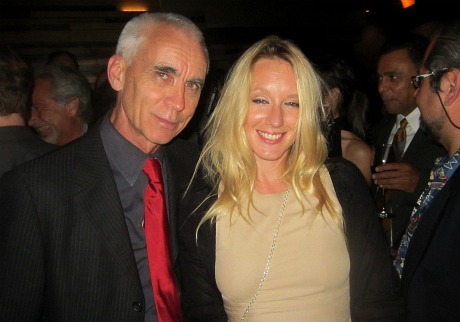
The Devil’s Double director Lee Tamahori, costar Ludivine Sagnier (who also stars in Love Crime, another LAFF attraction) during last night’s after-party at WP24.

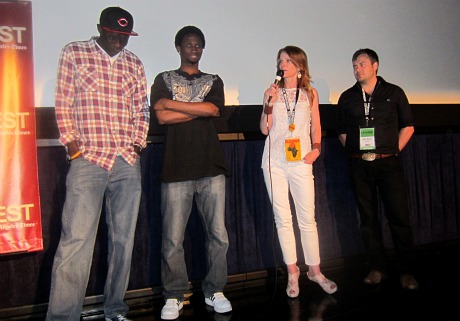
Elevate director Anne Buford (second from right) during last night’s q & a at LA LIVE Regal. Two of the Senegalese basetball players (i.e., the focus of Buford’s doc) attended. The guy standing closest to Buford is named Byago, and the guy to his right is named Dethie. (I think.) I feel as if I got to know the basketball players pretty well through Buford’s film, and they’re all good fellows with serious innards. The film also made me want to visit Senegal someday.

Several pretty-girl twins and celebrity lookalikes were hired to attend last night’s Devi’s Double party. “Jack Nicholson” and “Bono” attended alongside “Sarah Palin.”

Devil Downtown

Lee Tamahori‘s The Devil’s Double (Lionsgate, 7.29) is an absorbing, professionally made, (mostly) true story by way of a visit to a Middle Eastern nouveau riche insane asylum. In his first lead role, Dominic Cooper portrays the homicidal and demonic Uday Hussein as well as his double, Latif Yahia. The film uses Yahia’s story (which is partly fictionalized) to create a portrait of evil and cruelty and madness extremis.

It played last night at the LA Film Festival. I saw it at Sundance ’11 and found it generally engrossing as far as it went. But any story about the malicious Uday — surely one of the most fiendish human beings to walk the earth — is going to create a longing to see him “get his” at the end. And he doesn’t. He just gets shot a few times in the groin area (which actually happened in 1996) but survives to murder and torture another day until finally getting killed by U.S. troops in 2003.

So The Devil’s Double doesn’t end well. There’s no sense of justice or completion.

At the Devil’s Double after-party Tamahori told me he wrote and wanted to film a finale depicting the deaths of Uday (and his somewhat saner brother Qusay) at the hands of Task Force 20 and the United States Army 101st Airborne Division on 7.22.03. But his producer said they couldn’t afford to shoot this scene and that was that. Too bad.

There’s also a weird turn involving Ludivine Sagnier‘s character, Sarab, who is the #1 Untouchable girlfriend of Uday who eventually bestows affections on Yahia. I won’t describe it but she does something in Act 3 that I found a bit quizzical and confusing.

Uday’s Wiki bio reports that Yahia “attended the same school as Uday when they were children (approximately age 12 onwards) and it is alleged that he was forcibly recruited and groomed as Uday’s double around the same time.” The film shows Yahia being forcibly recruited when both men are in their 20s. “It is also claimed that, as he grew older, Yahia underwent extensive plastic surgery to enhance his resemblance to Uday.” This also is shown in the film.

Cooper is really quite good in his dual role. He gets the panic and the ferocity and the obstinacy in both characters. But I suspect that Tamahori’s film isn’t going to be well-reviewed enough to launch Cooper as a contender for year-end acting awards

Vitali Responds

In response to this morning’s Glenn Kenny/Some Came Running article containing a 12.8.75 letter from Stanley Kubrick to projectionists which specified that Barry Lyndon was shot in 1.66 and should be projected this way, former Kubrick assistant and keeper of the Kubrick flame Leon Vitali has sent me a long and detailed reply:

“Thanks for this,” Vitali begins. “Hopefully (though I’m sure, probably not) I can explain fully the situation as to the origin of the confusion. I can also tell you what Stanley explained to me and under what circumstances. I will try to make everything as clear as possible so excuse what may seem like a perfunctory layout in my response.

“(1) When we were shooting Barry Lyndon, Stanley saw that I was not only working hard as an actor, but saw that I was interestedin the technical process too. He invited me to be on the set even when I wasn’t called as an actor for shooting. An ‘invite’ was not a common occurrence from this particular filmmaker.

“(2) He told me how he was inspired for some set-ups by pictures painted or drawn during the 18th century, particularly Hogarth‘s work.

“(3) He also explained to me that even though I probably wouldn’t be aware of how to frame a picture, he said he thought that as an actor, I would only be interested in being in the picture, never mind how they were ‘framed’.

“(4) He introduced me into the world of aspect ratios and what they meant; not only that but how important they were to him as a part, not everything but an important part nonetheless, of how they help in an overall impression of what appeared in the screen.

“(6) He took me into his caravan and showed me how aspect ratios were worked out and, Stanley being Stanley, gave me a potted history of various developments in the history of picture making to illustrate his view.

“(7) I asked him what aspect ratio he was shooting Barry Lyndon in and he told me that he was shooting it in 1:1.77 and on my asking why told me that if I looked at a lot of Hogarth’s pictures, they had a ‘sort of boxy look‘ about them.” [Wells interjection #1: This makes absolutely no sense given Kubrick’s declaration in the letter that Lyndon was shot in 1.66 to 1 and the obvious fact that 1.66 to 1 is boxier than 1.77 to 1. Wells interjection #2: 1.77 to 1 aperture plates never existed in Europe, according to film restorer and preservationist Robert Harris. They used 1.66, 1.75 and 1.85.]

“For my continued part of this story, skip forward to 1977.

“(8) I was living in Stockholm and still in touch with Stanley.

“(9) Barry Lyndon was about to be released there along with other parts of Europe a year late because of a producers’ strike regarding profit-sharing in their projects.

“(10) He asked me to go to the cinema there where the film was opening to check the print and because I knew little about everything involved in what a ‘perfect print’ should look like, Stanley told me to write everything down that I thought MIGHT look wrong to me.

“(11) I did, and one of the problems I reported was that the top of the wide shots of ‘Castle Hackton’ — the portrayed ancestral home of Lady Lyndon — were cut off, some not so much but some seriously.

“(12) Stanley said to me ‘That means they’re not thinking of screening it at 1.77 — you know what I’m talking about, Leon?’.

“(13) He also said it had been a problem almost everywhere the picture had been shown.

“(14) I went back to the theatre after having spoken to the very obliging people at Warners and we tried to see what could be done. They even had the screen taken down and then re-hung along with re-racking the picture from the projector in an attempt to rectify the problem.

“(15) In the end, Stanley sent his editor, Ray Lovejoy, over to view the print and deal with the problem; Stanley only telling me that in the end, Ray had changed out some reels and on going back on the opening night, I saw that whatever he’d done had worked.

“(16) Skip forward again to when I was a permanent assistant to Stanley and I was dealing with the labs.

“(17) Whenever we were dealing with Barry Lyndon and I was projecting it for him, the first question out of his mouth was ‘Did you put the 1.77 aperture plate in, Leon?’ Like much else we did, it became a bit of a mantra.

“(18) Whatever work we were doing with Barry Lyndon, he always, always talked of it’s correct aperture as being 1:1.77. He never mentioned any other aperture to me ever when we worked with the title and that includes all other formats.

“(19) With all due respect to the doubters, many of them ‘doubters’ because they do actually care, I know, when one has heard for three decades that resonant Bronx accent saying 1:1.77 in relation to Barry Lyndon one doesn’t forget it, nor the circumstances surrounding the words. [Wells interjection #3: Then why did Vitali sign off on 1.66 to 1 versions of Barry Lyndon in 2001 and 2006 DVD releases if he was so slavish and exacting in wanting the true aspect ratio to be seen?]

“(20) Now THE LETTER which I have received and possibly from Stanley. I can say with 99.9% certainty that it is genuine.

“(21) He often enclosed a letter like this on first release in key cities everywhere not only with this film (I wasn’t with Stanley when Barry Lyndon was shipped out, but I was there for the whole shipping operation for Full Metal Jacket, in fact, I supervised most of it personally and physically) in an attempt to have the film seen universally in the way he in tended it when he was shooting.

“(22) What has to be realised is this: 1:1.77 was not your common-or-garden aspect ratio. It may have been that some cinemas were unable or unwilling to have a special 1:1.77 aspect ratio’ plate made or even look for one.

“(23) Being a pragmatist at heart, Stanley would have had a ‘Plan B’ which would have been, I paraphrase here, ‘If you can’t show it in 1.77, show it in 1.66’ (a more common format anyway), ‘… but no wider than 1.75’.” [Wells interjection #4: Then why didn’t Kubrick say that 1.66 was a Plan B option in the letter? He plainly said that 1.66 was preferred and that 1.75 would be a tolerable Plan B.]

“(24) [This Plan B option/approach] would have been to avoid, at all costs, showing it theatrically in 1:1.85, an aspect ratio that does not suit this picture anymore than it suits Clockwork Orange which many theatres these days can only show it in as they no longer have the choice of screening even in 1:1.66. I know this because like The Battle of Barry Lyndon, I have fought The Battle of Clockwork Orange and The Battle of Dr. Strangelove over the years too — both when Stanley was alive and since. And I can add that even when forced to shoot in 1:1.85, Stanley loathed the format because it wastes so much useable screen area.

“I’m sorry for the length of the explanation. I have tried to be succinct but as with everything concerning Stanley, nothing is ever that simple to explain.

“I suppose that whenever I have been asked the question, as recently during the New York and LA press junkets for the release of the 40th Anniversary

Bluray of A Clockwork Orange, I SHOULD HAVE SAID that Stanley COMPOSED his pictures for Barry Lyndon in the Aspect Ratio of 1:1.77 and WANTED it screened that way’. [Wells interjection #5: Again — why, then, did Kubrick not say this in the letter?]

“Maybe that would have taken some of the controversy out of it. So my abject apologies if I have inadvertently contributed to the controversy.

“But I would urge everybody to look at the film, relax into its atmosphere, watch the outstanding performance by Ryan O’Neal (who was in almost every single scene and with whom Stanley was ‘well pleased’) along with the cream of the English acting profession, many of whom were all idols of mine at the time — Andre Morel, Marie Keen, Murray Melvin as the Reverend Runt, Frank Middlemass as Sir Charles Lyndon, Stephen Berkoff as the effeminate Lord Ludd and many other actors who in the final cut had very little of their performances left and then realized that it is probably the most wonderfully accurate portrayal of 18th century England, its mores and it’s social structure (and how not to succeed in social climbing) they’ve ever seen on the film screen.

“Very best to all fans of Stanley’s work — Leon.”

I Confess

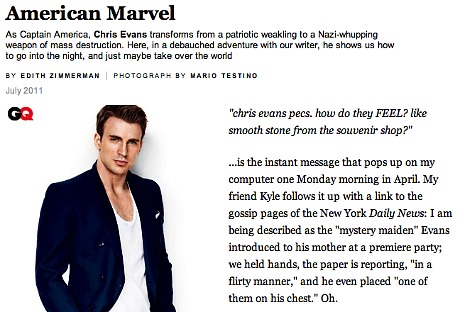
The Manhattan-based Edith Zimmerman has written a rash and brash but nicely phrased profile of Captain America star Chris Evans in the July GQ (“American Marvel“). It’s actually more of a first-person, the-dog-ate-my-notes, this-is-how-I-kind-of-screwed-things-up confession piece, which is what I like about it. It’s kind of a Hunter S. Thompson approach to a 21st Century celebrity profile from a tradition-defying, Bridesmaids-influenced, hang-it-all journalist who isn’t much for kissing celebrity ass.


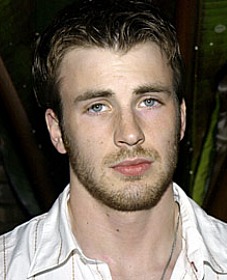
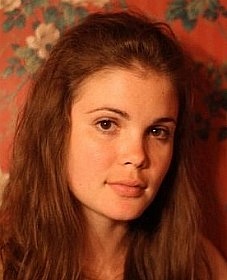
(l.) Chris Evans; (r.) Edith Zimmerman.

Or…no, wait. She is into “celebrity ass”, so to speak, when she’s doing the interview and hanging out and drinking (and God knows what else), but then she goes back to her place and writes the piece and it’s not really about the subject, which is what all ass-kissing profiles are necessarily focused on, right?

In writing the article this way Zimmerman has mainly portrayed herself and her issues (which may or may not involve wine-sipping, but definitely include a comme ci comme ca “what, me worry?” professional demeanor), and has revealed that she’s only slightly interested in Evans. But you learn enough about him, and about her, and you end up wondering if anything might have…uhm, occured between them because a lot of boozing happened and she wound up crashing at his place and then hitching a ride home.

What the article is really saying is that Zimerman thinks Evans is a little bit boring. She finds him hunky and hot and all that, but in the final analysis she can’t rouse herself to seriously inspect and consider every last detail about the guy because he’s just a dude from Boston who grew into a good-looking egotist. On top of which she finds her own longings and vulnerabilities to be at least as intriguing as Evans, if not more so.

Zimerman has the same nervy and irreverent blood, I suspect, that runs through Diablo Cody and Kristen Wiig and other cool ladies of the moment.

Paramount wil release Captain America: The First Avenger , a Marvel property, on 7.22. Evans will also costar in The Avengers, which will come open in May 2012.

I wrote the following to Zimmerman a couple of hours ago:

“I’m Jeffrey Wells. I write www.hollywood-elsewhere.com on daily/hourly basis. And I’ve just read the Chris Evans GQ piece. I thought, all in all, that the excellent writing balanced out what some might characterize as the drunken, undignified, un-reporter-like behavior.

“Or, put another way, that the drunken, undignified, un-reporter-like behavior acquired a certain confessional splendor — a go-for-broke, fuck-it-all Hunter S. Thompson quality — via the honesty and resultant vulnerability, and the quality of the writing.

“I think what you wrote was well-sculpted and brave, as you had to know you would draw a certain amount of flak for what traditional-minded journos would no doubt describe as an un-professional approach to a celebrity interview, blah blah.”

Case Closed

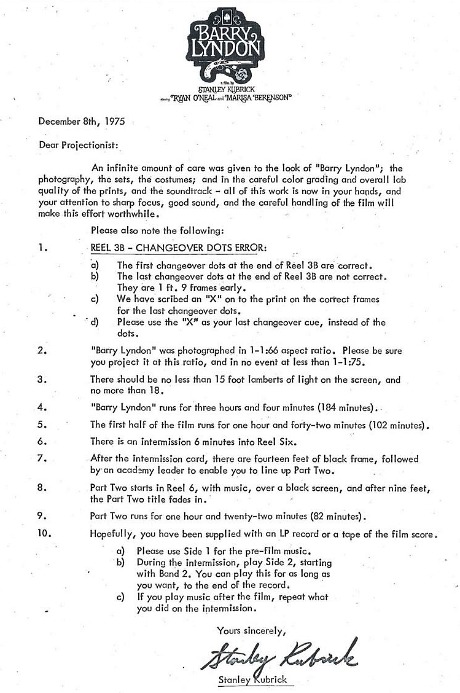
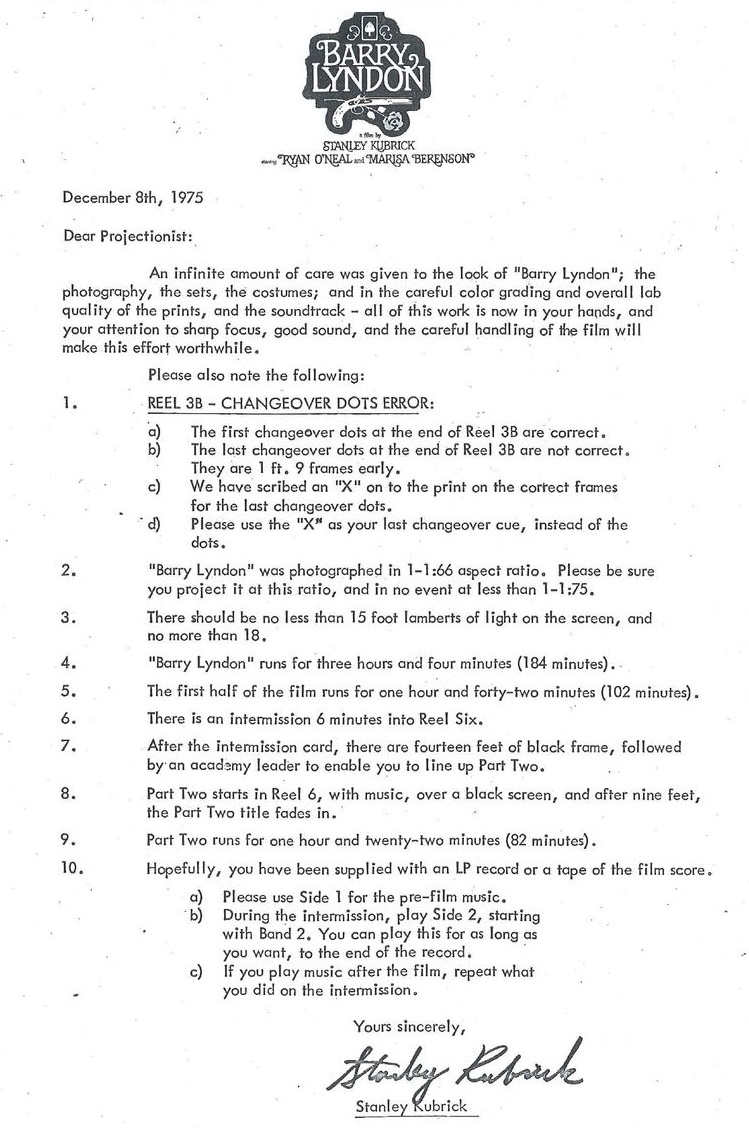
Some Came Running‘s Glenn Kenny has published a copy of a 12.8.75 letter written by Stanley Kubrick and sent to projectionists that states unequivocally that Barry Lyndon was shot at 1.66 and that it should be projected at this aspect ratio, “and in no event at less than 1.75 to 1.”

This is the irrefutable, concrete, smoking-gun proof (which was supplied to Kenny by screenwriter and former Time critic Jay Cocks) that I’ve been right all along about this aspect-ratio brouhaha, and that Leon Vitali, former assistant to Kubrick who infamously declared at a New York press conference last month that the intended aspect ratio of Barry Lyndon was 1.77 to 1, and whose commitment to this piece of revisionist history led to Warner Home Video’s Barry Lyndon Bluray being presented at 1.78 to 1, is dead wrong.

Yes, Kubrick states in the letter than he was willing to tolerate Lyndon being shown at a 1.75 to 1 aspect ratio. It is this allowance, apparently, that Vitali and Warner Home Video seized upon to justify their 1.78 to 1 aspect ratio determination. And yet — let’s try to not misunderstand — Kubrick says in clear and unmistakable terms in the letter that Lyndon was shot in 1.66 and should be projected at that aspect ratio — period, end of story and shut up.

Vitali and Warner Home Video were willfully wrong in their insistence upon presenting the Lyndon Bluray at 1.78 to 1, and now is the time for Vitali and Warner Home Video’s Ned Price to stand up, man up, come clean, admit their mistake and pledge to re-issue a Barry Lyndon Bluray at the correct aspect ratio.

If I were Vitali, I would grab a fishing hat and a fake beard and hide out in the desert for a good two or three weeks until this matter blows over or at least settles down. For he has now been proven to have endorsed misinformation that has slightly distorted and diminished the presentation of a classic film.

12:05 pm Update: I’ve just spoken to Vitali at the Standard Film Company, where he works in some co-managing or partnering capacity with director-writer Todd Field. I asked for an email address, and sent him the URL of Kenny’s article, and asked for a reply after he’s had time to digest it.

I wrote the following to Kenny this morning: “EUREKA! What a SCORE!! Congrats to you, and thanks ever-so-much to Jay Cocks.

“I’m nonethless mystied by the response from a Warner Home Video rep, which you quote in your short piece about the letter: “We stand firmly that we are 100% in compliance with Mr. Kubrick’s wishes” and that ‘the letter from Kubrick to projectionists was the reference for our 1.78 aspect ratio call.”

How does Kubrick specifying 1.66 to 1 and allowing that he will tolerate a 1.75 to 1 presentation become a “reference” for Warner Home Video’s 1.78 aspect ratio call? By what kind of strange, Orwellian, logic-bending process did the WHV rep compose this sentence?