Marquee Leftovers


I’ve never seen The Possession of Joel Delaney. Has anyone? The DVD came out two years ago. Did anyone see it in 1972? It’s amazing to think that it played a major house like the Criterion back then, and nobody has even heard of it today.

Rear of the Rivoli theatre (Seventh Ave. adjacent) where the abysmal Jaws 3D played in 1983.

42nd Street in the mid ’60s. I remember the Dixie Hotel. It was a hole. I stepped inside it once as a young lad, and the smell still haunts my nostrils.

Brooks’ Softball Flick

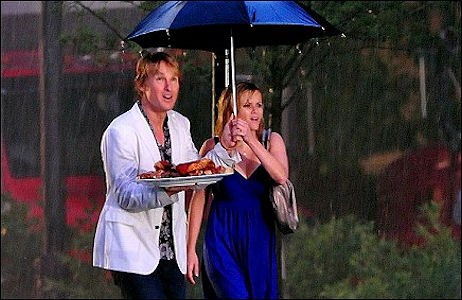
36 hours ago N.Y. Times reporter Michael Cieply posted a what’s-up-with-this? article about James L. BrooksHow Do You Know (Columbia, 12.17), a relationship dramedy about a softball player (Reese Witherspoon) involved in a kind-of love triangle with a nice business guy named George (Paul Rudd) and a professional baseball player named Manny (Owen Wilson). Jack Nicholson plays Charles, George’s father.
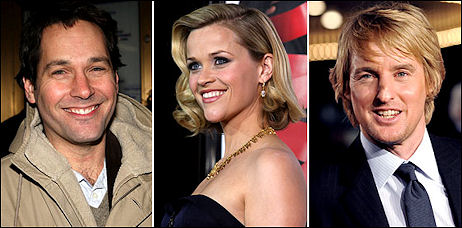

Triptych stolen from New York‘s “Vulture” site.

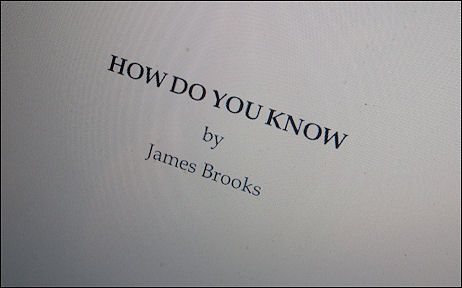
It’s a little weird for a film to have a title that’s a question (like Quo Vadis?) but spelled without a question mark. Cieply leaves off the question mark, and so does a draft of Brooks’ script that I’ve had on on my desktop since last August. Remember Tom Hanks “there’s no crying in baseball!” line in A League of Their Own? Well, you can’t leave off question marks at the end of a question, movie title or not…kapeesh?

No, I haven’t read the script. Okay, I’ve read 35 pages or so. I didn’t finish out of concern that reading Brooks’ well-honed dialogue might ruin my enjoyment of the finished film. But I can share one thing — Wilson’s Manny has clearly been conceived on the page as a superficially likable but chauvinistic ego-jock in the Tiger Woods vein.

How Do You Know started…five years ago, when Mr. Brooks…became fixed on the notion of making a film about a young female athlete,” Cieply writes. “Not untypically, he spent hundreds of hours interviewing women who excelled in various sports before settling on softball as good cinematic turf, according to people who worked on How Do You Know and spoke on condition of anonymity to avoid conflict with studio executives and others.

“The plot is rooted in an encounter between two people who meet on the worst night of their respective lives.

“Early on, Mr. Brooks became convinced that only Ms. Witherspoon could play his lead character, Lisa Jorgenson, who, at 27, is just past her sporting prime. Fortunately Ms. Witherspoon shared his conviction: she spent a year doing three-hour daily workouts to prepare for the role.

“Along the way Mr. Brooks became fascinated by the dilemmas of contemporary business executives, who are sometimes held accountable by the law for corporate behavior of which they may not even be aware. This brought new research into the lives of people who run companies, work for the Justice Department, or, in at least one case, have spent time in jail.

“From that slowly cooked stew came two new characters, one of whom is now played by Mr. Rudd, the other by Jack Nicholson — a Brooks regular who took the role only after Bill Murray, the first choice, declined.

“To complicate Lisa’s love life, Mr. Brooks created a professional baseball pitcher, now played by Mr. Wilson.

“Mr. Brooks, famously private, disclosed little about the project, which was widely described in news reports as a romantic comedy set in the world of baseball. But the sport only occasionally figures in a film that is actually about people trying to figure out exactly what, for each of them, matters most.

“Mr. Brooks began shooting last summer in Washington and Philadelphia with a team of producers that includes Julie Ansell, who is the president for motion pictures of his Gracie Films; Laurence Mark, who was recently a producer of Julie & Julia and worked with him on As Good as It Gets and other movies; and Paula Weinstein, a film veteran whose credits include Blood Diamond.”

Curious Move

I don’t know what owesies or side favors are involved, but the Weinstein Co. has just picked up U.S. rights to John WellsThe Company Men, a corporate downsizing drama that was generally seen as a dud at Sundance 2010. (Here’s my 1.23.10 review.) It’s not a “bad” or poorly made film per se, but, as I said two months ago, “this drama of layoffs and despondency affecting three Boston-area white-collar guys (Ben Affleck, Tommy Lee Jones, Chris Cooper) plays like an intelligent funeral in a nicely furnished minimum-security prison.”

In All Fairness

In this recently-shot clip, George Bush is shown wiping his hand on the fabric of Bill Clinton‘s right sleeve after shaking the hand of a boogie blackamoor Haitian native. It’s possible — let’s be extra fair — that the guy’s palm may have been sticky or sweaty. You can see Bush’s hand reacting right away to something. But talk about the appearance of being busted. This seems to reveal in a nutshell why Bush didn’t try harder with Katrina relief.

Cameron vs. Beck? Please…Yes!

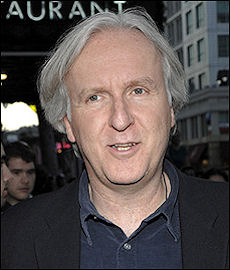
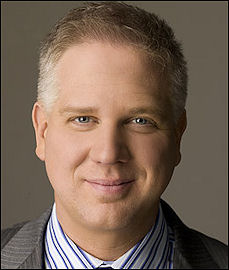
During an Avatar home-video press session yesterday James Cameron called Glenn Beck “a fucking asshole” and “a madman,” and threw down a challenge to debate the Fox News agitator about global warming and Beck’s “poisonous ideas” in general.


James Cameron, Glenn Beck

Referring to Beck and his regressive brethren, “I want to call those deniers out into the street at high noon and shoot it out with those boneheads.”

Wells to Beck: Be a man and please do this! I’m getting wet just thinking about it. I would pay $20 to see Cameron vs. Beck — seriously.

Beck is “dangerous because his ideas are poisonous,” Cameron said. He described right-wing attacks on him and Avatar‘s pro-earth, anti-corporate stance as “just people ranting away, lost in their little bubbles of reality, steeped in their own hatred, their own fear and hatred.

“That’s where it all comes from. Let’s just call it out. Let’s have a public discussion. That’s what movies are supposed to do, you know. You can have a mindless entertainment film that doesn’t affect anybody [but] I wasn’t interested in that.”

After calling Beck an asshole, Cameron said he’s “met him” and noted that “he called me the anti-Christ and not about Avatar. He hadn’t even seen Avatar [at the time]. I don’t know if he has seen it [since].”

The Hollywood Reporter‘s Alex Ben Block wrote last night that Cameron was apparently referring to Beck’s reaction to “The Lost Tomb of Jesus, Cameron’s 2007 documentary which casts doubt on the resurrection of Jesus Christ and makes the case that the ancient ‘Tomb of the Ten Ossuaries’ belonged to Jesus’ family.”

Cameron later edged away from the “asshole” comment, but reiterated that Beck “certainly is dangerous, and I’d love to have a dialogue with him.”

“I didn’t make this movie with these strong environmental anti-war themes in it to make friends on the right, you know,” Cameron said. “They’re not on my Christmas card list. It’s not going to change my lifestyle at all if they don’t talk to me. But you know they’ve got to live in this world too. And their children do as well, so they’re going to have to be answerable to this at some point.”

Tribeca Updates

Additions to the 2010 Tribeca Film Festival (4.21 to 5.2) were announced yesterday. The two essentials for me are Sex & Drugs & Rock N’ Roll (i.e., Andy Serkis as Ian Dury), which I’ve written about a couple of times, and Jacob Tierney‘s The Trotsky (Jay Baruchel as a reincarnation of Leon Trotsky), which had its North American premiered six months ago in Toronto.

Others include Aaron Schneider‘s Get Low (close to excellent — saw it at Sundance), Michael Winterbottom‘s The Killer Inside Me (woman-hating, obsessively violent, largely despised at Sundance), Spike Lee‘s Kobe Doin’ Work (saw about half of it, found it rote and unexceptional, walked out), Albert Maysles and Bradley Kaplan‘s Muhammad and Larry, Jean Pierre Jeunet‘s Micmacs (I’m hearing good but meh), and Neil Jordan‘s Ondine (saw most of it in Toronto, not a huge fan).

Elegy for Dr. Death

As I came out of Monday night’s Harry Brown screening at the Brill building, I saw a hand-written sign on a door that indicated Barry Levinson‘s You Don’t Know Jack, a Jack Kevorkian biopic starring Al Pacino, was being worked on inside. The HBO film, which costars Susan Sarandon, John Goodman and Danny Huston, debuts on 4.24.

“How do you like that word pairing: suicide doctor? Thats like pyromaniac fireman. Suicide doctor — what’s malpractice for this guy? You live?” — comic Rob Weinstein on jokes.com.

Yeah, yeah, very funny, but we all know that life for the terminally ill is always prolonged to the utmost by the medical establishment without the slightest regard for standards of decency and compassion in terms of quality of life. I don’t want to die so I laugh at Kevorkian jokes like everyone else, but if you want to go because you can’t stand it any longer and you just want to sleep, you should be allowed to do that.

And any doctor who stands up and says “if you’re of sound mind and you really want to leave, I’ll help you do that in a peaceful way” has my respect.

At Long Last

N.Y. Times columnist Maureen Dowd notes that “only a week ago, Fred Hiatt, the Washington Post‘s editorial page editor, had written that President Obama did not seem happy in his job, that he projected ‘weariness and duty’ instead of the ‘jauntiness’ of F.D.R. and J.F.K.

“But Tuesday, when the health-reform bill was signed, ‘the president was joyous, and that infectious smile so sparsely offered over the last two years lit up the East Room. Many Democratic lawmakers and Obama supporters were frustrated at the president’s failure to show more spine earlier. As Representative Louise Slaughter told the Times in February, ‘I wouldn’t mind seeing a little more toughness here or there.’

“Until now, Obama has gotten irritated at those who cast Washington affairs in Manichean terms of strength or weakness and red or blue. He wanted to reason, to compromise, to float in his ivory tower.

“But at long last, when push came to shove, he shoved (and let Nancy push). He treated politics not as an intellectual exercise, but a political one. He realized that sometimes you can’t rise above it. You have to sink down into it. You have to stop being cerebral and get your hands dirty. You can fight fear with power.

“The Chicago pol in the Oval has had to learn one of the great American truths: You’ve got to slap the bully in the face. He’s a consensus-building ‘warrior,’ David Axelrod boasted to Charlie Rose.

“The president, who has been reading Edmund Morris‘s ‘The Rise of Theodore Roosevelt,’ has always spoken with a soft voice. Now he’s wielded the big stick.

What provoked Obama’s turn-around from ivory-tower floater to bully-slapper? Some have pointed to an outburst by Sen. Al Franken following a presidential health-care briefing in early February.

“Goddamn it, what’s the deal here?” Franken asked Obama adviser David Axelrod. “You’re talking platitudes, and we have to go home and defend ourselves. We’re getting the crap kicked out of us!”

Dowd’s column notes that Franken, “who had blown up at Axelrod after Obama held a televised session with Senate Democrats in February, arguing that the president wasn’t fighting hard enough or strategizing well enough, [[has] sent Axelrod a congratulatory note after the health bill passed.

“‘You’re welcome,’ Franken wrote. He added an asterisk: ‘Joke. I used to be in comedy.'”

HBO For Older Guys

First it was Dustin Hoffman and Nick Nolte signing to do an HBO show, and now Kevin Kline has jumped into the pool.

Doing an indie film or a B’way play used to be how you got your career restarted — now it’s HBO. Movie parts have shrunk for older “name” performers who can’t comfortably portray a superhero mentor or a flamboyant comic-book villain, so they’re all running to lucrative TV gigs for their third acts. Agents are able to sell feature stars much easier on this due to the phenomenal success that 24 gave Keifer Sutherland. TV is also the only place where the older guys can expect royal treatment.

Fly ‘Em, Don’t Kill ‘Em

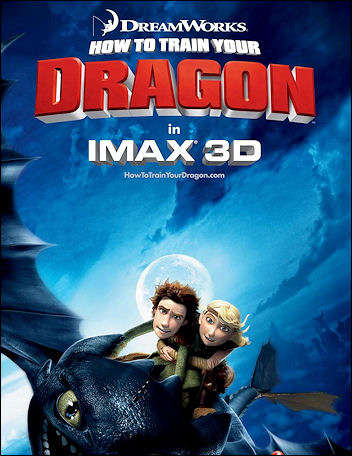
I spoke rashly and stupidly yesterday when I expressed advance disdain for Chris Sanders and Dean DeBlois‘s How To Train Your Dragon (DreamWorks, 3.26). I saw it in 2D tonight at an all-media screening, and while it doesn’t re-invent the family-friendly animation wheel it’s a well-written, emotionally satisfying “wow!” entertainment that will perform extremely well once the word gets out. It soars and charms and — holy dogshit! — is even “about” something besides a hunger to sell tickets.

It has the familiar Jeffrey Katzenberg stamp — i.e., pure-hearted hero, colorful characters, well-contoured story, smart-ass dialogue, great visual sense. And like Avatar (which it visually resembles at times), it delivers a metaphorical sermon about war and peace that’s very lefty-pinko-peacenik.

Like Avatar, Dragon could be approximately described as the Pocahontas/Dances With Wolves story about a young protagonist in a threatening warfare milieu who decides to befriend the supposed enemy — in this case a flying, fire-breathing dragon — rather than slay and conquer, as he’s been taught to do by his staunch, hide-bound elders.

Hiccup (voiced by Jay Baruchel) is a dweeby Viking teenager trying to prove his mettle to his village-chieftain dad, a.k.a. Stoick the Vast (Gerard Butler), and somehow make a successful play for Astrid (America Ferrera), a feisty village teen.

But after buddying up with a wounded teenage dragon that he names Toothless, Hiccup gradually comes to see that war isn’t necessary at all, and that the marauding dragon “problem” isn’t caused by the dragons per se but a Kraken-like winged super-beast whom the dragons are compelled to serve.

There are many scenes of Hiccup and Astrid soaring through the clouds on the back of Toothless, going “woo-hoo!” as they cruise low over the waves, glide through caves and canyons and around and over craggy rocky peaks. Which, of course, is pure Avatar — there’s no way to watch this footage without muttering “yup, same deal.”

And yet the visuals are fairly exhilarating, and I saw the “flat” version, mind. I said to a journalist pal as I left the AMC Empire that I’d kinda like to see it in 3D this weekend.

How To Train Your Dragon is quite pronounced in its liberal metaphorical messaging. The core theme is the saga of the young finding their own way — about the young minds of a Viking tribe standing up for their own beliefs and defying traditional ways. But it’s also Avatar-like in that it’s about (a) befriending the supposed “enemy” and (b) thereby breaking the bonds of an age-old warfare tradition — i.e., in order to be “proud Vikings” (i.e., good Americans) we must defeat and destroy those who threaten us.

The proverbial baddies were alluded to in Richard Lester‘s How I Won The War as the “wily pathan,” and if you let your mind go you could view the dragons as a metaphor for “them” — i.e., terrorists, Islamic fundamentalists, those who would attack and kill us.

In line with this, the big super-dragon which all the smaller dragons serve could be seen as Islamic jihad, the theology of martyrdom, radical fundamentalism, etc. The super-beast, the film is saying, is the real enemy because left to their own devices the regular dragons are actually fairly cool pets (i.e., just like the big screeching lizard birds the Na’vi flew around on in Avatar) who respond to petting and training and whatnot.