O’Neil’s Basterds Call

Envelope/Gold Derby guy Tom O’Neil is predicting that Inglourious Basterds will win the Best Picture Oscar.

Trust me — this won’t happen. We’re living in anxious, racially attuned, recession-afflicted times, and that means Up In The Air — the only film by my measure that has that dignified, settled, summing-up-everyone-and-everything vibe — or Invictus will take it. Enjoyable as it is and admired in some quarters, there is no discernible echo and spiritual after-effect in Inglorious Basterds.

I’m not alone in this thinking. In Contention‘s Kris Tapley has Basterds and director-writer Quentin Tarantino ranked pretty far down.

Hubba Hubba

I’m gathering/presuming that Hurt Locker screeners for Academy members will be mailed out before December 1st. If this doesn’t happen PDQ and if (God forbid) somehow The Hurt Locker somehow doesn’t get Best Picture nominated (which is unthinkable), the fault will be entirely Summit’s. This great war film has to be seen to kick in. A Crash-like screener mailing to everyone on the planet is the only way to go.

“At the start of the awards season, I had The Hurt Locker at the top of my top ten picks list,” writes columnist Anne Thompson. “But right now quite a few other movies are getting more noise. That doesn’t matter in the end. Finally, the Academy voters will dig back to all the films they saw this year, especially when they don’t have time to see all the marginal indies in their DVD stack. It’s more likely that they will remember the movies that the critics pick for their top ten lists at the end of the year, or that other awards groups like the Gothams, Critics Choice or Golden Globes anoint as must-sees.

“Finally, though, screeners are the best reminder. So where are those The Hurt Locker DVDs?

“At the New Moon party I asked [this of] Summit’s Rob Friedman, who denied that director Kathryn Bigelow was refusing to send out screeners because she wanted people to see the film on the big screen. (Ideally, that’s where it should be seen; it’s still playing in NY and LA.) Summit will send Academy screeners soon; they’ve already gone to the Hollywood Foreign Press Association.”

Captain Planet with Cats

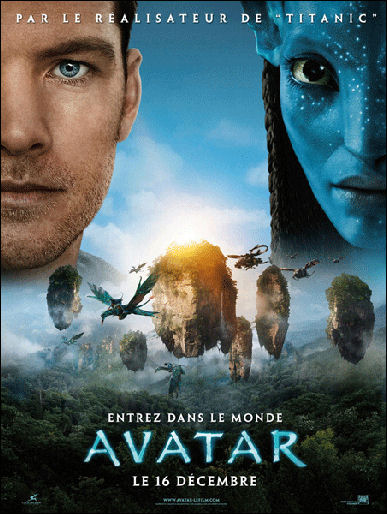
It’s not perfect, but this two-faced Avatar poster is much grabbier than the last one I’ve seen (or at least remember seeing) for the U.S. market. I’ve been experiencing a huge blockage with the Na’vi cat noses all along. There’s something in me that just doesn’t care for them. They just don’t strike me as particularly cool.

I’m not looking to dig my claws in and say “this is my last and only reaction to this film” — I’m just saying the noses haven’t stopped bothering me, and I sort of wish that they would. I’m looking forward to this impression going away. I’m not married to it.

Chorus Expands

A third prominent African-American commentator (and the fourth overall as far as this column is concerned) has joined the Precious takedown campaign. The writer is Washington Post Metro columnist Courtland Milloy, who has trashed Lee Daniels‘ film with almost an Armond White-like vitriol.

“In Precious, Oprah Winfrey and Tyler Perry have helped serve up a film of prurient interest that has about as much redeeming social value as a porn flick,” he wrote today. “In it, we glimpse a sweaty, faceless brute of a black man raping the girl while her mother watches from a doorway. Two children are conceived in incest.

“I watched the movie at a theater in Alexandria where showtimes are nearly around the clock, from 10:15 a.m. to 12:15 a.m. The audience was mostly black women and teenagers. When the lights came up, all of the moviegoers appeared sullen and depressed.

“After escaping the abuse of her home life, Precious ends up in a halfway house. She is still functionally illiterate and has two babies to care for, one with Down syndrome.

“Strangest of all, many reviewers felt the movie ended on a high note. Time, for instance, wrote that Precious ‘makes an utterly believable and electrifying rise from an urban abyss of ignorance and neglect.’ Excuse me, the movie ends with the girl walking the streets, babies in her arms, having just learned that her father has died of AIDS — but not before infecting her.

“The story is set in 1987, before AIDS treatment became widely available. Precious is as good as dead.

“At the Cannes Film Festival, members of a mostly white audience gave Precious a 15-minute standing ovation. I guess they can hardly wait for the sequel. Rolling Stone gave Precious 3.5 stars out of four. Three X’s would be more like it.”

Del Toro-Stuhlbarg

The 2007 blowoff of Benicio del Toro‘s landmark performance in Things We Lost in The Fire by critics groups, Oscar pundits and Academy members is one of the most shameful (certainly incomprehensible) wrongos in the history of award-season politicking and handicapping. The people who ignored Del Toro’s work as Jerry the junkie will one day have to stand before the Movie Godz with bowed heads and explain themselves, which will surely be a painful thing all around.


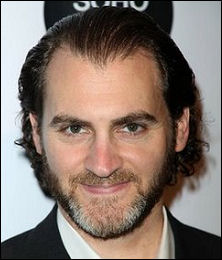
Benicio del Toro in Things We Lost in the Fire; Michael Stuhlbarg as he doesn’t appear in A Serious Man.

I’m wondering now who will get Del Toro’ed this year? Life can be unfair and sometimes cruel, especially on the awards circuit. Who will fate slap down with nary a glance?

I’m sensing right now that A Serious Man‘s Michael Stuhlbarg might be a candidate. (I’m telling myself I shouldn’t mention this for fear of this piece being misinterpreted as a flat-out prediction of same.) I know for certain that Stuhlbag’s performance will be one day be savored as a delicious bit of tonal balancing. His persistent and yet faintly farcical performance is of a different flavor and dimension that Del Toro’s in Fire (which I feel, no offense, is a greater achievement), but it is arguably a more difficult thing to have gotten right. Every second Stuhlbarg is on-screen he seems to be simultaneously acting in a farce and a hellish deadpan tragedy, which of course is what A Serious Man is.

“…I Know I Am Loved”

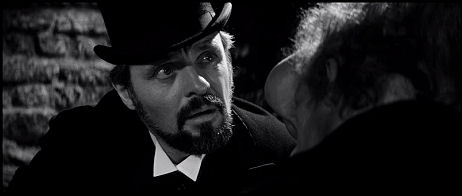
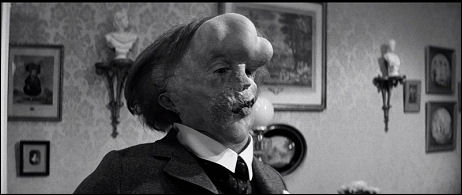
For whatever reason a beautiful Blu-ray of David Lynch‘s The Elephant Man, long admired for Freddie Francis‘s ravishing monochome scope photography, is available in Europe but not here. Another standout is Stuart Craig‘s fascinating production design, which almost makes a character out of the aesthetic ravages of industrialism in late 1800s London.


Anthony Hopkins in David Lynch’s The Elephant Man (1980).

John Hurt

“Crash and Burn”

“One thing that’s really changed [in the last few years] is the independent landscape,” Hurt Locker screenwriter-producer Mark Boal said in a recent (11.15) Hollywood Reporter ‘Award Watch’ roundtable. “I didn’t know much about it, but I learned in the process of writing The Hurt Locker and producing it. That was a four-year thing, all in, and by the end of that period I felt like, ‘Wow, I’ve learned a little bit about how independent films work.'”

“And in the last year,” Boal concludes, “I’ve watched that entire business model crash and burn. I don’t know that the film I set out to make four years ago could get made again today.” Amazing! Today’s business environment might well prohibit (or come close to squelching) the next Hurt Locker-type boldfacer.

Amalfi Coast

A high-def version of the recently-posted “Cinema Italiano”/Nine music video appeared today. Nobody will be free to say anything about the film until mid-December, but I can at least mention that Nine offers a three-second shot of Positano (also in the trailer from the 10 to 12 second mark), and that this gave me a pleasant jolt, sending me back to my brief visit there in late May 2007.

I completely understand and agree with the view of Italian sophistos that Positano has been degraded by the tour buses and hee-haw Americans who keep the local economy going. I remember being in a Positano internet cafe and overhearing a guy with some kind of Kentucky or Tennessee accent using the international land line and speaking or bellowing too loudly (“Great Italian fewd!”), and immediately flinching and saying to myself, “Uh-oh…the Cancun crowd is here.”

But it’s such a beautiful place anyway. The feeling of being cut off from the world is so special and serene. The magnificent Moorish architecture, the 45 or 50 degree incline, the view from a cheap hilltop restaurant that Jett and I visited during magic hour, etc. I’d go there again in a heartbeat.

I took this video myself with my old silver Canon with the fish-eye lens:

Howlin’ Wolves

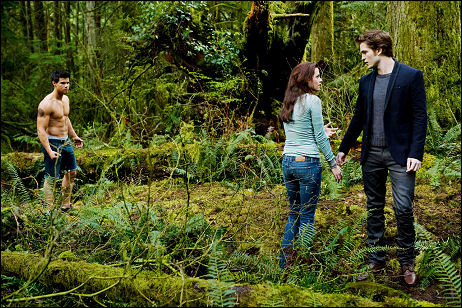
The all-media screening of Chris Weitz‘s New Moon happens tonight on 42nd street. No plus-ones, I’ve been told. I wouldn’t normally run an excerpt of anything from the UK News of the World but this 11.17 review by Robbie Collin has an interesting passage in which he calls it “unnecessarily good.”

Weitz “kicks off with an eerie dream sequence that says more about the main characters in two minutes than the last Harry Potter film managed in two and a half hours,” he writes.

“In fact, special effects aside — which, by and large, are still a bit pony — New Moon grinds recent Potter efforts into the dust because it takes the time to flesh out its characters rather than just slamming them from one manufactured crisis to the next.”

(Pony? Presumably meaning second-tier, not good enough, etc. Great term!)

“These are convincing, fully-rounded teenagers right here. They sulk, they stew, they agonize and they lust. They don’t run around playing kiss-chase in magic school.

New Moon is “a visually serious step up too. Weitz knows how to use pictures to tell a story — a pretty important skill for a director, you would think — but it means the film’s not bogged down with unnecessary chatter.

“Take a short scene in which three months pass, with the camera circling Bella as she sits by the window. Or the masterful chase sequence between the werewolves and bad vampire Victoria (Rachelle LeFevre) scored with a Thom Yorke track. Or the nicely-staged climax in Italy, complete with flashes of James Bond glamor and a predictably ace turn from Michael Sheen as vampire royalty Aro.”

Enemy Mine

This is over a week old, but on 11.10 Digital Bits columnist “Two Cents Worth” wrote the following about a Martin Scorsese remark heard via satellite at the recent Blu-Con 2.0 conference, to wit: Scorsese “spoke very positively about the Blu-ray format:, saying it has ‘the potential to replicate the original theatrical experience” and “is the best I’ve seen in forty years of [movie] collecting. Blu-ray offers the ability to see the film as it was intended.’

And then comes a passage straight out of the grainstorm monk’s handbook. “The most interesting quote [Scorsese] offered, however, was something I hope was not lost on the audience of studio executives and mastering engineers on hand. He noted that Blu-ray is capable of displaying ‘a film grain texture which I think is very important in recreating the film experience.’ Can I get an AMEN on that?”

Good God. A breakthrough of sorts has just happened with Warner Home Video releasing an almost entirely grain-free Gone With the Wind Bluray — a revelation! — and here’s this guy apparently pining for more grainstorm transfers in the vein of Criterion’s The Third Man. This shows how fanatical grain monks can be. They’re the Islamic fundamentalists of the Blu-ray fanboy world.

There’s no talking them out of their views, I know, and I’m saying this as one who fully understands and respects the concept of proper grain levels — who understands the difference between appropriate grain and digital wipeouts in the unfortunate tradition of the Patton Blu-ray. The only thing to do with these guys, I suppose, is to hang tough and…I don’t know, wait for them to die out or whatever.

Heal Thyself

You may not find this fact in film-history books, but 1987 was a seminal year for the tarnished moral and ethical authority of the proverbial investigator and law enforcer (i.e., the loosely-allied private dick and big-city cop) in Hollywood films. For this was the year in which they both succumbed to the forces of darkness and crazy-hood.

It was 22 years ago when Shane Black‘s (and Richard Donner and Joel Silver‘s) Lethal Weapon introduced the then-radical idea of a cop who was screwier and possibly more dangerous than the criminals he was chasing. ’87 was also the year when Alan Parker‘s Angel Heart told the tale of a wise-guy shamus who turned out to be the very same grisly murderer he’d been looking to find all through the film.

Before these two movies cops and private eyes were thought to be more or less safe — corrupted and flawed to varying degrees (like Treat Williams‘ narcotics cop in Prince of the City) but still vaguely decent, semi-trustworthy, on “our side,” exuding a recognizable sense of morality. These two films changed all that.

Bring It On


I just took a shower an hour or so ago so I’m only looking at two days of discomfort.

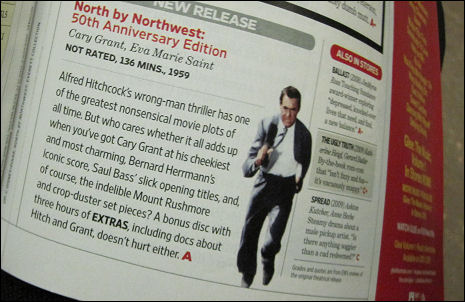
This mini-DVD review is from last week’s (or the week before’s) Entertainment Weekly. I was surprised that it didn’t even mention the North by Northwest Bluray version, which was more or less the incentive for Warner Home Video’s re-issuing this 1959 Alfred Hitchcock classic in the first place. This means, I’m guessing, that EW readers are primarily under-25 females who don’t know from Bluray players.