Late to “Wordplay”

Late to Wordplay

I’d been hearing good things about Patrick Creadon’s Wordplay since it played at last January’s Sundance Film Festival, but missing the subsequent screenings. So I leapt at the chance to see it last night (i.e., Tuesday) at Santa Monica’s Aero as part of Pete Hammond’s KCET screening series.
I expected something smart, engaging, amusing (Jon Stewart being one of the talking heads), but I wasn’t expecting a Mensa-style “heart” movie about an extended family. That’s what Wordplay is, and why it ought to keep playing and playing in urban blue-state areas, and — who knows? — maybe all over.


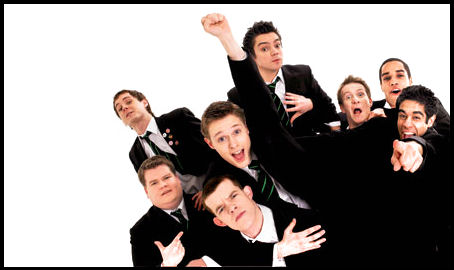
Wordplay gang: (l. to r. foreground) Trip Payne, Ellen Ripstein, Al Sanders; (l. to r. background) Tyler Hinman, Jon Delfin, Will Shortz, Merl Reagle

I never thought I could get so caught up in the lives of intellectual game-players and puzzle fanatics, but there’s an emotional current to their existence that’s just as real and embracable as anything you’ve seen or felt on The Waltons or Malcom in the Middle or any other hokey family TV series.
I feel nothing but loathing for the family-relationship pablum in those two Cheaper by the Dozen films, but Wordplay is the real deal — a movie about a family of engaging eccentrics whose brains cross paths every morning via The N.Y. Times crossword puzzle, and who bond with each other every year in a very warm and fraternal way at an annual Crossword Players tournament in Stamford, Connecticut.
< ?php include ('/home/hollyw9/public_html/wired'); ?>
Wordplay started out as a profile of N.Y. Times crossword page editor Will Shortz, but gradually expanded into a group portrait of six hardcore types — crossword constructor Merl Reagle, pudgy not-quiter Al Sanders, congenial former champion Ellen Ripstein, super-brilliant Trip Payne, a 20 year-old whiz kid named Tyler Hinman, and a bespectacled Tin Pan Alley piano player named Jon Delfin.
The Philadelphia Inquirer‘s Carrie Rickey calls them “word nerds.”
I’ve always felt so intimidated by the N.Y. Times crossword puzzle. Some of the words and clues are so arcane and obscure. Until I saw Wordplay I was totally unaware that there’s a kind of grass that grows in the wide-open midwest areas called “redtop.” But now I feel like becoming a crossword addict regardless. The movie is that infectious.


KCET screening series host Pete Hammond (l.) and Wordplay director Patrick Creadon after last night’s screening at Santa Monica’s Aero/American Cinematheque theatre — 6.20.06, 8:55 pm.

Wordplay sure is fantastic publicity for the New York Times and longtime editor Shortz.
Celebrity guests besides Stewart include the charming Bill Clinton (who’s constantly grinning and filling out a crossword puzzle as he talks with Creadon), Bob Dole (who finally consented to be in the film when Clinton called and urged him to do so), documentarian Ken Burns, the Indigo Girls, and Yankee hurler Mike Mussina.
Everyone in the film worships the daily Times puzzle as the “gold standard.” No other puzzles from any source are even mentioned except for USA Today‘s, and when it comes it’s a put-down.
Wordplay ends, predictably, with the March 2005 championship tournament. The suspense kicks in when the final three contestants go up against each other in front of an audience, writing their answers on large-sized posterboard crossword grids. You can figure out who’s probably going to win, but you’re never 100% sure.

Skeptics should understand that while Wordplay is about some very smart people with phenomenal vocabularies, it’s not a snob movie at all. The Wordplay Seven are good people with containable egos who care about crossword puzzles like others care about baseball or basketball or going to church.
There’s some fairly terrific graphic work by Brian Oakes that brings the viewer into various crossword games that are played throughout the film, creating a play-along excitement that most audiences will find extremely cool.
I suggested during last night’s q & a with Creadon that a smarty-pants reality TV series could be created out of the day-to-day lives of the Wordplay family. It could crescendo each week — on Sunday night, naturally — with the six or seven principals jumping into the Times Sunday crossword puzzle.
IFC Films opened Wordplay in Manhattan last weekend on four screens and took in $32,847 for an $8200 average. The film goes out nationwide this Friday (6.23).

Superman 3D Reactions

Superman Returns director Bryan Singer was “thrilled” with the IMAX 3D version at a screening last Friday, says a 6.20 L.A. Times story by Geoff Boucher. He adds, however, that “others attending the screening were put off by a distracting blurring effect that crops up when the action crosses the screen at high speed.” Bullshit — I noticed a very slight blurring around the edges, but that’s par for the course with IMAX 3D. (I won’t see the final version until next Tuesday.) Boucher admits that “some sequences — such as that plummeting plane — have an undeniable gee-whiz factor.” After the screening, Singer “talked about adding some unique footage to the IMAX version — restoring some footage to the early part of the film (it showed Superman on the gutted husk of Krypton) that might be especially dramatic with the visual effect.” There’s only about 20 minutes worth of 3D footage in the IMAX version of Superman Returns, so how will viewers know when the 3D scenes are on? “Pretty much when Clark Kent takes his glasses off,” Singer said, “you put yours on.”

Styles of Shooting

There’s a doc by Jon Fauer called Cinematographer Style showing at the Academy next Tuesday (6.27) that, according to the copy on the invitation, “takes audiences into the hearts and minds of 110 renowned cinematographers, offering a rare glimpse into the art of visual storytelling and the universal language of cinematography.” In other words, it covers the same turf as Todd McCarthy and Arnold Glassman‘s Vision of Light, which is generally regarded as the definitive (so far) doc about the art of cinematography. Has anyone seen the Fauer doc? I’m suspicious of anything or anyone intending to explore the art of cinematography that uses the word “style” in its title. Does this mean if you were making a doc about the most venal dictators of all time (Hitler, Stalin, Pol Pot, etc.), you could conceivably call it Dictator’s Style?

Koehler’s Will

Variety critic Robert Koehler swears that Randy Walker and Jennifer Shainin‘s Apart From That, which played at Cinevegas and the Seattle Film Festival, is “the best American film I’ve seen this year.” Here’s his review, “which gets in some but hardly all of my thoughts,” Koehler says. “If you like Richard Ford‘s and Raymond Carver‘s fiction and what I’m now sensing is a new radical American cinema characterized by films like Old Joy, then you’ll probably like Apart From That. Then again, you may not. It would have done very well in competition in either Un Certain Regard or the Quinzaine, but for whatever reason Cannes turned it down. (It was ready for Sundance, but the filmmakers didn’t submit it. Had it been shown in Park City, Apart From That would be famous by now.) For me, it’s the U.S. find of the year, along with In Between Days.” Koehler, by the way, is hosting an L.A. Film Festival discussion on Sunday, 6.25, at 5 pm at Westwood’s Armand Hammer Museum called “Unshown Cinema: Inside the World of The Films That Got Away.” “YOU ARE BEING DEPRIVED OF THE OPPORTUNITY TO SEE HUNDREDS OF GREAT MOVIES EACH YEAR,” the copy reads, “and you probably don’t even know it! Of the over 2,000 movies produced annually, the average Los Angeles filmgoer has access to fewer than 400 titles. In a market supposedly glutted with new product, why are there still so many great films being made both in the US and abroad that you have no opportunity to see?” The panelists besides Koehler will be the legendary, frizzy-haired, never-say-die director Monte Hellman, Greg Laemmle of Laemmle Theatres, Warner Independent’s Paul Federbush, L.A. Weekly film critic Scott Foundas, and bespectacled publicist Ziggy Kozlowski of Block-Korenbrot. Koehler warns that “your ability to see unconventional movies and visions that challenge the norm that is at stake.” It is fine and good to challenge the norm, but you don’t have to be particularly talented or inspired to do that. What finally counts isn’t challenging the norm, per se, but challenging it in a way that turns people’s heads around, knock their socks off and makes them go “whoa!” Is this something that Apart From That or In-Between Days accomplish?

Thomson on Herrmann

The late composer Bernard Herrmann “made life easier for good films,” says David Thomson in a recent Guardian piece. Many Alfred Hitchcock films in particular — Vertigo, Psycho, North by Northwest (the final act of this film is nearly a Hermann symphony in itself), The Man Who Knew Too Much — as well as Citizen Kane, Taxi Driver, The Day The Earth Stood Still, et. al. This may sound insignificant, but I feel Hermann’s most delicious accomplishments are his incidental mood pieces in thrillers, in particular the ones that seem to say “be careful…bad stuff could quite easily happen to this character.” Here are three sublime samples from that closing portion of North by Northwest…they take you right into the film. Thomson apparently got on the Herrmann topic because the San Francisco Symphony (under Michael Tilson Thomas) will perform some Hermann compositions next July (or were they performed last July?…can’t quite follow). Herrmann would probably be perplexed, Thomson feels. “A tribute? Thank you, very nice, but no cigar. Why are you playing the music without the movie? Don’t you get it — they are married. They want to be in bed together.”

Slacker Town

This is a good Nikki Finke satire piece because it’s grounded in fact. Hollywood is Slacker Town. Almost everyone works long hours — twelve-hour days are fairly standard — but too many in the upper echelons overcompensate by taking extended vacations (“working” or otherwise) that eat up huge chunks of the calendar. Finke’s piece was triggered by news that “some Hollywood types [are] already leaving town for the July 4th holiday.” I’m guessing that the big vacation-takers are those with school-age or younger kids, and I can relate to that. But at the end of the day (especially these days) I subscribe to words that David Mamet wrote 20 years ago for an episode of Hill Street Blues: “I went to sleep dreaming life is beauty — I woke the next day knowing life is duty.” Life is short, we’re all strutting and fretting our hour upon the stage, and either you get it or you don’t. Better creative work is done on less-full stomachs and less vacation money to draw upon, but of course (and this is the bottom line) most of the folks in this town aren’t in it for the creative highs but the money saunas. How many people in this town would do what they do if the bucks weren’t quite as flush? How many are in it for the work itself rather than the creamy compensatory comforts? You know Jack Black would be Jack Black no matter what, but could the same be said of Gail Berman or Brad Grey or Ron Meyer or a hundred others I could name? If Hollywood were to suddenly become socialist and adopt the salary plan that the London magazine Time Out had around 1980, which was that everyone earned the exact same salary, you would see an exodus like nothing since Moses led the Jews out of Egypt. (For the record, HE’s work day is 15 to 16 hours if you count screenings. Longer if you count DVD-watching, primarily a relaxation thing but one with occasional work-related aspects.)

Hailing “Petulia”

Richard Lester‘s Petulia “is essentially about two lonely and bored people desperate to find passion in an increasingly dispassionate world,” writes DVD Savant. “The ’60s-drenched setting is tapped to add shadings of meaning, but it nevertheless remains a backdrop. Indeed, much of Petulia‘s genius stems from such shadings, particularly stylistic flourishes that result in a work of stunning freshness — even nearly 40 years after its theatrical release. This keenly observed art film finds the counterculture of that era being swallowed up and taken over by a nation of overwhelming wealth, commercialism and consumerism. Lester might not have known it at the time, but when he ventured to San Francisco in 1967 to shoot Petulia, he was creating one of the great cinematic time capsules of a watershed period in American society.”

Dretzka Fellates “Kiss”

Shane Black, director-writer of Kiss Kiss Bang Bang, has written “against type by skewering the conventions of noir fiction in a movie that wouldn’t make sense without a comprehensive awareness and palpable appreciation of each and every one of them,” says MCN’s Gary Dretzka. “As such, Kiss Kiss Bang Bang favorably recalls Robert Altman’s The Long Goodbye.” Get outta town! If Black’s film had one-fifth of the funky, bumbling neo-noir charm of The Long Goodbye, it would have been far more intoxicating. If nothing else, Kiss Kiss Bang Bang seems totally stoned on how wise-ass clever it is, especially the dialogue. The Long Goodbye never once grabbed you by the lapels and said, “You’re watching a very hip, ahead-of-the-curve film here!” Either you got the unforced charm of it or you didn’t…Altman seemed to be cool either way.

Dissing Sandler’s “Click”

Didn’t make it to Monday’s all-media screening of Adam Sandler‘s Click, but a knowledgable industry friend did, and here’s his verdict: “It’s okay but not that great. I don’t know what to make of the audience reaction because these screenings are so heavily recruited with people off the street, but there wasn’t overwhelming laughter in the press section. It’s a typical downmarket Sandler movie, the kind he does when he’s not being directed by Paul Thomas Anderson or Mike Binder or James L. Brooks. He’s got complete control and his team putting it all together — director Frank Coraci, producer Jack Giarraputo — so it has that mix of over-the-top comedy (Sandler never knows when to stop with this) and schmaltz…broad gross-out comedy that turns on a dime into sentimental slop. Amd I’m sure he and his team and Columbia will be rewarded with great success for this. It’s always interesting to see what Sandler comes up with on his own. This is a competently made film, and Corachi is one of his stable of directors that he hires, and the studio doesn’t want to tell him anything different because he’s so successful. It’s basically about what would you learn if you fast-forwarded through your life, and he definitely lays it on during the last half hour, especially with the prosthetics. It’s a little bit like Ebenezer Scrooge being shown what’s to come by the Ghost of Christmas Future. You laugh at certain parts, but it’s more of a short-film premise than a feature — after a half hour or so it starts to wear down. There’s no even tone throughout this picture…it’s all over the place. And the product placement stuff on behalf of Bed, Bath and Beyond is unbelievable. ”

Plummeting “Cars”

“[Disney distribution execs] originally expected that Cars would only start to fade once Adam Sandler‘s Click opened in theaters this coming Friday. That teens and young adults would favor that film over ours. But that was okay because we’d still pretty much have the family audience all to ourselves until Superman Returns opened five days later. But to have ticket sales fall off by 43% in our second weekend and to almost lose the top spot to a Jack Black wrestling comedy …nobody here ever saw that coming. This was a film that was initially projected to do over $300 million domestic. Last week, that number got pushed back to $250 million. Today, I’ve got people asking me if I think Cars is actually going to be able to make it to $200 million domestic. And right now, to be honest, I don’t know. I’m hoping that Cars can pull in another $50 or $60 million by next Wednesday. But after Superman Returns opens, we’re officially toast. With Dead Man’s Chest opening 9 days after that, there’s no way that Cars is going to do any significant repeat business this summer. This time around, the competition is just too strong.” — a Disney insider talking to Jim Hill in his “Mousewatch” column.

Friedman’s “Vice” Diss

For those who’ve happened across that Roger Friedman item that passes along bad reports about Michael Mann’s Miami Vice (Universal, 7.28), I have two responses. One, Mann is absolutely incapable — strategically, emotionally, psychologically, physiologically, technologically — of making a bad film. Even if Vice turns out to be one of his lesser efforts, by Mann’s Olympian standards that will still make it an exceptional ride. And two, keep in mind what F.X. Feeney, who’s seen a cut of the film, had to say last week. The film, Feeney claims, “draws on wellsprings of romantic passion that haven’t surfaced this vividly in Mann’s films since Last of the Mohicans. Two kinds of passion are represented — you have a stable relationship between Jamie Foxx (as Tubbs) and Naomie Harris as the fellow undercover cop, who are trying to make love work in the dangerous arena of undercover work, and then you have Colin Farrell as Sonny Crockett pursuing a dangerous liason with Gong Li, the wife of a stateless plutocrat who rules in the triborderarea.” The films is about “the psychological cost of working undercover, of leading a life in a mask for months on end, of behaving in terms of ‘impulse without inhibition.’ So Crockett must answer to a spontaneous passion while Tubbs must secure a more traditional, if endangered, one. This balances the Tubbs/Crockett partnership in fresh, unpredictable ways I don’t recall from the series.”

Hollywood is Predominantly White

The non-white Hollywood-suit head count is “pretty dismal,” reports L.A. Times industry columnist Patrick Goldstein . “A survey of African American or Latino production executives at a vice president level or higher found one executive at 20th Century Fox, New Line and Paramount, none at Universal, Warner Bros. and Sony Pictures. After three days of trying, I couldn’t get an answer out of Disney’s corporate publicity staff, so I’m guessing they’re at zero too. Whenever I would ask studio chiefs for an explanation, there was usually a long, awkward silence.”