Last Gasp of ’20s Prosperity

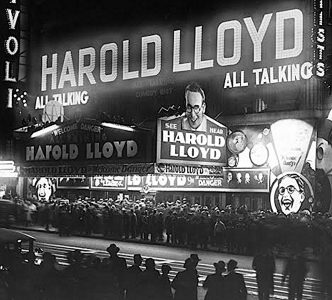
Until an hour ago I had never heard of, much less seen, Welcome Danger, a 1929 Harold Lloyd adventure-comedy that was also (I think) his first sound film. Which is “topical,” in a sense, in this is more or less the historical turf of Damien Chazelle‘s Babylon (Paramount, 12.23), a film about the Hollywood changeover from silent to sound flicks.

In its 10.3.29 issue, The Film Daily reported that Lloyd would attend the 10.7.29 world premiere of Welcome Danger,” opening at the Rivoli Theater. Pic opened on Friday, 10.12.29.

Welcome Danger opened two weeks before the beginning of the ’29 Stock Market Crash. At the end of Thursday, 10.24.29, the market was at 299.5 — a 21 percent decline from a few days before. On Black Monday, or 10.28.29, the Dow Jones Industrial Average had dropped another 13 percent.

Read more

Criterion — King of Inky Shadows

With sensible film buffs dreading the inky arrival of the forthcoming 4K Casablanca Bluray (11.8), it’s worth reminding ourselves that for years Criterion has been the father of the shadows-and-ink aesthetic. The Criterion tech guys never met a mineshaft they didn’t like, a shadow that didn’t brighten their day.

Here’s a 2017 tribute piece to that effect, dated 8.11.17 and titled “Darkness Darkness“:

In the case of at least two relatively recent Criterion Blurays, Only Angels Have Wings and His Girl Friday, the tech guys darkened images that were slightly or distinctly brighter on previous Blurays and DVDs.

Criterion clearly has an occasional fetish for inkinessin the black-and-white realm. Two HE reviews, “Dark Angels, Black Barranca, Noir All Over” and “Inky, Grain-Smothered Friday Doesn’t Deliver Decent Bump”, complained about this.

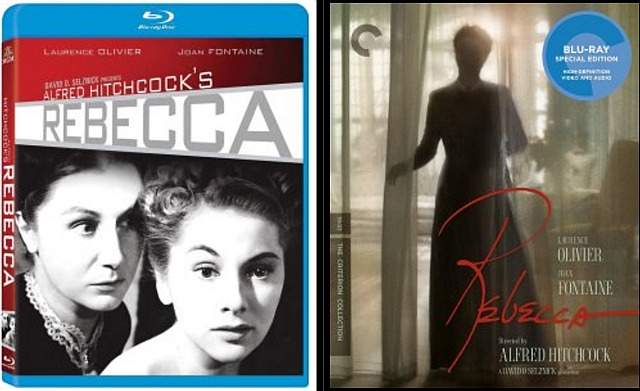
And now, to judge by a new DVD Beaver review, the Criterion guys have gone all dark and inky on their forthcoming 4K-scanned Rebecca Bluray (due on 9.5.17).

Review quote: “Like their 2001 480p DVD, the image on the new Criterion Bluray of Rebecca is darker than [previous] digital releases. From our experience and comments from transfer specialists, ‘darker’ is usually more accurate to the theatrical presentation. You can see from the screen captures that the Criterion shows less information in the frame [and yet] the Criterion actually shows more on the top.”

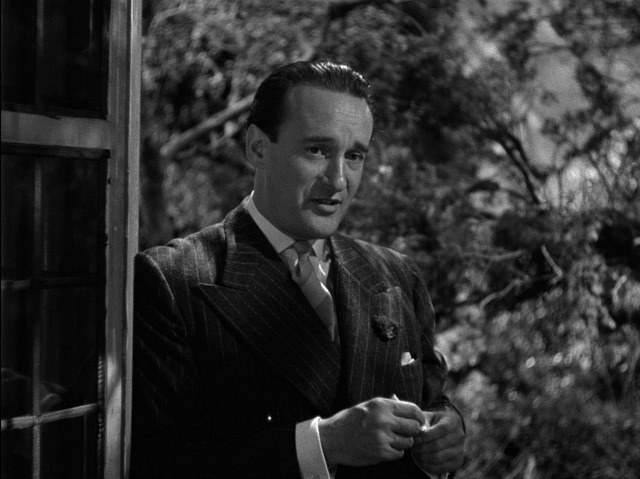
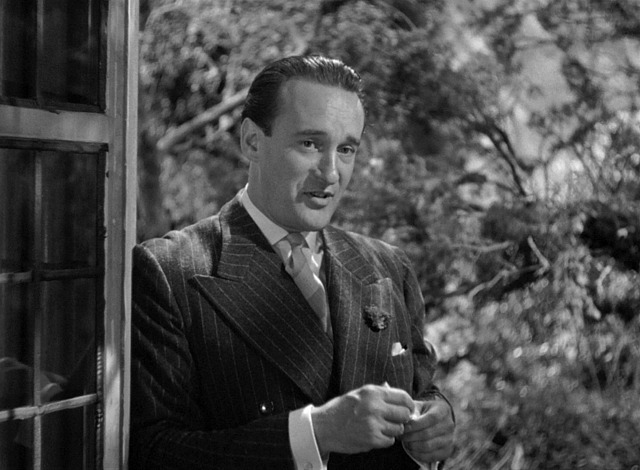
Look at George Sanders‘ Jack Favell in these DVD Beaver-captured images. The lighter version is from the 2012 MGM Bluray (which I am totally happy with — thank God there’s a fine-looking Rebecca that hasn’t been inked up) and the darker, of course, is from the Criterion. What kind of sick-fuck cineaste would prefer the darker image? It looks as if heavy thunderstorm clouds are passing over Manderley, and that Favell is about to get soaked.

2017 Criterion Bluray version.
2012 MGM Bluray version.

Read more

Darkest “Casablanca”…Hooray!

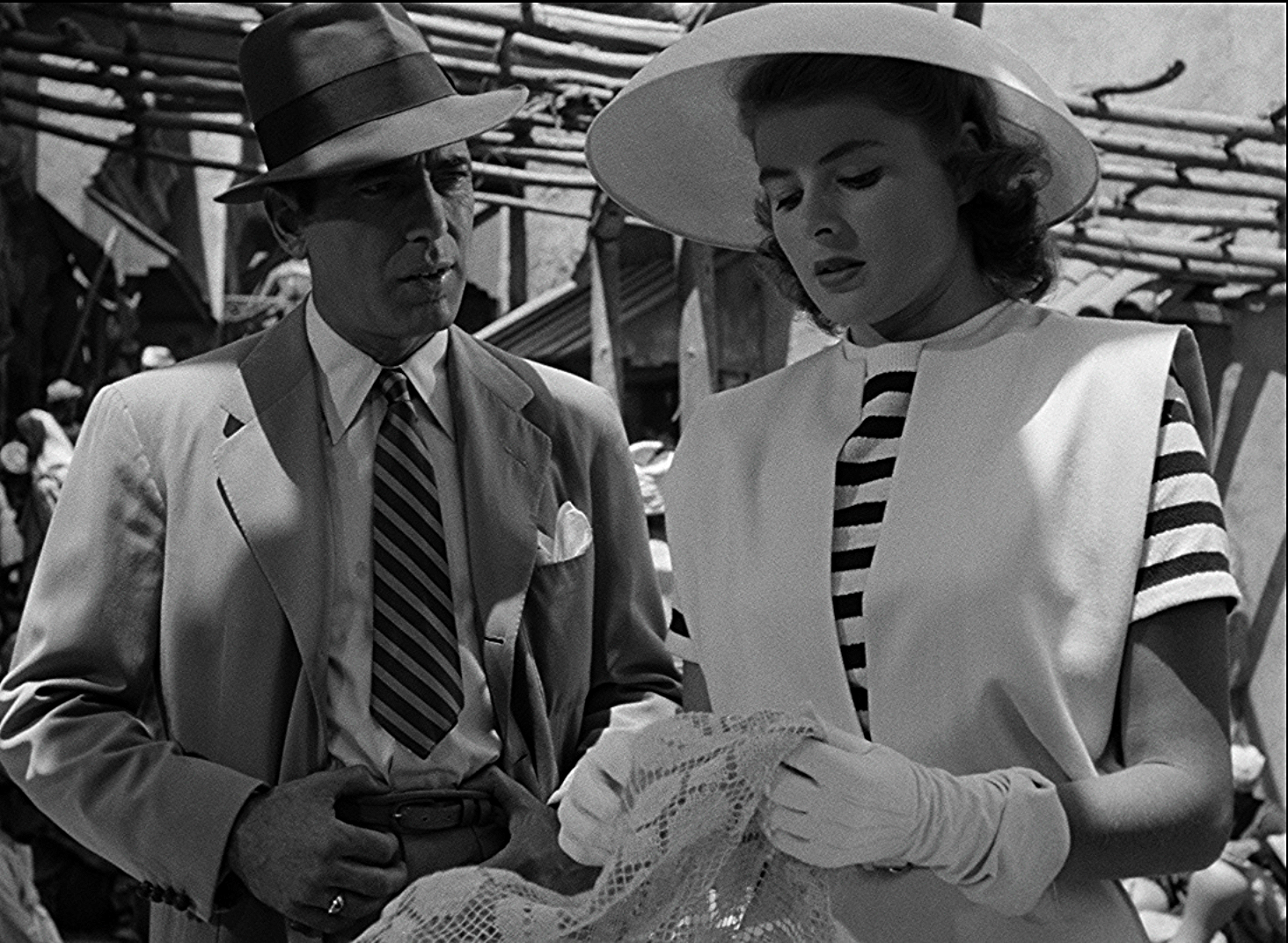
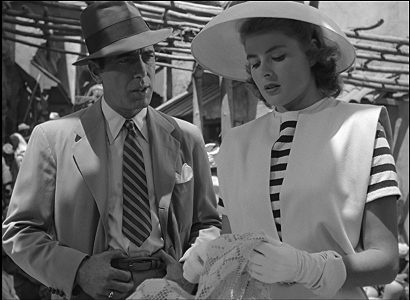
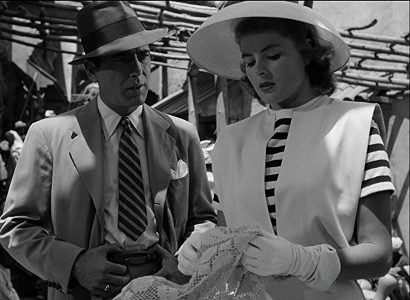
I haven’t seen the forthcoming 4K Casablanca Bluray (WHE, 11.8) but to go by the DVD Beaver screen captures it just looks darker, which is what 4K versions of classic films often provide…inkier, buried in shadow.

Compare the stills of the 4K version vs. the old 2007 Bluray — details you could see with the 2007 Bluray (which is still my favorite) you can’t see as clearly on the 4K. How is that an improvement?

Were the techs who created this inky Casablanca inspired by Criterion’s 2016 Bluray of Only Angels Have Wings? — one of the most bizarre and totally needless experiments in pointless shadow baths? 

Home Theatre Forum‘s Robert Harris, posted on 11.4.22: “Casablanca looks fine in 4k. Blacks may be a bit richer than the previous Bluray, but beyond that I’m not seeing a great deal of difference. I’m seeing some constantly shifting grain patterns, which I can understand as much of the film is taken from dupes.

“Extremely fine in some facial close-ups and medium shots, far more normal in exterior long shots and other bits of the film. The management is obvious, but not a problem.

“If one owns [an earlier 1080p] Bluray version, is there enough of a 4k bump to purchase the film again? I’m not seeing it.”

My favorite is still the good old DNR’d 2007 Bluray. Perfect — I love it like family. I hated the 2012 70th anniversary Bluray, which covered Casablanca in billions upon billions of grain mosquitoes…infinite swarms swirling around the heads and inhaled into the lungs of poor Humphrey Bogart, Ingrid Bergman, Dooley Wilson, etc. Ghastly.

As to the 4K, why would anybody want to watch a Casablanca that’s been shadowed and darkened all to hell? Where is the upside in that? 4K treatments almost always smother with unneccessary inky darkness that often obscures detail.

The 2007 Casablanca Bluray is good enough for me. It’s my little baby, my teddy bear, my blue blanky.

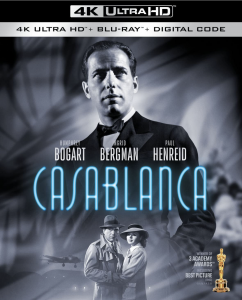
Question: Why does the 4K Bluray jacket use a shot of younger Bogart (taken in the mid to late 30s) wearing a black tuxedo, which his somewhat older character, Richard Blaine, doesn’t wear in Casablanca?  Why?  What kind of perverse or diseased mind says “yeah, that’s fine — Bogart looks a few years younger but so what?  And who cares about the black tux?”. 

Read more

Brian Wilson’s “I’m Waiting For The Day”

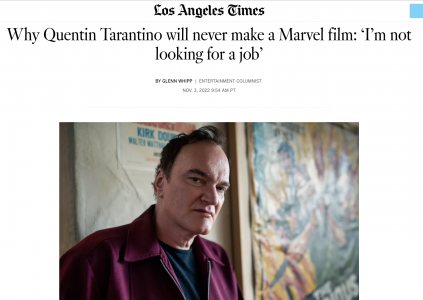
In an 11.2 interview with the L.A. Times Glenn Whipp, Quentin Tarantino stated that he and other filmmakers “can’t wait for the day” when the superhero genre finally runs out of gas.

When might this happen? Or more to the point, will it happen?

Excerpt: “[Tarantino] muses that, just as ’60s anti-establishment auteurs rejoiced when studio musical adaptations fell out of favor, today’s filmmakers ‘can’t wait for the day they can say that about superhero movies. The analogy works because it’s a similar [economic] chokehold.’”

When will that hallej]lujah moment arrive? “The writing’s not quite on the wall yet,” Tarantino says, “[or certainly] the way it was in 1969 when it was, ‘Oh, my God, we just put a bunch of money into things that nobody gives a damn about anymore.’”

QT kicker: “You have to be a hired hand to do [superhero films]. I’m not a hired hand. I’m not looking for a job.”

Read more

Streisand in the Sky With Diamonds

The only time I’ve really fallen head-over-heels for Barbra Streisand was when I saw her in Funny Girl. She really pours it out in that William Wyler film, and I just melted in the onwash of all that heart and soul.

But honestly? The main reason I was so susceptible to Barbra’s Fanny Brice was because I was tripping on Orange Wedge. That’s the truth of it — I saw and felt her like no other time in my life because of the soul-stirring power of lysergic acid diethylamide.

Which Streisand performances did the trick when I wasn’t tripping my brains out? K-K-K-K-Katie Morosky in The Way We Were I(’73), Cheryl Gibbons in All Night Long (’81) and Dr. Susan Loewenstein in The Prince of Tides (’91).

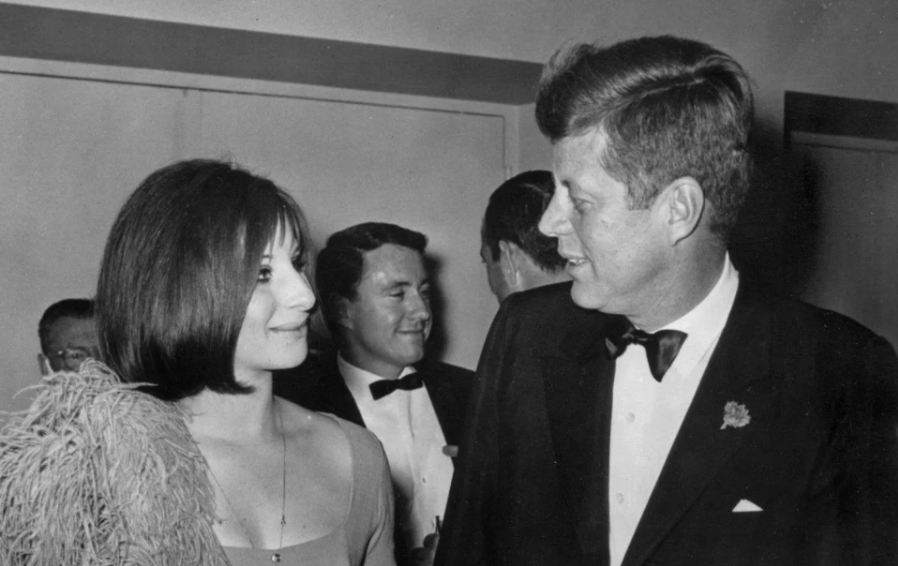
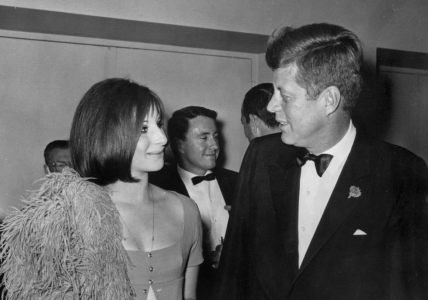
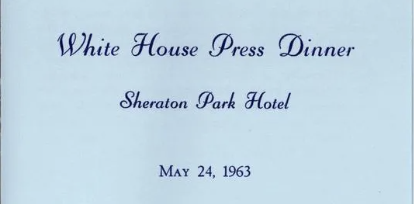
On 5.24.63 the 21-year-old Streisand met JFK after performing at the annual White House press dinner. (It happened at Washington’s Sheraton Park Hotel.) JFK: “You have a beautiful voice. How long have you been singing?’ Streisand: “As long as you’ve been President.”

In fact Streisand had begun professionally singing in 1960, first at the Lion, a Manhattan gay nightclub on West Ninth Street, and then in another Greenwich Village club, Bon Soir (40 West 8th Street).

Streisand said later that “I never get autographs for myself, but my mother had asked me to get [President Kennedy’s]. He signed a card for me and I said, ‘You’re a doll.’”

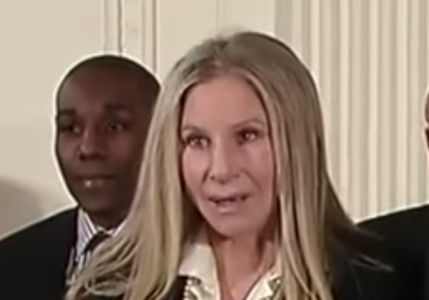
On or about 11.23.15 Barbra Streisand was awarded the 2015 Presidential Medal of Freedom from President Obama at the White House. At the 15-second mark Streisand’s facial expression goes “what?” when the guy reading a few salutory words refers to her career having lasted “six decades.”

At that point Streisand’s career had been going strong for just under five and a half decades, although she didn’t really get rolling until ’62-’63.

If Only Biden Had Renounced The Crazy

…and attempted to govern in a sensible, moderate way…principled but restrained…if he had simply recognized and respected the fact that Average Joes and Janes had voted for him in ’20 as a rejection of Trump’s criminality and his temperamentally crazy cult-of-personality approach to everything…but of course he didn’t.

If Biden had simply adopted a “enough with the crazy” and let’s all celebrate fairness and moderation…holdupski on the sweeping woke nutter stuff and let’s bring back maturity and moderate liberalism…if he had simply and politely drawn the line and told the progressive “all white people are evil and racist” wackos to take a breath and turn the volume down…if he had done this and stuck to a sane agenda, the left wouldn’t be in the appalling situation that it’s currently in.

In short, I agree with roughly 90% of the 11.4 edition of Andrew Sullivan‘s Weekly Dish column, titled “Will Biden and the Dems Finally Get It?

Excerpt: “There was no choice in 2020, given Trump. I understand that. If he runs again, we’ll have no choice one more time. And, more than most, I am aware of the profound threat to democratic legitimacy that the election-denying GOP core now represents. But that’s precisely why we need to send the Dems a message this week, before it really is too late.

“By ‘we,’ I mean anyone not committed to the hard-left agenda Biden has relentlessly pursued since taking office. In my view, he and his media mouthpieces have tragically enabled the far right over the past two years far more than they’ve hurt them.

“I hoped in 2020 that after a clear but modest win, with simultaneous gains for the GOP in the House and a fluke tie in the Senate, Biden would grasp a chance to capture the sane middle, isolating the far right. After the horror of January 6, the opportunity beckoned ever more directly.

“And yet Biden instantly threw it away. In return for centrists’ and moderates’ support, Biden effectively told us to get lost and championed the entire far-left agenda.

“[He pushed] the biggest expansion in government since LBJ; a massive stimulus that, in a period of supply constraints, fueled durable inflation; a second welfare stimulus was also planned — which would have made inflation even worse; record rates of mass migration, and no end in sight; a policy of almost no legal restrictions on abortion (with public funding as well!); the replacement of biological sex with postmodern “genders”; the imposition of critical race theory in high schools and critical queer theory in kindergarten; an attack on welfare reform; ‘equity’ hiring across the federal government; plans to regulate media ‘disinformation’; fast-track sex-changes for minors; next-to-no due process in college sex-harassment proceedings; and on and on it went.

“Even the policy most popular with the center — the infrastructure bill — was instantly conditioned on an attempt to massively expand the welfare state. What on earth in this agenda was there for anyone in the center?”


Ten Years After

“I’m just average, common too. I’m just like him and the same as you. I’m everybody’s brother and son. I’m no different than anyone.”

Maher: “The left has gone super crazy.” Yes, they have. And Average Joes hate them for it, and this is why the right is going to do well next Tuesday night, and why the world is going to get much uglier as a result. Thank you, wokesters, for bringing down the temple walls.

Thank God Almighty!!

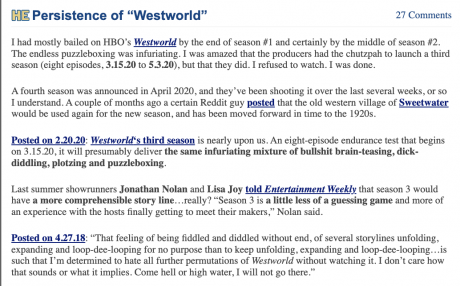
The plug has finally been pulled on Westworld, one of the most throughly despised cable series in human history.

I was calling Westworld a bullshit puzzlebox series at the end of its first season, and it doubled down on that puzzlebox awfulness in season 2. THR‘s James Hibberd: “Fans [had] increasingly griped that the show had become confusing and tangled in its mythology and lacked characters to root for”…no shit?

[Posted on 11.28.16]: Last night a pair of posts about HBO’s vaguely infuriating Westworld series — one by Matt of Sleaford, the other by brenkilco — really hit the nail on the head. Together they explain why some viewers feel that good movies, which have to set everything up and pay off within two hours or so, are more satisfying than longform episodics. Here’s what they said in condensed form:

Brenkilco: “The problem with episodic TV narratives designed to blow minds is that the form and intention are at odds. A show designed to run until the audience gets tired of it cannot by definition have a satisfying structure. It can only keep throwing elements into the mix until, like Lost or Twin Peaks, it collapses under the weight of its own intriguing but random complications.

“Teasing this stuff out is easy. But eventually the rent comes due. Dramatic resolutions are demanded. The threads have to be pulled together. And that’s when things gets ugly.”

Matt of Sleaford: “Westworld is a puzzle-box show, which is kind of the opposite of a soap opera. Puzzle-box shows, like the aforementioned Lost and X-Files, can be fun to chew on while they’re progressing. But the solution is almost always anticlimactic. And though it may seem counterintuitive, puzzle-box shows are less effective in the internet era, because someone in the vast sea of commenters is almost certain to solve the puzzle before the end (see: Thrones, Game of).”

Douglas McGrath, Adieu

Witty, personable, endearingly urbane Douglas McGrath — playwright (the Tony-nominated Beautiful: The Carole King Musical), screenwriter (Woody Allen‘s co-author on the Oscar-nominated Bullets Over Broadway), actor and columnist — suddenly died today, and he was only 64.

The night before last (Wednesday, 11.2) McGrath gave his last performance in Everything’s Fine, a 90-minute one-man-show that McGrath wrote, based on his life. Today he left, and at a relatively young age. I’m very, very sorry for all concerned.

I for one loved his Becoming Mike Nichols doc, which I saw at Sundance in early 16.

Bill McCuddy: “Lovely guy. Had his writing room apartment (a uniquely NY thing, I believe) in the same building [that] I lived in briefly on Central Park South. I had dated an entertainment journalist from his hometown of Midland, Texas and he was always charming on the few occasions we chatted. We both loved the “21 Club” Christmas lunches that the Salvation Army performed carols at and always advised each other to “not tell the others” about it. You could ask him anything about working with Woody Allen and he always spoke in admiring terms. After his direction of Emma I thought he would direct more but it didn’t seem to interest him. He was a New York guy. Very sad. He was performing in a John Lithgow directed play that I wanted to see next week. Ironically it was titled Everything’s Fine.”