Given the prevalence of racism and bullying among high-school adolescents, it goes without saying that post-9/11 a U.S.-residing teenager with that name would be taunted and provoked. Teenagers can be horrible.
If I’d been Al-Issa’s parents, I would have given him an American nickname so his classmates would leave him alone, or at least pick on him less. Immigrants do this in order to assimilate into American society. Issur Danielovitch didn’t keep his name — he adopted another one.
“Partly because the occasionally undressed lead, Melanie Thierry, performs in a way that feels rather prim and Grace Kelly-ish, an all-but-extinct vibe or romantic brand in films today. But primarily because the movie is mostly about unrequited desire and hardly at all about consummation.
It’s probably not bawdy or obvious enough for most viewers, but I felt and believed this film without the slightest discomfort, and I never wanted to turn it off or multitask as I watched.
“The story is basically about four or five guys who can think of little else but having Thierry, and who spend most of their screen time being told ‘if only,’ ‘no,’ ‘not now,’ ‘not here’ and so on. I only know that the combination of Thierry, the feeling of sensual restraint or suppression, and the generally realistic and non-movieish atmosphere created by Tavernier and his team (including some excellent hand-to-hand combat and duelling scenes) feels right and believable and on-the-money.
“It’s delightful when a film drops you into an exotic time-trip visitation without making this world seem arch or ‘performed’ or overly prettified or set-decorated within an inch of its life. I’ve never thought of Tavernier as a director who excels or even cares about violent action and/or mercury-popping eroticism, but maybe I need to go back to watch some of his films.
“I didn’t expect to say this, but I felt as stirred and satisfied and convinced by The Princess of Montpensier as I was by Andrzej Wajda‘s Danton (’83), a superb historical drama about the post-revolutionary “terror.”
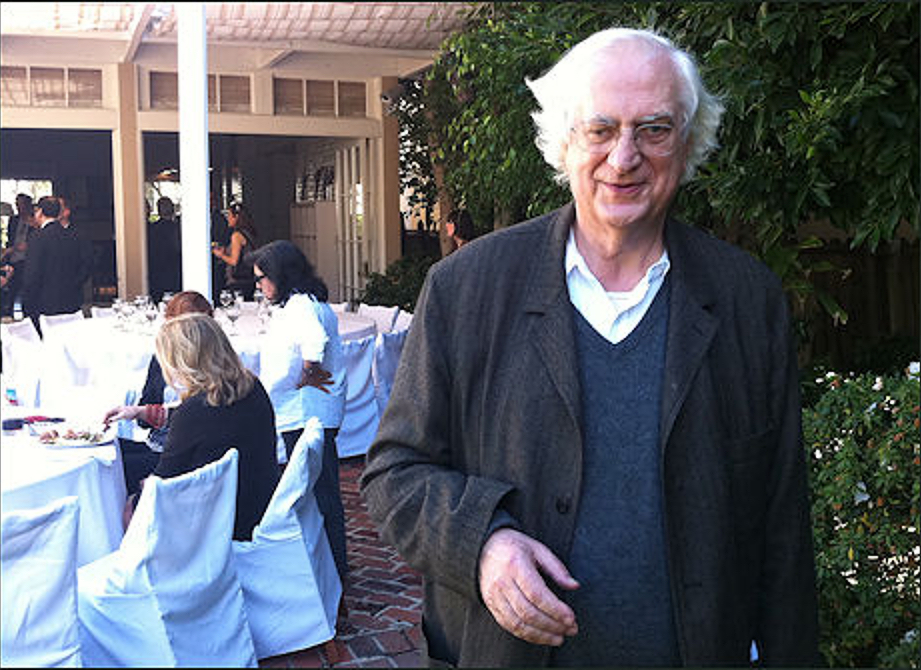
Solemn condolences and melancholy tidings in the matter of Bertrand Tavernier, who has passed at age 79. A great director (Coup de Torchon, Round Midnight, A Sunday in the Country, Let Joy Reign Supreme, Life and Nothing But, In The Electric Mist, The Princess of Montpensier), a brilliant fellow, French to the core but an internationalist, an avid cineaste and warm acquaintance to journalists the world over.
Monsieur Tavernier was simply a magnificent human being and a consummate Renaissance man — warm, gentle-mannered, passionate, knew everything and everyone. I was transported when I realized about 15 years ago that Tavernier was an HE reader, and doubly if not triply elevated when I met him at a journo gathering in Cannes a year or two later. We first chatted at the Algonquin Hotel in ’81 or ’82, during a press interview for Coup do Torchon. Quite the occasion.
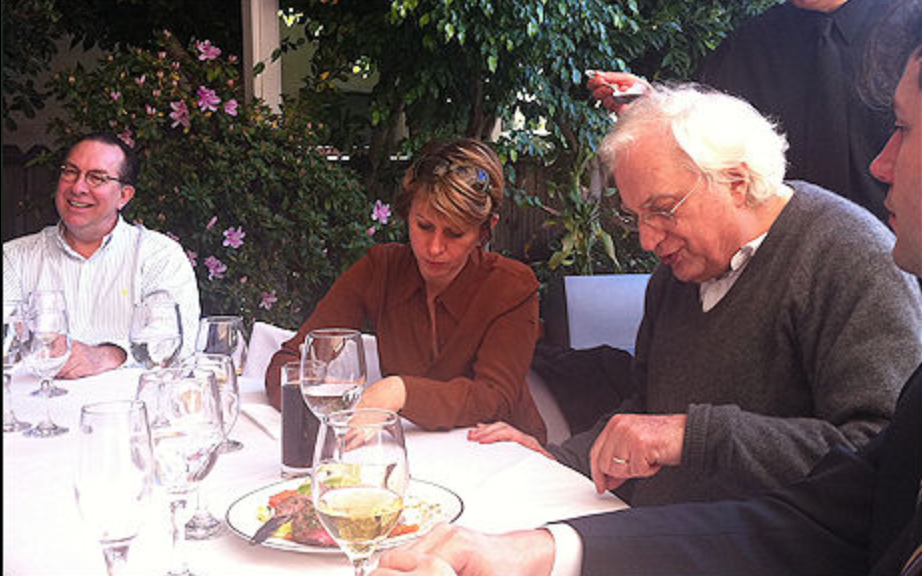
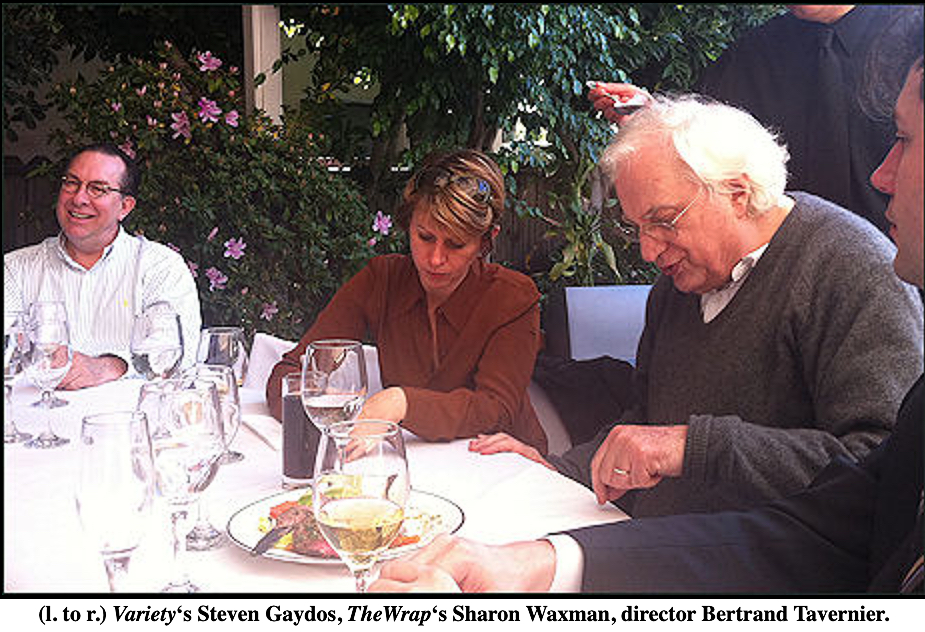
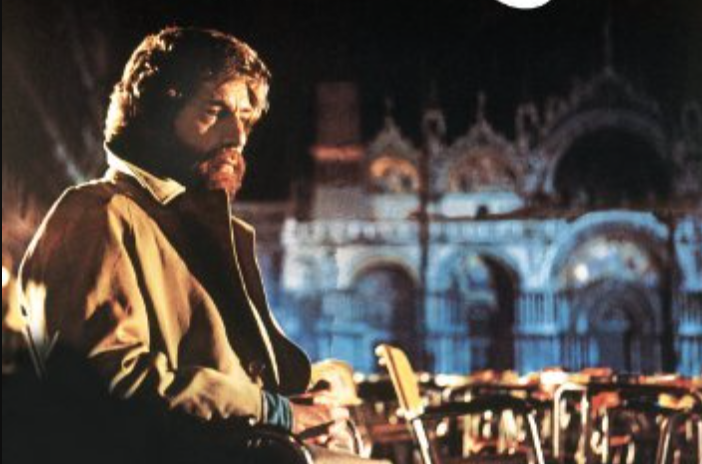
We last met almost exactly a decade ago (3.9.11), during a French Consulate press encounter for The Princess of Montpensier, which might be my favorite Tavernier of all. Right now I can hear Bertrand whispering to me from heaven, telling me to stand tall and hold fast against the demonic Twitter jackals (I don’t know for a fact that he hated wokesters but I’m 98% certain of this) and to keep the cinema-love faith.
As an employee of Tatiana, Ltd., I’m obliged to run certain errands. Last Sunday afternoon I was told to visit the Beverly Blvd. post office and send a stuffed plastic envelope (first-class) to an eBay buyer in Miami. Because it was Sunday I had to slip the parcel into a large blue post office bin that had a relatively thin drop-off slot. The bin was pretty well stuffed, I quickly realized, but I managed to push the package into the slot, about 10″ to 12″ deep.
After driving off into the West Hollywood maze I called my superior and explained what had happened. She didn’t like the package being vulnerable to passerby thieves, and ordered me to go back and retrieve it.
I returned to the post office about a half-hour later. I put my hand into the bin but couldn’t find the Miami parcel. Other packages had been jammed in on top of it. I called Tatiana with the news — “I can’t find it…it’s been pushed deep into the bin so it’s probably okay.”
The USPS online system always notifies senders when their package has been scanned and put into the system. If you drop a package off on Sunday you’ll see a USPS online confirmation by the following morning. On Monday morning there was no confirmation of any kind.
I was sent back to the Beverly Blvd. office on Monday afternoon to inquire. The first postal employee I spoke to looked at me impassively, like she was a wood carving, and basically washed her hands. I double-checked the USPS scanning system and reported back to Tatiana. “Ask someone else,” she ordered. A second employee was more responsive. She went into the back room to check. She said the package was probably okay and would most likely be in Miami by the coming weekend (3.26 or 3.27).
Tatiana is convinced that I screwed the pooch by pushing the parcel into the bin in the first place. I should never have dropped it off into an overstuffed bin! “You may have ruined my reputation as a seller and sender,” she said. Furthermore, she said, if the package doesn’t arrive this weekend I will owe her the cost of the contents.
Plus she’s just told me I can’t divulge the contents or their value. I live under a Putin-like regime.
The evening’s highlight, I meant, came when Once maestro Glenn Hansard sang a portion of Woody Guthrie‘s “This Land Is Your Land” a capella. Everyone was humming along and the feeling in the room was quite beautiful, which is to say patriotic in the best sense of that term.
During the recent presidential inauguration (1.20.21) of Joe Biden, Jennifer Lopez performed some verses of Guthrie’s as part of a medley with “America the Beautiful”.
But now it appears that this heartfelt Guthrie narrative — i.e., “Woody was a beautiful guy and a serious humanitarian socialist, and we all love this song for its values” — is coming to an end. The new narrative is basically that “This Land Is My Land” is a racist-white-man song that dismisses the historical rights of Native Americans and Mexican Americans, and is basically a tribute to white American expansionism and suppressing native voices, etc.
One of the funniest things I ever saw Billy Crystal do was imitate a Chinese waiter trying to perform Crystal’s “you look mahvelous” routine. Crystal did this on the Today show back in the late ’80s, or so I recall. I know that Bryant Gumbel thought it was drop-dead hilarious. Whenever I think of Crystal I think of three things: (a) Muhammud Ali imitation, (a) Chinese waiter doing “mahvelous” and (c) Crystal explicitly saying “axed” instead instead of “asked” in Analyze This.
Variety‘s Matt Donnelly is reporting that the former Tonight Show host, comedian and expensive-vehicle owner (who occasionally shops at WeHo Pavilions) has formally apologized for years of telling Asian-American jokes.
And who could blame him or Guy Aoki, the Media Action Network for Asian Americans (MANAA) guy who’s been after Leno to apologize for years?
“At the time I did those jokes, I genuinely thought them to be harmless,” Leno said in a joint press release with Aoki. “I was making fun of our enemy North Korea, and like most jokes, there was a ring of truth to them.
“At the time, there was a prevailing attitude that some group is always complaining about something, so don’t worry about it,” Leno explained. “Whenever we received a complaint, there would be two sides to the discussion: Either ‘We need to deal with this’ or ‘Screw ‘em if they can’t take a joke.’ Too many times I sided with the latter even when in my heart I knew it was wrong.”
Eddie Murphy used to tell Asian-waiter jokes; ditto Richard Pryor.
An occasional drama or comedy will acquaint us with a young kid version of a lead character. Every so often the young actor won’t look like the older actor at all, and sometimes (or usually) he/she will offer a reasonably decent resemblance (like the kid who played young Vito Adolini/Corleone in The Godfather, Part II).
And every so often (as in very rarely) a young actor will bear such a close resemblance to the older actor that you can’t help but say “wow, amazing…where’d they find that kid?”
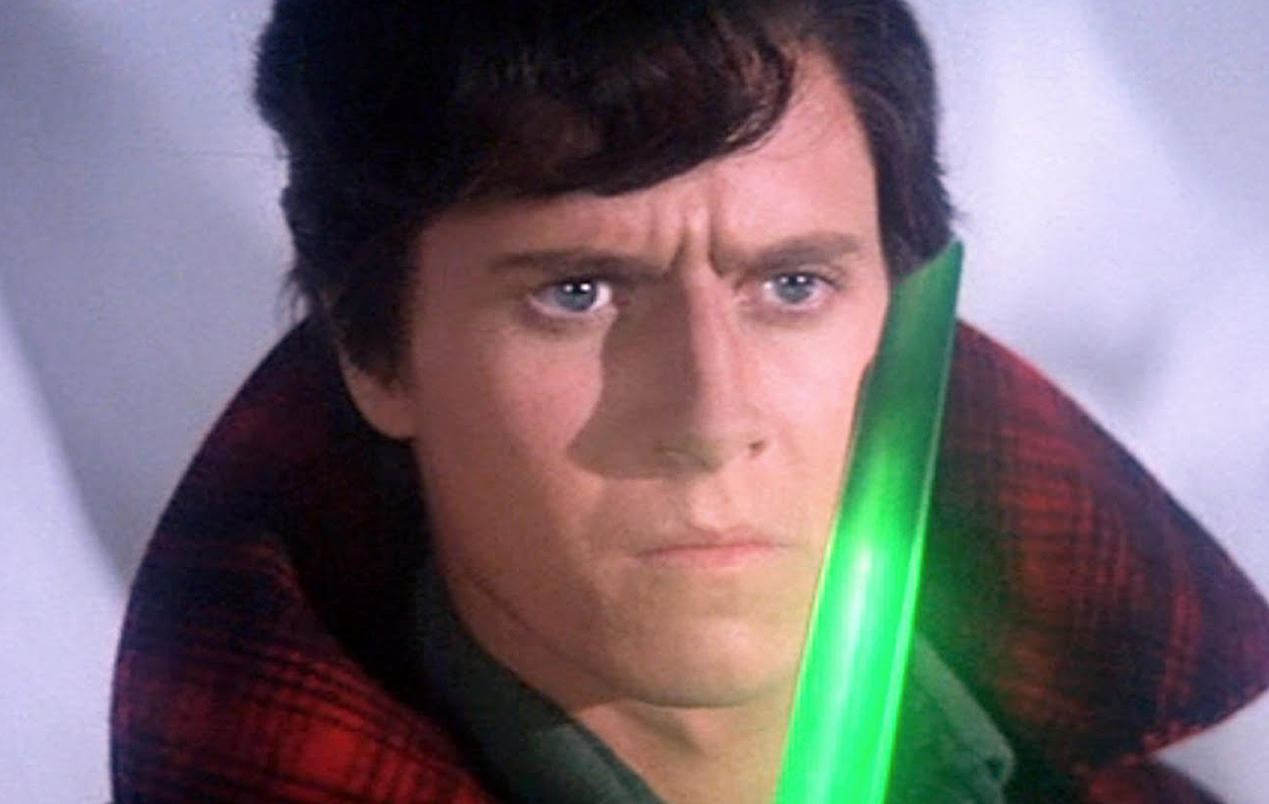
Example #1: Micheal McConkey was cast as a young version of Marty Feldman‘s “Digby” in Feldman’s The Last Remake of Beau Geste (’77).** A fairly astonishing resemblance. McConkey later adopted the name Mícheál Mac Donncha and became an Irish (Sinn Fein) politician, rising to the title of Dublin’s Lord Mayor between ’17 and ’18.
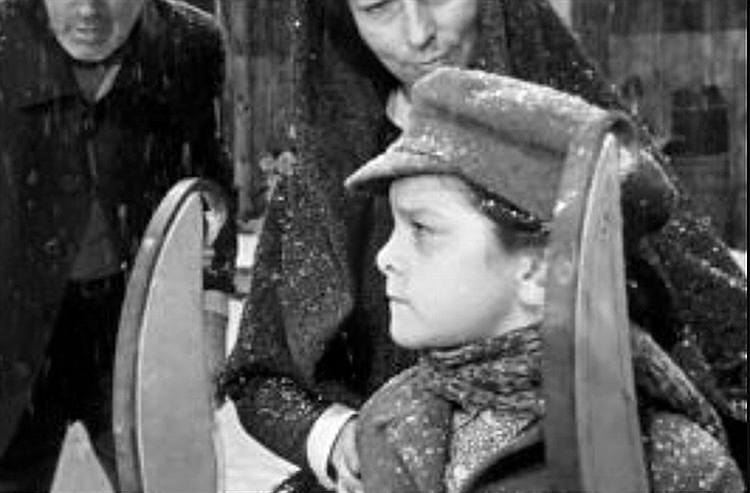
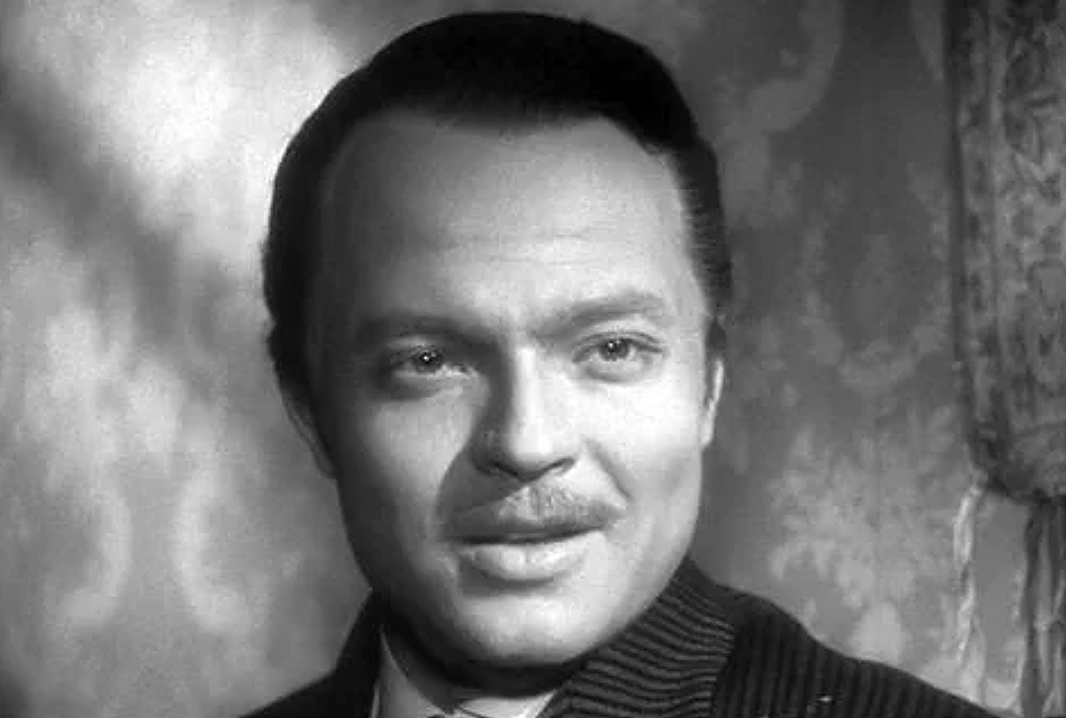
Example #2: Buddy Swan‘s casting as the eight-year-old Charles Foster Kane in Citizen Kane hits the bull’s-eye. It was easy as pie to imagine Swan growing up into Orson Welles.
Worst casting of a teenage version of grown-up lead character: Jeff East as high-school version of Chris Reeve‘s Clark Kent-slash-Superman. Born in late ’57, East was 18 or possibly 19 when Richard Donner‘s Superman began shooting in March 1977. Reeve, who was a young-looking 25 at this point, could have easily played his own teenaged self and nobody would’ve blinked an eye. East didn’t resemble Reeve in the slightest. It was 100% INSANE of Donner to have cast him.
Which other kid castings, good or bad, deserve mention?
Kilday is saying that 2020 (which includes early ’21) has been a dud movie year and a general downer for all concerned. Everyone knows this and wants to move on and return to normal. All hail gains by women and POC filmmakers but nobody really loves the wokester progressive surge except those who’ve directly benefited. (And don’t forget that wokesters are the Robespierre-like architects of cancel culture.) Everyone’s morose and bummed and nobody gives a shit about the ’20 and ’21 nightmare because it’s an asterisk and a tragedy — a gloomy movie year defined by streaming and domestic hibernation and the slow suffocation of our souls…half-dying under a grim cloud.
The exceptionally gifted George Segal was a necessary, nervy, highly charged actor for over 50 years (early ’60s until 2014). In his heyday he was an explorer of urban Jewish neurotics with underlying rage…half superficial, half pained and always guilty or bothered about something…at other times Segal was a smoothie…an amiable grinner with sandy brown hair and an eye for the ladies.
Segal’s two best roles were in Paul Mazursky‘s Blume In Love (’73) and in Robert Altman‘S California Split (’74).
Segal worked hard and dutifully and never stopped pushing, but honestly? His leading-man peak period lasted only nine or ten years. Or if you want to be cruel about it, he was The Guy Everyone Understood and Related To for only about five years, between ’70 and ’75.
The golden period began with Segal’s breakout performance in Ship of Fools (’64), and then as a crafty prisoner of war in King Rat (’65). This was followed by his career-making performance as Nick, the ambitious and randy biology professor who beds Elizabeth Taylor but can’t get it up, in Mike Nichols‘ Who’s Afraid of Virginia Woolf? (’66). Segal’s streak ended with his lived-in performance as compulsive gambler Bill Denny in California Split, opposite the wonderfully on-target Elliot Gould.
Segal didn’t catch serious fire until neurotic Jewish guys became a hot Hollywood commodity in the early ’70s. His first serious breakout came when he played a vaguely unhappy cheating commuter husband in Irvin Kirshner‘s Loving (’70). This was followed by his guilty, lovesick moustachioed Jewish attorney in Carl Reiner‘s Where’s Poppa? (’70).
After this Segal starred in six winners — The Owl and the Pussycat, Born to Win (drug addict), The Hot Rock (Kelp the locksmith), Blume in Love, A Touch of Class, The Terminal Man and finally California Split — my favorite of all his films.
Between the mid to late ’60s Segal starred in five films that were somewhere between interesting and pretty good but at the same time not great — The Quiller Memorandum (’66), The St. Valentine’s Day Massacre
(’68), Bye Bye Braverman, No Way to Treat a Lady (’68), The Bridge at Remagen (’69) and…well, that’s it.
Segal’s last decently written role was as Ben Stiller‘s dad (and Mary Tyler Moore‘s henpecked husband) in David O. Russell‘s Flirting With Disaster (’96).
On 1.17.21, World of Reel‘s Jordan Ruimyreported that “there are early, but very serious, talks from Mouse House head honchos to punt the football and release a majority of their 2021 releases straight to Disney Plus, some in unison with theatrical releases. The titles being seriously discussed include Cruella, Luca, Shang-Shi, Jungle Cruise and, most intriguingly, the overtly-delayed Black Widow.”
Today Deadline‘s Anthony D’Allesandroreported that Disney will open Cruella and Marvel’s Black Widow “simultaneously in theaters and on Disney+ with Premier Access (which is usually $30 a purchase extra for subscribers) in most Disney+ markets on Friday, 5.28 and Friday, 7.9, respectively. It also shifted release dates on five other films.”
Big deal Who cares? I wouldn’t pay $30, $13 or even $3 to see Black Widow. Whadaya think of them apples?