A certain number of QAnon-influenced Texas morons are using TikTok to share suspicions about all the “fake snow” that has blanketed their homeland. The idea is that government baddie-waddies, possibly aided and abetted by Bill Gates, engineered the snowstorm in order to get the righties. The “proof” is in the fact that the stuff on the ground isn’t real snow, certain Texans are claiming. Because if you try and melt the “fake snow” with hair dryers. matches or bunsen burners, it turns black rather than melts.
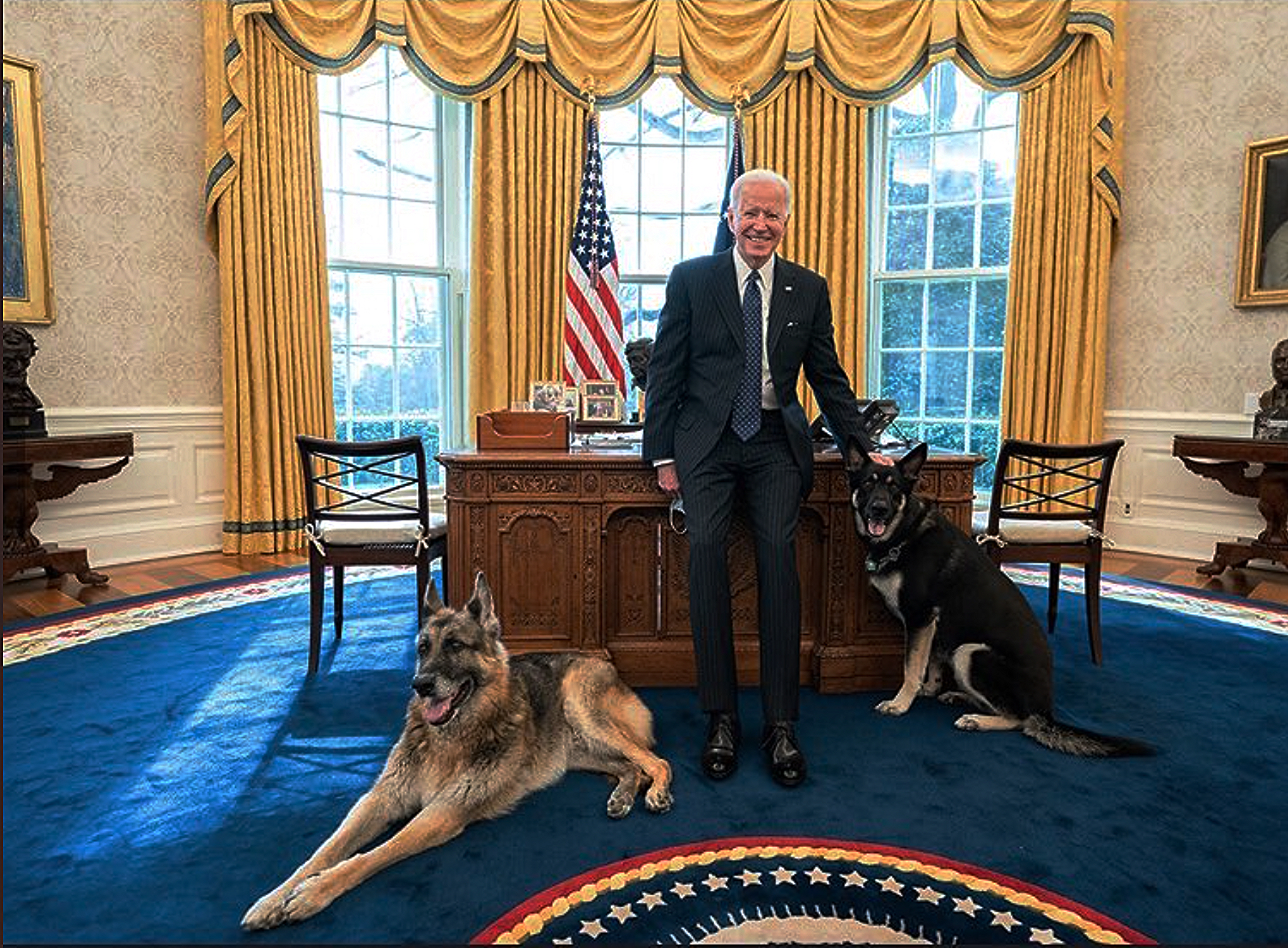
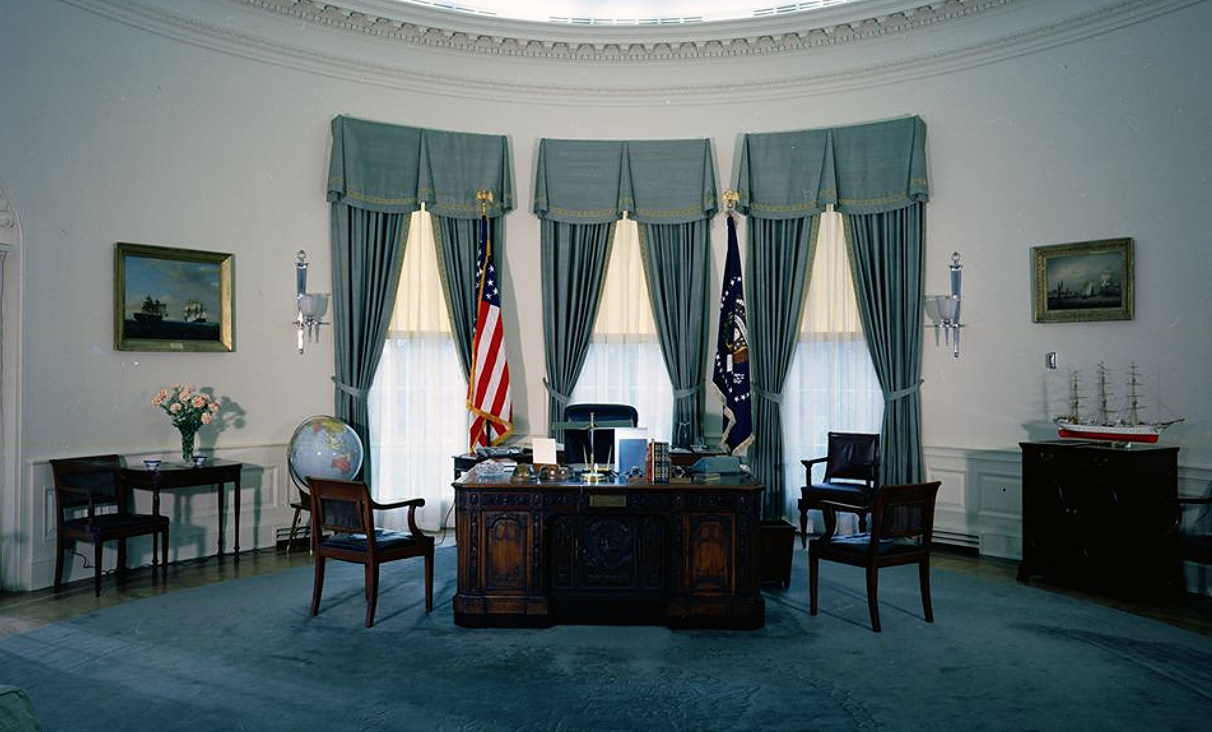
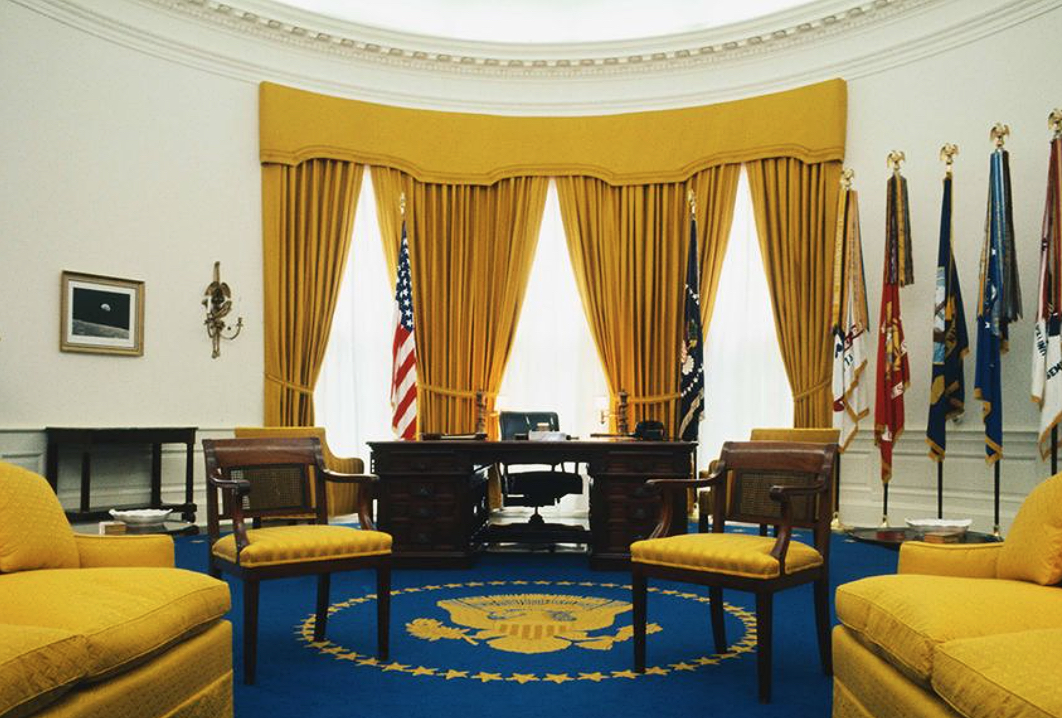
Uncle Joe has been President a bit more than a month now (33 days), and I have to say that I’m profoundly disappointed — shattered — by his Oval Office decor choices. I was all but certain he’d remove Trump’s hideous gold curtains, and imagined that he might choose some kind of classy, subdued rug color. (Like JFK’s olive green carpet or perhaps a midnight blue.) Instead Joe has apparently chosen a royal blue carpet — the same eyesore shade as Nixon and Clinton’s. And he seems to actually like glaring gold curtains, which Marie Antoinette or Louis XVI would have felt right at home with.
People reveal who they are by their choice of home or office decor. All this time I’ve presumed that Joe, an old-school Pennsylvania and Delaware guy, had better taste than this. This may sound overly dramatic, but a royal blue plus garish gold combination is the stuff of nightmares. Mine, I mean.
Rich guys almost never do time in orange jumpsuits. Jeffrey Epstein was the one big exception, of course. Now that Orange Plague can no longer withhold his tax records and there’s no longe any way to hide from any potential prosecutions launched by Cyrus Vance, Jr., District Attorney of New York County, what could actually happen to the guy, punishment-wise, if he’s found guilty on tax fraud and whatnot? Are fines the best most we can hope for? What could actually, realistically happen? MSNBC and CNN talking heads always joke about custom-tailored jumpsuits but I’ve always presumed that’s basically smoke
Hollywood Elsewhere is having a tough day today. I’m sorry but they happen. One way out of this psychological morass or snake pit is to grab your one-iron and “tee off” on someone else’s hard work. Whack! Leap onto someone else’s horse and gallop into the sunset.
Hence HE’s take on “The 101 Greatest Endings in Movie History,” written by three senior Vulture staffers — Bilge Ebiri, Allison Wilmore, Angelica Jade Bastien. Along “with” Nate Jones, Rachel Handler, Hunter Harris, Jackson McHenry, Jen Chaney, Katherine Brooks, Melvin Backman, Rebecca Alter and Helen Shaw. My list is going to be shorter. 25, give or take.
Consider the following Vulture slogan: “Good finales offer catharsis — the best deny us closure altogether.” I have no idea what that means, but I’ll go further than that. Nobody has the slightest idea what that means, including Bilge Ebiri.
The idea seems to be that endings which struggle to fuse the various loose ends and tie them all together with a big red bow are the worst because they’re phony, and endings that leave you cold and stranded with nothing to do and nowhere to hide are the best because they’re frank and real.
In HE’s view, the best endings are those in which the main characters are finally stuck with themselves and they know it…stuck with the yield of their hustling and bustling…left to ponder who they are deep down and to contemplate the terms “just desserts” and “fair shake”…alone with themselves (even if they’re a couple), facing an uncertain future, throwing their hands up, half-laughing and half-crying about their big scheme that didn’t work out, or because it did but led them to an unexpected place. Desire, deception and discovery.
Great endings, in short, are about acceptance of and submission to fate or dumb luck or, if you will, God’s grand plan. We got what we deserved, and we’ve only ourselves to blame.
“Life…life’s a goddam laugh riot!” — Leonard Frey‘s “Harold” in The Boys in the Band.
The last shot of The Godfather, Part II — Michael Corleone engulfed by solitude and shadows — is a perfect finish.
A nominally “satisfying” ending in which good triumphs over evil but at the same time doesn’t really resonate and could even be called mediocre? The last two minutes of On The Waterfront.
Another ending that doesn’t quite get it? The last shot of Stanley Kubrick‘s 2001: A Space Odyssey in which Keir Dullea‘s infant star child is gazing down upon earth. Also Sprach Zarathrusta tells you it’s an ending, but try to imagine it “working” without music.
On the other hand the ending of Kubrick’s The Killing is damn near perfect; ditto the ending of A Clockwork Orange — “I was cured, all right!” and therefore a healthy psychopath again!
Anyone will tell you how much they love the ending of Barry Lyndon, but it’s not how the movie ends in a dramatic or visual or musical sense as much as the aptness of the epiloque (“…they are all equal now”).
The best ending of an otherwise mediocre film? The long shadow at the conclusion of Nicholas Ray‘s King of Kings.
Many have praised the last-minute “uh-oh” ending of Mike Nichols‘ The Graduate because the happy ending when Ben and Elaine escape the church ceremony gives way to feelings of uncertainty, loneliness and anxiety. And melancholy is better than ecstasy. They don’t know what to do next. It’s an interesting ending but we all know what happened, of course. Audiences pretty much ignored the “uh-oh” ending and told all their friends about the good parts, and that’s why The Graduate became a huge hit.
The ending of Planet of the Apes isn’t all that great when you think about it. It hasn’t been set up. The film takes place in areas that look like Nevada and SoCal’s Imperial Valley and Malibu Canyon, and yet we’re supposed to believe that this hilly, desert-like terrain is located somewhere on the East Coast near New York City, hence the fallen Statue of Liberty lying on a beach next to Zuma State Beach cliffs. An “oh, wow” ending that doesn’t make the least bit of geographical sense.
Movies that end with senior characters being burned to death are horrible — wicked sadism for the same of wicked sadism. Midsommar, of course. Both versions of The Wicker Man (’73 and ’06). Ken Russell‘s The Devils. Marlon Brando burned to a crisp at the ending of The Fugitive Kind.
One of the greatest endings ever? And the best ending of a nourish police thriller ever devised? Hand that trophy to the director and writer of Se7en — David Fincher and Andrew Kevin Walker.
Another great Fincher ending — Mark Zuckerberg + “Baby, You’re A Rich Man”.
One of the worst, most full-of-shit endings ever was delivered by True Romance.
One of the best was created for Eric Von Stroheim‘s Greed.
Billy Wilder delivered five great endings with Double Indemnity, Sunset Boulevard, Ace in the Hole, Stalag 17 and One, Two, Three.
I’m not sensing a driving narrative or thematic undercurrent in these Spotify conversations between Bruce Springsteen (who’s worth around $500 million) and former President Barack Obama ($60 or $70 million).
If they were to sit down and grapple with, say, five burning topics of the day, and really dig into them while exploring how their personal histories have led to certain views, I’d definitely want to listen.
Good idea: Barack and Bruce discuss the takeover of the N.Y. Times by the Khmer Rouge, and whether or not sensible liberal types like themselves have to stand up to the New Racism (tagging all white people as inherently evil because of their skin color), or whether or not they believe in this shit? Or if Barack thinks one way about it and Bruce thinks another? (Don’t be afraid to debate!) Perhaps they should discuss why liberal media types won’t even discuss this madness, and why the forecasted “blue wave” of 2020 never happened. (It didn’t because average Americans feel that liberals are too much in the pocket of ideological leftist crazies.) I would definitely pay attention to a discussion along these lines.
But Bruce and Barack sitting around talkin’ about their bad dads and anxious childhoods? Bruce playin’ a little guitar and Barack singin’ along? Not feeling the urgency. Why are they doing this? Because Spotify is paying them a fee? Are they looking to promote their products (albums, books)? Aren’t they rich enough?
Bruce and Barry do have a 42-minute conversation about race in America called “American Skin: Race in the United States.” They “reflect on their early experiences with race and racism and the uncomfortable conversations we need to have.” But I’ll bet they don’t come with 200 feet of Average Joe discomfort with totalitarian lefties, cancel culture and certain people losing their jobs because they posted the wrong tweet.
Spotify “is a Swedish audio streaming and media services provider, launched in October 2008. The platform is owned by Spotify AB, a publicly traded company on the New York Stock Exchange since 2018 through its holding company Spotify Technology S.A. based in Luxembourg,” blah blah.
Last year, I sat down with my good friend Bruce @Springsteen for a long and meaningful conversation that touched on so much of what we’re all dealing with these days. I’m excited to share it with you over the next few weeks: https://t.co/sQACD08AWxpic.twitter.com/biMoxCLhAG
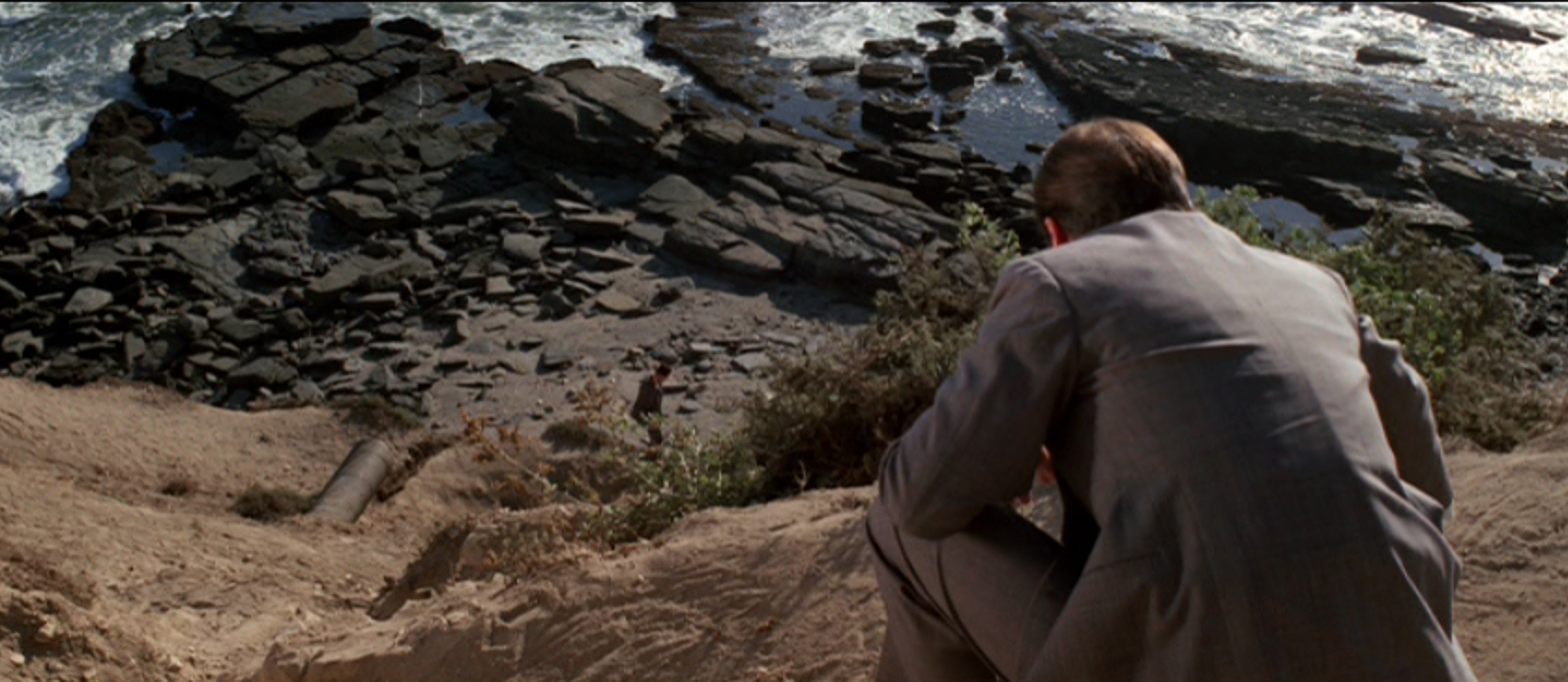
One of my favorite Chinatown sequences is when Jake Gittes follows Hollis Mulray to some kind of seaside cliff area at dusk. Settled vibes, quiet street. Bunny Berrrigan‘s “I Can’t Get Started” can be heard from inside a small curbside cafe. Gittes watches Mulwray climb down to the rocky beach area and wait. Sitting atop the bluff and next to a large metal water pipe, Gittes waits also.
Night falls, and then the approach of surging water, whooshing out of the pipe…”runoff.”
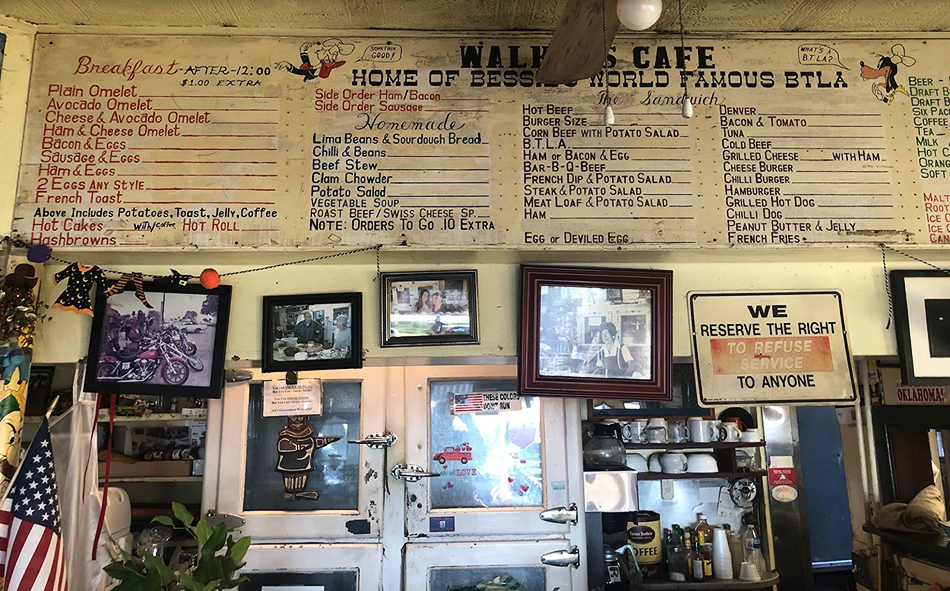
I’ve been a Los Angeles resident since ’83. I don’t know why I waited 37 and 1/2 years to visit this fabled location, but at least I finally did. The Bunny Berrigan place is still there — a ramshackle joint called Walker’sCafe, more or less a biker haunt. The address is 706 West Paseo del Mar in San Pedro — just off South Gaffey Street and right next to PointFermin.
The isolated cul-de-sac vibe is gone, of course — partially destroyed by a large metal fence. But when you look down to the sea from the edge of the bluff it’s definitely the same spot that Gittes spied on Mulwray from. Before we left I ordered two root beers from Walker’s.
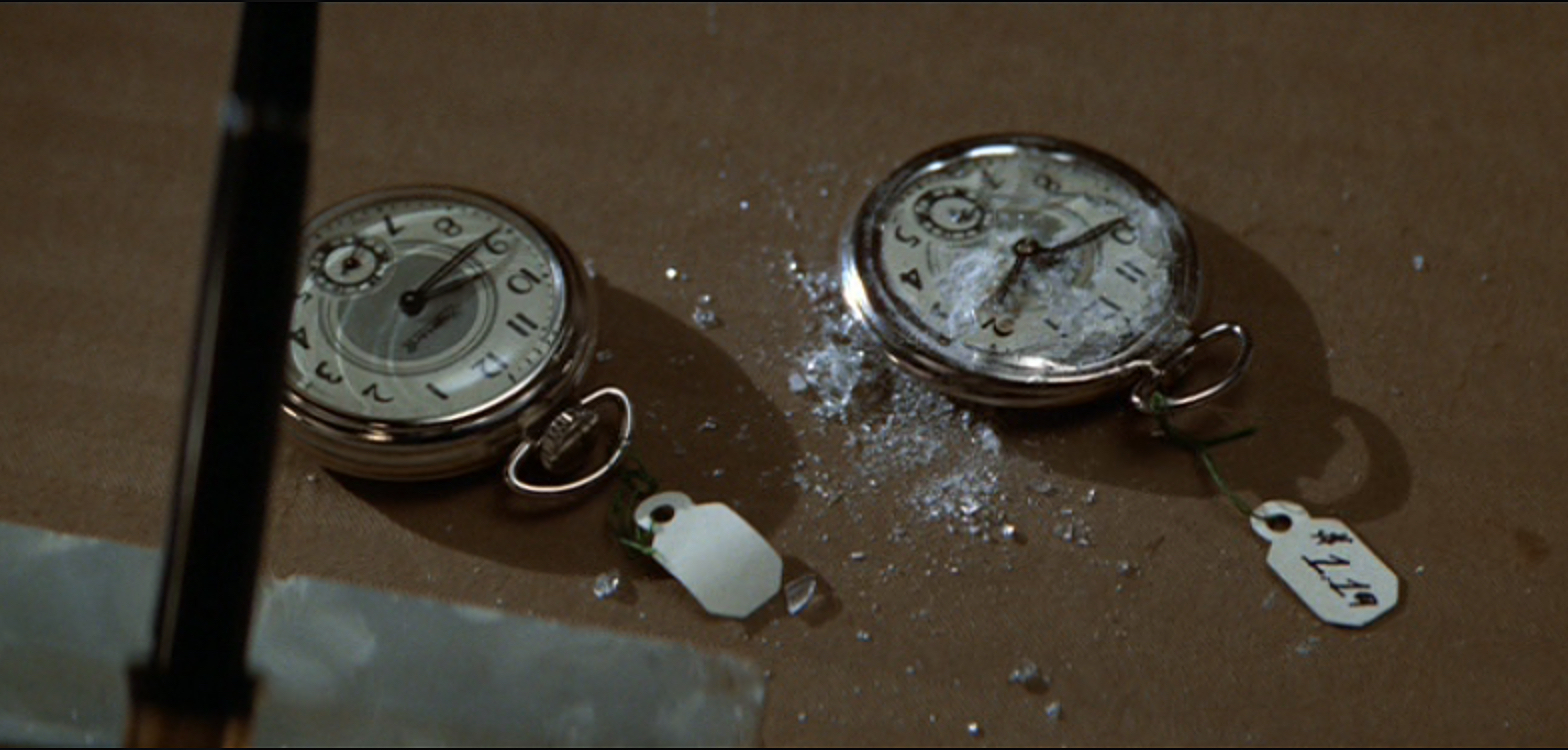
Gittes: “Jeez, he was there all night.” Walsh: “I had to go back three times to pick up the watches.”
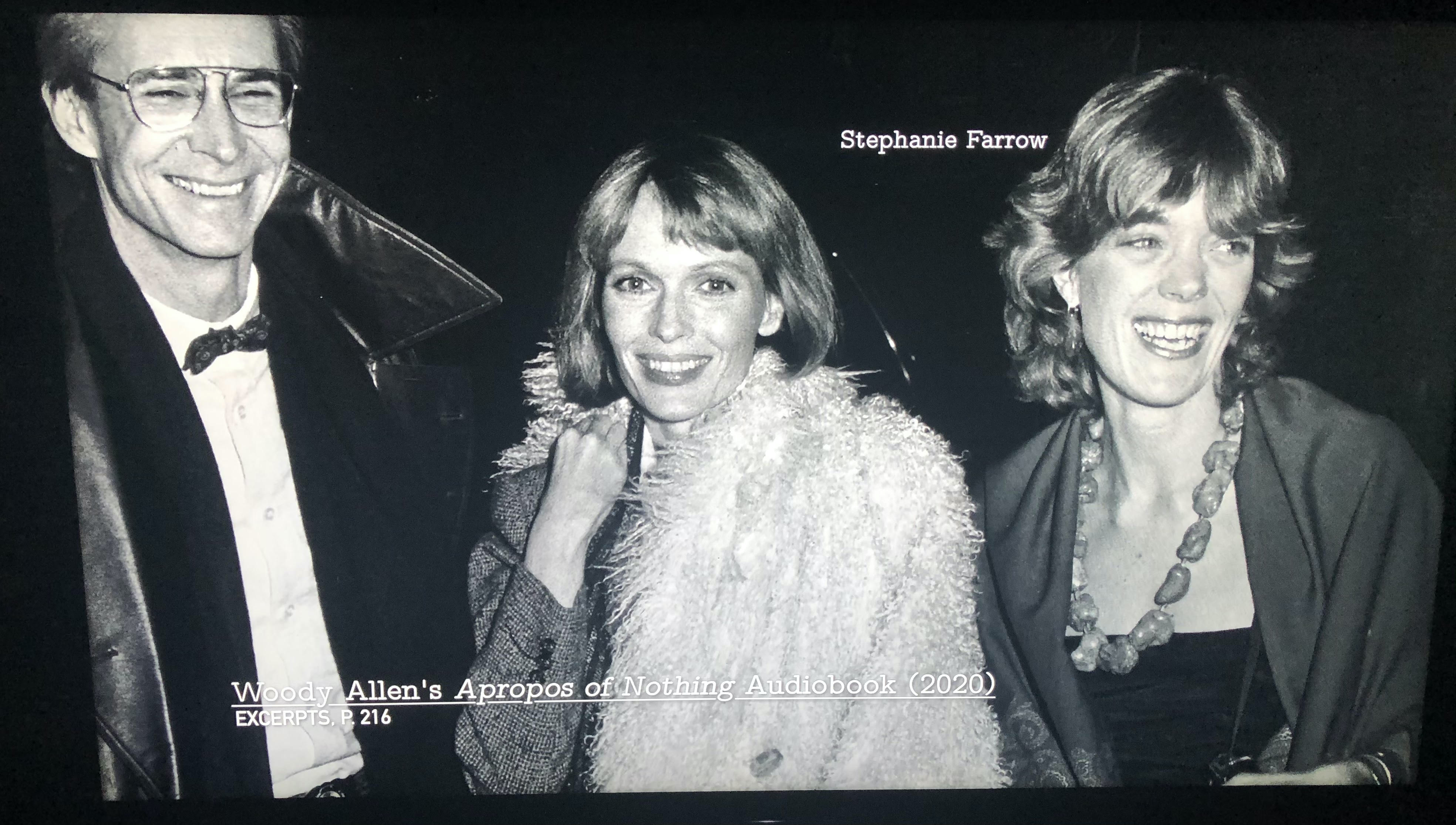
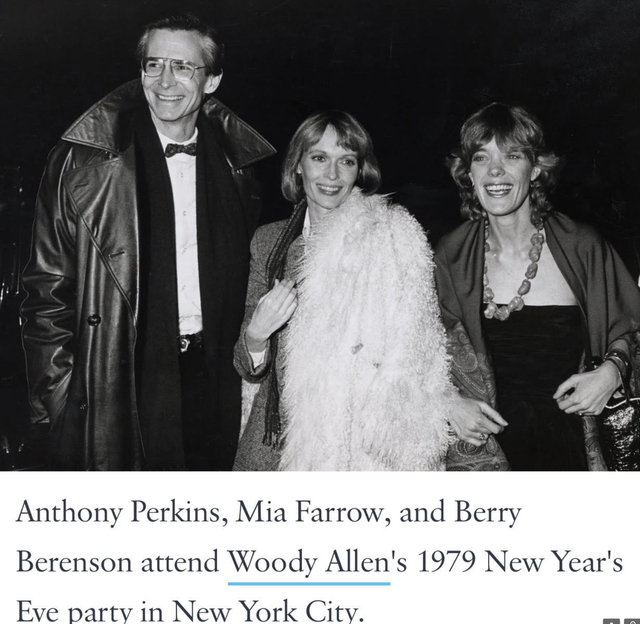
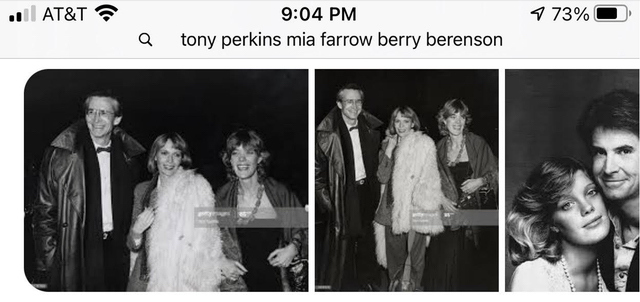
Within the first 20 or 25 minutes of Allen v. Farrow (HBO Max, 2.21), co-directors Kirby Dick and Amy Ziering misidentify Berry Berenson, the late wife of Tony Perkins, in a 1979 New Year’s Eve photo.
Allen v. Farrow captions the 41-year-old photo as one of Perkins, Mia Farrow, and (far right) “Stephanie Farrow.” Except it’s Berry Berenson.
How could Kirby and Amy and their homeys (producers, allies, editors, publicists, Carly Simon) make a fairly glaring mistake like this? Who can say? But after working on this doc for three years and constantly, I’m sure, double-, triple- and quadruple-checking it over and over again, they did. So they’re fallible, capable of error. Like all of us.
Is there anything else they might’ve gotten wrong or misunderstood or otherwise dropped the ball on? Maybe not. Maybe they whiffed just this one time.
Repeating: Moses Farrow needs to answer Farrow v. Farrow on each and every wrongo or misunderstood or questionable assertion.
Screenshot of incorrectly captioned Allen v. Farrow photo — the woman on the far right is not Stephanie Farrow but Berry Berenson.
Over the past few weeks, we have received many requests to comment on the HBO documentary Allenv. Farrow. Below please find a statement, attributable to a spokesperson for Woody Allen and Soon–Yi Previn. Thank you.
“These documentarians had no interest in the truth. Instead, they spent years surreptitiously collaborating with the Farrows and their enablers to put together a hatchet job riddled with falsehoods. Woody and Soon-Yi were approached less than two months ago and given only a matter of days ‘to respond.’ Of course, they declined to do so.
“As has been known for decades, these allegations are categorically false. Multiple agencies investigated them at the time and found that, whatever Dylan Farrow may have been led to believe, absolutely no abuse had ever taken place. It is sadly unsurprising that the network to air this is HBO – which has a standing production deal and business relationship with Ronan Farrow. While this shoddy hit piece may gain attention, it does not change the facts.”
In HE’s humble opinion the most engrossing and ravishing X-rated or NC-17 film ever released is Lindsay Anderson‘s If…, closely followed (most of us have this list memorized) by John Schlesinger‘s Midnight Cowboy, Pedro Almodovar‘s Tie Me Up! Tie Me Down!, Bernardo Bertolucci‘s Last Tango in Paris, Louis Malle‘s Damage, Nicolas Roeg‘s Performance, David Cronenberg‘s Crash and Abel Ferrara‘s Bad Liuetenant.
I know I’m obliged or at least expected to include Stanley Kubrick‘s A Clockwork Orange but I’ve absorbed it too many times — I can’t really “watch” it any more.
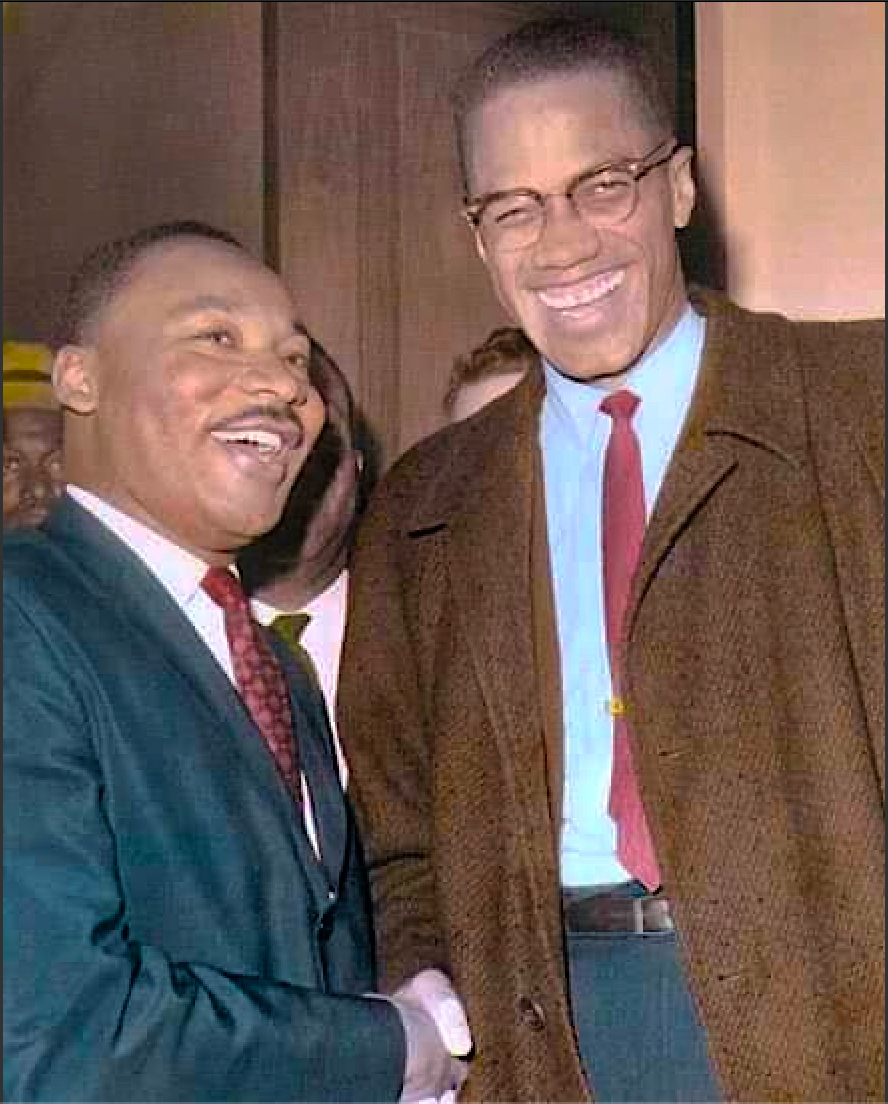
On the 56th anniversary of the murder of Malcolm X, it somehow never sank into my thick head that the former Malcom Little was six-feet-four. I can’t blame Spike Lee or Denzel Washington — it’s basically my fault, my lack of focus. Nor had I paid much attention to the fact that Martin Luther King was only five-foot-seven. I knew he wasn’t Wilt Chamberlain but I never understood that he was what most people would consider “on the short side.” He shared the same height as Al Pacino. Then again he was an inch taller than Alan Ladd.
Actual conversation that took place yesterday (HE being one of the participants), mostly focused on Kylie Jenner:
Friendo #1: “You can be as shamelessly sexual as you want any time you want. You just can’t be a guy noticing or commenting or looking.”
Friendo #2: “I think that cognitive dissonance you’re talking about in the culture — i.e., encouraging male lust while demonizing male lust — is almost psychotic. And toxic in its hypocrisy. One can only weep for the vanished honesty of Sex and the City. The demonizing of male sexuality now symbolizes a kind of cultural death wish.”
Friendo #1: “Hah — I can’t imagine what it’s like to grow up as a young white male right now.”
HE: “But wasn’t female sexuality (much less open expression of same?) rigidly of not punitively repressed in this country and throughout the world for centuries? Since forever? The pendulum has simply swung sharply in the other direction. Woke society to young males: We can’t stop your natural hormonal urges, but step out of line just once and WE WILL LOP YOUR HEAD OFF.”
Friendo #2: “True enough. But that repression of female sexuality took place within a more repressed culture, period. That didn’t justify it, but that was the context. Trying to make the pendulum swing the other way in a culture as openly, rabidly sexual as ours is insane. It doesn’t work. It only breeds…more Republicans!”
Kylie Jenner
HE: “Funny.”
Friendo #1: “What I’m noticing is the Kardashian brand…Cardi B or Miley Cyrus or any young female on Instagram or Tiktok, and even the rise of ‘only fans’ where young women are selling naked pictures of themselves. For instance, on Tinder apparently young beautiful girls attract a whole bunch of men who then pay them to send photos. Most of the young women only want that kind of interaction.”
“But the puritanism is played out on a much bigger stage where men are ‘creepy’ if they even comment on a woman’s looks (like Variety‘s Dennis Harvey). Maybe this ONLY applies to white men. Maybe black men or men of color can say or do whatever they want and it won’t matter. But I just find it all very odd — women seem to be at once infantilizing themselves as perpetual victims while also, and at the same time, feeling empowerment by displaying their hyper sexuality.
“I find it all really confusing. We know what the rules are who must obey them but they seem to change all of the time with the one constant being to remove the cultural power of straight white men.
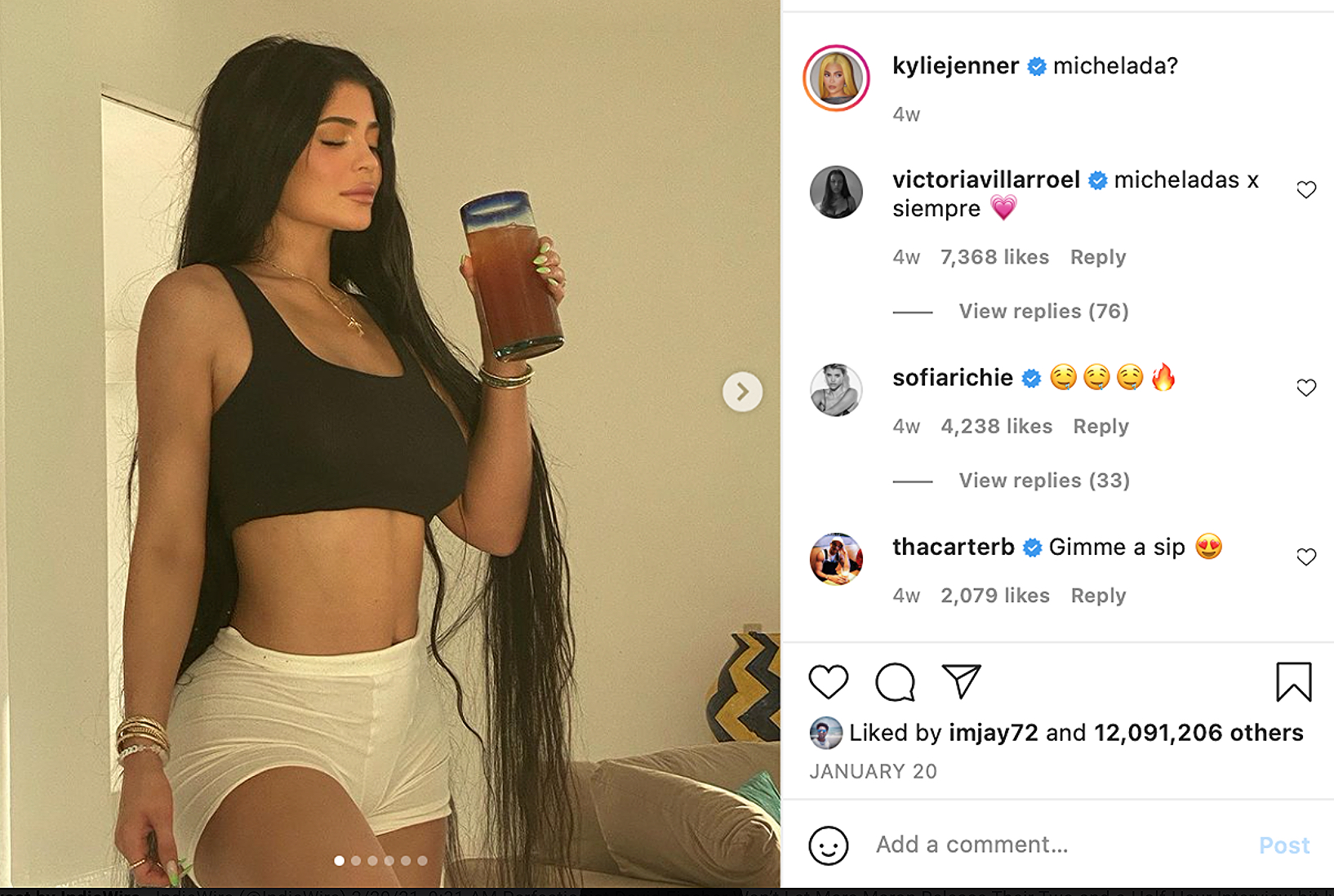
“Like, for instance, how does this picture [of Kylie Jenner] get 12 million likes on Instagram:
HE: “What’s she drinking, iced tea? WHO CARES?”
Friendo #1: “I know. But she has 200 million followers. Barack Obama only has 34 million. The point is that ALL she’s selling is sexuality. That is it. Sold mostly to women, I would imagine.”
Friendo #2: “The power of EVERYONE is being removed. Women are coerced into these roles, and it only looks like ‘freedom.’ This is late-capitalist corporate control — Orwellianism in a thong.”
Jodi Shaw to Smith College as passed along by Bari Weiss: “I ask that Smith College stop reducing my personhood to a racial category. Stop telling me what I must think and feel about myself. Stop presuming to know who I am or what my culture is based upon my skin color. Stop asking me to project stereotypes and assumptions onto others based on their skin color.”