Eric doesn’t get it

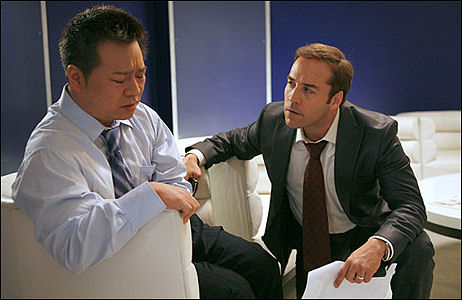
In last Sunday’s Entourage (episode #48 — “The Weho Ho”), Kevin Connolly‘s Eric — the manager of Adrien Grenier‘s Vincent — decided to bail out as producer of Vincent’s next film because he can’t stand the abrasive personality of the film’s director, Billy Walsh (Rhys Coiro), despite his considerable talent. (According to Vincent and at least one other character.)
In so doing, Eric not only acted like a picky-prissy — he also ignored one of the most essential laws of survival and success in this town, which is that you can never afford to pass up a chance to work with seriously talented people, no matter how distorted or deranged they may be as human beings.

I’m not saying that all assholes are talented or that all talented people are assholes. (Thank God.) But sometimes — some would say often — talent and abrasive or hard-to-take personality traits go hand in hand. At the very least the extremely gifted are often a handful. That’s unfortunate, but also the way it is. Salieri is polite, tactful, politically skilled…and a mediocre artist. Mozart is boorish, vulgar, childish…and a genius.
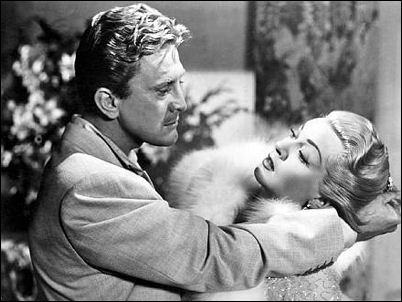
The finale of Vincente Minnelli‘s The Bad and the Beautiful makes this point very concisely. The film is all about why a famous actress (Lana Turner), an honored director (Barry Sullivan) and a gifted novelist and screenwriter (Dick Powell) despise a certain brutish and egoistic producer (Kirk Douglas). But at the very end they can’t resist picking up a phone so they can listen in on Douglas explaining his latest idea.
But the Kevin Connolly/Eric aesthetic says nope — the talented guy’s a prick, impossible, makes me unhappy, won’t work with him. Eric’s a decent, sensitive guy, but he doesn’t get it. Unless, of course, he’s right about Walsh being “over” with “his best days past him.” In which case he’s doing the right and sensible thing.

Howell on “people of size”

Speaking of Hairspray star Nikki Blonsky, National Association to Advance Fat Acceptance spokesperson Peggy Howell has told The West that “we’re delighted to see a young, beautiful woman of size have an opportunity like this. About 65 per cent of the American population is now considered overweight or obese, yet people of size are really under-represented in the media, television and movies.”

“Right now, in terms of acceptance of overweight people, it’s maybe even worse than it’s ever been,” Howell says. “There are people who identify more with anorexic and bulimic-type bodies than they do even with what would be considered a normal, average, healthy-sized body. Some people definitely show a lot of hatred toward a fat body.”
Hatred? In Powell’s case it’s more a matter of concern. Besides, why do fat-people spokespersons always make it a choice between Jabba-sized sea lions and bony wasted anorexics? What about the ample in-betweens — curvy, zaftig, rubenesque, pleasantly plump and sexy roly-poly?

Darfur growth trip

U.S. authorities looked the other way when the Rwandan genocide happened in ’94, and there hasn’t been very much said or done about the current slaughter in Darfur either, despite George Clooney and Don Cheadle trying to ignite attention. (And men like Congressman Tom Lantos writing articles like this one in Vanity Fair.) Racist indifference about the fate of dark-skinned peoples is surely part of the reason, but did anyone in this country get wildly aroused by the Serbian slaughter of Bosnian Muslims in the ’90s, or by Pol Pot’s Cambodian genocide in the mid ’70s?
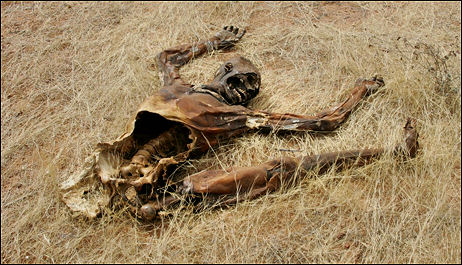
Part of the problem is that the reasons for the Darfur killings, which began in early ’03, are a bit murky. But it comes down to an ethnic cleansing campaign driven by oil-rich, Islamo-facist Arabs who want to destroy the farmer-class blacks who live in the Sudan’s southwestern section.
The bad guys are the Sudanese chiefs in Khartoum and the evil militia called the Janjaweed, whom the government funds. The good or somewhat better guys are the Darfur-region farmers, some of whom have given support to the fighters for the Sudan Liberation Movement and the Justice and Equality Movement. The Janjaweed and the Khartoum government have been systematically slaughtering tribes — women, children, old people, livestock — as a way of getting at the rebels. Maybe it’s also because Khartoum has acquired a taste for conquest and simply doesn’t want to stop. The estimates of the dead range from at least 200,000 to over 400,000.
I’m finally feeling the situation a bit because last weekend I saw Annie Sundberg and Ricki Stern‘s The Devil Came on Horseback (International Film Circuit), which opens in NYC on 7.25 and after that move across the country on a city-by-city basis into the mid-fall.
It’s a strong, moving, very well made documentary. Sad, obviously. Numbing, to a certain extent. (How could it not be?) But it’s not just grisly images and depressing statistics. It tells a story of an awakening, and in so doing invites us to follow suit. I’m glad I saw it.
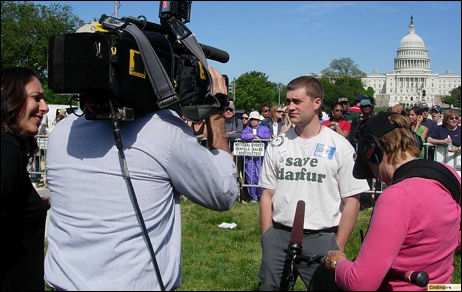

Brian Steidle (right center)

The first half of Horseback is the story of how former Marine Capt. Brian Steidle, a guy with a taste for danger, wound up taking pictures and video footage of the Darfur genocide after landing a job with the African Union, an observer group, in ’04. He came to realize soon enough that the Janjaweed militia, armed by the Sudanese jihadists, were slaughtering Darfur’s black, non-Arab residents in massive numbers.
The second half is about an outraged Steidle showing his stills and his video documentation to various political and do-gooder groups in the U.S.. As Variety‘s Robert Koehler has said, the fact that an ex-Marine “had to do the job that was once the province of foreign correspondents is both an unspoken statement on Darfur’s extreme danger and remoteness, and also on the failure of Western — and American — journalism, and in particular, TV journalism to report on Africa.”
The film finally wonders what will it take to get U.S voters aroused enough to ask that something be done to stop the murders. Things have happened, of course — rallies, celebrity lobbying, Senator Barack Obama calling attention to the situation in speeches, etc. But this is only the beginning.
What the U.S. government really needs to do is step in big-time and start forcing the issue. Huge financial incentives (i.e., bribes) need to be offered to make it clear to Sudanese president Omar Hassan al-Bashir and his cabinet stooges that stopping the slaughter will be much more profitable than to prolong it. The Chinese need to get tough with them also. An armed civilian-protection force has to some- how muscle its way into the country to defend the defenseless.

The Devil Came on Horseback co-director Annie Sundberg

I’ll be doing a phoner with Steidle tomorrow; I’ll try and get it up before the day’s out.

Ari and Lloyd

New York‘s “Vulture” columnist Ben Mathis-Lilley hit it right on the head in his assessment of the Ari-Lloyd thread in last night’s Entourage episode. He calls it “a subplot that wavered with surprising skill between comedy and tragedy,” and that it “points to the odd fact that the ostentatiously hetero Entourage writers do a much better job writing monologues for a hyperactive gay Asian than they do writing shit-talking bro-down exchanges between the four dudes.

“It also led to the scene in which Ari tracks down Lloyd’s ex and reveals that Lloyd was actually at work the previous Friday, not philandering like the boyfriend thought. Typically clean Entourage wrap-up, it seemed, except it turned out that Ari was just covering — Lloyd was cheating! It was an unexpected moment of depth involving a peripheral character, followed up by an even more unexpectedly heartfelt moment in which Lloyd explained that he strayed because he’s so plagued by self-doubt that he didn’t know what to do when someone he thought was out of his league showed an interest in him.
“Great stuff!,” Mathis-Lilley concludes. “Should Entourage go all gay, all the time?” Uhm, well, no…but Lloyd is a first-rate character, and it’s always pleasurable when a genuinely ironic turn occurs (i.e., an amusing but essentially deranged psycho agent brings a couple back together and brings happiness into their world for totally selfish reasons). Real-life stores are often made up of morally tangled situations, but TV and screenwriters rarely use them.

Kovacs memorial

Audrey Kovacs, widow of the recently departed dp Laszlo Kovacs, informs that some kind of memorial gathering will happen at the ASC Clubhouse in Hollywood within the next three to four weeks. The details, as they become available, will be posted on www.theasc.com.

Spoilers require offense

“I wouldn’t dare unmask the secrets in the movie A History of Violence out of respect for the artistry of David Cronenberg and the integrity of his booby-trapped plot,” writes Village Voice film cricket Nathan Lee in a 7.21 N.Y. Times piece. “But there isn’t a single frame of The Number 23 I wouldn’t mock in great, guiltless detail for the simple reason that I find it extremely silly.

“A spoiler requires something to spoil and someone to take offense at the spoiling, and I’m confident that my readership does not include humorless scholars of the Joel Schumacher oeuvre.”
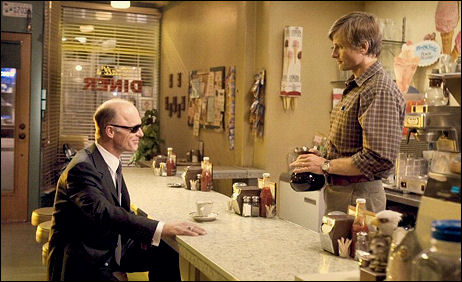
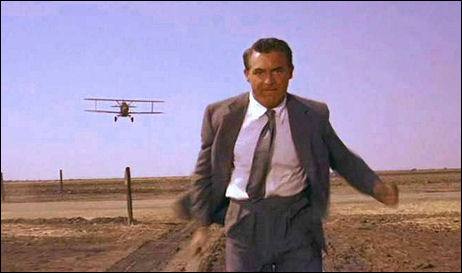
What’s the History of Violence spoiler? That Viggo Mortensen is really Joey the gangster? Isn’t that rather obvious from the moment when Mortensen wastes those two cafe robbers, and surely from the moment that Ed Harris and those two goons come into the diner and start with the insinuations? 48 years ago, would a critic have spoiled the just-opened North by Northwest by revealing that Cary Grant‘s Roger Thornhill isn’t really George Kaplan? Gimme a break.
I love those guys who angrily complain when I discuss a plot point about a film that’s opened, say, a month or two ago on the grounds that they’re waiting for the DVD to see it. And the ones who complain about spoilings because they’re waiting for the film to show up on cable before seeing it. I don’t have a hard and set rule, but if a film’s been playing for five or six weeks, I say all bets are off. Except for movies with Really Big Surprises — The Sixth Sense, The Empire Strikes Back, Crying Game, etc.

Note: Thanks to Moving Picture Blog’s Joe Leydon for linking to Lee’s article.

Smith’s Next Two Films

Wow, missed this one, all the way back to 7.18: Kevin Smith talking to MTV.com’s Shawn Adler about two films he’s shooting in tandem — Zack and Miro Make a Porno, a comedy about two Minnesota guys starting an amateur-porn business on the eve of their 15-year high school reunion, and a Shining-type horror flick called Red State. The former will be “done shooting by Christmas,” with Red State expected to begin production “sometime in February or March.”

Spielberg & Co. leaving Paramount?

If you believe in the maxim that fire follows smoke, those recent stories about the DreamWorks guys (Steven Spielberg, David Geffen, Jeffrey Katzenberg) possibly looking to sever ties to Paramount — written by Business Week‘s Ron Grover, Variety‘s Peter Bart, DHD‘s Nikki Finke and Hollywood Wiretap‘s Tom Tapp — suggest something’s probably up.
What’s the rumpus exactly? What does it all boil down to? A small group of super- rich older guys (50ish, 60ish and beyond) rubbing each other the wrong way. One pissed about another’s dismissive manner, one dissing another over an evident pattern of credit-hogging, all of them fuming because their massive egos haven’t been satisfactorily stroked. Truly fascinating. If only Honore de Balzac could somehow be raised from the dead and given close access.

Hungarian translation

Laszlo Kovacs ‘ death was confirmed to me this morning by Lisa Muldowney of Creative Communication Services, which represents the American Society of Cinematographers. He died Saturday at his home in Beverly Hills.
On 7.18 a Hollywood Reporter story by Carolyn Giardina said that “Martin Scorsese, Dennis Hopper, Mark Rydell, Owen Roizman and Haskell Wexler are slated to be interviewed for inclusion in a new documentary about two of the community’s most influential directors of photography, Laszlo Kovacs and Vilmos Zsigmond.
“In production, Laszlo & Vilmos: The Story of Two Refugees Who Changed the Look of American Cinema is being written and helmed by director of photography James Chressanthis.”
Last night I passed along a Hungarian website report about Kovacs’ apparent passing after attempting to translate the first three paragraphs of the Hungarian story on a website called InterTran. The translation was prettty nutso, but the brief career recap alone indicated the worst. Here’s the precise Hungarian-to-English reading:
She had died Hammersmith Laszlo, the Hungarian bead-roll world camera-man, extended serious illness after first-day at dawn Bung Hills at his home senses kozlemenyeben the Hungarian Cinematographer. His companion HSC. Vagyoczky Tibor cinematographer , the HSC tagja the MTI nek she told me, the heavy-hearted hirt in person the artiste widow of him intimidated with it on the phone. Hammersmith Laszlo ban graduated the Budapest Theater, and Cinematics College cinematographer cook, yet on that year emigrated, ever since in the United States she was alive and panted. Several knew picture cinematographer it had been.”

Second Worst Man

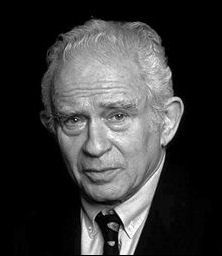
At yesterday’s launch of “The Mistress and the Muse“, a Manhattan retrospective of Norman Mailer‘s film work, the legendary author spoke about the second worst man he’d ever met, and The Reeler‘s Stu Van Airsdale wrote it all down:

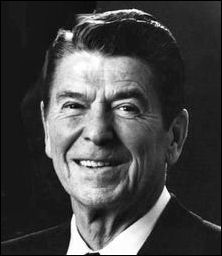
“I sat across the table from him. He had about the stature of a man who’s a publicity director for a Midwest corporation of medium size. There were about 12 of us at the table. I never met his eyes once even though I was sitting this far away from him. [Holds palms three feet apart.] I realized that this was a man who had learned very early in life to never have a conversation with anyone who could do you no good. So our eyes never met, because he sensed that if our eyes met, a good question would pop into my head.
“Anyway, that person — number two — is Ronald Reagan.”
I don’t like to visit much less dwell in this realm, but this led me to wonder who are the two or three worst people in Hollywood I’ve ever run across? And how do you define worst? For me it means a person who, after all is said and done, has shown himself to be profoundly vicious and ungracious in his regard for certain others, and who insists on a certain manic rigidity in his/her estimation of other people, places, views, etc. A person, in other words, who not only has a difficult time cut- ting other people slack, but who seems to revel — who seems to almost derive a form of sensual pleasure — in the caverns of sulfur, in harshness and combative- ness, in bully-boy scheming and finger-pointing and the rendering of damning judgments.
I was about to spit out the name of this rancid human being…until I stepped back and asked myself if I’ve been a little bit guilty of these things from time to time. I’ve been accused of being mean and overly judgmental, and I won’t say I’ve never gone there. But I think I’m pretty good at cutting other people slack, which is to say choosing to focus on their good sides and ignore the bad. So I’m not going to spit that name out. But as God is my co-pilot and Jesus my judge, there are people in this town who in serious need of personality transplants.

Laszlo Kovacs dead

MNO, a Budapest-based website, is reporting that the great cinematographer Laszlo Kovacs has passed on. Working backwards and choosing randomly from his credits: My Best Friend’s Wedding, Multiplicity, The Scout, Radio Flyer, Say Anything, Little Nikita, Legal Eagles, Mask, Ghostbusters, Frances, Heart Beat, The Runner Strumbles, New York, New York, Shampoo, Freebie and the Bean, Paper Moon, Slither, Steelyard Blues, The King of Marvin Gardens, What’s Up, Doc?, Pocket Money, The Last Movie, Alex in Wonderland, Five Easy Pieces. One of the very best. A legend. Met him a few years ago at the Newport Film Festival, heard him speak…Excellent human being.