Good Riddance?

Deadline‘s Mike Fleming reported a while ago that Disney has shut down Jerry Buckheimer and Gore Verbinski‘s The Lone Ranger, the Johnny Depp-Armie Hammer western that’s currently in pre-production, and which would have begun principal photography in October. The problem, says Fleming, was that Disney wanted the all-in cost to be $200 million and that the production tab was either $232 millon or $250 million or…whatever, too high.

I don’t know anything but cheers (I think) to the Disney execs who approved this. Mainly because The Lone Ranger isn’t, according to the grapevine, about fighting aliens or the Mexican Army or the entire Sioux nation, and it doesn’t involve gargantuan steampunk machines a la Wild Wild West or a cattle drive involving 80,00 steers. Or at least no one’s heard of anything along these lines. So why the hell would a movie about a masked avenger and his loyal Indian friend riding around on horses cost $200 or $232 or $250 million….are the filmmakers insane?

Unless, of course, the film is about the Lone Ranger vs. aliens or Mexican soldiers or steampunk monsters or dinosaurs, etc. In which case the filmmakers have gone off the deep end. Scale and grandiosity in and of themselves are not entertaining.

I obviously need to read a script and call around but isn’t The Lone Ranger supposed to be, like, a “western”? The Legend of the Long Ranger, the crappy 1981 version with Klinton Spillsbury, was more or less “realistic” and cost about $18 million. That translates to about $45 million in 2011 dollars so how the hell could Bruckheimer-Verbinski jack their budget up to four and half times that amount? Or higher?

Update: A friendly reader just sent me a 3.29.09 draft of Ted Elliott and Terry Rossio‘s script. $200 million divided by 125 pages = $1,600,000 per page.

O'Neil Explains Help Situation

I’ve just spoken with Gold Derby‘s Tom O’Neil about the likely award-season strategies for The Help‘s Viola Davis and Octavia Spencer, and he’s convinced me that Disney is going to push Davis as Best Actress and Spencer as Best Supporting Actress.
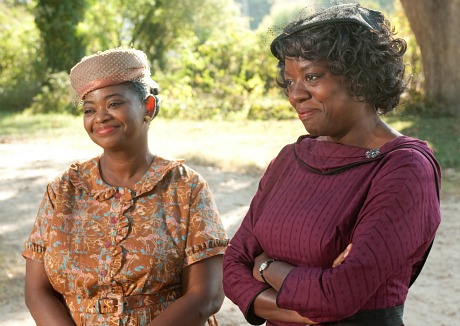

Octavia Spencer, Viola Davis in The Help.

As O’Neil partly says in a recent “Awards Tracker” article, Spencer has the best shot at winning between the two because she’s playing an impudent back-talker and that this is the kind of performance — spunky, spirited — that tends to win in that category.

“They have to split up those two maids,” O’Neil said a few minutes ago. “And Davis is not the sort of actress who at this stage in her career, after winning a Best Actress Tony award for Fences on Broadway…she will not will accept sitting at the back of the bus.

“In Fences she took a role that Mary Alice had won a Best Featured Actress Tony for in 1987…and then the same play comes back in 2010 and her reps pushed for Davis to be nominated as Best Actress…they peititioned the Tony committee to change their minds, and they did change their minds and Davis won. That is why we know she’s not going to accept a Supporting Actress campaign for The Help.

“So she’s not going to go for a Best Supporting run anyway, and this works out because that way the two maids won’t be running against each other and possibly cancelling each other out.”

But Davis’s role in The Help isn’t a lead, I told O’Neil. It’s basically a strong supporting part about a woman who doesn’t drive or instigate the action (i.e., the writing of a book about maids in Jackson, Mississippi circa 1963) but who stands up for herself in a strong, dignified way. So why campaign Davis as Best Actress if (a) she’s not delivering an unmistakably lead performance, (b) if people are thinking, rightly or wrongly, that she’s playing a supporting role, and (c) if the likelihood of Davis winning over Glenn Close or Meryl Streep in their respective lead roles in Albert Nobbs and The Iron Lady, is not that high?

“Because they dont give a fuck,” said O’Neil. “This is about splitting up Davis and Spencer and putting them into different acting categories and about what Davis will and won’t accept. It’s about stature and status and politics…it’s highly unlikely that Davis will accept a Best Supporting campaign, and it’s not in anyone’s interest to have Davis and Spencer run against each other.”

“I know this is what they want to do,” said Deadline columnist Pete Hammond, referring to the split-up scenario, “but the bottom line is that Disney has to see what the actors branch says.

“Obviously they don’t want Davis and Spencer in the same category. This is an ensemble cast in The Help, and running actresses against each other used to be done all the time, like when they ran Debra Winger and Shirley MacLaine for Best Actress in Terms of Endearment, but these days the studios feel it ruins their chances to actually have a win, so they’re going to want to split them up.”

A couple of days ago I was told by a friend that a Disney publicist had said following a recent Academy member screening of The Help that they want to run both Davis and Emma Stone as Best Actress…maybe. But then I was told this decision hasn’t yet been firmed.

Hammond offered some historical perspective. “Remember that Susan Sarandon‘s performance in Atlantic City (’78), which even she thought belonged in the Best Supporting category, wound up being nominated for Best Actress,” he said. “And Patricia Neal won a Best Actress Oscar for her performance in Hud even though it was arguably for a supporting role, playing a maid.”

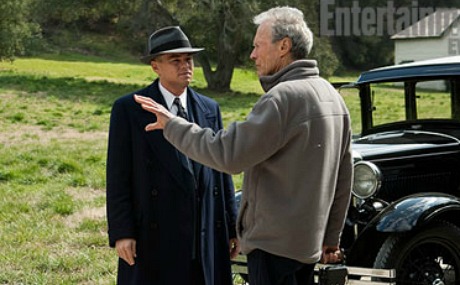
Channeling Ennis Del Mar?

In a piece based on a chat with J. Edgar director Clint Eastwood, EW’s Anthony Breznican writes that “while the screenwriter…believes it was J. Edgar Hoover’s suppressed sexuality that twisted him into the ultimate control freak with ultimate enforcement power, the screenplay keeps things somewhat ambiguous. After all, the premise is that failing to be able to feel something for another person is what warped Hoover, leading him to see everyone from Martin Luther King Jr. to Robert F. Kennedy as enemies of the state.”

In other words, J. Edgar is, in a sense, a cautionary tale about what happens when you suppress your feelings and deny who and what you are. Which was more or less what Brokeback Mountain was, right?

“Eastwood says he didn’t want to make a definitive statement about whether Hoover was gay, since that history is far from certain: ‘Some people might interpret it that way. Some people might say [he and Tolson] were just inseparable pals. Or maybe it’s a love story without being gay, I don’t know. But it’s very interesting, the way [Dustin Lance Black] laid out the script. It was nicely written. It didn’t go to the obvious.”

Due respect, but the version of Black’s script that I read last year wasn’t as oblique as Eastwood suggests.

Repeating again my April 2010 impression: “The scenes between Hoover and FBI ally/colleague/friendo Clyde Tolson are fairly pronounced in terms of sexual intrigue and emotional ties between the two. Theirs is absolutely and without any qualification a gay relationship, Tolson being the loyalty-demanding, bullshit-deflating ‘woman’ and Hoover being the gruff, vaguely asexual ‘man’ whose interest in Tolson is obviously there and yet at the same time suppressed.”

They Give Grief

Almost every ATM I’ve used in this country, Europe and/or Africa (and we’re talking hundreds) has refused to give me the cash until I withdraw the debit card, which always quickly spits out after you punch in the data. Bank of America ATMS are the only ones in the world that give you the cash first and then, very slowly, spit the card out.

The B of A people know that people who are scatterbrained and in a hurry tend to grab the cash and run and forget the card. They obviously know this, and for years they’ve refused to change the machines so they’ll work like all the others.

As I’m scatterbrained and always in a hurry, I’ve lost ATM cards four or five times with the help of Bank of America technology. This happened three weeks ago and again today, and both times when I tried to retrieve the cards from the B of A staffers in the adjoining bank they’d disappeared. My fault, of course, but it’s really B of A’s.

Pet peeve #2: People who get into their car inside a crowded parking structure, obviously aware that a driver is waiting to take their spot when they leave, and don’t leave. They get into the car and futz around, taking their sweet time before finally (sometimes a full minute or 90 seconds later) starting the car and backing out. And the guy/gal looking to take the spot is still waiting and blocking other cars, and no one thinks to go around him/her and before you know it it’s a total logjam with nothing happening, all because of the guy sitting in in his car and doing nothing. I never do this. When I get into my car in a crowded parking lot I get the hell out of there right away so as not to cause trouble.

But being able to beat L.A. traffic on the scooter is such a joy. I can get around almost twice as quickly as I can in the car.

"That's Fag Stuff!"

This Best Buy Exclusive Bluray of Midnight Cowboy came out last May, and I guess with Cannes and everything it slipped between the cracks or something. I happened to spot it on a rack last night at a Best Buy on La Brea. The film looks exactly as it should, like a moderately grainy 1969 film that was deliberately under-exposed by dp Adam Hollender, who wanted a verite, un-prettified, grubby-Manhattan-streets aesthetic. And he got that. And I’m fine with it. The Oscar-winning classic has never looked better.

Walk On

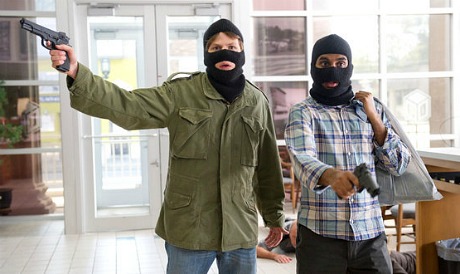
I tried to write a 30 Minutes or Less review three times over the last five or six days, and it wouldn’t come. Mainly because I just sat in my seat and pretty much waited for it to be over. It’s strenuous but almost entirely unfunny — I know that much. I knew going in that I didn’t want to see a movie about a guy forced to assist in a robbery because a device with plastic explosive is strapped to his chest because it happened for real in ’03 and the guy died. Sue me but I just didn’t want to see it. Not into chest bombs.

As it turned out there was one thing I laughed at. One. I wrote about it seven days ago. Otherwise the film is thin. Strained and thin and kind of drab.

I just sat there feeling a little badly for Jesse Eisenberg. Well, not that badly (he’ll be fine) but what a cliff-drop after The Social Network. I guess it all boils down to my Danny McBride problem. I haven’t much a choice, of course, but I really don’t want to see his morlock/warlock eyes in another comedy again…really. He’s not funny. And director Ruben Fleischer ‘s stock is surely worth a lot less now that it was in the wake of Zombieland. Because the comic inspiration that fed into that Bill Murray zombie sequence is nowhere to be found in 30 Minutes. It’s not a funny idea, not a funny script…I’d just like to forget it if it’s all the same. Just let it go.

Embrace The Realm

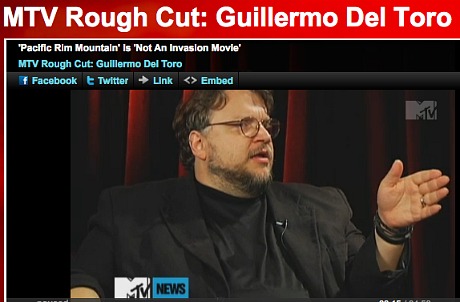
The bargain-basement, almost comically fake monsters in Attack the Block are harbingers of a new wave, I think. Aren’t we all sick of movie-club monsters that cost millions and take months to design? I want to see movie stars earnestly fighting “ironic” monsters that look borderline fake and stupid…but not entirely. Monsters that honestly admit to being creations. Almost in the vein of those stupid Toho monsters from the ’60s. To go by Guillermo del Toro‘s description of his Pacific Rim monsters, I don’t think he’s into this.

Christian Wackos for Perry

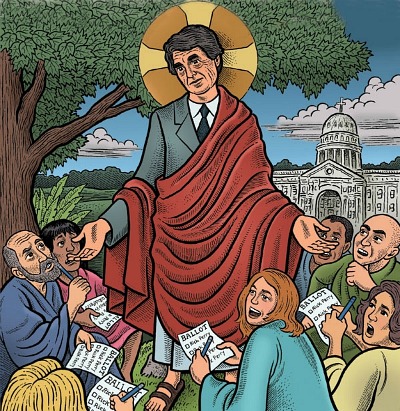
Forrest Wilder‘s 8.3 Texas Observer piece about the ties between Texas Gov. Rick Perry and a Pentecostal-on-steroids holy-roller nutbag sect called the New Apostolic Reformation doesn’t exactly say Perry is in the tank for these guys…but he’s clearly winking at them a lot. In Perry the NAR “may have found their vessel,” he writes, “and the interest appears to be mutual.

“Why would Perry throw in with this crowd?,” Wilder asks. “One possible answer is that he’s an opportunistic politician running for president who’s trying to get right, if not with Jesus, with a particular slice of the GOP base. Perry is a white southern conservative male who may end up running against a black president. It doesn’t take a prophet to see that he could use friends like these.

“There’s one other possible reason for Perry’s flirtation with the apostles, and it has nothing to do with politics. He could be a true believer. He’s certainly convinced the movement’s leaders. ‘He’s a very deep man of faith and I know that sometimes causes problems for people because they think he’s making decisions based on his faith,’ says Texas pastor Tom Schlueter. ‘Well, I hope so.’

“But the danger of associating with extremists is apparent even to Schlueter, the man who took God’s message to Perry in September 2009. “It could be political suicide to do what he’s doing,” Schlueter says. “Man, this is the last thing he’d want to do if it were concerning a presidential bid. It could be very risky.”

Schlueter and fellow pastor Bob Long “consider themselves modern-day apostles and prophets, blessed with the same gifts as Old Testament prophets or New Testament apostles,” Wilder reports. During their September ’09 visit to Perry’s governor’s office in Austin Schlueter and Long “told him of God’s grand plan for Texas. A chain of powerful prophecies had proclaimed that Texas was ‘The Prophet State,’ anointed by God to lead the United States into revival and Godly government. And the governor would have a special role.

The day before this meeting, Schlueter “had received a prophetic message from Chuck Pierce, an influential prophet from Denton, Texas. God had apparently commanded Schlueter — through Pierce — to “pray by lifting the hand of the one I show you that is in the place of civil rule.”