High-Strung Thandiwe Newton Intrigues

Last night an old friend gave me a bum steer. He persuaded me to watch All The Old Knives (Amazon), a poor man’s spy drama that made me feel resentful (as in “why didn’t I just stop watching after the first 15 minutes?”) and sullen. I could sense the mediocrity early on — I knew it would pollute my system but I stayed with it.

Starring Chris Pine and Thandiwe (formerly Thandie) Newton and costarring the infinitely depressing Larry Fishburne, Knives is basically third-rate “find the mole” John le Carre stuff + a glass of poisoned wine + a predictable third-act twist borrowed from Angel Heart. HE to old friend: “I blame the filmmakers, of course, but I also blame you for speaking well of it.”

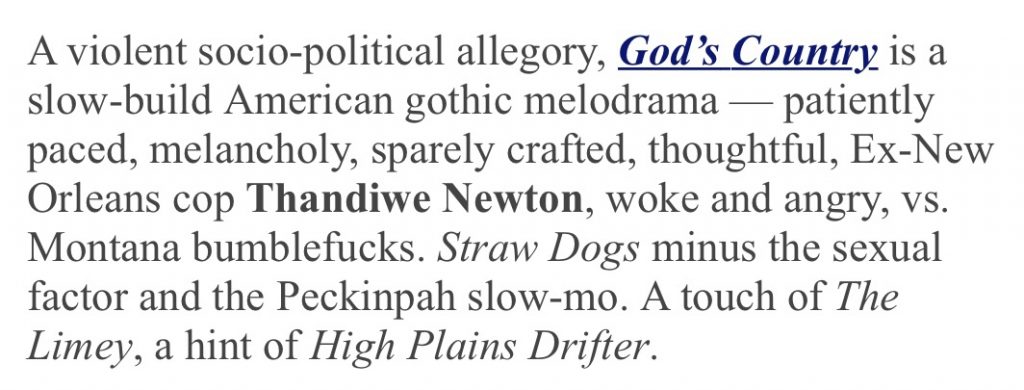
At least it reminded me of a much better film that also stars Newton: God’s Country, which I caught during last January’s Sundance Film Festival. I’m presuming it’ll surface sometime this year. It’s basically about an angry feminist Newton vs. three Montana bumblefucks. Here’s what I wrote three months ago:
This in turn led me to read all about a seemingly ridiculous but nonetheless intense argument that allegedly happened three or four days ago between Newton and Channing Tatum on the London set of Magic Mike’s Last Dance. A dispute about the Will Smith + Jada Smith + Chris Rock Oscar contretemps actually led to an enraged Tatum, the film’s producer-star, canning Newton and replacing her with Salma Hayek.

Who fires someone off a movie set over differing opinions about the Will Smith slapdown? If this really happened we can probably assume that Newton voiced a certain allegiance with Jada and that Tatum, whose right-leaning opinions were suggested by Dog, probably expressed a general disapproval of this whole déclassé spectacle. Woke feminist defiance vs. conservative white-guy values…something in that realm.

Insect antennae vibrations are telling me Newton’s emotional composure has recently been on the ragged edge, what with her recent marital split-up and all. Altogether a very strange episode.

Therapist Asks Tough Question

Don’t recite your resume or your hobbies, don’t tell us what you own or how your golf game has improved or how much you love your pets or anything peripheral…none of that…just tell us who you are.

Okay, here goes: I’m a guy who lives to write and writes to live. I believe that while certain bedrock behaviors are more or less constant if you’re sober, moods and perceptions are always tipping this way or that. There is no “real” essential identity. There is only our genetic history plus the constantly adjusting, moving-train way of things…influences, appetites, defense mechanisms, second thoughts.

I was angry as a kid because I’d suffered through a traumatic birth, and angry as a teenager because my functioning alcoholic dad managed to persuade me that I had to avoid turning out like him…that anything would be preferable to that. And yet I miss him on some level.

Nicholson to HE: That’s very nice, Jeff, but as usual you’re dodging. Who are you? Just say it.

HE to Nicholson: I don’t have a pat answer, and neither do you. Nobody does. I’m an imaginative egocentric refugee from a middle-class New Jersey suburb. I live for those transcendent moments that descend from time to time. (We all do, I think.) I’ve been lucky in some respects, and I’ve been blessed with a strong constitution. Otherwise I’m a reasonably stable, steady-as-she-goes workaholic.

I vastly prefer the poetry of cinema + great writing + music to the occasionally maudlin reality of day-to-day life. My eyes go all watery when certain memories surface, and especially when certain songs and passages from certain film scores are re-savored.

Most of us understand about God’s absolute and infinite indifference about whether we are happy or not, and that there is only “be here now” and the hum of it all, etc. And yet deep down I seem to spend a lot of time trying to re-savor or re-appreciate my deepest and most lasting memories from the 20th Century, and all the while hitting re-fresh.

I understand the rule about not mentioning cats and dogs, but they’re mostly wonderful (98% of the time) to hang with.

The Dark Night

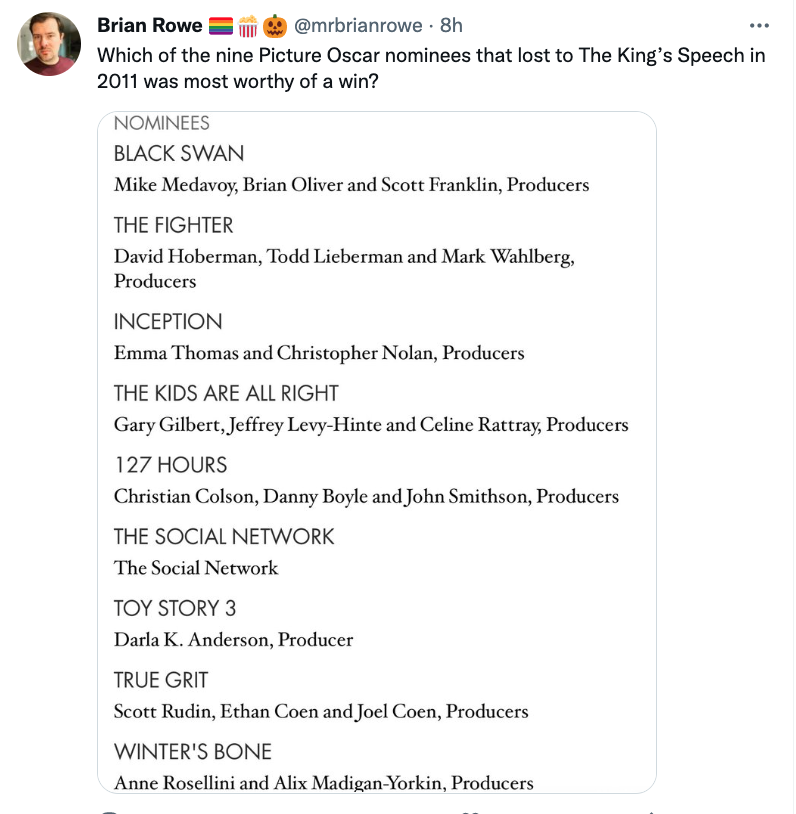
The Kings Speech (2010) won the Best Picture Oscar on 2.27.11, mainly because of a voting bloc of old boomer fuddy-duds who (a) always succumbed to anything upper-class British and especially if it concerned the crown, and (b) felt vaguely threatened by Millennial market forces and social media upheavals and weren’t emotionally moved by the saga of a chilly, Harvard-educated entrepeneur who fucked over a partner.

Obviously David Fincher‘s masterpiece was the crowning achievement of 2010 and should have won the big prize. And it not that then David O. Russell‘s The Fighter. The same people who voted for Chicago, The Artist and Argo voted for The King’s Speech.

Bad News Bears

I shared a pro-Russian invasion Instagram post from a certain party with Jordan Ruimy, and he replied as follows: “Hahaha…90% of Russians believe this. The Russians I know here in Montreal all post pro-Putin stuff on their Facebook. They are very patriotic people. I’ve also met a few Ukrainians over the years who consider themselves more Russian than Ukrainian. It’s very common, especially if they come from Eastern Ukraine.

“I just went to a old colleague’s Facebook page, he’s a pro-Russian Ukrainian, and he’s posting Tucker Carlson videos dubbed in Russian!”

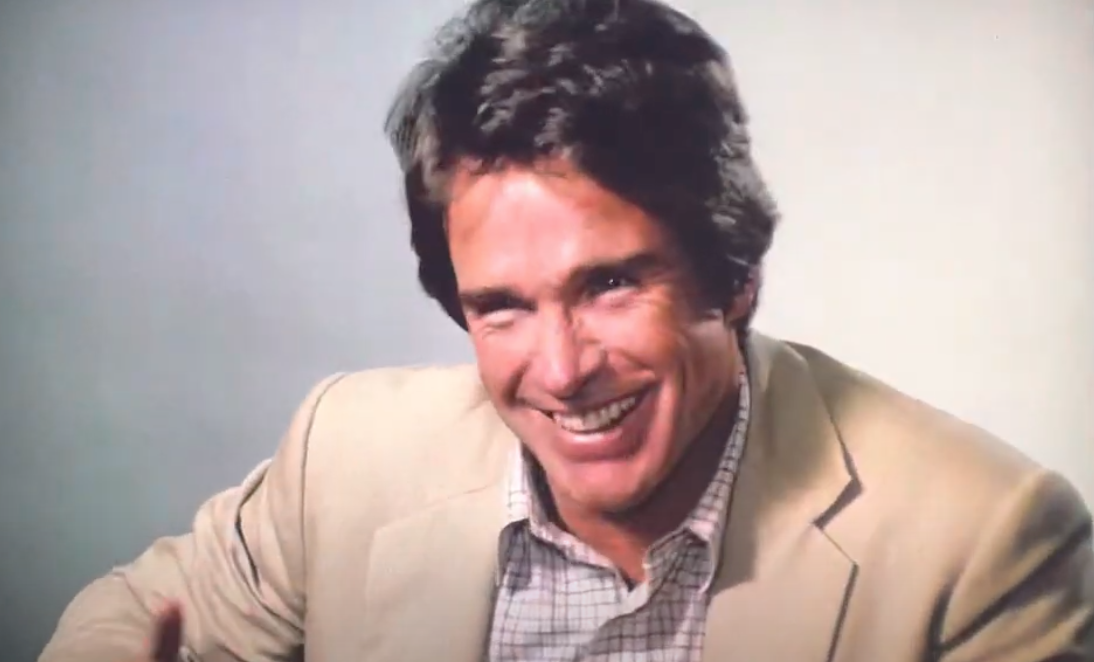
Beatty’s Sound-Mix Story

I’ve been looking for this hilarious story on YouTube for ages. It’s from George Stevens A Filmmakers’ Journey (’85), and nobody’s ever posted it. It’s funny because it reminds us that no matter how divine the inspiration and how arduous and exacting the effort to make the movie turn out right, the last guy on the delivery food chain can still screw it up. From Shane to Bonnie and Clyde to a projectionist’s booth inside London’s Warner cinema.

Read more

Don’t Make Too Much Of This

A certain party who caught a research screening of David O. Russell’s still-untitled ‘30s period drama (aka “Canterbury Glass”), which will open at year’s end…a certain party feels that Taylor Swift, who plays a secondary role, delivers impressively.

As I understand it Swift plays a somewhat tragic figure a la Anne Hathaway in Les Miserables, and that…okay, let’s stop right there. I don’t know if Swift plays a cameo or an actual supporting character or what. I don’t really know a damn thing, and with Russell’s rep declining to clarify for the time being, that leaves me high and dry.

Here’s how a Letterbox’d commenter put it a day or so ago:

“It felt like most of Russell’s effort was built into legitimizing Taylor Swift’s acting abilities more than the film surrounding her. She’s in the hunt for an Oscar nomination or even a win because, without spoiling, what she’s accomplished is remarkable (think Eddie Redmayne in The Theory of Everything meets anne Hathaway in Les Miserables). But I do fear she could end up like Hong Chau in Downsizing if the film isn’t fixed editing-wise in post.”

You have to take the preceding with a grain of salt given that some many people out there want Swift to be wonderful and triumphant at whatever she does. Let’s just wait and see.

Another source tells me Canterbury Glass is a complex, non-comedic ensemble film involving threats and murder. It does not appear to be aimed at people who loved CODA. “Complicated,” “sophisticated,” etc. Robert De Niro plays a politician afraid that certain parties are trying to kill him. Another character meets death due to a car accident.

From a recent screening invite synopsis: “Set in the 1930s, this film follows three friends who witness a murder, become suspects themselves, and uncover one of the most outrageous plots in American history.”

Don’t Tell Me About “Seven-Ups”

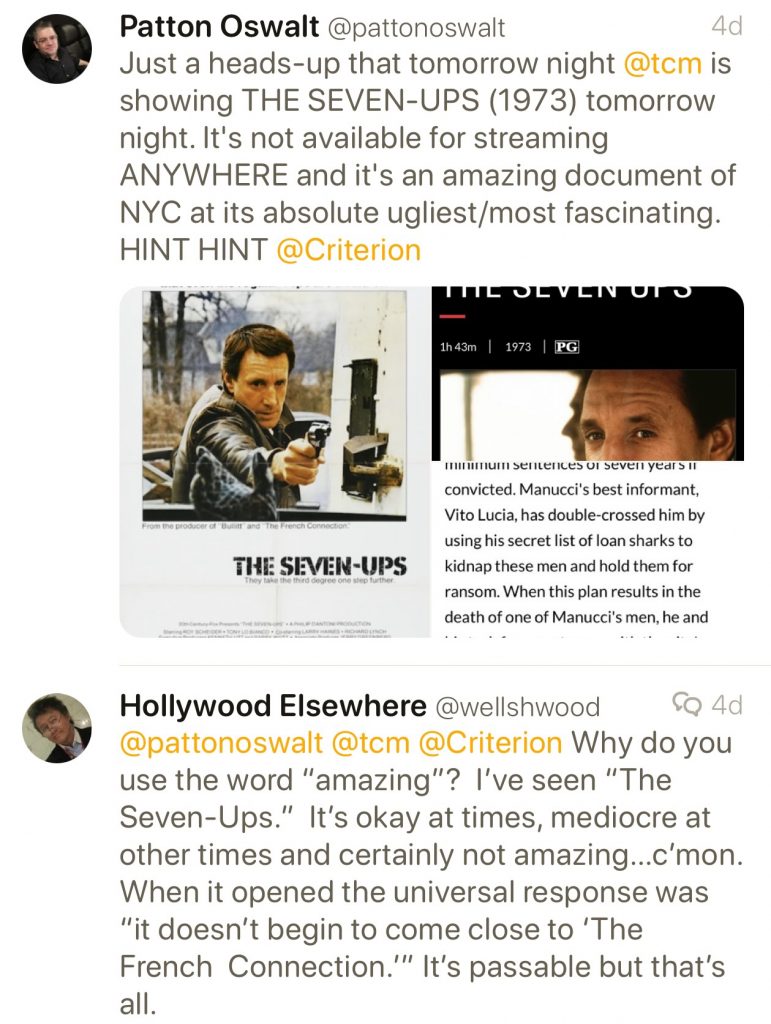
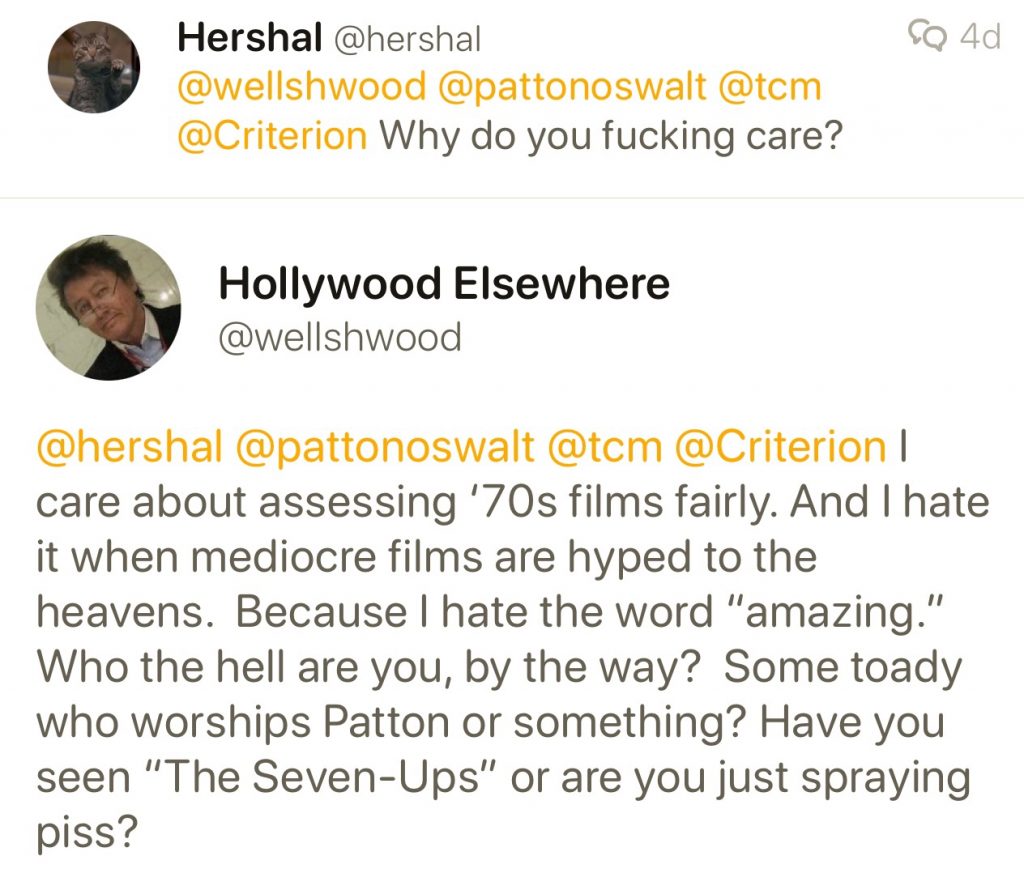
Three or four days ago I disputed Patton Oswalt’s overly admiring description of The SevenUps (‘73), a kind of French Connection wannabe cop film that starred Roy Scheider and featured another high-octane car chase. The only film directed by Bullitt and French Connection producer Philip D’Antoni. Decent but second-tier, and no one’s idea of wowser or amazing.

See It Differently

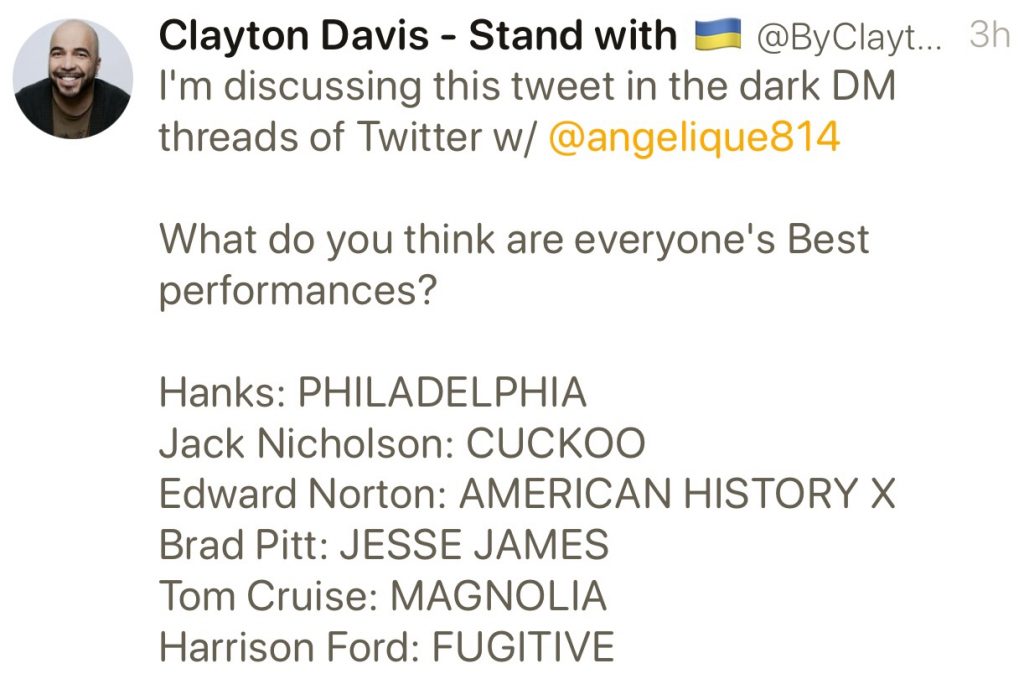
I kind of agree with Clayton Davis about Tom Hanks…actually I don’t. I think Hanks’ best performance was in Cast Away, followed by Big. (Denzel Washington was significantly more real-deal than Hanks in Philadelphia.)

HE sez…

Jack Nicholson: THE LAST DETAIL

Edward Norton: PRIMAL FEAR

Brad Pitt: MONEYBALL

Tom Cruise: JERRY MAGUIRE

Harrison Ford: WITNESS

“Talk of the Town” Given Bum’s Rush…Again

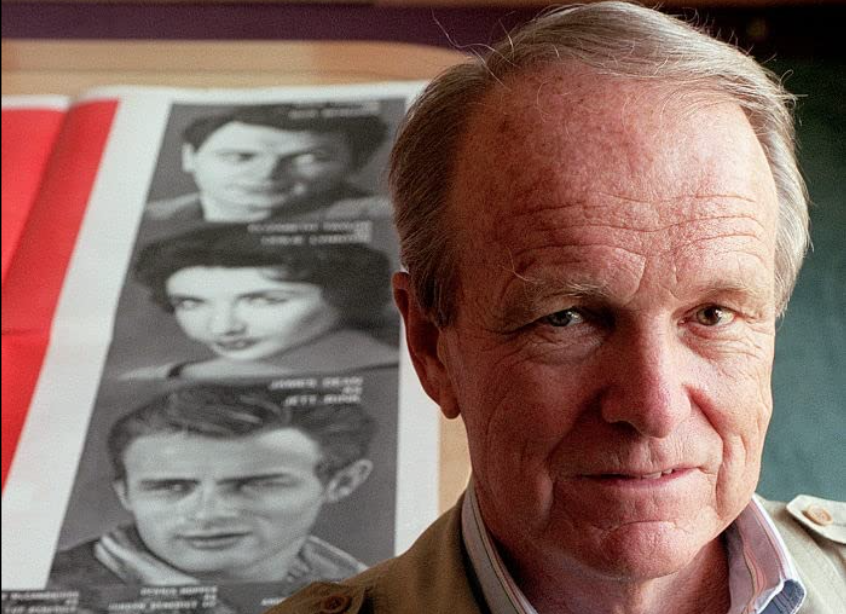
George Stevens: A Filmmaker’s Journey (’84), an illuminating study of the legendary director of Gunga Din, A Place in The Sun, Shane, Giant and The Diary of Anne Frank, is one of my all-time favorite biographical documentaries.

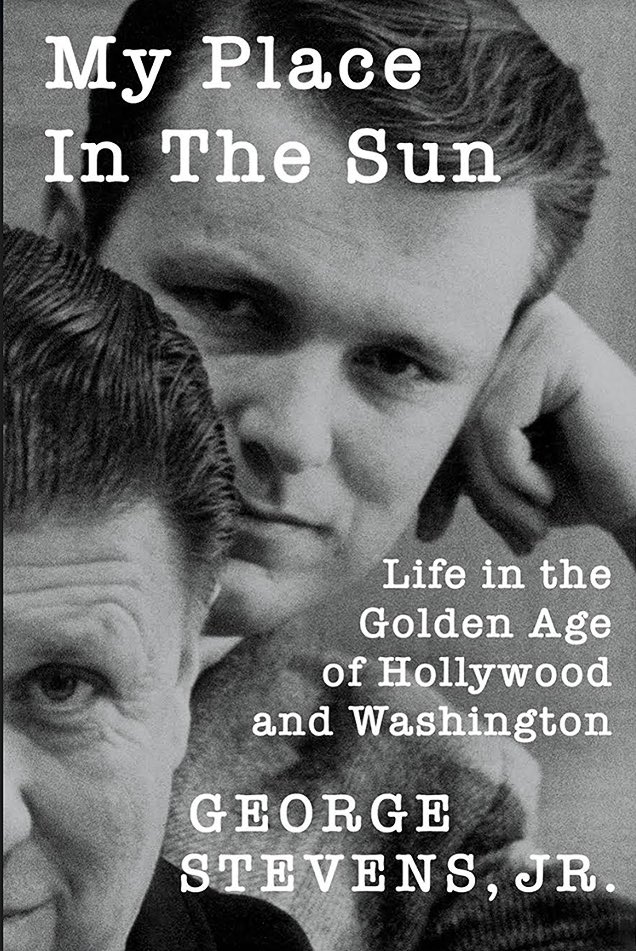
Directed by Stevens’ illustrious son George Stevens Jr., a long-time pillar of the Hollywood community who recently celebrated his 90th birthday, the 110-minute doc teems with familial warmth, first-hand recollections and classic Hollywood bon ami.

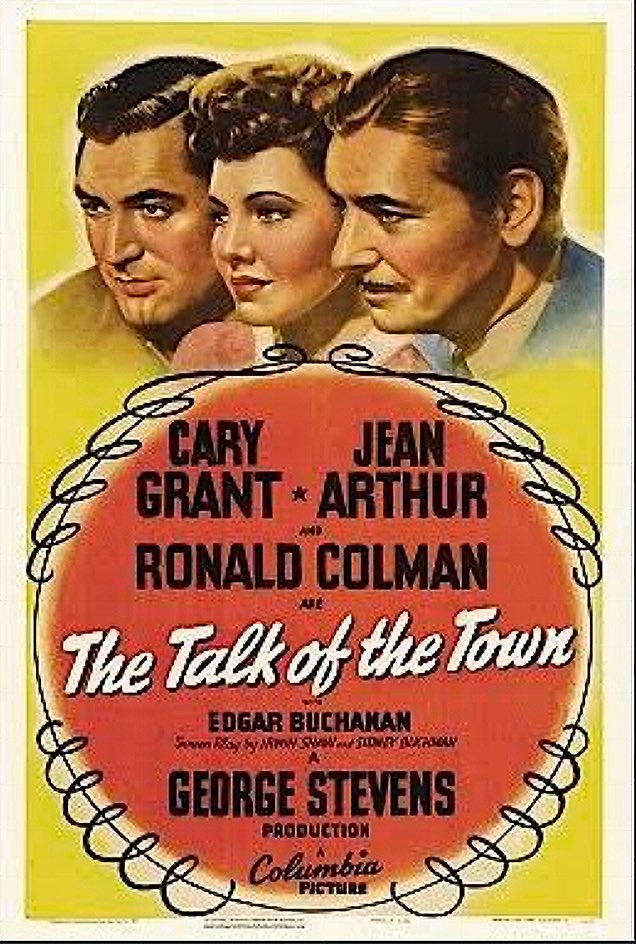
I first saw it at an Academy screening in March of ’85. (Or so I recall.) It was a huge moment for me personally in that I was able to shake hands with Cary Grant during the after-party. Grant had starred in three Stevens filmsPenny Serenade (’39), Gunga Din (’39) and The Talk of the Town (’42). And yet, oddly, the doc had skipped over the latter effort, a pro-labor, anti-ownership political comedy that costarred Jean Arthur and Ronald Colman.

During my 25 or 30 seconds of Grant time I started to mention my disappointment and slight puzzlement about The Talk of the Town‘s absence in the doc, but them someone else butted in and I lost the moment.

Flash forward 37 years to last night, when I read a little less than half of Stevens, Jr.’s “My Place In The Sun” (University Press of Kentucky, 5.17.22), a memoir and TV a first-hand witnessing of so many fascinating and legendary Hollywood moments.

I had hoped that, being a book and all, it would provide the kind of microscopic observational detail that George Stevens: A Filmmakers Journey had been obliged to leave out.

As a longtime fan of The Talk of the Town, I was especially hoping to read something fresh or novel about the dynamic between his dad, Grant, Colman and Arthur. Any intimate details about the making of this Oscar-nominated Columbia release would have sufficed. But George barely mentions it.

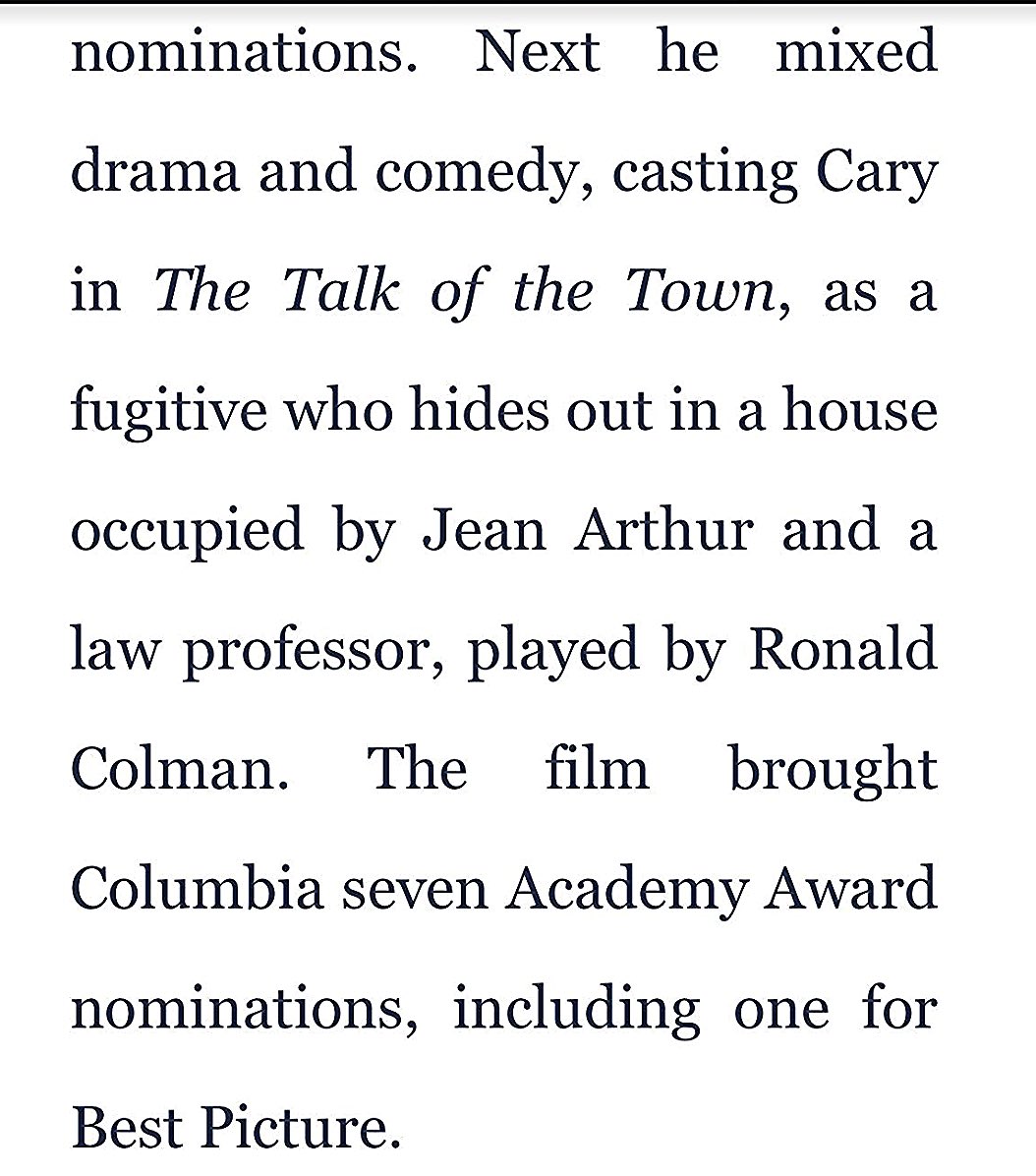
Here’s what he says:

It’s fair to say that between omitting any mention of The Talk of the Town in his 1984 documentary and giving it a lousy 48 words in his new memoir, George Stevens, Jr. is not a huge fan.

I would say, in fact, that “My Place In The Sun” is not what anyone would call an exacting, deep-drill, no-holds-barred memoir. It’s very well written and heartfelt at just the right pitch, but also tidy and proper — it’s the story George wants to tell but perhaps not (all of) the story that actually went down, warts and all. But it’s fine.

It seemed obvious from the style and tone of the book that Stevens would never in a million years mention The Great Shane Aspect Ratio Bluray Skirmish of 2013 — a conflict that happened between March and April of that year, and which the honorable Joseph McBride lent his support to and which Woody Allen probably decided when he allowed me to post his views on the matter.

A friend who’s read the entire book says that the Shane aspect-ratio episode isn’t mentioned. Which makes sense. Leave well enough alone.

By any measure it was a bizarre chapter in which Stevens, Jr. advocated (or at least defended) the issuing of Warner Home Video’s Shane Bluray with a 1.66:1 aspect ratio, which the film was not shot in during the late summer and fall of 1951.

Many of us were appalled by the 1.66 thing — a cleavering that would have unmistakably compromised Loyal Griggs‘ original compositions. As we all recall, Warner Home Video ultimately folded and decided to issue the Shane Bluray in the original 1.37:1 aspect ratio. All’s well that ends well.

Don’t Touch This

“We all know that the body positivity movement has grown into something far more than just a level-headed way to prevent bullying based on bady shape. It’s become a movement that promotes something that is objectively bad for your health as something that’s healthy. Instead of taking self-responsibility to nurture your body into good health, body positivity helps you pretend that bad health is good health.” — from “If Body Positivity Logic Was Used Everywhere,” a recent YouTube posting by “AwakenwithJP.”