
 Jeffrey Wells
 Yesterday’s Daily Beast takedown piece on TheWrap editor and CEO Sharon Waxman arose from complaints by whiney ex-employees.
“Regional Friendo” piped in with a gripe about abusive bosses and how gentle bosses are much better, and how respect is a two-way street.
HE to Regional Friendo: “I prefer mellow to agitated as well. But this is a tough town and snappy bosses are lamentably par for the course, at least in some corners. You basically have to man up, grim up and take it. Life in the big city.
“You remember Budd Schulberg’s What Makes Sammy Run?, of course. Imagine if Sammy Glick had hired a team of snowflake employees. What a Daily Beast article that would make! ‘Sammy is a real prick and he’s hurt our feelings…waahhh!’
“Except they didn’t have sensitive snowflakes back in the ‘40s and ‘50s. Well, they did but nobody voiced any complaints, certainly not to magazine reporters.”
Journalist Friendo: “LOL at Daily Beast trying to knock out a successful competitor. Fuck these crybabies. Go work somewhere else. Sharon is gruff and direct but you have to be to win in this town. She owns her own business so she can tell them to fuck right off.”
I was left with mixed feelings after catching George Clooney‘s The Tender Bar last weekend. Set in Manhasset and Connecticut in the ’70s and ’80s and featuring a steady, trustworthy performance from Tye Sheridan and an amiable supporting one from Ben Affleck, this is a warmish, working-class family saga about the usual dysfunctions and obstacles…in this case a fatherless kid nurtured in a bar + romantic college-age yearnings + toil and trouble + struggling to make it as a journalist.
The following day I ordered a copy of J.R. Moehringer‘s same-titled life saga, published in 2006 and the basis of William Monahan‘s screenplay.
Moehringer is a relaxed, colloquial, straight-up honest writer. The book is well sculpted, easy to read, no speedbumps or detours. It’s a compelling tale of a Manhasset kid who grew up fatherless (his radio talk-show dad was an absentee alcoholic asshat) but who was nurtured along by some surrogate dads at a Manhasset watering hole called The Dickens (later Publicans), and eventually went on to a Yale education and a career as a journalist with the N.Y. Times, Rocky Mountain News and L.A Times.
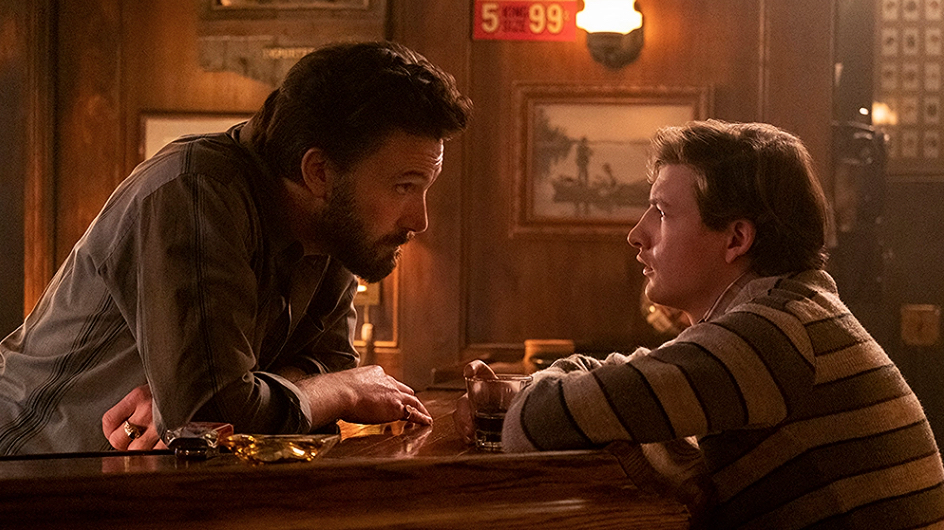
The film is not as good as the book, but it’s an agreeable, sometimes affecting in-and-outer. It keeps everything personal and local, and is basically a “this happens and that happens and then this happens” type of thing. I wasn’t levitated, but I wasn’t annoyed either. I went with it and so did Tatiana, who insists that Clooney’s film will affect people in the same way that Kenneth Branagh‘s Belfast, another turbulent family drama, did during Telluride.
Actually I was a bit irked from time to time.
Affleck charms as Uncle Charlie (no allusions to Joseph Cotten‘s doppleganger in Hitchcock’s Shadow of a Doubt), and despite playing this amiable bartender with a somewhat broad “Long Island accent,” which struck me as needless. Ben is an authentic Boston guy, and he doesn’t need to pretend. On top of which all Charlie does is hang out and share pearls of working-class wisdom. Nothing develops or builds with the guy.
There’s a father-son event at young J.R.’s school, and you naturally expect that Charlie will fill in for the absent asshat dad (Max Martini). Affleck stepping up to this plate would have meant something to us. But no — J.R.’s crabby, white-haired grandfather (Chris Lloyd) puts on a tie and attends instead. Which struck me as hugely unsatisfying.
And there’s a cancer scare subplot involving J.R.s mom (Lily Rabe) that goes nowhere. One minute Affleck is admonishing a young woman for even asking about Lily’s disease, and a scene or two later she’s older and cancer-free and completely out of the woods. And it’s like “whut?”
And I regret to say (and I hate having to spit this out, being an ardent admirer of Clooney, one of the better human beings in this town) that The Tender Bar is partly undone by a surreal casting decision that makes the first 40% of the film feel seriously out of whack.
I’m speaking of the casting of young Daniel Ranieri, a kid from an apparently Middle Eastern family (the last name is Italian but the lineage appears to be Lebanese, Iranian, Jordanian…somewhere in that realm), as the 10 year-old version of Sheridan, who, like Moehringer in actuality, is the biological son of a German paleface couple (Rabe and Martini). It would be one thing if Ranieri was adopted, but there’s NO WAY IN HELL this kid grows up to be Tye Sheridan.
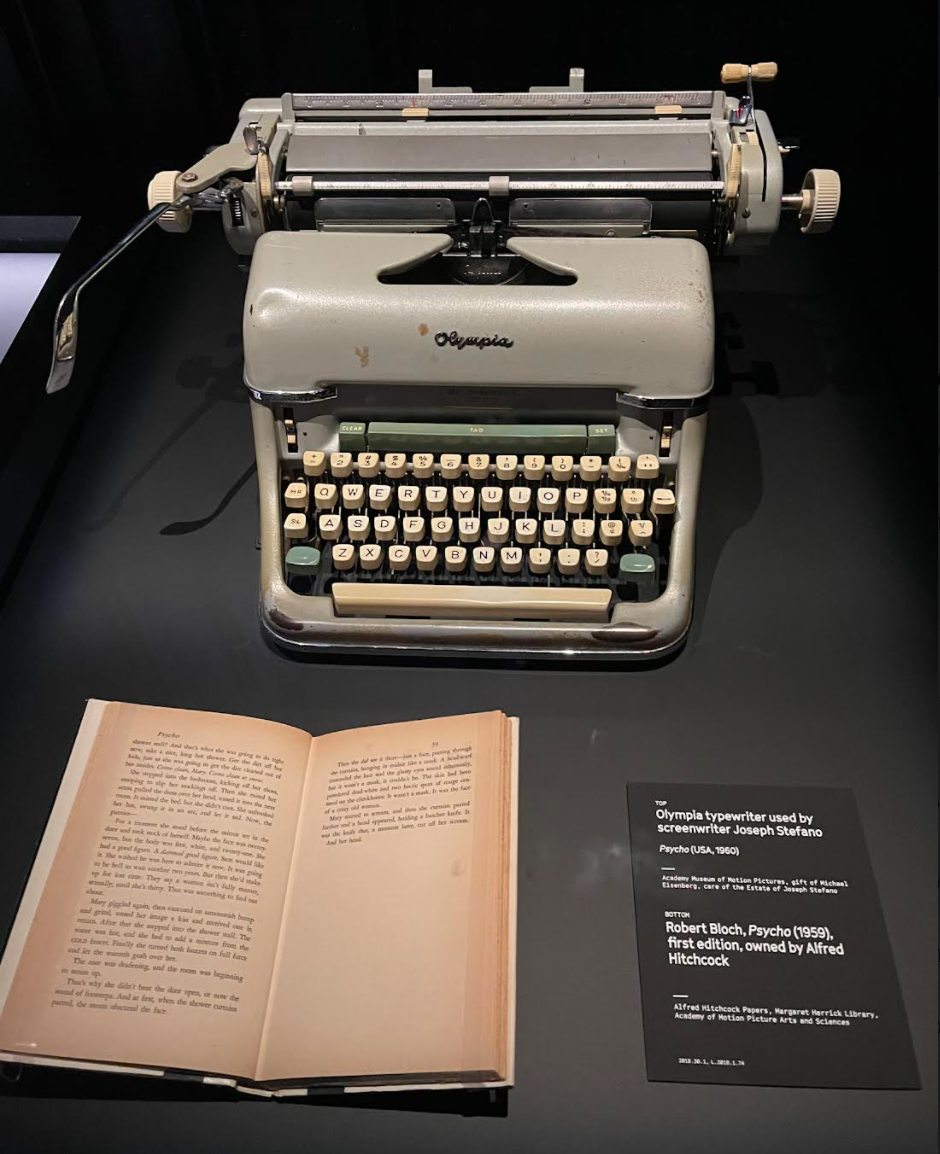
I’m looking forward to the first YouTube report about the Academy Museum that at least mentions the fact that the “apology for 100 years of white Hollywood” angle constitutes a good 80% of the museum’s content, above and beyond the Miyazaki exhibit. The people who’ve covered it so far are all gladhanders.
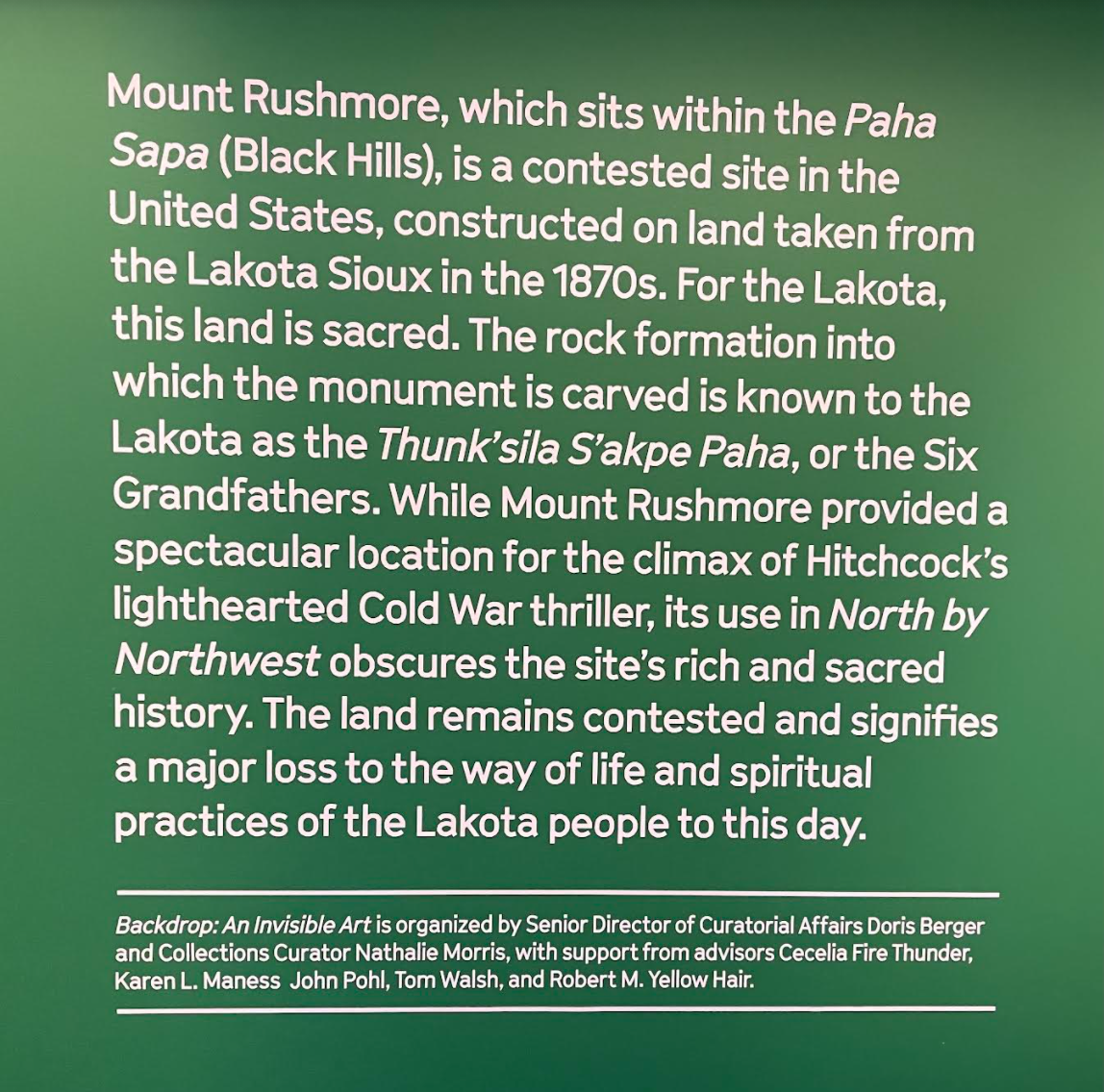
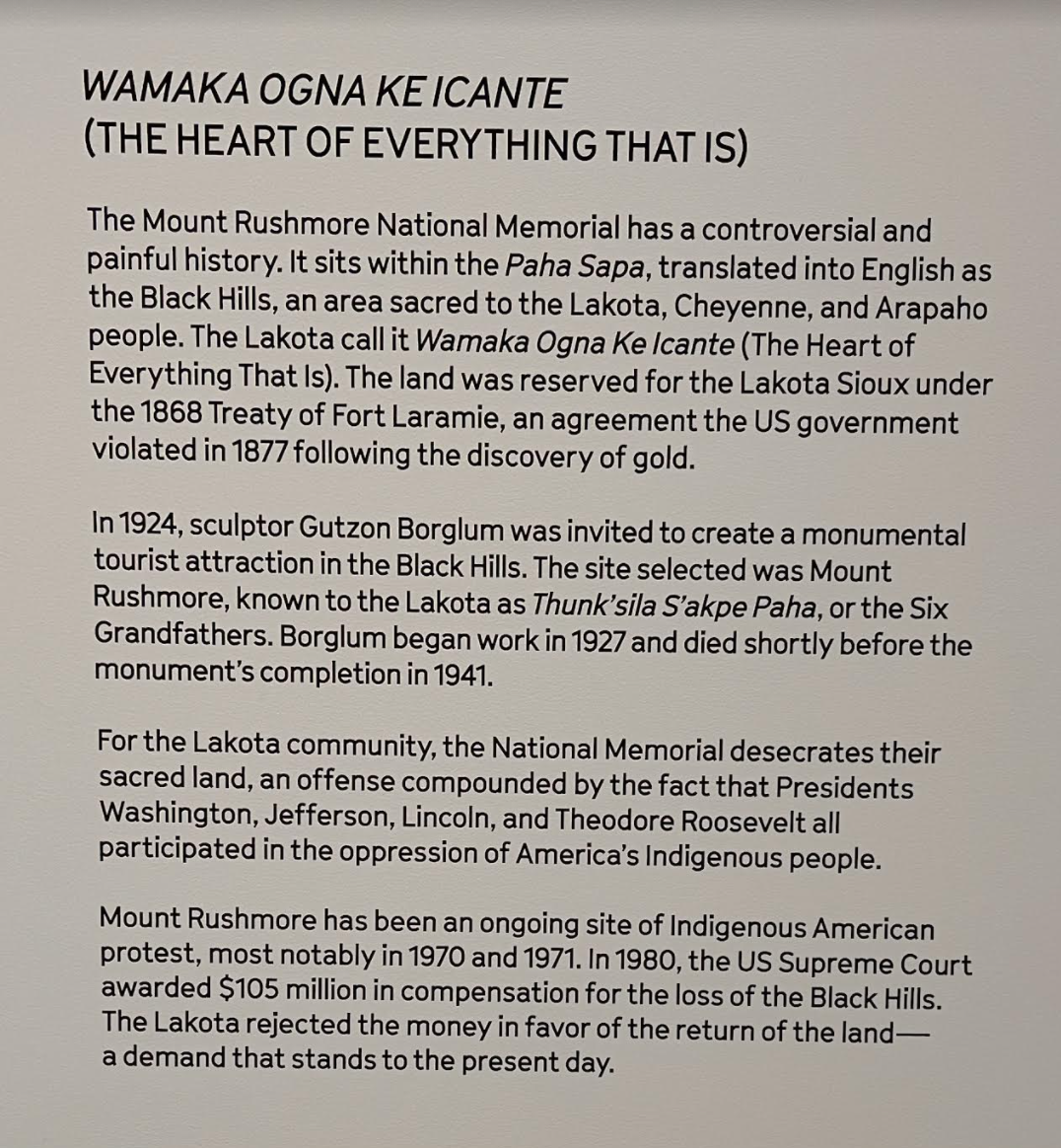
Seriously, how could any fan of North by Northwest not be a little thrown by the “Backdrop: An Invisible Art” exhibit, which all but indicts Alfred Hitchcock, Ernest Lehman, Cary Grant and others who helped make this 1959 thriller for crimes against the Lakota nation?
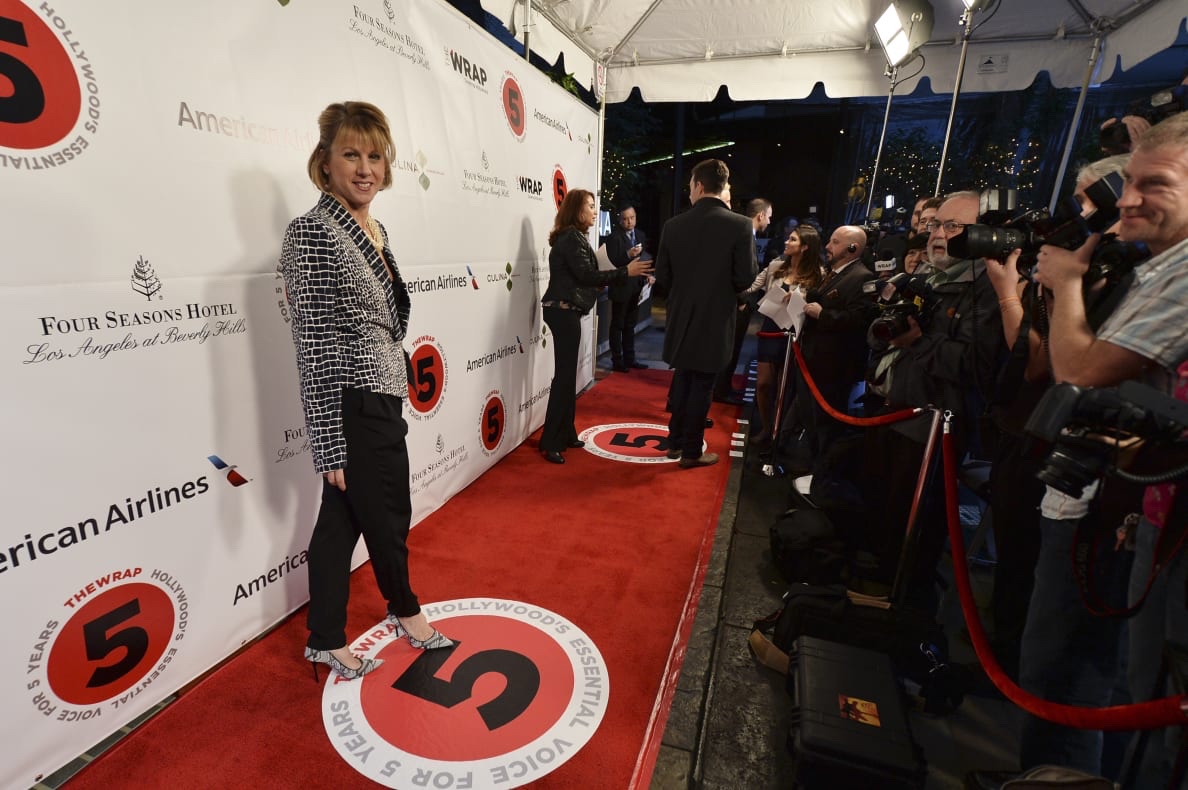
And yet the Fox 11 reporter [below] waltzes in with her camera crew and goes “oh, what a paradise for movie fans! And there’s Bruce the shark!”
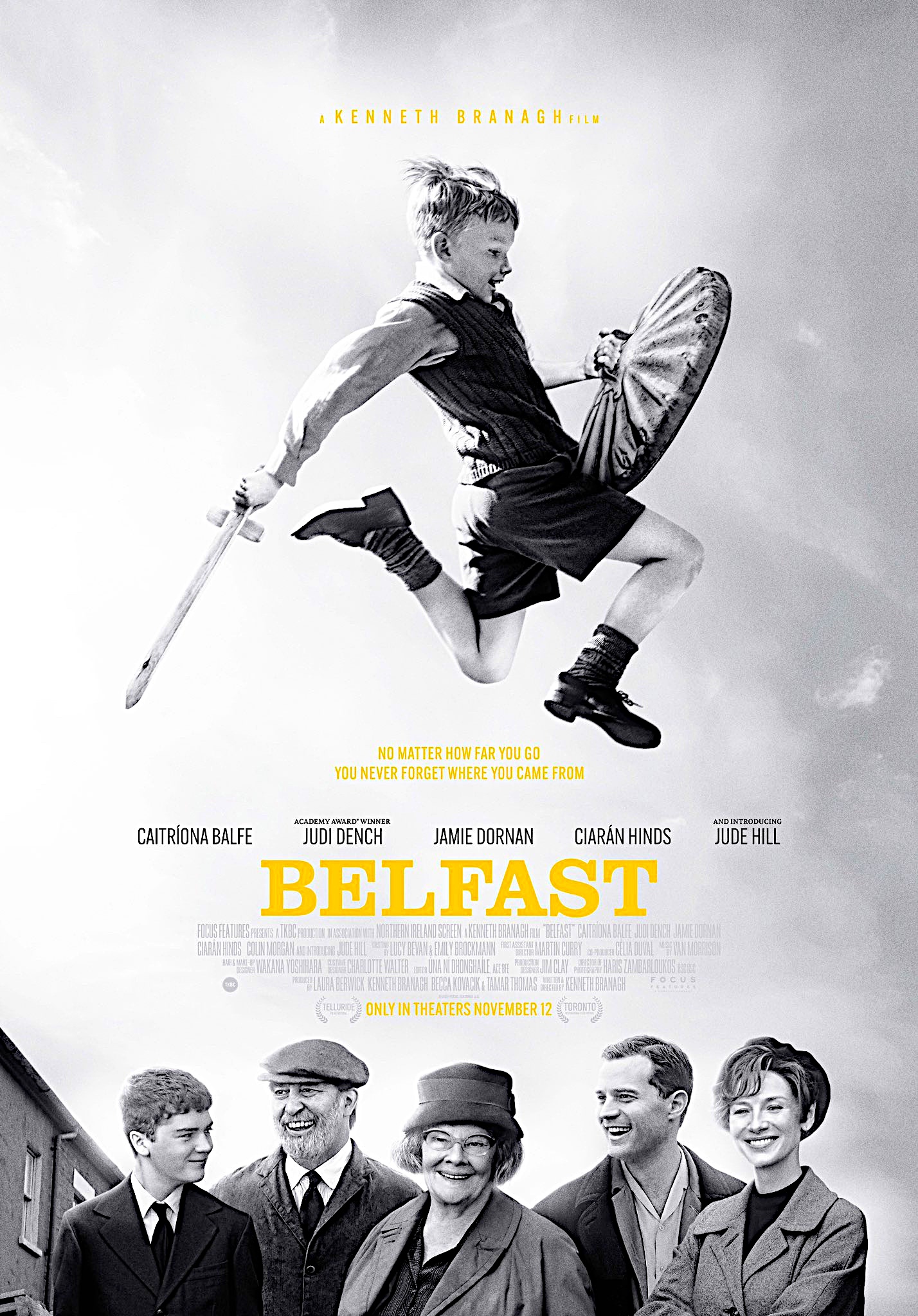
This Belfast poster doesn’t reflect an Academy-angled, award-season campaign; it’s aimed at general audiences. The idea is that Jude Hill’s adolescent lead character lives in his own world, and that “the troubles” of 1969 Belfast (Irish vs. Protestant, anti-British occupation) haven’t made a dent. The smiling faces of his family indicate a similar buoyant attitude.
Regional Friendo: “I thought this Daily Beast hit piece on TheWrap‘s Sharon Waxman might interest you.”
Journalist Friendo: “LOL at Daily Beast trying to knock out a successful competitor. Fuck these crybabies. Go work somewhere else. Sharon is gruff and direct but you have to be to win in this town. She owns her own business so she can tell them to fuck right off.”
HE to Regional Friendo: “She’s neurotic but then so am I. So are many of us.
“The article is a typical ‘sensitive Zoomer & Millennial snowflakes don’t like tough taskmaster boss’ story. It’s nowhere near as incendiary as Tatiana Siegel’s ‘Scott Rudin is an abusive boss’ THR story. Not even in the same league. Hollywood’s business community is teeming with stories fueled by unhappy snowflakes who resent brusque, occasionally snappy bosses. Big deal.”
Regional Friendo to HE: “You seem okay with nasty bosses who verbally abuse their underlings. Well, I’m not a youthful snowflake but I don’t think you get the best work out of people when you abuse them. Not saying you have to pat them on the head and give them a Kumbaya moment, but respect is a two–way street. I’ve had both kinds of bosses, and believe me, I appreciated the ones who treated me like a professional, not some piece of dogshit.”
HE to Regional Friendo: “I prefer mellow to agitated as well. But this is a tough town and snappy bosses are lamentably par for the course, at least in some corners. You basically have to man up, grim up and take it. Life in the big city.
“Remember Budd Schulberg’s What Makes Sammy Run? Imagine if Sammy Glick had hired a team of snowflake employees. What a Daily Beast article that would make! ‘Sammy is a real prick and he’s hurt our feelings…waaahhh!’
“Except they didn’t have sensitive snowflakes back in the ‘40s and ‘50s. Well, they did but nobody voiced any complaints, certainly not to magazine reporters.”
After the Academy Museum I dropped by the Farmers’ Market. Within five minutes I was ordering a cup of Cookies ‘n’ Cream ice cream at Local Ice (formerly Gill’s ice cream stand, which opened in ’37). Four younger women (early 20s) were behind the counter. I was holding an Academy Museum brochure and placed it on the counter as I waited.
One of the women (a pretty brunette) beamed when she saw the brochure, and leaned forward slightly and said, “So what did you think of the museum?”
For three or four seconds I wondered if I should just say “oh, I really loved it…very handsome, beautiful displays” and so on. But of course the HE thing won out.
“Well, it’s kind of a mixed bag because it’s pretty woke,” I said, shrugging my shoulders and trying to softpedal my words. “It’s basically a huge apology museum,” I continued. “An apology for white males having run the film industry for 100 years. It’s basically a celebration of the inclusion moves made over the last few years on the part of non-white people and women are concerned, and it’s basically bullshit.”
When I said the word “women” the 20something brunette slightly twitched. She was apparently trying to suppress her discomfort that this older customer with red-tinted glasses seemed to be vaguely irked by the museum celebrating the progress of persons like herself. (Which I wasn’t conveying at all.) Plus her eyes had begun to harden. She wasn’t about to get into an argument with a customer but she clearly wanted to hear how wonderful and cleansing the museum was, and she didn’t want to hear my anti-wokey.
“I can see you don’t want to hear my impression of the place,” I said, “but I know a lot about this town and I’ve been a movie journalist for a long time, and the museum is not about Hollywood history or culture as it was defined for a century or less. It’s strictly about what guilty liberals are doing to make things better for women and people of color.”
She smiled and said “I’m fine…just listening.” But her eyes twitched again when I said “women” for the second time.
“Nobody’s saying that women gaining more power and opportunity in the industry isn’t a welcome thing,” I explained. “But this and the secular histories of women and POCs and the Hayao Miyazaki exhibit on the third floor…that’s all the museum is about really. And that’s a very small slice of Hollywood history and culture.”
I would love to hear a recording of the women discussing my comments after I left. Publicity and marketing women who think like the ice-cream brunette have killed my life.

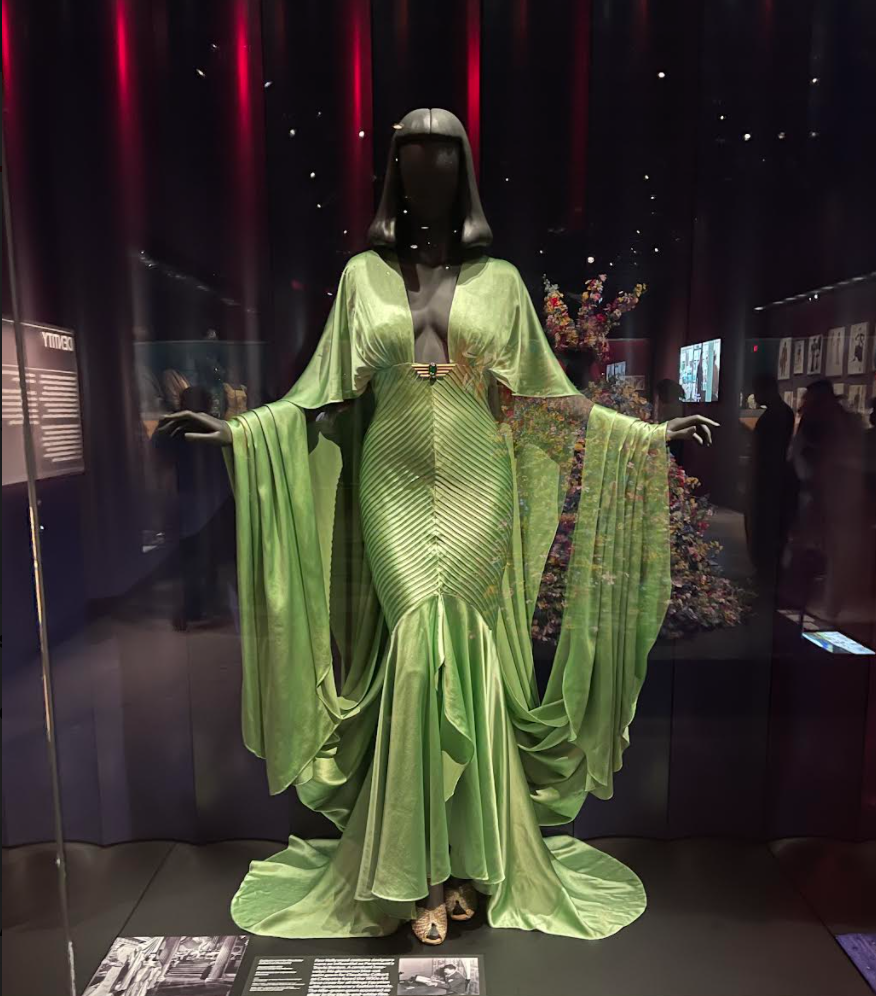
I visited the Academy Museum yesterday. Due respect but after 100 minutes of wandering around I felt that the $25 entrance fee was too high. It’s an impressive collection of exhibits that tell a certain kind of film history, but I felt slightly burned. The phrase I muttered two or three times was “this…this is it?”
For this is a huge, four-story, super-expensive apology installation. In room after room and in display after display, the museum says the following: “The Academy of Motion Picture Arts and Sciences is very, very sorry that white men ran the film industry for 100 years straight, and there are doubtless too many white men running things now, but at least things are changing now for the better — women, Black artists, Asian-Americans, Native Americans and other POCs are making significant inroads, and we the Academy are proudly standing beside them and doing what we can to give them more power and say-so.
“So again, please understand our profound sorrow about how Hollywood’s film industry was run between 1915 and 2015, but the Academy is helping to make things right. Onward, progressive soldiers!”
I was especially entertained by two apology statements that are mounted on walls next to the “Backdrop An Invisible Art” exhibit. It partially salutes the huge Mount Rushmore painting used in Alfred Hitchcock‘s North by Northwest (’59) but mostly condemns it, or at least condemns the U.S. government for betraying the Lakota by allowing Mount Rushmore to be carved into a mountain in virgin Lakota territory, and by association condemns North by Northwest.
You’re given the distinct idea that North by Northwest is kind of an evil film, and that it might be better if Hitchcock, Ernest Lehman, Cary Grant and others involved were to be cancelled posthumously.
The best part of the museum is the viewing platform atop the rounded Death Star portion — the view of central Los Angeles is spellbinding. Otherwise you can have it.



In a No Time To Die debate piece with Owen Gleiberman (“Is No Time to Die a Triumph or a Letdown? And Where Does the James Bond Series Go From Here?“), Variety critic Peter Debruge has written the following:
“The question now on everyone’s mind is who will take over for Craig. I suspect future installments will transpire in a parallel (but only just) dimension, the way past hand-offs have gone. That means we probably won’t see Lashana Lynch again.
“But introducing a Black woman as 007 opens the doors to a whole range of actors, and proves that of course Idris Elba or Riz Ahmed or Florence Pugh (my vote, if any Eon execs made it this far) could fill those shoes. He’s been played by a Scot (Sean Connery) and an Aussie (George Lazenby) already.”
The notion of Pugh being a successor to Daniel Craig and all the other Bond boys over the past 60 years…this idea is beyond ludicrous.
I’m not allowed to say this, but here goes anyway. Pugh, who recently went through the soul-draining Marvel motions with ScarJo in Black Widow, is TOO LITTLE to be play a Bond-like MI6 figure. She’s only 5’3”, for decency’s sake. I don’t think Lynch will get the gig either, but at 5′ 9″ she at least has the stature.
I know that nobody cares about bulk and muscles and upper body strength these days. A seasoned action director recently insisted to me that effective movie fighting is all about balance and agility and Thai combat techniques, etc. Whatever, man. But there’s no way in hell that Florence Pugh will come within 100 miles of playing a 007 figure down the road.
I might not have a problem with Riz Ahmed stepping into the role. The only problem is that he’s kinda short also — only 5′ 8″.
Yesterday Jason Reitman‘s Ghostbusters: Afterlife (Sony, 11.19) was screened at New York Comic Con. Naturally the fanboy tweeters and reviewers love it. In line with this, The Hollywood Reporter‘s Sheri Linden has posted a favorable sounding review, running 15 paragraphs.
Seasoned reviewers who want to be briefly candid but don’t want the candid stuff to color the tone of their review rely on a standard ruse, which is to insert an honest paragraph somewhere around the two-thirds mark. This is exactly what Linden has done. Consider the content of paragraph #11:
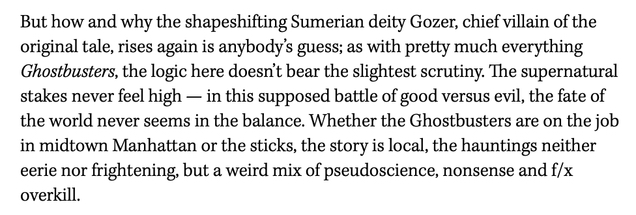
“The logic here doesn’t bear the slightest scrutiny“? “The supernatural stakes never feel high,” and “the fate of the world never seems in the balance”? “The hauntings [are] neither eerie nor frightening, but a weird mix of pseudoscience, nonsense and f/x overkill“?
Linden knew what she was doing. Her review started out in a very positive, close-to-euphoric vein, and was thus likely to placate most readers. And then in paragraph #11…truth bombs!
Critics just starting out should take note — this is how to be honest and “political” at the same time.
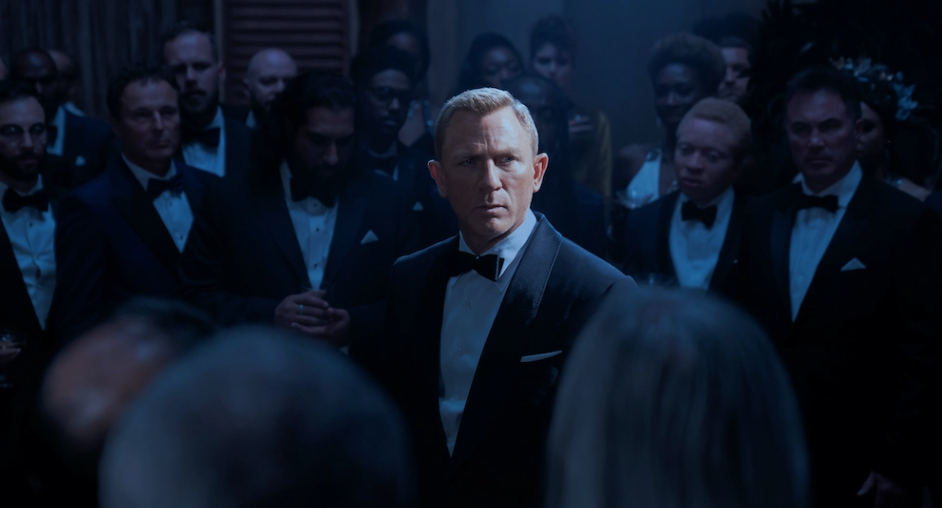
I won’t precisely say what happens at the end of No Time To Die, but it happens for two reasons — partly a dramatic one (which I respect within the realm of the plotting, James Bond‘s character arc, the emotional payoff and whatnot) but mostly for a political one.
The latter is about the producers’ belief that the curtain had to come down on Bond because his studly, smugly sexist, martini-sipping, tuxedo-wearing attitude had become an anachronism, and that this mid 20th Century character had to relinquish the reins in the woke era. Sooner or later all tropes become old hat and need to be retired. We all get that, except that this mid 20th Century character began to relinquish the sexist reins 25 years ago, and for the most part did relinguish them 15 years ago.
For that Bondian current of studly sexism is, in fact, a decades-old cliche — pretty much confined to the Sean Connery, George Lazenby and Roger Moore periods and pretty much brought to a close during the Pierce Brosnan era, and more or less absent during the time of Daniel Craig (’05 to ’21 — Casino Royale, Quantum of Solace, Skyfall, Spectre and No Time to Die).
And the wokesters don’t care — the Bond “thing” had to be symbolically terminated all the same.
Critics won’t say it was a political call, but it was — the last 40 minutes work dramatically on their own terms, as noted (and some will shed tears), but the finale was primarily implemented to satisfy “them.” Don’t kid yourself, and don’t let anyone blow smoke about this.
Excerpt from Matt Belloni‘s latest “What I’ve Heard”…