Oh and Incidentally….

[WARNING: HE regulars who routinely complain about political-minded or inside-the-Hollywood-beltway posts should just ignore this. It’s just an angry reply to an ex-friend that I wrote last weekend. Don’t worry about it.]

A journalist I’ve known for a long, long time recently repeated an accusation that he’s hit me with before — that my blunt prose and occasional stridency isn’t a social fit these days, and that I’m not sufficiently emphasizing my passion for films and generally not being enough of a love machine in my jottings, and that my failure to do this since woke terrorism began to manifest in mid ’18 has been self-destructive.

My troubles are my own, he basically meant. He was also subliminally hinting that if there ever was a time to drop to my knees and start aggressively smooching ass, it’s right now.

Something snapped when I read his email, and so I sent him a sternly-worded reply. After being in this racket for 30 years (a little over 40 years if you go back to my NYC freelance days), he was basically saying “you need to recreate yourself…you need to eat a little humble pie and audition for your tormentors as a way of saying ‘hey, guys, I’m not that bad because I love movies!’ I thought about my reply this morning, and decided to share it with the world:

“I have written the best HE column I can, each and every day, for 17 years now (i.e., HE launched in August 2004). I was part of the serious film journo crowd starting in the early ’90s, and I stayed there for nearly 30 years — on all the screening and festival lists, occasionally quoted or written about, good to excellent ad income, liked by many, tolerated by others and, except in the minds of a few cancerous and malevolent personalities, certainly respected.

“And then (hello?) Trump was elected and THE CULTURE WENT INTO CONVULSIONS, the hinterland uglies came out of their gopher holes, the hate currents intensified, wokester advocates began to spread terror in liberal circles, and the crime of being an older white male (even a liberal, thoughtful one) suddenly became a ‘thing’ to avoid or identify as, and before you knew it older white dudes were presumed to be suspiciously toxic on all fronts (especially if your views on CRT and the 1619 Project were similar to Andrew Sullivan’s), and when questioned the only thing a white dude could do was drop to his knees and plead for forgiveness and insist (as was the case in my corner) that he’s a moderate left-centrist and that he despises the nutbag right.

“And somewhere in the midst of this process (i.e., starting around mid ’18 and certainly by ’19 and ’20) persons like yourself and the sickening fiends you schmooze and smile with decided it was time to murder my life and livelihood because…I don’t know, because people can be vile when given half a chance? Because Hollywood’s progressive, diverse, anti-racist, #MeToo agendas had to be furthered and mandated top to bottom, and that meant cancelling certain belligerents (i.e., people who thought Moonlight was good but not great, or who despised the Soderbergh Oscarcast or who loathe most of the Marvel/D.C. films or thought that Parasite fell apart after they let the maid in during that evening rainstorm, or who find ‘presentism’ in historical films to be a bizarre form of fantasy-projection or who regard the normalizing of morbid obesity to be grotesque).
Read more

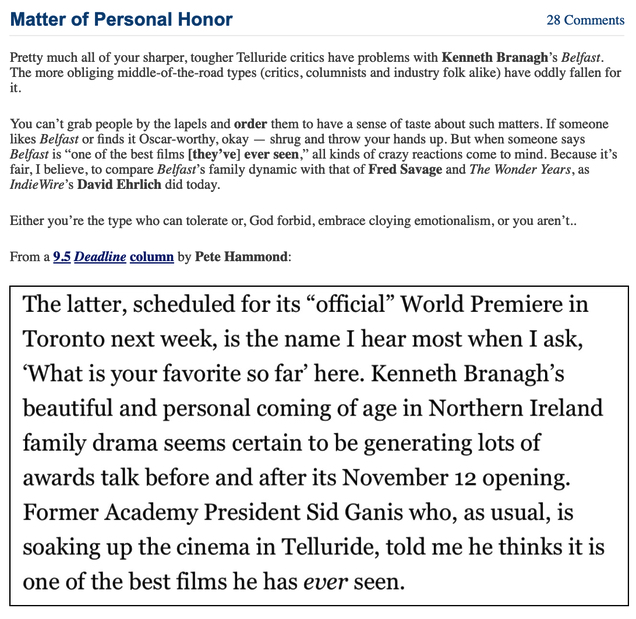
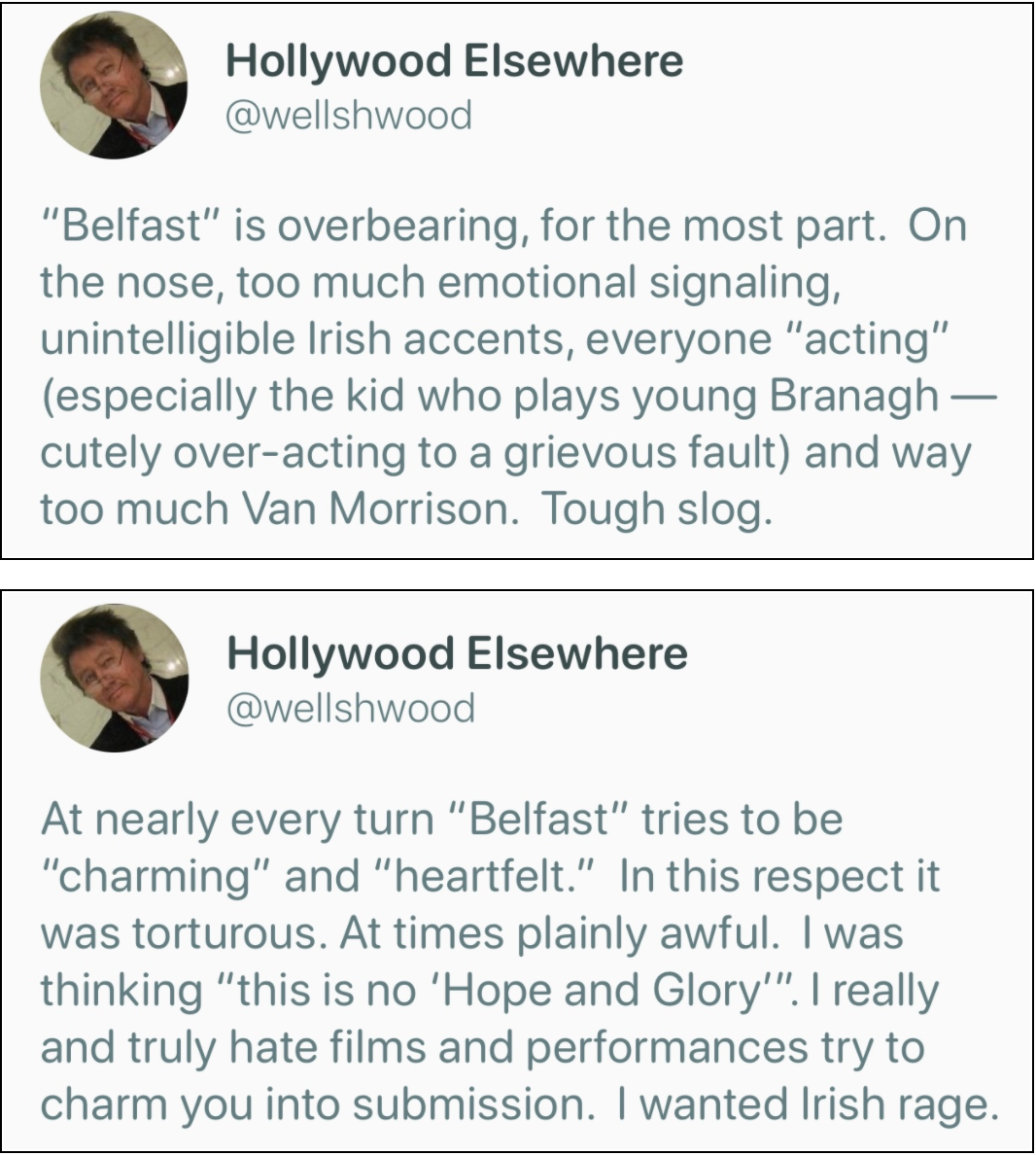
“Belfast” Reactions Are Scaring Me

Award-seeking fall movies often spark bitter disputes. God knows Green Book did, and I was an ardent fan of that film all through the ’18 and early ’19 season. I didn’t “believe” that Green Book had a certain humanity and emotional poignancy that would connect with Average Joes in the Academy and the guilds — I knew it did and would.

Green Book wasn’t the deepest or most complex film in the world, but for a character-driven period flick about a pair of flawed but recognizably human fellows and the way things unfortunately were back in 1962, it rang true. And I knew people would respond to that fact. I was 90% sure that the wokester take-down efforts would come to naught because Green Book had the heart, the cards and the horses.

But now, God help us, it’s starting to appear that Kenneth Branagh‘s mawkish and treacly Belfast might be able to Green Book its way into the Best Picture category, and perhaps even into a win. As God is my witness and on the soul of my soon-to-be-born grandchild, Belfast isn’t worth the candle. I wouldn’t call it a calamity — it’s watchable and even interesting from time to time, and it delivers a certain bounce when Cieran Hinds is around — but it doesn’t have anything magical going on.

I knew after catching Belfast in Telluride that certain industry softies (i.e. the Sid Ganis brigade) would call it magnificent and heart-touching, etc. But I didn’t take them seriously. Competently made lump-in-the-throat movies, however treacly they may seem to some of us, will always win a certain portion of the crowd.

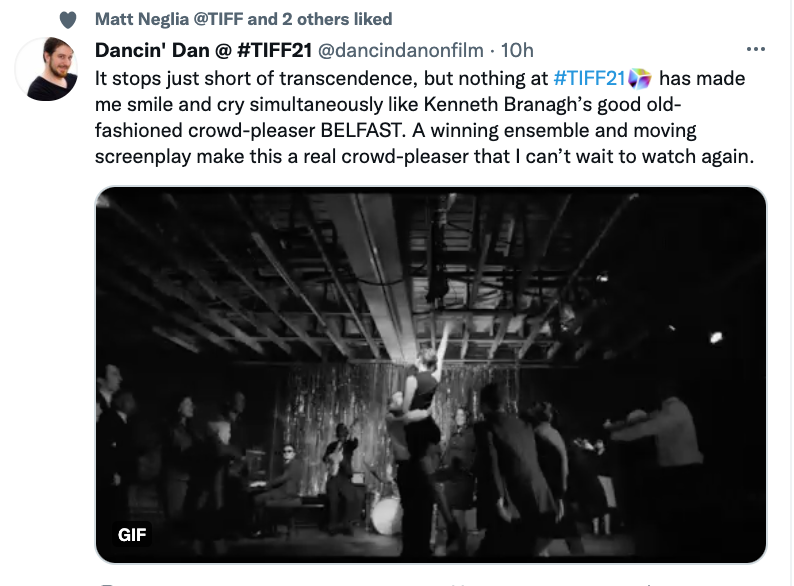
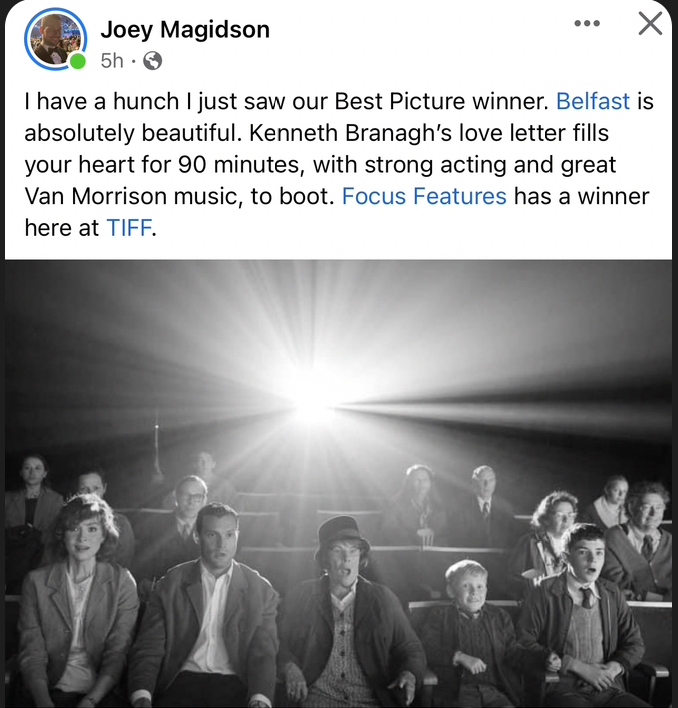
But this morning it hit me that the Belfast forces may be more numerous than I realized, and that they may be gaining strength. Awards Radar‘s Joey Magidson tweeted a few hours after seeing Belfast in Toronto that it may`go all the way and become “our” Best Picture winner, and that it’s “absolutely beautiful.” TheWrap‘s Steve Pond, a sensible and attuned pulse-taker who knows the difference between wheat and chaff, apparently attended the same TIFF screening and wrote directly after that it’s “visually stunning, emotionally wrenching and gloriously human.”

I feel drained and absolutely dumbfounded that we’re hearing such keen praise are for such a pandering and sentimental effort, a drama that partly incorporates the spirit of The Wonder Years (a thought posted by IndieWire‘s David Ehrlich) or even Leave It to Beaver (a view shared this morning by World of Reel‘s Jordan Ruimy), than to John Boorman‘s Hope and Glory or Alfonso Cuaron‘s Roma.

Pond: “Visually stunning, emotionally wrenching and gloriously human, Belfast takes one short period from Branagh’s life and finds in it a coming-of-age story, a portrait of a city fracturing in an instant and a profoundly moving lament for what’s been lost during decades of strife in his homeland of Northern Ireland. Plus it’s funny as hell — because if anybody knows how to laugh in the face of tragedy, it’s the Irish.”

Not only is Belfast not funny as hell — it tries for a tone of heartfelt amusement, but I didn’t so much as crack a smile.

Ruimy: “Belfast is rendered in rather ineffective and obvious ways — the first crush, going to the cinema, an absent father, Catholic school. Young Jude Hill, as a Branagh stand-in named Buddy, brings an insufferable amount of wide-eyed twee. [And] the whole thing sorely lacks a point-of-view, and so we never really get to know the boy well enough to become emotionally invested in the story. The end result is a mix of scattershot moments that want to feel personal and lovable, but end up isolating us. Too on-the-nose and lacking grit, Belfast plays like an odd mix of Roma and Jojo Rabbit.”

Essential Big-Screen Viewing

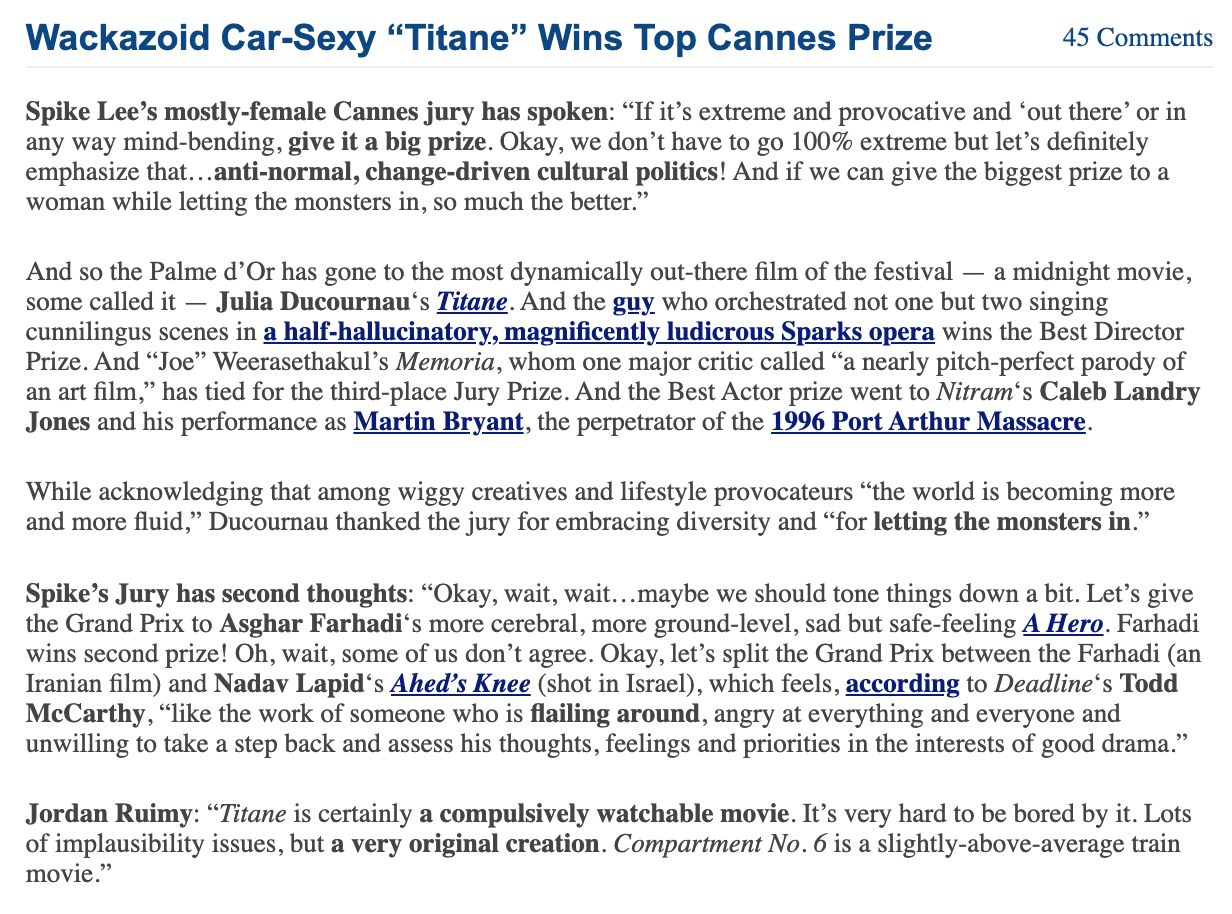
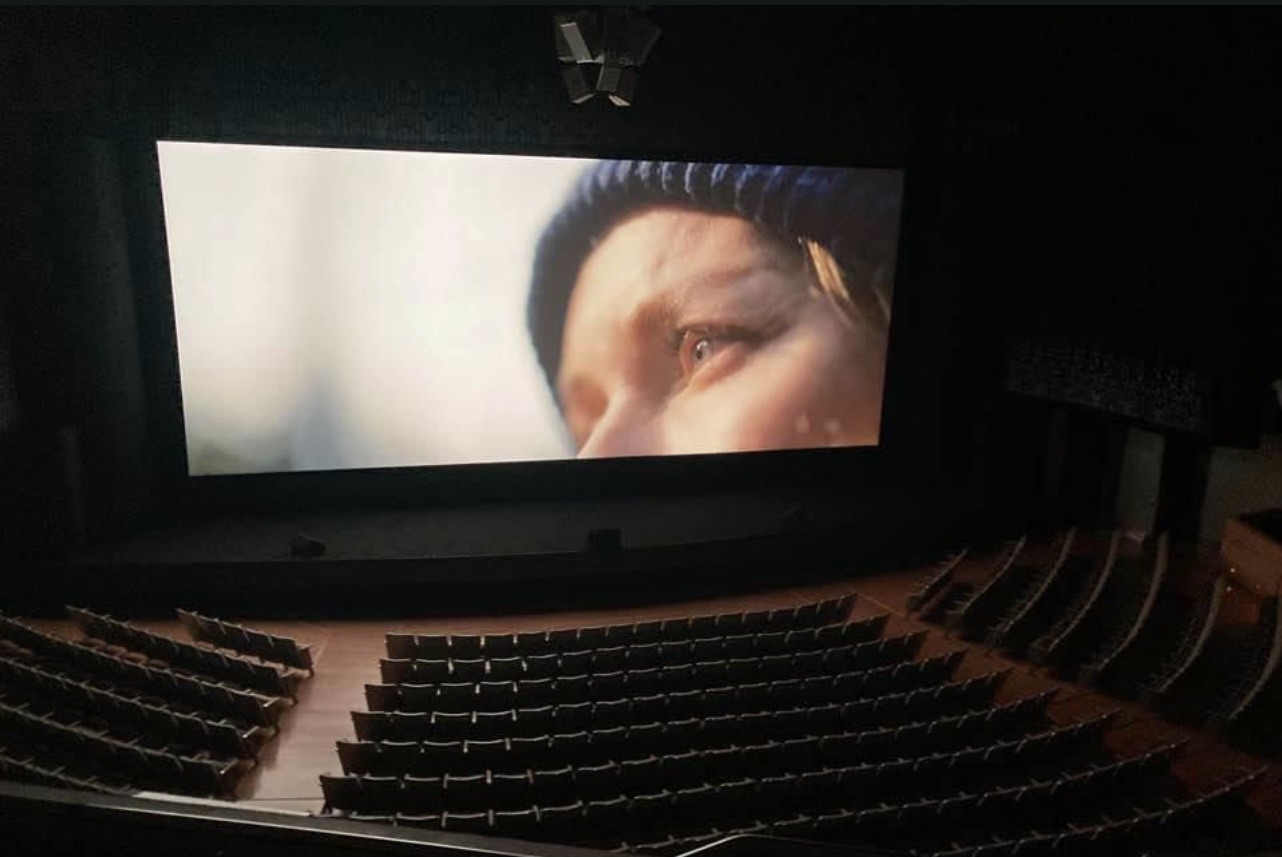
There’s only one way to see Julia Ducournau‘s Titane (Neon, 10.1)**, the “body horror” thriller that won the Palme d’Or last July, and that’s on a big screen. I’d ideally like to see it on a huge IMAX screen, which of course will never happen.

** Titanium

How Things Work

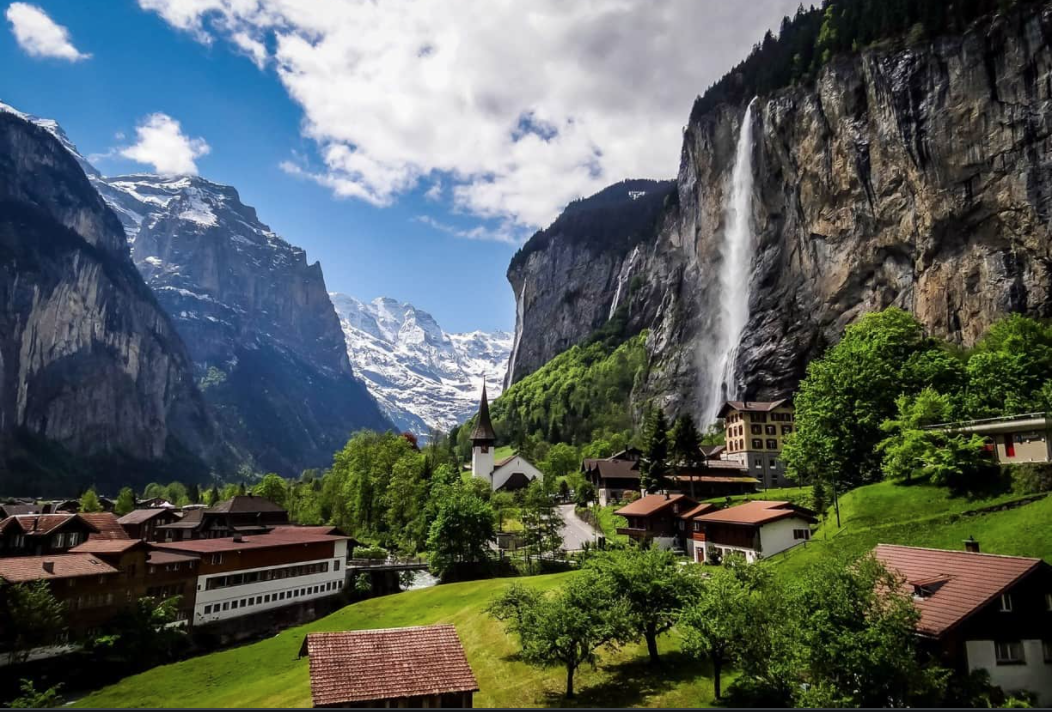
Originally posted from Lauterbrunnen, Switzerland on 6.17.12: “Early yesterday afternoon I was expecting to meet Jett and Dylan at the modest Alpine-styled cabin we’re renting in Lauterbrunnen, but they weren’t there when I arrived. So I texted them and they said they were in town and would be along. The problem was that they had the only key to the place, and I was coping with a slight call of nature. But I figured I’d wait it out.

“The minutes dragged on and they didn’t show. The little devil on my left shoulder began to think about taking care of business behind the cabin. ‘No!,’ said the angel on my right shoulder, ‘don’t be an animal!’ But Jett and Dylan were taking their time.

“I looked around and noticed a narrow driveway behind the cabin — a possible problem. But nobody had driven by in quite a while. I also considered the fact that the rear of the cabin is sheltered from view by a hilly mound. Quiet, quiet, no cars, no cars. The devil won out and I stepped behind the cabin.

“Four or five seconds later a car drove up the driveway with a family in it, and with a three-year-old staring and pointing at me from the back-seat window. Five seconds after that another car drove by with a pretty girl at the wheel. She also checked me out.

“If I hadn’t stepped behind the cabin, those two cars would have never driven by.”

Read more

Truly Great Achievement

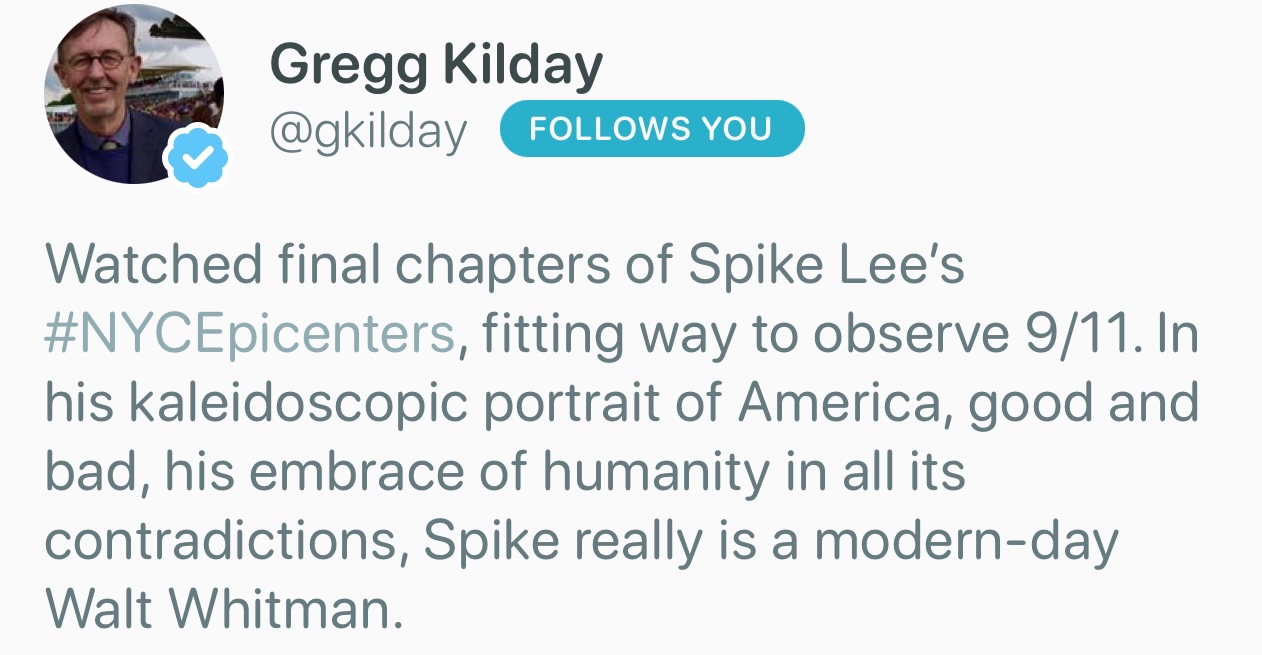
It took me a while but I’ve finally watched three of the four episodes in Spike Lee‘s NYC Epicenters 9/11->2021½. It’s easily one of Lee’s finest film achievements; I would even call it miraculous. Due to the fact that you can feel the soul of New York City glowing and flowing through all of it.

Episode 3, which runs two hours, focuses on the 9/11 attacks, and provides perhaps the most emotionally fulfilling and heartfelt recapturing of that day, ever. It’s so good I’m thinking of watching it again soon.

Episode 1, which is about NYC’s response to the Covid crisis, is also magnificent except, in my opinion, for one aspect. Unless I missed something, Lee doesn’t really grapple with the relatively low percentages of African American vaccinations in New York State and elsewhere.

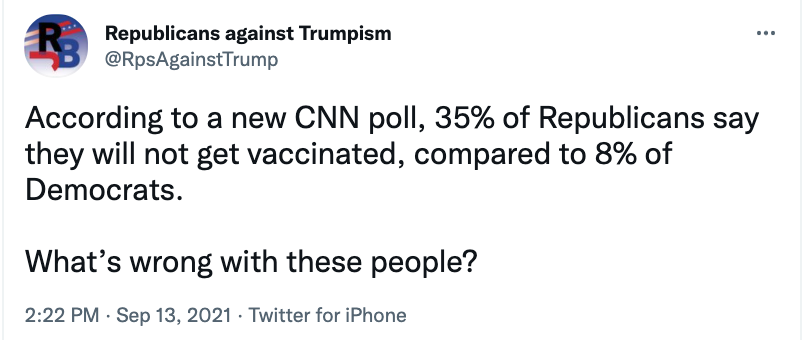
Something like 80 million U.S. citizens have sidestepped Covid vaccinations, and we will never get out of this hole as long as tens of millions of idiots continue to refuse.

Into The Woods

An adult all alone and on a phone, having to talk his or her way out of a tough, high-pressure situation. I don’t know how many times this set-up has been built into a compelling feature, but I’m thinking at least four**.

The very best is Steven Knight‘s Locke (’14), an 85-minute character study about a construction foreman (Tom Hardy) grappling with issues of personal vs. professional responsibility. Three years ago Gustav Möller‘s The Guilty, a gripping, Danish-made crime thriller that I just re-watched yesterday, delivered similar cards. Last weekend a same-titled remake, directed by Antoine Fuqua and starring Jake Gyllenhaal, played at the Toronto Film Festival, and will debut theatrically on 9.24 before hitting Netflix.

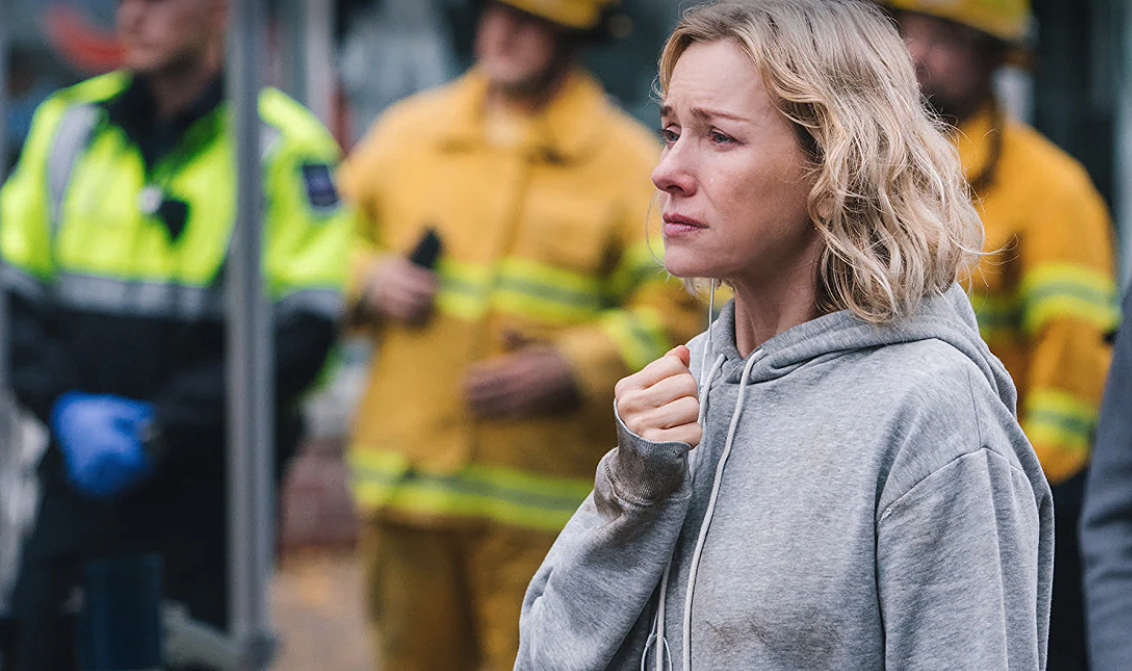
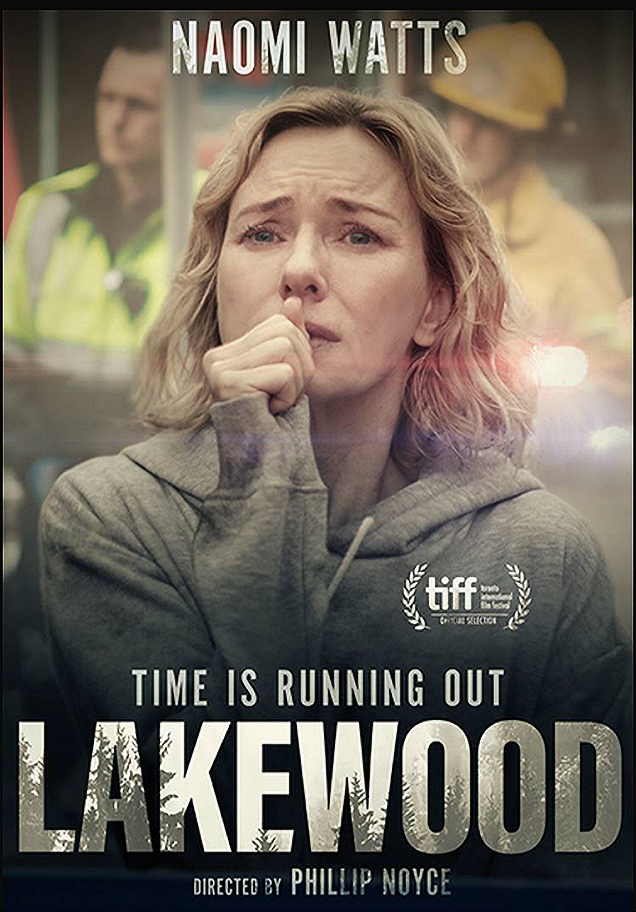
And now there’s Phillip Noyce‘s Lakewood, which stars Naomi Watts as Amy, a widowed, small-town mom reacting not only to news of a Parkland-esque high school shooting, but to the possibility that her sullen and estranged son Noah (Colton Gobbo) may be involved in some way.

More than two-thirds of this 84-minute film (roughly 47 minutes) are focused solely on Amy and her iPhone in a remote wooded area. We’re talking about a torrent of smooth steadicam footage plus several overhead drone shots and some elegant editing (kudos to Lee Haugen), plus Watts stressing, emoting and hyperventilating her head off — a one-woman tour de force.

Right away I was thinking that Noah might be the shooter, and that, you bet, made me sit up and focus all the more. And that’s all I’ll discuss in this vein.

My second reaction was about Amy’s iPhone, and what an amazing reach it has. She’s in a woodsy area a few miles from town (I didn’t catch how many reception bars were showing) and yet she experiences only a couple of signal drop-outs, and she’s watching all kinds of video and whatnot without a hitch. I was also impressed by her iPhone’s battery — what power! (I never leave home without a back-up battery for my iPhone 12 Max Pro — I have too many active apps and the battery is always draining hand over fist.)

Despite all that’s going on at the high school and having to juggle all kinds of incoming info, Amy continues to jog during most of her phone marathon. If there’s one thing that all Lakewood viewers will be dead certain of, it’s that Watts will stumble and suffer an ankle injury. I was telepathically begging her not to. HE to Watts: “C’mon, stop…don’t…there are all kinds of obstacles on your forest path and you obviously need to focus so just start speed-walking”…down she goes!

The pace of Lakewood is very fast and cranked up, and Amy is nothing if not resourceful. She manages to persuade an auto mechanic whom she doesn’t know to supply crucial information about Noah’s whereabouts, as well as info about the possible shooter’s name and contact info. All kinds of conversations and complications ensue, and you’re always aware that Chris Sparling‘s script is determined to increase the stress and suspense factors.

Most of these efforts felt reasonable to me, or at least not overly challenging or irksome. Lakewood is a thriller. I didn’t fight it. I accepted the rules and requirements.

Read more

Intimate Terms

I wouldn’t call myself “sad and lonely,” at least not in the Buck Owens sense of that term. But I do understand and relate to those anxious, intensely focused, mostly melancholy fellows who tend to populate Paul Schrader‘s films — aka “God’s lonely men”.

Because I’m more or less one of them. Not in a mopey or morose sense (or so I prefer to think) but certainly in the sense of being aware of the anxious and predatory nature of things out there, and certainly since the monsters came to Maple Street two or three years ago.

I have, I think, a livelier, spritzier attitude about things than, say, Ethan Hawke‘s “Reverend Toller” in First Reformed or Willem Dafoe‘s “John LeTour” in Light Sleeper, and I’m certainly more talkative and less guarded than Oscar Isaacs‘ William Tell in The Card Counter. But I relate in certain basic ways.

The Card Counter is a tight, well-organized, stripped-down drama about Tell and his basic situation, which is to play cards in various casinos and frequently win but at the same time stay away from the big pots — bet modestly, win modestly. Because he’s a shrewd and meticulous-minded fellow, and not stupid enough to agitate the pit bosses, who are always on the lookout for “counters.”

The film is only peripherally about cards and casinos, of course — it’s mainly about the wearing of a Schrader mask while grappling with buried guilt.

I found The Card Counter entirely solid and sturdy for the first 70 or 80 minutes. In my view it doesn’t end right — doesn’t quite bring it all home. But I didn’t feel burned or under-nourished either.

It’s basically a three-hander — Isaac plus costars Tye Sheridan (“Cirk”) and Tiffany Haddish (“La Linda”). Willem Dafoe‘s character, a former military guy (“Major John Gordo”) whom Isaac’s character served with during the Iraq War, is too peripheral (at least in terms of screen time) to be called an ensemble member.

In any event four-fifths of the film is taut and absorbing, and Isaac’s performance is highly respectable.

But Haddish’s character, a kind of casino scout who reps big-money guys who are looking to invest in exceptional poker players, never seems to really matter that much. I have to add that I didn’t believe her performance, and that she has no chemistry with Isaac. Matters of trust, attraction and sexuality between these two never seem the least bit interesting, much less central or necessary.

The film definitely goes soft when William and La Linda go on a date, taking an evening stroll through a lighted outdoor garden and becoming intimate later that evening. (Or soon after.) I was asking myself “why is this happening?” and “what could William having sex with La Linda possibly have to do with anything>?”

The sexual communion and levitation moment between Ethan Hawke and Amanda Seyfried in First Reformed was a whole different thing. It was transcendent, liberating, other-worldly.

At the very end La Linda pays a visit to William in the same manner that Lauren Hutton visited Richard Gere at the close of Schrader’s American Gigolo, and in which Marika Green visits Martin LaSalle at the end of Robert Bresson‘s Pickpocket. My basic reaction was “this isn’t right…it diminishes the value of the previous two visits.” I’m not saying the ending fails, but it certainly underwhelms.

And yet the fact that I found The Card Counter to be four-fifths effective is a ringing endorsement — seriously. I can shrug off an ending if it doesn’t quite get it.

Read more

Medieval #MeToo Slog

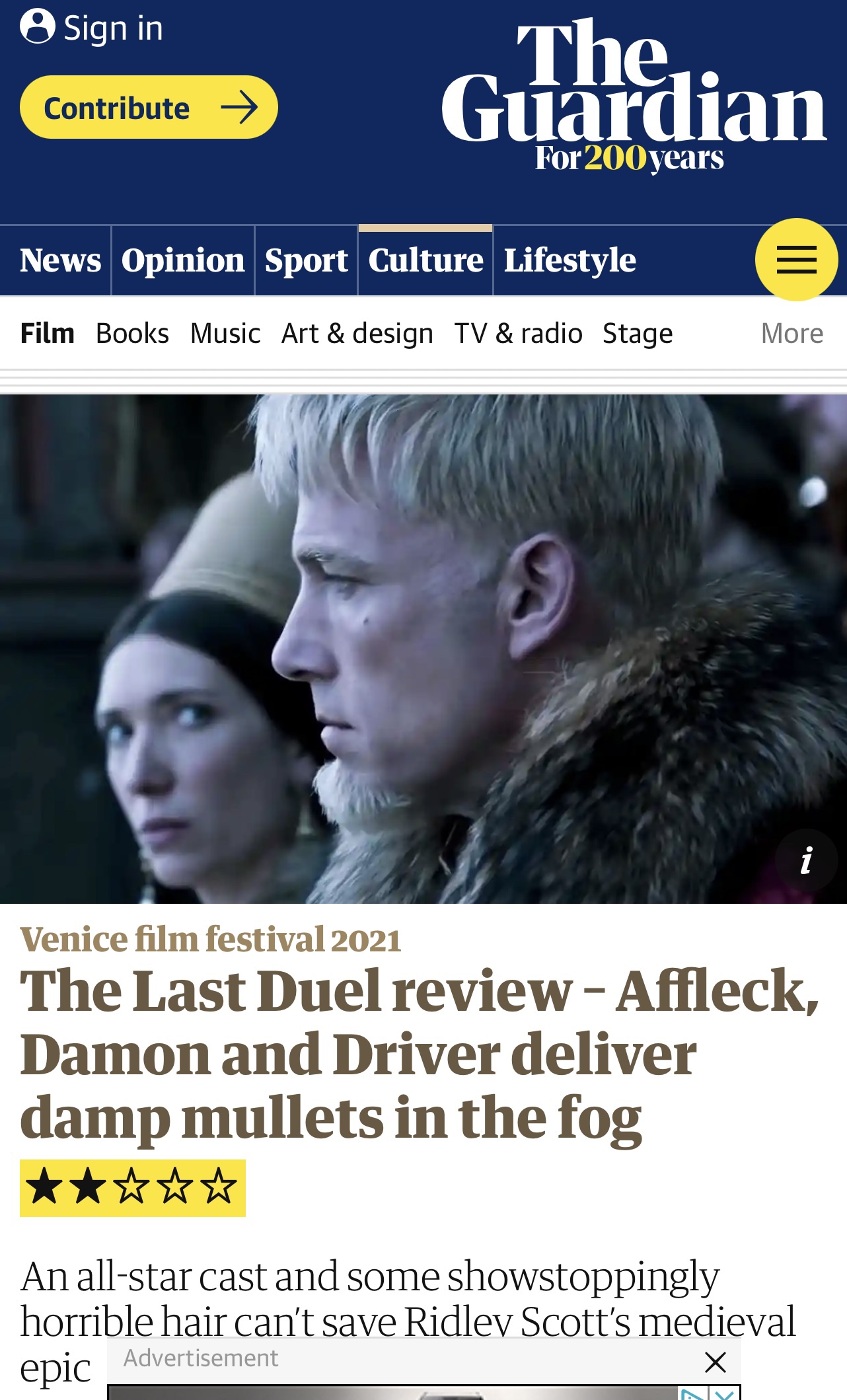
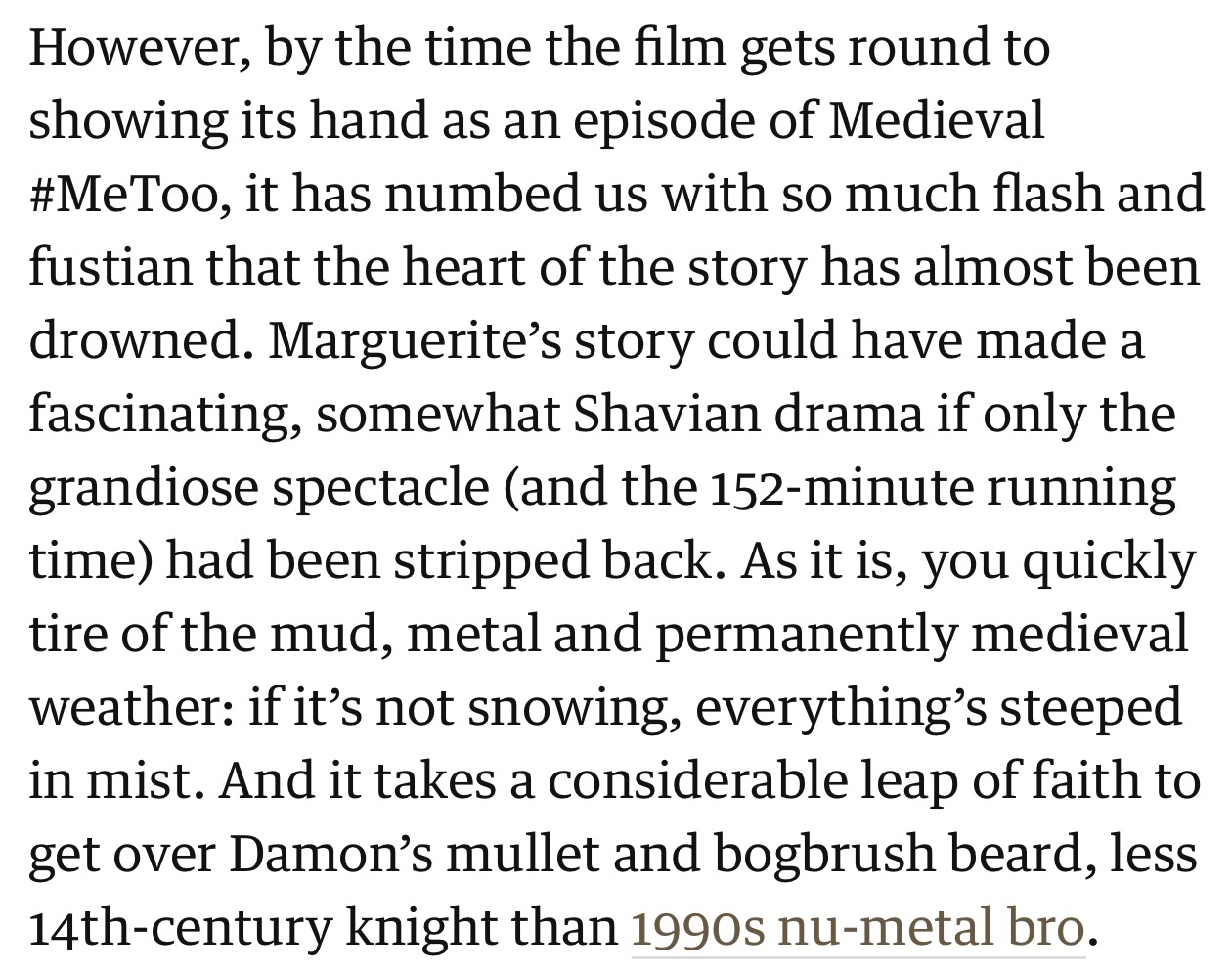
So that’s all she wrote for Ridley Scott’s The Last Duel — seen, considered and more or less dismissed as a sullen “damp mullet” melodrama by the Venice Film Festival critical watchdogs. What turned me off in West Hollywood is Dariusz Wolski’s affected bluish-gray color scheme. I’m a huge fan of Frank Tidy’s natural toned, Barry Lyndon-ish cinematography in Scott’s The Duellists (‘77); it would have been heavenly to return to that palette in Duel…but nope.