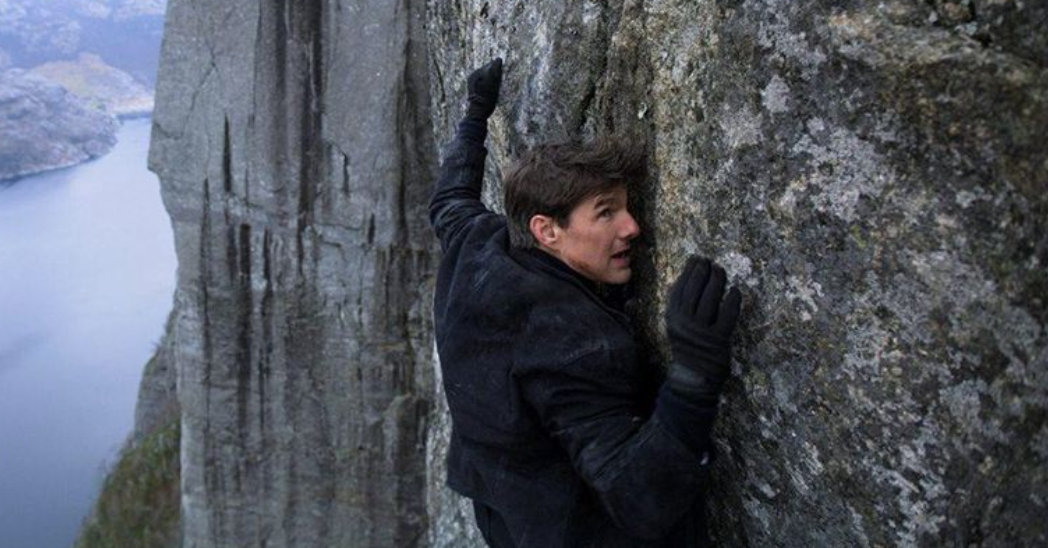
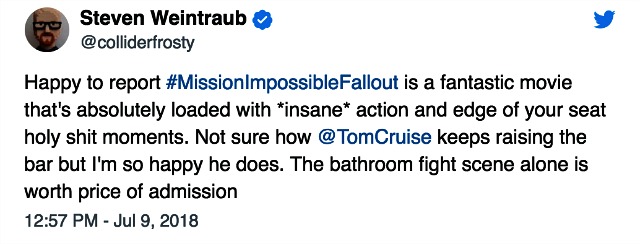
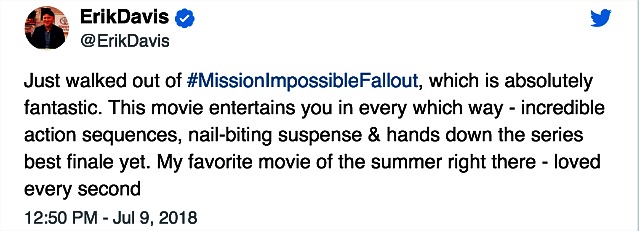
Chris McQuarrie and Tom Cruise‘s Mission: Impossible — Fallout (Paramount, 7.27) screens tonight in Los Angeles for journo elites. (Reviews will pop tomorrow — Thursday, 7.12 at 2 pm Pacific.) The NYC and LA all-media screenings will happen on or about 7.23. You can’t trust the junket guys, but even if you dial down their praises by 30% or 40% it still sounds pretty good.
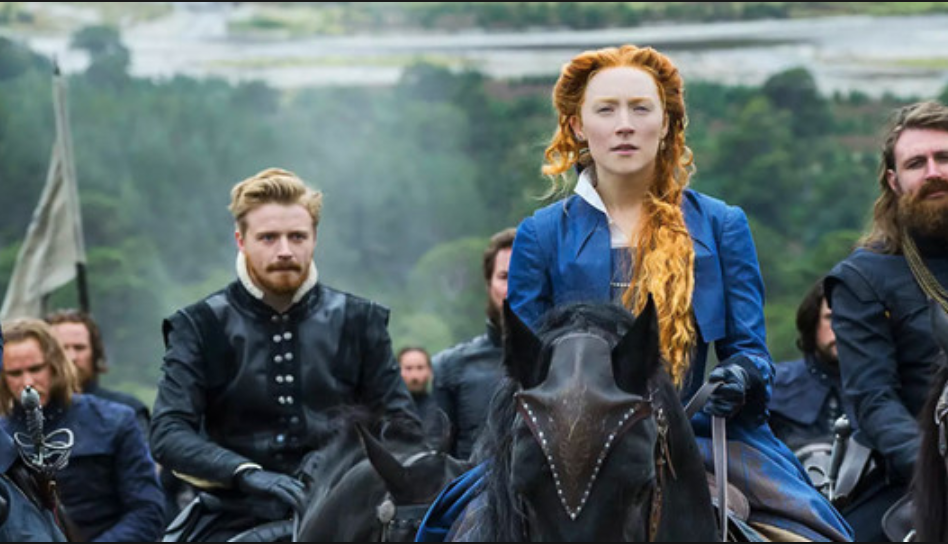
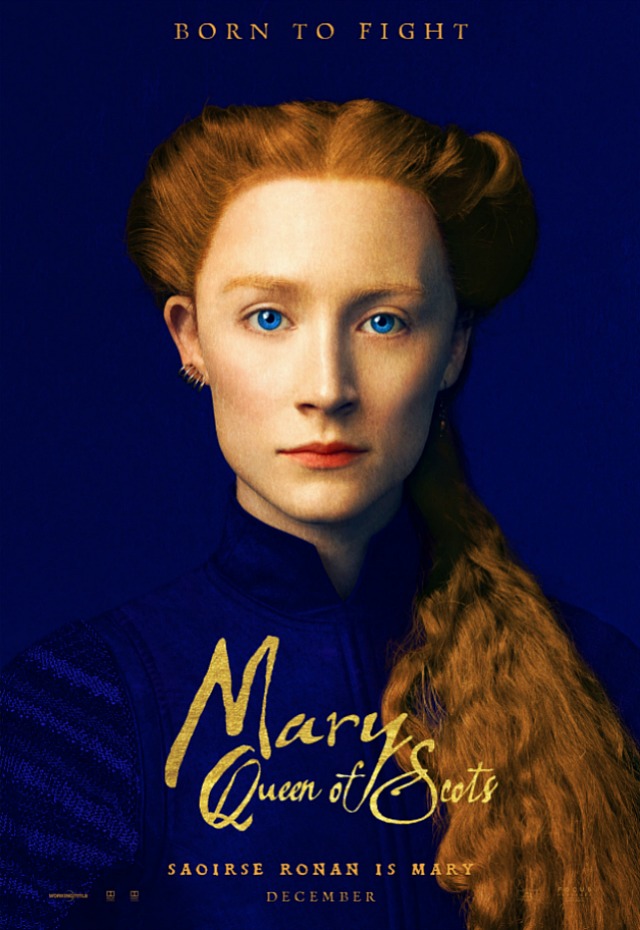
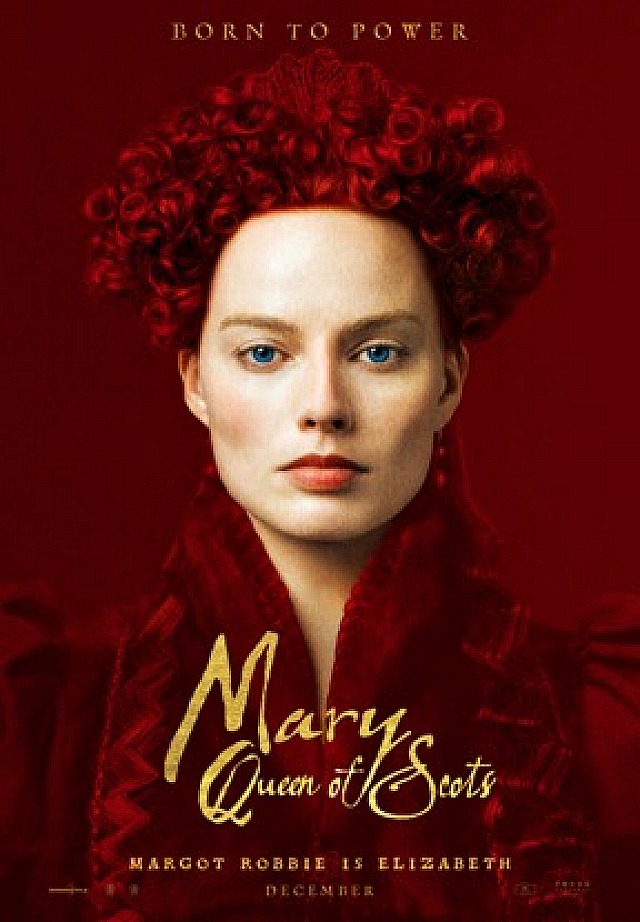
The branding has begun on Josie Rourke‘s Mary, Queen of Scots (Focus Features, 12.5), even though it won’t open for another five and a half months. I’ve heard that the film offers a kind of Game of Thrones aesthetic — hard R, vivid sex scenes, bloody battle sequences, unflinching. I’ve also heard that that Saoirse Ronan, playing the title role, delivers big-time. A guy who’s seen it says she’s “incredible, one of her very best performances, a physically demanding role that she throws herself into, really gets to shine, a full range of emotions.”
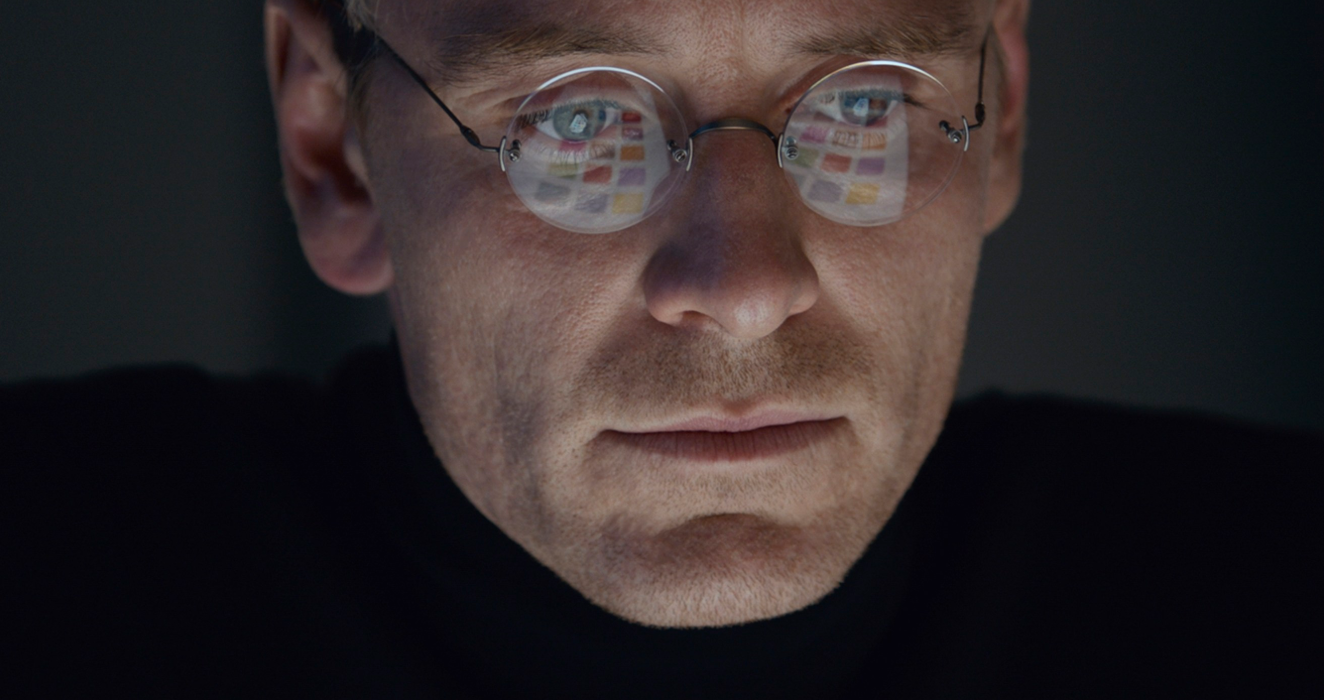
Danny Boyle and Aaron Sorkin‘s Steve Jobs (’15) bothered me from the get-go. It was close to three years ago when I saw it for the first time (at Telluride), and after re-thinking and re-thinking it again, I realized that it didn’t work for two principal reasons.
One, the relentless use of “Sorkin walk-and-talks.” (I don’t remember at what point I flinched in my seat and almost stood up and said aloud, “Are they gonna walk and talk through this whole damn movie?”) And two, Michael Fassbender. I was just starting to realize how much I disliked the guy because of those cold fuck-you eyes of his. From a 8.28.16 riff called “Shorter Steve Jobs Review”: ‘I know this is a class-A enterprise with a sharp Sorkin script, but how much longer do I have hang with this prick?'”
In short, Andrew Saladino‘s “12 Angry Men: A Lesson In Staging,” a seven minute and 41-second video essay, reminded me how much I disliked Steve Jobs. Because of those infuriating walk-and-talks (and how more inventive and confident 12 Angry Men director Sidney Lumet was at shooting straight-dialogue scenes), and, yes, because of that super-prick Fassbender.
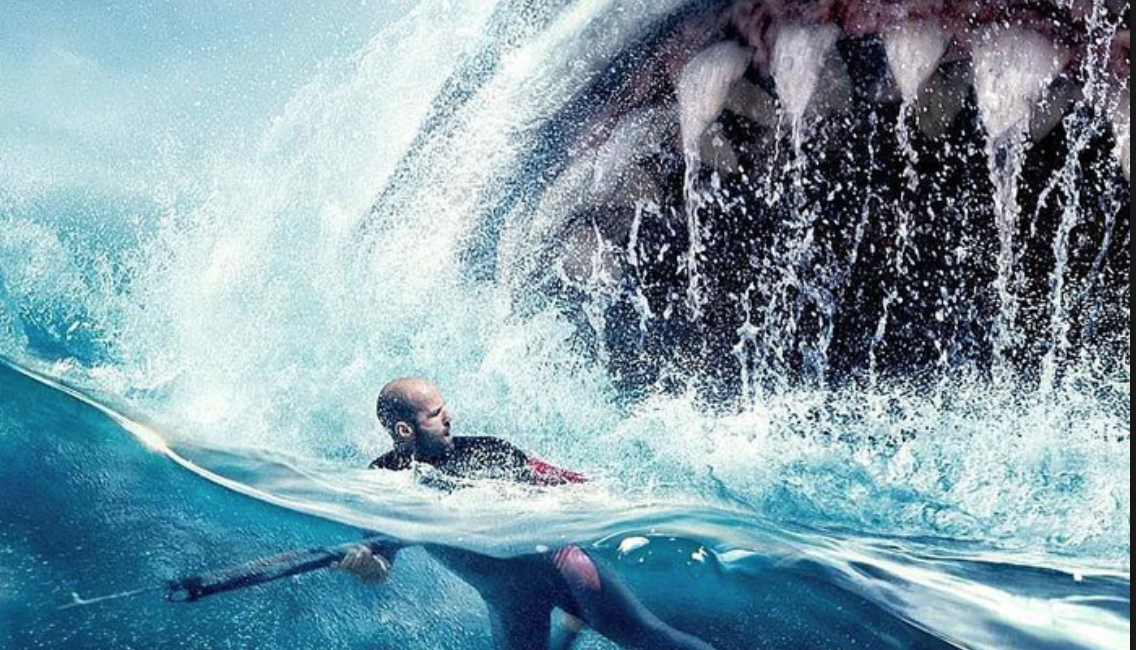
If you get eaten by a 95 foot-long Megalodon shark, at least you’ll die quickly…right? Thank God we have Jason Statham on the case. I’m sensing a comedic attitude lurking beneath the generic chops. The director of The Meg (Warner Bros., 8.10) is Jon Turtletaub, whose last theatrical feature was Last Vegas (’13). Should moviegoers be concerned about principal photography having begun in October 2016 and concluded 18 months ago? Post-production was presumably slowed down by the CG. The film will work if the shark looks real, but if the effects look even a little bit shitty…aiiiy, pobrecito mío! Costarring Li Bingbing, Rainn Wilson, Ruby Rose, Winston Chao and Cliff Curtis. Pocket those paychecks.
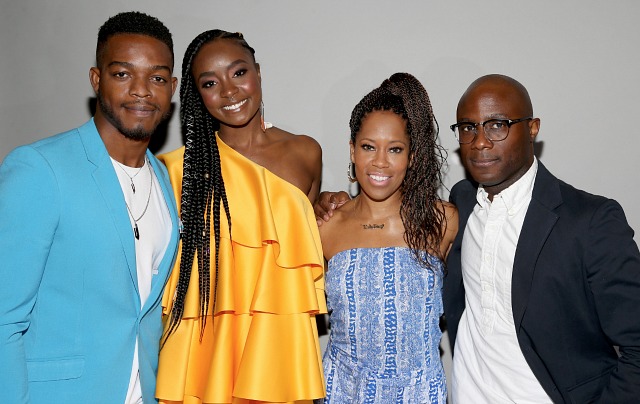
Two days ago clips from Barry Jenkins‘If Beale Street Could Talk (Annapurna) were shown at Essence Festival, the New Orleans-based cultural gathering which wraps today. Jenkins, director-writer of the 2016 Best Picture Oscar winner Moonlight, took bows along with leads Kiki Layne and Stephan James, who play engaged lovers Clementine “Tish” Rivers and Alonzo “Fonny” Hunt. Regina King, who plays Kiki’s mom Sharon, was also on hand.
The Annapurna release has no release date, but will probably pop through at the Venice, Telluride or Toronto film festivals — i.e., some combination thereof.
If Beale Street Could Talk castmembers Stephan james, Kiki Layne, Regina King + director-writer Barry Jenkins.
Based on the 1974 James Baldwin novel and set in early ’70s Harlem, Beale Street is about difficulties faced by Tish, a 19 year-old, and Fonny, a 22 year-old sculptor, and their extended family. Fonny is unjustly accused of raping a Puerto Rican woman, Victoria Rogers (Emily Rios), and is sent to prison. Soon after Tish discovers she’s pregnant. She, her family and her lawyer struggle to find evidence that will free Fonny before the baby is born.
Regina King and Colman Domingo portray Kiki’s mom and dad. Michael Beach plays Fonny’s profane dad and Aunjanue Ellis his strictly religious mom. Nobody seems to know who plays the lawyer but it’s either Dave Franco or Finn Wittrock.
Morales: “The first clip showed all the principal cast in the house of Kiki’s parents. It happens right after Stephan has been taken to jail and everyone is talking about his young lawyer. Stephan’s parents come in (Beach and Ellis) and it’s clear that his mom and dad are different from one another. Mom is very church-like and strict while dad curses in front of others and says his foul language is considered hip. There’s a lot of tension in the room when Kiki talks back to Steph’s mom.
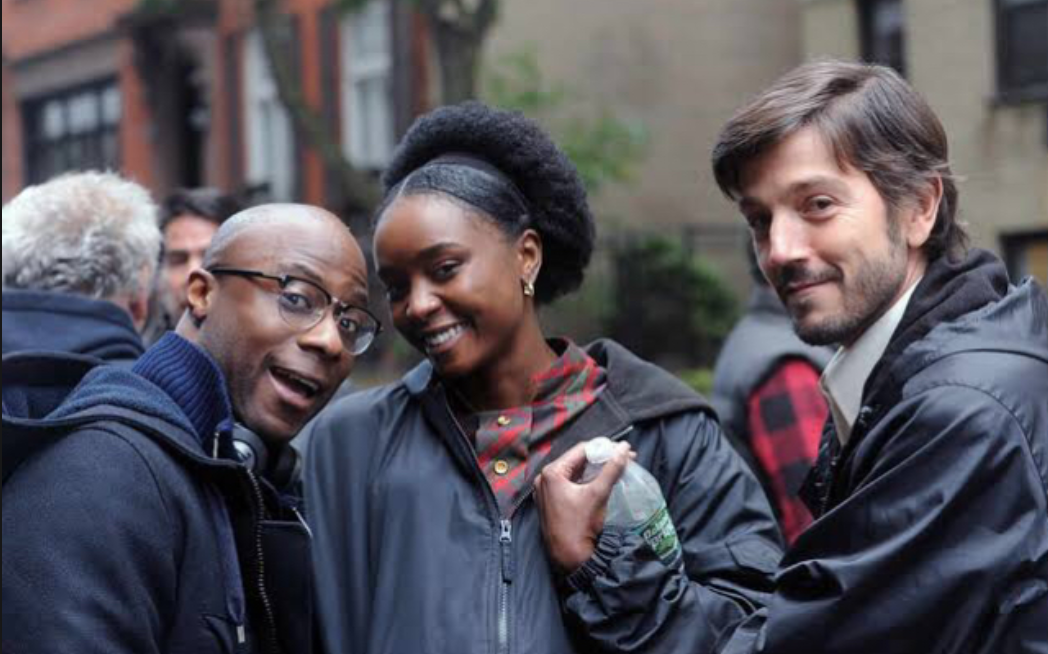
“The second scene, apparently a flashback, shows Stephan and Kiki hanging at a Spanish restaurant where he says hi to Pedrosito (Diego Luna). It’s raining as he walks Kiki outside, and then asks her to come home with him.”
A 7.5 Indiewire article by Zack Sharf reports that Guardians of the Galaxy director James Gunn has offered stern words to a certain sector of Star Wars fanatics. Gunn was affected by a 7.3 Wrap article in which Ahmed Best, the actor who played Jar-Jar Binks in The Phantom Menace, confessed that the Jar-Jar hate was so intense 20 years ago that he actually contemplated killing himself. Some fans apparently replied that George Lucas was the guilty party and not Best, as Lucas was Jar-Jar’s creator.
Gunn’s reply: “Star Wars may be important to you, but it doesn’t belong to you. If your self-esteem depends on how good you think the current Star Wars is, or if your childhood is ruined because you don’t like something in a movie, GO TO THERAPY.”
HE to Gunn: There are very few critics or columnists who feel less in league with Star Wars loonies than myself, but if you want to be fair about it two truths need to be acknowledged.
One, fanboy fervor cuts both ways. The sputtering anger that fed haters of The Last Jedi or The Phantom Menace came from the same emotional gas tank that has propelled the reputations of other fanboy flicks and made them into super-hits. Fanboy ardor can obviously turn toxic, for sure, but it’s slightly hypocritical for filmmakers to deplore fan-bile on one hand while winking at fanboy worship and profiting handsomely when the reviews are good and the winds are favoring.
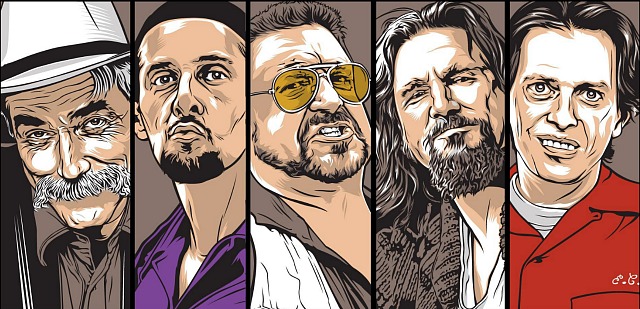
And two, fans who’ve responded to certain films with crazy intensity arguably own the film as much as the filmmakers, and perhaps even more so. When The Big Lebowski was surprise-screened at Sundance in January of ’98, it was nothing more or less than an offbeat Coen brothers entry — a deadpan stoner comedy that some critics liked and others not so much. But the crazy fans of Joel and Ethan’s eccentric paen turned it into a cult phenomenon. That special popularity is owned by them, not the Coens. Ditto the fanatical love of the first two Star Wars films, A New Hope and The Empire Strikes Back, between ’77 and ’80, and how all of that flipped into rage when the prequels came along 20 years later.
Last Jedi haters probably could benefit from a little couch therapy, but Hollywood types never allude to fan psychology when the money is pouring in.
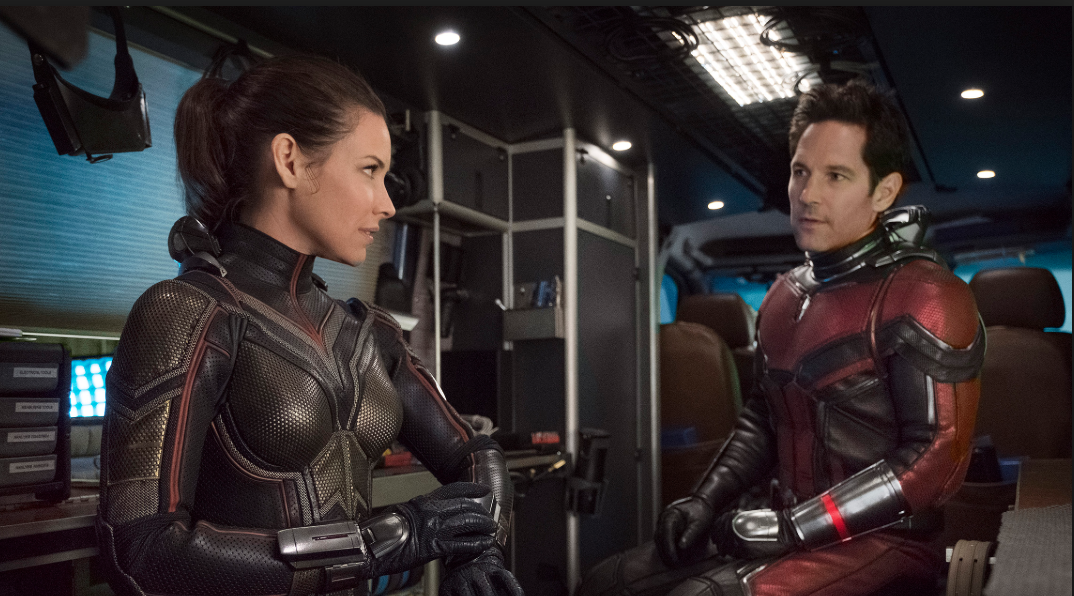
Posted on 6.27: Peyton Reed‘s Ant-Man and the Wasp (Disney, 7.6) isn’t a problem unless you’re determined to complain about it not being as good as the original Ant-Man (’15). Which it’s not.
It nonetheless has good, occasionally amusing work by Paul Rudd, Evangeline Lilly (Hope van Dyne / Wasp), Michael Douglas, Michael Pena, Walton Goggins (fated to play pain-in-the-ass, low-rent villains for the rest of his life), Bobby Cannavale, Judy Greer, Hannah John-Kamen (Ghost), Abby Ryder Fortson (Rudd and Greer’s daughter Cassie), Randall Park, Michelle Pfeiffer (Janet van Dyne — rescued in Act Three from the sub-atomic, micro-quantum realm or whatever you want to call it), Laurence Fishburne (punching the clock), etc.
Ant-Man and the Wasp is fleet, funny, disciplined, carefully honed, occasionally dazzling, light-hearted, pleasingly absurd…112 minutes worth of cool cruisin’. And those 112 minutes feel like 80 or 85, by the way. There are no significant downshiftings or speed bumps, or none that bothered me.
Please don’t let any other sourpusss types stop you from seeing it, but I’m telling you straight and true that Ant-Man and the Wasp is not quite as affecting, highly charged and/or sink-in good as I wanted it be. You may feel the same way when you see it, but you’ll probably survive.
Why should anyone care if Ant-Man and the Wasp registers as a slight letdown that’s nonetheless entertaining? There are bigger fish to fry and meditate upon. See it or don’t see it. But don’t weep for the Marvel and Disney empires — they’re fine. On top of which the Rotten Tomatoes whores have given it a 96% approval rating.
The dopey subversive humor in Reed’s three-year-old original felt fresher, for one thing. And the story was more emotionally affecting as far as Paul Rudd‘s Scott Lang was concerned. He was in a fairly dark and despairing place as it began — ex-con, low-rent loser, not much of a role model for his daughter — so morphing into Ant-Man by way of Michael Douglas‘s (i.e., Hank Pym’s) brilliance and reluctant largesse really meant something.
The footage was recorded 38 years ago by filmmaker Jun’ichi Yaoi. It was part of a documentary about paranormal experiences, blah blah. Yaoi’s doc was never released but a VHS of the raw footage was reportedly sold two years ago on eBay. Somebody evidently decided to upload the video to YouTube. Why did they wait two years? Why didn’t they upload it immediately? Or why didn’t they wait until 2001‘s 60th anniversary in 2028? Or the 70th in 2038? Who cares?
The Great Stanley K., in his own words: “I’ve tried to avoid doing this ever since the picture came out. When you just say the ideas they sound foolish, whereas if they’re dramatized one feels it. But I’ll try.
“The idea was supposed to be that [Keir Dullea‘s Dave Bowman] is taken in by god-like entities, creatures of pure energy and intelligence with no shape or form. They put him in what I suppose you could describe as a human zoo to study him, and his whole life passes from that point on in that room. And he has no sense of time. It just seems to happen as it does in the film.
“They choose this room, which is a very inaccurate replica of French architecture….deliberately so, inaccurate…because one was suggesting that they had some idea of something that he might think was pretty, but weren’t quite sure. Just as we’re not quite sure what do in zoos with animals to try to give them what we think is their natural environment.
John SturgesThe Great Escape (’63) was shot on sound stages near Munich, and to some extent in a Bavarian town named Fussen. The real-deal Stalag Luft III, the P.O.W. camp from which P.O.W.s actually escaped in March 1944, was located 100 miles southeast of Berlin, in what is now the Polish town of Żagan.
In the comment thread that followed yesterday’s Great Escape post (“Independence Day Doldrums”), a discussion arose about the logistics of the escape, which led me to riff about the whys and wherefores of the escape itself.
The Great Escape P.O.W. camp was built in what looks like a 15-acre area not far from the Munich sound stages. It consisted of 16 P.O.W. barracks, which could theoretically hold 50 guys each or 800 total. The actual Stalag Luft III was spread over 60 acres and housed 11,000 POWs.
I noted yesterday that Sturges’ P.O.W. camp had the atmosphere of a leisurely, not-hugely-unpleasant work camp, and that the German guards were like testy high-school teachers (who’s been throwing spitballs?) and that the inmates conveyed military decorum while being casually impudent, or the attitude that TV audiences would later associate with Hogan’s Heroes.
The actual Stalag Luft III was not a hell hole. A bit grim but certainly tolerable. The men were adequately fed and housed. Bunks, blankets, pillows. Holiday dinners were served. The atmosphere was almost collegial, to go by the Wiki page. POWs organized theatrical shows and published two weekly newsletters. Mail and parcels from loved ones arrived. All kinds of recreational fitness options (including weights, fencing and table tennis) were available. The camp even had a small swimming pool.
As noted, the escape happened in the late stages of WWII (i.e., March 1944). Any sage assessment of how the war was going told you the Germans were doomed. The coming Eisenhower invasion, the disastrous Russian front, constant Allied bombing. Albert Speer wrote that events turned against the Germans in ’42, and that he knew they were sunk soon after. A 9.8.09 Guardian article by Richard J. Evans (“Why Hitler’s Grand Plan Collapsed”) asserts that “ordinary Germans knew by the end of 1943 that the war was lost.”
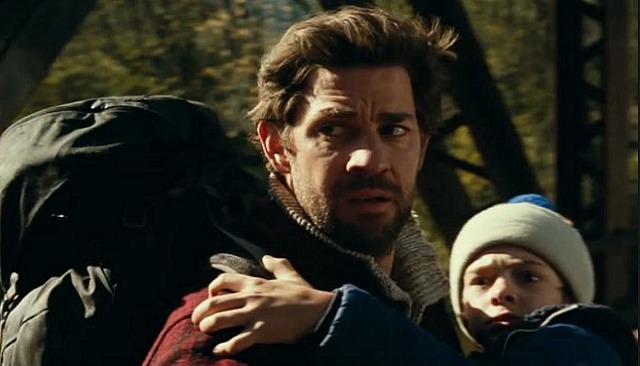
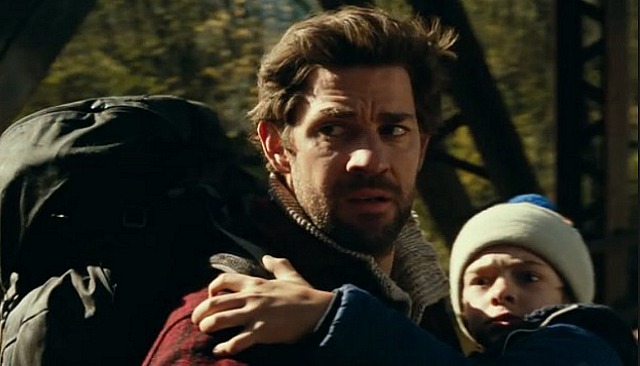
The folks at IDPR aren’t letting grass grow under their feet as far as John Krasinki‘s A Quiet Place is concerned. A day or two ago an assortment of journos and columnists received a special Quiet Place package from the high-powered publicity firm. It contained a DVD of Krasinski’s film along with a letter that reads, according to THR‘s Scott Feinberg, “As we enter the second half of the year and you begin to work on your awards coverage, we wanted to remind you…”
In the same way that Universal got the jump by inviting journos 13 months ago to an FYC “garden party” on behalf of Jordan Peele‘s Get Out, IDPR is looking to ignite Best Picture talk for Krasinski’s high-end horror flick. And why not? It’s only July, and A Quiet Place is almost a sure thing. The little man in my chest (a close relation of HE’s fabled insect antennae) is 80% convinced of this.
In the old days (i.e., three or four years ago) Academy voters wouldn’t have considered a well-made “elevated” horror film as a possible Best Picture contender. But things have changed. The New Academy Kidz (i.e., the younger, proportionately female, multicultural types who were invited to join AMPAS to counter #OscarsSoWhite) are totally down with nominating genre films, and so Get Out, a racial-minded Stepford Wives, became a Best Picture nominee. Hell, the Best Picture Oscar was won by The Creature From The Love Lagoon. So A Quiet Place shouldn’t have any trouble.
Don’t forget that Quiet made $187 million domestic and nearly $330 million worldwide.
For what it’s worth, I called A Quiet Place “an exceptional, top–tier horror–thriller…it has some logic problems but the oppressive silence element is brilliant and in fact riveting. Best monster-stalker flick in years.”
I added that having a baby in such a situation is a suicide move, of course. “In a world of alien domination and global decimation, what is the ONE THING ABOVE ALL that a heterosexual couple DOESN’T want to do?,” I asked. “In a world in which the slightest sound will trigger instant savage death, what is the ONE THING that a heterosexual couple must NEVER, EVER DO, no matter what? That’s right — they don’t want to get pregnant. Because there’s no keeping babies quiet, and so the aliens will immediately pounce and kill the infant within hours of its birth along with mom, dad and everyone else.”
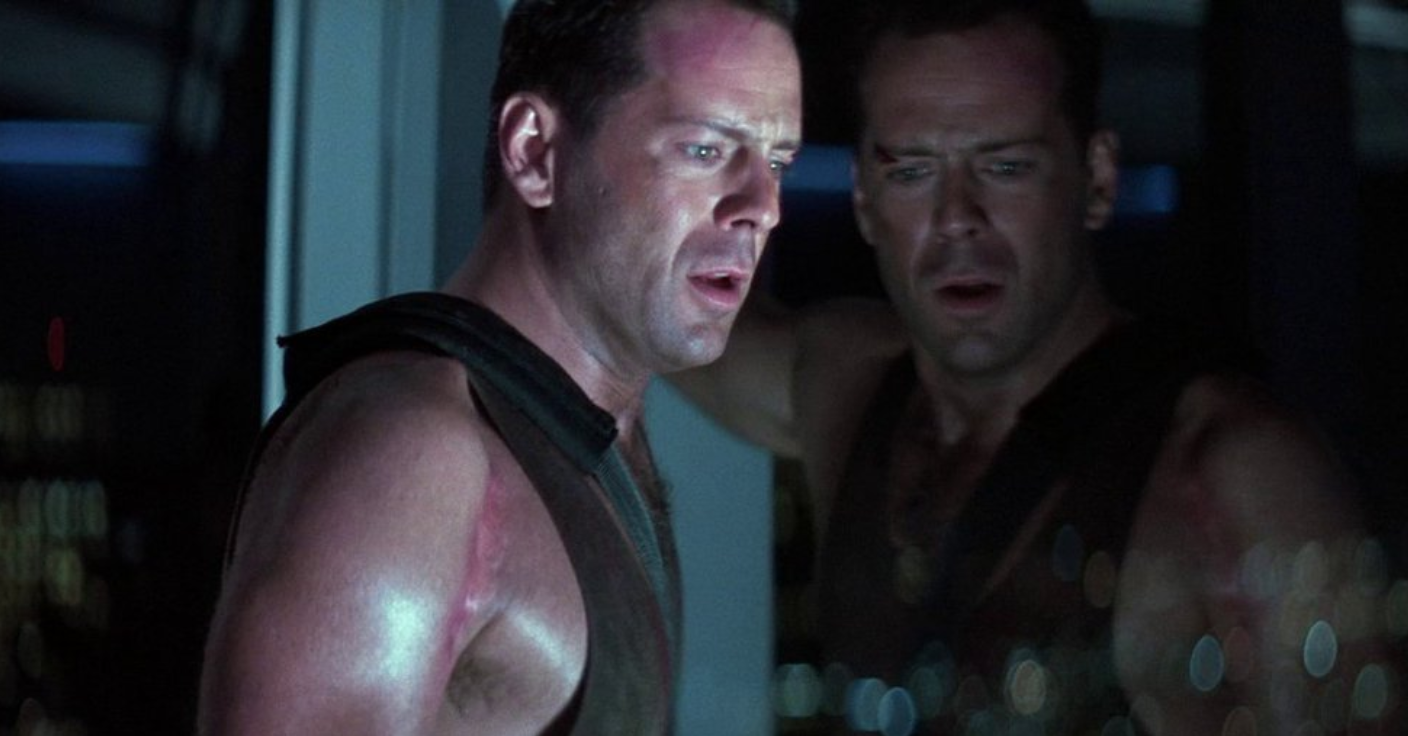
I trusted the action in John McTiernan‘s Die Hard (’88). I didn’t “believe” it, but it was disciplined and well-choreographed for the most part, and it mostly avoided the outrageous. Now it’s all outrage, all absurdity, all Coyote vs. Roadrunner. Cliffhanger moments in 21st Century action thrillers are always solved with a half-second to spare. The hero grabs the rope, shoots the guard dog, ducks out of danger or figures out the bomb-defusal code at the very last instant. Every damn time. Thrillers have been using this last-second-solve device for decades, of course, but nowadays it’s almost all on this level. 59 years ago the dangling Eva Marie Saint losing her footing at the very instant Cary Grant grabs her wrist (at the 57-second mark) was cool, but if 90% of the damn movie is about a woman losing her footing, the audience will eventually get irritated and then more irritated and then mad.
Eugene Jarecki‘s The King (Oscilloscope, now playing) “is a nonfiction chronicle of the life and career of Elvis Presley, but it’s really a documentary-meditation-essay-rhapsody, one that captures, as almost no film has, what’s happening, right now, to the American spirit. What’s new — and revelatory — about The King apart from the soulful dazzle of Jarecki’s filmmaking, is that it asks, at every turn, a haunting question: When you take a step back and really look at what happened to Elvis Presley, what does [that] say about the rest of us?
“The King says a tremendous amount. In a way that no film has before it, The King captures how Elvis, while he was blazing new trails as an entertainer, was being eaten alive by forces that were actually a rising series of postwar American addictions.
“The healthy desire to be successful, and even to stay on top, evolved into an over-the-top lust to break the bank. Elvis started as a true artist, but in Hollywood his movies made a spectacle — almost a debased ritual — of commercial compromise. (You could chortle at a cheese doodle like “Blue Hawaii,” but you couldn’t argue with it, because it was the earliest incarnation of The Blockbuster Mentality.) And as an individual, Elvis, even as he remained a superstar, became the ultimate consumer. He ate and drank and ate some more, and sat on his gold toilet throne, and sealed himself off from the real world, like Howard Hughes on a junk-food binge that never ended. High on Dilaudid (i.e., opioids), Elvis shot out his TV screen with a gun. Today, he’d be on an all-night video-game bender.
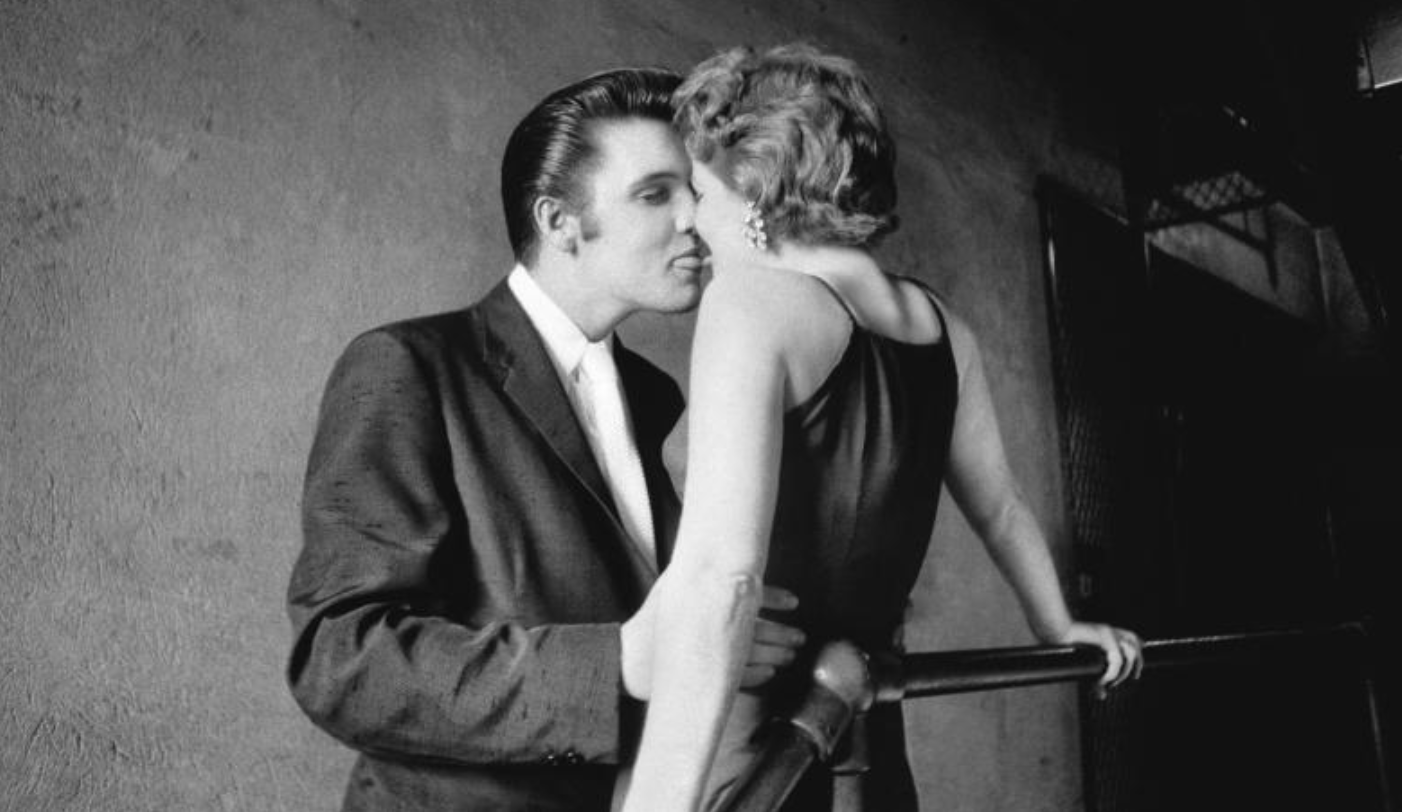
“[Early on we’re shown] an inky-haired young rebel, who may have been the most handsome man of the 20th century, bring a vibratory erotic-ecstatic energy into the world (he didn’t invent that energy, but he channeled it, blended with it, and redefined it), and in doing so he changes the world overnight. He tilts it on its axis.