Another Exceptional, Oscar-Worthy Performance

Dan Gilroy‘s Roman J. Israel, Esq., which screened on late Sunday night at the Ryerson, is a whipsmart, cunningly performed, immensely satisfying film in so many ways. Such a skillful job of character-building on Gilroy’s part, layer upon layer and bit upon bit, and such a finely contoured performance by the great Denzel Washington.

My only hang-up is that I wanted a different ending. Not that Gilroy’s ending is “bad”, per se, but I didn’t agree with it. I didn’t want it. 

Otherwise this is such a brilliant, invigorating and fully believable film for over-30s — milieu-wise, legal minutiae-wise, Asperger’s-wise. It’s my idea of pound cake topped with whipped cream and strawberries…give it to me. You can take a terrific bath in this film and never feel unsatisfied that the story isn’t quite delivering the way you want it to.

Until the last 25 or 30 minutes, that is, but even then it’s not a fatal problem, just an air-escaping-the-balloon one.

Alas, I have to awaken at 6:30 am for an 8:30 am screening of Chappaquiddick, which I hear is quite good, and it’s 1:28 am now.

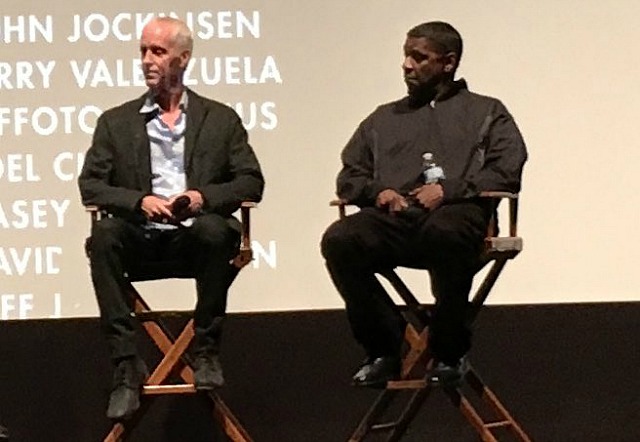
7:01 am update: Variety‘s Owen Gleiberman agrees with me — a wonderfully detailed Gilroy character, superb Washington acting but with a less-than-satisfying third act:

“The way Roman J. Israel, Esq. is set up, the film should be building to a moral-legal confrontation that tests everyone involved. Instead, it’s content to be a character study; but the audience, after a while, may not be so content.

“Roman gets assigned to the case of a young man (Niles Fitch) accused of murder (he tagged along when his buddy killed a convenience-store clerk). After a while, Roman goes through with an action that seems, in movie terms, to be justified: He turns the identity of the killer over to the victim’s relatives, gathering a private reward of $100,000. Legally, it’s a dicey thing to do, but no one innocent has gotten hurt, and Roman uses the money to put himself through a transformation that feels good.

“He buys real suits. He rents a fabulous apartment. He brushes back his hair. He scarfs honey-and-turkey-bacon donuts. He goes on a date with Maya (Carmen Ejogo), who runs a non-profit and, in her small way, is carrying on the dream of Roman’s formative era. The audience surveys all of this and approves, because Roman J. Israel, Esq. looks like a guy who could use a break.

“But the reward money comes back to haunt him. And that seems, in the end, a little facile. The movie turns into a war of signifiers, an archetypal L.A. battle pitched between going-for-the-bucks and holding-on-to-your-values. We’ve seen that battle before, a few too many times, and Roman J. Israel, Esq. doesn’t play it out in a particularly satisfying way. It leaves us with a character you won’t soon forget, but you wish that the movie were as haunting as he is.”
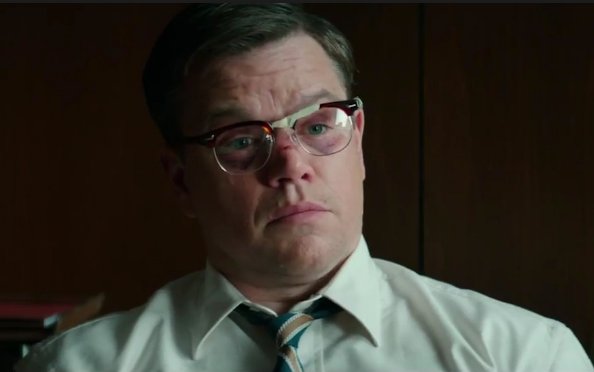
Bloody White Apology

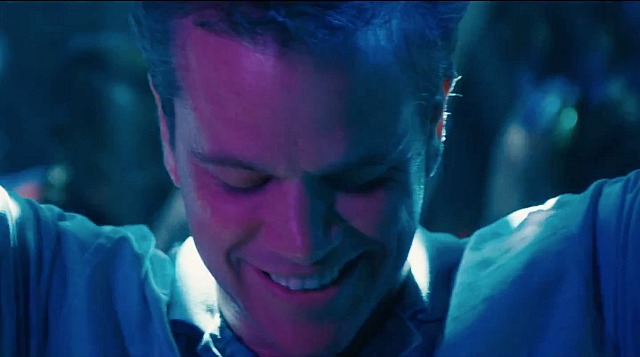
I saw George Clooney‘s Suburbicon earlier today…wow. Fargo-ish, it’s not. But it should have resembled Joel and Ethan Coen‘s 1996 classic at least somewhat, I was telling myself, because the original Suburbicon script, written by the Coens in ’86 and set in the mid ’50s, was their first stab at a Fargo-like middle class crime noir. Nine or ten years later the Coens went back to the same James M.Cain well and created Fargo, and the rest is history.

In Suburbicon, Clooney and producer and co-screenwriter Grant Heslov have reworked things, keeping the Fargo noir stuff but also, it seems, diluting or ignoring that sardonic deadpan wit that we all associate with the Coens, and deciding to paint the whole thing with a broad, bloody brush.

When it comes to tales about greed, murder and doomed deception, there’s nothing duller than watching a series of unsympathetic, unwitting characters (including the two leads, played by Matt Damon and Julianne Moore) play their cards like boobs and then die for their trouble. There’s just no caring for any of them.

Most significantly, Clooney and Heslov have added a side-plot about how Eisenhower-era white suburbanites were racist and venal to the core, and how things really aren’t much different today.

The Suburbicon victims are the just-arrived Meyer clan (Karimah Westbrook, Leith M. Burke, Tony Espinosa), and from the moment they move into their new, ranch-style home in a same-titled fictitious hamlet (i.e., an idyllic real-estate development right out of Martin Ritt‘s No Down Payment) their cappuccino skin shade incites ugly pushback from just about everyone. But the situation doesn’t develop or progress in any way. The Meyers keep absorbing the ugly, and that’s pretty much it.

Remember how those small-town citizens greeted the arrival of Cleavon Little in Blazing Saddles? Nearly the same broad-as-fuck tone prevails here. There isn’t a single non-racist white adult in Suburbicon. With the exception of Noah Jupe‘s Danny, who’s about ten, and the Meyers clan everyone in Clooney’s film has horns, hooved feet and a tail.

Clooney and Heslov to progressive industry hipsters and Twitter banshees: “We get it…whiteys carry the demon seed…a pox upon humanity…they totally sucked in the Eisenhower era and are probably no better right now…down with the curse of Anglo Saxon gene pools except, you know, for a certain small sliver of enlightened humanity that includes Glenn Kenny, Ellen DeGeneres, Greta Gerwig, Phillip Noyce and a few thousand others.”

Suburbicon is about a married middle-management milquetoast (Damon’s Gardner Lodge), obviously a close relative of William H. Macy‘s Jerry Lundegaard, scheming with his wife’s sister (Julianne Moore plays both roles) to scam a pile of dough by hiring a couple of thugs to kidnap and “accidentally” kill his wife. All kinds of hell breaks loose when the plan goes wrong.

Read more

Barber Blocking Coppola’s New Cotton Club

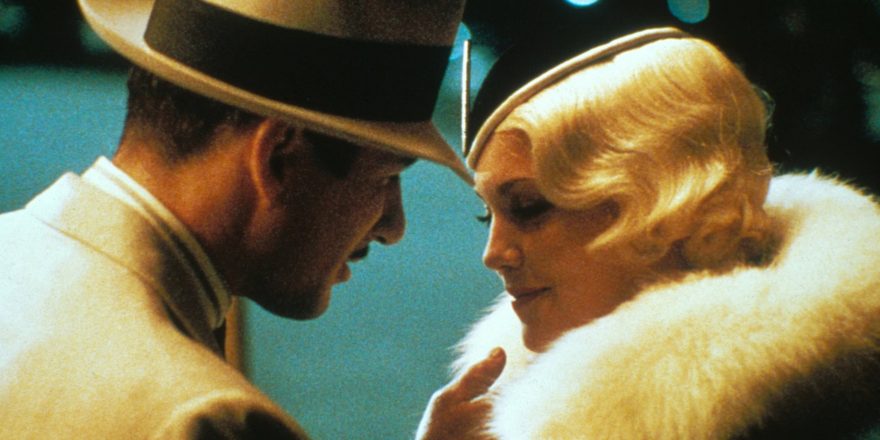
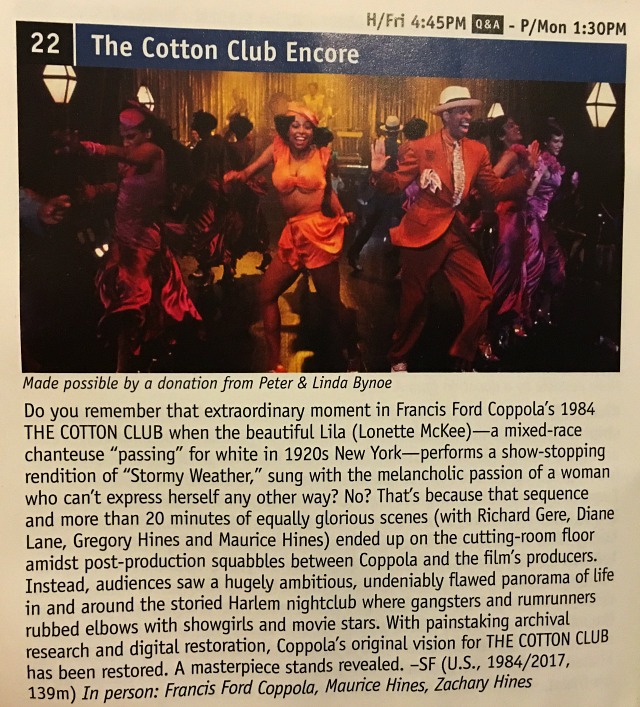
Francis Coppola‘s The Cotton Club Encore, an expanded and allegedly improved 139-minute version of the original 1984 film, played twice at last weekend’s Telluride Film Festival. I couldn’t fit it into my schedule, and I can’t find any reviews from any reputable or tough-minded critics whom I respect. Nor can I trust Jim Hemphill’s enthusiastic 9.6 review, which claims that the new cut is a “masterpiece”. But I’m certainly intrigued.

I didn’t care much for the original version, which I saw only once about 33 years ago. But Coppola’s new cut is said to feature more music and dancing, and to be less white, and less focused upon the romantic relationship between the two lead characters, played by Richard Gere and Diane Lane. It may do the trick and it may not, but who wouldn’t want to see it?

Coppola spent $500,000 out of his own pocket to create this new version. The restoration effort took four years, I’ve been told, and was completed about six months ago. Coppola was inspired after seeing an old Betamax version of an original cut that he liked better than the ’84 theatrical version.

Coppola archivist James Mockoski explained this morning that Coppola removed about 13 minutes of footage for the original 127-minute version, which took it down to 114 minutes or thereabouts. Roughly 25 minutes of new footage was added for a grand total of 139 minutes.

So why isn’t The Cotton Club Encore playing at the Toronto Film Festival or the forthcoming New York Film Festival? You’re not going to believe this, but the reason is MGM CEO Gary Barber, the same obstinate asshole who has blocked Robert Harris‘s long-hoped-for restoration of John Wayne‘s The Alamo.

MGM is the Cotton Club rights-holder, you see, and Barber, true to form, has not only objected to the film being shown in any kind of commercial venue (such as TIFF or NYFF) but is also uninterested in distributing or streaming Coppola’s expanded version, even though Coppola has paid for the whole thing.

Barber could theoretically (a) allow for a brief theatrical re-release of The Cotton Club Encore or (b) issue it on Bluray or via Amazon/iTunes streaming or (c) at least sub-license the home video rights to Criterion or some other dedicated, film-loving outfit. But the South African-born executive reportedly has no interest, just as he’s refused to even discuss the Alamo situation with Harris.

Read more

The Hell You Say

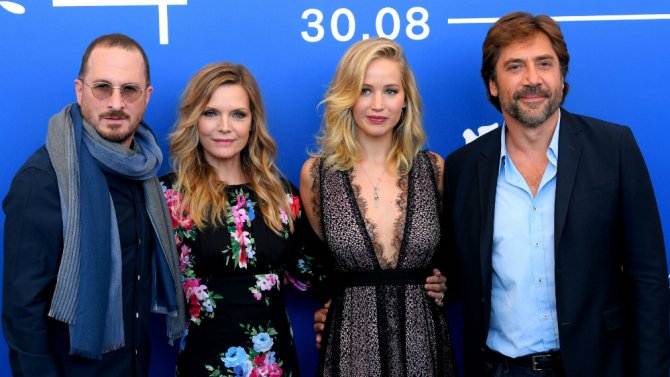
Attention Darren Aronofsky loyalists: The word has gone out that mother! is an allegory about something or other. Climate change, haunted Biblical prophecy, invasive social-media malevolence, a personal Aronofsky confession…you tell me. It’s not about the images, behaviors and disturbances presented on the screen, but whatever may be suggested or implied by same. Go to town and kick it around, but don’t limit yourself solely to the visual and aural content.

Ben Croll’s 9.6 Indiewire review (“Aronofsky’s Audacious and Rich Cinematic Allegory Is His Most Daring Film Yet”) is one manifestation of this mode of absorption. As Croll writes, “Come for the house that bleeds; stay for the reflections on parenthood and the difficulty of living with fame.”

Excerpt #1: “Awash in both religious and contemporary political imagery, Aronofsky’s allusive film opens itself to a number of allegorical readings, but it also works as a straight-ahead head rush. Not just another baroquely orchestrated big-screen freak-out in the vein of Black Swan (though it is very much that), the film touches on themes that — if too hazily figurative to be in any way autobiographical — at least tread on factors in the director’s own life.

Excerpt #2: “The film is divided into two parts that roughly parallel one another for reasons that eventually make themselves clear. Both follow married couple Jennifer Lawrence and Javier Bardem (and yes, their nearly 20-year age gap is an important and oft-commented upon plot point), who go unnamed as a way of telegraphing that they’re meant to represent Bigger Things.”

Excerpt #3: “Aronofsky and Paramount have launched one of the more secretive marketing campaigns in recent memory, which is odd because “mother!” is a not a particularly twisty-turny affair. Both parts of the film play out like the first few chapters of The Hobbit, where a growing number of unexpected guests pop in to break the leads’ bucolic solitude, and twist them toward different ends.”

Read more

Shape of Water Pushback

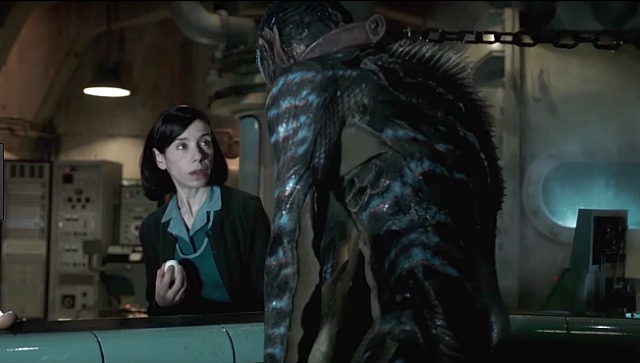
A few hours ago a critic friend took me to task for what he regarded as a slightly-too-friendly review of Guillermo del Toro‘s The Shape of Water, which I posted on 9.3. Here’s our conversation:

Critic friend: “I’m a decided non-fan of The Shape of Water, which puts me squarely in the minority. Which is fine.

“But I was struck by this paragraph in your write-up: ‘Alas, Shape isn’t perfect. It’s a full emotional meal but saddled, I regret to say, with an implausible story, even by the measure of a fairy tale. It contains unlikely occurences, curious motives and logical roadblocks, all of which have to be elbowed aside by the viewer in order to stay within the flow of it. Which — don’t get me wrong — I was totally willing to do because I so loved the overall.’

“Frankly, the qualifications you have — implausible story (even by the standards of a fairy tale), curious motives, etc. — sound much more major than your reasons for liking it. Why on earth is this glorified piece of production design “a full emotional meal”? If you found it so, go with God, but please explain.

“It doesn’t sound like you were even bothered by my #1 reason for not responding to it: The gill-man is…a blank!! A rubbery body suit in search of a single character trait.”

HE response: “I liked that GDT was once again off in his realm, confidently occupying his own patch, indifferent to the expectations of someone like you or me. He’s NEVER cared that much, never given a hoot about anything but the purely visual, the ripely sensual, the monster mash, the phantasm, the fangoria, etc.

“Seriously, I just decided early on that once again here was another GDT film that I would have to accept or reject. So I chose ‘okay, mostly yes.’ I decided to throw up my hands, shrug and accept it. I kept pushing away the bothersome stuff…push away, push away…because I fell in love with Sally Hawkins and her journey. I should have been tougher, I suppose, but I just didn’t have the heart to start chipping away and complaining.

“Remember that I also wrote the following: ‘If you ask me Guillermo has adhered too strictly to a black-and-white moral scheme here. I for one am always looking to find a couple of minor smudges or failings in a good character, and a sympathetic or slightly redeeming quality or two in a villain, but this kind of complexity is not, I regret to say, in the Shape of Water cards.”

Read more

Lady Bird — Whipsmart, Deeply Felt, Affecting

Greta Gerwig‘s Lady Bird (A24, 11.10), which I finally saw last night after absorbing all the buzz and praise for the previous two days, is by far the pizazziest, wisest, smartest, most emotionally resonant and complete film I’ve seen at Telluride ’17. And it’s going to keep happening after it opens two months hence, and by this I mean it will stir the award-season pot.

Lady Bird vibrates with pluck, wit and smartypants energy, but it’s not some indie outlier that will peak in terms of awards recognition with a Spirit trophy or two. It’s a Best Picture contender if I ever saw one, and Saoirse Ronan‘s lead performance — essentially a portrayal of the young, Sacramento-imprisoned Gerwig at age 18 or thereabouts — is a locked-down Best Actress contender.


Lady Bird star Saoirse Ronan, director-writer Greta Gerwig during filming in Sacramento.

A comically anguished piece of self-portraiture in which the 34 year-old Gerwig recalls and reconstructs (and to some extent re-invents) her life in ’02, when she was finishing high school and dying to get the hell out of Sacramento, Lady Bird is the only serious Telluride break-out, the only film that has really cast one of those spells…an amusing, touching, smallish knockout that truly glistens and scores and pushes that special massage button.

Lady Bird is Rushmore’s Daughter — a whipsmart, girl-centric indie that deals emotionally rounded cards, a Wes Anderson-type deal (sharply disciplined, nicely stylized, just-right music tracks, grainy film-like textures) but without the twee, and with polish and English and all kinds of exacting, soulful self-exposure from director-writer Gerwig.

She’s passing along a half-funny, half-turbulent saga of high-school-senior angst, lust, parental friction, friendship, frustration, existential ambition and social longing.

Ronan’s performance is the take-home, for sure — a pushy, achey and vulnerable teen thing, almost but not quite in the Max Fischer-Jason Schwartzman mode. She’s also, of course, portraying the young Gerwig. You could say that Ronan is inhabiting Gerwig as much as Jesse Eisenberg played a generic Woody Allen-like figure in Cafe Society, only with more energy. In my book this is Ronan’s best performance yet, and that ain’t hay.

But Laurie Metcalf, as Ronan’s prickly and emotionally frustrated mom, is a stand-out also, and a likely contender for Best Supporting Actress.

Read more

Once In A Lifetime

From Todd McCarthy‘s Venice Film Festival review of Alexander Payne‘s Downsizing: “[This] is a wonderfully outsized movie for these times if there ever was one. Alexander Payne has taken a conceit heretofore used for gag-oriented sci-fi and comedy, that of shrinking human beings down to the size of a finger, and breathtakingly transformed it into a way of addressing the planet’s overriding long-term issue.

“Captivating, funny and possessed of a surprise-filled zig-zag structure that makes it impossible to anticipate where it’s headed, this is a deeply humane film that, like the best Hollywood classics, feels both entirely of its moment and timeless. It was a risky roll of the dice, but one that hits the creative jackpot.

“The rare director who has never made a bad film, Payne has now arguably created his best one with a work that easily accommodates many moods, flavors, intentions and ambitions.

“At its core, Downsizing grapples head-on with the long-term viability of humanity’s existence on this planet, but with no pretension or preachiness at all, while on a moment-to-moment basis it’s a human comedy dominated by personal foibles and people just trying to get by in life. It’s also a science-fiction film that not for a second looks or feels like one.

“As such, this is a unique undertaking, one centered on an unexceptional Everyman character who unwittingly embarks upon an exceptional life journey; in that sense, Matt Damon’s Paul Safranek is like the hero of a Frank Capra or Preston Sturges film of 75 years ago, an ordinary man who has a certain sort of greatness thrust upon him. At the same time, the movie is a highly sophisticated creation that, due to its off-hand, underplayed presentation of the future, essentially seems to be taking place in the present day.

Read more

What if Zinneman’s Jackal Was New?

Fred Zinnemann’s The Day of the Jackal is one of my favorite comfort flicks. I’ll watch it maybe once a year, and when I do it never fails to engage. What other respected thrillers have been about “how and when will the lead protagonist be stopped from carrying out an evil deed?” and with such impressive finesse? (I can’t think of a single one.) Jackal is so crisp and concise, so well disciplined. And I loved Michael Lonsdale‘s inspector, and Edward Fox was such an attractive and well-behaved sociopath. And so nicely dressed.

It’s been nearly 20 years since the 1997 remake with Bruce Willis and Richard Gere, and I don’t even remember it. It did pretty well financially ($159 million) so it must have done something right, but I haven’t the slightest interest in seeing it again.

What if Zinneman’s version and the remake had never been made, and what if, say, Steven Soderbergh had recently directed a just-as-good-as-the-Zinneman version with Ryan Gosling in the lead role, and it was about to be seen and praised at the Venice Film Festival and then open stateside a few weeks later? How would today’s popcorn inhalers respond to it?

Fred Zinnemann’s The Day of the Jackal is one hell of an exciting movie. I wasn’t prepared for how good it really is: it’s not just a suspense classic, but a beautifully executed example of filmmaking. It’s put together like a fine watch. The screenplay meticulously assembles an incredible array of material, and then Zinnemann choreographs it so that the story — complicated as it is — unfolds in almost documentary starkness.

The Day of the Jackal is two and a half hours long, and seems over in about fifteen minutes. There are some words you hesitate to use in a review, because they sound so much like advertising copy, but in this case I can truthfully say that the movie is spellbinding.” — from Roger Ebert‘s Chicago Sun Times review, 7.30.73.

Nobody Tells Us What To Do

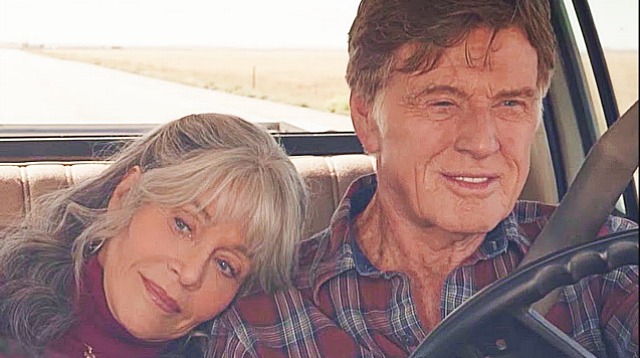
I’ve heard a couple of genuinely positive responses to Our Souls At Night, the Robert Redford-Jane Fonda romantic drama that Netflix will debut on 9.29. Both tipsters have said it’s a really nice film with very winning performances. The Venice Film Festival reviews (expected to pop sometime late Friday) will tell the tale, of course. Why isn’t it showing at the Toronto Film Festival? I mean, why wouldn’t it? It’s not a bust — the film is somewhere between good and pretty good — so where’s the downside?

Excerpt from Amazon reader review of same-titled Kent Haruf book: “I don’t want to spoil the ending of this book. It takes an unexpected twist and isn’t all happiness. But the overwhelming impression this book leaves in your mind is of simple friendship that moves into love, and of two old people who discover they’re still able to learn and grow. It’s beautiful. There are no verbal fireworks, no peeking inside characters’ heads. Everything is observed from the outside. It’s simple, clean, human.”

 
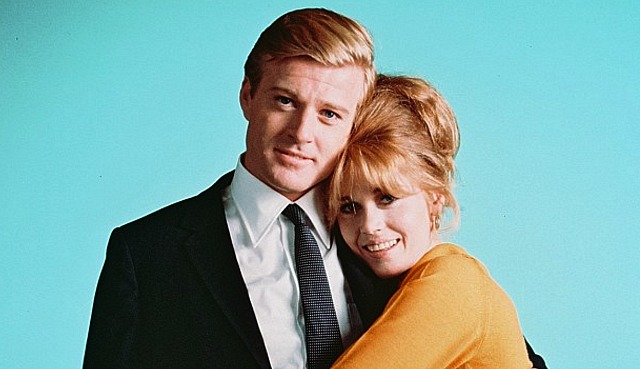
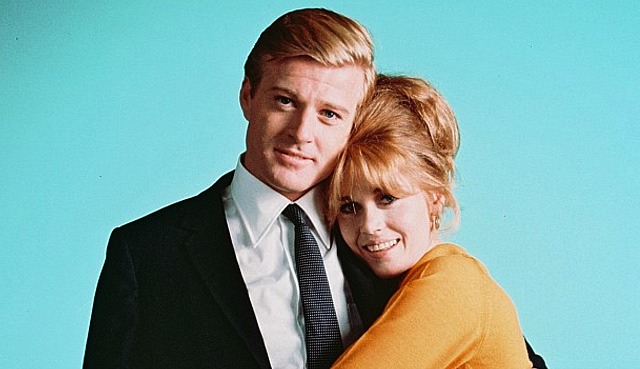
Publicity shot for Barefoot In The Park, which opened on 5.25.68. Fonda was 29 at the time; Redford was 31.
 
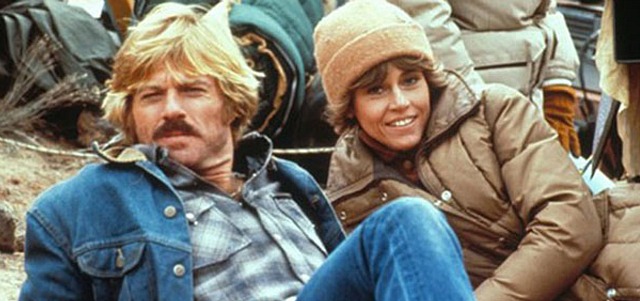
Sydney Pollack‘s Electric Horseman, released on 12.21.79.
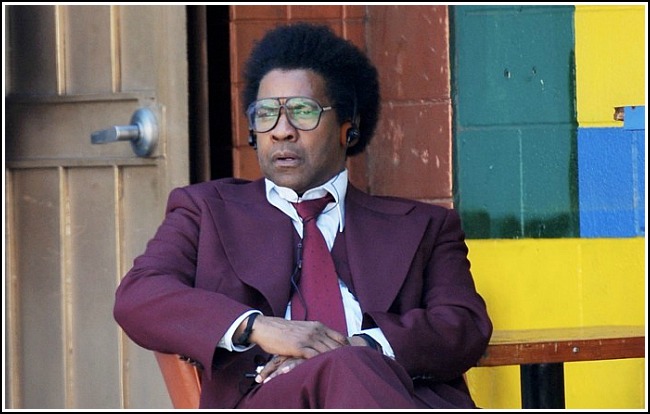
Gilroy’s Roman Israel, Esq. Heading For Toronto

A friend has been told that Dan Gilroy‘s Roman Israel, Esq. (Columbia, 11.3) is going to premiere at the Toronto Film Festival. I’ve also heard from a reliable source, and he didn’t deny it. Apparently TIFF accidentally posted their announcement about Roman Israel, Esq. earlier today, and then quickly deleted it. The addition, if true, will be officially announced…uhm, on Wednesday? For whatever reason they didn’t today, but TIFF moves in mysterious ways.

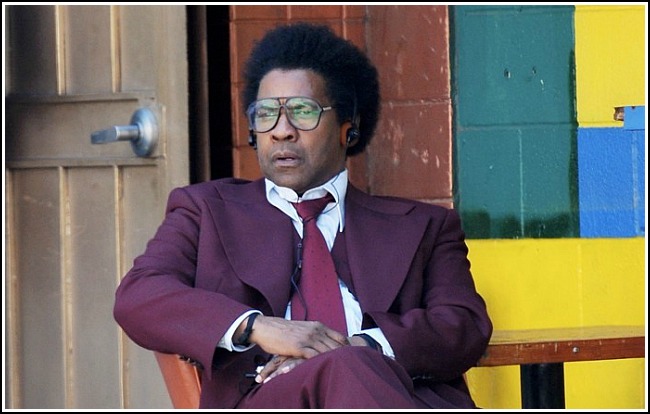
Roman Israel, Esq. is an awards-baity, Verdict-resembling legal drama with Denzel Washington as an ambulance-chasing attorney going through a crisis of character and professional ethics. It costars Colin Farrell, Carmen Ejogo, Joseph David-Jones and Andrew T. Lee.

If the information is true, it would obviously speak volumes about the confidence that Gilroy, the film’s director-writer, as well as Sony/Columbia execs may have in the film. Gilroy also directed and wrote Nightcrawler, of course.

“If is the middle word in life” was spoken by Dennis Hopper in Apocalypse Now. Robert Mitchum also said it in some late ’40s or early ’50s noir.

Wells to source: “If the story is bullshit, could you indicate so by not hanging up the phone as I count to 10? And if it’s not true, don’t say ‘are we straight, man?…got it?…everything clear?’ just before hanging up.  Anything but that.”

But the story probably isn’t bullshit.   I’ve just been told something that makes me comfortable with it.

Read more

Passing of Tobe Hooper

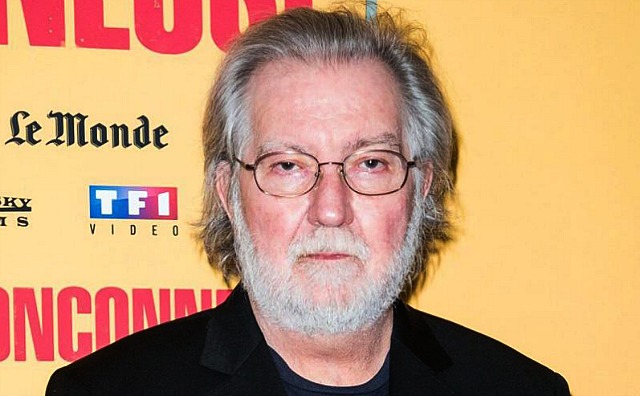
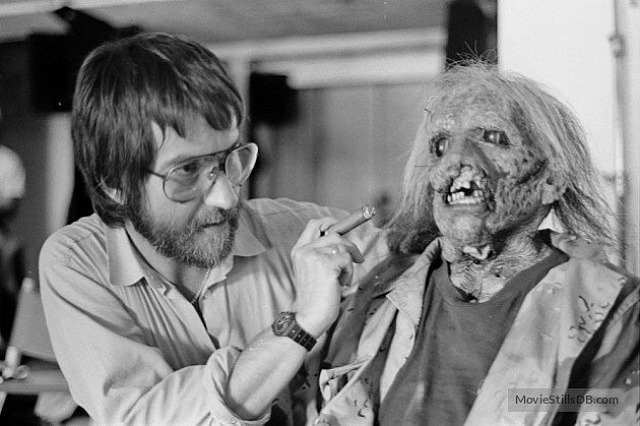
Hugs and condolences for the friends, fans and colleagues of influential horror film maestro Tobe Hooper, who died yesterday at age 74. There’s no question that Hooper did himself proud with The Texas Chain Saw Massacre (’74), a low-budget slasher thriller that I’ve never liked but have always respected. The following Wikipage sentence says it all: “It is credited with originating several elements common in the slasher genre, including the use of power tools as murder weapons and the characterization of the killer as a large, hulking, faceless figure.”

Hooper made a life out of his facility with horror. He career-ed it to the max. But after The Texas Chainsaw Massacre he never struck the motherlode again, not really.

You can’t give Hooper serious credit for Poltergeist, which was mostly directed by Steven Spielberg. And no, I’m not a fan of Lifeforce. If you want to be cruel about it you could call him a feverish, moderately talented fellow who got lucky only once, and that was it. Hooper was tenacious and industrious and always kept going, and of course he dined out on the original Saw for decades. No harm in that.

L.M. Kit Carson, the renowned screenwriter, producer and journalist whom I proudly called a friend and ally from ’86 until his passing in 2014, was friendly with Hooper. They shared a Texas heritage and worked together on The Texas Chain Saw Massacre 2 (’86), a misbegotten piece-of-shit sequel that Cannon Films produced and which I, a conflicted Cannon employee at the time, wrote the press notes for. Carson introduced me to Hooper as a gifted writer who really understood the satirical tone of Carson’s brilliant Saw 2 script. If only Hooper had absorbed it as fully and translated it to the screen with a similar panache.

Carson wrote a tangy piece about Hooper for the July-August ’86 issue of Film Comment, called “Saw Thru.” Here’s an excerpt that explains the genesis of TTCM:

“Near broke at Christmas ’72, Hooper got tangled in the last-minute-shopper mob at a Montgomery Ward and shoveled into the heavy equipment department. Suddenly he was standing face to face with a big wall display of glinting chainsaws. All sizes. Row above row. An uneasy-making sight mixed with the tinsel, bright Christmas balls, red ribbons. Whu.

“And an abrupt Christmas crackup thought flicker-lit a few of Hooper’s brainy synapses: Quickest damn way out of here tonight is just to yank-start one of those chainsaws and cut a path to the door. It was a joke, but only a half-joke. An image that sold itself a bit too strongly.

“Hooper got the hell out of Montgomery Ward, went home with a chainsaw in his brain, and starred piecing together a movie. ‘In about 30 seconds I saw the movie right in front of me,’ he said.”

Read more

You Can’t Just Throw All That Out

In response to the Orpheum Theatre’s recent decision to permanently shun Gone With The Wind, here’s an HE rebuttal to Lou Lumenick’s anti-GWTW rant, posted on 6.26.15:

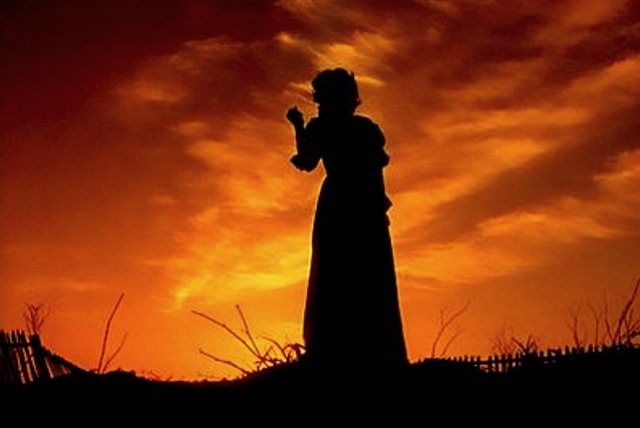
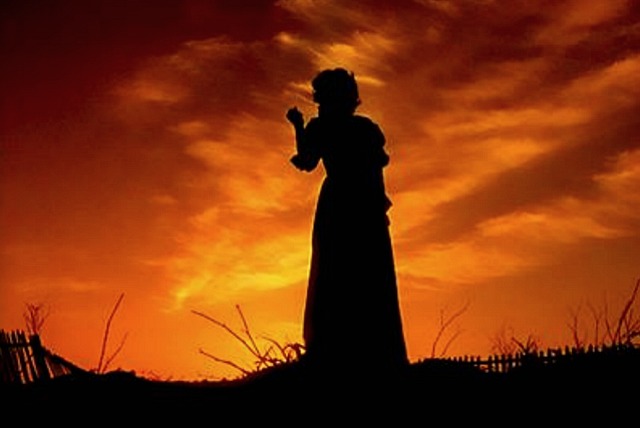
“Lumenick is not wrong, but I feel misgivings. I don’t believe it’s right to throw Gone With The Wind under the bus just like that. Yes, it’s an icky and offensive film at times (Vivien Leigh‘s Scarlett O’Hara slapping Butterly McQueen‘s Prissy for being irresponsible in the handling of Melanie giving birth, the depiction of Everett Brown‘s Big Sam as a gentle, loyal and eternal defender of Scarlett when the chips are down) but every time I’ve watched GWTW I’ve always put that stuff in a box in order to focus on the real order of business.

“For Gone With The Wind is not a film about slavery or the antebellum South or even, really, the Civil War.

“It’s a movie about (a) a struggle to survive under ghastly conditions and (b) about how those with brass and gumption often get through the rough patches better than those who embrace goodness and generosity and playing by the rules. This is a fundamental human truth, and if you ask me the reason Gone With The Wind has resonated for so long is that generation after generation has recognized it as such. If you want to survive you have to be tough and scrappy and sometimes worry about the proprieties later on. Anyone who’s ever faced serious adversity understands the eloquence of that classic Scarlett O’Hara line, ‘I’ll never be hungry again.’

“I think GWTW particularly connected with 1939 audiences because they saw it as a parable of the deprivations that people had gone through during the Great Depression.

Read more