Origin Stories Can Kiss My Ass

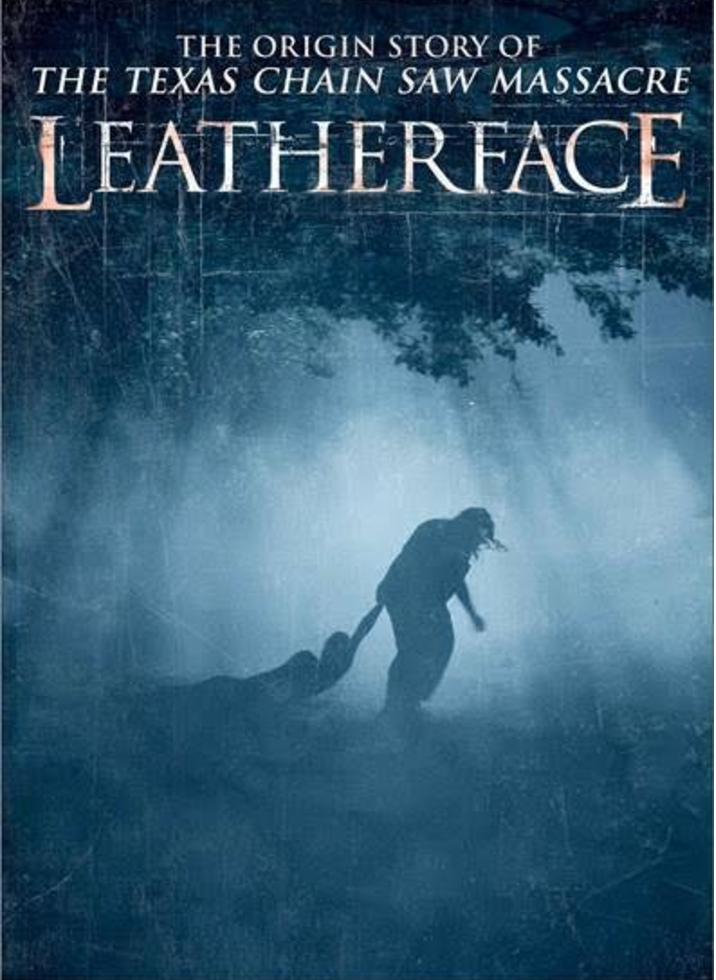
I was just noticing Alexandre Bustillo and Julien Maury‘s Leatherface (LionsGate, 9.21), a prequel to ’74’s The Texas Chainsaw Massacre and the eighth film in the TCM franchise. And I was saying to myself, “You know something? I don’t a flying fuck about Leatherface’s backstory…does anyone?”

I actually don’t give a flying fuck about any character’s backstory…ever. I never cared about little Bruce Wayne seeing his parents murdered or how that trauma affected him as an adult. Tough shit, sonny! I had a pretty tough childhood also — get over it. Seriously — fuck you and your aloof, melancholy Wayne Manor attitude about everything. I’m sitting here in my cushy megaplex seat with a small popcorn and a Diet Coke. Entertain me, ya fuck.

If I never see another origin story, it’ll be too soon. Fuck all origin stories from here to kingdom come. I don’t want to know anything about what any character went through before the movie started. All I want to know about any character in any film is how they’ll respond to the particular thing that’s happening right now. Nothing else matters.

You could make an origin-story movie out of any major character in cinema, and you’d be some kind of destroyer of worlds if you did.

Did we need to know what North by Northwest‘s Roger Thornhill was like as a nine-year-old kid, playing marbles or stickball or falling in love with the girl next door? In Zero Dark Thirty Kathryn Bigelow told us nothing about the early formative years of Jessica Chastain‘s Maya, and that was totally fine with me. I didn’t give a damn about the evil father of Heath Ledger‘s Joker taunting him as a kid. I’ll never want to know about how Alan Ladd‘s Shane came to be an ace-level gunfighter, or how Clark Gable‘s Rhett Butler became a charming rogue. I’ve always hated, hated, hated depictions of young heroes in any context or franchise. Those movies are always awful. The only young anything I’ve ever liked was Young Frankenstein.

The only realm in which backstories are regarded as a big deal is that of (a) superheroes and (b) hit-movie sequels. You really do need to be a bit of a simpleton to be genuinely interested in backstories in the first place. There are NO backstories or character fill-ins of any kind of in Chris Nolan‘s Dunkirk, and it’s utterly wonderful for that.
When Ax-Blade Handsome Was Okay

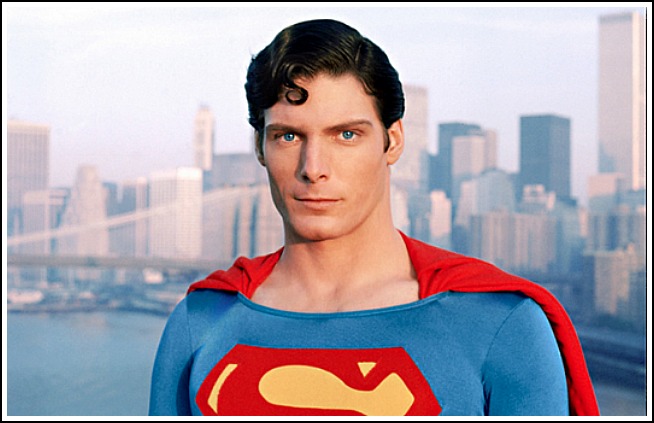
Christopher Reeve did well by critics when Richard Donner‘s Superman popped in December of ’78. This was partly due to the fact that by late ’70s standards Reeve was quite the hunk. “Reeve’s entire performance is a delight,” wrote Newsweek‘s Joe Morgenstern. “Ridiculously good-looking, with a face as sharp and strong as an ax blade, his bumbling, fumbling Clark Kent and omnipotent Superman are simply two styles of gallantry and innocence.”

What upper-echelon actors in today’s realm are ax-blade handsome in that tall, broad-shouldered, WASP-ian way? Two guys I can think of — Armie Hammer and (when he’s not summoning memories of Ernest Borgnine) Henry Cavill. But that’s about it.

Because ax-blade handsomeness isn’t trusted, much less admired. It’s even despised in certain quarters. Because it’s now synonymous with callow opportunism or to-the-manor-born arrogance. Men regarded as “too” good-looking are presumed to be tainted on some level — perhaps even in league with the one-percenters and up to no good. It’s been this way since Wall Street types and bankers began to go wild in the mid ’80s.

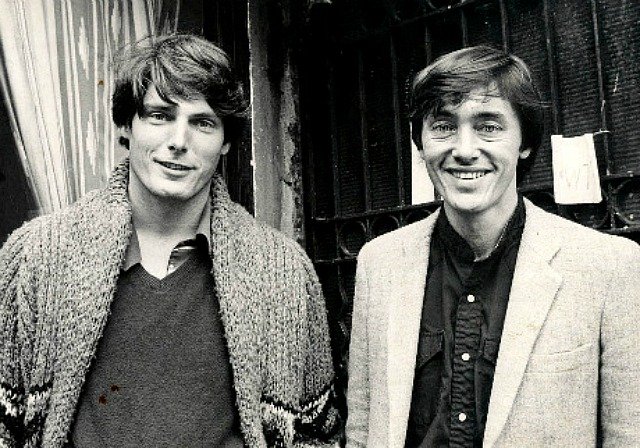
I was thinking this morning about how Reeve and Robin Williams were the best of friends for 30-plus years (they bonded at Juilliard in the early ’70s), and now they’re both dead. And they didn’t go peacefully into that good night either.

After his 1995 horse-riding accident, which turned him into a quadraplegic, Reeve became a kind of never-say-die spiritual hero. There’s no question that his becoming an impassioned stem-cell-research advocate left a more profound impression on the world than his performances ever did. But he was a fine, appealing actor.

Reeve had a ten-year run (’78 to ’88) as a marquee name. Superman launched him; Switching Channels finished him off. His best film performances were in Jeannot Szwarc’s Somewhere in Time (’80), Sidney Lumet’s Deathtrap (’82) and James Ivory’s The Bostonians.

His best performance ever was in the Broadway stage production of Lanford Wilson’s The Fifth of July, in which he played a gay paraplegic Vietnam veteran. It ran in the late summer or fall of 1980. Jeff Daniels and Swoozie Kurtz co-starred.

Read more

The Day I Killed Willy Loman’s Car

Here’s an oldie-but-goodie about the worst on-the-job mistake of my life. Nothing to do with politics, but I posted it four days after Barack Obama’s election (11.8.08). The incident happened when I was working for a chain-link fence company in Fairfield, Connecticut, when I was in my early 20s. It’s a good story because I wasn’t just “fired” but kicked to the curb for an error of classic proportions. A lulu.

I worked with two other guys for the company. Every day we loaded big coiled-up bundles of chain-link fence and schlepped them around to this and that job site. We would dig several holes, pour cement into each one and then insert metal poles. We would then return to the job a couple of days later to put up the fence, unspooling it yard by yard and fastening each length to the poles with hard metal coils or “ties.”

It was agony moving the chain-link rolls off the flatbed truck and then lifting them up with sheer brawn every time a section had to be unspooled. Especially in the horrid winter with the cold metal freezing your fingers and the tips of the fences making scratches and cuts on your hands every time you manhandled them. My job attitude was half-hearted at best. It was awful, awful work.

I was the guy who would back the truck up and get it into position before the fence rolls were unloaded in front of the poles.

One time we were putting up a fence near a large dirt lot. The road was a couple of hundred feet away from the location of the poles, and for whatever reason it was decided not to park the company’s flatbed truck right next to the poles but up near the road.

In any event it got to be 4:30 pm one day — time to get the truck and bring it back to where the un-mounted fence sections were lying on the ground. The rear of the truck was facing the far side of the road. The obvious plan was to back it into the road and then whip it leftward and drive across the lot.

I started the truck and checked the two rearview mirrors. The coast seemed clear although there was a bit of a blind spot. My coworkers were collecting tools and whatnot, so it was just me and my wits.

The truck was parked on an incline, however, and there was a lot of mud under the tires and I couldn’t get any traction when I hit the gas. So I tried rocking it back and forth — no luck. I then decided to put a couple of pieces of scrap lumber under the rear tires for traction. I again put it in reverse, hit the gas and finally the truck lurched backwards.

Read more

Six Likeliest Best Picture Nominees As We Speak

Right now the likeliest 2017 Best Picture nominees are Christopher Nolan‘s Dunkirk, Luca Guadagnino‘s Call Me By Your Name (Sony Pictures Classics, 11.24); Steven Spielberg‘s The Papers (20th Century Fox, 12.22); Alexander Payne‘s Downsizing (Paramount, 12.22); Paul Thomas Anderson‘s Phantom Thread (Focus Features, 12.25) and Hugh Jackman‘s The Greatest Showman (20th Century Fox, 12.25).

That’s six, but there could be two or three more: Guillermo Del Toro‘s The Shape of Water, Dan Gilroy‘s Roman Israel, Esq. and Jonathan Dayton and Valerie Faris‘s Battle of the Sexes.


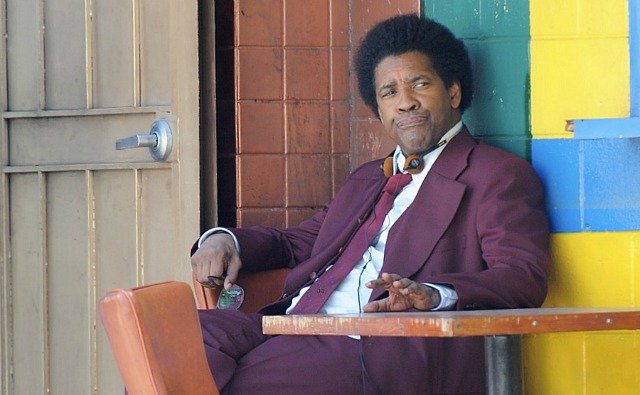
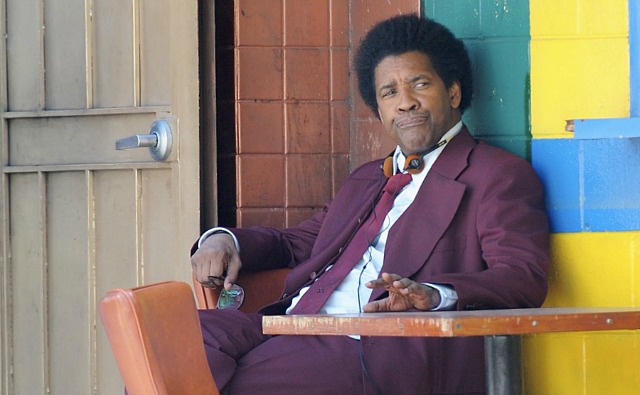
Denzel Washington as attorney Roman Israel in Dan Gilroy’s film of the same name, due for Columbia Pictures release on 11.3.

That’s my best guesstimate so far. Leaving aside the excellent Dunkirk and Call Me By Your Name, the others will most likely register as pretty good if not more so. But the surest way to calculate the odds is not to consider suspected quality as much as the socio-cultural agendas of this or that group that will champion this or that film.

I’ll tell you right now that the lack of a significant contender portraying an African-American milieu (unless you want to consider Roman Israel, Esq., an ethical drama starring Denzel Washington, in this light) or made by an African-American director means things are wide open as we speak.

Dunkirk will have the support of anyone with the ability or willingness to acknowledge grand, ahead-of-the-curve greatness when they see it. It will surely gather special support from 40-plus males and members of below-the-line guilds.

Call Me By Your Name will definitely corral those who are soothed by naturalism and stirred by its lulling emotional bath elements and bucolic travelogue delights. It will occupy a special place for those with the ability to appreciate and revel in an Eric Rohmer-like realm.

The Spielberg drama, which is about how Washington Post publisher Katharine Graham (Streep) decided to grow a journalistic backbone in the midst of the Pentagon Papers episode of ’71, will obviously have the 40-plus feminist vote and the support of sedate older boomers who automatically kowtow to anything bearing the beardo stamp.

As Battle of The Sexes is another feminist-themed drama set in the early ’70s, it may be highly competitive with The Papers as far as the older-woman or feminist-sympathy vote is concerned. If, that is, it turns out to be exceptional.

The Greatest Showman, a brassy musical about P.T. Barnum, will obviously excite those voters who prefer cheery, sparkly entertainments to solemn, thoughtful dramas or this or that sort.

I’ve only seen 10 or 12 minutes’ worth of Downsizing, but my impression following a viewing of said excerpt during last March’s Cinemacon is that it’s a visionary, Metropolis-like film that will definitely turn heads.

The only ones I really know about about are Dunkirk and Call Me By Your Name. I’ve read early drafts of The Papers and Downsizing. Everything else is spitballing.

Best Picture Nominee, Natch, But Unlikely To Win

On Facebook this morning Rod Lurie posted a lamentably familiar Joe Popcorn view about Christopher Nolan‘s Dunkirk. Lurie basically said that (a) it’s too brilliant not to be nominated for Best Picture but (b) it can’t win because the SAG contingent will find it too Olympian, too studied and not character-driven enough. Pretty much the same complaints could have been levelled at Barry Lyndon, right?

Dunkirk, of course, is much grabbier and more commercial than Lyndon ever had a hope of being, but the sons and daughters of the peons who spoke dismissively of Stanley Kubrick’s 1975 masterpiece are just as vocal today, sad to say.

“Yes, Dunkirk is a masterpiece,” Lurie wrote. “One of the great war films of our time, maybe one of the greats period. It’s an auteur’s work. Celluloid Beethoven. I saw it for a second time last night on IMAX — and the experience was different. Immersive. Ethereal. Especially in the ‘air’ segments where we were so in the sky that I feared running out of oxygen. And yet… and yet…Dunkirk will not win the Best Picture Oscar.

“Nolan likely gets the directing statue, so brazenly original a movie it is, so arduous an exercise it might have been, but it’s not getting the top award.

“Best Picture Oscars go to character-driven films. Pretty much every time they go to movies that are humanly driven and not necessarily creatively driven. Maybe that’s because ‘human’ movies are actor-dependent and actors are the plurality of the Academy.

Read more

Amazon Self-Distributing 150-Minute Suspiria?

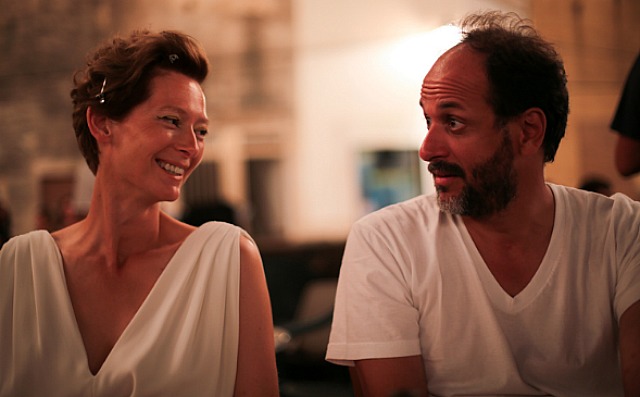
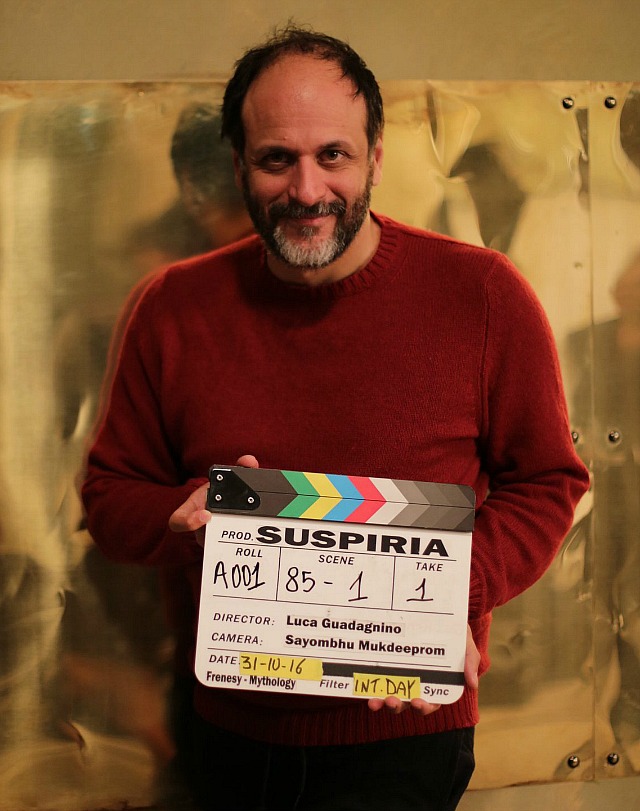
Word around the campfire is that Amazon will self-distribute Luca Guadagnino‘s Suspiria. (Same thing they’re doing with Woody Allen‘s Wonder Wheel.) I was told last May that this remake of the 1977 Dario Argento classic runs two hours, 50 minutes. (Argento’s version ran 98 minutes.) I’m now told Guadagnino’s cut will run 150 minutes with credits. LG screened it for the Amazon gang at the end of his recent L.A. visit.  He and editor Walter Fasano had applied finishing touches to their erotic witch flick before the unveiling. The costars include Dakota Johnson, Chloë Grace Moretz, Mia Goth, Tilda Swinton, Sylvie Testud, Angela Winkler, Małgosia Bela, Lutz Ebersdorf and Jessica Harper. Do I know for a fact that everyone gets naked in that big scene I described a couple of months ago? No, I don’t. Suggested alternate title: All Of Them Witches.


Chateau Marmont to HE: Not This Time

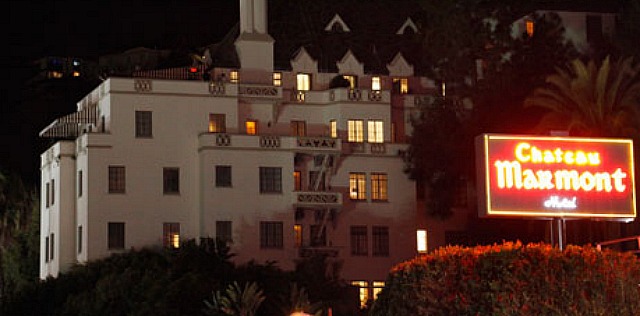
This morning I sent the following to Amanda Grandinetti, identified on her Facebook page as the food and beverage director at the Chateau Marmont but, according to a longtime Chateau employee who insists that Grandinetti’s Facebook page is out of date, currently the managing director. Philip Pavel, who ran the Chateau for a long stretch, is now the big cheese at the soon-to-open NoMad hotel in downtown Los Angeles:

Amanda,

Mellow greetings, yukey dukey. I’m Jeffrey Wells, Hollywood Elsewhere columnist (www.hollywood-elsewhere.com) and longtime industry reporter going back to the early ’80s. I’m writing to convey a mild form of displeasure about a no-big-deal incident that happened last night at the Chateau Marmont, or more precisely at the outside entrance.

I don’t want to sound like an entitled asshole, but I’ve been attending industry parties at the Chateau for eons (mainly during Oscar season), and every so often I’ll pop by to meet someone for a drink at the restaurant bar, or maybe order breakfast or dinner or whatever. (Svetlana Cvetko and I met Guillermo del Toro there for dinner a year or so ago.) Or I might be with a visitor and just want to show them the Chateau’s to-die-for interior.

This was last night’s agenda — showing the interior to my wife Tatyana, who’s only been in Los Angeles for seven months and has never had the pleasure. But I was told by a polite young lady at the valet desk that we couldn’t enter without a room or dinner reservation. I said we were just looking to order a drink at the bar, no biggie. “The bar is filled,” she said. Obviously she couldn’t have known that. We went back and forth but her mind was made up.

What she meant, I presume, is that she sensed we were riff-raff, and so she was following an instinct to protect the hotel guests from people who might gawk or snap iPhone photos and otherwise generate un-coolness.

I totally get the “keep out the riff-raff” thing. If I was guarding the gate I would actually take pleasure in politely rebuffing any would-be visitors who looked like they’d just gotten off the tourist bus. Overweight types, noisy kids in tow, wide-eyed expressions, low-thread-count T-shirts, dorky sandals and a general approach to attire that’s more suited to a mall in Henderson, Nevada.

Your predecessor Phillip Pavel, who served as the Chateau’s managing director for a long stretch, said it succinctly a few years ago: “The Chateau Marmont has built its success on creating an environment where the privacy of our guests is paramount. Please know that the decision to not allow certain guests in our hotel is based solely on this concept.”

The problem is this: I’m not riff-raff, and I don’t look like riff-raff. I have the snooty cool thing down pat, and I was nicely groomed last night. I was wearing a dark blue Kooples shirt and white pants and shiny black loafers. The beautiful Tatyana was nicely dressed also. Nothing about us radiated “uh-oh…don’t let these chumps past the gate!” Granted, we didn’t arrive in a big black SUV and had just approached on foot, but still…what’s the deal here?

Read more

Red Desert Return

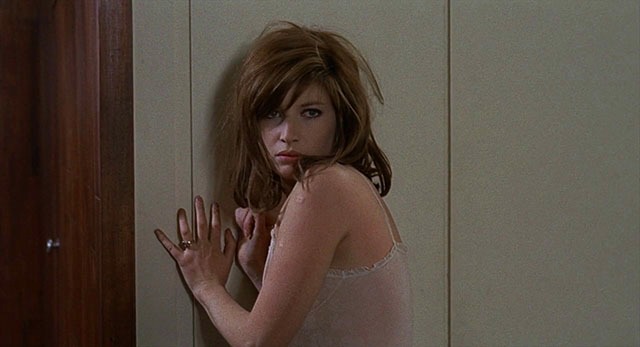
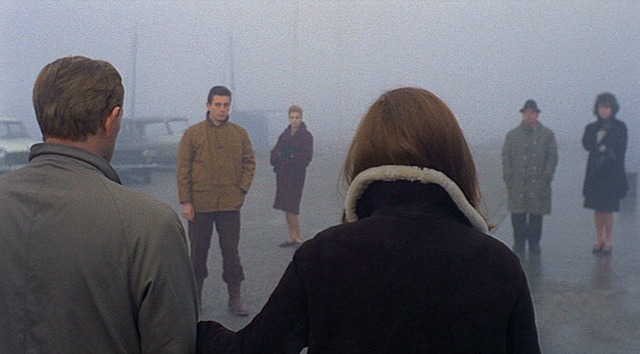
Michelangelo Antonioni‘s Red Desert (’64) will screen this Friday (7.28) at the Walter Reade. Oh, that red hair and pale skin, that black mud and those gloomy gray skies and general sense of sprawling ecological ruin…mother’s milk to me.

I saw Red Desert for the first time two years ago. I know the Antonioni milieu, of course, and had read a good deal about it over the years, so I was hardly surprised to discover that it has almost no plot. It has a basic situation, and Antonioni is wonderfully at peace with the idea of just settling into that without regard to story. And for that it seemed at least ten times more engrossing than 80% or 90% of conventional narrative films I see these days, and 87 times better than the majority of bullshit superhero films.

Monica Vitti plays a twitchy and obviously unstable wife and mother who’s been nudged into a kind of madness by the industrial toxicity around her, and Richard Harris is an even-mannered German businessman visiting smelly, stinky Ravenna, a port city on the Adriatic, to arrange for several Italian workers to perform a long work assignment in lower Argentina.

You suspect that sooner or later Harris, whose hair has been dyed an odd brownish blonde, will make a move on Vitti but other than that nothing really happens. It’s about industrial sprawl and poisoned landscapes and a lot of standing around and Vitti’s neurotic gibberish and a certain caught-in-the-mud mood that holds you like a drug, specifically like good opium.

Each and every shot in Red Desert (the dp is Carlo di Palma, whom Vitti later fell in love with) is quietly breathtaking. It’s one of the most immaculate and mesmerizing ugly-beautiful films I’ve ever seen. The fog, the toxins, the afflictions, the compositions.

Read more

Winslet Breeze

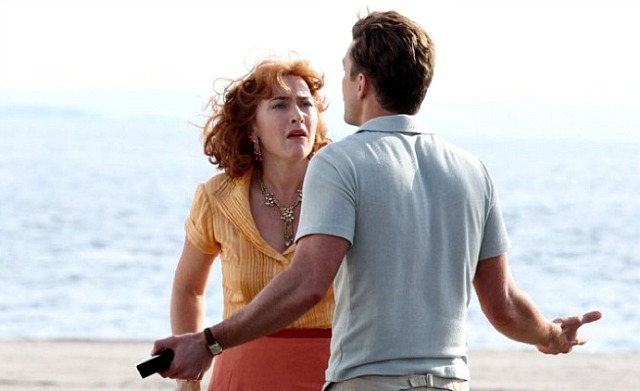
HE to guy who’s seen Woody Allen’s Wonder Wheel: “Without sourcing or even mentioning whom I spoke to or what country you’re from, how would you rate Kate Winslet‘s performance in terms of potential award-worthiness, on a scale of 1 to 10? It all comes down to the arc and the writing and the third-act catharsis, of course, but I gather she does a theatrical angst-and-hair-pulling thing due to Justin Timberlake two-timing her with Juno Temple, or something like that.”

Answer: “10. Truly. She’s amazing.”

Then I turned to a guy who’s spoken to a guy who knows a thing or two, and his reply was “I’ve only heard that she has a Blue Jasmine-ish meltdown that goes on for many minutes. So who knows but it at least sounds like a seven-plus at this stage.”


Blade Runner 2049 Buzz Is Settling Down

Blade Runner 2049 will probably land a berth at the Toronto Film Festival (right?), but the fact that it wasn’t announced among the first batch…what does that tell you? To me it suggests indecisiveness or an internal debate on the part of Warner Bros. marketing, but maybe not.

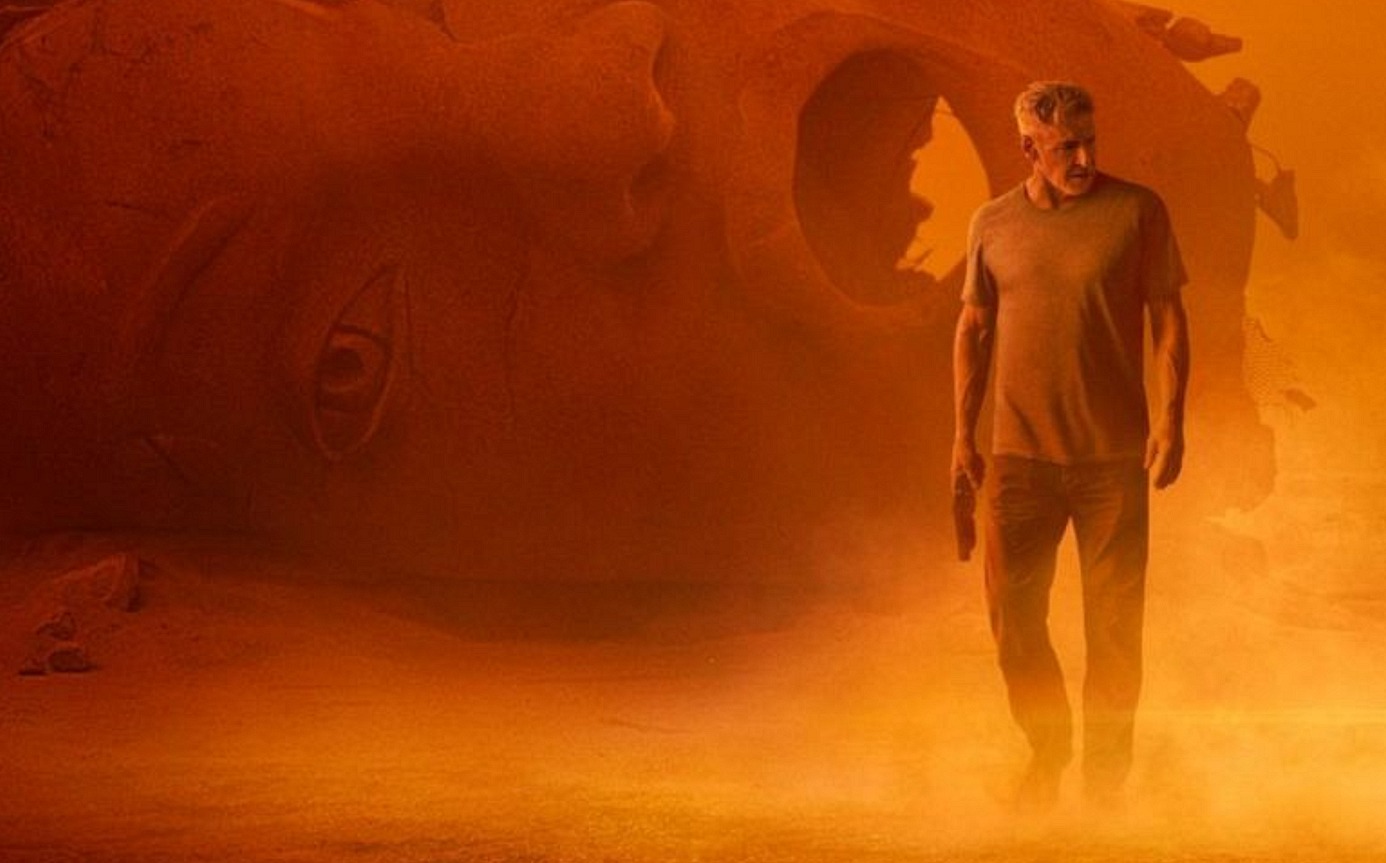
The fanboys are gradually starting to realize that the most Denis Villeneuve’s film can hope to do is “cover” the dog-eared design mythology of Ridley Scott’s 1982 groundbreaker. That’s it, that’s the shot. A revered, ahead-of-its-time cult movie did an urban dystopia thing 35 years ago, and here we are doing it again. Except we’re doing a nostalgic classic-rock thing, and we’re keeping Harrison Ford in the wings until the very end.

What’s the most memorable moment in Blade Runner? When Rutger Hauer‘s Roy dies and the dove flies away.

Again: It would seem that the decades-old Blade Runner suspicion about Harrison Ford‘s Rick Deckard being a replicant has been answered by the trailer for Blade Runner 2049. Deckard, like Ford, has aged, and that, for me, feels like proof that Deckard is flesh and blood. Why on earth would the Tyrell Corporation have constructed replicants that age like humans? This would make no sense at all — none.

The official synopsis says 2049 is about LAPD Officer K (Ryan Gosling) discovering “a long-buried secret that has the potential to plunge what’s left of society into chaos,” etc. This “leads K on a quest to find Deckard, a former LAPD blade runner who’s been missing for 30 years.” It would follow, naturally, that the K-meets-Deckard moment happens in the third act.

Read more

Notes on Toronto ’17

An announcement popped this morning about principal attractions slated for the 2017 Toronto Film Festival. As usual, Hollywood Elsewhere will be there with bells on following my Telluride attendance. All hail the enticement of Darren Aronfosky‘s mother!, even if it’s not playing Telluride.  Why turn down an Aronofsky film, Tom?

Don’t knock the Toronto rock: Guillermo del Toro‘s The Shape of Water (following showings at Venice and Telluride), Joe Wright‘s Darkest Hour, Alexander Payne‘s Downsizing (which will also have previously played Venice and Telluride), the noteworthy inclusion of Luca Guadagnino‘s Call Me By Your Name after the forehead-slapping turndown by Telluride, George Clooney‘s Suburbicon, Valerie Faris and Jonathan Dayton‘s Battle of the Sexes, Martin McDonagh‘s Three Billboards Outside Ebbing, Missouri (Venice but no Telluride), Scott Cooper‘s Hostiles, Scott Cooper‘s Hostiles, Greta Gerwig‘s Lady Bird (also a Telluride firstie), Ruben Ostlund‘s The Square, Alfonso Gomez-Rejon‘s The Current War, Stephen FrearsVictoria and Abdul, et. al.

The first thing you have to ask about any TIFF is “how many high-profile titles are grim stories about some form of assaultive or debilitating trauma followed by painful recovery or, failing that, acceptance or closure”? I’m not posting a comprehensive list of these films here and now, but Toronto Agonistes certainly applies: Andy SerkisBreathe, David Gordon Green‘s Stronger, Angelina Jolie‘s First They Killed My Father, Hany Abu-Assad‘s The Mountain Between Us, Paul McGuigan‘s Film Stars Don’t Die in Liverpool, Jennifer Baichwal and Nicholas de Pencier‘s Long Time Running, et. al.

Thanks to TIFF’s regional designations after every film (listing them as a North American, Canadian or international premiere), we know almost everything about who’s doing Venice, Telluride and/or Toronto. Jig’s up, cat’s out of the bag.

I doubt that Telluride will be showing Dee ReesMudbound, which played Sundance last January, but if they do they’ll be granting it an exception that they didn’t grant Call Me By Your Name, which Tom Luddy deep-sixed for having played Sundance and Berlin. But Sebastian Lelio‘s A Fantastic Woman, which played Berlin and other international festivals, is going to Telluride, as indicated by TIFF’s calling it a Canadian premiere, which means the film will have been celebrated as a U.S. and international premiere prior to Toronto.

Here, based on TIFF’s info, are rosters of films playing and not playing Telluride (special acknowledgment to Deadline‘s Pete Hammond and the tireless Jordan Ruimy for sharing and clarifying):

Going to Telluride: Joe Wright‘s Darkest Hour (which TIFF is calling a Canadian premiere), Paul McGuigan‘s Film Stars Don’t Die in Liverpool (Canadian premiere), Alexander Payne‘s Downsizing, Sebastian Lelio‘s A Fantastic Woman (Canadian premiere), Angelina Jolie‘s First They Killed My Father (Canadian premiere), Chloé Zhao‘s The Rider (Canadian premiere), Guillermo del Toro‘s The Shape of Water, Valerie Faris and Jonathan Dayton‘s Battle of the Sexes (calling it an “international premiere” = no Venice or Berlin), Scott Cooper‘s Hostiles (international premiere), Greta Gerwig‘s Lady Bird (international premiere) and Joachim Trier‘s Thelma.

NOT going to Telluride: Luca Guadagnino’s Call Me By Your Name (HE response: boooooo!), Robin Campillo‘s BPM (Beats Per Minute), Darren Aronofsky‘s mother! (baahh), Ruben Östlund‘s The Square (boooo!), George Clooney‘s Suburbicon, Martin McDonagh‘s Three Billboards Outside Ebbing, Missouri, Stephen FrearsVictoria and Abdul, Andy Serkis‘s Breathe, Deniz Gamze Ergüven‘s Kings, Hany Abu-Asasad‘s The Mountain Between Us, David Gordon Green‘s Stronger, Alfonso Gomez-Rejon‘s The Current War

The Girl From Lonesome Holler

Emilia Clarke‘s Rolling Stone cover is another celebration of her Game of Thrones fame (i.e., “Queen of Dragons”). Clarke has been dining out on that hugely popular HBO series for six years now, but gradually realized, as every star of a hit cable series has in the past, that she had to do more rep-wise than the usual usual, which in her case meant wearing that blonde wig and performing the occasional nude scene. The long game required it.

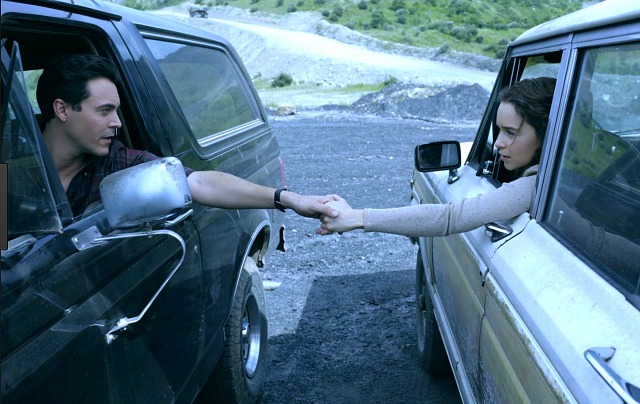
And so last summer Clarke starred in Phillip Noyce‘s Above Suspicion, a fact-based, late-’80s drama about Susan Smith, a drug-addicted Eastern Kentucky mom who lunged at an affair with a married FBI guy named Mark Putnam (Jack Huston) as a possible means of escape from her dead-end existence, but played her hand too hard and wound up dead in the woods.


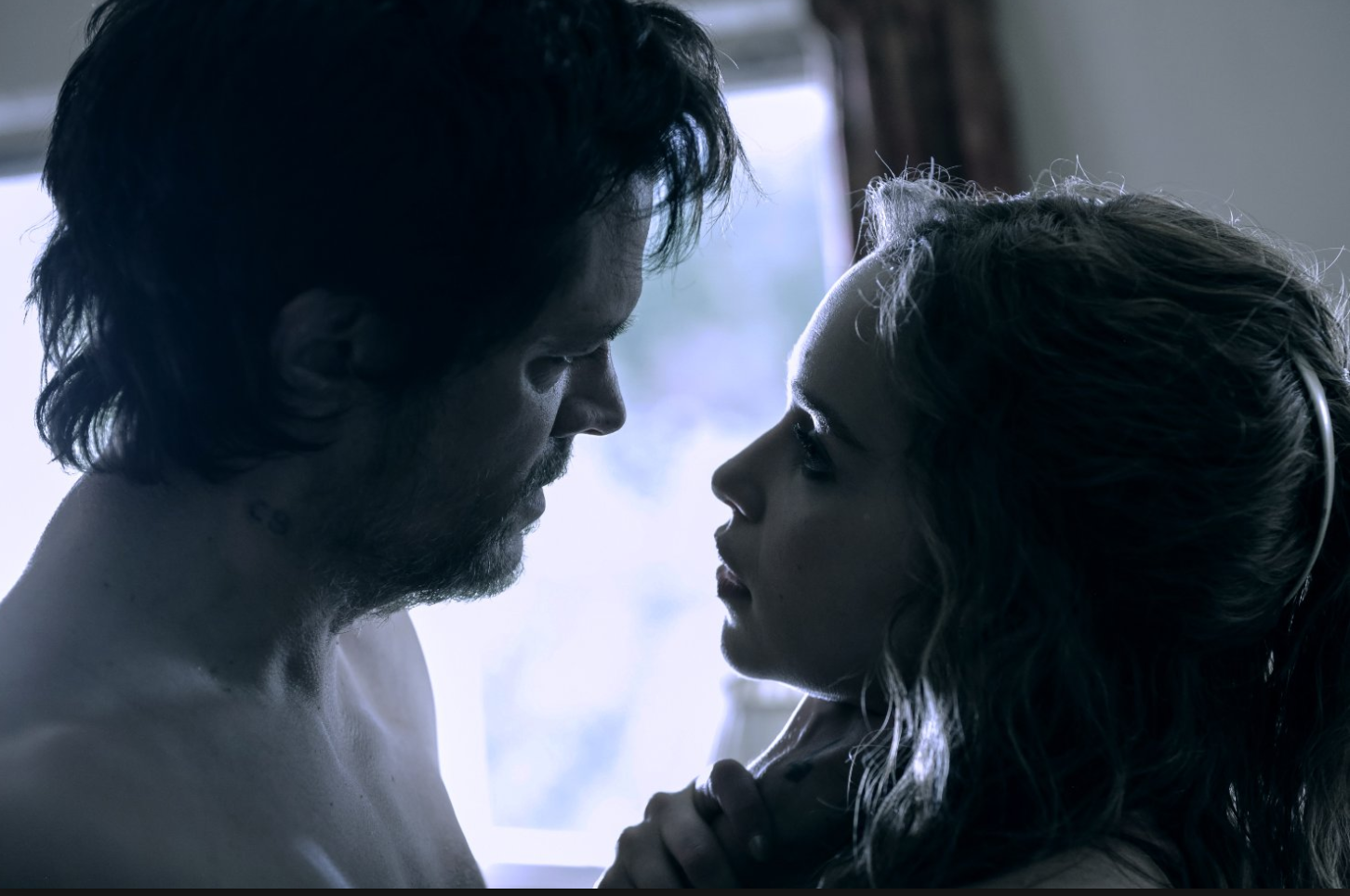
(l.) Jack Huston as Mark Putnam, (r.) Emilia Clarke as Susan Smith in Phillip Noyce‘s Above Suspicion.

Clarke did good. Her emotionally poignant performance as Smith proves that she can operate above and beyond the realm of Tits and Dragons, and with scrappy conviction to spare. Tart, pushy, believably pugnacious. Clarke is English-born and raised but you’d never know it. Her Susan is the Real McCoy in a trailer-trash way, but she brings heart to the game. In other words she’s affecting, which is to say believably scared to death. What Clarke delivers, trust me, is a lot more than just the usual collection of redneck mannerisms.

Speaking as one who despises rednecks in general and who presumes that the residents of Pikeville, Kentucky, where Smith lived and died, went heavily for Donald Trump last November, it means something that I wound up feeling genuinely sorry for this spunky, self-destructive, long-dead woman whom Clarke has brought back to life.

How do I know all this? Noyce’s film screened last week for a select group of elite blogaroo types, and I can say straight and true that Above Suspicion, which is based on Joe Sharkey’s 1993 true-life novel, is a triple-A, tightly-wound, character-driven genre flick (i.e., rednecks, drug deals, criminals, lawmen, murder, car chases, bank robberies) of the highest and smartest order.

Most people would define “redneck film” as silly escapist trash in the Burt Reynolds mode, but there have been a small handful that have portrayed rural boondock types and their tough situations in ways that are top-tier and real-deal. My favorites in this realm are John Boorman‘s Deliverance, Billy Bob Thornton‘s Sling Blade, and Lamont Johnson‘s The Last American Hero. I’m not saying Noyce’s film is the absolute, dollars-to-donuts equal of these films, but it certainly deserves to stand side by side as a peer, and is absolutely a close relation with a similar straight-cards, no-bullshit attitude.

Noyce always delivers with clarity and discipline but this is arguably the most arresting forward-thrust action flick he’s done since Clear and Present Danger. Plus it boasts a smart, fat-free, pared-down script by Mississippi Burning‘s Chris Gerolmo, some haunting blue-tinted cinematography by Eliot Davis (Out of Sight, Twilight) and some wonderfully concise editing by Martin Nicholson.

Read more