Notes on Toronto ’17

An announcement popped this morning about principal attractions slated for the 2017 Toronto Film Festival. As usual, Hollywood Elsewhere will be there with bells on following my Telluride attendance. All hail the enticement of Darren Aronfosky‘s mother!, even if it’s not playing Telluride.  Why turn down an Aronofsky film, Tom?

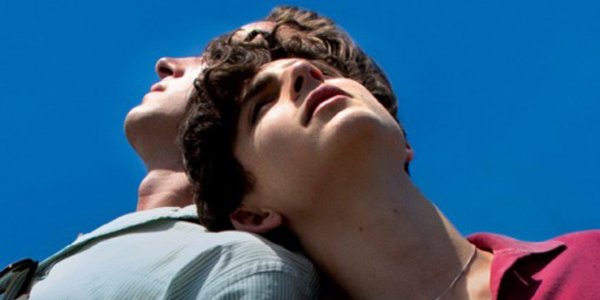
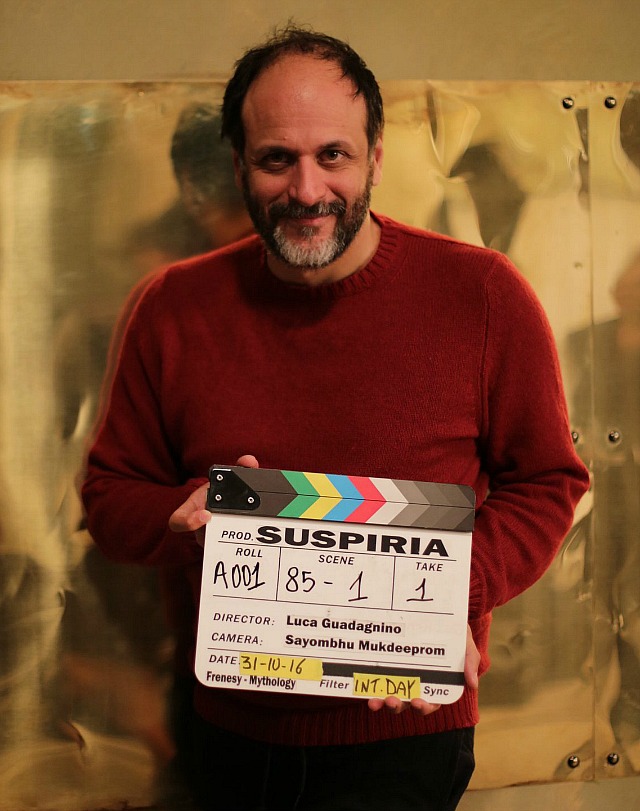
Don’t knock the Toronto rock: Guillermo del Toro‘s The Shape of Water (following showings at Venice and Telluride), Joe Wright‘s Darkest Hour, Alexander Payne‘s Downsizing (which will also have previously played Venice and Telluride), the noteworthy inclusion of Luca Guadagnino‘s Call Me By Your Name after the forehead-slapping turndown by Telluride, George Clooney‘s Suburbicon, Valerie Faris and Jonathan Dayton‘s Battle of the Sexes, Martin McDonagh‘s Three Billboards Outside Ebbing, Missouri (Venice but no Telluride), Scott Cooper‘s Hostiles, Scott Cooper‘s Hostiles, Greta Gerwig‘s Lady Bird (also a Telluride firstie), Ruben Ostlund‘s The Square, Alfonso Gomez-Rejon‘s The Current War, Stephen FrearsVictoria and Abdul, et. al.

The first thing you have to ask about any TIFF is “how many high-profile titles are grim stories about some form of assaultive or debilitating trauma followed by painful recovery or, failing that, acceptance or closure”? I’m not posting a comprehensive list of these films here and now, but Toronto Agonistes certainly applies: Andy SerkisBreathe, David Gordon Green‘s Stronger, Angelina Jolie‘s First They Killed My Father, Hany Abu-Assad‘s The Mountain Between Us, Paul McGuigan‘s Film Stars Don’t Die in Liverpool, Jennifer Baichwal and Nicholas de Pencier‘s Long Time Running, et. al.

Thanks to TIFF’s regional designations after every film (listing them as a North American, Canadian or international premiere), we know almost everything about who’s doing Venice, Telluride and/or Toronto. Jig’s up, cat’s out of the bag.

I doubt that Telluride will be showing Dee ReesMudbound, which played Sundance last January, but if they do they’ll be granting it an exception that they didn’t grant Call Me By Your Name, which Tom Luddy deep-sixed for having played Sundance and Berlin. But Sebastian Lelio‘s A Fantastic Woman, which played Berlin and other international festivals, is going to Telluride, as indicated by TIFF’s calling it a Canadian premiere, which means the film will have been celebrated as a U.S. and international premiere prior to Toronto.

Here, based on TIFF’s info, are rosters of films playing and not playing Telluride (special acknowledgment to Deadline‘s Pete Hammond and the tireless Jordan Ruimy for sharing and clarifying):

Going to Telluride: Joe Wright‘s Darkest Hour (which TIFF is calling a Canadian premiere), Paul McGuigan‘s Film Stars Don’t Die in Liverpool (Canadian premiere), Alexander Payne‘s Downsizing, Sebastian Lelio‘s A Fantastic Woman (Canadian premiere), Angelina Jolie‘s First They Killed My Father (Canadian premiere), Chloé Zhao‘s The Rider (Canadian premiere), Guillermo del Toro‘s The Shape of Water, Valerie Faris and Jonathan Dayton‘s Battle of the Sexes (calling it an “international premiere” = no Venice or Berlin), Scott Cooper‘s Hostiles (international premiere), Greta Gerwig‘s Lady Bird (international premiere) and Joachim Trier‘s Thelma.

NOT going to Telluride: Luca Guadagnino’s Call Me By Your Name (HE response: boooooo!), Robin Campillo‘s BPM (Beats Per Minute), Darren Aronofsky‘s mother! (baahh), Ruben Östlund‘s The Square (boooo!), George Clooney‘s Suburbicon, Martin McDonagh‘s Three Billboards Outside Ebbing, Missouri, Stephen FrearsVictoria and Abdul, Andy Serkis‘s Breathe, Deniz Gamze Ergüven‘s Kings, Hany Abu-Asasad‘s The Mountain Between Us, David Gordon Green‘s Stronger, Alfonso Gomez-Rejon‘s The Current War

The Girl From Lonesome Holler

Emilia Clarke‘s Rolling Stone cover is another celebration of her Game of Thrones fame (i.e., “Queen of Dragons”). Clarke has been dining out on that hugely popular HBO series for six years now, but gradually realized, as every star of a hit cable series has in the past, that she had to do more rep-wise than the usual usual, which in her case meant wearing that blonde wig and performing the occasional nude scene. The long game required it.

And so last summer Clarke starred in Phillip Noyce‘s Above Suspicion, a fact-based, late-’80s drama about Susan Smith, a drug-addicted Eastern Kentucky mom who lunged at an affair with a married FBI guy named Mark Putnam (Jack Huston) as a possible means of escape from her dead-end existence, but played her hand too hard and wound up dead in the woods.


(l.) Jack Huston as Mark Putnam, (r.) Emilia Clarke as Susan Smith in Phillip Noyce‘s Above Suspicion.

Clarke did good. Her emotionally poignant performance as Smith proves that she can operate above and beyond the realm of Tits and Dragons, and with scrappy conviction to spare. Tart, pushy, believably pugnacious. Clarke is English-born and raised but you’d never know it. Her Susan is the Real McCoy in a trailer-trash way, but she brings heart to the game. In other words she’s affecting, which is to say believably scared to death. What Clarke delivers, trust me, is a lot more than just the usual collection of redneck mannerisms.

Speaking as one who despises rednecks in general and who presumes that the residents of Pikeville, Kentucky, where Smith lived and died, went heavily for Donald Trump last November, it means something that I wound up feeling genuinely sorry for this spunky, self-destructive, long-dead woman whom Clarke has brought back to life.

How do I know all this? Noyce’s film screened last week for a select group of elite blogaroo types, and I can say straight and true that Above Suspicion, which is based on Joe Sharkey’s 1993 true-life novel, is a triple-A, tightly-wound, character-driven genre flick (i.e., rednecks, drug deals, criminals, lawmen, murder, car chases, bank robberies) of the highest and smartest order.

Most people would define “redneck film” as silly escapist trash in the Burt Reynolds mode, but there have been a small handful that have portrayed rural boondock types and their tough situations in ways that are top-tier and real-deal. My favorites in this realm are John Boorman‘s Deliverance, Billy Bob Thornton‘s Sling Blade, and Lamont Johnson‘s The Last American Hero. I’m not saying Noyce’s film is the absolute, dollars-to-donuts equal of these films, but it certainly deserves to stand side by side as a peer, and is absolutely a close relation with a similar straight-cards, no-bullshit attitude.

Noyce always delivers with clarity and discipline but this is arguably the most arresting forward-thrust action flick he’s done since Clear and Present Danger. Plus it boasts a smart, fat-free, pared-down script by Mississippi Burning‘s Chris Gerolmo, some haunting blue-tinted cinematography by Eliot Davis (Out of Sight, Twilight) and some wonderfully concise editing by Martin Nicholson.

Read more

Should’ve Riffed On This Earlier

My bad for not highlighting this Snowman trailer last week or whenever the fuck it surfaced. You can tell this chilly British crime thriller is a standout, in part because you know director Tomas Alfredson (Let The Right One In, Tinker Tailor Solder Spy) has his shit together. Michael Fassbender, Rebecca Ferguson, Charlotte Gainsbourg, Val Kilmer, J. K. Simmons, Toby Jones, Chloë Sevigny. The Universal release opens on 10.20.17.

Detroit Broke My Heart

Kathryn Bigelow and Mark Boal‘s Detroit (Annapurna, 7.28 and 8.4) is a raw-capture history lesson hoping to arouse and enrage, but it mostly bludgeons. I’m saying this with a long face and heavy heart as I like and admire these enterprising filmmakers, but there’s no getting around the fact that they’ve made a brutal, draggy downer. Detroit lacks complexity and catharsis. It doesn’t breathe.

I was hoping that this blistering docudrama, which isn’t so much about the 1967 Detroit riots as the bloody Algiers Motel killings, would play like Gillo Pontecorvo‘s The Battle of Algiers, but alas, nope. Failing that I wanted Detroit to be an investigative political thriller in the vein of Costa Gavras‘s Z, but that wasn’t the scheme either.

No one is more beholden to Bigelow-Boal than myself; ditto their magnificent Zero Dark Thirty and The Hurt Locker. But after these two films I’ve become accustomed to brilliance from these guys, or certainly something sharper, leaner and more sure-footed than this newbie.

At best, Detroit is a hard-charging, suitably enraged revisiting of what any decent person would call an appallingly ugly incident in the midst of a mid ‘60s urban war zone. And of course the system allowed the bad guys to more or less skate or not really get punished. What else is new?

The Algiers Motel incident happened, all right, to the eternal discredit of Detroit law enforcement system back then. But guess what? It doesn’t serve as a basis for an especially gripping or even interesting film.

Detroit has good chaotic action, street frenzy, bang bang, punch punch and lots of anger, and I really didn’t like sitting through it and I watched it twice, for Chrissake. For they’ve made a very insistent but air-less indictment film — militant, hammer-ish, screwed-down and a bit suffocating.

In and of itself, the Algiers Motel incident repels but dramatically under-delivers. There’s not a lot of complexity in the portraying, although the episode obviously reflects upon several well-documented 21st Century instances of white-cop brutality and murder.

The white-guilt factor is abundantly earned in terms of the behavior of three pathetically brutal Keystone cops who also happen to be racist fucktards — Will Poulter‘s “Phillip Krauss”, Jack Reynor‘s “Demens” and Ben O’Toole‘s “Flynn”. But it needed more than this.

Ugly, blatant racism in and of itself is obviously repellent, but Detroit doesn’t feel sufficiently layered. It makes for a jarring but rather one-note movie.

The principal actors portraying the victims of harassment — John Boyega as Melvin Dismukes, Algee Smith as Larry Reed, Anthony Mackie as Greene — hold their own; ditto those portraying the shooting victims — Jason Mitchell as Carl Cooper, Nathan Davis, Jr. as Aubrey Pollard and Jacob Latimore as Fred Temple.

I can’t think of a single good sticker line — a line in the vein of Al Pacino‘s greatest Heat moments, say — or anything in the way of clever, diversionary movie craftsmanship. The Detroit script barely feels “written” in the sense that any number of urban thrillers have been. It doesn’t feel tightly sprung or strategized as much as thrown at the wall. 

Too often the film feels coarse, pushed, misshapen, misjudged. I plainly, simply didn’t like watching it.

I didn’t even like Barry Aykroyd‘s photography — way too many tight close-ups. And if you ask me the cop haircuts feel a wee bit too long for ’67, when straight-laced society was still rocking short hair and whitewalls. Longish hair (hint of sideburns) didn’t sink into mainstream society until ’69 or ’70 or ’71.

It feels like a decent if rudimentary attempt to recreate the Detroit chaos of ’67 rather than some wowser re-visiting or, you know, a major redefining or rejuvenation of same.

Yes, there are four or five uniformed law enforcement figures plus a nurse (played by Jennifer Ehle) who come off as decent human beings, but otherwise the idea seems to have been to remove any and all shading, dimension and subtlety as far as the white characters are concerned. After a while your spirit wilts in the face of this diseased, cut-and-dried cardboard slime factor. 

I’m not saying that white Detroit beat cops were anything but foul and deplorable for the most part back in ’67 (as many cops have recently shown themselves to be when it comes to treatment of black suspects in God knows how many altercations in recent years), but a movie of this sort has to deliver some kind of balance and finesse and shared humanity and quiet-down moments (i.e., we’re all scared children running around on God’s blue planet) or it’s just crude caricature — a racial hit piece.

Whatever the content or mood or metaphorical thrust, all good movies have to feel cinematically sexy. You have to be charmed by their chops, aroused by their strategy. If a movie doesn’t turn you on in one way or another or doesn’t at least make you sit up in your seat, it probably isn’t very good.

I could’ve rolled with Detroit if it had felt more slick and “commercial.” If only it had the look and professional cutting and smooth camerawork and assured pacing of Alan Parker’s Mississippi Burning. Yes, I know — an absurdly inaccurate film history-wise, but a very good one in terms of chops, and a damn sight better than Detroit in this respect. Remember the repetitive hammer music in Parker’s film? Not very melodic but it really worked, really connected.

Detroit makes its points but it’s direct and blunt to a fault. The attack on the bin Laden compound finale in Zero Dark Thirty was 11 or 12 times better than anything in Detroit. Ditto that lively firefight involving Ralph Fiennes’ character in The Hurt Locker.

What happened to the smooth, fleet editing, and the sense of planted authority and versimilitude that I got from Zero Dark Thirty and The Hurt Locker? I’ll tell you what’s happened to it. It’s taken a powder.

Hour of the Wolf

It’s not a great idea to meditate too heavily upon basic “where is my life heading?” stuff if you happen to be up at 4:30 am, as I was a little while ago. I tried to concentrate on my usual pre-dawn iPhone surfing ritual, searching for stories or topics or bounce-offs that might be worth a comment or argument of some kind. But that old, regrettably familiar Ingmar Bergman-like sense of impending doom kept creeping in. It’s best not to dwell in this realm. Gloom thoughts always go away when the morning light appears. But that vague sense of big black wolves sitting outside your door at 5:10 am…whoa. Why am I even sharing this? I can’t even remember if I’ve seen Hour of the Wolf, which probably means I haven’t. But I guess I don’t need to, right?

Manhattan Timber Wolf

I like the idea of a young New York guy (Callum Turner) discovering that his married dad (Pierce Brosnan) is having it off with a significantly younger hottie (Kate Beckinsale), and then slipping into the situation and boning the girlfriend himself.

And I’m willing to forgive director Marc Webb for those two Andrew Garfield Spider-Man reboots that no one really cared about, primarily because he directed 500 Days of Summer. And I’m willing to forgive screenwriter Allan Loeb for having written Wall Street: Money Never Sleeps because he also wrote Things We Lost In The Fire.

The only thing that gives me slight pause is the fact that Turner has eyes like Johnny Hallyday‘s, which is to say eyes like a timber wolf — a timber wolf in stylish, round-rim glasses. Some guys have warlock eyes (Stephen Frears), some have big cow eyes (Cary Grant), some have Walken eyes, some look like otters (Benedict Cumberbatch) and others have eyes like Turner…just saying.

It’s also fair to ask where these eyes came from genetically. Brosnan obviously doesn’t resemble a timber wolf and neither does Cynthia Nixon, who plays his mom. Look at the guy…come on! (Nobody ever seems to notice this stuff, much less comment about it, except me.)

Roadside/Amazon will open The Only Living Boy in New York on 8.11.

Read more

Comic Con Blackout

I’ve nothing left to say about Comic Con, but I’m gonna say it anyway.

For the last few years this infernal San Diego gathering has been Hollywood Elsewhere’s idea of Evil Central — the absolute dregs of cinema culture congregated en masse, goofballing and cosplaying in one ten-square-block area of downtown San Diego, ripe for strafing as they fiddle with this or that pathetic fantasy…anything to distract them from the general drift and hollowness of their day-to-day lives.

Last year I said I wouldn’t go there with a knife at my back and a $1000 cash bribe in a brown paper bag. My refusal price has since gone up. This year I wouldn’t attend Comic Con with an offer of (a) $1500 in cash, (b) a RT flight to San Diego in a private jet, (c) ten gratis sushi dinners, (d) a year’s supply of dark Italian Starbucks Instant and (e) a $300 gift certificate from The Kooples.

Okay, the British guy who managed to actually fly around like a low-altitude Iron Man deserves a round of applause.

“Cons are for partying and cosplay and raucous behavior,” a “retired organizer of genre cons” named faustidisq wrote last year. “This attitude attracts so many different people now and not just the fat basement dwellers who used to be the only types. But at least those comic book guys weren’t pushovers to taste. They were well-read and quite articulate and knew their movie history. Nowadays, it’s a ‘look at my costuming group’ and ‘can I sneak into that press event, dude?’ attitude.”

Me too: “Except for noteworthy exceptions like Ant-Man, Avatar, portions of the 2014 Godzilla, the original Guardians of the Galaxy, the first two Captain America flicks and others I’m forgetting right now, the Comic-Con influence is the nexus of evil in the action-movie realm.

Read more

Criterion’s Lyndon Coverup

Presumably everyone knows by now that Criterion is coming out with a 4K-mastered Barry Lyndon Bluray on 10.17, or about three months hence. The big thing from HE’s perspective is that they’re going with a totally correct 1.66:1 aspect ratio. This amounts to a stiff rebuke to longtime Kubrick associate and Warner Home Video consultant Leon Vitali, who six years ago persuaded WHV to release a Lyndon Bluray that cropped Stanley Kubrick‘s masterpiece at at 1.78:1.

The problem is that the Bluray table of contents on the Criterion page doesn’t seem to acknowledge the highly significant, historically important Lyndon aspect ratio brouhaha of 2011 — one of the most bitterly fought and not incidentally triumphant a.r. battles in Hollywood Elsewhere history, the other being the Shane a.r. battle of 2013.

A somewhat taller Barry Lyndon image than the 1.66 one that will appear next October via Criterion, but one I nonetheless prefer.


Aspect-ratio-wise, this image is the same one used on the Criterion Barry Lyndon page.  The a.r. is roughly 1.78:1.

Glenn Kenny actually provided the coup de grace in the form of a letter confirming Kubrick’s wish to have Lyndon screened at 1.66, but HE felt a surge of pride regardless because I’d insisted all along that 1.66 was the only way to go.

Why doesn’t Criterion’s Peter Becker man up and admit that his company’s decision to go with a 1.66 a.r. on their Lyndon Bluray was at least a partial offshoot of the HE/Kenny-vs.-Vitali debate? Why don’t they just act like men and cop to it instead of pussyfooting around and pretending it never happened?

The ultimate way to go, of course, is for Criterion to present its remastered Barry Lyndon on an actual 4K Bluray, as opposed to a 1080p Bluray using a 4K scan. If they do this I’ll break down and buy a 4K Bluray player.

The Barry Lyndon a.r. debate ranged between 5.23.11 and 6.21.11. I posted three or four argumentative pieces about the Barry Lyndon Bluray in late May, but before 6.21.11, which is when the whole matter was cleared up when Kenny posted that “smoking gun” letter from Jay Cocks and I ran my q & a with Vitali explaining “the confusion.”

Read more

The Colossus of Nolan

Last night I saw a 70mm IMAX version of Christopher Nolan‘s Dunkirk. Staggering, breathtaking, HANDS DOWN BRILLIANT — not just a Best Picture contender for 2017 (obviously) and not just Nolan’s best (ditto) but easily among the greatest war films ever made in this or the 20th Century. Saving Private Ryan, step aside. The Longest Day, sorry. Full Metal Jacket, down half a peg. Gabriel’s trumpet is blaring from the heavens — this is a major, MAJOR 21st Century achievement.

Dunkirk is not just exceptional cinema but majestically its own thing in an arty, stand-alone, mad-paintbrush sort of way — emotional but immediate and breathtaking, but at the same time standing back a bit by eschewing the usual narrative and emotional engagement strategies that 100 other war films have used in the past (and will probably use again and again in the future).

Thank you, Chris, for not explaining who each character is or giving me their back story or supplying them with an emotional speech or two. Thank you for just plunking me down on that huge Dunkirk beach of 75 years ago and letting me fend for myself, for putting me right in the middle of 400,000 young British troops trying to get the hell out of there before the Germans come and rip them to shreds with bombs and hot lead.

Dunkirk is way above the usual-usual. It will tower, stand astride, fly, soar, float, bob and IMAX the shit out of you. A Colossus of Rhodes awaits at your nearest IMAX theatre. Just don’t see it on a regular-sized screen…please. Go as big and loud as you can. Beg, borrow, wait in line…whatever it takes.

Does everyone understand the exceptionalism here? The critics do but others don’t. People who like the usual massages and neck rubs (i.e., guys like Jeff Sneider) are expressing concerns. I’ve been told that a certain name-brand journalist found it a drag. Some (okay, a couple of women) feel it’s not personal or emotionally affecting enough in the usual theatrical-device ways.

Dunkirk is about Nolan saying, “Okay, look, of course…I know how to do that kind of film. Anybody can make that kind of proscenium-arch, emotional-bromide war film if they have the funding and know a little something about screenwriting and camera placement. Please understand I am not doing that kind of film out of choice. This is a giant-ass art film. This is a ‘less story and next-to-no-character-detail equals richer cinema’ thing. This is a highly selective, God’s-editing-machine take on a World War II tragedy that actually turned into a heartening thing in actuality.”

Tatyana says it’s really great in terms of visual splendor and the land-sea-air concept “but I didn’t see or feel any characters except for the guy on the boat [i.e., Mark Rylance]…it’s just about people struggling to survive, and it’s awful when people can do nothing or next to nothing to save themselves…so despairing, no content, no emotions or empathy, an empty movie…unlike The 9th Company or Stalingrad, which I quite liked….bombing, bombing, bombing….emotions and involvement are so much more important to me than the shape or size of a screen.”

Thank God for the great Tom Hardy, the Spitfire pilot who mostly performs from behind a pilot’s mask of some kind. It’s the best thing he’s done since Locke.

Read more

Telluride Frown Factor

Obviously I’ve been in the tank for Luca Guadagnino‘s Call Me By Your Name since last January’s Sundance premiere, but no more than any of the other big HE favorites in recent years — Manchester By The Sea, 12 Years A Slave, Zero Dark Thirty, A Separation, Birdman, Silver Linings Playbook, et. al. Naturally I’ve been expecting to see this landmark film play the Telluride Film Festival. Everyone regards TFF’s annual offerings as pretty much the finest distillation of early-to-mid-fall smarthouse or award-friendly cinema, so how could Guadagnino’s film not begin its award-season adventure there?

If a really good film starts its journey in Telluride or for that matter Venice (like Alexander Payne‘s Downsizing will), it will automatically radiate a special tingle vibe or savory aroma throughout the season. A Telluride debut is a gold-seal thing whereas a Toronto premiere is…well, lively and certainly welcome but without that special aromatic lift.

Which is why I went into a state of catatonic shock yesterday when I learned that Call Me By Your Name has been heave-ho’ed by Telluride’s Tom Luddy and Julie Huntsinger. Not due to a lack of admiration or respect (or so I gather) but because of organizational egos and politics. CMBYN‘s apparent sin was having had its world premiere at Sundance ’17 plus a European premiere the following month at the Berlinale. Telluride has screened only three Sundance debuts in its entire history, I’m told.

Yes, Manchester By The Sea was shown at Telluride ’16 eight months after debuting at Sundance, but that was because Telluride mounted a special tribute to Casey Affleck. The Affleck tribute, of course, was just an institutional ploy to sidestep Telluride’s own edict or disinclination to show Sundance films. Had they been so inclined Tom and Julie could have easily justified screening CMBYN by running a special Luca Guadagnino tribute.

Festival politics can be such bullshit.

Read more

So What’s The HE Community Verdict?

Is Matt ReevesWar For The Planet of the Apes as good as the critics (myself included) have been saying it is? Does it in fact traverse the realms of smart summer tentpole, masterful art-film composition and epic storytelling at a high emotional pitch? Is it as satisfying for the snoots as the slovenlies? Is it an emotional tour de force, a band-of-brothers film, a ferociously realistic war movie, and a kind of Great Escape rolled into one? Is Reeves a rightful successor of the kind of achievement that Peter Jackson and George Lucas managed in decades past? Is it the most satisfying trilogy of its kind since the original Star Wars threesome (A New Hope, The Empire Strikes Back, Return of the Jedi), or is it better?

Thanks But No Thanks

The new Wrinkle In Time trailer begins with Chris Pine asking “what if we are here for a reason? What if we are part of something truly divine?” HE answer: Don’t be tedious. There are more things in heaven and earth, Horatio, than are dreamt of in your philosophy.

Okay, you could call the relentless, never-ending cycle of creation, destruction and renewal a divine thing if you want, but the only reason any of us are here boils down to mere chance. In other words, we got lucky. Ava DuVernay and Jeffrey Wells were born on this blue planet for exactly and precisely the same reason that a certain blade of grass sprouted on a large fairway at the Bel Air Country Club last March. Why did this particular blade of grass happen to punch through the soil? Because God has a plan.

Seriously, this teaser feels like a mystical mumbo-jumbo hodgepodge. It gave me a stomach ache. In part because Oprah Winfrey plays Mrs. Which, Reese Witherspoon plays Mrs. Whatsit and Mindy Kaling plays Mrs. Who. (The latter is rumored to be the great granddaughter of Who, the baseball player from the Abbott & Costello “Who’s On First?” routine.)