Acting Coach Hired to Boost Aldenreich’s Performance?

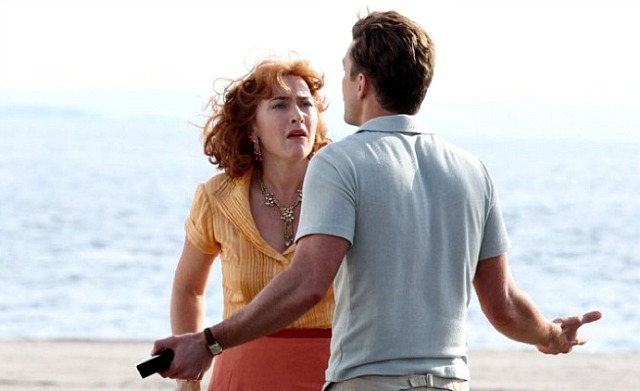
From Kim Masters’ 6.26 Hollywood Reporter story about the ongoing Han Solo calamity (“Star Wars Firing Reveals a Disturbance in the Franchise“): “Matters were coming to a head in May as the production moved from London to the Canary Islands. Lucasfilm replaced editor Chris Dickens (Macbeth) with Oscar-winner Pietro Scalia, a veteran of Ridley Scott films including Alien: Covenant and The Martian. And, not entirely satisfied with the performance that the directors were eliciting from Rules Don’t Apply star Alden Ehrenreich, Lucasfilm decided to bring in an acting coach. (Hiring a coach is not unusual; hiring one that late in production is.) Directors Phil Lord and Chris Miller suggested writer-director Maggie Kiley, who had worked with them on 21 Jump Street.”


Alden Ehrenreich, the anti-Han Solo.

Did I just read this?

Han Solo producer Kathy Kennedy and her creative consigliere, Lawrence Kasdan, could have chosen anyone to play the brave, reckless, somewhat rascally commander of the Millenium Falcon. How many name-brand 20something actors could have easily slipped into the role, guys with the natural insouciance and underlying gravitas of a young Harrison Ford? More than a few, I’m imagining. They had to choose a guy who could be at least faintly believable as a young Ford, which would have meant conveying a certain Hanitude — a mixture of Anglo Saxon cock-of-the-walk confidence, selfish mercenary cunning and shoulder-shrugging heroism.

And yet they chose a mopey, modestly proportioned, beady-eyed guy with the air of a rabbinical studentAlden Ehrenreich. Say hello, Star Wars fans, to the new Solo — a seemingly joyless, small-shouldered guy who lacks a sense of physical dominance (Aldenreich is five inches shorter than the 6’2″ Ford) and whose stock-in-trade is a kind of glum, screwed-down seriousness. A perfect candidate to play a solemn neurotic in one of Woody Allen‘s New York-based dramedies, but as Han Solo, not so much.

You’ll never guess what happened next. After three-plus months of shooting (early February to early May) or more than halfway through principal, it dawned upon Kennedy and Kasdan that Ehrenreich wasn’t working out like they’d hoped. They were presumably expecting that he’d shed his naturally morose manner and magically morph into a devil-may-care adventurer, but, to Kennedy and Kasdan’s astonishment, this didn’t happen.

“I really don’t get it,” Kasdan might have said to Kennedy. “There was absolutely no reason to presume that a frowning Jewish downhead couldn’t easily assume the manner and moxie of a grinning frat-boy scoundrel type.” To which Kennedy might have responded, “Yes, Larry, I know…it’s quite puzzling.” And so, at the suggestion of Han Solo directors Phil Lord and Chris Miller, they hired an indie-level female director to try and…what? Instruct Ehrenreich on the basics of big-screen machismo? Teach him a few Harrison Ford mannerisms?

Read more

Richardson Seems To Be Happening

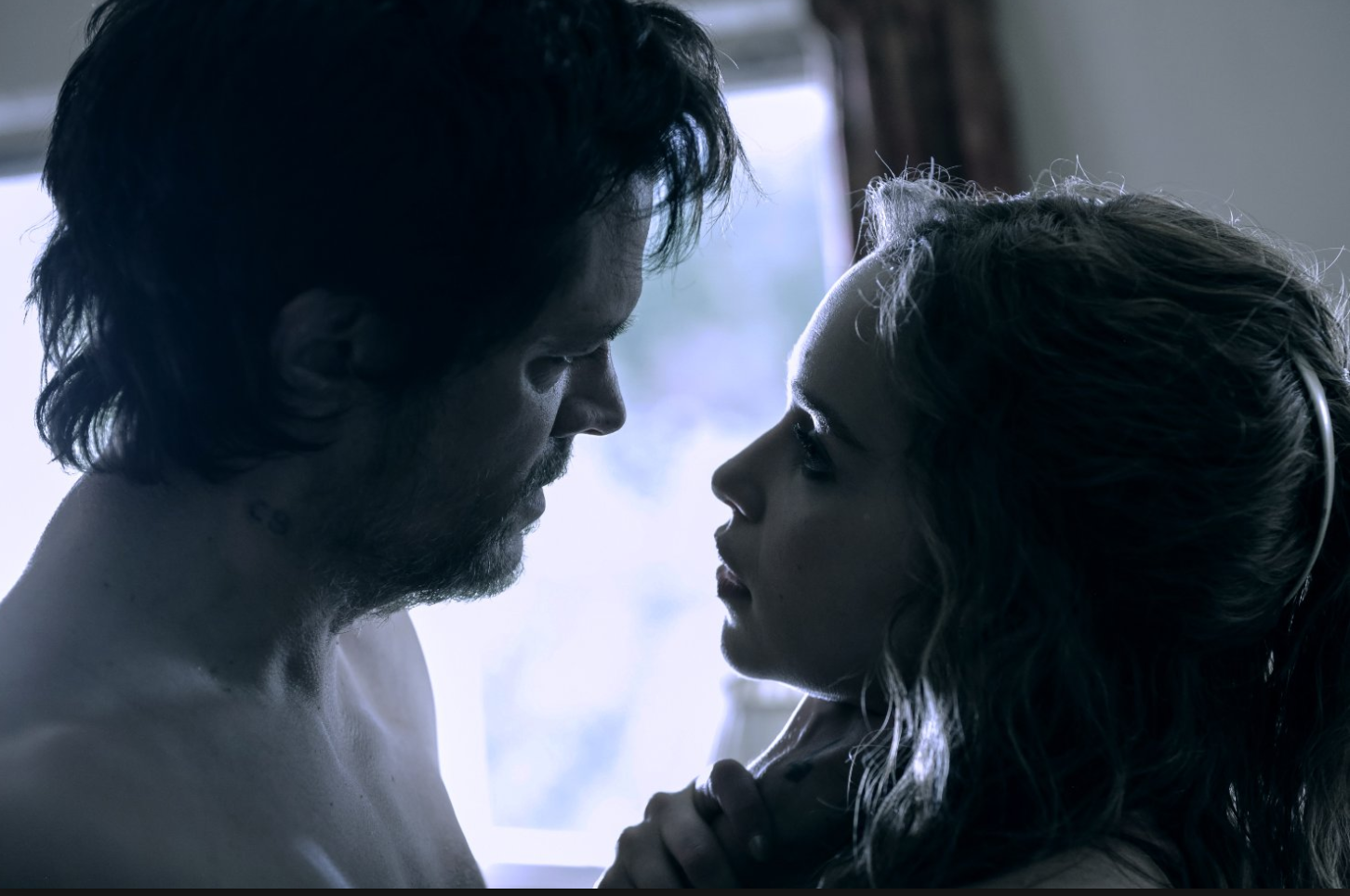
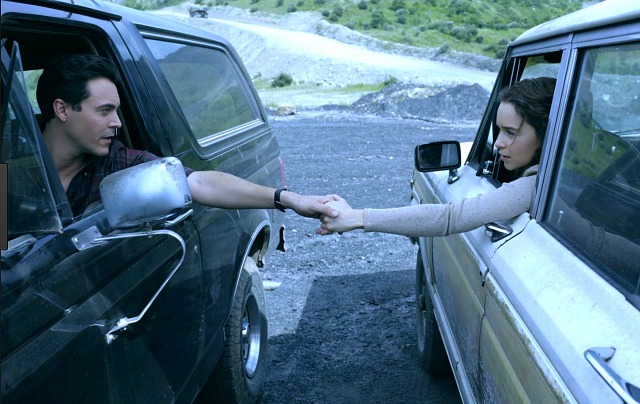
Excerpt from Geoff Berkshire’s Variety review: “In Kogonada’s Columbus (Sundance Institute, 8.4), the protagonists write, talk, bicker, and dance about an extraordinary collection of modernist structures in the unassuming Midwest town of Columbus, Indiana. The hypnotically paced drama, carried by the serendipitous odd-couple pairing of John Cho and Haley Lu Richardson, is lovely and tender, marking Kogonada as an auteur to watch.”

Sidelight #1: Cho is 45; Richardson is 22. 23 years is a significant gap when you’re looking at a romantic pairing, no? It’s mitigated, yes, by the slim and healthy Cho looking like 35 or so. But remember that a potential romantic relationship between 35 year-old Josh Radnor and 19 year-old Elizabeth Olsen (i.e., a mere 16 years between them) was treated as a dicey thing in Radnor’s Liberal Arts (’12).

Sidelight #2: Richardson (Haley Steinfeld‘s best friend in The Edge of Seventeen) appears to be catching on. I can’t be specific but I’m told she’s being circled by a major director as we speak.

Brighton Blitzkreig

Why pay to see a film theatrically when you own a first-rate Bluray of same? Or when an HD version is easily streamable? I’ll tell you why. I don’t know why. Okay, to get out of the house. And, I suppose, to savor well-amplified music.

In the case of Franc Roddam‘s Quadrophenia, which is showing this evening at the Aero, that would be The Who’s “Quadrophenia” album. Which I saw performed by the actual Who, Keith Moon and all, at the L.A. Forum on 11.23.73.

The ultimate reason is that Quadrophenia, a 1979 release that uses the 1964 Mod vs. Rocker mania as a backdrop, is an unqualified masterpiece.

Call me eccentric, but every now and then I feel obliged to pay respect to such films by watching them from the fifth or sixth row with a container of salted popcorn.

I’ve said this two or three times, but the older I’ve gotten the more I’ve come to realize that this film — loosely based on the Who rock opera and basically the story of Jimmy Cooper (Phil Daniels) and his identity, friendship and girlfriend issues — belongs in the near-great category.

“Hands down it delivers one of the craziest, most live-wire recreations of mad generational fervor and ’60s mayhem.” — from a 6.17.12 HE posting.

Excerpts from “Quadrophenia: Jimmy vs. World” by Howard Hampton:

Quadrophenia is the closest thing England has produced to its own Mean Streets, but its most invigorating aspect is the way it systematically upends expectations. It shares Mean Streets’ dedication to emotional veracity, but its midsixties streets are meaner, more inhospitable — far from the sensual precincts of Little Italy (and from the madding elites of Swinging London).

“Period songs aren’t given Scorsese’s seductive, exhilarating sheen; these kids aren’t all right, and they’re too wired on pills to really take pleasure in anything but human-pinball aggression.

“Using the Who’s heavyweight score primarily in flashes and spurts, for aural color or outbursts of blocked feeling, the film subtly distances itself from its own soundtrack, holding the music at a certain remove.

Read more

The Papers?

The Papers is the official title of Steven Spielberg‘s currently shooting Oscar-bait film that will pop on 12.22.17 via 20th Century Fox. Working from a script by Liz Hannah and Josh Singer, the drama is about how Washington Post publisher Katherine Graham (Meryl Streep) and editor Ben Bradlee (Tom Hanks) grappled with a decision to publish the Pentagon Papers in June 1971.


Tom Hanks as Washington Post editor Ben Bradlee, Meryl Streep as Post editor Katherine Graham in Steven Spielberg’s The Papers.

One question: Has anyone ever heard or read of the Pentagon Papers being casually referred to “the papers” by anyone, ever? I haven’t. When I first saw the updated Wiki page I thought of Jimmy Two-Times in Goodfellas saying “I’m gonna get the papers, get the papers.”

I reviewed Hannah’s solo-authored script (which was called The Post) on 3.17.17. I said it was about how Graham, who initially saw herself as less than ideally suited to the task and was little more than a blandly embedded figure in Washington social circles, gradually grew some courage and a sense of journalistic purpose during the Pentagon Papers episode, which transpired over a 17-day period in June 1971.”

Read more

Insanely Delicious Musical Crime Flick Blows Itself Up

Most of Edgar Wright‘s Baby Driver (TriStar, 6.28) is inspired — one of the most strikingly conceived, purely enjoyable fast-car crime flicks I’ve ever seen. With Ansel Elgort as a Ryan Gosling-level getaway driver who needs the right kind of song playing in his ear buds in order to make it all come together, Baby Driver is essentially a kind of action musical — cray-cray car chases and ferocious gunplay synchronized with the sounds and vice versa. To some extent it reminded me of Drive, and at times of Thief, Gone In Sixty Seconds, Bullitt….that line of country.

The four or five car chases in the film are exhilarating nutso stuff, but at the same time the action is undisciplined and show-offy and actually quite mad — Wright going for the gusto without regard to probability or (that horrid word) reality, but at the same time delivering the best squealing-rubber thrills since Gosling and Nicholas Winding Refn pooled forces, and absolutely leaving the bullshit fantasy realm of the Furious franchise in the dust.

But then Wright decides to send Baby Driver flying off the freeway around…oh, the 90-minute mark. And the last 15 or so minutes are flat-out insane and then infuriating. I was sitting there with my face contorted as I silently screamed, “What the fuck are you doing?…you fucking asshole! You really had something going there, but now you’re ruining the movie…you’re making it into some kind of bullshit Vin Diesel cum milkshake with a pop-fantasy ending made of dingleberries and drooling saliva. Why? Do you have a creative death wish?”

HE to director friend this morning: “I just saw Baby Driver last night….a wowser, near-great action musical for the first 80% or 85% followed by a ridiculously absurd, overly violent, catastrophically stupid finale that all but destroys the current and the vibe. A friend said ‘the wheels come off at the end‘ but they come off because Wright got under the car and loosened the lug nuts. Rarely have I seen a popcorn film as inspired and well-made as Baby Driver just blow itself up and shatter into pieces at the very end…a shame and a tragedy.”

I am nonetheless recommending Baby Driver for those first 90 or so minutes. But at the same time I’m telling you that any critic who’s written a gushing pass without mentioning that it destroys itself over the last 15 minutes or so…anyone who ignores this DEAD OBVIOUS FACT is a lying, jizz-whizzing whore who can never be fully trusted ever again.

Read more

Little Miss Sunshine Guys In ’70s Mode

Five weeks ago I raved about the first trailer for Jonathan Dayton and Valerie Faris‘s Battle of the Sexes (Fox Searchlight, 9.22), and particularly a hunch that Steve Carrell‘s performance as tennis blowhard Bobby Riggs “is going to get most of the award-season action” with Emma Stone having won a Best Actress Oscar earlier this year. This was met with instant derision by the comment thread know-it-alls. (“No Oscar nom…Carrell in Anchorman mode…better in The Big Short,” etc.) This new trailer highlights another strong contributor — screenwriter Simon Beaufoy. If you can’t sense from the trailer that Battle of the Sexes is well written, you can at least presume that the top-notch quality of Beaufoy’s previous screenplays will manifest again — The Full Monty, Slumdog Millionaire, 127 Hours, Salmon Fishing in the Yemen, Everest, etc.

Spike Lee Says What Even I Haven’t Dared To Say

Spike Lee to Variety: “Every 10 years, black people win a lot of Oscars. And then we read articles in Variety magazine and others, the black audience has been discovered. It’s a renaissance. Then there’s another nine year drought. It should be constant. I will put my money on this. The reason why what happened at the Oscars this year” — Barry JenkinsMoonlight winning for Best Picture — “was because the year before was #OscarsSoWhite. That was a bad look for the Academy. And they had to switch up, get more inclusion, get more people, try to get more diversity among the voting members. But what happened this past Oscars, you think that’s going to happen [next] year?”

By the same token, when mainstream Academy fuddyduds start seeing Call Me By Your Name this fall, they’re going to say “wait, whoa…we already gave the Best Picture Oscar to a gay film last year….we ain’t goin’ there again…not two years in a row!” And that would be a bullshit attitude to embrace. If for no other reason than the simple fact that Call Me By Your Name, which isn’t a gay film (although it is) as much as a northern Italian film about sensuality, family and community, is 16 times better than Moonlight.

Five Knockout ’17 Flicks So Far, and That’s All

Variety‘s Owen Gleiberman and Peter Debruge have posted their best-of-2017 picks thus far. Tediously, they’ve restricted themselves to films that have opened commercially. Jordan Peele‘s absurdly over-praised Get Out, the kind of film that John Carpenter might have made in the ’70s or ’80s without a single critic creaming in his or her pants, tops the roster. They’re also fans of Miguel Arteta‘s audaciously conceived, reasonably decent Beatriz at Dinner, Michael Showalter‘s The Big Sick (one of my faves) and Edgar Wright‘s Baby Driver. I won’t repeat the others but they all fall under one of two headings — “not bad” and “huh?”


(/) Call Me By Your Name director Luca Guadagnino, star Timothee Chalumet during 2016 filming in Crema, Italy.

The real list (i.e., my own) is composed of the Best 2017 Films, period — i.e., not yet opened theatrically but which have (a) made big splashes at this or that festival or (b) have simply screened for press. They are, in this order, (1) Luca Guadagnino‘s Call Me By Your Name (Sony Classics, 11.24 — a Sundance ’17 wowser that should have opened in Cannes), (2) The Big Sick (Lionsgate/Amazon, 6.23 — Sundance ’17), (3) Matt ReevesWar For The Planet of the Apes (20th Century Fox, 7.14), (4) Andrey Zvyagintsev‘s Loveless (Sony Pictures Classics, late 2017) and (5) Ruben Ostlund‘s The Square (Magnolia, late 2017). Okay, I’ll include Get Out but strictly in terms of it being a smart, noteworthy, socially reflective genre film — it deserves an upvote but calm down.

I haven’t seen Sean Baker‘s The Florida Project and I won’t see Baby Driver until tomorrow night.

Daniel Day Lewis Going Back To Shoe-Making?

If you’re really good at something, which maybe 2% or 3% of the population has been lucky enough to discover and nurture, why would you want to quit doing it? Daniel Day Lewis has announced he’s finished with acting for good this time, but why? Not because the pay sucks, I’m sure. Because he’s bored? Get un-bored, get shut of it. Because at age 60 he’s found something more noble or nourishing to devote his life to? Great — but what is that? Is it because he finds acting too taxing or draining? Because he can’t stand the unreality of being paid to pretend to be someone else? If DDL can’t abide his life or his work, fine. But he can’t just plotz and lie in a hammock or walk the earth like Kane in Kung Fu, getting into adventures and shit.

If DDL has run out of gas an an actor, he has to man up and do that thing in some other chosen realm. He has to do that thing that we all have to do because we have no choice because God and life demand it, and because those who wimp out or run away from that struggle are, no offense, ignoble and cowardly.

Is this a Steven Soderbergh– or Frank Sinatra-style retirement? I understand burnout — it happens — but I don’t respect people who’ve been lucky enough to find a calling — to connect with the universe with a rare and beautiful gift that they’ve found within and made into something that has touched people worldwide — and then just walk away from it. 

Private Robert E. Lee Prewitt: “A man should be what he can do.” Wells to DDL: You have a duty to go, to be, to strive, to create, to become, to dig in and reach for something better or even wondrous within. Abandoning the struggle is a sin. We’re here only a limited time and then we’re dead, for God’s sake.

Lewis will make the Oscar season rounds one last time in late November and December to discuss what may be his final role, as 1950s fashion designer Charles James in Paul Thomas Anderson‘s Phantom Thread (Focus Features, 12.25).

What caused Lewis to snap and say “fuck it”? Was it the extraordinary task of making Charles James come exactingly alive under the demanding PTA? Was it a sense of existential engulfment? Did he suddenly buckle at the thought of sitting for a Santa Barbara Film Festival tribute at the Arlington?

Very Costly Film About An Evacuation

I’m not expecting to be stirred and swept aloft by the Dunkirk narrative. I am, however, expecting to be swept along by Hoyte van Hoytema‘s immaculate IMAX cinematography and what I presume will be an embarassment of fine historical detail. In a word, versimilitude. Either you’ll respect and appreciate what Dunkirk is or you won’t. A mass ensemble piece about a country getting its ass kicked, but its citizens responding in ways that will arouse deep-seated feelings.

What it doesn’t seem to be, if history and the Dunkirk trailers are any guide, is a riveting three-act story about fate and character that builds into something that pays off in a way that most people would call “dramatically satisfying” — i.e., a story with some kind of “stick-it-hard” ending that brings it all home and rings some kind of grand emotional bell.

Dunkirk doesn’t appear to be about nail-bitten tension or a frenzied battle or a triumph or some profound individual reckoning, but about British blood and compassion — familial duty, loyalty, togetherness. A huge civilian community of 700 boats coming together to help 400,000 British troops survive a crushing defeat. That’s the sea part. There’s also the air (Tom Hardy buzzing the Germans in a single-seat Spitfire) and the land (all those helpless British troops huddled on the vast Dunkirk beaches), and of course the blending of these scenarios.

If you can process family devotion as heroic, Dunkirk will probably work for you. At the very least it seems unlikely to be cliche-ridden. It seems to be its own bird. And I admire the running-time discipline — 110 minutes, seven or eight minutes of which will be taken up by closing credits. At least Nolan, whose tendencies as a director of big-concept mindblowers and Batman films has been to go two-hours plus, has restrained himself this one time. Dunkirk is three minutes shorter than Memento, and eight minutes shorter than Insomnia!

Update: The Hollywood Reporter‘s Pamela McClintock is stating that Dunkirk’s running time is actually 107 minutes — one hour, 47 minutes.

Read more

“As Good As A 1985 Print Gets”

In his review of Criterion’s Lost in America Bluray, Gary W. Tooze said it looks “thick” and “heavy.” I haven’t received my complimentary copy yet (the disc doesn’t pop until 7.25) but I’m assuming that Tooze is referring to the Bluray not delivering a proper “bump” — an enhanced visual palette (sharper, richer, more information) that tells the viewer “yes, this is definitely better looking than the DVD or the last time you saw a streaming version.” This was an issue with Criterion’s Rosemary’s Baby Bluray — looked perfectly fine but no upgrade aura. I’m a fan of Brooks’ legendary 1985 film either way, but when I buy a Bluray I want that bump, dammit. I want to bathe in an “extra” quality that I never knew before. In a tweet this morning Brooks said the disc looks “better, cleaner, as good as a 1985 print gets.” I’ll be savoring the extras if nothing else — a 30-minute chat between Brooks and Robert Weide (recorded in 2017), interviews with Julie Hagerty, exec producer Herb Nanas and James L. Brooks. Plus a booklet essay by Scott Tobias.

Read more

General Unfairness of Things

I was rumbling around the WeHo Pavilions parking lot on the two-wheeler, looking for a spot. Five or six car lengths ahead I saw a little red Mercedes pull out so I gunned it, drove around an idling SUV and pulled in. I was stowing away the helmet when I heard this wailing sound coming from behind me. It was some 40ish guy going “haaayyy!” He was frowning from behind the wheel of his white four-door something or other and whining, “I was waiting for that spot…Jesus! I was waiting for it!” As if to say, “S’matter with you? Have you ever heard of parking lot manners?”

Law of the jungle, pal. Okay, if I’d seen you “waiting” for the spot I might not have taken it. I would actually rather not occupy any parking spot as I don’t really need one. But I didn’t see you so I took the spot and that’s that. You chose to go bigger and slower with four wheels and I chose smaller with two wheels, and look who has the spot, asshole!

There’s a scene in The Treasure of the Sierra Madre that applies. Bearded Humphrey Bogart is dead broke and on the bum in Tampico. He’s walking down a cobblestoned street when he sees a smoking, half-gone cigarillo that’s been tossed into the gutter. Bogart wants to grab it but he hesitates out of pride. Fred C. Dobbs doesn’t drop to his knees for a few puffs of tobacco…too late! A little Mexican kid grabs the cigarillo and saunters down the street, puffing away, cock of the walk. Bogart is seething. I wanted that damn cigarillo and…okay, I hesitated but then I decided, and now some kid is enjoying it instead of me! Life sucks.

The pissed-off Pavilions parking-lot guy in the white four-door was Humphrey Bogart, and I was the little kid with the lightning reflexes. Life is like that from time to time. Unfair, I mean, but I didn’t rig it.

Read more