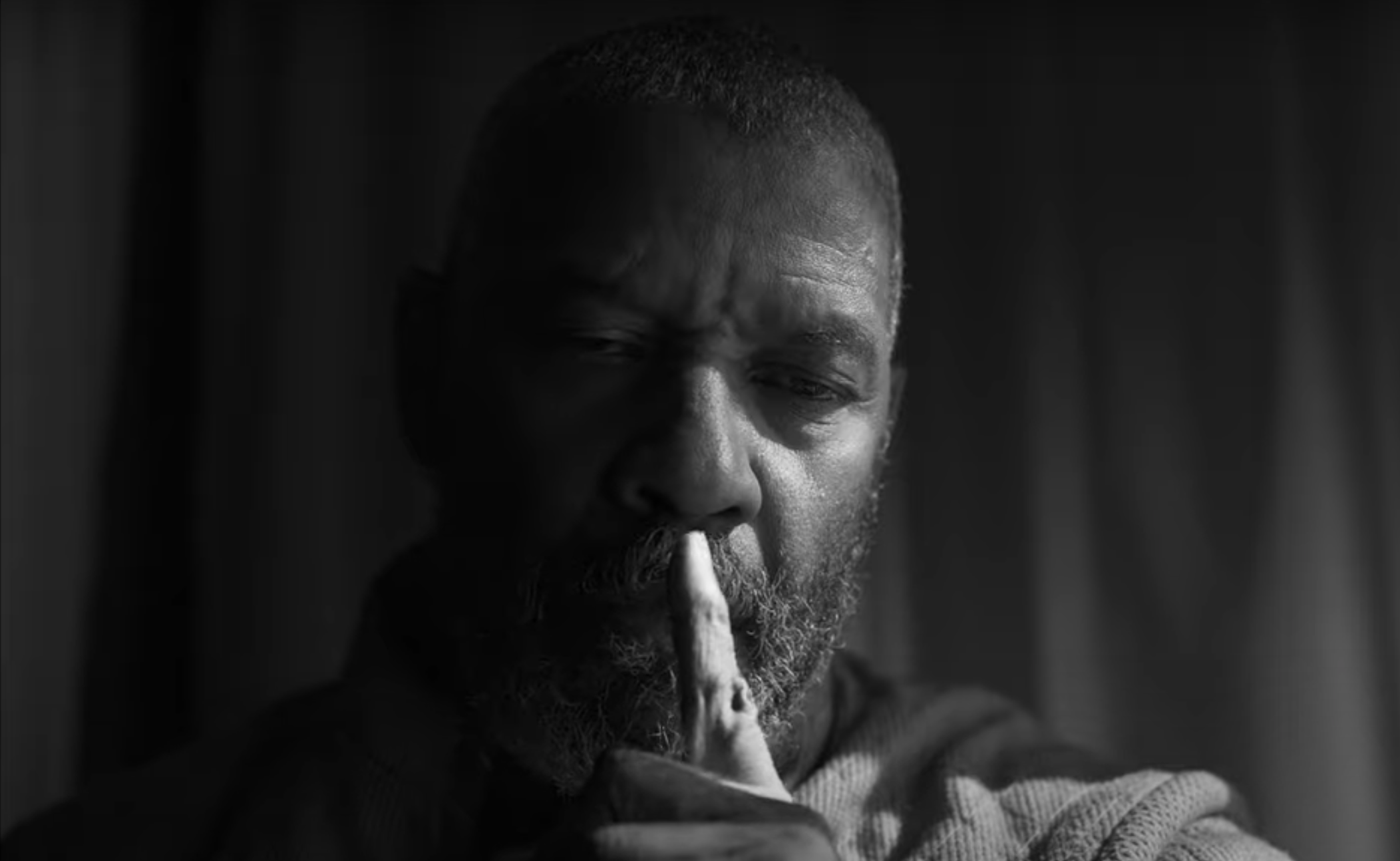
A stark, impressionistic Macbeth of no particular era. Well, some time in the past but not necessarily 17th Century Scotland. The spiffy hallway design and window panes obviously argue against that. The hallway in particular could have been designed by Albert Speer. And what about those boots, eh? Fine 20th Century cobblery.
slider
“Moonlight” Clarity

=
Sometimes in the science of Oscarology it takes a few years to understand the political reasons (for all Oscar triumphs are political) behind this or that winner snagging a trophy.
Take the Moonlight win, for example. Thanks to Spike Lee’s refreshing frankness, we can now safely assume that the deciding factor behind Barry Jenkins’ film beating La La Land was about Academy members being able to tell themselves that #OscarsSoWhite had been squarely faced and responsibly negated.
But in the days following the 2.26.17 Oscar telecast, many were saying “of course!…of course Moonlight was obviously better than La La Land!…on top of which it was wrong for a white guy to love jazz.”

I didn’t feel that way, but the mob was on a roll.
“Putting Moonlight To Bed,” posted on 3.4.17: “This is several days old and yesterday’s news, but a 2.28 Hollywood Reporter piece by Stephen Galloway that derided the echo chamber of Oscar punditry and the failure of the know-it-alls to foresee Moonlight‘s Best Picture win (“Why the Pundits Were Wrong With the La La Land Prediction“) was wrong in two respects.
“One, whoda thunk it? Even now I find it perplexing that Moonlight won. A finely rendered, movingly captured story of small-scale hurt and healing, it’s just not drillbitty or spellbinding enough. I wasn’t the least bit jarred, much less lifted out of my seat, when I first saw it at Telluride. Moonlight is simply a tale of emotional isolation, bruising and outreach and a world-shattering handjob on the beach…Jesus, calm down.
“As I was shuffling out of the Chuck Jones I kept saying to myself “That‘s a masterpiece?” (Peter Sellars, sitting in front of me, had insisted it was before the screening started.) If there was ever a Best Picture contender that screamed ‘affection and accolades but no Oscar cigar,’ it was Moonlight. And the Oscar pundits knew that. Everyone did.
“So I don’t know what happened — I really don’t get it.**
“I’ve already made my point about Moonlight in the Ozarks. It’s just a head-scratcher. And two, Galloway’s contention that only pipsqueaks with zero followings were predicting or calling for a Moonlight win is wrong.
“As I noted just after the Oscars, esteemed Toronto Star critic Pete Howell and Rotten Tomatoes‘ Matt Atchity were predicting a Moonlight win on the Gurus of Gold and Gold Derby charts. As I also noted, Awards Daily‘s Sasha Stone hopped aboard the Moonlight train at the very last millisecond, although she stuck to La La Land for her Gurus of Gold ballot. These are facts, and Galloway’s dismissing Howell and Atchity was an unfair oversight.”
** It wasn’t safe to say that Moonlight ‘s win was about Academy members covering their ass until Lee said this on 6.21.17. After that it was olly-olly-in-come-free.
Penelope Cruz Rules Roost

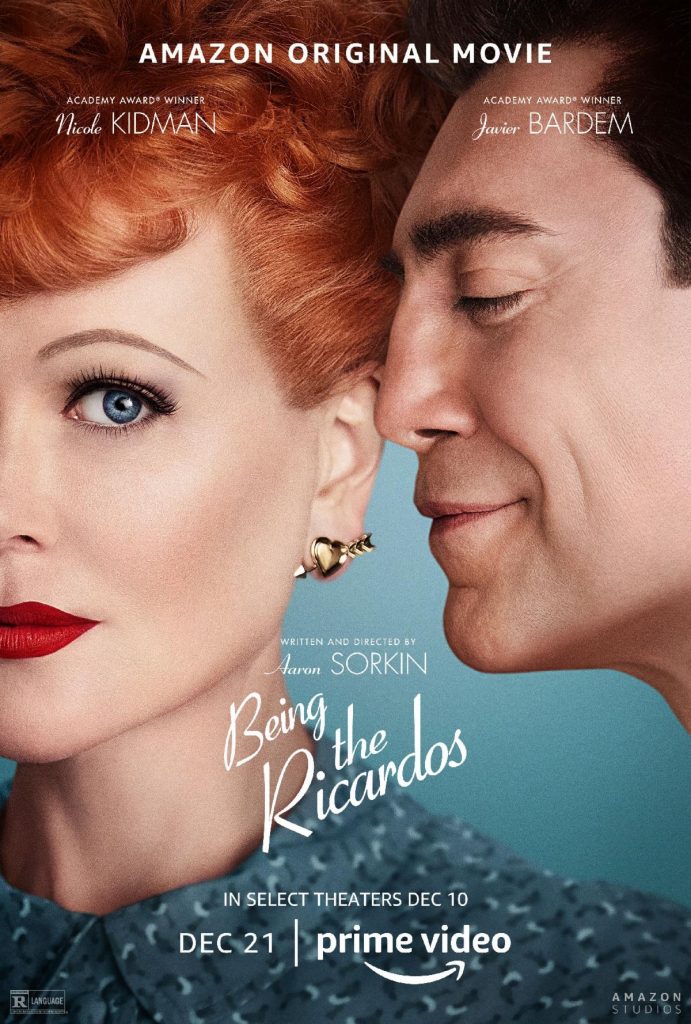
A handicapper friend assures me that Penelope Cruz, star of Pedro Almodovar‘s Parallel Mothers — a film that is 15 times better than House of Gucci, 10 times better than Spencer and far more emotionally rewarding than Being The Ricardos — is almost certainly good for a Best Actress nomination.
I hope so. I would certainly think so. I realize Cruz might not win for reasons having nothing to do with quality of delivery. But she needs to be nominated, at least.
I’ve seen the Almodovar twice and I know Cruz’s performance is the shit this year. She’s the absolute queen of her category. No other lead female performance comes close to plucking the emotional chords that she owns the patent on. She’s given the best female performance of the year. Don’t debate it, no question, put it to bed.
The Hollywood Reporter‘s Scott Feinberg has Penelope in 2nd place as we speak. Feinberg Frontrunners: Kristen Stewart (Spencer); Penélope Cruz (Parallel Mothers); Nicole Kidman (Being the Ricardos); Lady Gaga (House of Gucci) and Olivia Colman (The Lost Daughter).
I realize that in the myopic and strangely calculating award-season culture that we live in that some people are insisting otherwise…that Penelope is in the rear somewhere. They’re saying that Nicole Kidman (Ricardos) or Kristen Stewart (Spencer) or Lady Gaga (Gucci) are somehow better or at least more likely to win, partly because they’re backed by some heavy-hitter agencies and expensive campaigns.
Which is why I suspect that the best Cruz can expect is a Best Actress nomination. Because Oscar races are not so much about merit as muscle and power and primal audience longings and identifications. If it were my call I would give Cruz the Oscar now but she at least needs to become one of the five…c’mon.
I know that Pedro’s film doesn’t open until 12.24 but the big critics groups will begin voting soon. Somehow or some way the award-season heat has to start building in Cruz’s favor. I hope she gets there — her performances ‘is obviously much better than Kidman’s, Gaga’s and KStew’s — but she might not make it. I can feel it — she’s just not in the conversation the way the others are.
Repeating: Cruz’s Parallel performance is somewhere between 5 and 10 and 15 times better than all the other performances put together. It’s one of the finest efforts of her career, and yet if you talk to certain people her name is barely in the conversation. (David Poland actually believes that Licorice Pizza’s Alana Haim is one of the top three contenders.) As we speak Cruz is regarded as a peripheral player, and she’s not — she’s the top.

Five Films Stood Out
I was not a huge fan of most of the big grossers of 1976 — Rocky, A Star Is Born, King Kong, Silver Streak, The Omen, The Bad News Bears. I wasn’t even that much of a big believer in Hal Ashby‘s Bound for Glory (although I respected it). For me there were only five films that mattered that year — Network, All The President’s Men, Taxi Driver, Assault on Precinct 13 and Marathon Man. I still feel that way.
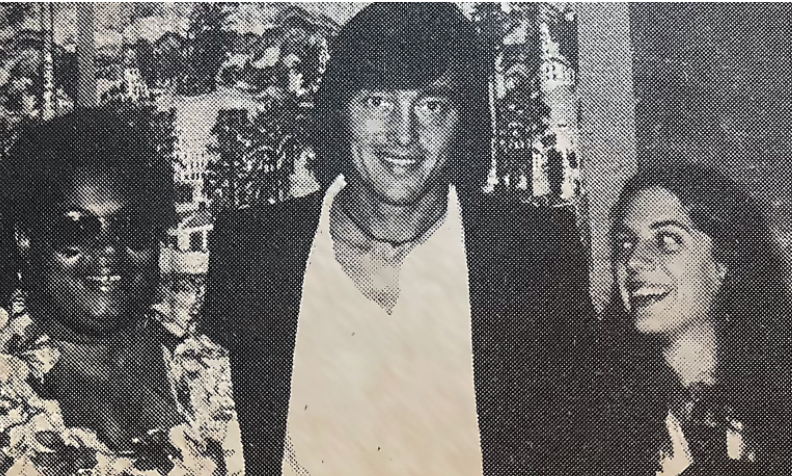
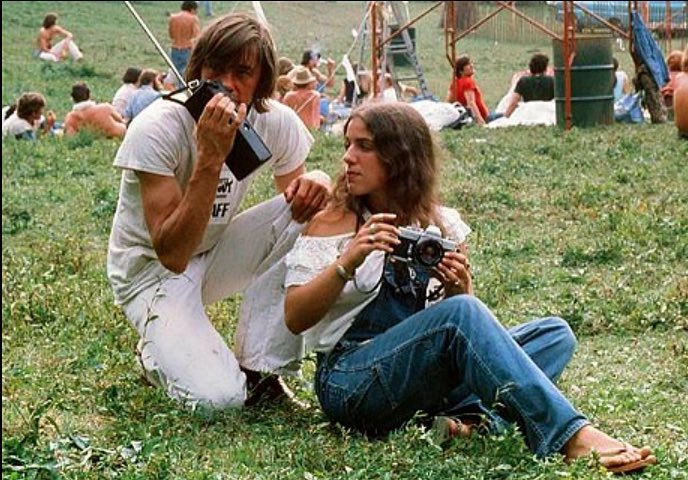
This photo ran in the Wilton Bulletin in early August ’76. It accompanied a story about a then-upcoming Save The Whales concert, which then-girlfriend Sophie Black (on my left) and I co-produced, and which was held on a hilly 52-acre farm owned by Sophie’s parents, David and Linda Cabot Black. The focus of the story was that a portion of the proceeds would be donated by Camp PIP, a non-profit that offered recreational facilities help to lower-income kids.
I must say that I was looking pretty good for a three-year-old. I turned four on 11.12.76.
“West Side Story” Violation

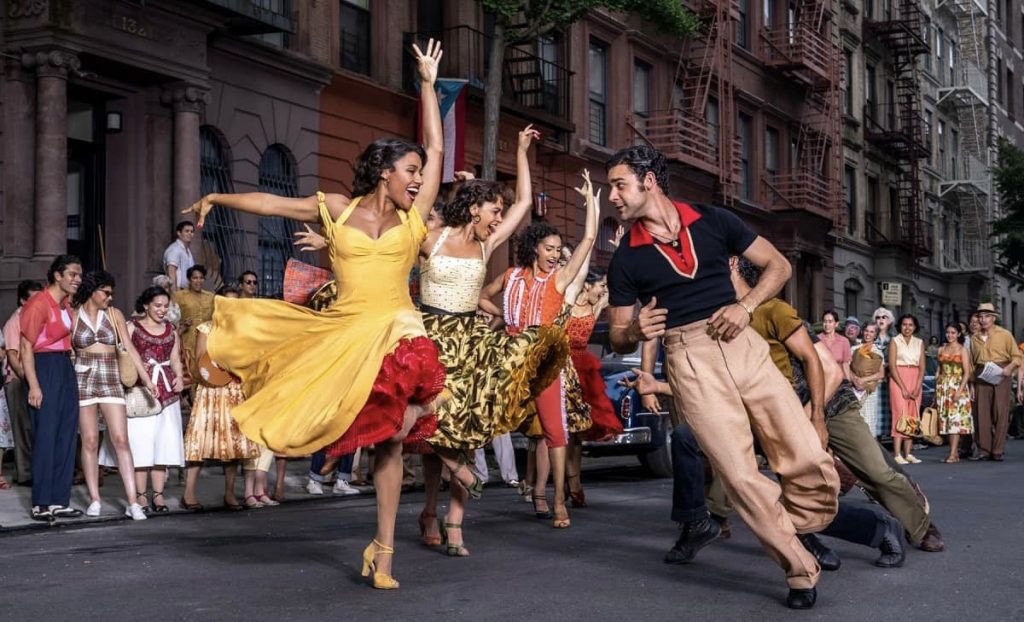
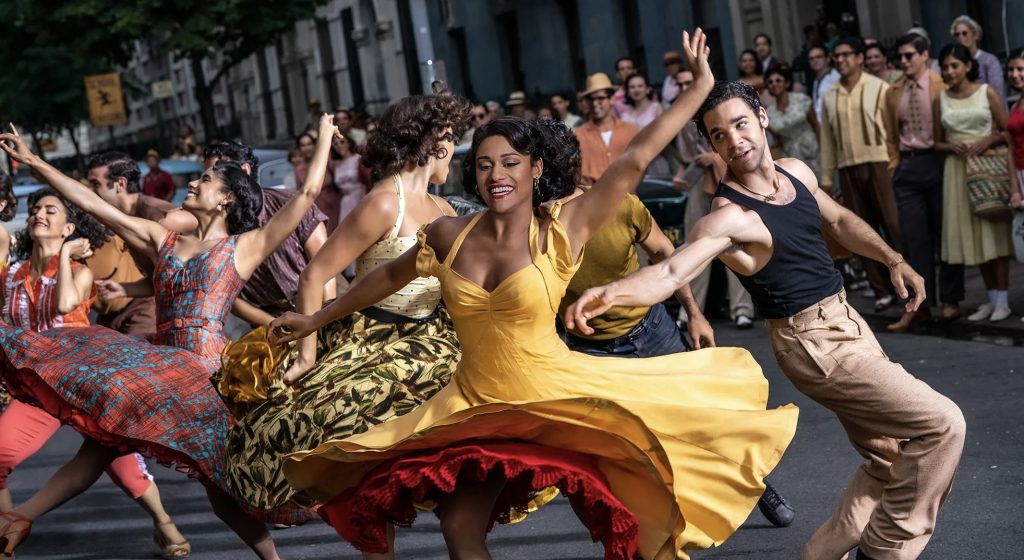
In Robert Wise’s 1961 West Side Story as well as innumerable stage versions performed over the decades, the dance scenes are never acknowledged by passersby, much less performed for them. In fact, passersby barely exist.
The basic rule is that each dance number happens in the hearts and minds of the Jets or Sharks. And one other thing: Except for the opening sequence (i.e., ballet-like daytime street fighting), the dancing happens in a restricted space of some kind (dance hall, tenement rooftop, back alley, dress shop, drug store, rumble under a highway), and always among Jets or Sharks and their immediate kin or sympathizers.
The dancing, in short, is restricted to the immediate “family.” Neighborhood civilians never notice or acknowledge that any carefully choreographed activity is going on. The dancing is rigorously intimate — members only.
Which is why snaps of that “dancing in the street during daylight” scene with Ariana DeBose (Anita) and David Alvarez (Bernardo) in Steven Spielberg’s West Side Story have been bothering me all along. Because sidewalk neighborhood residents are clearly watching Anita and Bernardo and their friends “cut a Latin rug”, so to speak. And, one presumes, are enjoying the “show.”
That’s a violation of a basic West Side Story rule — and a red flag.
Brisk Outdoor Weather? Later.

Earlier today Sutton Frances Wells, born on 11.17.21, had her very first experience with the great outdoors.
Her parents, Jett and Cait, drove her to Verona Park in Verona, New Jersey, which is just north of West Orange. Dressed in a pink winter coat, knit gloves and winter hat and lying under a blanket in a BMW-grade stroller, Sutton was rolled around and given her very first opportunity to breathe in those vibrant New Jersey aromas.
HE to Jett: “Hey, she’s sleeping! Her first time breathing that nippy New Jersey air and she’s catching 40 winks.”
HE to Sutton: “C’mon, man. Breathe in a few lungfuls of outdoor air, marvel at the big blue sky, smell the grass and trees and savor the sounds of other people talking and barking dogs and whatnot. Once you’ve done that, then you can take a nap.”
Sutton to HE: “Hey, give me a break. I’m only four days old. I sleep a lot. Deal with it. Verona Park will presumably still be there when I’m older and a bit more rambunctious.”


Larson’s Lovers

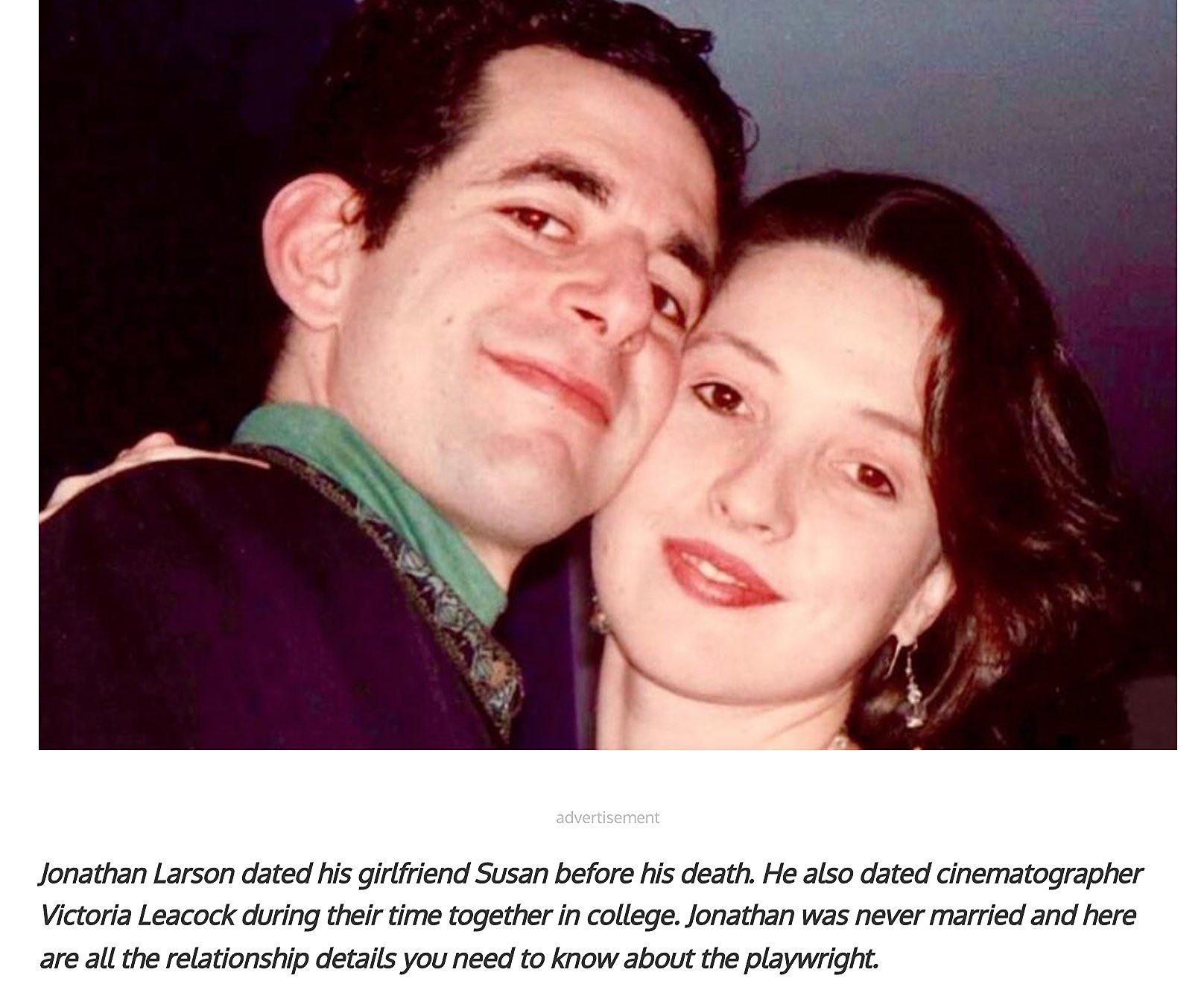
There were two slightly awkward things about Jonathan Larson‘s romantic life in the years before his untimely death in January 1996.
One was that he was straight, and nobody likes the sound of that. The second was the apparent fact that Larson’s two most conspicuous girlfriends, cinematographer Victoria Leacock and a woman named Susan (nobody seems to know her last name), were descended from …uhm, European tribes. This doesn’t square with 2021 sensibilities, of course. But Tick, Tick…Boom director Lin Manuel Miranda remedied the situation by casting Alexandra Ship as “woke” Susan, and now everything’s cool.
In sum, it wasn’t Larson’s “fault” for failing to become emotionally entwined with a woman of color back in the ’80s and early ’90s. He simply didn’t know any better at the time. No need to beat a dead horse, water under the bridge, etc.


Anticipation

I have to say I’m mildly excited by the idea of watching Peter Jackson‘s six-hour Get Back doc.
It’s so nice and comforting and fascinating to study the Beatles in their late 20s, and to bask in all that youth and verve and dark hair (medium light brown in John Lennon‘s case) and the once-unmistakable fact that John and George Harrison were alive and well and pulsing with blood and spirit, not to mention Beardo Paul and Ringo Starr.
At the same time it’s a crying shame that the Sgt. Pepper or Revolver or Rubber Soul sessions weren’t filmed in this fashion…raw and real and professionally-lighted, 16mm or 35mm film, grade-A sound, etc. Because I’ve never been much of a fan of the Let It Be songs.
Bob Strauss + “Red Rocket” = Caveat Emptor

You can’t leave your morality in the parking lot when you visit the megaplex. It’s a crucial part of who and what we are, of course, and surely a determining factor in how we react to amoral or immoral characters on the screen.
Obviously some bad guys can be charming or at least fascinating. I could post a long list of bad-guy protagonists who qualify — Kirk Douglas‘s Midge Kelly (Champion), Douglas’s Jonathan Shields (The Bad and the Beautiful), Anthony Quinn‘s Zampano (La Strada), Marlon Brando‘s Sir William Walker (Burn!), Rip Torn‘s Maury Dann (Payday), James Gandolfini‘s Tony Soprano, etc.
But every now and then you run into a scuzzy lead protagonist who crosses the moral-ethical line, leaving you no choice but to say “oh, give me a break!” or “all right, that’s it…I need a shower!” Such a character is Simon Rex‘s aging porn star (“Mikey Saber”) in Sean Baker‘s Red Rocket.
Roughly six weeks ago I wrote that Red Rocket teeters on the line between mostly legitimate film festival-smarthouse cinema and relentlessly depraved and disgusting sociopath-porn.
“It’s ‘good’ in the sense that Baker isn’t afraid to show his lead character diving into gross and reprehensible behavior; ditto most of the supporting players. We’re talking bottom-of-the-barrel Texas trash here.
Nor does Baker feel obliged to deliver some form of moral redemption for Mikey, which I respect.
Yes, Baker occasionally delivers slick chops and whatnot, and yes, Mikey has a sizable horse schlong (even when flaccid), but the scuzz factor in this film is REALLY rank. Yes, I realize that Baker isn’t out to soothe or feel-good me. I respect his integrity but the way Red Rocket makes you feel is not good in any way, shape or form.
The crowd I saw it with in Telluride left the theatre without comment. In short, they seriously hated it. Any human being who’s seen Red Rocket would understand that reaction and tread very lightly in recommending Baker’s film, if at all.
Unless you’re elite hipster critic Bob Strauss, that is, in which case you go “wheeee…one of the year’s best! Unless, of course, you can’t tolerate the lead character but if you’re really hip like me, you’ll get past that!”
HE to Strauss: Is this your new Get Out, Bob? Seriously, do you honestly think that people tell their friends and coworkers to see films about characters they may not be able to morally tolerate? You wrote “if you can tolerate the awful person he plays”….WHAT? Rex’s character is raw sewage. What kind of reprehensible scumbag would be cool with the company of this animal?
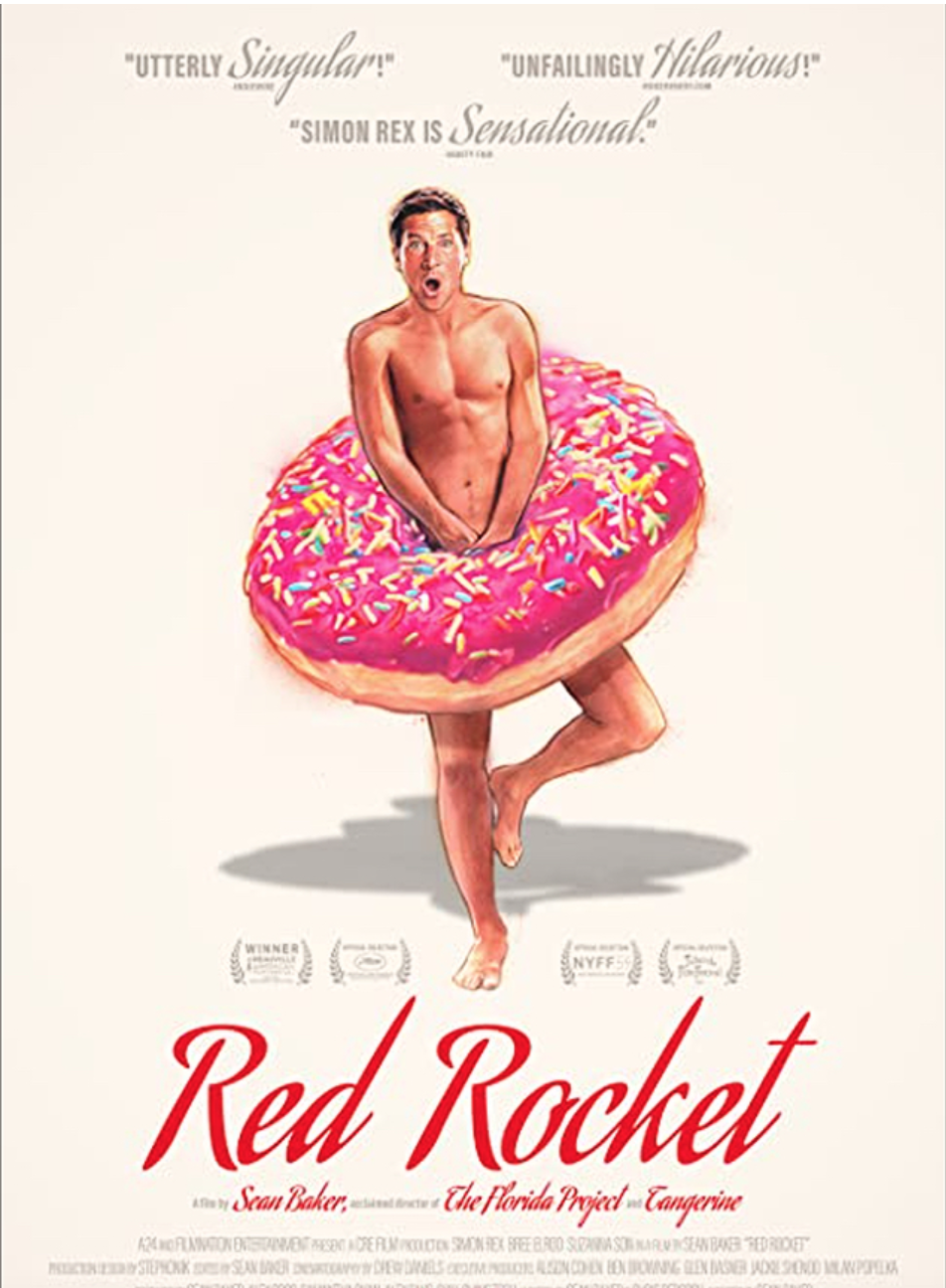
The “naked Mikey wearing a huge red donut” poster is much more audience-friendly than any stand-out aspect of the film, although I should offer side props to Susanna Son, who makes an impression as “Strawberry,” Mikey’s gullible, up-for-anything girlfriend.
Return to “Ragtime”
I’m of two minds about Paramount Home Video’s new 4K Bluray of Milos Forman‘s Ragtime, which popped yesterday.
Why not just buy the damn thing, watch it and sort out the issues as I go along? Because I’m torn about it.
On one hand Ragtime, mainly set in the New York City area between 1905 and 1910, is a generally respected effort. Plus it seems all the more noteworthy now considering that a film of this type (released in the fall of ’81) would never be made for theatrical today.
Nobody has ever called it great or mindblowing, but some admire the devotional labor-of-love thing — the wonderful yesteryear detail, the ambitious scope, the old Model-T cars and horse-drawn wagons, the period-perfect clothing.
Plus a fair amount of work went into making Ragtime look as good as it possibly can. Plus the package includes a “directors cut workprint” that runs 174 minutes — 19 minutes longer than the original 1981 theatrical release version (i.e., 155 minutes). For me this is the biggest attraction.
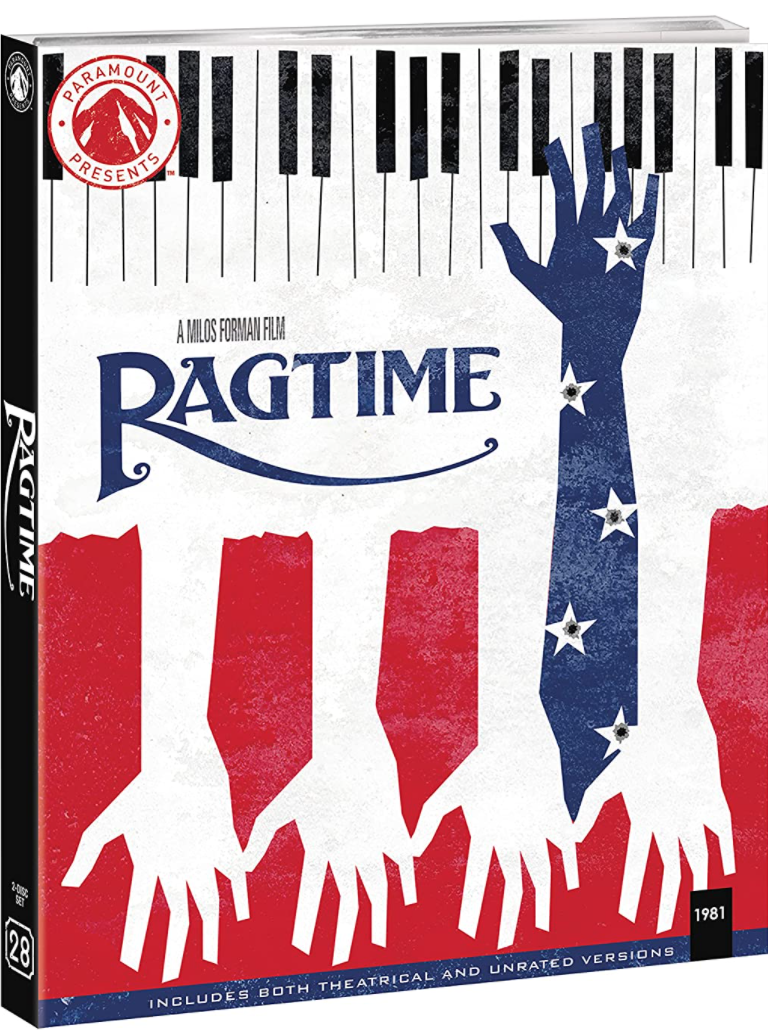
Plus it offers some deleted and extended scenes. Plus a presumably engaging discussion between screenwriter Michael Weller and the esteemed screenwriter and man-about-town Larry Karaszewski, who worked with Forman on The People vs. Larry Flint. So it sounds like a decent package.
But on the other hand I know that Ragtime is an underwhelming, at times mildly irritating film. It certainly seemed that way when I caught a press screening sometime in the early fall of ’81, inside the Gulf & Western building on Columbus Circle. And no, I haven’t seen it since. I felt that as engrossing as some portions were, it didn’t feel right. It felt spotty. And it certainly didn’t catch the sweep, texture and wonderful authenticity of E.L. Doctorow’s 1975 book, the reading of which I adored.
It was great to see the 80-year-old James Cagney back in action, but I really didn’t care for some of the casting choices (especially Elizabeth McGovern as Evelyn Nesbit and the way-too-young Robert Joy as Harry K. Thaw).
And I never understood why so much attention was paid to the tragedy of Coalhouse Walker (Howard Rollins, Jr.), whose racially-provoked standoff was just one of many sagas that Doctorow passed along. Ragtime is so intently focused on this one character and his injured sense of honor that it could have been titled Ragtime: The Saga of Coalhouse Walker.
I realize that in accepting the challenge of compressing Doctorow’s fascinating cultural tapestry into a two and a-half-hour film, the efforts of Forman, Weller and the uncredited Bo Goldman were all but doomed from the start. In a perfect world Ragtime would have been produced as an eight- or ten-hour miniseries. Then it might have had a chance.
Sutton Frances Wells

The daughter of Jett Wells and Caitlin Bennett arrived just after 11 am New Jersey time —11.17.21. Saint Barnabas Medical Center in Livingston. 8 lbs., 2 ounces. Labor began last night around 9 pm — 14 hours start to finish. Epidural administered around 3 am. Everyone is fine, all is well, morning has broken, all choked up.







Speaking as a leather-jacketed samurai poet clear light rumblehogger, I’m not that down with being called “grandpa”. It’s not what anyone would call a difficult hurdle, but the “g” word always makes me think of The Band’s “Rocking Chair.”
“Just Call It”

Likely Best Actress roster — Cruz, Kidman, Stewart, Gaga, Chastain. Hudson elbowed out? McDormand and Coleman probable no-gos.