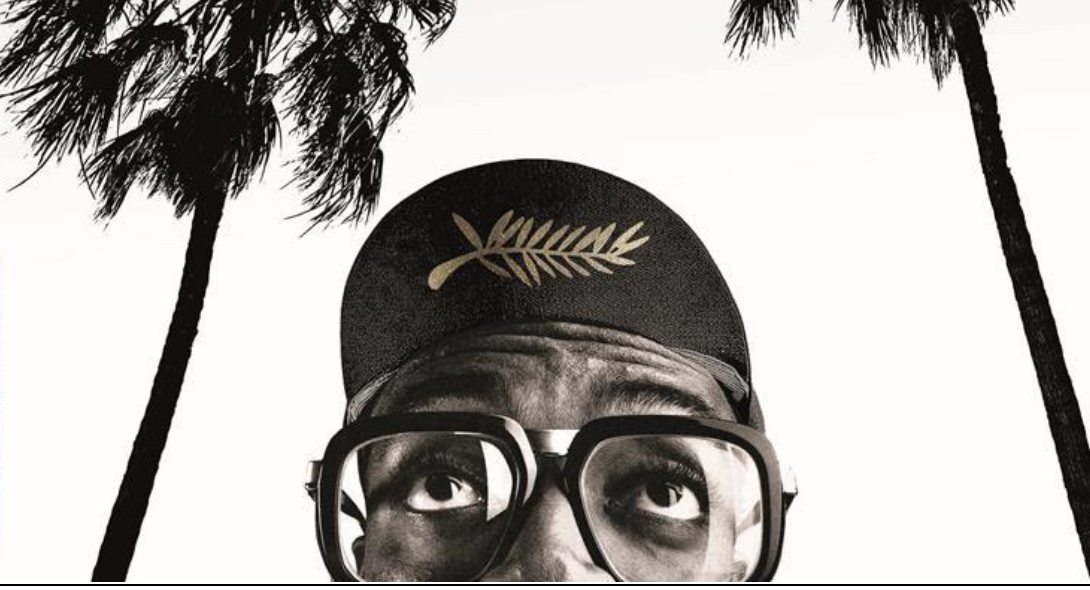
Having been tasked by President Biden to engage with the southern-border immigration crisis, Kamala Harris has been repeatedly criticized by rightie belligerents (including the Flatulent Florida Fatass himself) for not visiting the southern border and doing the requisite photo-op and press conference, blah blah.
Harris resisted at first, but now she’s finally caved — Politico is reporting that she’ll be visiting El Paso on Friday.
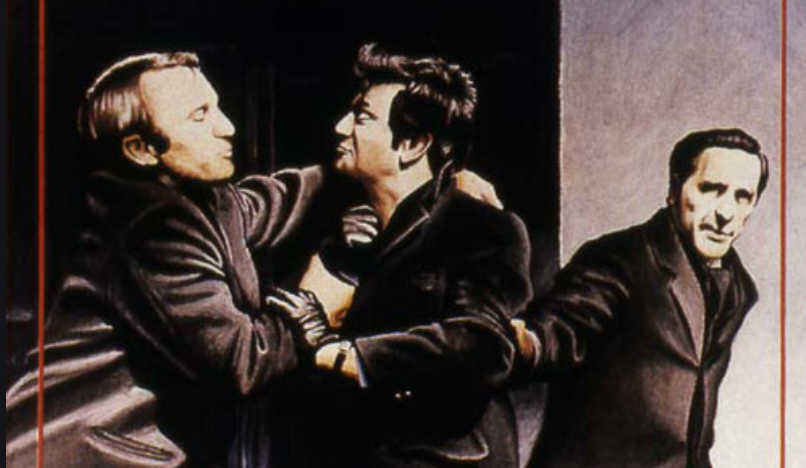
Do you want to hear a game-changing maneuver that will shut those cheap fucking righties up for good? Harris and a couple of tough security guards need to secretly do a Brubaker — she and the two bodyguards need to change into some tattered Target clothing and slip quietly into Mexico (Laredo, say) and then make their way by bus or foot toward the U.S. border and try to cross illegally, mixing with actual illegals and coyotes and really experiencing the reality of the situation. First-hand experience.
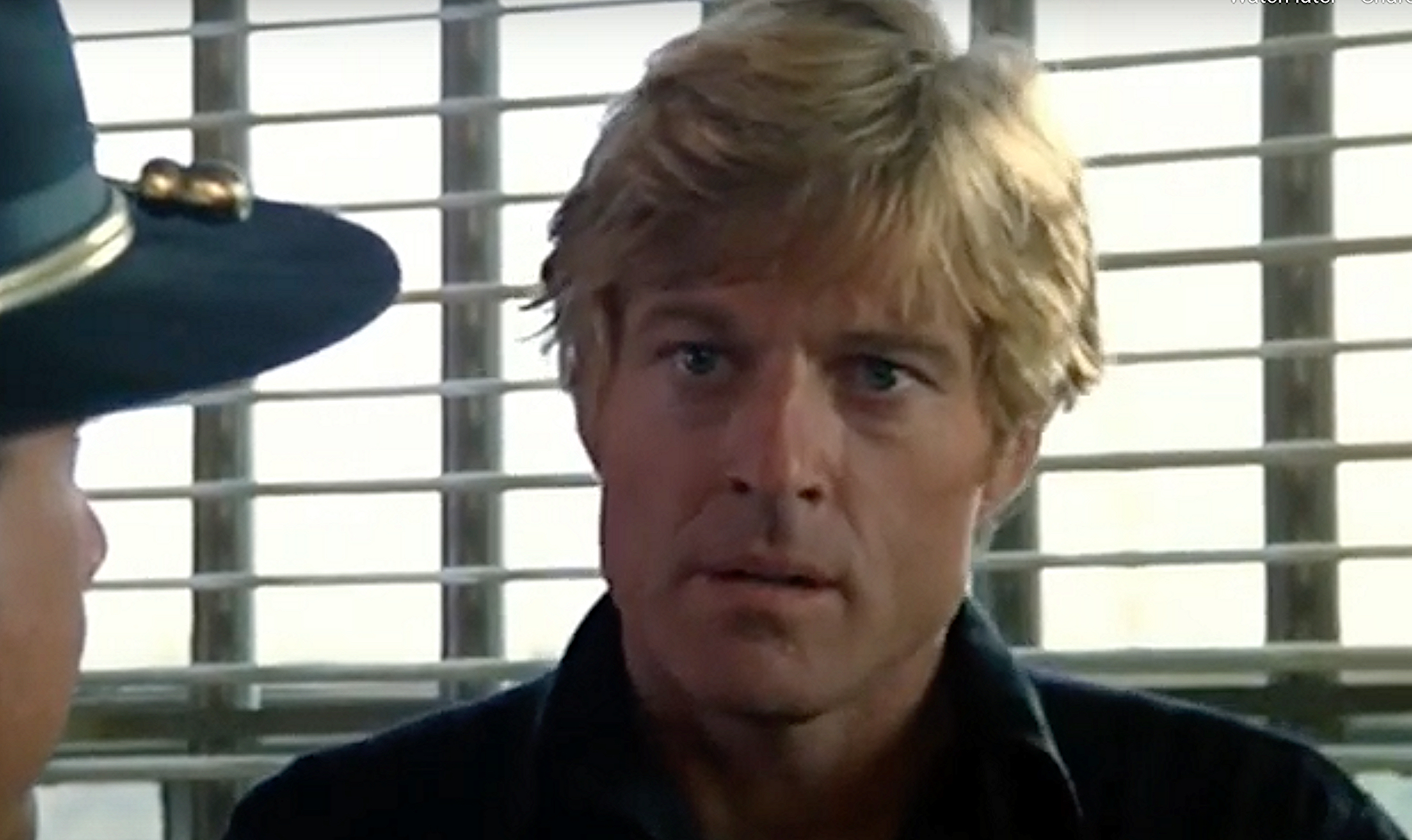
“Do a Brubaker” alludes to incoming prison warden Robert Redford anonymously pretending to be a prisoner and absorbing the situation as he never could through the usual official channels. I could have said “do a Sullivan’s Travels” but most of the readership wouldn’t recognize the title.
Kirk Douglas‘s last brawny action film was Jeff Kanew‘s Eddie Macon’s Run (’82), which he made in his mid 60s. He continued to play strong characters in challenging situations into the early aughts (The Man From Snowy River, Tough Guys, Final Countdown, Greedy), but the rugged action stuff seemed ill advised after Eddie Macon — why push it?
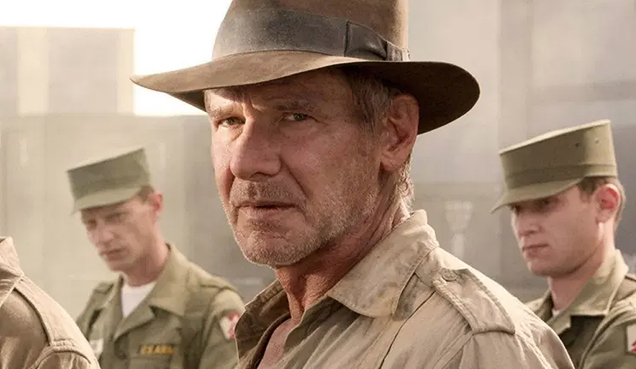
Harrison Ford (born on 7.13.42) was different — Douglas was Douglas but Ford had his own path to follow, and so he continued to make action films into his ’70s. Alas, he fractured his ankle (or was it his leg?) during shooting of Star Wars: The Force Awakens in 2014, when he was 71. (More bad luck than age-related.) And then those piloting mishaps occured — the Venice golf-course crash on 3.5.15 (the plane’s fault, not Ford’s), and two strategic landing errors — one at John Wayne Airport on 2.3.17, and a second at Hawthorne airport on 4.24.20.
We all admire Ford’s spirit and gumption, but he’ll be 79 next month — it’s not exactly a surprise that he’s succumbed to injuries and errors of judgment, is it? Same difference when Robert DeNiro, a year younger than Ford, damaged one his quad muscles last month while working on Martin Scorsese‘s Killers of the Flower Moon.
Part of the syndrome is psychological, I’m guessing. When presented with a physical challenge of some kind, older guys will say to themselves “I might be in my 70s but I feel like I’m 47…fuck it, I can do this, no sweat.” And then they do the thing and the body — surprise! — doesn’t perform as expected.
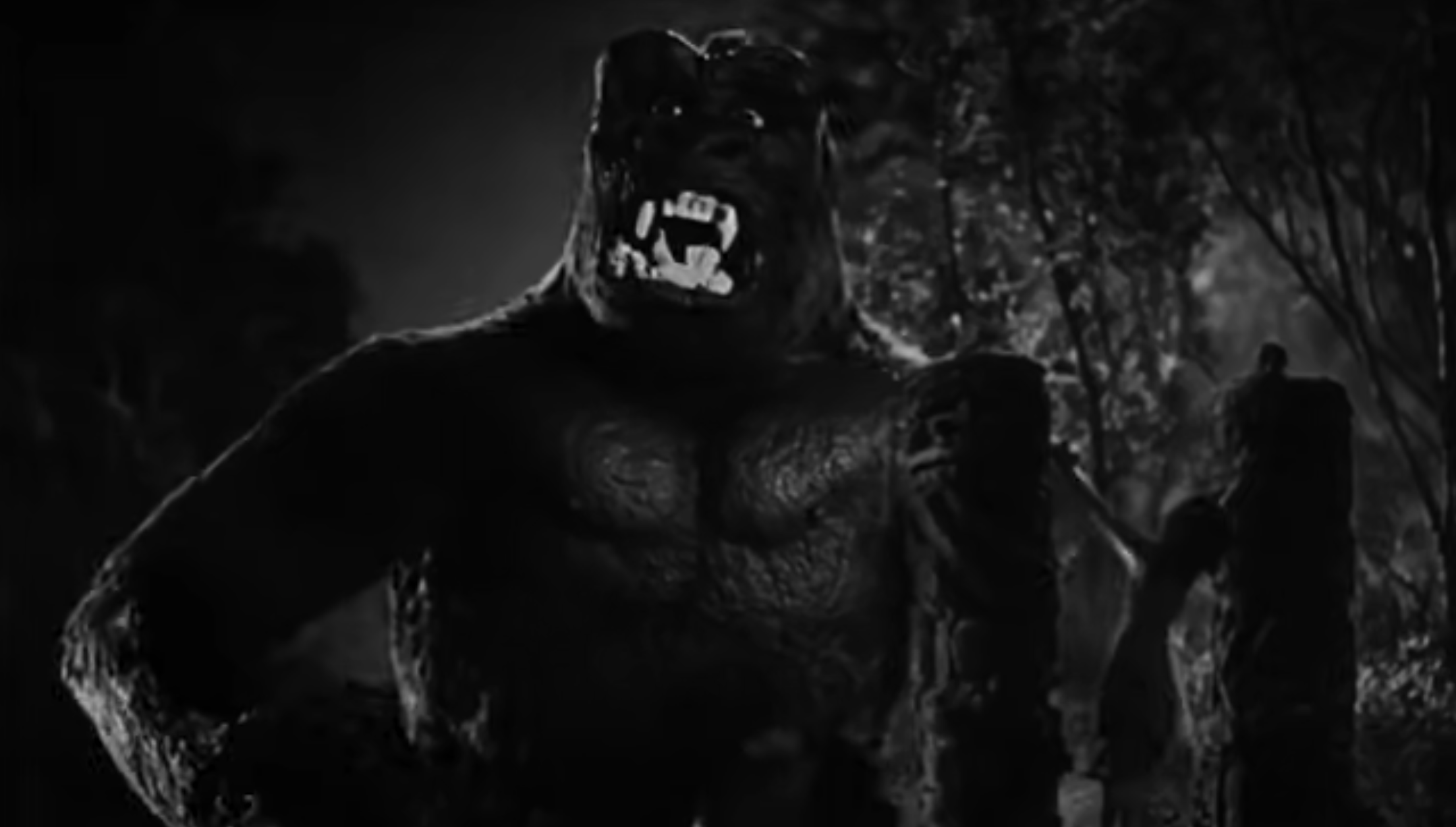
Just a reminder that King Kong, which ran 104 minutes with an overture, delayed the entrance of the big ape until the 46-minute mark. Build-up, set-up. In other words, co-directors Merian C. Cooper and Ernest B. Schoedsack made the audience wait until nearly the midpoint of this not especially long film to deliver the simian thrills. The Skull Island adventure chapter lasts for roughly 38 minutes, and ends at the 84-minute mark. The New York City finale lasts exactly 20 minutes, or from the 84 and 1/2 minute mark to 104 minutes and 23 seconds.
Peter Jackson‘s absurdly bloated King Kong (’05) ran 188 minutes.
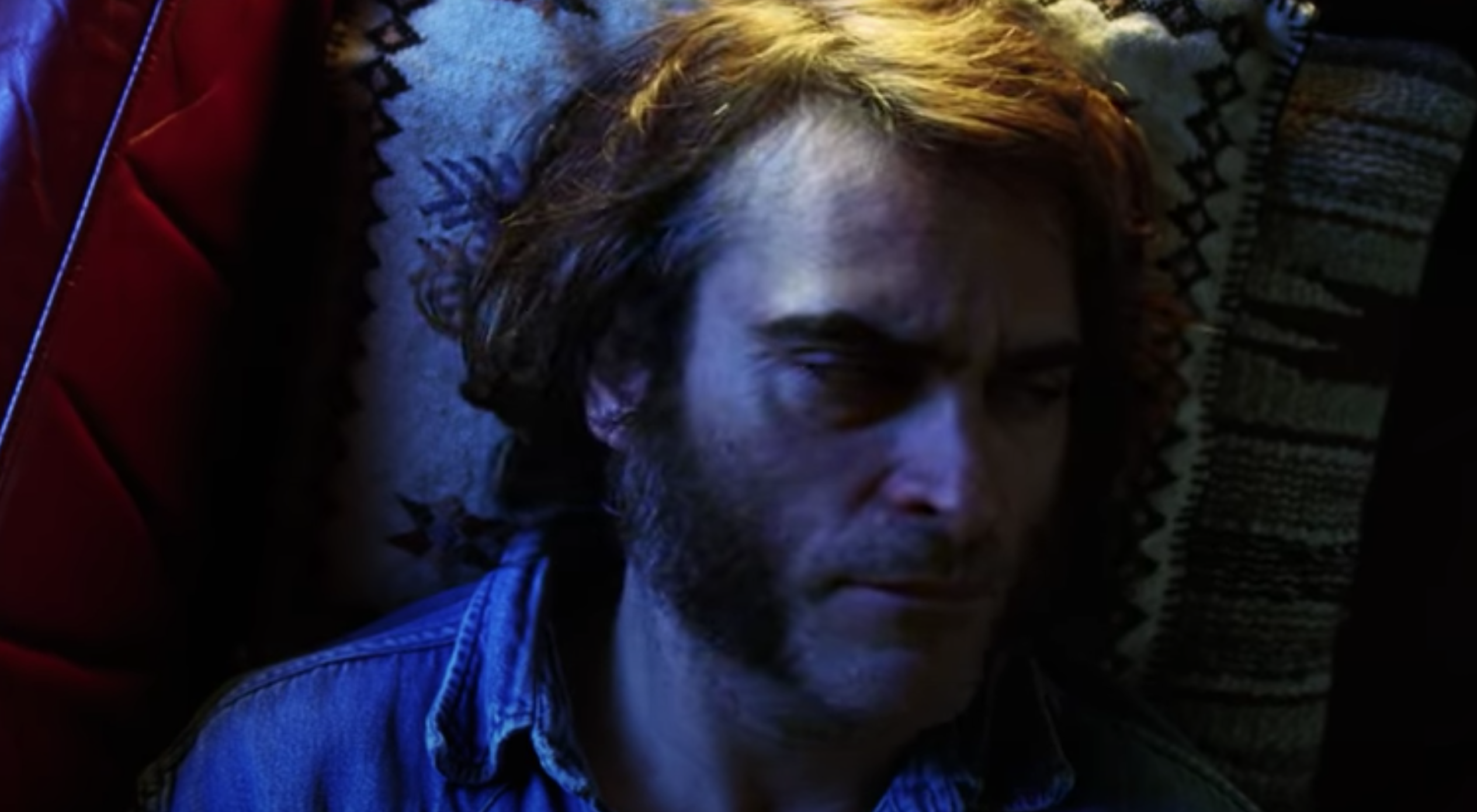
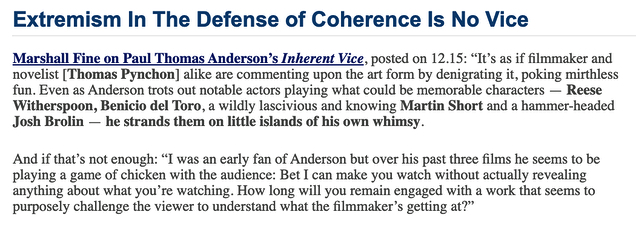
I’ve rarely felt so bummed and thrown by a film as I was after seeing Paul Thomas Anderson‘s Inherent Vice at the 2014 New York Film Festival (10.4.14). I was so destroyed that I couldn’t find the spirit to attend the Tavern on the Green after-party. I just jumped on the IRT south…I had to get out of there.
“I need to think about Inherent Vice a bit before writing anything. It just broke an hour ago and then I just hopped on the train. I was thinking about it while I was watching but that only got in the way. A friend wrote and said ‘how was it?’ Here’s what I wrote: ‘Oh, dear God…maybe it’ll come into focus after I’ve seen it a second or third time, or when I catch in on Bluray and can access the subtitles. Maybe by then I’ll have grown enough as a person or as a moviegoer or as a dog catcher. Maybe someday I’ll be as perceptive as Drew McWeeny or Scott Foundas.
“One thing’s for sure and that’s that I just wasn’t hip or smart or observant enough tonight to really get down in the swamp with Inherent Vice. I kinda got where it was coming from but I couldn’t get to a place of delight. I certainly got portions of it. I know I chuckled at a few lines. But I’m basically too fucking stupid or my ears are too full of wax or something. So it’s me — I’m the problem and not PTA.
“Vice is a meticulous recreation of an early ’70s film complete with dirt and scratch marks…it’s like you’re watching a semi-decent print of a film made in 1971 at the New Beverly in 1986. It really is an immersion and a half. Beautiful atmosphere, perfect Nixonian vibe, bleachy lighting scheme, ultra-dry humor, Aryans, dopers, a Neil Young tune or two, endless manner of perversity and duplicity and what-the-fuck-ity…but I couldn’t figure out a whole lot. Some but not enough. It’s in, it’s out, it’s back in again, it moves left and right, it drops its pants, it takes a hit, it bongs out again…it makes your brain feel like cheese that’s been left on the counter overnight, and it goes on for…what, two and a half hours?
“If only I was smarter…if only I could hear more of the dialogue…if only I had several lines of heroin to snort while watching it. You know what? Forget the plot. Solutions are for squares, man. Just submit to the period-ness and let that be enough. Let Joaquin Phoenix‘s mutton-chops rule. Doobies, sandals, hippie chicks, waves, the residue of Manson, shiny 1970 cars…all of it, dude. Be a ‘yes’ person.”
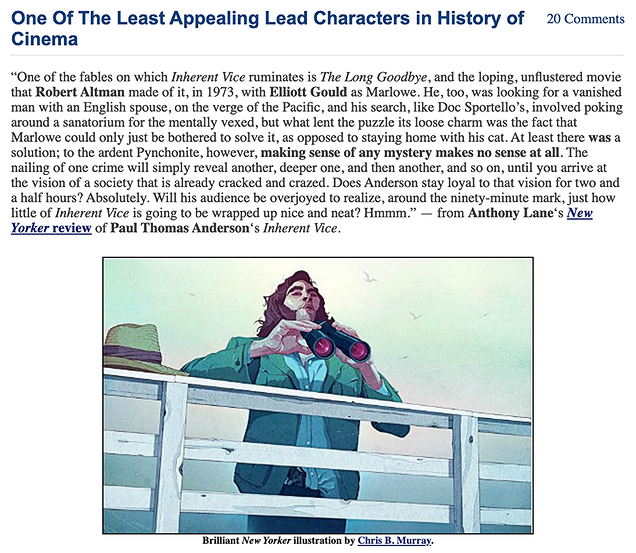
“Vice Mets The Public“, posted on 12.14.14: I really don’t want to hang with Joaquin Phoenix‘s Doc Sportello again, man. I hated his company like nothing else. Vice is far from thoughtless or haphazard and certainly deserves respect for PTA’s meticulous composition and use of…was it one or two Neil Young tunes? But I didn’t give a damn who did what (and neither did Thomas Pynchon — I get that) and I didn’t care about anyone in the entire cast except Martin Short.
“Pynchon fans might argue that Inherent Vice is an entirely different bird than Robert Altman‘s The Long Goodbye and Joel and Ethan Coen‘s The Big Lebowski, but these films are still quasi-detective stories about low-rent loser types trying to make sense of a complex Los Angeles demimonde and scratching their heads and shrugging their shoulders at the perverse and ungainly sprawl of it all. I recognize that Vice is more liked than disliked by critics and that the HE comment symphony may take a few pokes at me, but I’m used to that.”
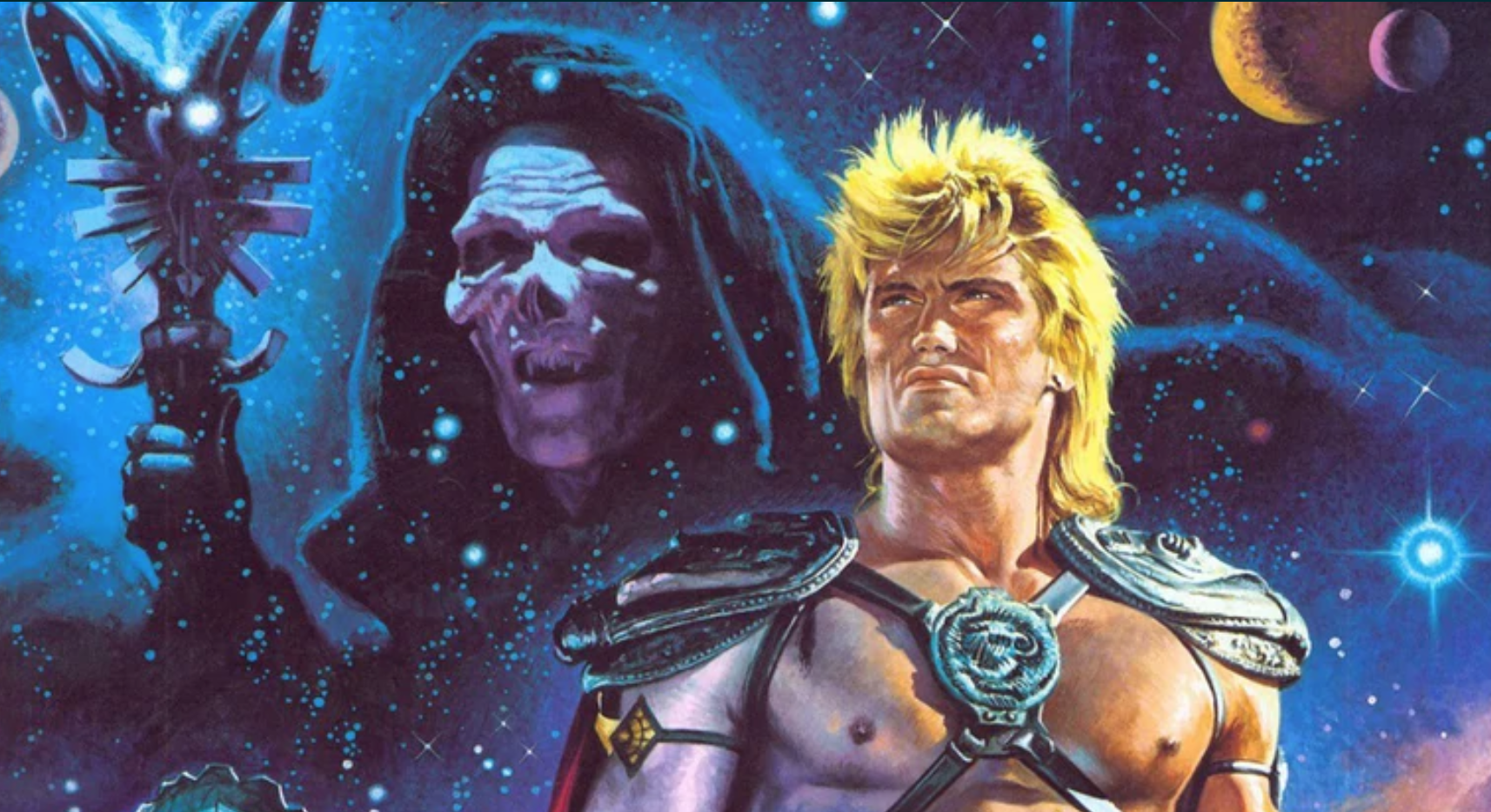
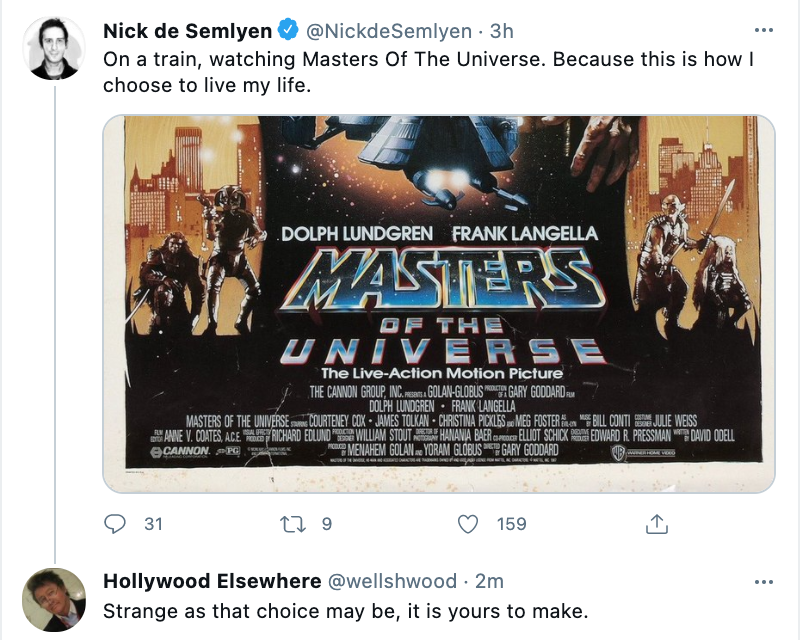
As a Cannon publicity staffer and press-kit writer, I visited the Culver City set of Masters of the Universe sometime around…oh, probably the late fall of ’86. I seem to recall interviewing director Gary Goddard and screenwriter David Odell, although I may not have. I don’t recall speaking with Dolph Lundgren, Frank Langella, Courteney Cox and other cast members, although I may have.
It was a difficult write as I was totally disheartened and certainly not into the Mattel sword and sorcery-themed franchise. The general presumption during filming was that Cannon had bitten off more than it could chew, and that the $22 million budget was probably insufficient. Masters opened on 8.7.87, was creamed by critics and wound up making $17.3 million.
And yet, very curiously, it has a modest cult following today.
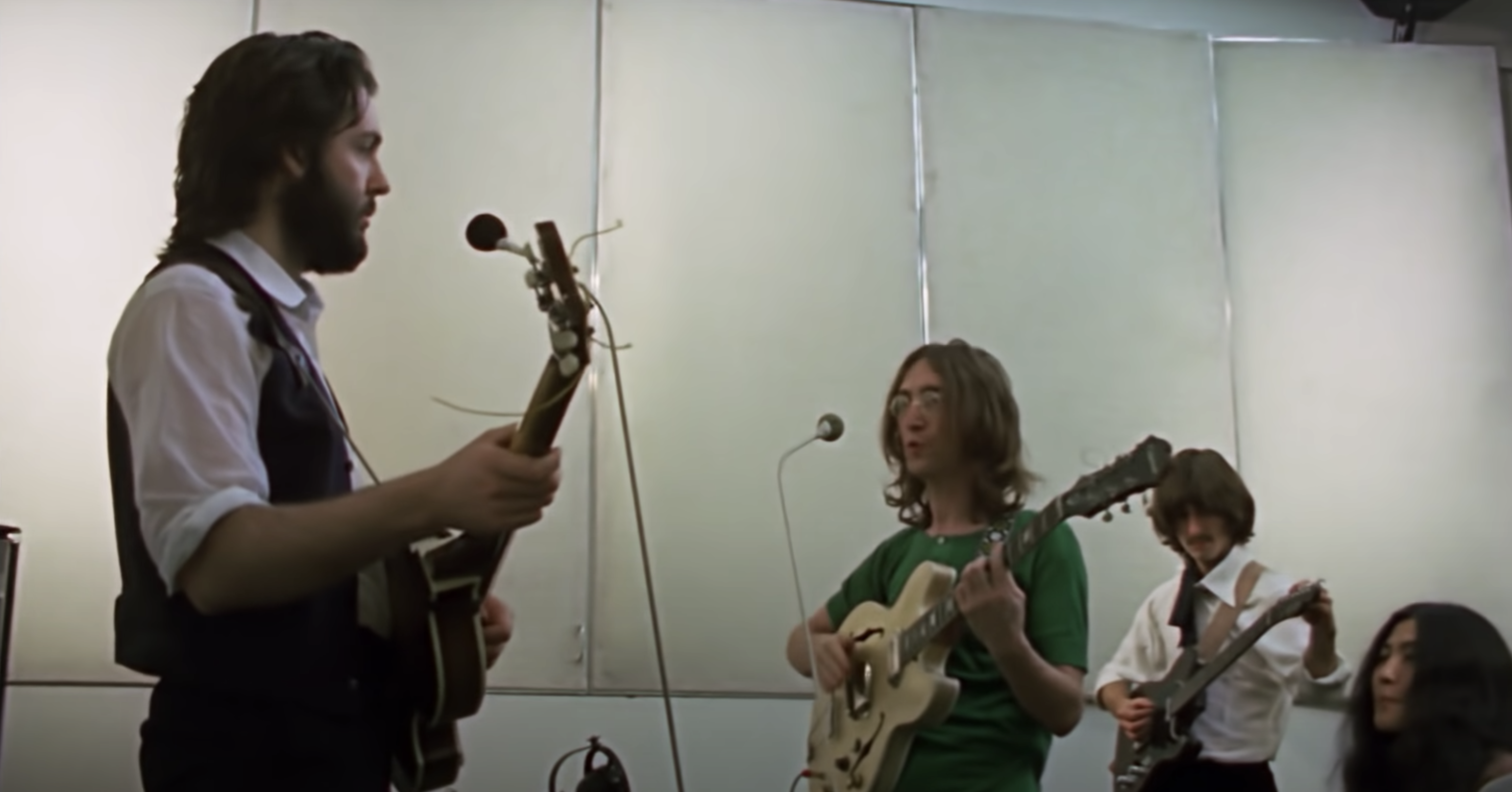
With one fell swoop, Disney and Peter Jackson have all but destroyed serious Beatle fan interest in Peter Jackson‘s endlessly delayed The Beatles: Get Back doc…they’ve blown the allure to smithereens by expanding it (i.e., watering it down) into a six-hour thing on Disney +.
The obvious strategy should have been to release the originally planned two-hour feature version in theatres — people would’ve loved to see this communally with popcorn! En masse! — and then follow this up a month or two later with a three-part, six-hour version (three docs lasting two hours each) on Disney +. But nooooo…
The Beatles: Get Back was originally slated to open theatrically on 9.4.20 in the U.S. and Canada, with overseas territories to follow. On 6.12.20 it was pushed back to 8.27.21…they should’ve stuck to that!
It was announced today (6.17.21) that The Beatles: Get Back “will be released as a three-part documentary series on Disney+ on 11.25, 11.26 and 11.27, with each episode being about two hours in length.”
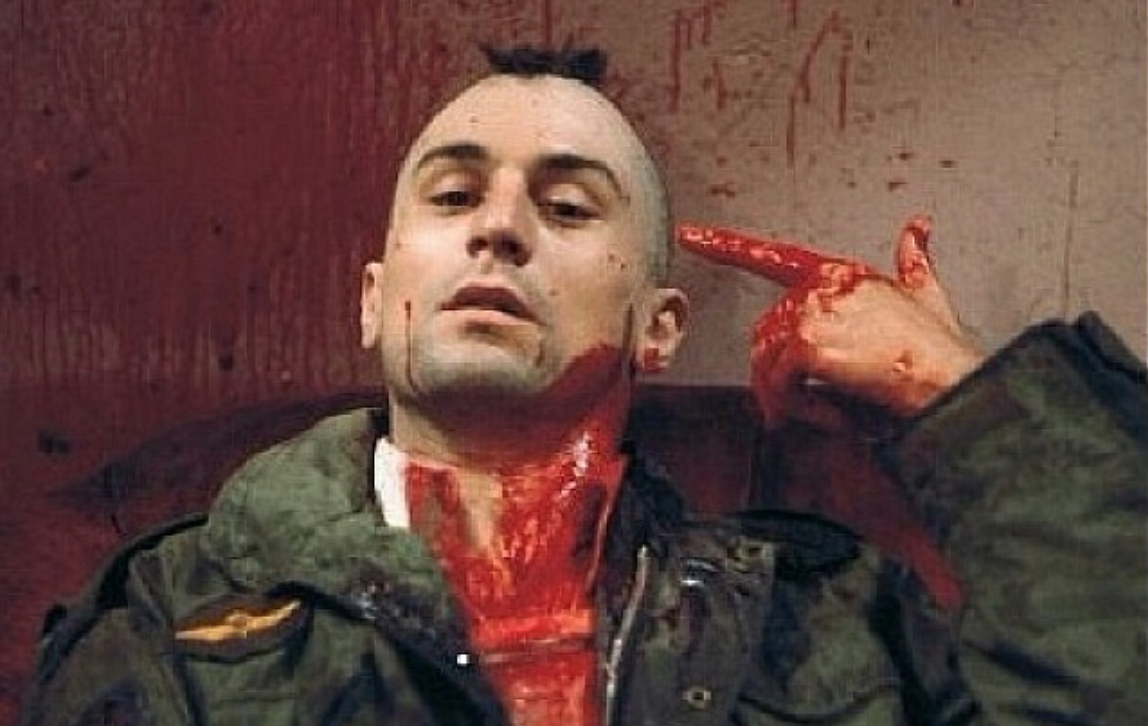
Lebowitz: “[Marty] said to me numerous times: ‘You know what ruins Taxi Driver? The color red. The studio wouldn’t give me enough money to correct the color red, and that’s why it’s horrible.’ To which I say, ‘You know what’s wrong with Taxi Driver, Marty? Nothing.’”
HE to Scorsese, Leibowitz: Wrong — the brownish sepia tint during Taxi Driver‘s East Village shoot-out sequence is fucking terrible. It’s always been terrible, and it always will be terrible. And now, after 46 years of saying the sepia brown color is fine and this is how the film was released and so on, Scorsese is suddenly admitting that it looks awful. Which of course is an accurate statement.
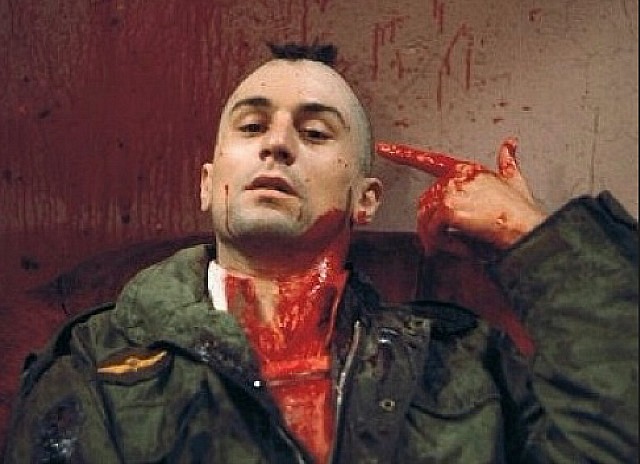
On 3.11.11 I ran a piece called “Taxi Driver‘s Brown Blood“. It was about (a) Grover Crisp and Martin Scorsese‘s Bluray restoration of Taxi Driver (it popped on 4.5.11). and more particularly (b) a technical question asked of Crisp by The Digital Bits‘ Bill Hunt.
Hunt asked about the brownish, sepia-tone tinting of the climactic shoot-out scene, which had been imposed upon Scorsese by the MPAA ratings board. Scorsese had naturally always intended this scene to be presented with a more-or-less natural color scheme, in harmony with the rest of the film.
Hunt to Crisp: “Why didn’t you and Scorsese restore the originally shot, more colorful shoot-out scene?”
“There are a couple of answers to this,” Crisp replied. “One, which we discussed, was the goal of presenting the film as it was released, which is the version everyone basically knows. This comes up every now and then, but the director feels it best to leave the film as it is. That decision is fine with me.”
HE response: “There can be no legitimate claim of Taxi Driver having been restored without the original natural color (or at least a simulation of same) put back in. The film was shot with more or less natural colors, was intended to be shown this way, and — with the exception of the shoot-out scene — has been shown this way since it first opened in ’75.
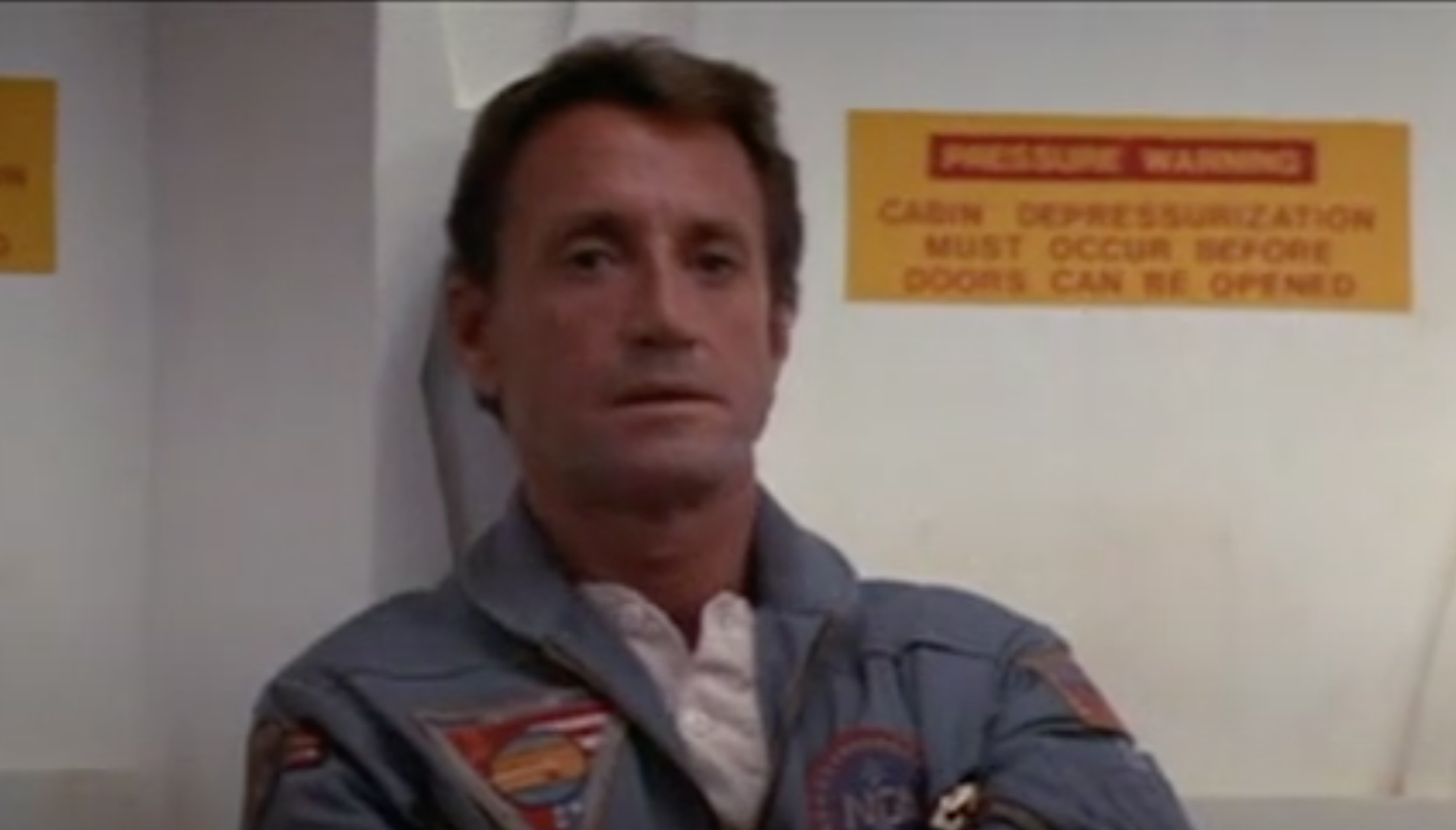
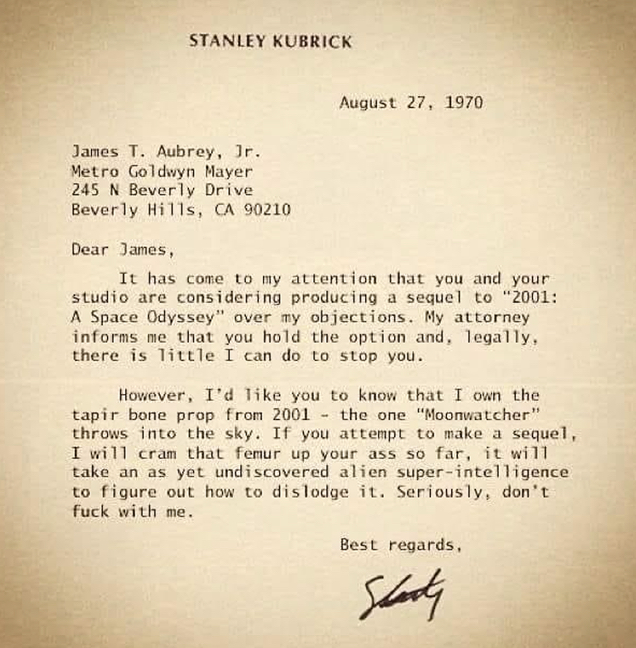
…and the legacy of a great classic was soiled by the disreputable hand of producer, director, screenwriter and cinematographer Peter Hyams. 2010: The Year We Make Contact (’84) is arguably three things — the worst space-travel film ever made, the worst big-time sequel ever made, and one of the worst films ever made. No, it wasn’t former MGM honcho Jim Aubrey who pushed it through (he resigned from MGM in ’73) but David Begelman. The stink of Aubrey-ism nonetheless prevailed.
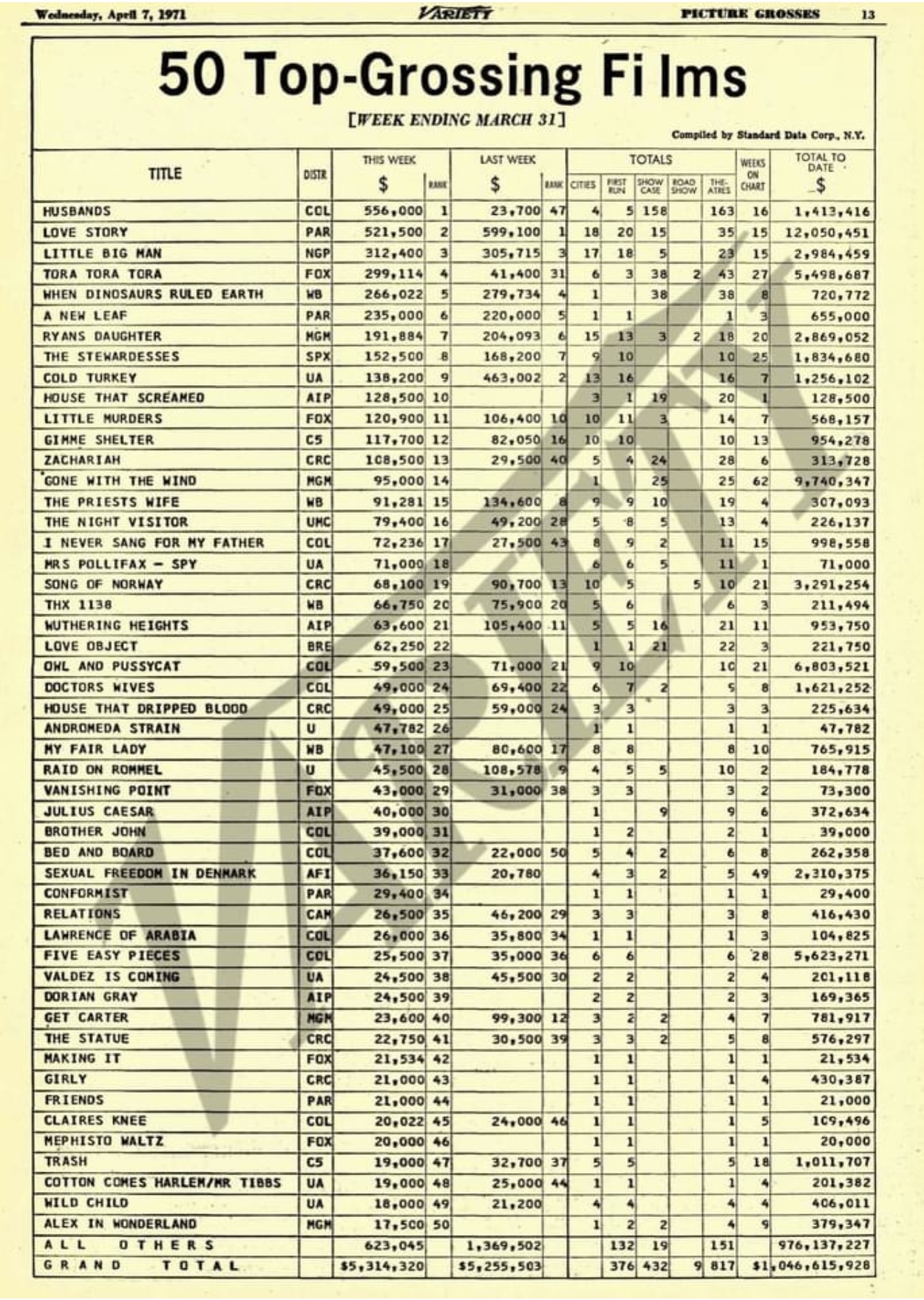
…in which a small, scrappy, boozy John Cassevetes midlife crisis film (16 weeks in limited release) briefly out-earns the long-running LoveStory and LittleBigMan (popular films had “legs” then), not to mention the monumentally masterful Tora Tora Tora. Meanwhile, amid the bottom third of the list, are The Conformist, FiveEasyPieces (28th week!), BedandBoard and Get Carter. Altogether a tasty smorgasbord for the avid film buff.
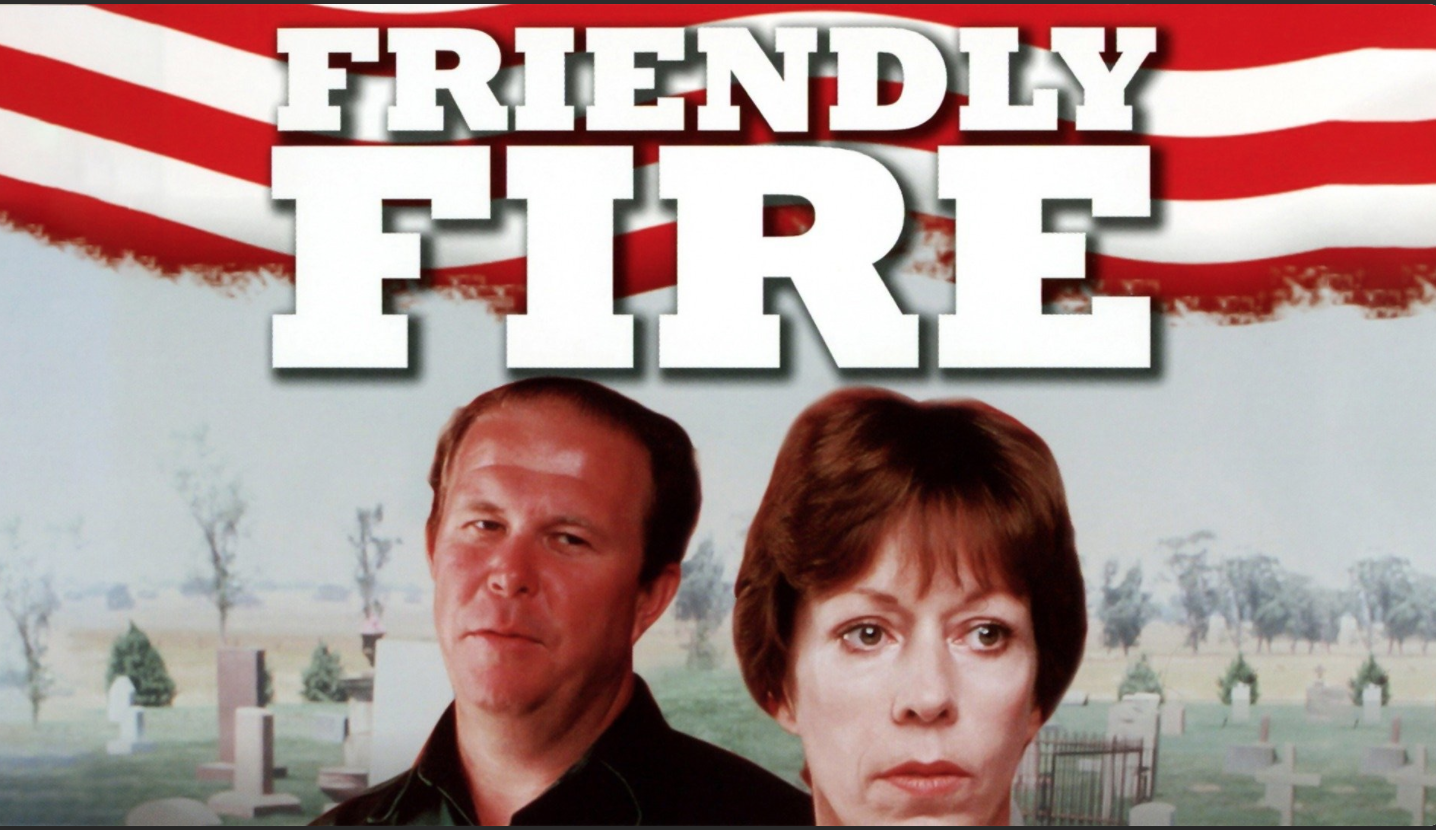
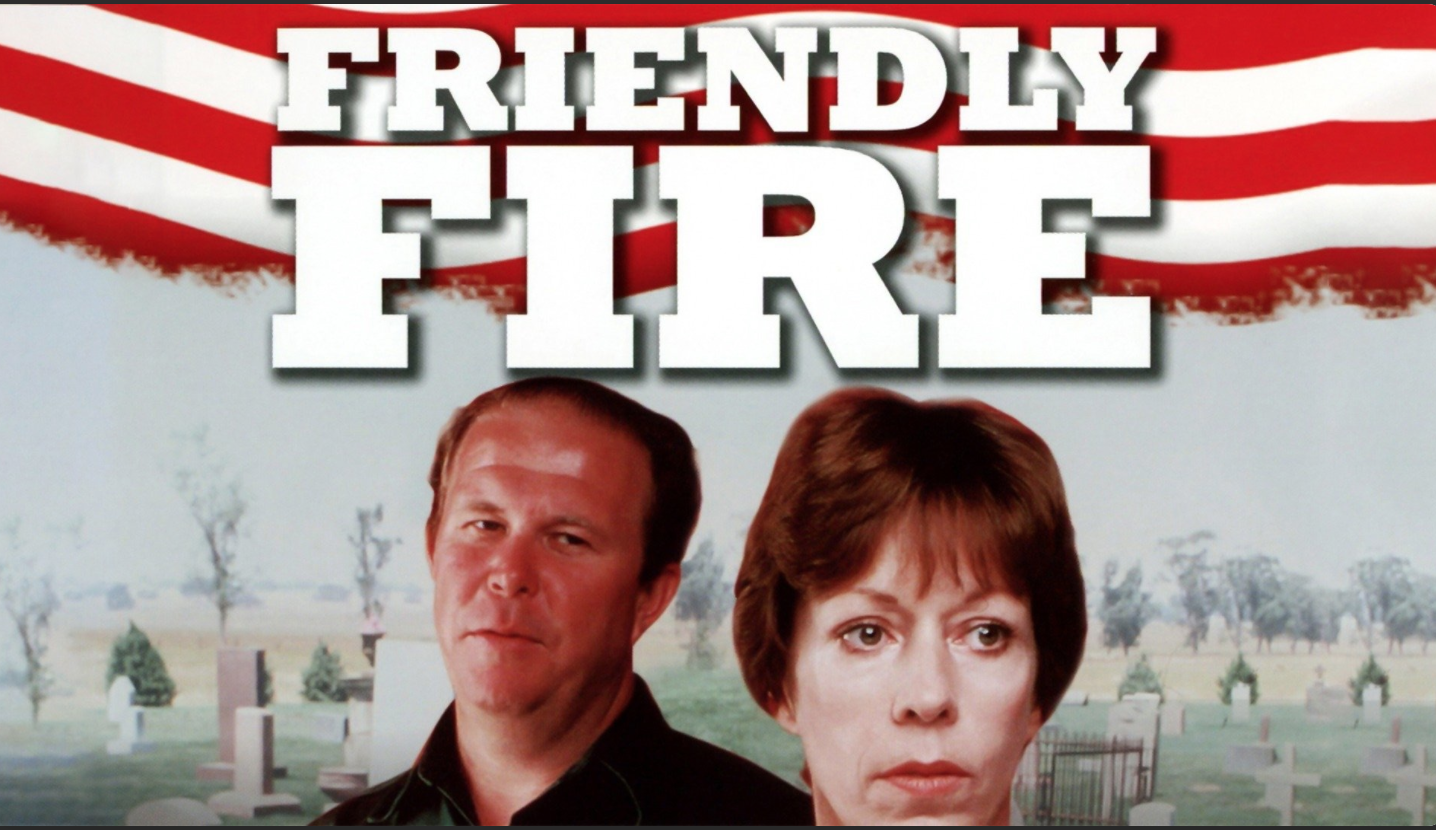
Last night I paid my respects to the late Ned Beatty by watching Friendly Fire, a 1979 TV docudrama about the increasing revulsion shared by the real-life Peg and Gene Mullen (Carol Burnett, Beatty) after the mystifying death of their son Michael (Dennis Erdman) while serving in Vietnam.
Army reps tell the Mullens that Michael’s death was a “friendly fire” accident, but they’re stingy with facts. This fudging of specifics annoys, irritates and then enrages the Mullens. Traditional patriotic Iowans at the start, they gradually evolve into antiwar activists.
There’s no big shocking twist at the end — we simply discover that Michael died from “friendly” shrapnel that exploded near his foxhole due to a miscalculation. So Friendly Fire is not Costa Gavras‘s Missing (’82) — there’s no satisfying “gotcha” moment in which the military “bad guys” are revealed as guilty super-shits, and are then punished or shamed. None of that happens.
The movie isn’t brilliant — it’s lean and direct but it lacks a certain elegance. It feels like a rough cut, or a second cut — certainly not like a polished final cut. But it’s a reasonably good film.
Burnett and Beatty are brilliant in every scene — Burnett in particular.
Friendly Fire wound up winning four Emmy awards. Fay Kanin‘s screenplay was adapted from C. D. B. Bryan‘s 1976 book of the same name, which began as a series of New Yorker magazine articles Bryan had written about the Mullens.
I really hated Erdman’s dialogue as well as his performance. We get to know him a bit during the first 15 minutes or so, and he’s presented as way too modest and dutiful…almost angelic. The movie is telling us that Michael was anall–but–perfectfellow — smart, reasonable, soft-spoken, inspired, modest. He feels like a cypher, and I was saying to myself early on that I was glad he’d be dead soon because I can’t stand characters who are this pure of heart, this pure-as-the-driven-snow.