Speaking of the Palace…

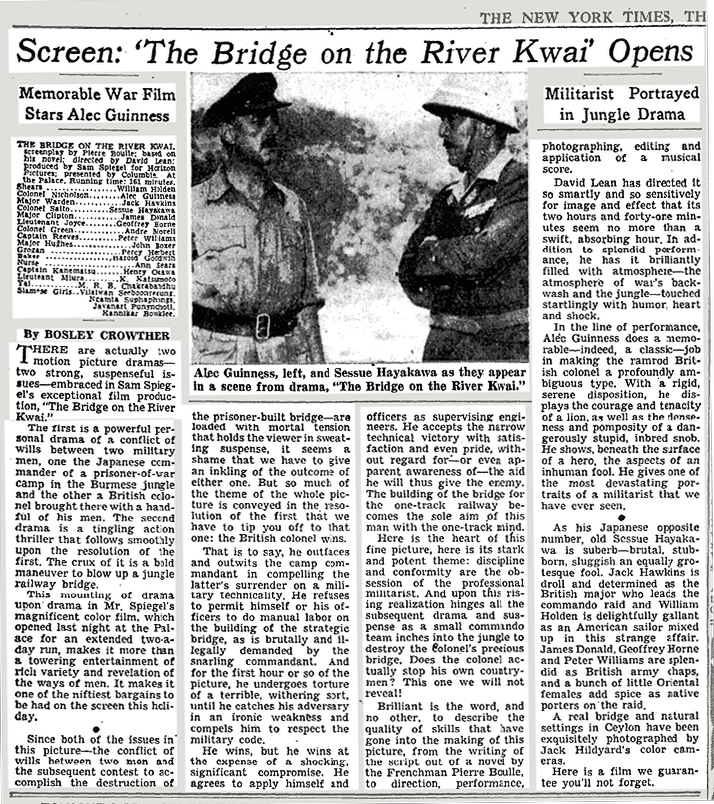
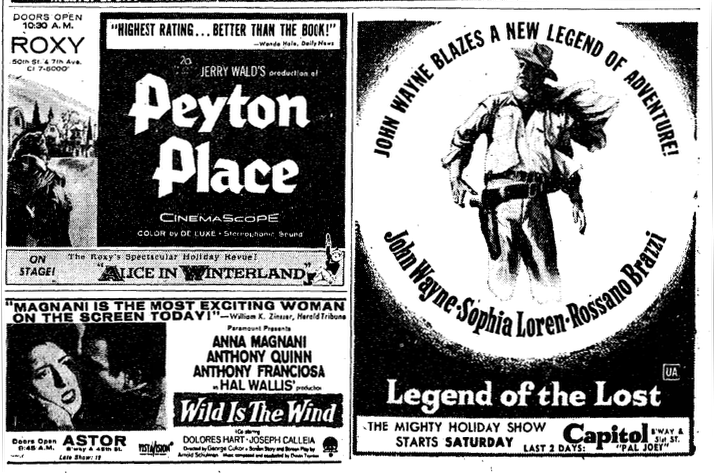
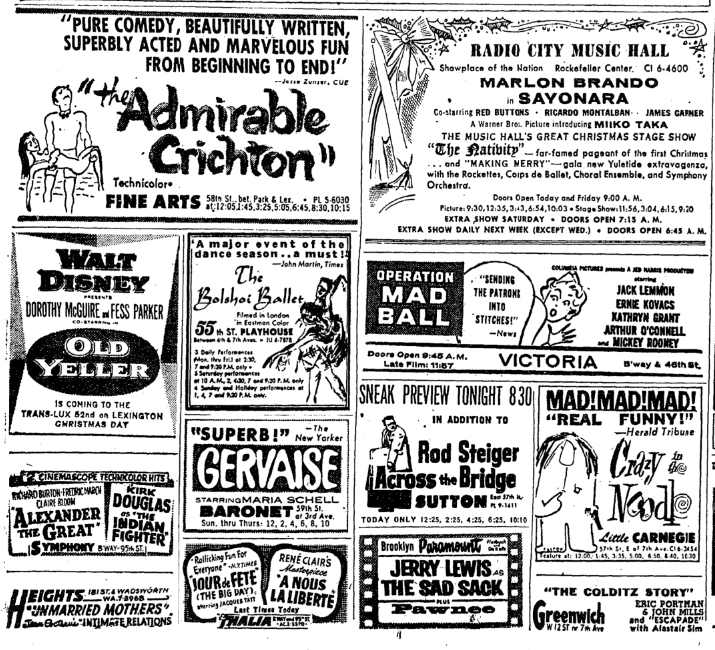
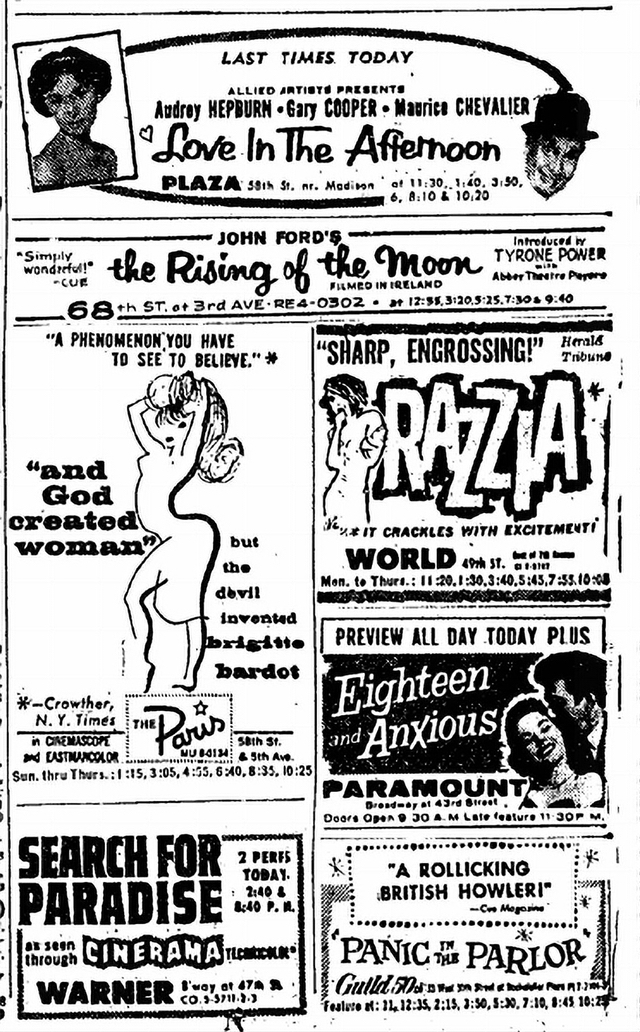
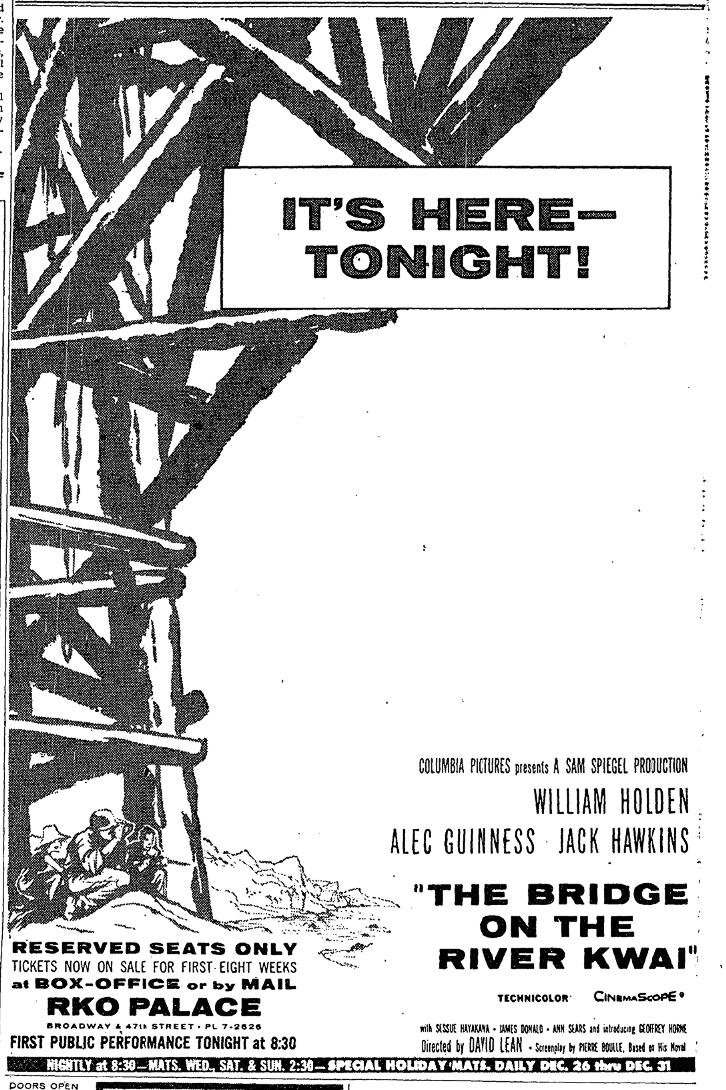
Of all the first-run films playing in various uptown Manhattan theatres on 12.14.57, The Bridge on the River Kwai is the only one regarded as essential viewing among 2021 film buffs (talk about a degraded term!). Boomers and GenXers, I mean, as I doubt it has any currency among Millennials and Zoomers.

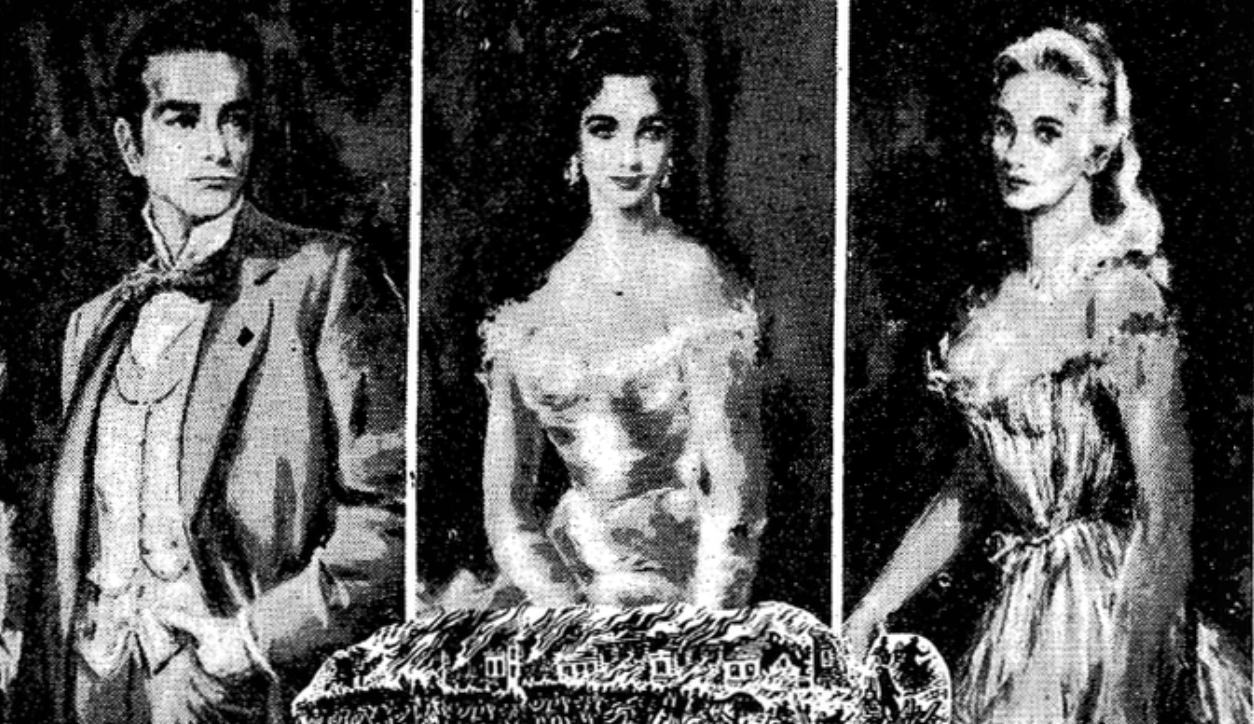
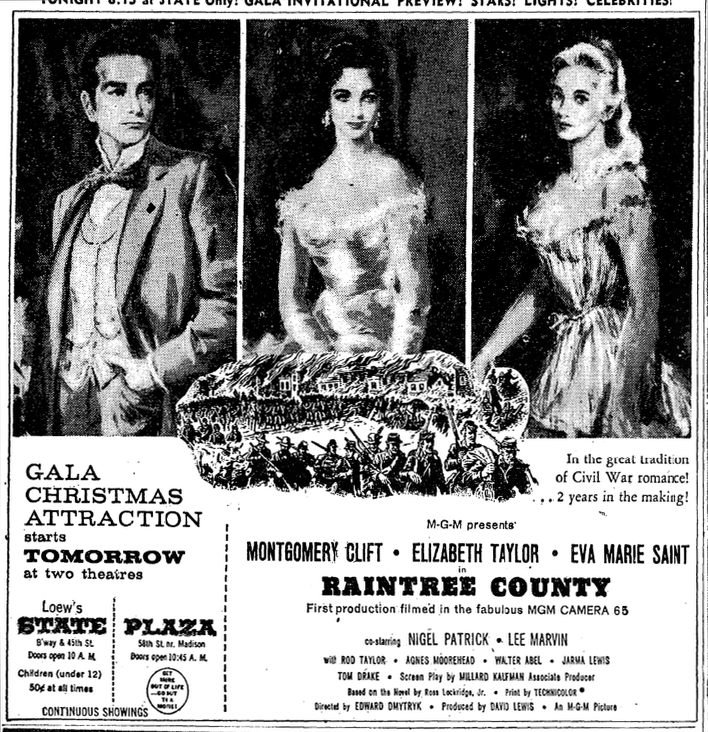
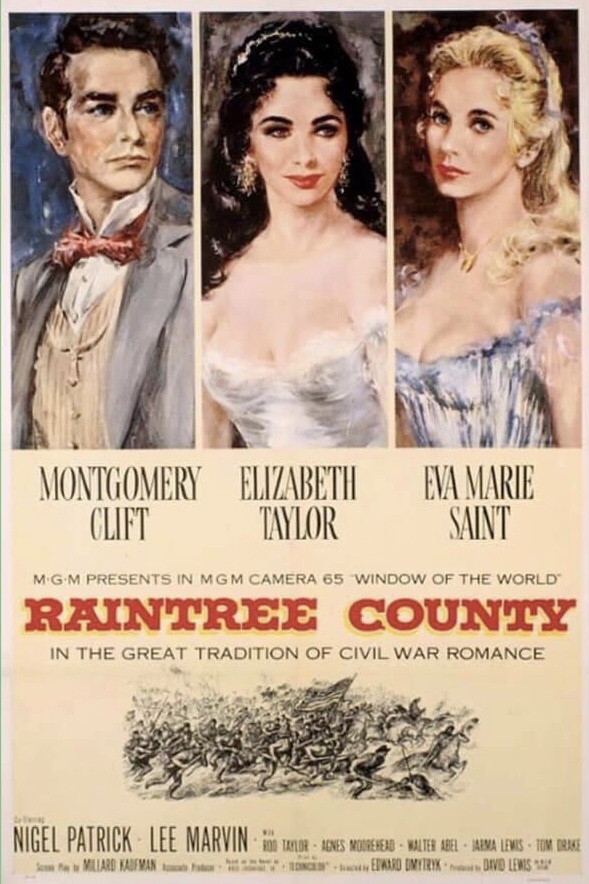
Confession: Even though it was the first film shot in Camera 65 (large format, 2.76 to 1), I’ve never once watched Edward Dmytryk‘s Raintree County, partly because it runs 182 minutes. I might give it a looksee if the rights owner would issue a decent Bluray or a digital HD rental, but right now it’s only viewable as a DVD.

“In The Heights” Over “West Side Story”

Friendo #1: “I’m certainly curious about West Side Story, but I can’t imagine it will be all that different from the original, except more muted visually. Two people who’ve seen In the Heights tell me it’s terrific and will go through the roof with audiences — and it will win all comparisons to the Spielberg.”

Jett and I saw the 2009 West Side Story revival at the Palace (B’way and 47th), where Judgment at Nuremberg and The Bridge on the River Kwai played reserved seat engagements in ’61 and ’57, respectively. I had never seen it onstage, and my basic responses were (a) “Well, I’ve finally seen it performed on stage!’, (b) “Very professional enterprise, and obviously more authentically ethnic in terms of Puerto Rican characters and dialogue,” (c) “I was impressed but not blown away,” (d) “Who was that little twerpy guy playing the imaginary son of Tony and Maria?”

Friendo #2: “I have high hopes pinned on In The Heights and West Side Story, although I’ve long regarded the latter as a weak piece of storytelling with great songs, and I’m not sure if Tony Kushner is going to be able to fix that. What put West Side Story over, when it first emerged in the paleolithic era of Elvis Presley and Dwight D. Eisenhower, was that exotic concept — switchblade-wielding street gangs, modern-dance mode, Romeo and Juliet. But exotic concept does not automatically = interesting or well-told story.”

Six weeks ago: “For months I’ve been thinking that Quiara Alegría Hude and Lin-Manuel Miranda‘s In The Heights (HBO Max, 6.18) may be a better, more rousing thing than Steven Spielberg‘s West Side Story (20th Century, 12.10), which I’ve been secretly scared of for a long time.”

“The original West Side Story B’way musical is over 63 years old, having came out of the Upper West Side tenement jungle of the early to mid ’50s. In The Heights is based on a 2007 Off-B’way show, and is therefore at least part of this century.”

A friend says he’s heard “mixed” responses. Like what? Too pop-fizzy? Too synthetic? “All of that,” he replied. “Overlong, poorly paced, fails at character development.”

Mickey Rourke Recap

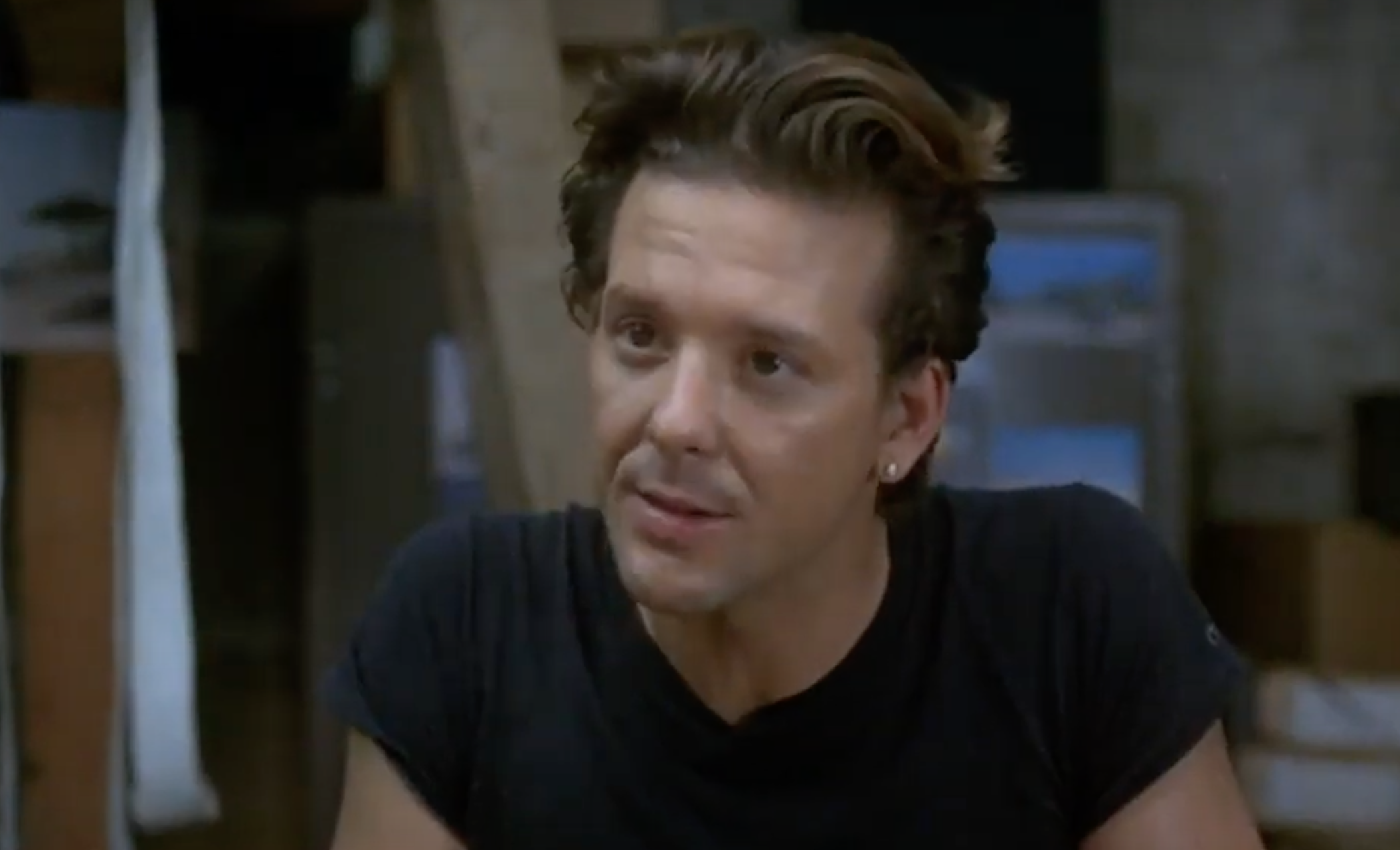
We all understand that Mickey Rourke‘s golden movie-star period spanned from ’81 to ’88 — Body Heat, Diner, Rumble Fish, The Pope of Greenwich Village, Year of the Dragon (“mood hair”), 9 1/2 Weeks, Barfly, Angel Heart, A Prayer for the Dying (“yes, fah’uhr”) and the respected, under-seen Homeboy.

The boxing period started sometime in the late ’80s, and then came the cheek implants and other facial tough-ups. Rourke began to look like a different person — that Diner guy hadn’t aged as much as suffered a transformation into something mottled and re-sculpted.

Then come a series of not-good-enough flicks — Johnny Handsome, Wild Orchid, Harley Davidson and the Marlboro Man, Michael Cimino‘s Desperate Hours, White Sands, etc. Rourke briefly “came back” with his Oscar-nominated performance in Darren Aronofsky‘s The Wrestler (’08). My favorite Rourke moments of the last decade came from his YouTube putdowns of Donald Trump.

Rourke was exquisite in Body Heat — the right age, a perfect look, authentic street attitude, a gentleness. When I think of classic Rourke I think of the triumvirate of Body Heat, Diner and Angel Heart.

Pauline Kael on early Rourke: ‘He has an edge and a magnetism and a pure, sweet smile that surprises you.”

Bob Dylan on Homeboy: “[Rourke] could break your heart with a look. The movie traveled to the moon every time he came onto the screen. Nobody could hold a candle to him. He was just there, didn’t have to say hello or good-bye.”

Tectonic Schrader Moment

This is nearly two weeks old (4.22) but worth highlighting anyway.

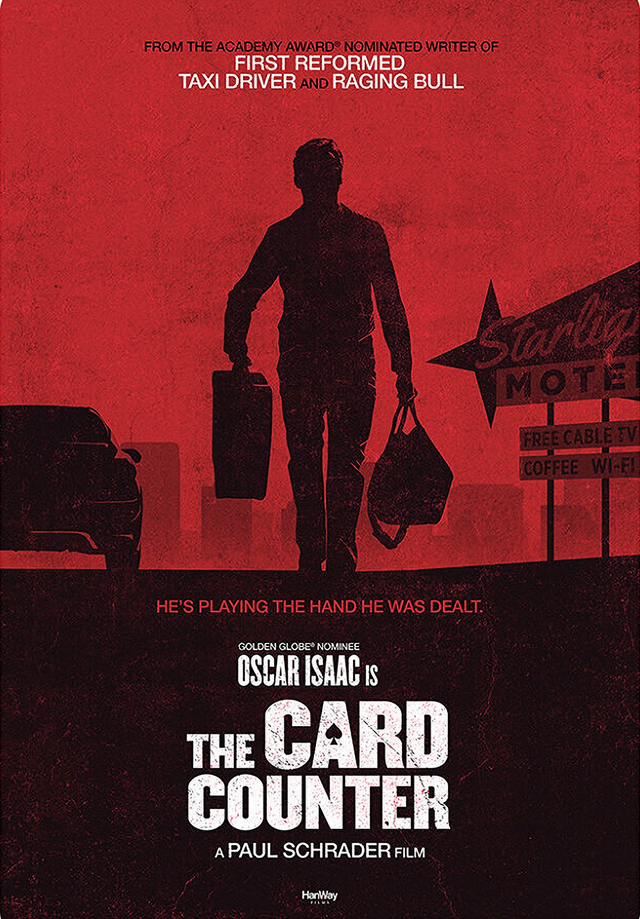
It’s Paul Schrader (The Card Counter, First Reformed) speaking to The New Yorker‘s Richard Brody, and if you’re the type of person who wishes that serious theatrical adult-angled features will somehow rebound when theatres come back, what Schrader says is, of course, hugely depressing. But what else is new?

Schrader: “I see four venues for theatrical. (1) Extreme spectacle, which is like 4DX—or like that van Gogh immersive experience that’s coming. That you have to go out of the house for. That’s a reason to go out of the house; (2) Children’s movies, of course, because you want to see your kids laugh with other kids, and that’s really for the parents more than the kids; (3) Date-night movies, which is horror and a certain kind of teen comedy, and there’ll still be a place for that. And (4) what we now call Club Cinema, which is where you have a membership. This is like the Burns or the Metrograph or the Film Forum or Angelika.

“They’re all event-based. And I think those places will come back. But the normal mall cinema or multi-cinema, I think that’s a real struggle.

div class=”columnPic”>

“They say that 50% of New York restaurants won’t reopen. That’s certainly true, also, of the movie theatres. And so we are rethinking that whole concept, and it’s a rethinking going across the board, because it’s also happening to the Oscars. What do the Oscars mean anymore? Does anybody care anymore? Will the festivals have the strength that they used to have?

“And this idea of the two-hour serious movie, which evolved in many ways as a reaction to television, where the film companies all had agents in New York looking for the new serious book…From Here to Eternity, we’re going to do that.” And that’s gone now. Nobody’s looking for the new serious book. And to make a movie today, a quality movie, let’s say a movie like Hud or The Hustler, that movie’s just not being made. Now, there is quality long-form but I think the serious two-hour film [is a commercially shaky proposition].

“I have a film that’s opening [The Card Counter], which fits in that mold. And I’ve been thinking of writing a new script after that, and I just find myself wondering, ‘Who will make such a film?’

Read more

Still Touches A Nerve

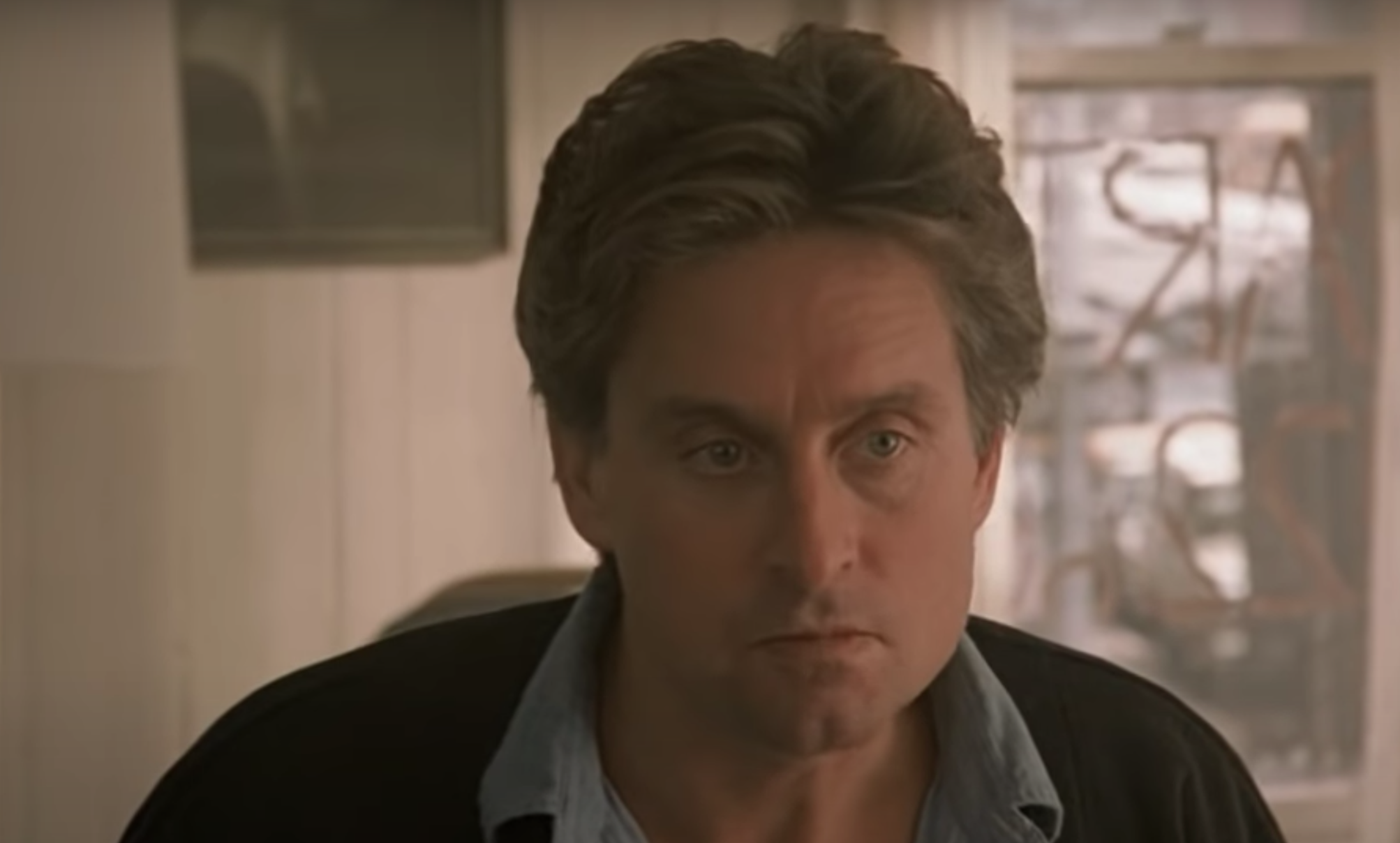
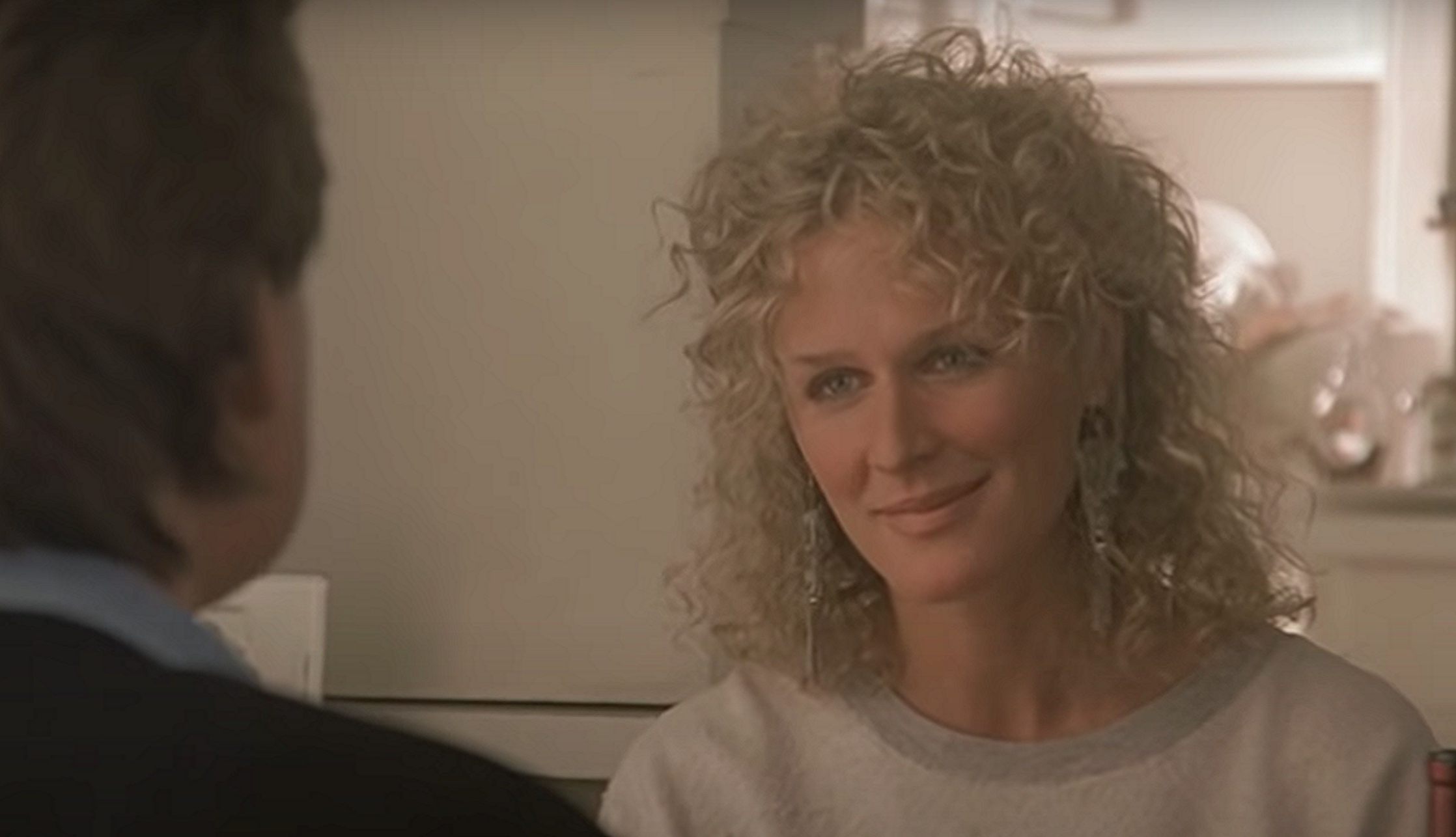
I for one didn’t revisit Fatal Attraction on the occasion of its 30th anniversary, which happened three and a half years ago (9.16.17). But others have in the interim, and the #MeToo view is basically that even though Glenn Close‘s Alex Forrest was damaged and unstable and jumped the gun as far as Michael Douglas‘s Dan Gallagher was concerned, she was coming from a no-bullshit emotional place, and she had a point.

Gallagher, a married attorney, saw an opportunity for some hot recreational sex (the kind that married people generally don’t have as a rule) and a brief revisiting of his hormonal hound-dog past with an enticing woman while his wife was out of town, and he went for it.

But almost right out of the gate Forrest began asking him why he was cheating. In some corners the new thinking is “was Alex really so wrong to want something real from the guy? She wasn’t some predatory psycho — she was hurting and off-balance, agreed, but it was the mid ’80s, she was 36 years old and she didn’t want to be treated like a sex poodle. She was simply putting her cards on the table.”

Hollywood Elsewhere re-watched Fatal Attraction two or three nights ago, and here’s the basic deal, #MeToo or not.

Forrest was way out line to even fantasize that a weekend (36 hours, give or take) of great sex and spaghetti and opera and more sex plus a suicide attempt…she was way out of line to think that there was even a slight basis for a serious extra-marital affair between herself and Gallagher.

The rules are the rules, and everyone knows that the first night or two of sex between consenting adults is strictly about sensual abandon and intoxication…under the best of circumstances and with the right person the initial stages of a sexual escapade can be a glorious and ecstatic escape from the regular grind of living and working and carrying the weight of it all.

And this rule goes double if not triple if one of the parties is married. In such a situation there’s always an assumption that this is strictly a one-timer or a one-weekender…all sane adults understand this.

If, on the other hand, the affair continues and the married man or woman becomes more and more attached to the non-married lover or vice versa, then it’s cool for the unattached person to ask “what are we doing exactly? Because I’m not into recreational, gymnastic sex for its own sake…I’m interested in having a real-deal relationship with someone I truly care for so where are we exactly?”

That kind of conservation is completely normal and par-for-the-course after the affair has been going on a while. But you can’t broach the subject after only a night or two. That’s crazy — totally bonkers.

Which is why Gallagher froze and said “oh, shit” to himself at the 42-second mark in the above scene, or right when Forrest said “so what are you doing here?”

Read more

“Strangelove” Pie-Fight Recall

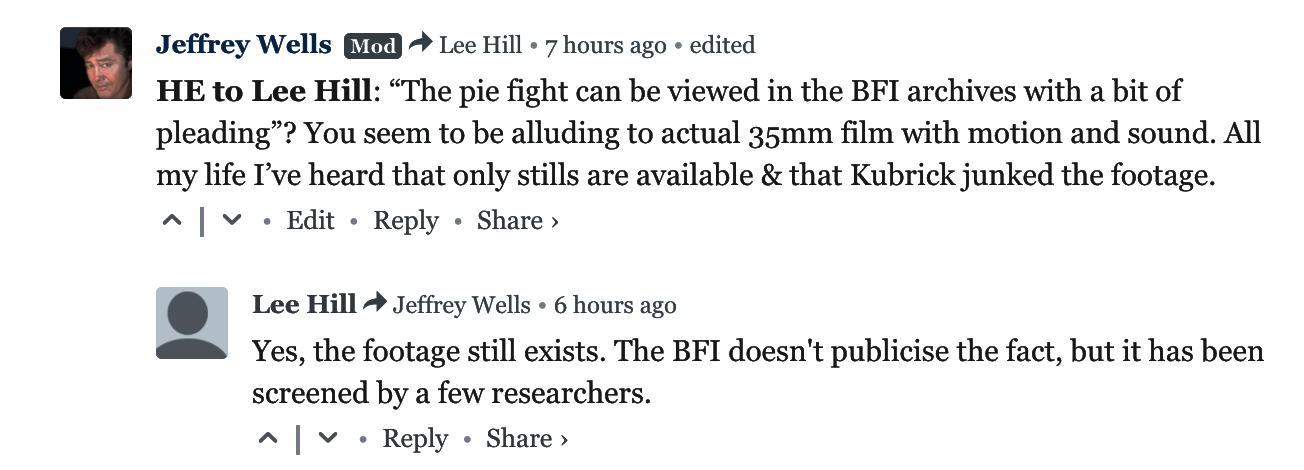
4 pm update: Before anything else, consider information supplied this morning by Lee Hill, a British-residing HE reader and Terry Southern biographer who stated that the Dr. Strangelove pie-fight sequence exists on film and is currently being stored in British Film Institute archives.

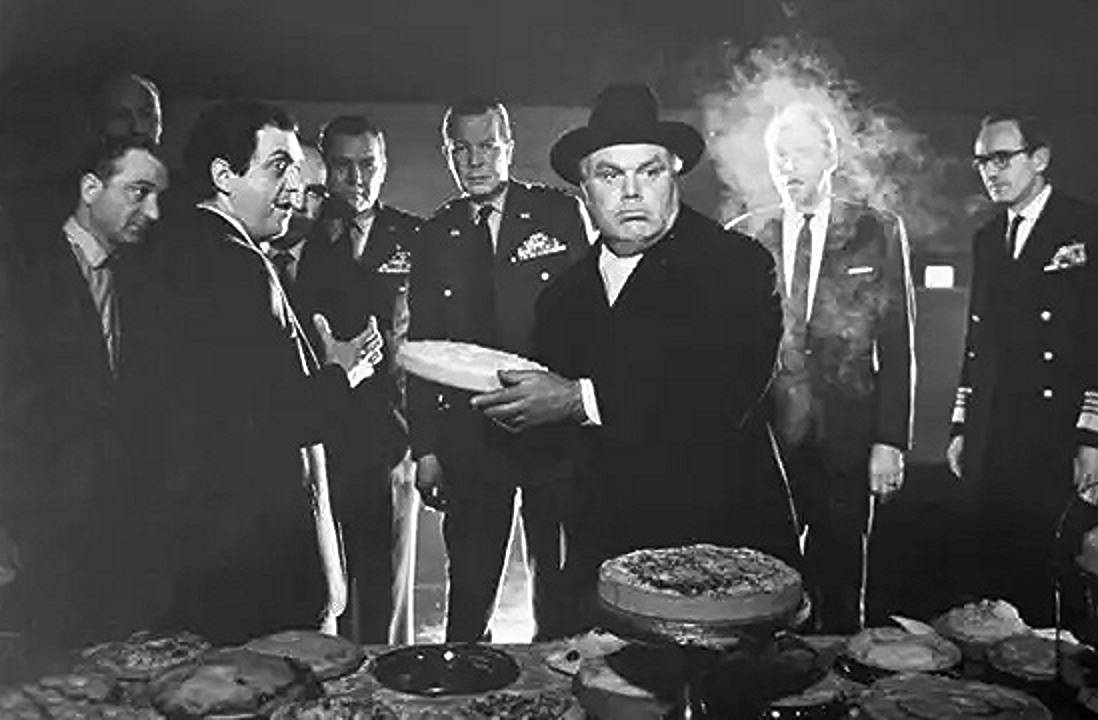
Earlier: This morning I stumbled upon a fascinating article by Dr. Strangelove co-writer Terry Southern. Titled “Notes From The War Room“, it contains several inside-baseball stories about the making of Stanley Kubrick‘s 1964 classic comedy, and particularly a blow-by-blow description of the pie-fight scene:

“[Then] we began shooting the famous eleven-minute ‘lost pie fight,’ which was to come near the end of the movie. This footage began at a point in the War Room where the Russian ambassador is seen, for the second time, surreptitiously taking photographs of the Big Board, using six or seven tiny spy-cameras disguised as a wristwatch, a diamond ring, a cigarette lighter and cufflinks.

“The head of the Joint Chiefs of Staff, Air Force General Buck Turgidson (George C. Scott) catches him in flagrante and, as before, tackles him and throws him to the floor. They fight furiously until President Merkin Muffley intervenes: “This is the War Room, gentlemen! How dare you fight in here!”

“General Turgidson is unfazed. ‘We’ve got the Commie rat redhanded this time, Mr. President!’

“The detachment of four military police, which earlier escorted the ambassador to the War Room, stands by as General Turgidson continues: ‘Mr. President, my experience in these matters of espionage has caused me to be more skeptical than your average Joe. I think these cameras” — he indicates the array of ingenious devices — “may be dummy cameras, just to put us off. I say he’s got the real McCoy concealed on his person. I would like to have your permission, Mr. President, to have him fully searched.’

“‘All right,’ the President says, ‘permission granted.’

“General Turgidson addresses the military police: ‘Okay boys, you heard the President. I want you to search the ambassador thoroughly. And due to the tininess of his equipment, do not overlook any of the seven bodily orifices.’ The camera focuses on the face of the ambassador as he listens and mentally calculates the orifices with an expression of great annoyance.

Read more

To-Die-From Parenting

A few years ago I ran a list of the five worst cinematic parents of all time: John Huston‘s Noah Cross from Chinatown, Daniel Day Lewis‘s Daniel Plainview from There Will Be Blood, Chris Walken’s Brad Whitewood from At Close Range, Faye Dunaway‘s Joan Crawford in Mommmie Dearest and Marion Lorne‘s Mrs. Antony (mother of Robert Walker‘s Bruno) in Alfred Hitchcock‘s Strangers on a Train.

And then a real motherfucker of a dad I hadn’t thought of in a long time popped into my head: Karl Malden‘s oppressively demanding John Piersall, the father of Tony PerkinsJim Piersall, in Robert Mulligan‘s Fear Strikes Out (’57).

I decided to stream an HD version the other night on Amazon, in part because I wanted to savor the detail of a black-and-white film shot in VistaVision. It looked pretty great, but God, Malden played such a fiend I couldn’t believe it. His son’s glories and accomplishments were never enough. The film throws a semi-happy gloss on their relationship at the end, but Malden is the kind of papa you need to keep at a certain distance until he’s dead.

But you know what? The Malden-Perkins relationship is almost exactly the kind of thing I have going on with the little man in my chest who’s never fully satisfied with anything good that I do. He’s always saying “okay, that’s pretty good but don’t get smug and coast on your laurels. You could probably do a little better than you’ve done so far, as you know. Because while you have talent and drive, you could use a bit more of each. And what about tomorrow’s agenda? And don’t forget to buy groceries and call the cleaning lady,” etc.

Please post your favorite dads and moms. The deceased Mrs. Bates in Psycho. Angela Lansbury in The Manchurian Candidate and All Fall Down, for sure. Harrison Ford in The Mosquito Coast. Who else?

Hilarious Bird Beaks

I’ll never forget the first time that my sons (Jett, Dylan) and I watched Alfred Hitchcock‘s The Birds together, and more particularly their reaction to the “homicidal crows attack the fleeing schoolchildren” scene. They were somewhere around 8 or 9 years old, as I recall, and basically found it hilarious. The more the schoolkids cried and screamed and fell to the ground and bloodied their knees, the more J & D laughed. A better word is “cackled.”

This happened, I immediately presumed, because the boys found the absurdly mannered and constricted behavior of the kids ridiculous. (Hitchcock was always terrible with children). They especially couldn’t stand the stilted, formal-sounding dialogue that poor Veronica Cartwright was obliged to say. And who, by the way, who doesn’t loathe that awful, perfectly phrased song the kids were singing inside Suzanne Pleshette‘s schoolhouse just before the attack?

Excerpt from Camille Paglia’s book-length essay about The Birds (BFI Film Classics): “It’s another race, this time foot versus wing. Like Furies, the crows harass the children from behind, nipping their necks and cheeks, as we seem to slide helplessly backward downhill, with the mob about to trample us. There’s a tremendous noise of mingled screams and raucous bird cries.

“After the first flash of real horror, I generally settle down to laughing and applauding the crows, whom I regard as Coleridgean emissaries vandalizing sentimental Wordsworthian notions of childhood. It’s like my idol Keith Richards cuffing about Pollyanna and Beaver Cleaver. There’s an exuberant, Saturnalian, Mad magazine zaniness to the whole grisly business.“

Read more

Scott’s “Strangelove” Story

Certain George C. Scott recollections about the never-seen Dr. Strangelove pie-fight sequence were recently posted on Facebook by director-writer Patrick Reade Johnson. Johnson directed Scott in Angus (’95), and presumably got the following from him during shooting.

I’d never read Scott’s story until this morning, and I have to say two things. One, I don’t believe that Strangelove director Stanley Kubrick would have behaved in the petty, wimpy, small-minded way that Scott describes. And two, I’ve found a photo of Kubrick directing Scott during the pie-fight sequence so take the following with a grain:

Johnson: “Scott told me a couple great stories from the Strangelove shoot. One contradicted a popular myth about the film — that the removal of the pie-fight scene was due to concerns over a line in which Scott’s General Buck Turgidson (or someone else in the scene) said, ‘Gentlemen, our beloved president has been struck down in the prime of his life!’ It was deemed insensitive in the wake of JFK’s assassination.


Obviously the rear angle means we can’t be 100% certain this is a shadowed Stanley Kubrick directing the pie-fight sequence, but it sure looks like him.

“Another theory holds that Kubrick just felt the scene didn’t work.

“’Bullshit!’, roared George, when asked about it. ‘The scene was terrific! Which is WHY Stanley CUT it!” George’s eyes narrowed, a big, toothy grin spreading across his face… “Because the sonofabitch didn’t DIRECT it! THE FIRST A.D. DIRECTED IT!”

“I asked George why Stanley would entrust his first A.D. (possibly Eric Rattray) with directing a high comedy scene, featuring most of his leading cast. And why the venerable actors would even agree to that arrangement.

Scott: “We DIDN’T agree to it! But on the day when we all showed up to shoot the fucking scene, including the guy with 500 goddamn pies, Stanley was nowhere to be found! We sat around on our asses for an hour or so, until the 1st A.D. walked in and said Stanley had a terrible cold…ALL OF A SUDDEN…and that he wouldn’t be able to work today.

“But then he added that Stanley had also said that if we didn’t forge on without him, the scene, which everyone LOVED, would NEVER get DONE!”.

Johnson: “So, you just went ahead and…“
Scott: “And SHOT a goddamn SCENE for a fucking STANLEY GODDAMN KUBRICK FILM that was NOT DIRECTED BY STANLEY GODDAMN KUBRICK! Which is WHY the fucking scene never made into the fucking MOVIE!”

Johnson: “But what about JFK and being sensi—“

Scott: “OH, what a load of CRAP! Stanley couldn’t have cared less about that! If ANYTHING, he PROBABLY HATED not having something so GODDAMN IRREVERENT in his FILM! He just didn’t hate it as much as he hated his First A.D.’s goddamn DIRECTING!”

Read more

In Short Supply

The following excerpt from Sasha Stone‘s “94th Oscars — It’s Time to Rethink Oscar Coverage” (4.30) doesn’t once mention the “w” word. Nor does she mention the legacy of Maximilien Robespierre or allude to new-styled blacklists or HUAC committees, etc. So HE readers who get upset or annoyed or threaten to abandon this site when the concept of woke terror is mentioned can rest easy:

Sasha: “Where bloggers were once the outspoken ones, the ones willing to puncture the status quo and say what couldn’t be said, now they have become hamstrung and silenced out of fear.

“If, say, Scott Feinberg or Kyle Buchanan or even Anne Thompson ever dared speak out about the things that all of us see going on [every day] ** — if they ever started to puncture the status quo the way bloggers used to do way back when — they’d be out of a job by the end of the day. If Next Best Picture’s Matt Neglia or Will Mavity stepped outside of the Twitter ideology for even a minute, both would be viciously attacked and eventually tossed onto the shunned pile.

“No one in the real world cares all that much about their online platform but if you work in any kind of media, content or entertainment you have to. You are under the thumb of the hive mind. You have only one option: total compliance. ‘When you have ’em by the balls, their hearts and minds will follow.’

“Not only is dissent not allowed in film coverage — it isn’t allowed in news either. Even if the regular person out there doesn’t pay attention to Twitter, what they’re seeing around them is shaped by Twitter — CNN, MSNBC, the New York Times, the Washington Post — all of it is under the thumb of the tiny minority of Twitter users who control 80% of the content.

“They are purists, they are strident and they will come for you if you slip up even once. Sure, you can offer the withering apology. That is always an option but in general, they will keep coming at you, scrutinizing your past for any offense and going in for the career kill.

“Even the little bit of pushback I have been doing has essentially blackballed me from Film Twitter. David Poland has been likewise purged and shunned from Film Twitter for having slightly controversial views. Jeff Wells has been stripped of his Broadcast Film Critics membership for posting an anonymous conversation that was deemed offensive. I have to wonder what David Carr would make of today. Would he pander to the hive mind out of fear? Would he be outspoken? Would he be fired?

“Wells and Poland were among the few who helped launch Oscar blogging in the early days” — late ’90s. “It isn’t that they’ve stopped writing what they think — they do. It’s just that Twitter pays little attention to them because what Twitter wants from them is something they can no longer give, and it’s something I can no longer give: total compliance. It’s just not happening for those of us from a different generation who remember what it was like to get noticed for being controversial.”

Read more

What If I Just Re-Watch “Perfect”?

…and take a nice friendly pass on Physical, a half-hour Apple series set to debut on 6.18? It’s apparently just another self-empowerment saga aimed at women of a certain age, set in the ’80s and starring Rose Byrne, etc.

I’m only saying that the trailer for Perfect (’85) persuades that despite being one of James Bridges‘ lesser efforts, it’s clearly a smarter, sharper, more handsomely produced A-level film than Physical ever dreamt of being. Obviously — you can tell immediately.

(A year earlier Bridges’ Mike’s Murder, a Los Angeles-based love story-slash-drug murder film with a lead performance from Debra Winger that becomes more poignant every time I re-watch it, received a bungled, half-hearted release from Warner Bros.)

I saw Perfect once 36 years ago, and I don’t recall anyone gasping or doing handstands or backflips. I shrugged it off, never gave it a second think. But I’d much rather sit through it again than watch Byrne reinvent herself as a celebrity gymnast while working out to “Video Killed The Radio Star.”

Read more