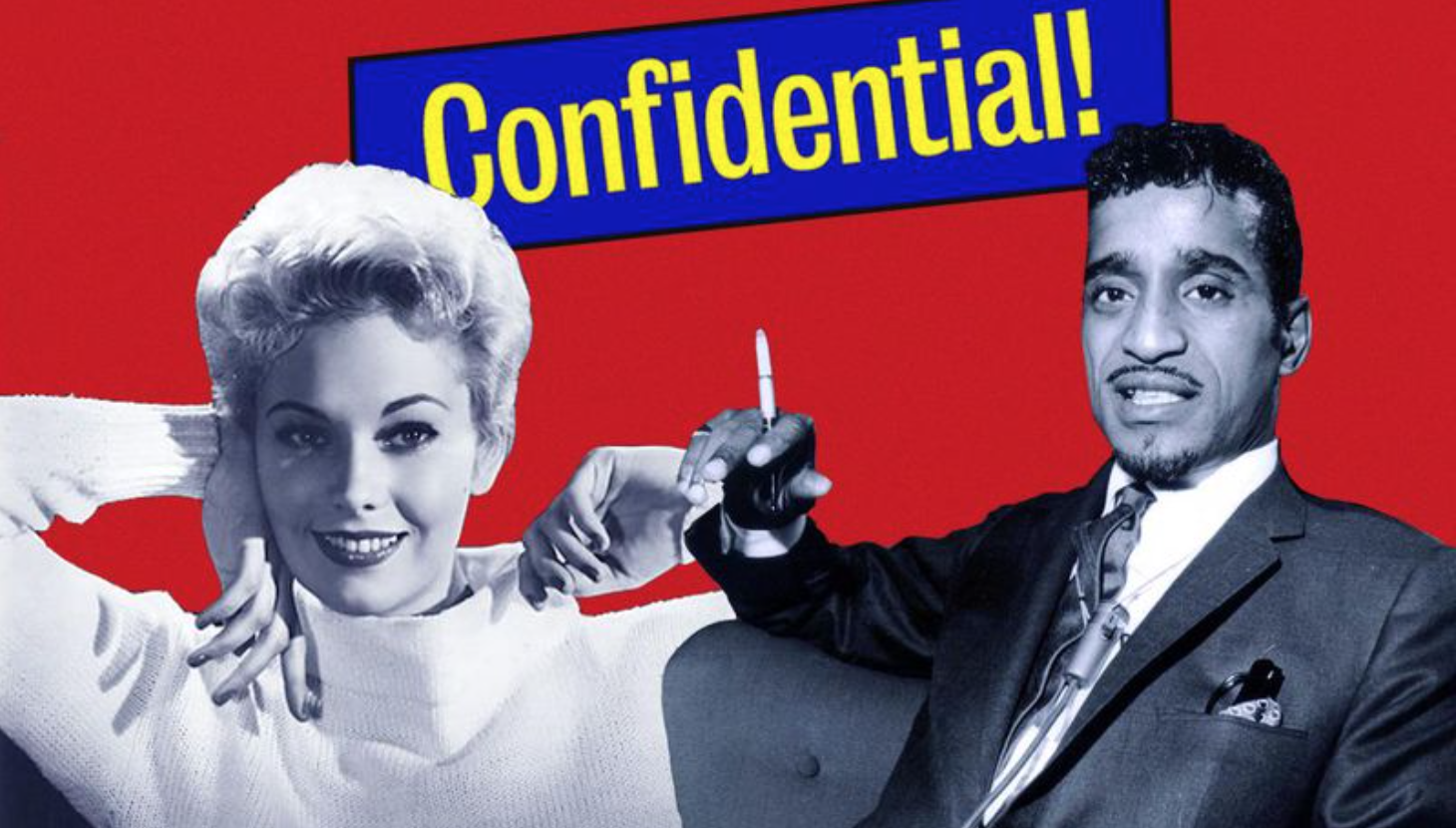
“Hey, Rossen…

“What do you…Rita! how are you!…Bob, how do you explain that lifeless Alexander The Great flick with Richard Burton, Claire Bloom and Fredric March? I mean, that movie just laid there like an uncooked, unseasoned filet of flounder. You need to jump into something, man…I don’t know, some kind of intense, contemporary, character-driven thing. Something about pool sharks or street gangs, something loose and jazzy and French New Wavey…”

Read more

Upsetting Phone Call

A “friendo” whom I know pretty well and whose opinions I don’t always agree with but whose observations are always fairly spot-on…this person has seen Amy Ziering and Kirby Dick‘s four-part Allen v. Farrow (HBO Max, starting on 2.21), and I’m upset and alarmed about what he told me, which is that he found the doc persuasive. Not in a conclusive smoking-gun sense, but in a way that registered. He went into it with a “show me” attitude and came out with his mind…well, nudged to some extent.

“Friendo” has read tons of material about Woody Mia Dylan Soon Yi over the last 28 years — he knows the turf pretty well. And he shares my view that certain adamant kneejerkers from the film realm were all too willing in years past to cast Woody aside. The doc nonetheless persuaded him as far as it goes that Allen may (emphasis on the “m” word) be guilty of committing an act of one-off incest with Dylan Farrow on 8.4.92. Just allowing for the possibility that the Woody haters…I don’t want to think about it. I’ve been on the Woody-is-innocent team for such a long time.

“Friendo” didn’t arrive at this conclusion suspicion without thinking it over good and hard. And he says the doc is “not” a hatchet job, in part because of the craft levels.

I’ve requested a link to Allen v. Farrow but until HBO coughs one up I’ve obviously no basis from which to accept or argue. The Woody friendlies (including Showbiz 411‘s Roger Friedman and Allen friend and confidante Bob Weide, who posted a sight-unseen assessment roughly a week ago) have vented suspicions and logical counterpoints all along, as I have. But Weide hasn’t seen the doc and even says he doesn’t want to.

Another journo colleague who’s never been part of the lynch mob says the doc is not a slam-dunk or dispositive, and yet Moses Farrow’s landmark 2018 essay (“A Son Speaks Out“) is challenged in the doc by members of the family, as well as by Allen’s own testimony in a child custody hearing. Allen allegedly stated, I’m told, that Moses had “gone for a walk that afternoon and was not in the house.”

Plus, I’m also told, the doc shows a police drawing of the attic in which the alleged molestation took place. Despite Moses’ claim that were no train tracks or toy-sized trains of any kind in the attic, the drawing allegedly shows train tracks and a toy train set-up of some kind.

Not in the house? A plain-spoken offering of first-hand testimony from a then-14 year-old kid who was there on that fateful day, and who is currently a licensed marriage and family therapist…I’m sorry but I was sold early on. Moses’ claim that there was no operating train set in the attic has always been, for me, one of the most important pieces of testimony. Moses states in the essay, in fact, that the train set was sitting in a kind of downstairs play room for the boys.

Now comes an alleged image, supplied by the Connecticut police, that argues with this? And Moses wasn’t even around when the alleged incident took place? What’s going on here?

Read more

Brimstone and Treacle

Jerry Zucker‘s Ghost (’90) implanted a creepy idea in the minds of millions — that when a seemingly evil or at least dastardly person dies (like, say, Tony Goldwyn‘s “Carl” or Rick Aviles‘ “Willie”), his soul is surrounded by a crew of shadowy growling demons who grab hold and take him down to hell. I’d be lying if I said this image didn’t manifest when I read about the death of Rush Limbaugh, a victim of lung cancer at age 70.

A truculent and blathery broadcaster of a long series of Big Rightwing Lies since he became a nationwide brand in the early ’90s (although he’d been making a lot of noise as a radio talk-show guy starting in the late ’80s), Limbaugh is, was and always will be the grandfather of rightwing disinformation and bullshit, right up to a radio show statement he made on 2.24.20 about the coronavirus: “I’m dead right on this…the coronavirus is the common cold, folks,” adding that it was being “weaponized” to bring down Trump.

When Limbaugh’s lung cancer diagnosis was announced three weeks earlier, or on 2.3.20, I posted the following: “I want to say this plainly but carefully: I did not feel profound sadness when I read of Rush Limbaugh’s condition. His strident-rightie rhetoric did a lot to inflame Bumblefuck Nation and rupture the fabric of civility in this country and fortify the toxicity that fuels the culture-war fires to this day. In the eyes of many millions Limbaugh is a flat-out villain. Anyone on my side of the battlefield (i.e., with a liberal or left-center attitude or philosophy) who says he/she feels badly about Limbaugh’s misfortune is just ‘saying that’, trust me.”

But of course, there is no cosmic moral judgment system that sends guys like Limbaugh to the caverns of hell and others into the clouds of heaven. I regret to say that death is a non-judgmental, non-denominational agent of flatline finality and that’s all. Nothing would give me more comfort than to learn otherwise…to learn that the 21 grams of spiritual matter that used to reside inside the body of Rush Limbaugh is hovering in some dark, self-loathing place. Wherever and whatever that is, it’s probably safe to say that Donald Trump‘s soul will be joining him down the road.

Anti-Woody Wokesters Turn It On

Four or five years ago, a certain multi-word mantra began to get around in entertainment-related journalistic circles. The mantra was this: “Get with the ‘woke’ Khmer Rouge program — embrace the notion that almost all straight white guys are evil or at least deplorable on some level, that people of color are blessed and need to be embraced and exalted every which way, and that the time has come for women who’ve been sexually harassed and/or discriminated against to be avenged — or forget about working as a front-line journalist.”

In short, the time had come for a little reverse discrimination against white males. Was this viewpoint justified? Yes — absolutely, abundantly and to hell with due process. Bully boys in powerful positions had earned this enmity for centuries, and now the tables had turned and a lot of powerfully corroded whiteys were hauled before courts (legal as well as Twitter-verse) and the general tone turned to one of condemnation and retribution.

Fairly or unfairly, the message was clear to every seasoned, semi-verified or would-be journalist or critic: talk the talk and walk the walk, or you won’t survive in this industry. Because a revolutionary mind wave, driven by Donald Trump nausea and Harvey Weinstein-esque repulsion, is spreading throughout liberal professions, and those who fail to sign on with enthusiasm will…uhm, have a difficult time of it.

My first significant taste of Khmer Rouge hysteria happened in the fall of ’17, as I was on my way to the Key West Film Festival. Indiewire‘s David Ehrlich shrieked like a p.c. banshee when I tweeted to Jessica Chastain that an aspiring film critic not only needs to be talented, tenacious and willing to eat shit, but that it would “help” if he/she is “fetching.” Ehrlich was appalled that anyone would even suggest that an attractive appearance might have something to do with how you’re received in mixed company or by potential employers. I called him a delusional little bitch, of course. 18 months later Bill Maher set him straight.

All to say that when it comes to reviewing Allen vs. Farrow, Kirby Dick and Amy Ziering‘s four-part Woody Allen hatchet-job doc which totally pushes the Dylan-and-Mia view of things, there’s no way for critics in the employ of Variety, The Hollywood Reporter, Indiewire and the Daily Beast to say anything except “hmmm, yeah, maybe, food for thought, who knows?, Allen is toast anyway and he’s probably guilty of what Dylan has long claimed, and this four-part investigation sure makes him look like the devil so he probably is.”

Do we all understand the basic dynamic? These critics are simply not allowed to disagree with the Mia-Dylan case or or quote from Moses Farrow‘s essay (“A Son Speaks Out“) or point out the Woody-exonerating facts. If they divert from the party line, they’ll be in trouble and they know it.

I haven’t seen Allen vs. Farrow (it premieres on HBO Max this weekend) but the hanging-judge reviews by Indiewire‘s Ben Travers and the Daily Beast‘s Marlow Stern speak for themselves. These guys were clearly wokester Woody haters before they watched the series. Then again the THR and Variety reviews don’t really come up for air either.

HE’s overwhelming impression is that the Dick-Ziering doc is a one-sided hatchet job. Elite wokester journas, to repeat, are so sold on and submerged within the faith of #MeToo deliverance and historical righteousness (which, on its own terms, is not disputed in the slightest by HE) that there’s only one way to review this four-part doc, and that’s by ignoring the facts and dismissing Woody’s denials and and Moses Farrow’s account of Mia’s psychology and behavior and what happened up at Frog Hollow on that day in August of ‘92. Haters are gonna hate. Deniers are gonna deny.

World of Reel‘s Jordan Ruimy: “Are you surprised by this? Imagine if a trade like THR or IndieWire would actually go against the grain and flat out say ‘this documentary is bullshit‘ and ‘it neglects facts and is one-sided”…the backlash would be so overwhelming that there would be calls for the writer to be fired. It’s fucking sad. Unless you operate your own site you’re basically committing career harakiri if you side against woke and #MeToo narratives.”

Roud and Truffaut

My first New York Film Festival was the ’77 edition. I was planning to move into a cockroach-infested Soho apartment on Sullivan Street, but in late September I was still sharing a home rental in Westport, CT. I forget how many films I saw but I definitely caught Wim WendersThe American Friend (the big public screening was on 9.24.77), Pier Paolo Pasolini‘s Salo or the 120 Days of Sodom (10.1.77) and Francois Truffaut‘s The Man Who Loved Women (ditto). All three were shown at 1.66:1.

If I recall correctly New York Film Festival director Richard Roud conducted a brief post-screening interview with Truffaut following the screening.

I was in awe of Roud, whose investment in nouvelle vague French cinema was storied by that point. I loved his deep voice and moustache, the smooth and off-handed way he spoke French, his continental cool-cat fashion sense and the constant smoking of what I assumed were unfiltered Galouises.

A Cahiers du Cinema contributor in the ’50s, Roud began running the Löndon Film Festival in ’60. He co-founded the NYFF in ’63 with Amos Vogel. Roud was a huge Jean Luc Godard enthusiast from way back, and I recall Andrew Sarris telling me that at one point that in his capacity as a NYFF board member he had to tell Roud and his co-enthusiasts that he couldn’t make it with Godard when his films took on an ultra-didactic political character in the early to mid ’70s.

Roud passed in 1989 at age 59.

This interview between Roud and Truffaut was taped right around the festival’s showing of The Man Who Loved Women. A longer version of the interview is on the Criterion Bluray of Truffaut’s Jules et Jim.

YouTube comment by “spb78”: “I’ll have to watch this full interview again on the Jules et Jim set, but if I’m correct in assuming there was no follow-up by the interviewer then what a wasted opportunity. Because the obvious question to Truffaut would’ve been ‘You articulated the auteur theory when you were a critic. Since becoming a filmmaker, do you still maintain this theory?’ Instead of telling Truffaut the theory is proven by his films, he should have asked Truffaut if making films validated his theory.”

Truffaut was 45 when the interview happened. He died of a brain tumor on 10.21.84 at age 52. My ex-wife Maggie and I visited his Cimitiere du Montmartre grave in January ’87.

Am I Allowed to Say “None of These”?

According to a five-week-old analysis of Anglo Saxon racial attitudes (plus a corresponding color illustration) from Barnor Hesse, Associate Professor of African American Studies, Political Science and Sociology at Northwestern University, white people come in all shapes, sizes and moods, but too damn many of them are thorny little bitches who won’t get with the Critical Race Theory program and therefore need to be shaken and shamed and maybe slapped around.

I’ve considered where I belong on Hesse’s graph. The general urging is that wherever I might belong, I need to work on becoming a White Abolitionist. So first I need to self-identify, and then I need to look deep within, put on a hair shirt and really get down.

Is it okay if I identify as a White Contrarian, which is to say somewhere between White Benefit and White Confessional but at the same time a mild-mannered paleface who deeply resents the spreading of academic prosecutorial insanity that has wafted off campuses over the last 20 or 25 years and has led to automatic presumptions of white criminality and malevolence and the anti-racist progressive kneejerk culture of the N.Y. Times and some of the more absolutist portions of “The 1619 Project”?

Speaking as a reasonably progressive, left-center, fair-minded sort, I am respectfully refusing to fall upon the church steps and apologize for being an embodiment of absolute evil because of who my parents and grandparents were and where and how I was raised and what influences fell upon me, etc. So far I’ve lived through quite a journey and arrived at a spiritual place of my own, thanks very much. So if Barnor Hesse doesn’t like who I am or doesn’t think I’ve sufficiently progressed according to Khmer Rouge wokeness standards of 2021….well, what can I say? I can say “gee, Barnor, I humbly apologize” but somehow I feel that won’t be enough.

All Hail Snyder’s Boxy Aspect Ratio

However satisfying or butt-painful Zack Snyder’s Justice League (HBO Max, 3.18) turns out to be, Hollywood Elsewhere stands foursquare in support of Snyder’s decision to go with a 1.37:1 aspect ratio. Even though it’s four fucking hours long, I’d love to watch this thing inside a first-rate IMAX theatre and just drown in the towering images (the IMAX a.r. would 1.43:1) and rib-throbbing sound. But of course I can’t.

Jared Leto‘s Joker looks a bit like Lon Chaney‘s unmasked Phantom of the Opera.

57 Senators Voted To Condemn

But a two-thirds majority (67 votes) was needed to convict the sociopathic Mar a Lago Beast. And so once again, due to the spineless, soul-less cowardice of red-state Republicans (even those who are planning to retire or aren’t facing re-election for another four to six years), Trump skates. The vote was 57 to 43 to convict.

Trump statement: “It is a sad commentary on our times that one political party in America is given a free pass to denigrate the rule of law, defame law enforcement, cheer mobs, excuse rioters, and transform justice into a tool of political vengeance, and persecute, blacklist, cancel and suppress all people and viewpoints with whom or which they disagree.”

Republican North Carolina Senator Richard Burr voted to convict — a surprise.

Read more

Sidesteppers

If you want to hear four film journalists — TheWrap editor Sharon Waxman, Independent film critic Clarisse Loughrey. Wrap assistant managing editor Daniel Goldblatt and Wrap reporter Brian Welk — totally tiptoe around the National Society of Film Critics having called on Variety to remove an apology it added to a review of Promising Young Woman and afford critic Dennis Harvey a bit more respect…if you want to hear four people dodge this issue like their lives depend on it and say almost nothing of substance, please click on the embedded link (“Summer of Soul Director Questlove”) and go to the 28:20 mark.

Waxman doesn’t tiptoe as much as the other three, but they mostly seem to feel that Harvey misunderstood the film and expressed himself inelegantly — that, to them, is the main issue. Otherwise they have zip to say about Variety undercutting Harvey and totally groveling before Mulligan and Focus Features, etc.

Clarisse Loughrey: “[I was] a little dismayed as a woman…I do think that we have to give room to women’s concerns about [Harvey’s] review….I did take issue with [it] although not in the sense that something should be done about this.”

Will you listen to her? Loughrey almost believes that Variety‘s 11-months-later apology was the right thing to do, and that Harvey was guilty of an actual mistake in perception. This is exactly what the NSFC didn’t say, of course, but nobody points this out to her.

I’ve said repeatedly that I don’t agree with what Harvey seemed to be saying in the review, and that relative hotness standards have nothing to do with sexually predatory behavior by young males, and that Mulligan’s dry, stylized performance was chilly but compelling.

Mulligan didn’t ask for an apology. Variety offered one willy-nilly after she mentioned her displeasure with a certain paragraph in mid-December ’20 to N.Y. Times award-season columnist Kyle Buchanan. If Variety editors had an issue with that paragraph they should have addressed it with a counter-review or an editorial after it first appeared in January ’20. But they didn’t say or do anything for a full 11 months.

Remember “Minari”?

Lee Isaac Chung‘s Minari premiered during the 2020 Sundance Film Festival. The well-reviewed film has since collected many award nominations, and is finally opening today (2.12). I reviewed it on 10.30.20 — here are portions of what I wrote:

A hard-knocks family drama about a South Korean family trying to succeed at subsistence farming in 1980s Arkansas, Minari qualifies as a “modest” Spirit Awards thing. And yet something about Steven Yeun’s complex character (i.e., Jacob) and performance really got to me.

I’m speaking of a proud, obstinate man determined to make a stand and not be pushed around by bad luck. In moments of stress and self-doubt he’s clearly weighing two ways of responding to the situation. He may have chosen the wrong path, but he’s determined to stick to it regardless. That makes him a possibly tragic figure and definitely an interesting one.

I’m not sure if Yeun’s touching performance will yield a Best Actor nomination, but it could. Or should I say “should”?

A while ago Variety‘s Clayton Davis was all excited about the possibility of Yeun possibly becoming the first Asian actor to be Oscar nominated for a lead role. That’s the wrong emphasis. Yeun has given a very strong and sad performance in a pretty good film, and he might snag a Best Actor nom for his trouble. But his South Korean heritage should be anecdotal, not a cornerstone of his campaign. Wokesters see it differently, of course.

I loved the grandmother (Youn Yuh-Jung) and the two kids (Alan Kim, Noel Kate Cho). Especially the little boy.

And Paul (Will Patton), a flaky but good-hearted Jesus freak whom the somewhat insensitive Yeun doesn’t sufficiently respect. I dislike Christians for their evangelical leanings and support of Donald Trump, but if I was acquainted with one and he/she offered to pray for me, I would respond with respect and gratitude. Because such a gesture would mean a lot to them.

Jacob’s wife Monica (Han Ye-ri) is a good person but not exactly a portrait of steadfast marital support. She has this shitty, dismissive “I don’t like this” attitude from the get-go. They’re in a bad marriage.

I didn’t get the water situation. Jacob has bought (or rented?) a place with no water supply or sewage system? Isn’t is super-expensive to install your own sewage system and septic tank? Jacob presumably buys his own water heater, but in one scene he doesn’t have $500 to pay a professional well digger? Jacob has drilled his own well with Patton’s assistance, but the water supply is limited — not enough to nourish the crop and also provide shower water, kitchen water and whatnot.

Read more

Don’t Worry About It

Who cares if Bruce Springsteen was arrested in New Jersey last November on suspicion of DUI? I’m presuming he wasn’t totally sloshed and slurring his words and vomiting on the side of the road when he was popped, and that he’d probably had two or three glasses of wine and was moderately buzzed. And so what? Jeep has removed the youTube link to his Super Bowl spot, titled “The Middle.” Big deal.

Driving while impaired isn’t cool, but Springsteen hasn’t lost his authority as a working-class folk hero because of it. I’m guessing that all proletariat salt-of-the-earth types drive buzzed from time to time. Against the law but negotiable.

I used to drive half-slurry during my vodka-and-lemonade days (’93 to ’96) as well as during my Pinot Grigio period. Don’t bring up my Connecticut party-animal behavior in the mid to late ’70s. I drove semi-inebriated every weekend. I used to believe that I was a better driver when I was half in the bag. Obviously not good, but I didn’t hurt anyone. How many times did I get into a fender-bender due to my semi-compromised state? Never — not once. It was only during my Los Angeles vodka-and-lemonade period that I got into vehicular trouble. Don’t ask.

Boseman’s Tragic Stature

Yohana Desta has written a 2.9 Vanity Fair cover story about the late Chadwick Boseman, titled “Inside Chadwick Boseman’s Grand Finale.”

The article is a smooth conveyance of two ideas — one, that Boseman deserves a Best Actor Oscar for his work in Ma Rainey’s Black Bottom, and two, that “Levee,” the randy, cornet-playing hustler with the cool shoes who suffers a tragic emotional breakdown at the finale, is “the performance of [Boseman’s] career.”

I’m sorry but the performance of Boseman’s career was James Brown in Get On Up. In that 2014 biopic he delivered the same kind of highly-charged, go-for-it quality that defined two previous performances that won posthumous Oscars — Peter Finch‘s “Howard Beale” in Network (’76) and Heath Ledger‘s “Joker” in The Dark Knight (’08).

Everyone knows that Boseman’s “Levee” doesn’t blow the doors off the hinges — not really. It’s a poignant performance (especially during the scene in which Levee recalls a sad episode involving his mother), but the main reason Boseman has been hailed as a Best Actor (and in the case of Da 5 Bloods, a Best Supporting Actor) nominee is because of his tragic passing last August, which broke everyone’s heart.

I understand the sentiment behind giving Boseman a special tribute, of course, but giving him an Oscar for performances that are no more than approvable — good acting but lacking that certain extra-ness or crackling charge — feels like a disproportionate thing to do.

Texting early this morning…

HE: “A deeply tragic turn for a gifted actor and a nice guy, but giving him an Oscar for a pair of okay performances is a stretch. “We all feel really badly that he died so young” shouldn’t translate into a Best Actor or Best Supporting Actor Oscar. Most above-the-line Oscars are about three things — audience feeling, a zeitgeist bull’s-eye and first-rate craft. A Boseman Oscar would be mainly about feelinga of sadness, and that’s really not enough. If Chad’s dying performance had been James Brown, that would’ve been a different deal.

Friendo: “Of course, but during a pandemic people want something to feel good about. Giving an Oscar to a young black actor who just died is too incredible a narrative to resist. Who knows, he might even win two Oscars! He might beat Anthony Hopkins’ masterful performance in The Father. He might beat Riz Ahmed in Sound of Metal.”

HE: “All he does in Ma Rainey is grin and grin some more, and then he talks about his arranging ideas and songwriting plans and argues with Ma, and then he puts the moves on Taylour Paige‘s Dussie Mae. And then he grins some more. And then, at the very end and out of the blue, he loses his temper over the song-publishing rejection and suddenly stabs Glynn Turman‘s Toledo out of a sense of misplaced rage. The killing at the end is historically understandable but feels insufficiently motivated in a dramatic sense.”

Friendo: “He seems to overact as Levee because Ma Rainey is essentially a stage play. Same with Viola Davis’ grotesque burlesque singer.”

HE: “He should just be given a special tribute. A special sad Oscar. But ‘the performance of his career‘? That’s just dishonest. It’s a good performance but it’s not a piece of the constellation.”

Has anyone honestly concluded that Boseman’s Levee is the equal of the performances given by Hopkins and Ahmed?