Orwellian Fear Calling Shots

Sasha Stone‘s 8.18 essay about Hollywood’s bluepill attitudes and certain inconvenient truths that apply blends right in with Tom Leonard‘s Daily Mail piece about woke-minded films tanking or under-performing with Joe and Jane Popcorn.

Here’s an excerpt from Stone’s article:

“The Boomers are responsible for having created most of American culture up to Obama’s presidency. They are on their way out and eventually, the Millennials will be taking over as the dominant generation that is inventing and re-inventing American culture. That is good in some ways, bad in others.

“The Boomers aren’t really going to help us through this moment because they remember their counter-culture days and that makes them more sympathetic to the ‘woke’ movement.

“My generation, Gen-X, is the only group that has maintained most of our subversive, or questioning authority mindset, which is why you see a lot of Gen-Xers like me pushing the boundaries of what is and what isn’t acceptable to talk about, think about or write about. This is the first time in my life I’m grateful to be part of that generation.
“I come from the unique vantage point of having spent the last 28 years of my life, exactly half, online. That means I had a full life before smartphones, the internet and social media. But if you imagine everyone you know who is around 28 or younger, they have spent their entire lives with an internet, and much of it with social media and smart phones.

“Human evolution, culture, society — it’s all a dance. It’s about adaptation, survival, endurance. It is a test for who has the right stuff to make it through.

“Zoomers have come of age as social media natives. They know no other way of living except that they use their phones a lot. Everything that happens to them happens on their phones. They have already grown up knowing that they must self-censor or they will be swarmed and attacked by their peers.

“Unless they make a conscious effort to unplug, which I hope they do, Zoomers are never coming out of their online spheres. That is the future, full stop. But we’re not quite there yet. There is still a whole America that isn’t yet living online the way Zoomers do. They’ll turn out to buy tickets to movies if it’s something that catches their fancy but it isn’t something they’re committed to as previous generations were.

“Zoomers are most definitely in the Matrix and blue-pilled. They don’t yet know, most of them I figure, that they can rebel against the system if they want to. They tend to be mostly agreeable and compliant when it comes to a society ordering them how to think, speak, behave, etc.

“But there will come a day when that changes. They will likely push back against all of it. And THAT, my friends, will be a time to be alive.

“Right now, though, we’re dealing with a media that doesn’t quite get the message yet about why people are going to tune out content that they see as inorganic and contrived to serve a specific agenda. The new religion of the [wacko] left is more or less like any religion. Where virtue is the goal, nothing else can survive. The idea is that they want to be good, and so all movies have to also be about being good.”
From Kat Rosenfeld‘s “The Progressive Puritans Will Fail,” an 8.18.22 Uherd essay:

“Here’s the thing: you can only see them online, and here they are preaching to the choir in an otherwise empty church. It is only the true believers who are left, feeding on and off each other, stewing in fear and resentment while everyone else goes outside and has fun. And as loud as they might seem to themselves, and each other, within the confines of their echo chamber, the truth is that outside of it they’re not just irrelevant, but nearly invisible. Their power, and their numbers, are diminished by the mere existence of normal people living normal lives.”
Ladykiller

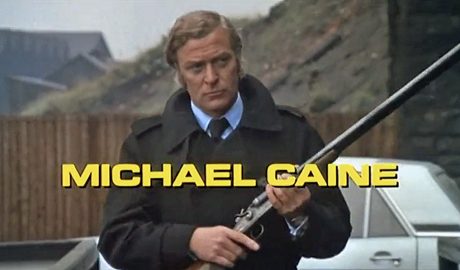
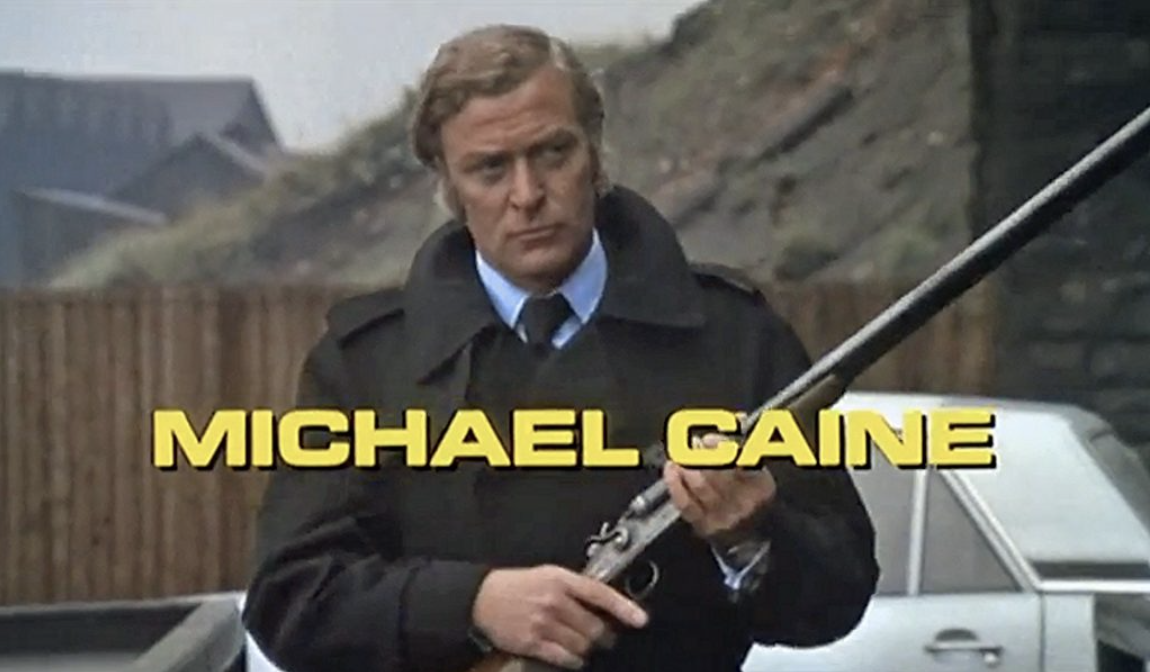
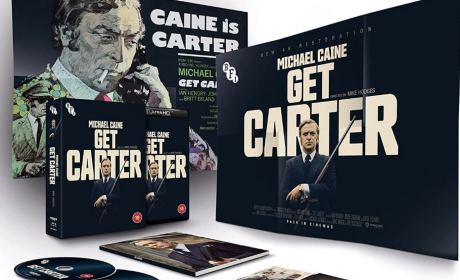
Michael Caine‘s Jack Carter is an icy, ruthless bastard in Mike HodgesGet Carter (’71). A real brute and a shit of a human being, and yet curiously emotional in a deeply buried sense. Which is to say a psychopath who cares about “family”, or at least about a certain offspring.

Carter is emotionally enraged, to put it mildly, over the death of his brother and the sexual molestation of his brother’s (or more likely Carter’s) daughter, Doreen (Petra Markham) and yet brusquely efficient when it comes to dispatching certain citizens of Newcastle. Five, to be exact, and none of them assassins or muscle types (like Carter) but basically go-alongers.

What stands out in Get Carter isn’t so much that Caine murders three shady fellows — Ian Hendry‘s “Eric Paice” (whose eyes are like “pissholes in the snow”, Carter observes), Glynn Edwards‘ “Albert Swift” and Bryan Mosley‘s “Cliff Brumby” — but also a pair of youngish, attractive women — Geraldine Moffat‘s “Glenda” and Dorothy White‘s “Margaret”.

These two aren’t killed in the heat of rage or passion exactly, but because of their laissez-faire complicity in nudging Doreen into performing in low-rent sex films. They are disposed of without any feeling, but certainly decisively and with absolute precision. (Okay, Glenda isn’t deliberately killed but she certainly wouldn’t have died if she hadn’t associated with Carter, and her ghastly manner of death — drowning in the trunk of a submerged car — rouses not the slightest emotion on his part.)

What other big-screen bastard has killed two prime-of-life women for what boils down to a moralistic motive — for going along with the corruption of a child? I can think of only one other murderer of this generally cold-blooded sort — Richard Widmark‘s “Tommy Udo” in Kiss of Death (’47), although his victim was an elderly, wheelchair-bound woman (Mildred Dunnock).

Seriously, what other bad guy has iced an attractive younger woman or two without blinking an eye? Caine’s Carter isn’t alone, but the others aren’t coming to me.

Better Late Than Never

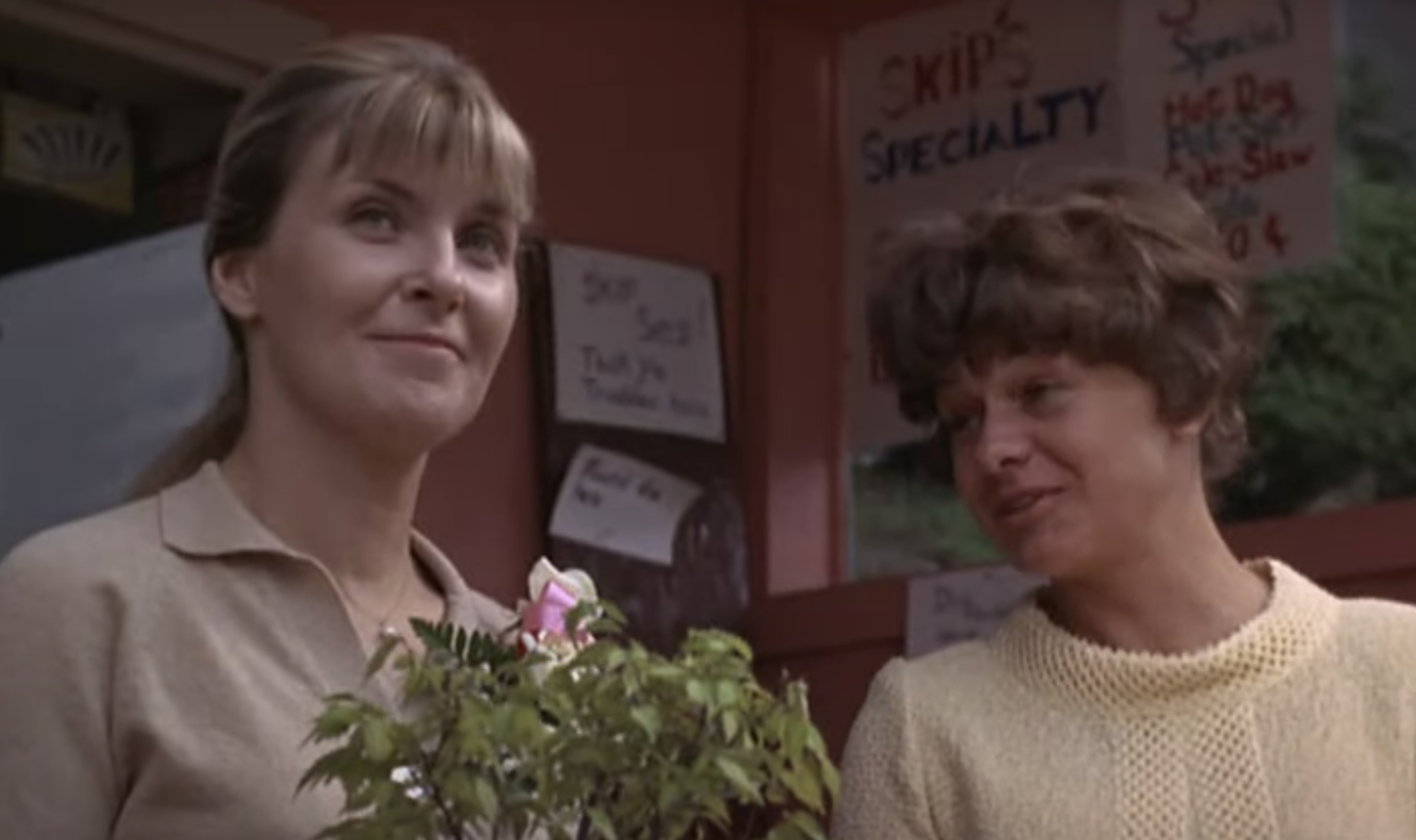
Inspired by Ethan Hawke‘s The Last Movie Stars, I finally watched Paul Newman, Stewart Stern and Joanne Woodward‘s Rachel Rachel (’68) last night. Yeah, for the first time.

Why the decades of reluctance? I guess I was afraid of hanging out with a mousey, fearful spinster in her mid ’30s who has little to look forward to and knows it. I was afraid of what I’d been told would be a kind of downer vibe — a death-watch film. Which, one presumes after reading the synopsis, is seemingly emphasized by the fact that Rachel’s deceased dad (played by a 37-year-old Donald Moffat) was a mortician.

I was wrong to presume this. Because the film is more sad than downish, because the screenplay is shrewd and well-honed, and because Woodward’s performance is undeniably moving. Many have called it her best ever, and I’m inclined to agree.

Woodward, also 37 during filming, was nominated for an Oscar**, and won Best Actress trophies from the New York Film Critics Circle, the National Society of Film Critics, the Hollywood Foreign Press Assoc. and the British Academy Film Awards.

Estelle Parsons as an outwardly cheerful, inwardly grief-struck lesbian (also a little mousey) is deeply touching as well.

I was struck by the Woodward-like eyes of the eight-year-old actress who plays Rachel in flashbacks, and lo and behold the performer is Newman and Woodward’s daughter, Elinor Teresa Newman.

Newman, a first-time director, wasn’t Oscar-nominated but won trophies from the New York Film Critics Circle and the Hollywood Foreign Press. He and Woodward shot Rachel Rachel in Bethel, Danbury, Georgetown and Redding in August 1967 — two and a half months after the release of Sgt. Pepper’s Lonely Hearts Club Band and smack in the middle of the Summer of Love.

Read more

Forget Paris

The refusal of Jean Dujardin‘s Valentin to venture into sound is due to his French accent, which he fears will be a career killer. Why not then return to France, “the home of cinema”, and join Marcel Pagnol, Jean Renoir, Jean Vigo and Marcel Carne “who were making, or about to make, films that entrance audiences to this day?,” asks The Economist‘s “Prospero.”

This is not an option, he explains, because Valentin “is so in love with Hollywood that he would rather fail there, even to the brink of suicide, than return to ply his trade in France. If the actor’s vocal ‘flaw’ had been an accent that revealed unacceptably working-class origins, sympathy would be genuinely merited. Still, this is a major star and, we are assured by the very title, a true artist. But he’d rather die! He’d rather be a second-rate hoofer in Hollywood than anything else anywhere.”

Wilder and Grander

I’ve been saying all along that I’d be a much more passionate Artist fan if it looked, moved and emoted like a real silent film, instead of offering a pastiche of one.

The Artist, a likable spoof, [is] bland, sexless, and too simple,” New Yorker critic David Denby wrote a few days ago. “For all its genuine charm, it left me restless and dissatisfied, dreaming of those wilder and grander movies [of the silent era].

Jean Dujardin, with a pencil mustache, looks a little like John Gilbert, but his cavorting star is meant to be a [Douglas] Fairbanks equivalent. A chesty, full-bodied man who moves quickly, Dujardin is good at buoyant peacocking, as when he shows off to an appreciative audience at the premiere of one of Valentin’s films. But most of what Dujardin does is obvious and broad. He smiles fatuously; he grimaces when things go wrong.

The Artist is an amiably accomplished stunt that pats silent film on the head and then escorts it back into the archive. The silent movies we see in The Artist all look like trivial, japish romps. Certainly, there’s no art form on display whose disappearance anyone would mourn. Hazanavicius’s jokes are playful but minor, even a little fussy, and after a while I began to think that the knowing style congratulates the audience on getting the gags rather than giving it any kind of powerful experience. ”

The Artist lacks the extraordinary atmosphere of the silent cinema, the long, sinuous tracking shots, the intimacy with shadow and darkness. Well, you say, so what? The movie is just a high-spirited spoof. Yes, but why set one’s ambitions so low? The movie’s winningness feels paper-thin, and, as Peter Rainer pointed out in the Christian Science Monitor, The Artist, with its bright, glossy appearance, looks more like a nineteen-forties Hollywood production than like a silent movie.”

Tsunami Approaching

It’s entirely possible that Hollywood Elsewhere will be overwhelmed later today by traffic, as it was during last year’s Oscar telecast. People not only had difficulty refreshing the site but I myself had difficulty posting. I’m just saying. I’ve just had a long, infuriating conversation with a senior-tech person at Softlayer, during which he assured me there’s little I can do at this juncture.

Two Months Before Nixon Resignation

The “Easy Rider, Raging Bull” days were in full bloom. Shampoo had just wrapped, and film rights to the unpublished All The President’s Men had just been bought by Robert Redford. The air was awful. (Catalytic converters had only just been invented a year earlier.) El Cholo and Lost on Larrabee were hip restaurants. The Microsoft Corp. was eight or nine months away from being hatched by Bill Gates and Paul Allen. And LexG was…what, four years old? (Photo tweeted by Shawn Levy.)

Spirit Award Depletion, Capitulation

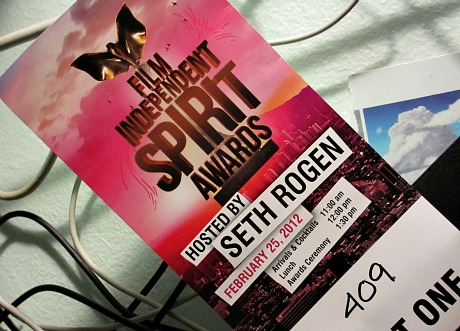
The 2012 Spirit Awards did the wrong thing today by giving four awards to the Big Oscar Inevitable known as The Artist — Best Feature, Best Director, Best Actor and Best Cinematography. The worst kowtow was giving Jean Dujardin its Best Actor prize instead of, say, A Better Life‘s Damien Bichir or Take Shelter‘s Michael Shannon. It wasn’t an indie thing to do — it was a “we want to be the Oscars too!” thing. Extremely bad form, dark day, etc.

Random Tweet #1: “Spirit Award for Best Actor goes to…Jean Dujardin? At the Spirits? People in the press tent going ‘eewww!” What a drag. Not Bichir?” Random Tweet #2: “Is it because I’m not drinking that the 2012 Spirit Awards are feeling so…I don’t know, rote and meh and under-energized & not-enoughy?” Random Tweet #3: “Not even light munchie food in Spirit Awards press cantina. No celery sticks, no carrots, no nothin’ — just empty, scarfed-up food boxes.” Random Tweet #4: “AT&T 3G is ridiculously slow in press tent. Too many people tweeting in too dense a space. No wifi for MacBook Pro and no celery sticks.”


Best Female Lead Spirit Award winner Michelle Williams — Saturday, 2.25, 2:55 pm.

Read more

Judgment

Now that Mike McCoy and Scott Waugh‘s critically-dismissed Act of Valor has emerged as the weekend’s #1 film with an expected $27 million, and now that at least some HE readers have seen it, did the “real Navy SEALS shooting real ammo” aspect do anything for anyone? From the get-go haven’t people been bracing for the expected shortcomings in the acting end of things? And how could live rounds mean anything to anyone? What detectable versimilitude could possibly occur from this?

And I’m a little surprised that eighth-place Wanderlust is an instant DOA. People just didn’t want to see it. Which is about the concept, I suppose, as well as a referendrum on the drawing power of Paul Rudd and Jennifer Aniston. People saw the poster, reminded themselves that Aniston almost never makes A-level movies, read the story about her pixellated breasts (and how she insisted on the boob coverup as a gesture of deference to boyfriend/costar Justin Theroux) and figured it’s a Netflix download, plain and simple. Plus people…what, aren’t into comedies about hippie communes?

What a disconnect between the 2.16 Wanderlust premiere screening and what I was feeling (i.e., moderate amusement) as I watched and the brutal reality of the box-office. I thought it might have a moderately okay weekend and then descend the following weekend and disappear.