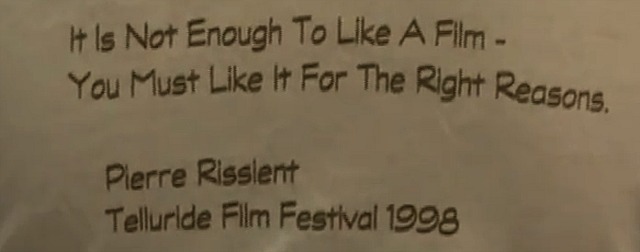
Karen McDougal, Stephanie Clifford aka Stormy Daniels, Alana Evans, Jessica Drake, Summer Zervos…I’m starting to get confused. Let’s just focus on Ronan Farrow’s New Yorker piece about Donald Trump’s thing with McDougal (or vice versa), which lasted from June 2006 to April 2007. The proof was an eight-page handwritten “document” that McDouglas wrote about her relationship with Trump, and which was fed to Farrow by John Crawford, a friend of McDougal’s. But that handwriting! I got a headache just from reading a few lines.
Excerpt: “’I was so nervous! I was into his intelligence + charm. Such a polite man. We talked for a couple hours – then, it was ‘ON’! We got naked + had sex.’ As McDougal was getting dressed to leave, Trump did something that surprised her. ‘He offered me money,’ she wrote. ‘I looked at him (+ felt sad) + said, ‘No thanks — I’m not ‘that girl.’ I slept w/you because I like you — NOT for money’ — He told me ‘you are special.’ ”
The cyberverse offers ample opportunities for wackos to post thoughts about how diseased they are, and there doesn’t seem to be any debate that Parkland shooter Nikolas Cruz did just that. Using his own name, Cruz said last September on a YouTube comment thread that he was going to become “a professional school shooter.” Some guy from a Southern state (i.e., not Florida) tipped the FBI through some kind of hotline but the FBI somehow flubbed it. Brilliant.
Who’s surprised that New Republic critic Armond White, the most reflexively contrarian critic around, has gone after Black Panther, calling it an “overhyped race fantasy”? But I have to say in all fairness that he’s not sounding all that reflexive this time, and could even be accused of being perceptive.
Give it a read-through and tell me White is completely or even largely wrong.
White begins by stating that “the Marvel Cinematic Universe (MCU) first infantilizes its audience, then banalizes it, and, finally, controls it through marketing” — yep, that it does.
Favorite passage: “T’Challa’s superpowers, tight-fitting Panther outfit, and Shangri-La-style homeland (transferring the fabled El Dorado from the Western Hemisphere to Africa) distort actual history and anthropology the same way that TV, comic books, video games, and movies have supplanted traditional education and learning.
“Utopian Wakanda, hidden behind clouds and mountains away from European colonizers, resembles the faux-naïve heaven of the 1936 negro musical Green Pastures. But the old-timey Christianity in that film is now replaced by faux-naïve Afrocentricity, including clichéd tribal customs (T’Challa must fight challengers to his throne).
“During the radicalized 1960s, Green Pastures’ stereotypes were considered an outrage. Black Panther would seem similarly fake if people weren’t falling for it without question.
“Black Panther offers no mystical alternative to racism’s threat, or the helplessness engendered by the tragedy of slavery (the original sin of removing Africans from their real and imagined roots). Instead, the movie offers a panacea, a comic-book fantasy of black empowerment that exchanges the actual history of the ’60s Black Panthers for a superficial commercial remedy.
The first term that comes to mind when thinking of Francis Lawrence‘s Red Sparrow (20th Century Fox, 3.2), which I saw last night, is “ice-cold,” and I don’t just mean the simulations of snow-covered Russia. (The film was shot in Hungary, Slovakia, Austria and, very briefly, London.) Almost everything that happens in this 139-minute, Americans-vs.-Russians spy thriller is coated with malice and arctic frost — just about every line, expression, motivation or attempt at manipulation, and every act of sadistic brutality, sexual or otherwise.
No one expects a film about a beautiful, poker-faced Bolshoi ballerina (Jennifer Lawrence‘s Dominika Egorova) being forced, after a horrid physical injury, to enroll in “whore school” (Lawrence’s term) to become a government-controlled seductress or “red sparrow,” and then graduate into the realm of double agentry, to provide any kind of emotional balm. But for the most part Red Sparrow goes out of its way to avoid even a faint hint of humanity.
Except, that is, for a couple of brief scenes between Dominika and Joel Edgerton‘s Nathaniel Nash, a CIA agent with a semblance of a heart. (The story begins with Nash on the outs with his bosses for behaving stupidly during a nighttime incident in a Moscow park, and then he attempts to redeem himself by recruiting Dominika into working for the Americans.) There are two or three scenes of domestic bonding between Dominika and her irritatingly dependent mother (Joely Richardson), but honestly? I was kind of hoping mom would get rubbed out as all she does is sit around and serve as a kind of albatross.
This is not, to put it mildly, a double-agent film with the finesse and subtlety of, say, Martin Ritt‘s The Spy Who Came In From The Cold (’65), which was regarded as a rather cold-hearted piece when it opened a half-century ago. The focus on cruelty in Red Sparrow makes that John Le Carre adaptation seem rather mild in this regard. At every turn Sparrow says “try a little heartlessness.”
Red Sparrow is more in the realm of Atomic Blonde, the period (late ’80s) spy film with Charlize Theron, minus the gymnastics. It’s an aggressively sexual thing, I mean, but is mainly about all kinds of physical brutality, including a pair of attempted rapes and two especially savage beating-and-torture scenes that would, in the real world, result in God-knows-how-many-weeks in a hospital.
Most of the violence, sexual and otherwise, happens to poor Dominika, and after the third or fourth assault I was asking myself, “Is this a movie for the #MeToo era?” I suppose it is, in a way, as it does allow for a form of satisfying fuck-him revenge at the finale. But in my seventh row seat in a 20th Century Fox screening room, I was as much of a recipient of the brutality as Lawrence, and after a while I felt covered with bruises. Sorry but I empathize. It’s in my nature.
It’s time once again to measure the year’s Best Picture nominees against the famous Howard Hawks criteria for a good film — “one with three great scenes and no bad ones.” Which of the 2017/2018 Best Picture contenders meet Hawks’ definition of a quality-level film and which don’t?
You need to do two things: (1) List the three good scenes in Call Me by Your Name, Darkest Hour, Dunkirk, Get Out, Lady Bird, Phantom Thread, The Post, The Shape of Water and Three Billboards Outside Ebbing, Missouri, and (2) answer honestly if any of these films have any bad scenes.
HE nitpickers have tried to dismiss the Hawks criteria, but a movie that delivers three great scenes and no shitty ones is always a very good film. Because people always tend to remember those extra-powerful or poignant moments. Because they always sink in.
HE’s list of Hawks’ seven best films (in this order): Red River, Only Angels Have Wings, The Big Sleep, Bringing Up Baby, His Girl Friday, Air Force, Scarface.
First, even if there was some kind of half-rekindled relationship between the two (which is almost certainly imaginary) there would be no reason for Aniston to trust Pitt. The fact that he cheated before means the odds are at least 50/50 that he’ll cheat again. Second, Pitt would never go back to Aniston for reasons of pride, partly because of the trust issue and partly because you can’t go home again. Third, Brad’s next serious girlfriend or wife needs to be someone better than Angelina Jolie and way better than Aniston, and by that I mean someone like Amal Clooney…a lawyer or a diplomat, a brilliant book author or stage director or brain surgeon, someone classy and accomplished but without Jolie’s curious history.
Francis Lawrence, Peter Chernin and Steve Zaillian‘s Red Sparrow opens two weeks from now, technically on the evening of Thursday, 3.1. The first screening happens tonight in the Fox lot, and the review embargo ends tomorrow at 9am Pacific. This in itself indicates this 20th Century Fox release might not be too bad, as studio publicists would enforce a review embargo only hours before it opens if it stunk.
Mr. Lawrence has sent a message to all critics asking that they keep “all major plot points including the ending secret so other viewers may also enjoy the movie to the fullest.”
It goes without saying that Tatyana is very keen on seeing this potboiler, which costars Jennifer Lawrence and Joel Edgerton, and costars Matthias Schoenaerts, Charlotte Rampling, Mary-Louise Parker, Jeremy Irons, Ciaran Hinds and Bill Camp. She’ll be giving me an expert critique about how realistic the various Russian accents may or may not sound.
A Criterion Bluray of Cristian Munguiu‘s Graduation (Romanian: Bacalaureat) will street on 5.22.18. I don’t know why it’s been given a 2K mastering instead of 4K, but it has. Essential viewing for anyone with half a brain. Easily one of the best films of ’16 or ’17, whichever you prefer. It earned a pittance at the U.S. box-office, largely due to the fact that a majority of American moviegoers are morons.
“Cristian Mungiu‘s Graduation is a fascinating slow-build drama about ethics, parental love, compromised values and what most of us would call softcorruption. It basically says that ethical lapses are deceptive in that they don’t seem too problematic at first, but they have a way of metastasizing into something worse, and that once this happens the smell starts to spread and the perpetrators start to feel sick in their souls.
“I don’t necessarily look at things this way, and yet Mungiu’s film puts the hook in. I felt the full weight of his viewpoint, which tends to happen, of course, when you’re watching a film by a masterful director, which Mungui (Four Months, Three Weeks, Two days, Beyond The Hills) certainly is.
“And yet I tend to shy away from judging people too harshly when they bend the rules once or twice. Not as a constant approach but once in a blue moon. I’m not calling myself a moral relativist, but I do believe there’s a dividing line between hard corruption and the softer, looser variety, and I know that many of us have crossed paths with the latter. Let he who’s without sin cast the first stone.
“Politicians or dirty cops who accept payoffs from ne’er-do-wells in exchange for favoritism or looking the other way — that’s hard, blatant corruption. Soft corruption is a milder manifestation — a form of ethical side-stepping that decent people go along with from time to time in order to (a) prevent something worse from happening or (b) to help a friend or family member who’s in a tough spot and needs a little friendly finagling to make the problem go away or become less acute.
Tonight the first wave of the Black Panther faithful will swarm into megaplexes in every state of the union and ignite a seismic moment in Hollywood history. It’s not just the $150 million that Ryan Coogler‘s film is expected to earn by Sunday night but also the representation factor — an almost-all-black cast (two middle-aged male white guys are included), power-punch superhero flick that screams “now,” empowerment, authority, 21st Century change and tribal fervor like no Hollywood film ever before.
Keep in mind whqt the Boston Globe‘s Ty Burrsaid, which is that Black Panther “isn’t the greatest movie ever made, [and] probably not even the greatest superhero movie ever made, but it’s very, very good.”
And keep in mind what Movie Nation‘s Roger Mooresaid the other day:
“Marvel marvels aren’t so much scripted and directed as focus-grouped and engineered. The story beats, hero or heroine hurdles and fights and effects are so familiar as to be budgeted down to the penny. Broadening the appeal of your franchise ethnically is just smart business. In story terms, in character inclusions, in casting, pandering pays. You’d expect no less from Disney.
“So you’ve got another cool costumed hero tested with dead daddy issues, another ‘sibling’ (or close relative) rivalry, another hidden world where superhuman heroes lay low.
“[Black Panther] has the attempted gravitas of Logan, the myth-building of Wonder Woman and the same pacing problems as those two consequential, worthwhile and only occasionally fun additions to the genre.
“This Panther is awfully slow on the prowl. The two hours and fourteen minutes just amble by. There’s little urgency to any of this, even the finale. It’s just passable entertainment, a noble attempt at waxing mythical that never, for one second, delivers that out-of-body giddiness that makes popcorn pictures of its ilk burst to life.”
Variety‘s Guy Lodge wouldn’t dare write a regular-guy, straight-from-the-shoulder, Hollywood Elsewhere-style review of Wes Anderson‘s Isle of Dogs. He’s too invested in presenting himself as elite, effete and eternally cutting-edge, and that means maintaining a constantly accommodating attitude toward cool-cat cinema, which of course includes all forms of animation.
Nonetheless, even with Lodge’s bending-over-backwards approach, the best he can offer in the way of an Isle of Dogs back-scratch is that it’s “puppy-treat cinema” with a “slender, precarious narrative…small, salty, perhaps not an entire meal, but rewarding nonetheless.”
So this is why Fox Searchlight and IDPR’s Bebe Lerner decided to completely ignore my request to participate in a Berlinale junket for Isle of Dogs. (They had previously invited me to the 2014 Berlinale junket for Anderson’s Grand Budapest Hotel, and before that the London junket for Fantastic Mr. Fox.) They knew I was no fan of animation, fair enough, and that I’m not a fan of Japanese culture in general. They also knew they had a marginal film on their hands, and that they had to restrict themselves this time to hardcore animation devotees.
Lodge will forgive me, I’m sure, but he seems to be saying that Isle of Dogs is “rewarding” mainly for animation hipsters, for people who are inclined to feel rewarded going in. But that it’s a dicey proposition, perhaps, for Joe and Jane Popcorn.
I for one have always had a problem with the basic concept of Isle of Dogs because of the garbage. Who wants to hang with a bunch of dirty dogs who eat rotting garbage covered with white worms?
“Isle of Dogs is really a film about its own enthusiasms: for four-legged fleabags of all shapes and sizes, of course, but also for the culture and cinema of Japan, which is woven with typical fastidiousness into Anderson’s magpie aesthetic,” Lodge writes. “That makes it a markedly more eccentric proposition than Anderson’s first feature-length foray into stop-motion, 2009’s Fantastic Mr. Fox — and with a PG-13 rating for its dry adult comedy, mostly played in a limbo-low key, a niche commercial prospect too.