

Nikki Haley‘s statement yesterday about a then-forthcoming U.N. vote about the Trump administration’s decision to support relocating the Israeli capital from Tel Aviv to Jerusalem, was, in the words of Morning Joe‘s Joe Scarborough, “somewhere between a schoolyard taunt and a mafia boss’s threat.” In the words of former CIA director John Brennan, “Trump administration’s threat to retaliate against nations [that] oppose U.S.position on Jerusalem is beyond outrageous…[it] shows that @realDonaldTrump expects blind loyalty and subservience from everyone — qualities usually found in narcissistic, vengeful autocrats.”
Either You Get It Or You Don’t
In one corner, Gary Oldman‘s hammy, blustery, broadly performed Winston Churchill, fortified with prosthetics and aimed at the cheap seats. In another corner, this.
Graduate Takedown Has Begun
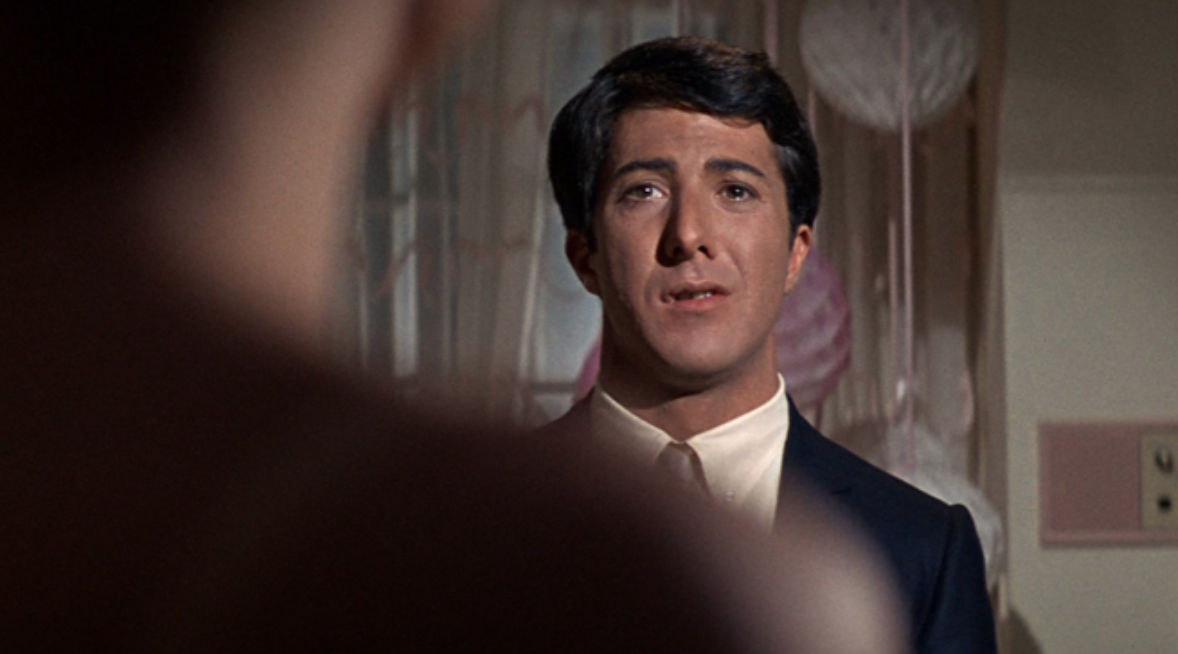
Mike Nichols and Buck Henry‘s The Graduate, perhaps the most culturally on-target, stylistically audacious and emotionally affecting relationship comedy in Hollywood history, opened exactly a half-century ago — on 12.22.67. But guess what? It’s time for a significant portion of that respect and glorification to go away, and for two reasons. I’m presuming that HE readers can guess the first without reading any further.
Just as former New York Post critic Lou Lumenick proclaimed a couple of years ago that Gone With The Wind has become a disreputable and even odious film because it reflects unfortunate racial attitudes of the late 1930s, Vox’s Alissa Wilkinson announced yesterday that it’s time to take The Graduate down a peg or two, partly because of recent allegations of sexual harassment and assault against Dustin Hoffman, and partly because Benjamin Braddock is a dullard — a far less interesting character than Anne Bancroft‘s Mrs. Robinson or even Katherine Ross‘s Elaine Robinson.
HE response #1: Deplorable as Hoffman’s behavior is alleged to have been during certain encounters in the ’80s, when The Graduate was shot he was a 29 year-old actor doing his damnedest to make the Braddock character sympathetic and engaging, and for the last half-century just about the entire civilized world has agreed that he achieved that goal. You can’t come along 50 years later and say “But Hoffman acted like a sexist asshole in the ’80s!” and so everything he did creatively before, during and after the Reagan era has to be darkly re-assessed.
HE response #2: On top of which Nichols and Henry, The Graduate‘s director and screenwriter, deliberately portrayed Braddock as confused, unfocused, de-politicized and largely inarticulate for the first 65 minutes. That was all a set-up for the big pivot point when Benjamin realizes he loves Elaine and is determined to end his affair with her mother. The first hour and change is about a bumbling guy in a passive-reactive state of mind, and the last 35 or 40 minutes is about this guy struggling to achieve a goal and attain a kind of emotional fulfillment.
HE response #3: Wilkinson doesn’t take credit for her “Mrs. Robinson is a more layered and intriguing character than Braddock” opinion, which I happen to agree with as far as the first 65 minutes is concerned. She acknowledges, in fact, that Roger Ebert offered this opinion at the time of the film’s 30th anniversary. She could have added that Sam Kashner said the same thing in a 2008 Vanity Fair piece about the making of The Graduate.
An Idea, Nothing More
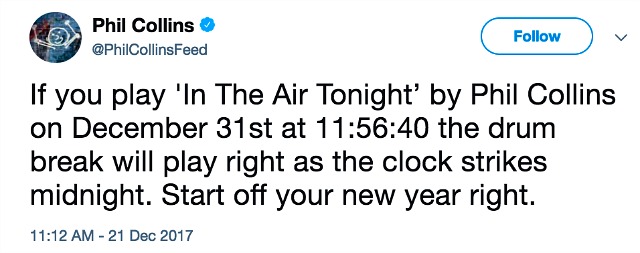
My initial response to Phil Collins’ tweet earlier today was “yeah, cool…blast it out for the Times Square crowd, or the Eiffel Tower congregation in Paris” How many decades was “Auld Lang Syne” the official anthem? But read the comments. Hostility, derision, “nothing better to do but reminisce, Phil?”, etc. An ugly, seething mob.
Streep’s Mamma Mia 2 Character Is Six Feet Under
The first full-length trailer for Mamma Mia! Here We Go Again strongly suggests that Meryl Streep‘s character, Donna, is looking down at the joyful goings-on from a heavenly perch. The forthcoming musical is actually a prequel-sequel with Lily James playing Streep’s character, Donna Sheridan, in her youth.
No, it doesn’t matter that James doesn’t even begin to resemble the young Streep of the ’70s.
The Wikipedia plot summary reads as follows: “As another day dawns on sunny Kalokairi, Sophie (Amanda Seyfried) is now running the Greek villa. She greets Tanya (Christine Baranski) and Rosie (Julie Walters) at the pier and announces she’s pregnant. She admits, however, to doubts about whether she’ll be able to cope without her late mother there to help her.”
On top of which the trailer opens with Tanya and Rosie telling Sophie that “your mother is the bravest person we ever met.” Plus the footage of Streep appears to be from the original 2008 Mamma Mia.
The real corker is that Cher plays Ruby Sheridan, Seyfried’s grandmother and Streep’s mother. Born on 5.20.46, Cher is three years older than Streep.
Never Trust A Sundance Summary
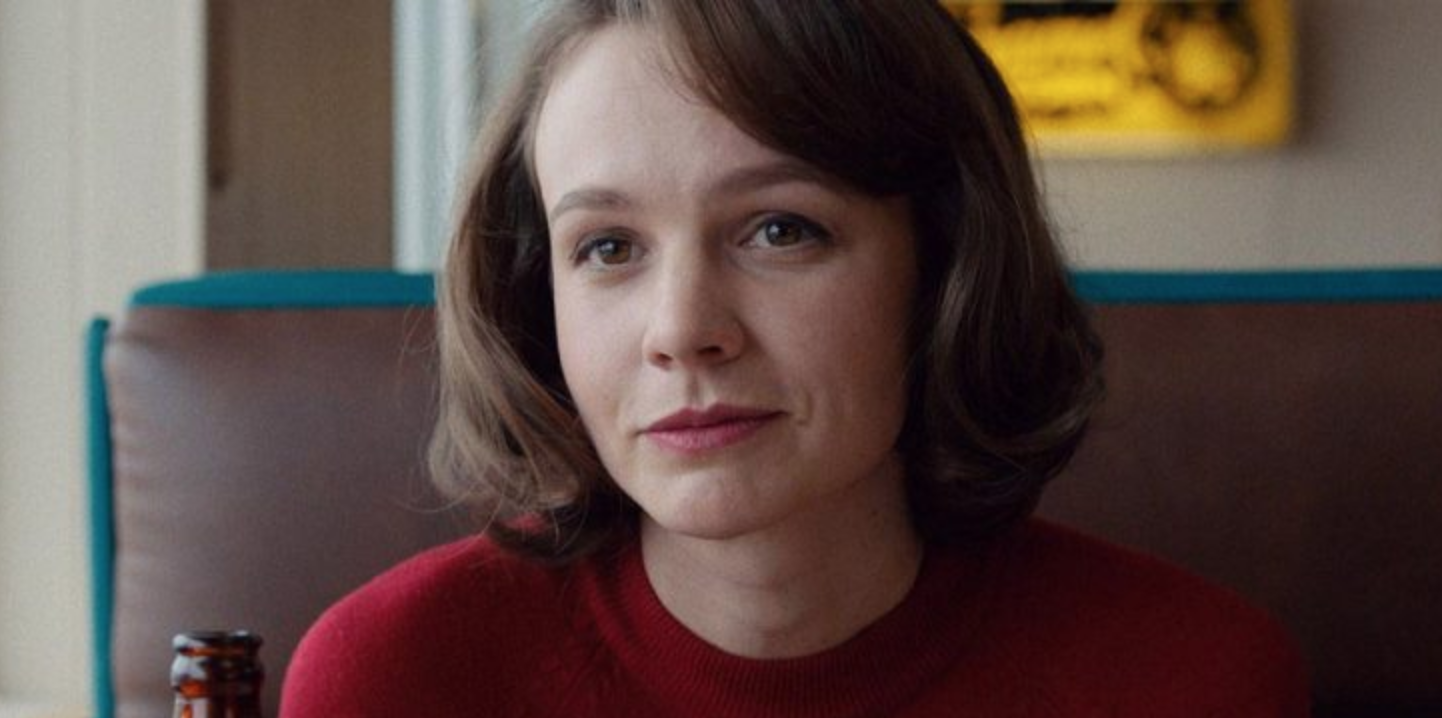
One of my most keenly anticipated Sundance ’18 films is Paul Dano‘s Wildlife, an adaptation of Richard Ford‘s same-titled novel, published in 1990 and set in 1960 Montana.
The main costars are Jake Gyllenhaal and Carey Mulligan as the married Jerry and Jeanette Brinson; the secondary performers are Ed Oxenbould as their son Joe, and Bill Camp as — here comes the rough part — an older, richer guy named Warren Miller whom Jeanette, believe it or not, has an affair with when Jerry, having lost his country-club job, leaves the homestead to become a firefighter.
Carey Mulligan and Bill Camp? The mind reels, convulses.
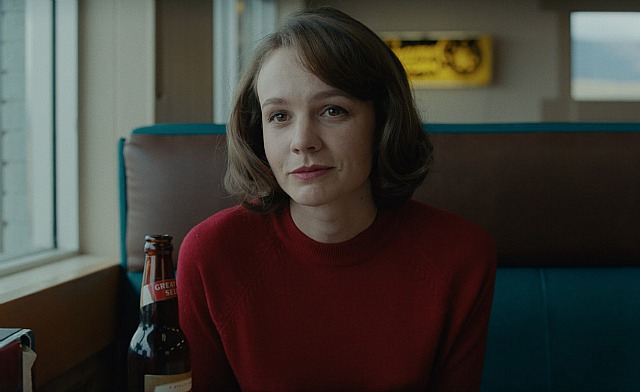
The official Sundance summary sidesteps the nitty-gritty. For a fuller understanding of where this film goes and what it delivers, consider a N.Y. Times review of Ford’s book by Christopher Lehman-Haupt:
“‘In the fall of 1960, when I was 16 and my father was for a time not working, my mother met a man named Warren Miller and fell in love with him.’ So begins Richard Ford‘s disturbing new novel, ‘Wildlife’. In it, Mr. Ford seems to have bitten off more than he can chew. Its action takes place in Great Falls, Montana. The theme, too, is a familiar one in Mr. Ford’s work, a love triangle involving a mother, a father and a son.
“The 16-year-old narrator is Joe Brinson. His father is a professional golfer who teaches at a country club in Great Falls. He is a natural athlete ‘with delicate hands and a short fluid swing that was wonderful to see but never strong enough to move him into the higher competition of the game.’ This is a perfect image for the searching innocence of Joe’s father, who has brought his family from Lewiston, Idaho, ‘in the belief that people — small people like him — were making money in Montana or soon would be, and wanted a piece of that good luck before all of it collapsed and was gone in the wind.’
Scumbag Victory
“America must make an honest appraisal: Donald Trump is a plutocrat masquerading as a populist…a pirate on a mission to plunder.” — Charles Blow, “The Great American Tax Heist,” N.Y. Times, 12.21.
Yesterday’s loathsome tax cut passage was the fourth largest in U.S. history — President Obama pushed through larger tax-cuts on 2010 and 2013, John F. Kennedy‘s tax-cut bill (passed posthumously in ’64) was bigger also, and Ronald Reagan’s 1986 corporate tax cut was also larger. And as the crash of ’87 showed, it didn’t achieve the desired result. Every single time the Republicans have cut taxes, a financial crash and economic depression have followed in fairly short order.
A Long Time Ago
It goes without saying that if Norman Mailer had made it into his late 90s and was alive and lucid in 2017, there’s no way he’d be invited to present an Oscar due to his reputation for chauvinism and that one awful instance of brutality with his wife, Adele Morales, in the mid 1950s. He would, in today’s climate, almost certainly be ostracized, reviled, shunned. And if by some odd twist of fate Mailer was invited to present an Oscar anyway, that Voltaire joke he told at the Oscar podium on 3.28.77 would have never been told today, and if it had would be greeted with embarassed silence.
Note to Twitter banshees: I happened upon this clip a half-hour ago and was simply struck by the stark differences in the socio-political climates of 1977 vs. 2017. I didn’t post this to indicate any sort of admiration for Mailer’s chauvinism, which was difficult to process even back in the day, or to suggest that his Voltaire joke is amusing to me today. I’m just saying “wow, things were really different back then” — nothing more.
Think About Willem Dafoe
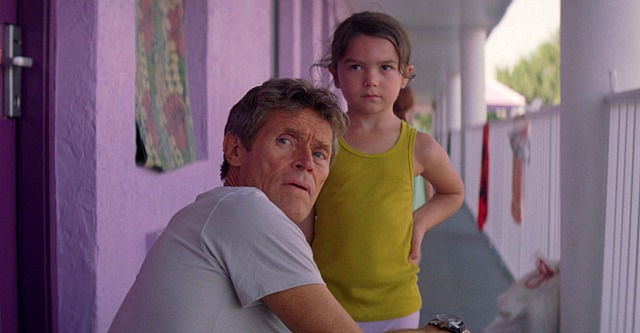
[Note to A24: I haven’t posted the following because I’m not an admirer of Willem Dafoe‘s performance in The Florida Project, or because I disagree with the likelihood of his winning a Best Supporting Actor Oscar. I’m just trying to explain why I think his performance is by far the most popular of all the 2017 contenders in his category.]
Make no mistake — Willem Dafoe is going to win the Best Supporting Actor Oscar for his performance as a harried building manager in The Florida Project. Everyone “knows” or assumes this because he’s won this prize from eight critics groups (NYFCC, LAFCA, BSFC, National Board of Review, San Francisco, NYFCO, Detroit, Atlanta). Aaaah, but why have the elite know-it-alls chosen Dafoe? I’ll tell ya why, and it ain’t deep. Because he’s this year’s Mahershala Ali.
Supporting performances generally win awards not because of sustained inventiveness but because the character does one thing that the audience really likes, and because people tend to remember that one thing when they vote. Sometimes the performance will make that one thing feel extra-powerful or extra-resonant (i.e., Beatrice Straight‘s big moment in Network), but Academy and guild members primarily vote for what a character does or says at a crucial juncture in a film.
Dafoe is way ahead this year because his character, Bobby Hicks, does one righteous and compassionate thing that everyone loves — he saves a group of little kids from being preyed upon by a creepy child molestor. That’s it, the whole thing.
Dafoe plays a middling low-life character with conviction and compassion, but when you boil it all down what else did Dafoe actually do in that film? What major crescendo or galvanizing moment did he otherwise deliver or take part in? Nothing. He reminded deadbeat tenants to pay their rent, tolerated the kids’ raucous behavior, painted the apartment walls, etc.
Last year Mahershala Ali‘s performance in Moonlight won a Best Supporting Actor Oscar because his character, Juan, did one righteous and compassionate thing — he taught “Little” to float and maybe swim around in the Atlantic Ocean. That was it, the whole thing.
Don’t Even Start
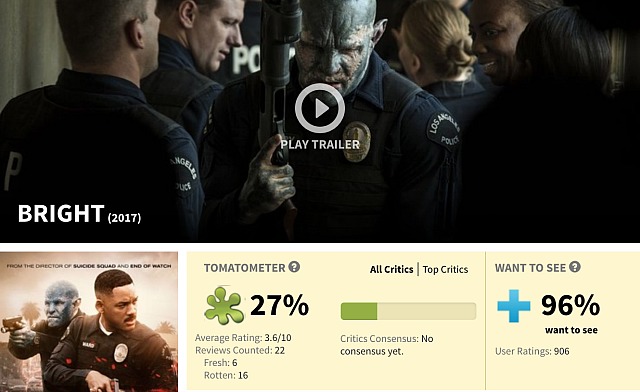
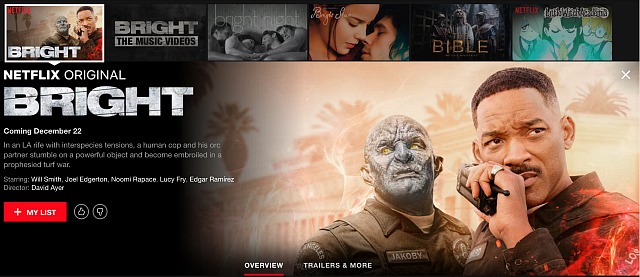
I knew early on that I wouldn’t want to see David Ayer‘s Bright (Netflix, 12.22), much less review it. An obvious conceptual ripoff of Graham Baker‘s Alien Nation, I knew it would put me through anguish, frustration, irritation. I knew this, in fact, because of four factors.
Reason #1: Will Smith, whose movies always either suck eggs or try my patience. I haven’t really liked a Smith film since Six Degrees of Separation.
Reason #2: “Antagonistic cop partners getting to know, respect and like each other as they investigate a crime or crime wave”…same old same old.
Reason #3: The script is by formula-roulette screenwriter Max Landis, whose ideas and writing style — “a pop-culture savant who synthesizes everything from pulp-fiction fantasy to Shane Black action-comedies into a kind of wild and witty blockbuster super-weapon,” according to Variety‘s Peter Debruge — represent the bane of my moviegoing existence.
Reason #4: Ayer has been off his game since End of Watch — Fury disappointed and Suicide Squad was mostly appalling. That was enough to stop me right there.
And now the reviews are in — 27% Rotten Tomatoes, 29% Metacritic. Case closed, end of story. Wait….Debruge likes it? “The best Netflix original movie to date”?
Let’s Hear It For The Boys
I’d be lying if I said I’m sorry that Emily Blunt isn’t costarring in Soldado, the upcoming Sicario sequel that opens on 6.29.18. Badass Benicio del Toro and Josh Brolin will do the job fine, thanks. I’m not interested in watching Blunt deliver her looks of horror at all the carnage, no offense. If you have fast eyes you’ll spot a glimpse in the trailer of Catherine Keener. Who’s the woman who dives under the truck? Isabela Moner? Matthew Modine also costars.
If Ted Kennedy Were Here Today…
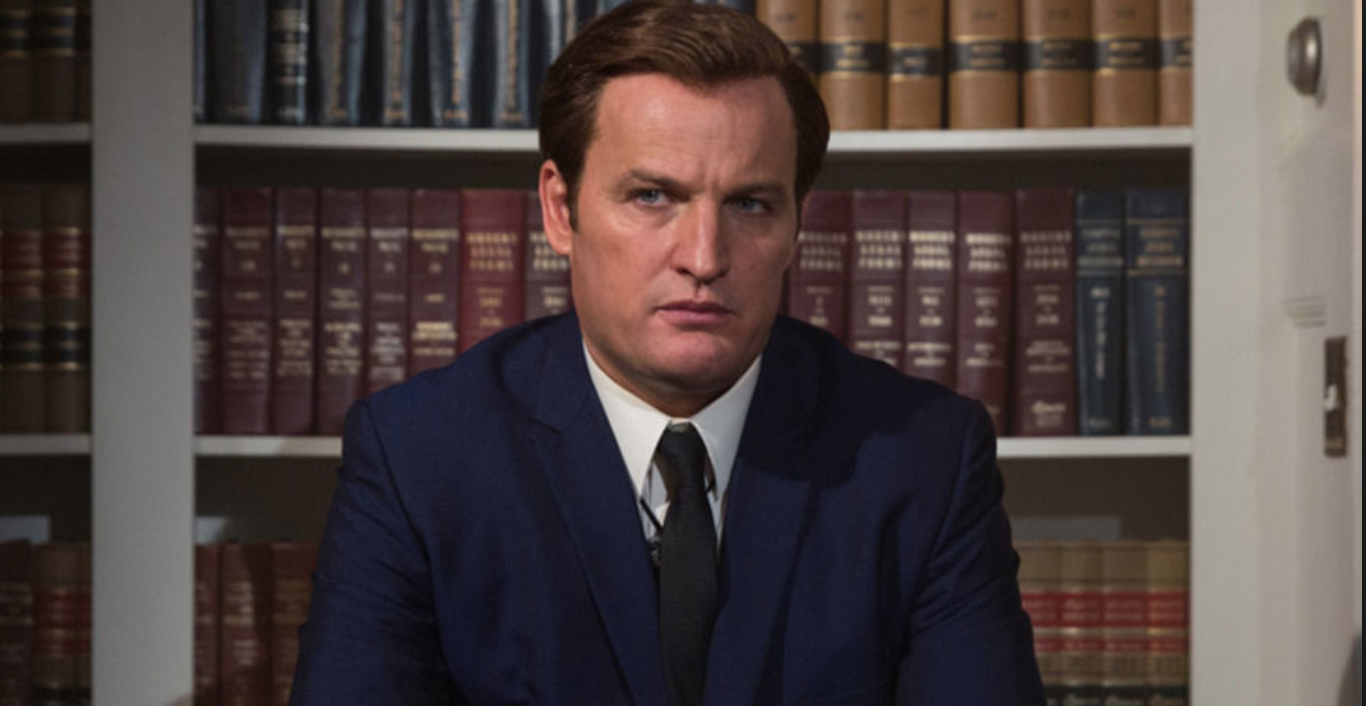
A damning portrait of arrogant male power and the ultimate abuse of a female subordinate, Chappaquiddick (Entertainment Studios, 4.6.18) is obviously its own raison d’etre. The story of the 1969 Chappquiddick tragedy is well-known and has been well-investigated, but producers Mark Ciardi, Chris Fenton and Campbell McInnes, screenwriters Taylor Allen and Andrew Logan and director John Curran wanted to deliver a concise but take-no-prisoners version of this cold, tragic tale in a narrative theatrical form.
Chappaquiddick has the cojones to call a spade a spade about a late, much beloved political figure, a respected liberal deal-maker and the most powerful and longest serving representative of what was, for decades, American’s premiere political family — the closest thing we ever had to a version of the British royals.
But over the last couple of months, Chappaquiddick has unwittingly slipped into the here and now. Without design or anticipation, what Chappaquiddick said last year during its making, the portrait it created of a world-famous power abuser and blame-shifter suddenly fits right into what’s happening now with this and that alleged sexual abuser being taken to task and made to walk the public plank.
There’s no question that the film is dealing straight, compelling cards, and that it sticks to the ugly facts as most of us recall and understand them, and that by doing so it paints the late Massachusetts legislator and younger brother of JFK and RFK in a morally repugnant light, to put it mildly.
All along I’ve been hoping that Curran would just shoot the script efficiently, minus any kind of showing off or oddball strategies that might diminish what was on the page. This is exactly what he’s done. Curran has crafted an intelligent, mid-tempo melodrama about a weak man who commits a careless, horrible act, and then manages to weasel out of any serious consequences.