

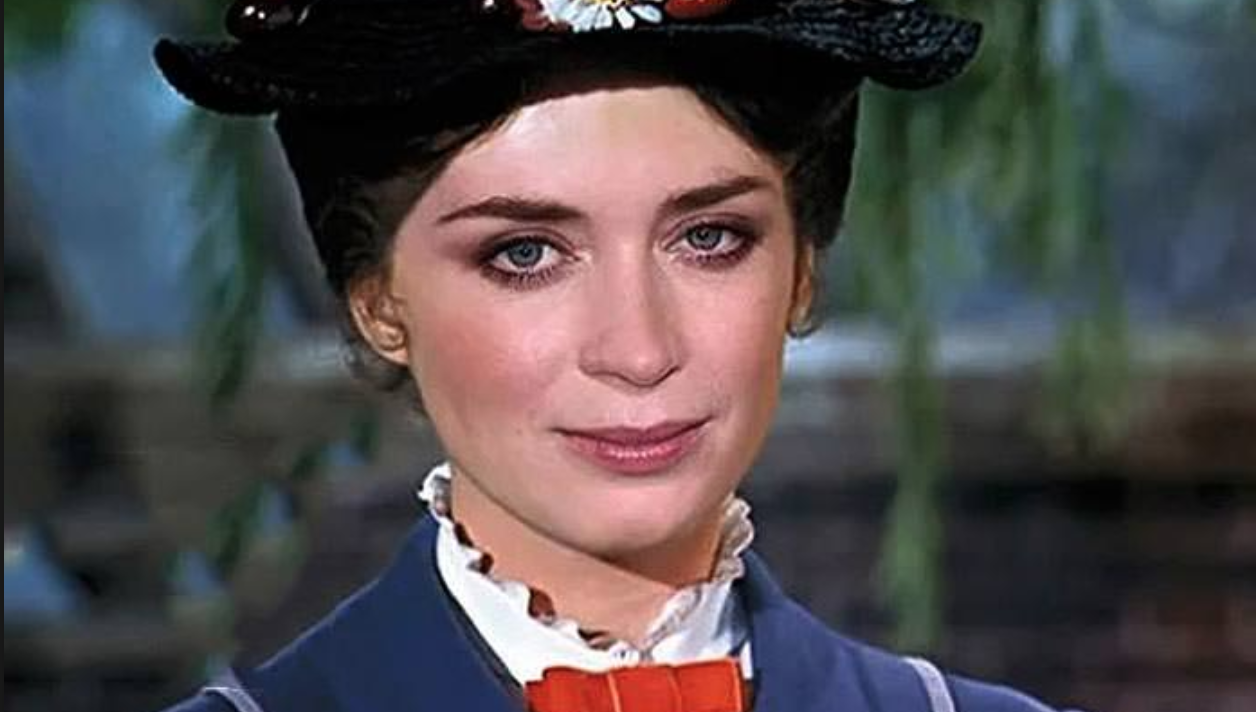
I can’t express sincere enthusiasm about a film directed by Rob Marshall, who has given me so much pain over the years. And I’m already having trouble with the idea of the Puerto Rican-descended Lin-Manuel Miranda playing a “lamplighter” (and apprentice to Dick Van Dyke‘s “Bert” from the original 1964 version) in 1930s London. But I love watching Emily Blunt‘s Mary Poppins descend from 5,000 feet in the foggy overhead, and I admire the damp outdoorsy atmosphere conveyed by John Myhre‘s production design and Dion Beebe‘s cinematography. So there’s hope.
Speaking Of Oscars
On 10.12.13 I posted about a 1949 film that won Academy Awards for Best Director and Best [Adapted] Screenplay, and was nominated for Best Picture:
Yesterday I watched Fox Home Video’s Bluray of Joseph L. Mankiewicz‘s A Letter To Three Wives (’49), which I first saw…oh, sometime in my teens. Even in that early stage of aesthetic development I remember admiring the brilliant writing and especially the way it pays off.
Nominally it’s a woman’s drama about whose husband (Jeanne Crain‘s, Linda Darnell‘s or Ann Sothern‘s) has run away with sophisticated socialite Addie Ross, who narrates the film from time to time (the voice belongs to Celeste Holm) but is never seen. But that’s just the story or the clothesline upon which Wives hangs its real agenda. For this is primarily an examination of social mores, values and ethics among middle-class marrieds of late 1940s America.
Over and over the film reminds you how long ago this was. Southern is fairly liberated in the sense that she’s the main breadwinner in her household; her husband, played by Kirk Douglas, is a more-or-less penniless schoolteacher. One of the film’s quaint highlights is Douglas’s cocktail party rant against the dishonest and vulgar hucksterism of commercial radio. This was a valid point, I’m sure, from Mankiewicz’s perspective 60-plus years ago, but if Joe could see the world now…
But I’d really forgotten how effective the ending is. It’s partly the surprise admission from Paul Douglas (as Darnell’s wealthy, somewhat crude businessman husband) that it was he and not Craine’s husband Brad (written by Mankiewicz as a bland and patronizing type, and certainly played that way by Jeffrey Lynn) who ran off with Addie. But what really got me is the final bit when Douglas and Darnell hit the dance floor and the camera drops down to the table and suddenly Addie is a spirit of some kind — a spectral force.
All through the film Addie has been the absent “other” and suddenly she’s a spook who tips over a champagne glass and breaks it. A metaphor for disappointment and defeat, sure, but I find it fascinating that Mankiewicz would shoot Wives as a thoroughly dialogue-driven, medium-interior, right-down-the-middle relationship drama and then, at the very last second, change the rules and turn it into Topper or The Ghost and Mrs. Muir. That’s a surprise ending in spades.
Congratulations to Fox Home Video’s Schawn Belston and his restoration team for managing a superb upgrade of this classic. I’ve never seen it look so rich and clean and dynamically alive.
Please, C’mon, Stop it
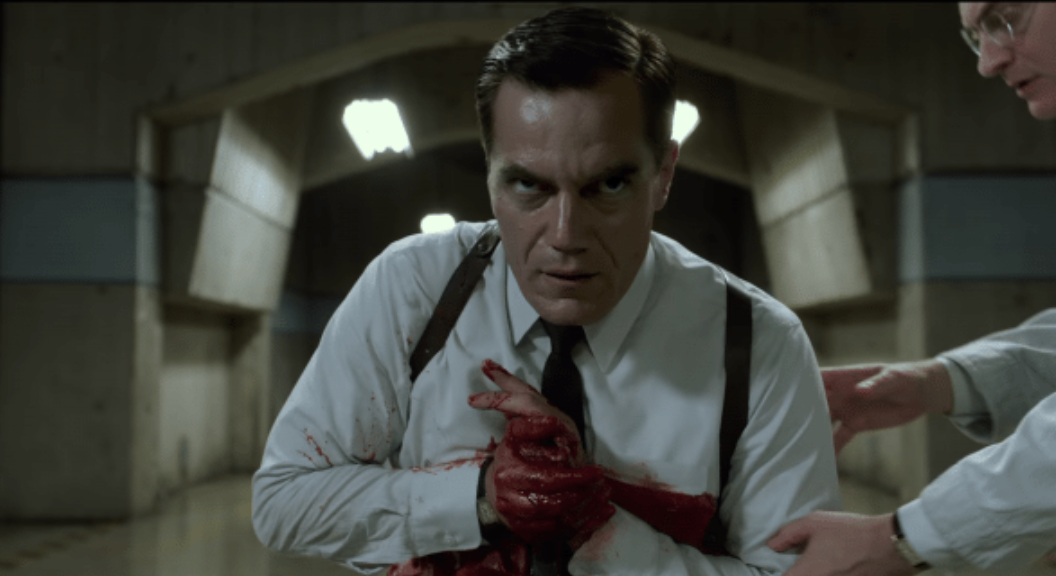
This morning Awards Daily‘s Sasha Stone declared that Guillermo del Toro‘s The Shape of Water “is one of the best films to win the Best Picture Oscar in two decades. It joins the ranks of the best of the best, like No Country for Old Men, The Departed and The Hurt Locker, and perhaps ushers in a new decade of films that will flourish under America’s sudden turn to the dark side.”
The Shape of Water is a partly gentle, partly porno-violent fairy-tale about loneliness and longing and fish-sex, but it’s a genre film and therefore a curio in the annals of Best Picture winners, and it damn sure isn’t one of “the best of the best.” Sasha is crazy for comparing it to The Departed or No Country For Old Men….good God! The Movie Godz don’t read everything but they read Hollywood Elsewhere, and I can tell you they’ll shriek like banshees when they read her piece. And I mean like Michael Keaton in Beetlejuice when Geena Davis tries to say his name three times: “Eeeeeeeeeee!!!”
The Shape of Water is the only creature fantasy to seriously contend for a Best Picture Oscar, much less win one. (Right?) It’s a trans-species love story that cares about the interior lives of marginal people and whatnot, but I’m writing about it now because it’s first and foremost an aberration — a film that won largely because of the New Academy Kidz and their clenched determination to include genre films in the realm of Best Picture consideration, and in so doing shake things up.
I’ve long disagreed with the Academy prejudice that comedies can’t be regarded with the same respect afforded to socially realistic dramas, but there’s no denying that genre films have worked hard for decades at defying general laws of believability and credibility with a kind of “fuck it, we’re a genre movie” attitude.
I’m not talking about scary or horrific films but those which deal their cards according to pulpy, fast-and-loose rules. (Like The Shape of Water.) And I’m saying this, mind, as one who would have completely respected King Kong or Psycho or Val Lewton‘s Cat People or The Night of the Hunter being handed a Best Picture Oscar.
Unlike almost every other Best Picture winner except for six or seven I’d rather not mention, The Shape of Water is more or less indifferent to the world that we’re all unfortunately stuck with, and is a creation that totally resides in Guillermo’s head.
It contemplates nothing except for the eternal condition of loneliness and the need to be loved and the balm of compassion, which we all value. But at the same time it’s not that great because of staggering plot holes and logic flaws. It’s a creature feature that believes in kindness and compassion, yes, and is “completely dominated and in fact saturated with its Guillermo-ness,” as I said last September. But “the best of the best”?
A Remake That Only Elitists Will Want To See?
Variety reported two months ago that Guillermo del Toro and Sunset Gun‘s Kim Morgan are co-writing a remake of Nightmare Alley, a 1947 film noir that even its biggest fans (and they are relatively few in number) would describe as decidedly bizarre if not grotesque.
The handsomely produced 20th Century Fox film starred Tyrone Power as a sociopathic carnival barker who rises and falls in sordid, appalling fashion, and ends up returning to the carnival realm as a geek who bites the heads off chickens.
Stuart Gordon‘s Trailers From Hell assessment sums it up nicely, and I’m all for films that cater to people with perverse tastes in downswirl melodrama. But the original Edmund Goulding-directed film died at the box-office for a reason.
If Guillermo and Kim’s script closely adheres to the 71-year-old Jules Furthman screenplay or to William Lindsay Gresham‘s 1946 novel (which arose from conversations Gresham had “with a former carnival worker while they were both serving as volunteers with the Loyalist forces in the Spanish Civil War”**), look out. At best this will be a film festival darling (Telluride’s Tom Luddy will wet himself) and not much else.
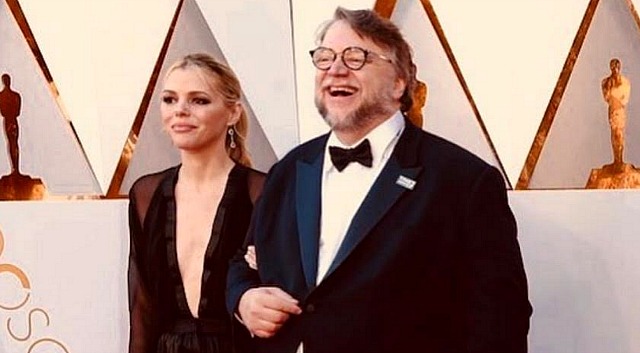
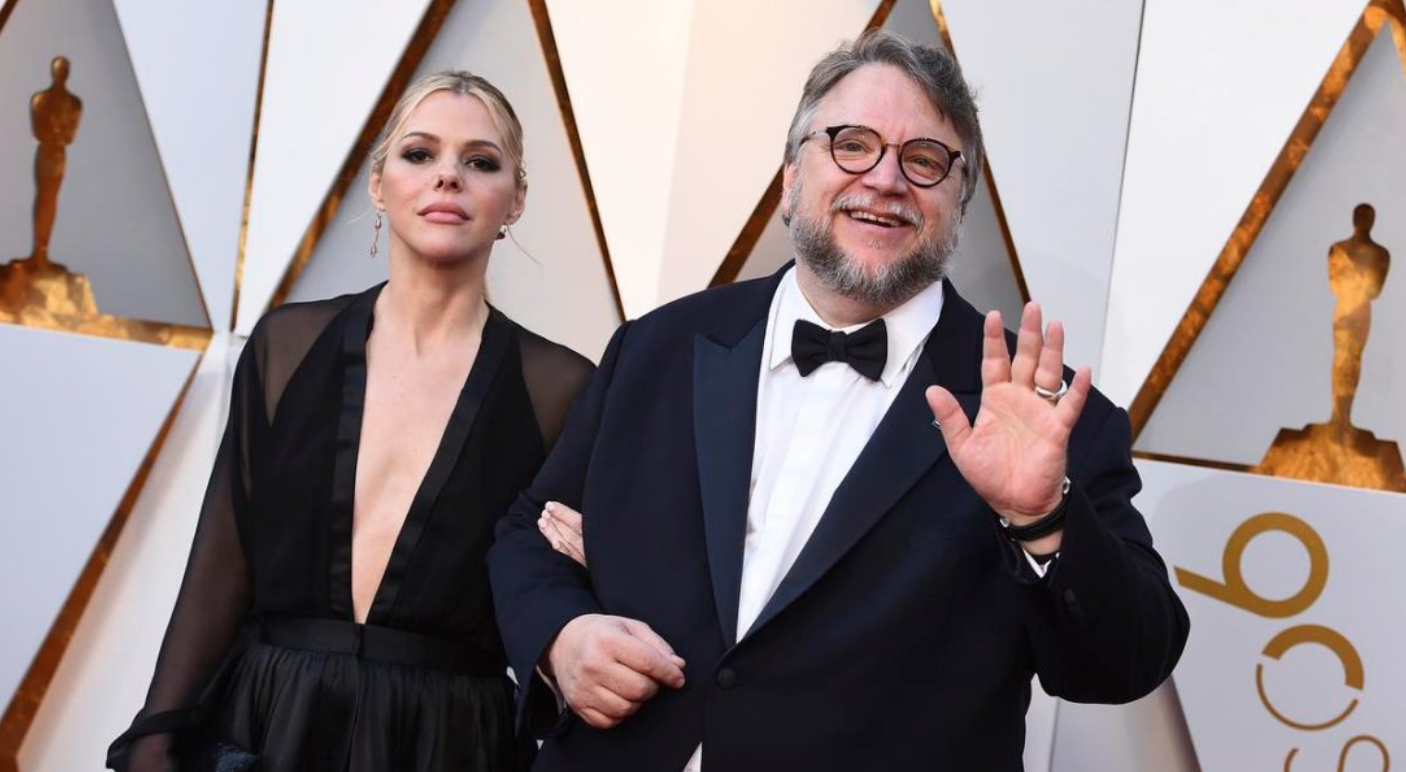
Kim Morgan, Guillermo del Toro prior to last night’s Oscar telecast — I’m getting a Frida Kahlo and Diego Rivera vibe.
“I Am A Moron! Goo-goo-ka-choob!”
There’s a hunger-for-fame virus infecting the populace, and Terry Bryant is the latest victim. This ayehole stole Frances McDormand‘s Oscar last night during the Governors Ball after-party. Bryant posted a Facebook video of himself boasting about winning (““Lookee, baby…this is mine…my team got this tonight”) and smooching the statuette. Then he allegedly tried to use the Oscar to gain entrance to the Vanity Fair after-party, and that’s where he was busted. McDormand reportedly told authorities to let him skate, which I personally interpret as “this guy is insane…this is about mental health…this episode can’t be sufficiently addressed by the criminal justice system.”

Oscar Schmoscar
8:38 pm: Three hours and 38 minutes, and the presenting of the Best Picture Oscar is the last item on the list. Warren and Faye take the stage. The clips are running, and the suspense is killing me. Please please please. The Shape of Water wins? Okay…if you say so. At least my nightmare didn’t happen, and thank God for that. Guillermo del Toro to future filmmakers: “You can do it. Kick in the door and come in.” The show is over, and it’s 8:49 pm.
8:21 pm: Jane Fonda and Helen Mirren announcing the winner of the Best Actor Oscar, which of course will go to Darkest Hour‘s Gary Oldman. And of course it is. We all love it when the Academy does exactly what everyone has predicted. Oldman goes on for too long. Best Actress Oscar presented by a towering Amazonian Jennifer lawrence or a shrimp-sized Jodie Foster…you choose. I would be happy if Sally Hawkins were to win. McDormand, of course, who, hyper and trembling, requests that someone pick her up if she falls over, etc. Everyone stands up with her. We all shine on. “Inclusion rider”?
8:13 pm: Three hours and 13 minutes, and four Oscars to go. Emma Stone announcing the best Director Oscar winner. Guillermo del Toro is the expected winner, of course, and he is, of course. “Erase the lines in the sand…we should continue doing that.” I loved his emotional last words (borrowed from James Cagney in Yankee Doddle Dandy): “My father thanks you, my mother thanks you, my brother and sister thank you, and I thank you.”
8:05 pm: Jill Messick makes the Death Reel…good. Sam Shepard, Martin Landau, Jeanne Moreau, Roger Moore, George Romero, Rance Howard, Don Rickles, Bernie Casey, Brad Grey, Jerry Lewis…still here, never leaving.
7:52 pm: “This Is Me” performance was a knockout — my favorite of all the songs. The Shape of Water‘s Alexandre Desplat wins for Best Musical Score. I wasn’t knocked out by it…sorry. And the Best Original Song goes to “Remember Me,” from Coco. Totally predicted.
7:46 pm: Sandra Bullock presenting the Best Cinematography, which will go to Roger Deakins, I presume. HE votes for Dunkirk‘s Hoyte von Hoytema. Deakins’ work on Blade Runner 2049 was fine, but he’s won tonight because of “give the poor guy an Oscar already!” sentiment. Because he’s been nominated so often. No worries.
7:44 pm: What’s with the tribute to military movies? A sop to the red states? Nothing against the military, mind — I’m just wondering why.
7:32 pm: Best Adapted Screenplay Oscar win by James Ivory…expected. Dignified acceptance speech. Best Original Screenplay pending…Get Out, right? And the Oscar goes to Jordan Peele. “I stopped writing this movie about 20 times…I didn’t think it was gonna work. To the cast and crew, I love you. And to everyone who went and saw the movie…who told friends to buy a ticket. I love you all, thanks so much, good night.” Please let this be it for Get Out…seriously. Give the Best Picture Oscar to Dunkirk. Yeah, I know.
7:22 pm: I wasn’t paying attention to the latest song, the one rapped by Common and sung by Andra Day.
7:17 pm: So Dunkirk is going to win the Best Picture Oscar because it’s won three Oscars already and winning for Best Editing is a strong indicator? Not buying it. If it happens, great, but I doubt it.
7:05 pm: That visit to the crowd watching a film at the next-door Chinese was fun but noisy. I felt lost. Chaos overcame the feeling. The bearded fat guy stumbled on the copy he was asked to read. Tiffany Haddish announces that Heaven Is a Traffic Jam on the 405, a portrait of Mindy Alpert‘s battle with mental illness, has won the Best Documentary Short Oscar. The Best Live-Action Short Oscar goes to The Silent Child.
6:55 pm: HE to Matthew McConaughey — movies are not “an illusion” — they’re more real than life, because it’s a constantly moving and transitional train and movies are forever. And Dunkirk wins the Best Editing Oscar. Three for that film so far.
6:52 pm: And Best Visual Effects Oscar goes to Blade Runner 2049.
6:43 pm: Daniela Vega introducing Call Me By Your Name song composter Sufjan Stevens, singing “Mystery of Love.” And his accompanists St. Vincent (totally in the background), Chris Thile, Casey Foubert, James McAllister.
6:35 pm: Nominees for Best Short Film, which Kobe Bryant‘s Dear Basketball won’t win because of the thing, right? No…it wins anyway! And there’s Bryant right on the stage. I thought #MeToo would take this one down. Second surprise of the night after the Icarus win. Best Animated Feature Oscar goes to Coco, of course.
6:27 pm: And here comes Allison Janney‘s Best Supporting Actress Oscar! HE would prefer a win by Lady Bird‘s Laurie Metcalf…nope! Janney takes it. “I did it all by myself.” Funny! Heartfelt and eloquent thanks to a long list of people, but delivered with speed and style. Three from the cast of The Last Jedi (Oscar Isaac, Mark Hamill, BB8, whatsername) awaiting their turn.
6:22 pm: Best Supporting Actress Oscar winner Rita Moreno…what an entrance! Announcing the nominees for Best Foreign Language Feature, and the Oscar goes to A Fantastic Woman. Expected, no? Congrats to the Sony Classics guys, Daniela Vega…everyone.
6:14 pm: I loved this Rolex ad. Jack Morrissey called it “tacky”. I loved the paycheck appearances by Scorsese, Bigelow, Inarritu, Cameron + the cinematography, production values.
6:07 pm: The Shape of Water wins for Best Production Design. I respectfully disagree — Dennis Gassmer‘s production design for Blade Runner 2049 ruled a bit more. Who’s the guy with (a) the velvet tuxedo sleeves that don’t cover his arms and (b) who’s wearing those stunning white sneakers?? Imagine someone actually choosing to look like this on the Oscar stage.
6:07 pm: Kimmel to Steven Spielberg: “Do you have any pot?” Huh? “Do you have any pot?”
5:58 pm: Two Dunkirk guys win for Best Sound Editing. Deserved! Now the Best Sound Mixing Oscar — Dunkirk again! Deserved! This doesn’t portend anything. Okay, it portends that voters respect Chris Nolan’s film, and they want to give it what they can, knowing it won’t win for Best Picture. One of the winners waves to his family way, way up there. (Sitting next to Sasha Stone? Actually, she’s in the second mezzanine this year.)
5:53 pm: That montage-y dreamscapey essay about Hollywood emotionality and high conveyance…excellent. I’d like to see it again, post it on Hollywood Elsewhere, whatever. Who was the editor?
5:44 pm: Taraji P. Henson‘s dress is…uhm, nightgowny. Mary J. Blige, Best Supporting Actress nominee for Mudbound, singing “Mighty River”…nice delivery! Hats off to the choreograher, lighting designer…everyone. The chorus behind her really killed it.
5:39 pm: Greta Gerwig and Laura Dern announcing winners of Best Documentary Feature. Hollywood Elsewhere is rooting for either Icarus or Faces Places. And Icarus wins! A surprise! Hooray for director Bryan Fogel and Oscar strategist Lisa Taback! Most people were predicting Faces Places, no? Kimmel: “At least we know Putin didn’t rig this competition, right?”
5:37 pm: “You know what else Superman has always been besides white? Not real.”
5:17 pm: What is that burgundy blood tux Armie Hammer is wearing…red velvet? What is that sparkly chiselled stalagnite design above the stage? The Darkest Hour makeup guys have won, fine, but they’re going on for too long. Play ’em off! Eva Marie Saint, who looks great at age 93, talking about losing her husband, Jeffrey Hayden…sad. Announcing the Best Costume Design Oscar, which will presumably be won by Phantom Thread‘s Mark Bridges. Correct!
5:17 pm: A lot of classy build-up (excellent clips from the past and present) for the Best Supporting Actor Oscar, which of course will go to Sam Rockwell. And it has! Rockwell’s “it’s grandma” story…excellent. “Everyone who’s ever looked at a billboard”…Rockwell went on just a wee bit too long, but he didn’t get played off because the show just started.
5:05 pm: Who advised Timothee Chalamet to wear that Good Humor man tuxedo? I love that Jimmy Kimmel raised the Mark Wahlberg vs. Michelle Williams payment-disparity episode…”if we can’t trust agents.” Black Panther‘s success was great for African Americans and Bob Iger.Kimmel: The world is watching us, and we need to set an example…and if we can stop sexual harassment, women will only have to deal with harassment in every other realm.” Or something like that. Guillermo del Toro and Nightmare Alley collaborator Kim Morgan sitting together. Helen Mirren caressing a brand-new lime-green Jetski.
The Hour Is Nigh
The question is whether to bang out my usual live-blogging reactions to the Oscar telecast (starting at 5 pm Pacific or 85 minutes hence) from the comfort of my living room, or should I join HE’s own Svetlana Cvetko for a relaxed viewing opportunity at Soho House? What if the Soho House wifi isn’t optimum? What if we can’t find seating next to a wall outlet?
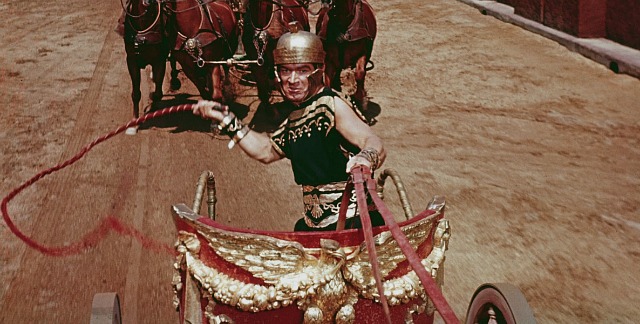
Jordan Peele: “This is the day, Jeffrey. It’s between us now.” Jeffrey: “Well, it’s obviously not between us, Jordan…you flatter me as I’m but a small fish in the pond, but yeah, this is the day. And if things go well for you, there won’t be much difference between myself and Stephen Boyd at the conclusion of the chariot race.” (Dialogue borrowed from William Wyler‘s Ben-Hur.)

Time Passes
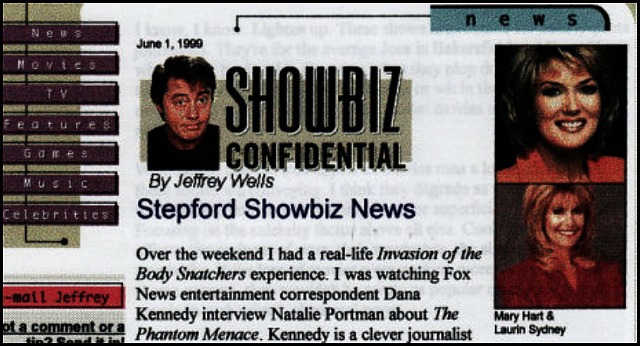
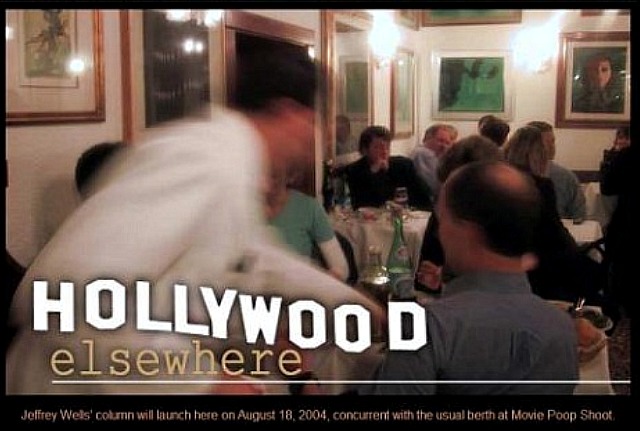
It was almost exactly 12 years ago (sometime in early March of ’06) when Hollywood Elsewhere abandoned the two-columns-per-week thing and began banging out items and stories on a steady bloggy-blog basis. And as of 8.20.18 Hollywood Elsewhere will have been running as a stand-alone for 14 years. But a more important anniversary will be celebrated two months after that (or eight months from today), for October 2018 will mark my 20th anniversary in this racket. For I began my online adventure on Mr. Showbiz sometime around 10.10.98. I stayed there for a little less than a year (until August ’99), and then was hired by the Reel.com guys. I stayed with them for three years, and then leapt over to Kevin Smith‘s unfortunately named Movie Poop Shoot site. Smith cut me loose in June of ’04, but graciously kept me on salary for a few weeks more.
Gone With The Currents
I’m not saying As Good As It Gets was a great film or even one of the best of the ’90s, but it has six or seven scenes that deliver a certain kind of emotional bull’s-eye satisfaction by way of first-rate writing and world-class acting. And on top of the long-lamented death of theatrical middle-budget adult dramas, this sort of high-polish, push-the-right-button-in-just-the-right-way confection (which cost $50 million or $77 million in 2018 dollars) is just about extinct, certainly in the theatrical realm. As extinct as screwball comedies or VistaVision westerns or counter-culture drug-dealing dramas.
As Good as It Gets was the last film in which the two leads (Jack Nicholson, Helen Hunt) won Best Actor and Best Actress. The big night wasn’t exactly 20 years ago (it happened on 3.23.98) but close enough.
One of the reasons this James L. Brooks film got funded was a belief that fall awards buzz (or even an actual statuette or two) might really make a difference to the financial bottom line. But if Brooks, Nicholson, Hunt, Gregg Kinnear and everyone else were 20 years younger and As Good As It Gets had been released in ’17, it probably wouldn’t have struck the same kind of emotional chords and might have even been dismissed by the New Academy Kidz (“Representation!…genre films deserve respect!…let’s give some others a chance!”) as typical middle-aged awards bait. For the Oscars have more or less become the MTV Awards (hat-tip to the HE commenter who said this a couple of days ago), and this is the world in which we’re all stuck in living.
“I Have An Uneasy Feeling My Career Just Peaked…”
Screenwriter Earl W. Wallace said the above after Witness, which he co-wrote along with Pamela Wallace and William Kelley, won for Best Original Screenplay. It happened 32 years ago, during the 58th Academy Awards telecast in ’86. For some reason I’ve never forgotten that confessional moment, and the laughter that followed. Wallace says it at 4:33.
What an awful realization or suspicion that everything you do from here on, no matter how hard you try, will never match this one shining moment of triumph. A couple of years later Wallace (who is still with us) hit the jackpot again with his script for the epic miniseries War and Remembrance, and he wrote several TV movies throughout the ’90s. But he was, by the currency of esteem, correct. It never got any better than winning for Witness.
Who among the major nominees for the 2017 Oscars might be nurturing this same concern, if and when they wind up standing at the lecturn tonight with all the world applauding? Answer: They all could be thinking this. Tomorrow is promised to no one. There is only the great and immediate now.
Posted on 8.7.13: If Gregory Peck had been clairvoyant and under the influence of a truth drug on the night he won the Best Actor Oscar for To Kill A Mockingbird in March 1963, he might have said, “Well, this is it…the peak moment.
“I’ve been lucky enough to play starring roles for the finest producers, directors and writers in the business for the last 18 years…Spellbound, Duel In The Sun, Gentleman’s Agreement, The Paradine Case, Twelve O’Clock High, Roman Holiday, The Man in the Gray Flannel Suit, Moby Dick, The Bravados, The Big Country, Pork Chop Hill, On The Beach, The Guns of Navarone, Cape Fear…and it’s been wonderful.
“I’m saying this because for the next 40 years it’s going to be all downhill. Oh, I’ll make a few interesting films over the next couple of decades but my charmed career period is over and I know it. Some actors only get lucky for five or ten years or so. I nearly had 20. And for that I’m very grateful to the industry and especially to the public. From the bottom of my heart, thank you.”
From someone who was there: “Of the three winners for Best Original Screenplay for Witness, Earl Wallace and his wife Pamela were in the middle of an acrimonious divorce — the conflict had begun with a fight over her sharing ‘written by’ credit — and were not speaking. The third partner, William Kelly, wasn’t speaking to either of them. He did, however, thank the studio Paramount, not knowing that a few days earlier they had fired him off another solo project. Someone had requested that his agents not tell him until after the ceremony, for obvious reasons. Enough to make the Marquis de Sade cry.”
Larry Gelbart’s 1986 introduction: “The successful screenwriter, one who is the author of more than a set of clever license plates, is a poet pragmatist, ready at the drop of a [hat] to change the script so that the part of Mother Theresa can be played by Goldie or Dusty or Whoopie. And if the writer is ready and willing but considered unable, perhaps the problem of water on the brain that the director has no trouble walking across, the writer is either re-written or partnered with one or more collaborators, often unknown to each other until their hands meet over the same award. Here are this year’s triumphant survivors of a system that would have made the Marquis de Sade cry uncle.”
Splendor In The Sea
This Screen Junkies Dailies piece popped yesterday morning on Facebook. It’s a fair observation. I know Guillermo del Toro well enough to testify that everything he draws and imagines and eventually puts on screen comes from his creative subconscious. Then again popular movies have a way of blending into the collective unconscious, and it wouldn’t be a crazy leap to presume that Guillermo saw Splash in ’84 (when he was 20) and that an echo of Ron Howard and Brian Grazer‘s film was part of the creative combustion that led to The Shape of Water.