Non-Racist Racists

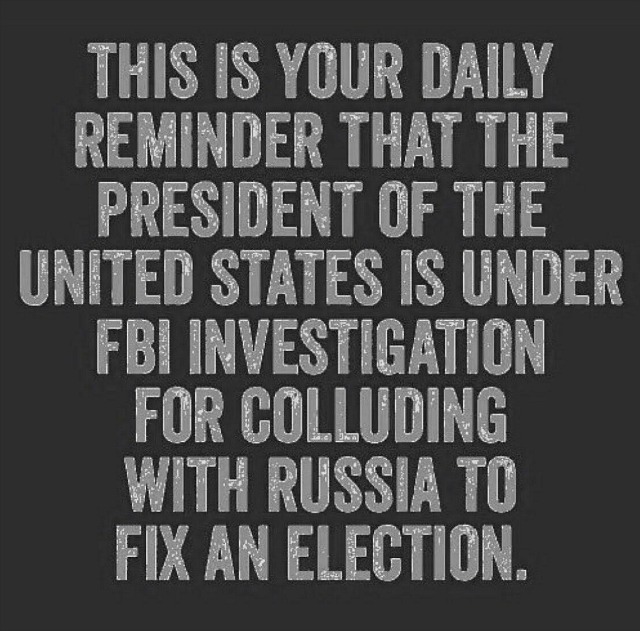
Four days ago The Atlantic‘s Adam Serwer posted “The Nationalist’s Delusion,” a seminal portrait of the racist mindset of Trump Nation — a constituency of white, mild-mannered yahoos who don’t see themselves as racist at all.

“During the final few weeks of the [2016] campaign, I asked dozens of Trump supporters about their candidate’s remarks regarding Muslims and people of color. I wanted to understand how these average Republicans — those who would never read the neo-Nazi website The Daily Stormer or go to a Klan rally at a Confederate statue — had nevertheless embraced someone who demonized religious and ethnic minorities.

“What I found was that Trump embodied his supporters’ most profound beliefs, combining an insistence that (a) discriminatory policies were necessary with (b) vehement denials that his policies would discriminate and (c) absolute outrage that the question would even be asked.

“It was not just Trump’s supporters who were in denial about what they were voting for, but Americans across the political spectrum, who searched desperately for any alternative explanation — outsourcing, anti-Washington anger, economic anxiety — to the one staring them in the face. The frequent post-election media expeditions to Trump country to see whether the fever has broken, or whether Trump’s most ardent supporters have changed their minds, are a direct outgrowth of this mistake.

Key sentence: “These supporters will not change their minds because this is what they always wanted: a president who embodies the rage they feel toward those they hate and fear, while reassuring them that that rage is nothing to be ashamed of.

“Most Trump supporters I spoke with were not people who thought of themselves as racist. Rather, they saw themselves as antiracist, as people who held no hostility toward religious and ethnic minorities whatsoever — a sentiment they projected onto their candidate.

“’I don’t feel like he’s racist. I don’t personally feel like anybody would have been able to do what he’s been able to do with his personal business if he were a horrible person,’ Michelle, a stay-at-home mom in Virginia, told me.

“Far more numerous and powerful than the extremists in Berkeley and Charlottesville who have drawn headlines since Trump’s election, these Americans, who would never think of themselves as possessing racial animus, voted for a candidate whose ideal vision of America excludes millions of fellow citizens because of their race or religion.

“The specific dissonance of Trumpism — advocacy for discriminatory, even cruel, policies combined with vehement denials that such policies are racially motivated — provides the emotional core of its appeal. It is the most recent manifestation of a contradiction as old as the United States, a society founded by slaveholders on the principle that all men are created equal.”
Read more

They Won’t Forget

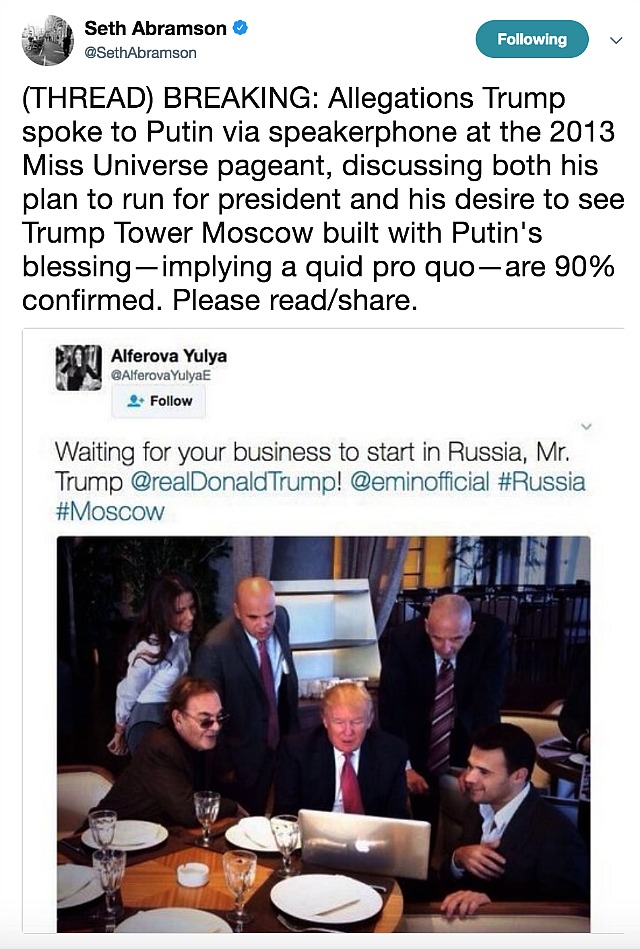
Please read the latest Seth Abramson twitter thread about Trump-Putin, kompromat and Trump Tower Moscow. For whatever reason the mainstream media seems to be dragging ass on this story. Or, if you aren’t caught up, scan a thread he posted in late August/early September.

What’s perfectly clear, Abramson tweeted, is the Trump-Russia scandal began in earnest the moment Trump corruptly gave Russia the 2013 Miss Universe pageant. Mueller will investigate many crimes — see Manafort and money-laundering — but it all comes down to a four-year-old scenario: Trump, Putin and Trump Tower Moscow.

“We know a Trump Tower Moscow letter-of-intent was signed, then lied about; we know Trump and his team tried to convince us his only play for Trump Tower Moscow was a failed 2015 bid; we know Russians knew before we did that Trump was running for POTUS; we know Trump wanted to meet Putin at the 2013 pageant, and surrounded himself with every resource he could to make it happen telephonically, even as Putin was sending him every imaginable resource needed to get a Trump Tower Moscow deal done; we know a one-time Trump friend confirms all this.

“So while we don’t—yet—have 100% conclusive proof, every piece of evidence now available says (a) yes, Trump established a Trump Tower Moscow/presidential run quid pro quo with Putin in Moscow in November 2013, and (b) yes, he was lured to Moscow as part of a kompromat plot.”

Read more

Personality Shifts

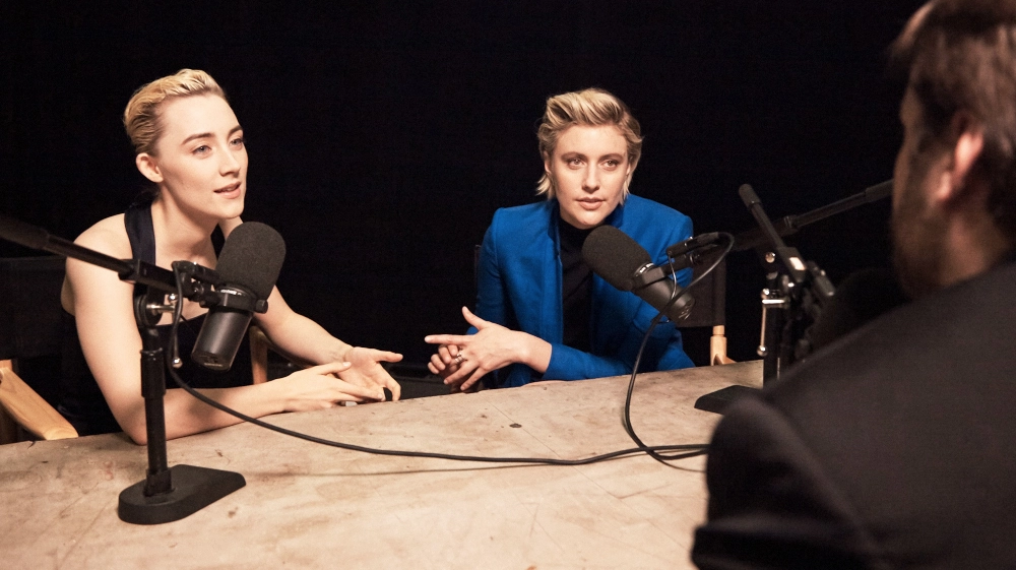
Variety‘s Kris Tapley has posted a Thanksgiving Day “Playback” interview with Lady Bird director-writer Greta Gerwig and star Saoirse Ronan. It’s aimed at people who’ve seen the film, but that’s fine. I love Ronan’s Irish accent, and I adore Lady Bird. It deserves all the appropriate Oscar nominations — Best Picture, Best Director, Best Original Screenplay, Best Actress (Ronan), Best Supporting Actress (Laurie Metcalf), et. al.

The aspect that really stands out, for me, is Tapley’s engaging manner — gently chatty, streetcorner friendly, smooth. I listen to his voice and think “yeah, nice guy, cool personality…sounds like he’d be good to know.” Except I’ve known Tapley for 10 or 12 years, and have discussed stuff with him numerous times but (and I don’t mean this as a put-down) I’ve never met the guy who’s talking to Greta and Saoirse here. Honestly, not once.

And that, trust me, is totally par for the course. Guys never talk to other guys the way they do to women. Every guy is like this, myself included.

We all turn it on when we interview talented hotshots, but male interviewers really turn it on when the hotshots are brilliant, attractive ladies. The Tapley in this discussion — warm, chuckly, gentle-voiced — is way different from the guy I occasionally run into at industry parties. That Tapley is downbeat, a bit sullen, rarely a smile and sometimes a vibe that indicates he’d rather be elsewhere.

I’m also describing my own personality when I run into colleagues and whatnot. I’m much friendlier — perkier, smiley, even giggly — when I’m interviewing someone or talking to some director or screenwriter or actor I admire. When the interview ends I turn off the “sell” and default to my basic personality, which is on the wry, sardonic, occasionally glum side. But when a pretty woman enters the room that personality will vaporize in less than two seconds.

We all act like phonies at parties, but guys will sometimes outdo themselves. I’ll sometimes watch a guy I know talk to a woman at a party and think to myself “Jesus, man…are you going to just completely bullshit her or are you going to turn it down and get just a little bit real?”

On the other hand I’ll sometimes force myself in social situations to turn on my interview personality because I occasionally get tired of myself and all of my creations.

Breezy Eason Was Bad Guy, Not Michael Curtiz

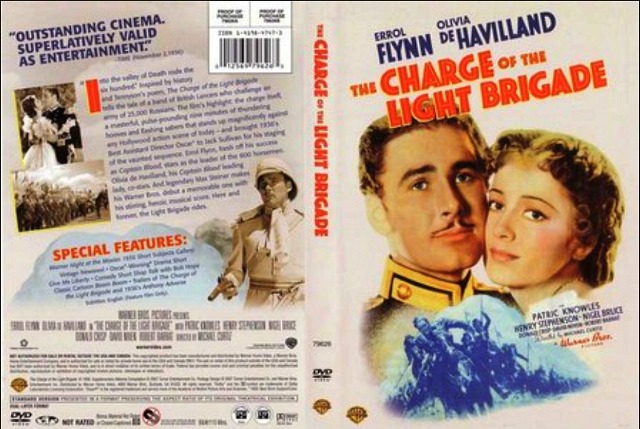
Yesterday I posted a short piece titled “When Horse Cruelty Was Common.” It was sparked by an interest in Alan K. Rode‘s just published “Michael Curtiz: A Life In Film,” a reputedly excellent biography. Yesterday I focused on allegations about the tripping of horses during a military attack sequence in Curtiz’s The Charge of the Light Brigade (Warner Bros., 10.20.36). A Wikipedia account contends that “125 horses were tripped with wires; of those, 25 were killed or had to be put down afterward.”

Unable to reach Rode yesterday afternoon, I repeated the Wiki account along with a comment about Curtiz from a critic friend.

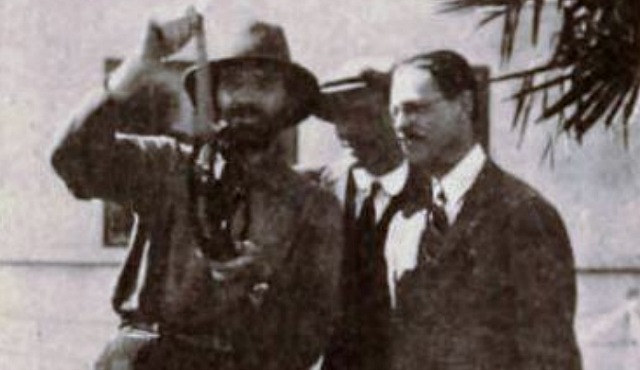
This morning, however, I learned that the Wikipedia report, which partly stems from a tale about the Light Brigade shoot by David Niven in his book “Bring On The Empty Horses,” is exaggerated and erroneous. Rode, who got in touch this morning, calls it “a myth.” Only four horses were killed during the shoot, Rode contends, and the real bad guy in the Light Brigade horse tragedy was second-unit director “Breezy” Eason.

To explain his case Rode sent along a couple of pages from his book. He also gave permission to reprint them.

“Several horses did die during the filming of The Charge of the Light Brigade,” Rode wrote in an email, “but the stories of the mass killing of horses propagated by David Niven and other sources including Wikipedia appears to be yet another anecdote that has fossilized into the bedrock of Hollywood folklore.

“Curtiz could be quite merciless when it came to putting ‘realism’ on screen, but, as you indicated, this was in keeping with the times. The more notorious story is his alleged drowning of three extras during the filming of Noah’s Ark (’28).

“I’ve attached an extract from my unedited manuscript that discusses the Light Brigade horse situation in some detail. My research on this matter was quite thorough. All of my writing about Curtiz is traceable to a verifiable source.”


2nd unit director “Breezy” Eason (hat, beard), sometime in the 1930s.

Read more

Newbies

I still haven’t seen Wonder so here it is, right? But among these five you know which one I really feel like popping onto the Bluray player? The Disaster Artist, and I’ve already seen it twice. You know why? I’ll tell you why. I don’t know why. Actually it’s because I love James Franco‘s performance as the wailing Count Dracula from Eastern Europe. “Aaagghhh!!”…give this man a Best Actor nomination.

Office Hours

A few hours ago I dropped off the Mini Cooper at A & M Auto Repair for a tune-up. Rather than take a cab home and return at 5 pm, I decided to file from Sprouts Farmers Market, which is right next door. They have a nice cafeteria area, and what I would call half-decent wifi. I was hit with a sudden urge to nap around 2 pm and so I stretched out on a bench, and the staffers didn’t hassle me. Good fellows. I’ve also done a lot of people watching over these last few hours, and it left mem with a certain melancholy feeling. A lot of hangdog expressions, a mood of slight despair, people with stooped shoulders, etc. A lotta people out there hurtin’. Life is demanding and then you die.

When Horse Cruelty Was Common

A day after expressing interest in Alan K. Rode‘s “Michael Curtiz: A Life in Film” (University Press of Kentucky), a critic friend reminded me about a dark stain on Curtiz’s reputation. I’m speaking of the notorious tripped-horse incident that happened during the filming of The Charge of the Light Brigade (Warner Bros., 10.20.36).

The Wikipedia entry explains it concisely: “For the filming of the climactic charge, 125 horses were tripped with wires; of those, 25 were killed or had to be put down afterward. Errol Flynn, an accomplished horseman, was outraged by the animal cruelty and by director Michael Curtiz’s seeming indifference, and attacked Curtiz. They were pulled apart before any serious damage was done.

“The charge sequence forced the U.S. Congress to ensure the safety of animals in motion pictures; the ASPCA followed suit and banned tripwires from films. Because of the number of horses killed, TCOTLB was never re-released by Warner Brothers despite Flynn’s great popularity at the time.”

Earlier today I asked Rode if we could discuss some of the details of this incident, and what his final feelings are about Curtiz’s handling of it.

My critic friend told me he’d “read parts of the book on Amazon and noted that Rode denies that Curtiz was a ‘sadist.’ I had been looking forward to buying and reading it if it told the truth. If Curtiz had worked in another business, he would have been in the penitentiary for repeated instances of (at least) manslaughter as well as cruelty to animals.”

My response: “That was a horrific episode, no question. But it’s easy to sit here in 2017 and condemn work practices of 80 and 90 years ago. As I understand Hollywood history, animal cruelty was par for the course during the 1920s and 30s. The charge is what, that Curtiz was more ruthless than others who’d deliberately caused injuries to horses? Even more so than those in charge of shooting of the chariot race in the 1926 Ben-Hur, during which “as many as 100 horses died“?

“Perhaps so, but that was the climate and the shooting ethic in Hollywood back then. Curtiz may have been a grievous offender, but the industry-wide effort to prevent cruelty to animals wasn’t institutionalized until 1939. And animal cruelty continued for decades, or at least according to a 4.2.12 Salon piece by Susan McCarthy called “Hollywood’s Long History of Animal Cruelty.”

Read more

Proudly Never Saw It

Almost everyone has a short list of films they’ve not only never seen but wouldn’t with a knife at their back.

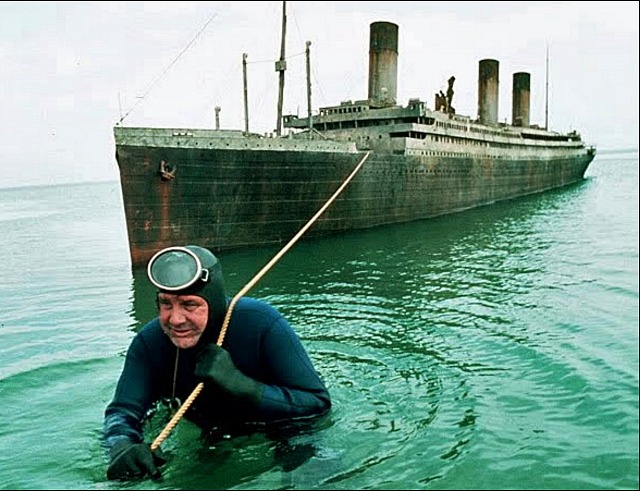
This is how I’ve long felt about Jerry Jameson and Sir Low Grade‘s Raise The Titanic (’80). Poor Richard Jordan, Jason Robards, David Selby, Anne Archer and Sir Alec Guinness — convulsed by self-loathing as they pocketed their paychecks.

What put me off was that story about Pauline Kael bolting out of a Manhattan press screening while angrily muttering that “life is too short.”

Until an hour ago I’d never seen a frame of footage from this box-office calamity, but now that I’ve seen the below passage I…I…I…I don’t like admitting this but I have to. The moment when Richard Jordan slowly walks through the rusted remains of the fabled vessel, there’s a certain…what, faintly haunted quality? Something tingly around the edges?

What films have you avoided like the plague all your life, and have never experienced a moment’s regret?

Day Before Thanksgiving And…

The Twitter embargo on Steven Spielberg‘s The Post lifts on Monday, 11.27, at 9 pm Pacific; reviews can’t appear until Wednesday, 12.6 at 6 am Pacific. I can’t describe or even briskly summarize the discussions among critics so far, but the conversations next week will be lively, I can tell you. There’s a big evening screening happening on Monday, 11.27 at the DGA, complete with Spielberg and his illustrious cast attending a post-viewing discussion


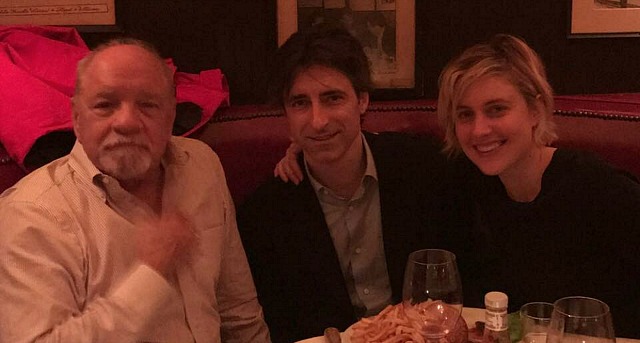
Paul Schrader engineered a stunning comeback with First Reformed, which tallied a Rotten Tomato score of 95%. It delivered the kind of lean, flinty, straight-faced realism that hadn’t been seen from Schrader since….what, Light Sleeper? Or should I say Hardcore (’90)? This photo of Schrader, Noah Baumbach and Greta Gerwig was recently taken at Minetta Tavern, and then posted on Facebook.

Read more

Another Night with Lois Weber

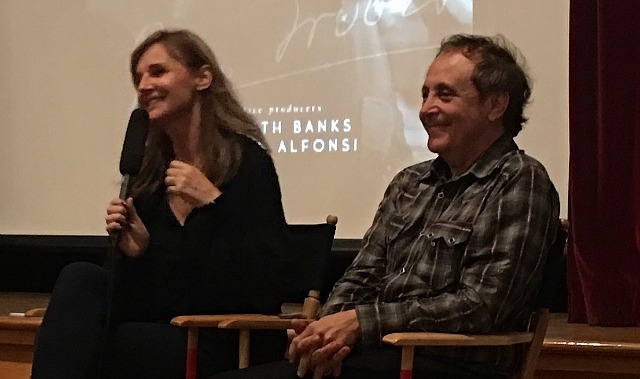
Last night Hollywood Elsewhere hopped on the beast and drove over to the Hollywood Woman’s Club (1749 No. La Brea) for another viewing of Svetlana Cvetko‘s Yours Sincerely, Lois Weber, which is angling for a Best Short Subject Documentary Oscar nomination. The event was well attended. Following the screening Cvetko and Hollywood historian and researcher Marc Wanamaker talked about Weber, a powerful, highly influential director-writer in her day.

Easily the industry’s most prolific filmmaker in the teens and 20s, Weber owned and operated her own studio beginning in 1917. She lost her mojo in the late 20s, largely out of a refusal to cater to prevailing tastes in shallow escapist fare. Shelley Stamp‘s “Lois Weber in Early Hollywood” is the definitive biography.

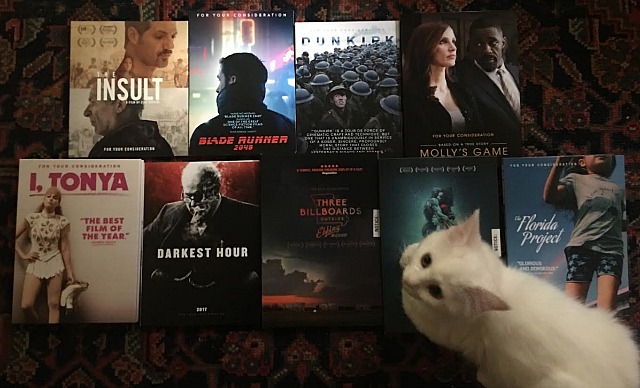
The dominant theme of the ’17 award season has clearly been the struggles of tough, dynamic women marching to their own beat, so Cvetko’s short fits right into this.


Yours Sincerely, Lois Weber director Svetlana Cvetko, Bison Archives’ Marc Wanamker during last night’s post-screening discussion at the Hollywood Woman’s Club.

"Yours Sincerely, Lois Weber" Trailer from Svetlana Cvetko on Vimeo.

Read more

Remember The Ramsay?

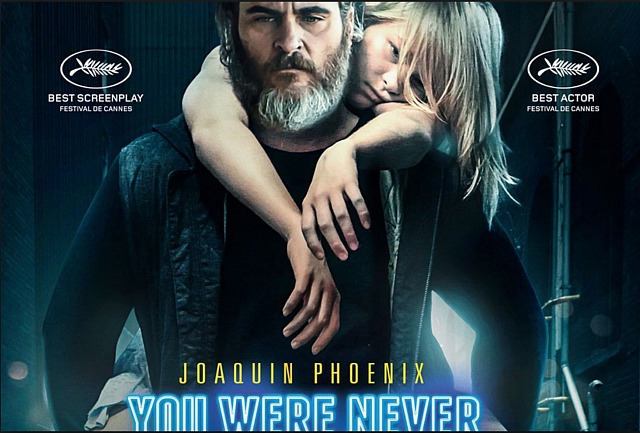
There was a fair amount of excitement about Lynne Ramsay‘s You Were Never Really Here, a violent character study with Joaquin Phoenix, at the end of last May’s Cannes Film Festival. Phoenix won the fest award for Best Actor; Ramsay won for Best Screenplay. It would have made for a more interesting ’17 award season if Amazon Studios had decided to platform it next month in New York and Los Angeles, but nope. It pops limited on 2.23.18, or a little more than a week before the 2018 Oscar telecast.

It would be great if Amazon could offer a couple of screenings sometime in December, allowing those who missed the Cannes debut a chance to catch up.

Read more

Cannes 2018 Shifting Ahead By One Day

For as long as I can recall the Cannes Film Festival began on Wednesday morning, and ended 12 days later with the big award ceremony on Sunday evening. Well, no longer. It was announced this morning that the 71st Festival du Cannes will begin Tuesday, 5.8.18, and end with the big awards ceremony on Saturday, 5.19.18. The change, according to festival president Pierre Lescure, “will increase [the] prestige of the award ceremony” — Saturday night is more prestigious than Sunday night? — “while at the same time giving the closing film better exposure.” HE readers are obviously free to sort that one out for themselves. The bottom line is that the annual journalist gathering at La Pizza will now happen on the evening of Monday, 5.7.18.


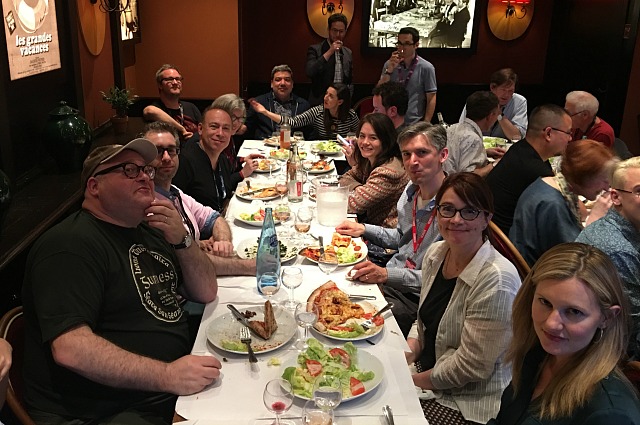
La Pizza table #1 (clockwise from left): Guardian/Vanity Fair critic & contributor Jordan Hoffman, Indiewire critic David Ehrlich, Variety critic Owen Gleiberman, Indiewire editor/columnist Anne Thompson (half-obscured), First Showing‘s Alex Billington, Film Society of Lincoln Center deputy director Eugene Hernandez, critic Tomris Laffly (Film Journal, Time Out New York, Vulture), [standing] TheWrap‘s Ben Croal, Indiewire‘s Eric Kohn, Vulture‘s Kyle Buchanan (left profile, half obscured), New York/Vulture‘s Jada Yuan, Screen Daily‘s Tim Grierson, Washington Post critic Ann Hornaday, Vanity Fair‘s Rebeca Keegan.

Read more