Last night there was a Pasadena Arclight research screening of Damien Chazelle‘s La-La Land (Summit, 7.15). A contemporary musical love story starring Ryan Gosling and Emma Stone, pic seems to have gone down pretty well with the viewers. Not at all on the level of Whiplash, one guy remarked, but that wasn’t the intent. In a 10.7.14 interview with Collider‘s Steve “Frosty” Weintruab Chazelle called La-La Land “an old fashioned musical in the vein of Singin’ in the Rain, A Star Is Born and The Umbrellas of Cherbourg but set in contemporary L.A.”
Chazelle’s money quote was that he wanted it to be “a big, CinemaScope, Technicolor love letter to Los Angeles.”
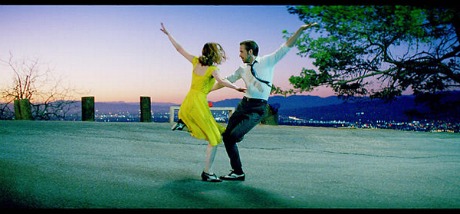
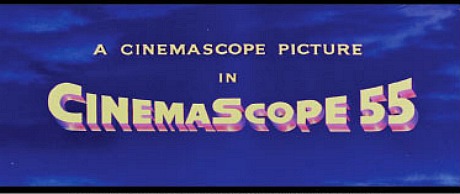
What interested me this morning was a report that prior to the opening credit sequence, which one guy descibed as “very old-fashioned and 1950s-styled”, the film begins with a CinemaScope 55 logo (not in color but in black and white). I thought this might signal another revival of an old widescreen technology a la Quentin Tarantino‘s filming of The Hateful Eight in Ultra Panavision 70.
It makes no sense that anyone would want to shoot in CinemaScope 55, which (a) was the first large-format widescreen system, (b) delivered an aspect ratio of 2.55:1 and (c) was used on only two mid ’50s 20th Century Fox musicals, The King and I and Carousel. But I figured it was worth investigating.
Well, it wasn’t. The more I searched and called around the more specious or even silly the idea of shooting with CinemaScope 55 seemed. The logo at the front of La-La Land seems to have been a sentimental nod to the above-named musicals more than anything else. I knew I wouldn’t be told anything substantive so I tried to merely discover whether CinemaScope 55’s aspect ratio (2.55:1) was used in the shooting of La-La Land. But even that piece of rinky-dink information was too much to share.