Heartbreak

Last week Vulture guy Kyle Buchanan mentioned something about Neil LaBute‘s Some Velvet Morning being a kind of comeback-resurgence film and possibly his best since In The Company of Men (or something like that). It will screen three times at the Tribeca Film Festival, which begins on Thursday, 4.18. It sounds like a major event — a film that may all but erase memories of The Wicker Man and restore LaBute’s rep as a master conveyor of fear and loathing between the sexes.


Alice Eve, Stanley Tucci in Neil LaBute’s Some Velvet Morning.

But this isn’t a good year for me to attend Tribeca (I can’t afford it) and Steve Beeman of Falco Ink is telling me that the Velvet Morning guys won’t be allowing any Left Coast critics or columnists to see it concurrently via DVD screeners or a limited digital viewing window of some kind. That’s a real shame. They’re presumably afraid of piracy but a limited digital streaming option for favored journalists doesn’t seem like much of a risk to me. So if I want to catch it next weekend I’ll have to fork over $1200 or so and probably more.

“Young and beautiful Velvet (Alice Eve) is enjoying a relaxing morning in her New York brownstone when Fred (Stanley Tucci) interrupts,” the synopsis reads. “With suitcase in tow, he enters the apartment with great expectation. Not having seen or heard from Fred in nearly four years, Velvet is clearly surprised. As Fred unloads the reason for his resurfacing, the history and nature of their relationship is revealed. The weight of their reconnection becomes clear as tension mounts and their chemistry reaches its climax.

“Writer/director Neil LaBute continues his exploration of male and female relations in this enigmatic relationship drama. The use of natural lighting and handheld camera highlights the dramatic realism for which LaBute is known. Both lead actors give electric performances, Stanley Tucci as the manic, ego-crushed older man, and Alice Eve, the dazzling ingénue. Their nuanced performances, paired with LaBute’s dialogue, create an intriguing drama with a stunning finale.”

Update: The only thing that gives me pause is the fact that Velvet is a porn-star name. What semi-upstanding parents would name their daughter Velvet? Any woman who would self-name herself Velvet would do so only to enhance her reputation among oily guys who pay for it. Woman: “Hi, my name is Velvet Kowalsky and I’m applying for the marketing position with your company.” Employer: “Uhm…your name is Velvet?”

Remember that line in Woody Allen‘s Husbands and Wives in which a business colleague was telling Sydney Pollack to call a certain lady of the evening, in part because “she has a mouth like velvet”?

And by the way, what “young and beautiful” blonde 20something who isn’t holding down a senior executive-level position with a major corporation can afford to live in her own “New York brownstone”? At best somebody like Velvet might be able to afford a share…maybe. On her own she might be able to afford some small, moderately dumpy apartment in Brooklyn or Queens.

Zod Channel

This Man of Steel teaser is the most promising, intriguing and even exciting come-on yet. Rage, bad reception, a bad acid trip. It’s the only thing to put the hook in so far. For the first time I’m saying to myself “hmmm, yeah, possibly” instead of “Zack Snyder doing another Superman movie?…yeesh.”

Last Site In World To Post Catching Fire Trailer

“From now on your job is to be a distraction so people forget what the real problems are.” A very significant percentage of the films, actors and actresses celebrated on the MTV Movie Awards tonight are more or less about fulfilling this goal. At least as far as the under-35 audience is concerned. If I think about it I’m sure I can come up with exceptions. Give me until tomorrow morning.

GenY Version?

In this trailer for Carlo Carlei‘s Romeo and Juliet, Juliet’s “little stars” riff (read by Hailee Steinfeld) is truncated. Let’s presume that the whole passage will be in the film: “And when he shall die, take him and cut him out in little stars, and he will make the face of heaven so fine that all the world will be in love with night, and pay no worship to the garish sun.” It’s the “garish sun” line that’s missing. Adaptation by Julian Fellowes.

Best Edwardian-era Capturing

I’ve never seen sharper, cleaner footage from over 100 years ago, ever. Posted two years ago, originally shot around 1900 (partly in Cork, Ireland). Footage was motion stabilized and slowed down to correct speed (from 18 fps to 24 fps), and then upscaled to HD via enchancement software. There are apparently no grain monks among historical film preservationists, but if there were they would probably argue for keeping the naturally faded and jumpy look of old film and against digital enhancements.

Tell it, Glenda!

For those stalled by Ms. Jackson’s reference to Hogarth, she means William Hogarth (1697 – 1764) — “an English painter, printmaker, pictorial satirist, social critic, and editorial cartoonist. His work ranged from realistic portraiture to comic strip-like series of pictures called ‘modern moral subjects‘. Satirical political illustrations in this style are often referred to as ‘Hogarthian.'”

Subterfuge, Dots, Connections

Why is it that no one except myself has even mentioned what would seem to any observant person like a somewhat plausible (if not entirely plausible) reason for the vague, sketchy, mostly dialogue-free nature of Terrence Malick‘s To The Wonder? The reason I’m suggesting (apart from the fact that Malick’s natural inclinations are to jettison characters and dialogue) is that he’s a very private fellow, notoriously so, and yet, paradoxically, he very clearly based the narrative bones of To The Wonder on his own personal history, as I pointed out on 8.19.12.

Variety‘s Steven Gaydos commented as follows: “I’m sure this isn’t the first time someone connected the dots between an artist’s obsessive desire for secrecy and privacy in life and their obsessive desire for full-frontal exposure of everything personal and painful and private in their art.”

It just seems queer that not one reviewer has brought this up. Not even as a talking point, not even as gossip…nothing.

From the article: “I’ve heard or read bits and pieces over the years, but a 5.21.11 ‘The Search’ document by Brett McCracken called ‘39 Facts About Terrence Malick‘ reports that in the early 80s, Malick, raised in Bartlesville, Oklahoma, fell for Michele Morette, ‘a Parisienne who lived in his building in Paris and who had a daughter, Alex. After a few years the three of them moved to Austin, Texas. Malick married Michele in 1985, but they divorced in 1998.’ That same year, McCracken writes, “Malick married Alexandra ‘Ecky’ Wallace, an alleged high school sweetheart from his days at St. Stephen’s school in Austin, Texas. They are still married and currently reside in Austin, Texas. Ecky Wallace is the mother of actor Will Wallace, who appears in The Thin Red Line, The New World and The Tree of Life.”

Are you going to stand there and tell me that Neil (Ben Affleck) isn’t Malick, Marina (Olga Kurylenko) isn’t Michele and Jane (Rachel McAdams) isn’t Ecky?

Early Morning Purgatory

There’s nothing quite like the feeling of wee-hour entrapment when you can’t sleep. It happened this morning around 2:15 am. I awoke on the couch fully dressed with the lights on and the TV blaring. I got up long enough to jettison the externals and kill the lights and flop. Pointlessly. Nothing. if I’ve been through this once I’ve been through it 100 times. The best thing you can do is accept the situation and get up and turn the lights on and start working. At least that way you’re doing something with your time. Instead I watched Peter Bogdanovich‘s Mask, which I haven’t seen in 27 or 28 years. Sleep usually kicks in around 5 or 5:30 am, and that’s what happened this morning. What a drag.

Just Saying

If you’re having a disagreement and asking someone if they’re insane, you can’t be mild-mannered about it. You need to say the word “insane” as if you’ve spent time in a mental ward and know the meaning of the word. You can’t say “insane” like “tomato” or “laundromat” or “Allen wrench.” You need to get into it. One good example is the way Julie Hagerty says “you’re insaaaaane!” to Albert Brooks in the opening scene in Lost in America. You really have to go with the “aaayyne” part. You have to really bray it out.

Bichir, Parker Take Sonoma Bows

Weeds costars Demian Bichir and Mary-Louise Parker were given a tribute last night at the Sonoma Int’l Film Festival. A large audience sat in Veteran’s Hall and listened to a spirited q & a, during which Parker wouldn’t stop praising Bichir’s acting gift and especially his Oscar-nominated performance in A Better Life.


(l. to r.) Sonoma Int’l Film Festival honcho Kevin McNeely, Demian Bichir, Mary-Louise Parker following last night’s tribute.

For whatever reason nobody mentioned that roughly five months hence Bichir will begin directing Refugio, a love story that he’s been writing and re-writing for five years. It will shoot in the U.S. and Mexico. His upcoming feature films include Dom Hemingway, Machete Kills and The Heat. He also has a significant role in The Bridge, a 2013 TV series.

A big invitational dinner followed the tribute. I chatted with Demian a bit and said hello to Mary-Louise. I don’t mean to sound uncaring but I wasn’t a fan of the appetizer (a beet dish). By the time the entree began to be served I had to leave to catch a 9 pm screening of Eric Christensen‘s The Cover Story, a doc about the art of ’60s and ’70s album jackets. But thank you, Sonoma Int’l Film Festival, for a very pleasant evening and for your abundant generosity.

The Cover Story was too much to take. I fled at the half-hour mark. It appears to have been made with the assumption that nobody has heard of the super-groups that reigned in the ’60s and ’70s, requiring that their commercial and artistic exploits have to be recited ad infinitum. It’s very tedious. On top of which the narrator speaks in a slick salesman tone that sounds like his main gig is narrating infomercials for potato slicers and cleaning equipment. The deal-breaker was when he recalled the death of John Lennon in the manner of…oh, Wheel of Fortune‘s Pat Sajak?

42 Breakdown

Those who saw 42 this weekend should watch The Jackie Robinson Story (1950), a mild-mannered biopic in which Robinson played himself. There are more than a few similarities. Go to 23:00 for the scene in which Branch Rickey (Minor Watson) offers Robinson a job with the Dodgers, but only if he “has the strength not to fight back” — roughly the same scene happens in Act One of 42. Not line for line, but close enough.


(l.) Minor Watson as Branch Rickey and (r.) Jackie Robinson as himself in The Jackie Robinson Story.

Brian Helgeland‘s sports drama overperformed with $27 million. Presumably the HE community has some sort of verdict? Too simplistic, on-the-nose and old-fashioned? Or are you on the Marshall Fine side of the fence?

In Nikki Finke‘s 4th box-office update, posted late last night, she notes that audience composition was 48% male, 52% female, and 83% over-25 and 17% under-25. She also reports that 84% saw the film due to “subject matter.” (And the other 16% saw it for the special effects?) The funny part comes when Finke presumably asks a Warner Bros exec how “urban” the audience was, and the exec replies that “while we do not poll race breakdown, I can tell you we performed extremely well in all the large urban markets. But the highest grossing theaters were the country’s most commercial screens.” Are there any highly commercial screens that aren’t in urban-area markets?

McBride Says Stevens Would Be “Appalled” Over 1.66 Shane

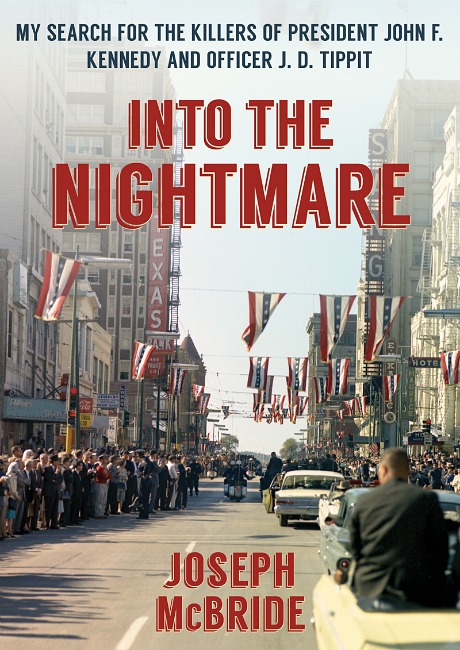
Author, former Variety guy and renowned cineaste Joseph McBride has revealed that he’s written George Stevens, Jr., with whom he co-wrote several AFI tribute specials in the ’80s, and told him he’s wrong about having contributed to the presentation of his father’s western classic, Shane, in a 1.66 to 1 aspect ratio on the forthcoming Warner Home Video Bluray.

John McElwee‘s Greenbriar Picture Shows has posted a portion of McBride’s letter, which, I’m told, has appeared on his Facebook page.

“I have written my former writing partner George Stevens, Jr., to share my concern about how the Shane Bluray release is chopping off parts of the film. This obviously must not be done.

Patrick McGilligan and I interviewed Stevens in 1974, [and during that discussion] Stevens talked about the importance of deliberate pacing and editing.

“‘It’s related to music or painting, the arrangement of film, and it has an enormous effect on an audience,” McBride quotes Stevens saying at one point. “They never relate to it as being devised, any more than I presume I’m seduced because Renoir devises the composition of what he shows me in a painting. I know he sweated it out, erased it, but he got it. There’s no question about it, there’s the grand man.

“‘It surprises me how well audiences, also critics, reward a film that has that kind of thing in mind, by design, not because it just happened. Sometimes we find really fine quality in a film by looking at it, looking at it, and then looking back at it — why, this darn thing’s designed as the Bolero is designed!”

McBride concludes that “this was a man who took great pains over every aspect of his work, including composition. I am sure he would be appalled to see Shane cut down to 1:66 again when it could be released in the Academy ratio in which he shot it.”

Portion of actual letter from McBride to Stevens, Jr.: “Since your father composed Shane so painstakingly and beautifully in 1:33 (I remember vividly him telling me how he achieved the great composition of Shane framed within the antlers of the elk in the opening of the film), I would not see any value in changing that original ratio for home viewing, even if your father had to go along with a cropped widescreen version for early theatrical engagements during that first all-encompassing craze for widescreen.

“I have seen your father’s 35mm print projected on theatrical screens three times (once by your father himself in Madison the first time I saw the film at the University of Wisconsin, in 1966), and it was carefully preserved (indeed spectacular-looking) and in the 1:33 ratio.

“I have seen recent frame comparisons between Shane at that ratio and Shane at the 1:66 evidently planned for Bluray, and it seems clear that important visual data would be lost if the film were cropped again to 1:66, no matter how carefully and no matter whether it were to be done frame by frame. Your father’s great compositional sense would be at risk here, in my opinion. This great film would be diminished.

“I would hope at least that you could influence Warners to release both the 1:33 versions and the 1:66 versions on a Bluray set so viewers can choose to watch it either way. There may be some of the usual arguments about the public expecting to have their TV screens filled, but I recall how we went through all that when even the clips for AFI Life Achievement Award shows had to be panned-and-scanned, but later the industry and the more knowledgeable segment of the public (the segment that values and reveres classic films) learned to accept black bars at the side to preserve a film’s original 1:33 ratio.”