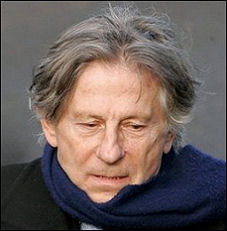
Different Strokes

In a discussion of the Polanski case, Vanity Fair‘s Julian Sancton notes that “the French, in particular, are constantly baffled at the puritanical fervor with which the United States pursue men they admire, from Woody Allen to Bill Clinton. Sexual deviance, they seem to believe, is a natural and acceptable side-effect of greatness.”

Which isn’t putting it fairly. The French may have a comme ci comme ca attitude about world-class artists and powerful politicians having certain perverse or flamboyant tendencies in their private moments, but that’s not the same thing as calling such appetites (particularly those involving minors) acceptable. Because they not.

Rich and powerful go-getter types are different from Average Joes and Janes in two respects. One, they dream bigger, think bigger and are consumed by much stronger desires to get somewhere in life (or, in some cases, to get to the very top). And two, once they’ve risen to the upper stations of whatever profession or social network they’re operating in, they’re basically told in a hundred different ways that the Average Joe, lower- or middle-station rules about what you can or can’t get away with are no longer quite as demanding and unchallengable and black-and-white as before.

Rich and powerful people tend to believe they can get away with more, and so they tend to step over the line more because life tells them they can. It really is that simple.

Zenovich Did It

In a 9.28 piece called “Why Arrest Roman Polanski Now? Revenge,” Newser‘s Michael Wolff says that last weekend’s Zurich airport bust was “about the LA prosecutor’s office’s public relations.” But it really happened, he feels, because the office felt goaded by Marina Zenovich‘s 2008 documentary about Polanski, called Roman Polanski: Wanted and Desired.

“Prosecutors ignored Polanski for 30 years because it was a terrible case in which the prosecutor’s office and the sitting judge, in the interest of getting publicity for themselves, had conducted themselves in all variety of dubious ways,” Wolff explains. “But then, last year, a documentary, Roman Polanski: Wanted and Desired, came out detailing all this dubiousness. So the first motivation for going after Polanski now, as it so often is with prosecutors, is revenge — Polanski and this film makes the DA look bad.

“The second is that the documentary reminded everybody that the LA prosecutor must be turning a blind eye to Polanski, wandering freely in Europe — hence the arrest now is the prosecutor covering his ass.

“The third is — and it’s curiously the success of the documentary that made the LA prosecutor’s office realize the brand name significance of the case — press. The headlines now sweeping the world are the prosecutor’s ultimate benefit. Many careers are suddenly advanced.

“It could tell us quite a lot about the real motivations and real interest in Roman Polanski in the LA prosecutor’s office, about the sudden enthusiasm for Polanski’s capture and the convenient timing of it, if we just got the date and time — Polanski’s lawyers can certainly get this information through discovery requests — when they began to Google him, and when they set up the first alert.

“Among all media whores, there is none so greedy and mendacious as a prosecutor.”

Kneepads

I’m pleased to have been invited to visit London a couple of weeks hence for a 20th Century Fox/Fantastic Mr. Fox junket, so why didn’t I get invited to the now-concluded Universal/Couples Retreat junket in Bora Bora that happened over the weekend? I’ll tell you why — somebody in Universal publicity doesn’t think I’m whorey enough. I sorta faintly resent this. I can bend over as readily and willingly as the next guy.


Matira Beach in Bora Bora

Okay, my Bora Bora posts might have included zaps at this and that, but that’s what makes Hollywood Elsewhere a cool read…right? Plus I would have taken excellent photos. Couples Retreat will open on 10.9.

Perilous Stuff

If you were an independent DVD retailer, would you have gone into the store yesterday and put up a special Roman Polanski standee-display near the front? Like, you know, the way stores put up special displays whenever a major actor dies? When the iron is hot, strike it. And speaking of irons, this clip from a certain Polanski film carries an echo of what’s in the air right now.

Polanski Wars

The Telegraph‘s Matthew Moore reported this morning that Wikipedia administrators have blocked filmmaker Roman Polanski‘s Wikipedia page from being changed after an ‘edit war‘ broke out following the news of Polanski’s arrest two days ago in Zurich on a 31 year-old beef that has been forgiven, to some extent forgotten (save for Marina Zenovich‘s documentary about the case) and has been clearly withering on the vine and yellow with antiquity except in the heads of L.A. prosecutors and the online moral-vengeance crowd.

In other words, the same battle that happened here yesterday has been happening among Wikipedia posters and all over the web.

Polanski slammers on Wikipedia have apparently tried to amplify the matter into a much uglier and more pernicious thing than may be fairly warranted, and his defenders have tried to frame the episode within a realistic historical and sociological realm — i.e., one unmotivated by a curiously frenzied and tub-thumping moral outrage that seems to be about something other than just the late ’70s behavior of Roman Polanski, Samantha Geimer and Laurence J. Rittenband.

What is it that is preventing the Polanski haters from easing up about this thing? Unlike Michael Jackson, Roman Polanski didn’t invest tens of millions into constructing a child-luring fantasy realm called Neverland, which obviously allowed Jackson to take certain liberties. Polanski was, in 1977 and ’78, simply a brilliant obsessive with certain wounds and bruises and perverse inclinations who one night acted like a brute and a pig and probably damaged a young girl’s psyche, although apparently not to a great extent, to judge by her own statements about the incident.

The demons in Polanski that allowed for such behavior were almost certainly sired by his traumatic World War II Nazi-evading childhood and then further exacerbated by the slaughter of his wife and unborn son at the hands of the Manson family in 1969. Does this history excuse his abhorrent behavior in the case of a young teenager who, with the aid and assent of her mother, got herself into a situation that was way over her head? Of course not. Has Polanski suffered at all for his crime, apart from going to jail for 42 days in 1977? Of course he has. The crime has been haunting his head and heart for 32 years and it has defined the political and geographical limits of his life and career for same amount of time — more than half his adult life. He’s lived as a fugitive, a restricted man, a hider in the shadows — never a good thing for anyone in a spiritual sense.

But in the minds of the haters, Polanski hasn’t begun to suffer enough. They’re determined to lash him to the rack and keep him there. They want Pilgrim justice, flayings, black caps, thumbscrews, howls and clanging metal doors.

How do the haters not understand that forgiveness and letting go, particularly after decades of natural healing and the universe having moved on, is an essential tenet of a humane and compassionate philosophy/attitude? Especially when the victim herself has been saying “give it up” for years?

I wrote this morning that there seems to be something almost fetishistic about this case for some people — a weirdly lopsided and enduring sense of vengeance that they feel a need to pursue. There’s something oddly primal going on here. Some kind of metaphor they’re reading into it.

“Why, oh, why, do so many people go so rabid over this, and not thousands of other outrages and injustices?,” Glenn Kenny wrote yesterday morning. “[The] theory that it might have something to do with one’s feelings towards an older person, etc., could indeed be relevant. My own instinct is less charitable. [The revived Polanski episode] just gives people a chance to have a good long wallow in their own inflated sense of righteousness. You should enjoy, as they say.”

Mike in Seattle urged the haters to “please understand the concept of projection. All this righteous indignation is coming from you — not the case, not him, not anything except you. Projection. This is not about what Polanski did or did not do. It’s about you and your feelings toward some older person who did you wrong in your life. Please take responsibility for your feelings.

“What is this obsession that people, especially Americans, have for punishment and revenge?,” he went on to say. “Do these events all take place in a vacuum? Is there no consideration for what happened to this man only a few years before this incident? With his pregnant wife and child brutally murdered? It would seem as fresh and raw as yesterday. So to everyone who says he must pay, does this not get taken into account at all? When a soldier fresh home from some war goes PTSD nuts on his family, would we all say he needs to pay? Or would we say he needs help, and that he surely must have been temporarily insane? Why does Roman Polanski not get just a little of the same consideration? These events do not happen in a vacuum.”

The author Robert Harris, who wrote the adaptation of Polanski’s latest film, The Ghost, said that Saturday’s arrest struck him as “disgusting treatment.” French culture minister Frederic Mitterand contendedthat “a scary America” had “shown its face,” and said it “doesn’t make any sense” for the director to be “trapped” and “thrown to the lions, because of ancient history. [Polanski] has had a difficult life but he has been able to have a family life in France with a wife who loves him and children he has brought up with great care and attention.”

Polanski’s agent Jeff Berg, speaking on BBC Radio 4, echoed this sentiment, pointing out that Polanski’s director’s “psychological makeup” may have been adversely affected by the personal tragedies he’d endured, but that he’d moved forward in his career and personal life since the child rape conviction.

Shelter From The Storm

In Jason Reitman‘s Up In The Air, airports are cavernous antiseptic places in which people like George Clooney‘s Ryan Bingham feel very much at home. Comforted, even. That’s my feeling also. No man-made atmosphere makes me feel quite as serene as an airport. When I’m waiting for a plane, I mean. (And after I’m through the security scan.) A blissful feeling of being neither here nor there. All my cares and anxieties suspended. It’s actually kind of beautiful.

I know and accept, of course, that airport environments are no substitute for anything, least of all the real rock ‘n’ roll of life. I only know what I feel when I’m inside them. I’m in a kind of womb — a place in which the normal heave and pitch of things doesn’t happen or disturb. The appointments, challenges, pressures, deadlines — all that will surround me and more after I’ve landed. Expected, understood. But what a charmed feeling it is to be within an airport with all of that stuff outside, and with nothing to do inside but chill. I especially love three- and four-hour layovers. I adore browsing around, having a cafe au lait, leafing through magazines, looking at the hundreds of travellers. (Especially the women.)

I feel especially calmed by airports in Europe. Especially those in Germany and Switzerland. Maybe because the wifi is always fast and accessible. And because the technologies in both countries always seem to be state of the art or even ahead of the game. I guess I’m mainly thinking of Zurich Airport. I could live at Zurich Airport — live in an actual apartment there, I mean — and almost be happy. I could almost die there. Tony Gilroy used it as a backdrop in Duplicity (just an exterior shot, actually — the interiors were shot in Newark). And of course, Roman Polanski was arrested there yesterday. What a nice place to be cuffed and kept in a holding cell. I mean that.

Great Start

I’ve been sensing that Michael Moore‘s Capitalism: A Love Story might break through. Maybe not in a Farenheit 9/11 way but certainly in a better-than-Sicko way. Jay Leno saying he really liked it was a tipoff. An ex-Fox News broadcaster told me a week or two ago, “A Michael Moore film that’s ‘fair and balanced’? I’m as stunned as you are. Every tax-paying American needs to see this film immediately.”

The limited opening this weekend resulted in the year’s spiffiest per-screen average — $60,000 on four screens for a total of $240,000. The Overture release has grossed a total of $306,586 since Wednesday’s opening. Next weekend’s 1000-plus screen opening will tell the tale. Indiewire‘s Peter Knegt points out that “one hopeful sign was the film’s large increase from Friday’s gross ($62,000) to Saturday’s ($95,000).”

Safire Departs

William Safire, the witty and cogent N.Y. Times columnist and rapier wordsmith, died today at a Maryland hospice at age 79. Pancreatic cancer took him out.

The tightness and clarity of his prose was a huge influence upon my own meager scribblings. I so enjoyed his stuff (“Yamani or ya life?“) that I decided early on to forgive Safire for having been a Nixon/Agnew speechwriter. On top of which I always half-loved those withering phrases he tapped out for Agnew — “effete corps of impudent snobs,” “nattering nabobs of negativism,” etc. And like everyone else I rarely missed his “On Language” columns, also in the Times.

Robert D. McFadden‘s obit says that “unlike most Washington columnists who offer judgments with Olympian detachment, Mr. Safire was a pugnacious contrarian who did much of his own reporting, called people liars in print and laced his opinions with outrageous wordplay.”

Indie Crisis Summit

There are tons and tons of quotes but no clear through-line in Anne Thompson‘s 9.26 Indiewire report about Friday’s Indie Crisis panel, organized by Rajendra Roy and Marian Koltai-Levine, at the Museum of Modern Art.

So let’s focus on the positive side. Sellers, Thompson reports, “struck a more positive note. There’s nothing to explain the shock in the specialty studio acquisitions market, said one lawyer. DVD rentals should compensate for the decrease in DVD sales. Theatrical numbers are robust, and pay deals, though receding slowly, still exist. Clearly, the irrational need to bid high at a festival has been replaced with a slower, more thoughtful approach based on checking out all the films and then deciding which ones to buy later on. The pattern of the past few festivals has become a slower trickle of smaller deals culminating after the festival.

Focus Features honcho James Schamus “downplayed the so-called crisis, insisting that basically, entitled white guys are not skimming as much money off movies as they used to. People were flipping companies. Over the past decade, distributors were contributing to insanely inflated buys. With the drop in DVDs, there are fewer resources on hand.

“‘There are plenty of good movies out there,’ he said. ‘I go to festivals and see movies that I hope will get acquired. There’s a renaissance creatively. But turning filmmakers into distributors seems like a mixed bag idea.'”

SPC, IFC and Magnolia, Thompson reminds, “are the ones buying movies. Some complaints were raised about how little the distribs pay now, and the fact that foreign filmmakers’ work is often subsidized, so they can afford these deals in a way that American indies cannot. IFC insisted that their filmmakers do, indeed, make money.

“One filmmaker argued that folks got spoiled by the studios, and should stop relying on them and reduce their scale. The magic left because people became part of the system. Reinvention is in order. Another filmmaker insisted that his film get a theatrical release rather than VOD. Engaging critics is key, he said, throwing a movie into the cultural mosh pit. No independent film will succeed without critical support. Critics are undervalued, he argued.

“Another doc producer said that audiences are gravitating to HBO and cable, which are often of higher quality than indie film. One producer said that selling films like product on the internet is the future: aligning with ad networks and social networks.”

Can I make a suggestion? Something that might not punch up indie business as much as lessen the downside? Indie producers, directors and distributors might want to ease up on movies about unshaven middle-aged child molesters. Just a thought.

Cheap Swiss Theatrics

Roman Polanski was arrested yesterday by Swiss police for possible extradition to the United States for that largely discredited, over-and-done-with 1977 charge over his having had sex with a 13 year-old minor and then, after serving six weeks in jail, having jumped bail on 2.1.78 after learning of a prosecutorial betrayal that would have put him back in the slammer for God-knows-how-long.

The victim forgave Polanski long ago, and Marina Zenovich‘s doc about the case, Roman Polanski: Wanted and Desired, explained how prosecutorial corruption and misconduct by Judge Laurence J. Rittenbad stank to high heaven. And now the case stinks even worse. What the Swiss authorities did was bizarre and pathetic.

Update: The L.A. TimesHarriet Ryan reported this morning that L.A. prosecutors planned the whole pinch.

Polanski, 76, was detained after arriving at Zurich airport yesterday to receive an honorary award at the Zurich Film Festival. A Swiss Justice Ministry said that U.S. authorities have sought Polanski’s arrest since 2005. “There was a valid arrest request and we knew when he was coming,” ministry spokesman Guido Balmer told The Associated Press. “That’s why he was taken into custody.”

Balmer said the U.S. would now be given time to make a formal extradition request. The Swiss statement said Polanski was officially in “provisional detention for extradition,” but added that he would not be transferred to U.S. authorities until all proceedings are completed. Polanski can contest his detention and any extradition decision in the Swiss courts, he said.

Polanski flew the coop after being informed than an arranged deal with the late Judge Laurence J. Rittenband that would have given Polanski a non-incarcerational “time served” jail sentence (he was imprisoned for 42 days of observation in the wake of the arrest) was being reneged on. The Oscar-winning director has lived in France for the last 31 years.

In France, Culture Minister Frederic Mitterrand said he was “dumbfounded” by Polanski’s arrest, adding that he “strongly regrets that a new ordeal is being inflicted on someone who has already experienced so many of them.”

Polanski’s victim, Samantha Geimer, now a 45 year-old mother of three children, has repeatedly forgiven Polanski and said that the U.S. judicial system should just let it go. “I have survived, indeed prevailed, against whatever harm Mr. Polanski may have caused me as a child,” she’s reportedly said, adding she now believes Polanski fled “because the judicial system did not work.”

In a 2003 interview, Geimer said “Straight up, what he did to me was wrong. But I wish he would return to America so the whole ordeal can be put to rest for both of us.” Furthermore, “I’m sure if he could go back, he wouldn’t do it again. He made a terrible mistake but he’s paid for it“.

In 2008, Geimer stated that she wishes Polanski would be forgiven, “I think he’s sorry, I think he knows it was wrong. I don’t think he’s a danger to society. I don’t think he needs to be locked up forever and no one has ever come out ever — besides me — and accused him of anything. It was 30 years ago now. It’s an unpleasant memory [but] I can live with it.”

Cinevegas Is Toast

The plug has been pulled on the 2010 CineVegas Film Festival, Indiewire‘s Peter Knegt reported earlier today. The Great Recession has turned Las Vegas into a City of Hard Times, and it would seem that festival chiefs Robin Greenspun and Trevor Groth were basically told “sorry, guys” by the Palms Resort & Casino, which has hosted the festival for the last several years. I could tell that the festival was trimming back slightly in ’08 and a bit more so last June. I hope that things rebound.

Lebanon Out Of Running

Cinemascope‘s Yair Raveh is reporting that the Israeli academy has chosen Yaron Shani and Scander Kobti‘s Ajami as the Israeli Oscar submission for Best Foreign Language Feature. So that’s all she wrote Academy-hoopla-wise for Samuel Moaz‘s Lebanon, which Sony Classics recently acquired.

A just-announced winner of five awards at the Ophirs (i.e., the Israeli academy awards), Ajami is described by Raveh as “a gritty crime drama about Israeli and Arabs in the Ajami neighborhood in Jaffa.” The closing-night attraction in the Director’s Fortnight program in Cannes last May, Ajami won Ophirs this evening for Best Picture, direction, screenplay, editing and music. Lebanon was the second biggest winner with prizes for supporting actor, cinematography, production design and sound design.