Cannes Winner Predictions

The big Cannes Film Festival award ceremony happens tonight — Saturday, 5.28 at 8:30 pm.

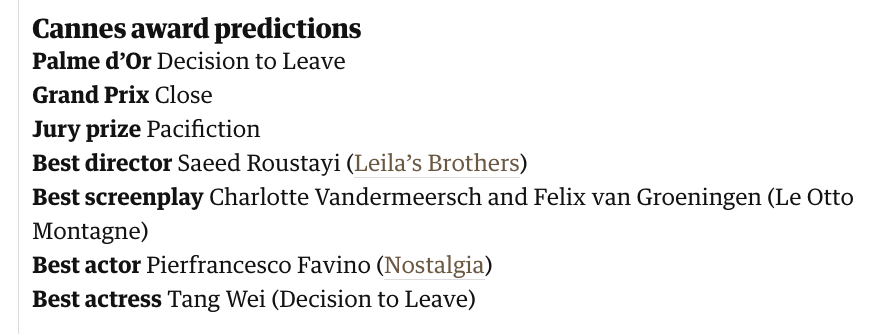
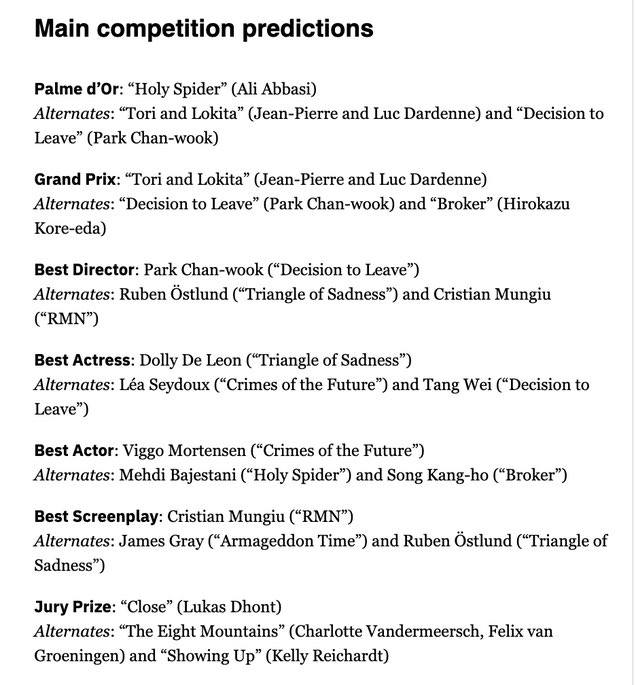
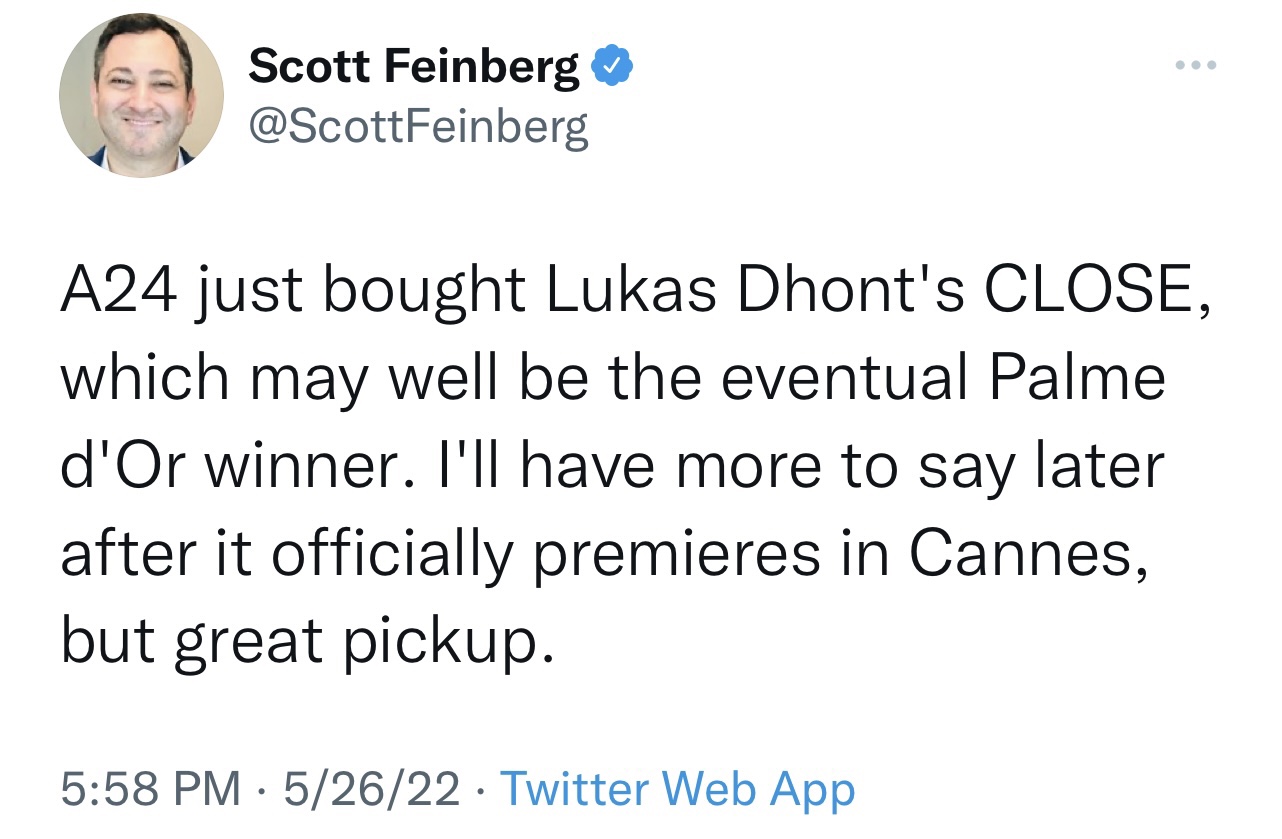
Lukas Dhont‘s Close (which I capsule-reviewed this morning) will most likely win the Palme d’Or. Yes, I understand that Cannes juries have a strange history of not choosing (i.e., defying) journalist favorites, or films, even, that Average Joes might want to celebrate.

In a fair and just world Cristian Mungiu‘s R.M.N. would win either Best Director or Best Screenplay. It would personally please me if James Gray‘s Armageddon Time wins something or other, as I’m certain that it’s his best film in many years, and because Variety’s Clayton Davis tried to dismiss it because Gray had the temerity to include racist characters in his depiction of  Yeah I’m sure of it1980 Queens.

I am not in favor of Park Chan-wook‘s Decision to Leave and the DardennesTori et Lokita winning anything (neither are exceptional enough), although I realize that both, for political reasons, will probably walk away with a significant prize.

Keep in mind that in his Cannes predictions, Davis has Close rated fairly low, allowing only for the possibility of it taking the Jury Prize. This is almost certainly because (a) Variety critic Peter Debruge frowned upon Close‘s second act, and (b) Clayton tends to defer to progressive team-consensus viewpoints. Just hang onto this.
em

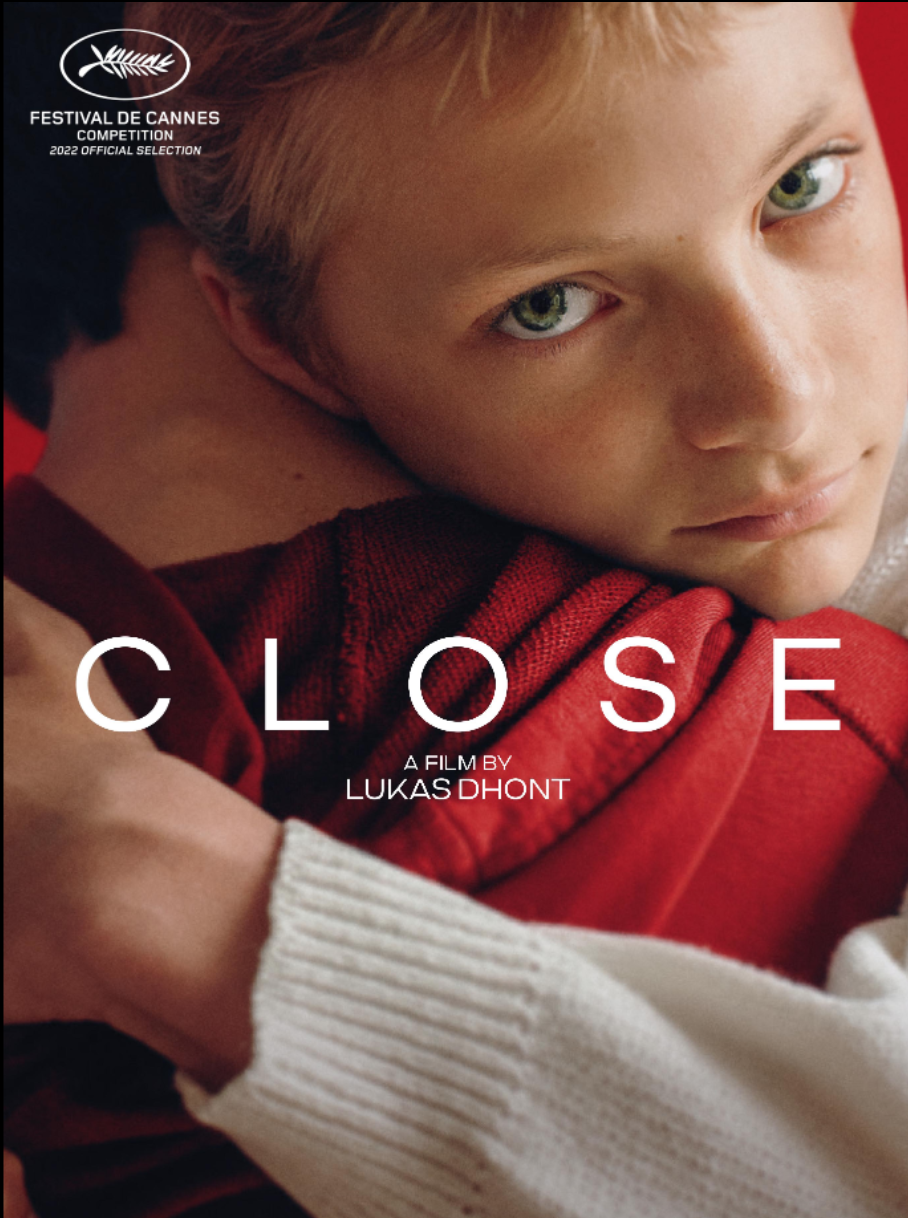
Dhont’s “Close” Is A Devastating Grand Slam

I’ll be a monkey’s uncle if Lukas Dhont‘s Close, which I saw last night, doesn’t win the Palme d’Or.

Okay, it might not win because Cannes juries have been known to blow off great or near-great films, but if it doesn’t there’s no way on God’s green earth that the film’s teenage star, Eden Dambrine (who’s now 15 and taller than he was during shooting last summer), doesn’t win the festival’s Best Actor trophy. And if both the film and Dambrine are denied, the jury will deserve exile on the island of Elba.

(This may sound like a harsh penalty, but I visited Elba 22 years ago and as places of exile go it’s pretty great. Just ask Napoleon Bonaparte.)

I’d heard a couple of days ago that this subdued, emotionally poignant small-town drama was a Palme d’Or favorite, but I also heard that one or two critics who’d attended an advance screening found it brutally manipulative, at least as far as the second half is concerned.

A similar kind of complaint was triggered by a third-act mutilation scene in Dhont’s Girl (’18), which I totally flipped for. The argument was that showing the film’s transgender protagonist (Victor Polster), a teenaged ballet dancer who’s simultaneously preparing for a performance and transgender surgery, commit a terrible act of self-harm sent the wrong message for trans kids — obviously a political criticism.

In Close a young male character is driven or goaded into an act that represents emotional finality in its most tragic form. Given my own history with intense teenaged feelings of romantic confusion and despair, I was shocked by this occurence but it didn’t register as beyond the pale.

Teenagers routinely commune with the blackest of moods these days, especially when confronted with social disapproval and whatnot due to being gay or trans or questioning in this regard. So what happens didn’t knock me out of the film.

The critics who are calling Close manipulative seem to be repeating the same charge that was levelled against Girl — that the film is sending a harmful message to struggling LGBTQ youths.

But the ultimate measure of a film’s value is not how well it articulates the most politically correct viewpoint on a given social issue, but how artfully and exquisitely it portrays what its characters are going through in elemental human terms, and the degree of subtlety that it uses to achieve this effect.

It’s 2 pm (I got up late because Close didn’t break until midnight, and I felt compelled to hit a cafe and talk it out with a friend until 1:30 am) and now I have to attend a 3:15 pm screening of Kelly Reichardt‘s Showing Up — the last “big”film of the festival. So I’ll continue the Close review later today. But make no mistake — in Steve Pond terms Lukas Dhont’s film is “the one.”

Repeating: If the Cannes jury blows it off, they’ll probably have to be smuggled out of Cannes in windowless vans and protected by private security.

Liotta’s Crazy Laughter

Poor Ray Liotta passed in his sleep while shooting a film in the Dominican Republic. Just like that, out of the blue. I’m very sorry. Condolences to friends, family, colleagues.

Right now everyone is talking about Liotta’s landmark (or certainly commendable) performances in Goodfellas, Something Wild, Field of Dreams, Dominick and Eugene, Cop Land, Killing Them Softly, Marriage Story and The Many Saints of Newark.

I feel the same way, but I’ll bet nobody right now is mentioning one of my all-time favorite Liottas — Captain T.C. Doyle in Simon Wincer‘s Operation Dumbo Drop (’95). It might be the only family-friendly Disney film I’ve ever half-liked. Not a great film, but a likeable, well-made effort that holds back on the cutes.

And for my money Liotta really scores because he plays Doyle completely straight, and then occasionally angry to great comic effect. Dumbo Drop certainly didn’t deserve a 31% Rotten Tomatoes rating. Danny Glover, Denis Leary, etc. Did I take part in the press junket? Yes. Have I seen it a second time over the last 25 years? No, but I could. I think I will.

What I don’t understand about Liotta’s dying at a youngish age is this: insurance companies on films require physicals for all principal talent above the line (including directors).  It remains to be seen what he died from, but if it’s heart-related, shouldn’t that have been caught in time at a regular physical?

What’s “Keening”?

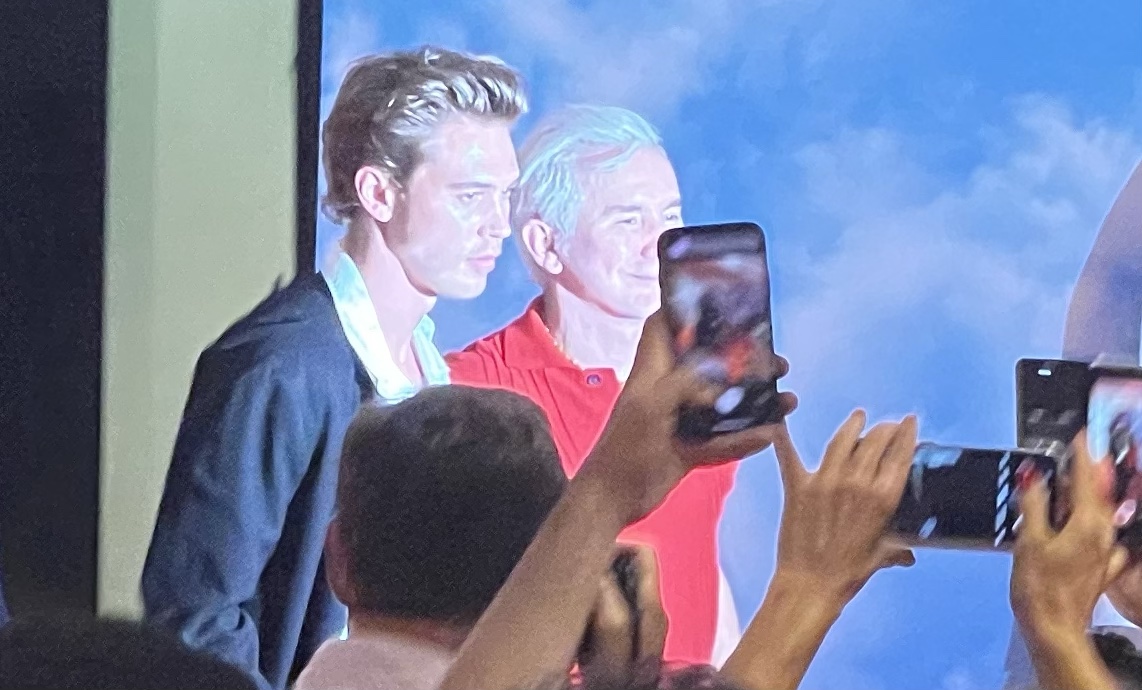
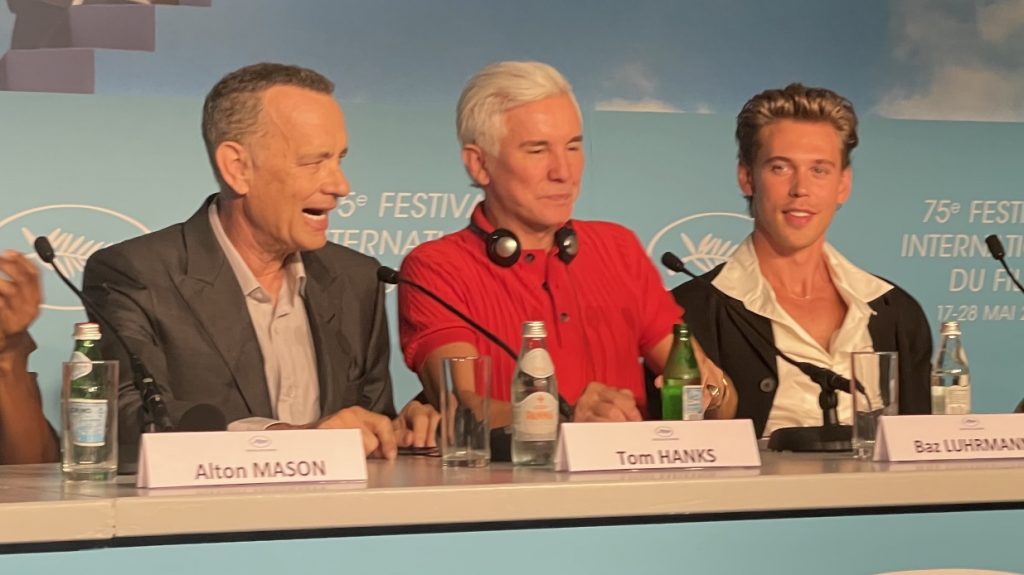
“That ready-to-fly moment is happening for Austin, and I know because we went to the Met Gala together,” Baz Luhrmann said. “As soon as we got on the red carpet, there was keening from fans. Not just screaming — keening. I’ve only heard that sound once before. I was with a young actor whose name was Leo.” He was referring to a pre-Titanic DiCaprio, then quivering hearts in Luhrmann’s Romeo + Juliet.” — from Brooks Barnes‘ 5.25 N.Y. Times profile of Elvis star Austin Butler.

Colonel Parker’s Pointy Tail

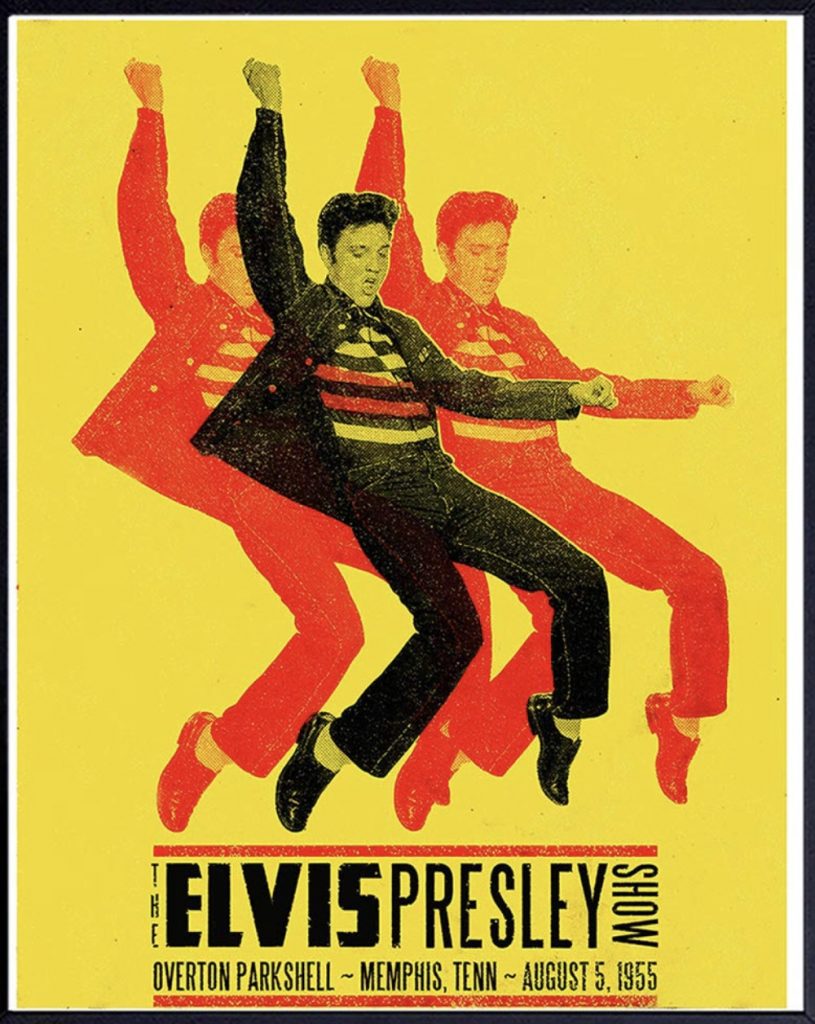
The top video tells us that Col. Tom Parker, Elvis Presley‘s manager between 1955 and the early ’70s, spoke with a soft country accent. But for his portrayal of Parker in Elvis, Tom Hanks speaks with an odd accent that I’ve never heard before — half American, half European (Dutch?) and maybe a little touch of space alien.

In one or more of the Elvis biographies, a story about the fee negotiation for one of Presley’s first big TV appearances in ’56 (possibly The Ed Sullivan Show) is reported. The Sullivan show producer offered whatever the standard compensation was back then for a newcomer. Parker replied, “Well, that’s okay for me but what about the boy?” In an Elvis negotiation scene about what Presley will be paid for his Las Vegas Hilton appearance, the conversation is reversed. A Hilton rep mentions a sizable fee and Parker replies, “Well, that sounds about right for Elvis, but what are you paying me?”

First “Elvis” Thoughts

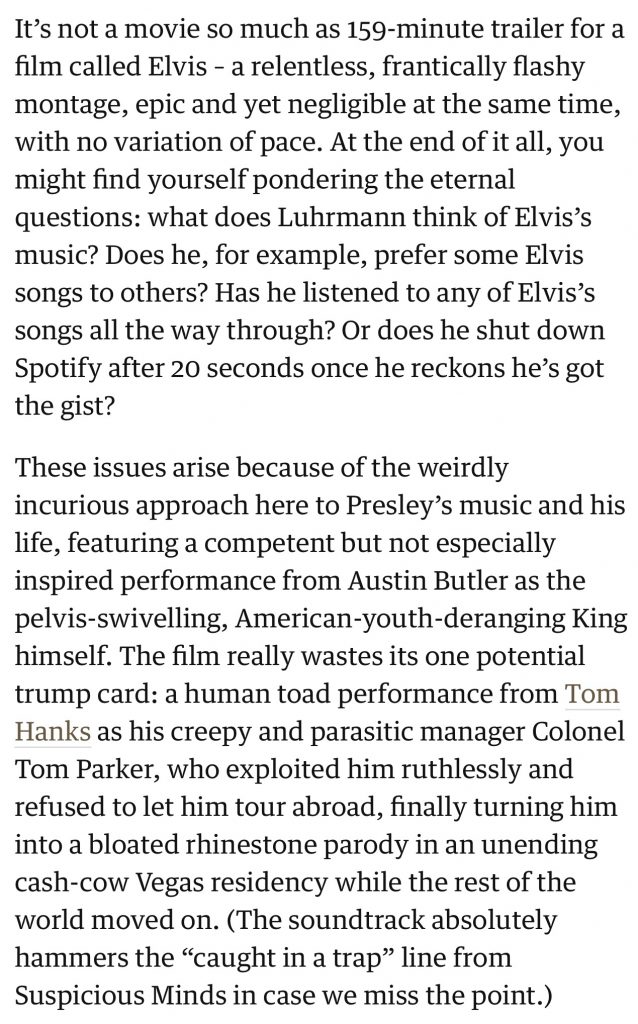
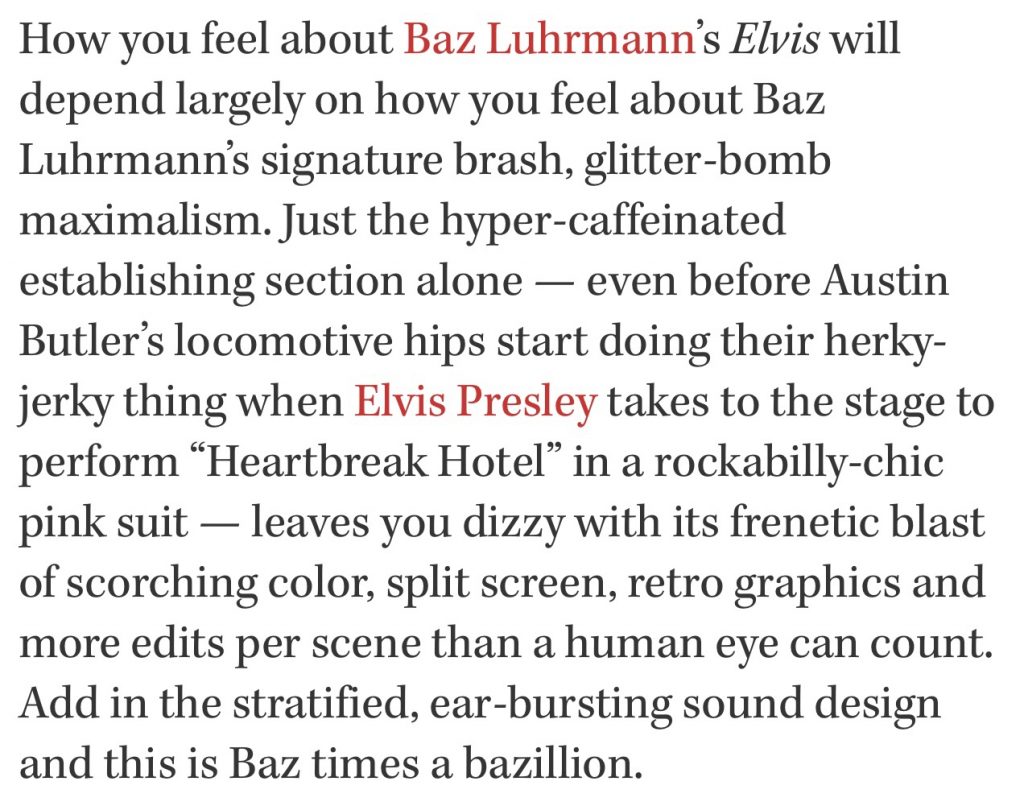
[11:25 am] Elvis isn’t quite as bad as I feared, but several sections are punishing to sit through. It’s a flashy, pushy, often exhausting carnival sideshow, very primary and primitive, clearly made for the ADD peanut gallery…a fairly blunt tool.

Baz Luhrmann understands the whole Elvis Presley story chapter-and-verse, and the film covers every last important or noteworthy story point, but God, what a crushing, staggering drag to hang out with fatsuit Tom Hanks (as Colonel Tom Parker) for 159 minutes.

Using Parker’s perspective as a framing device was an understandable decision, I guess, but the Hanks presence seems to drain so much of the film’s potential. It kills so much of the music, the invention, the potential fun of it, the all of it. At times it feels as the film is mainly about Parker with Elvis as a prominent supporting character.

Just as Parker became more and more of a pestilence (a constantly interrupting or stifling figure) in Elvis’s life and career, Hanks’ performance becomes more and more unwelcome and deflating from an audience perspective.

Ladies and gentleman, the villain of Elvis’s life! The guy who stifled and nearly smothered Elvis’s career because Elvis was too complacent or blinded or drugged by the big money to see what a bloated, selfish, gambling-junkie, revenue vacuum cleaner Parker had become.

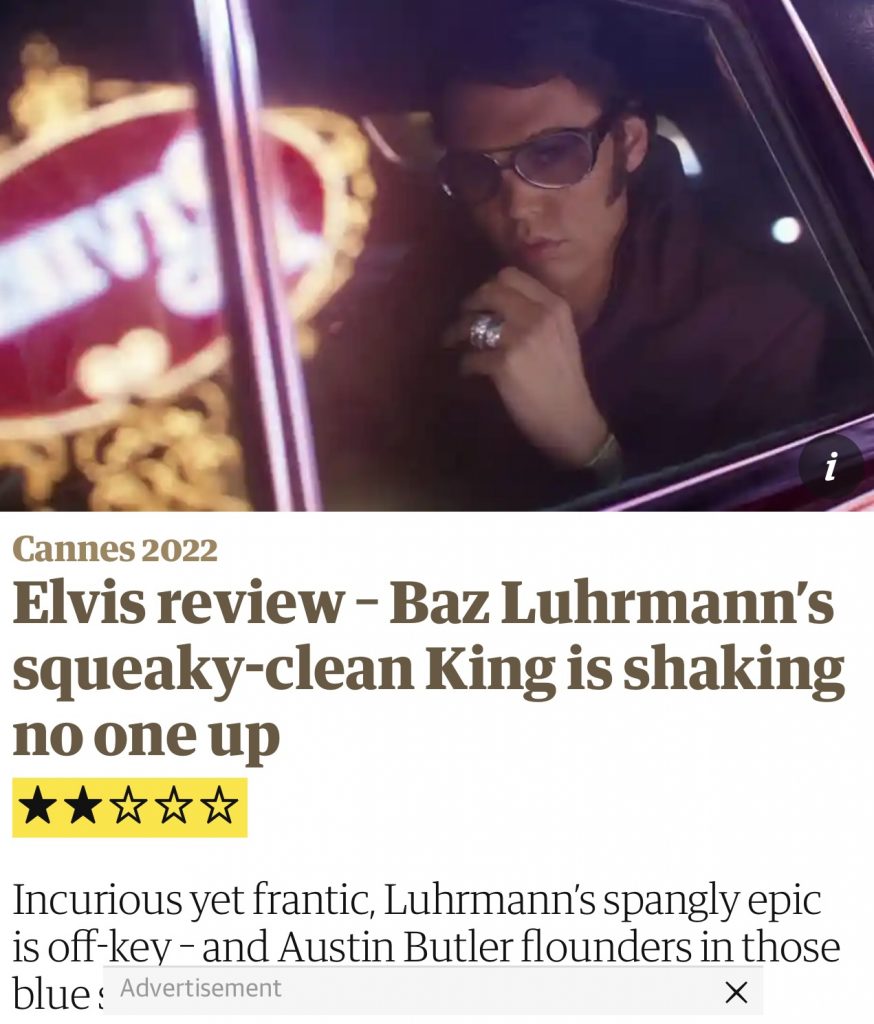
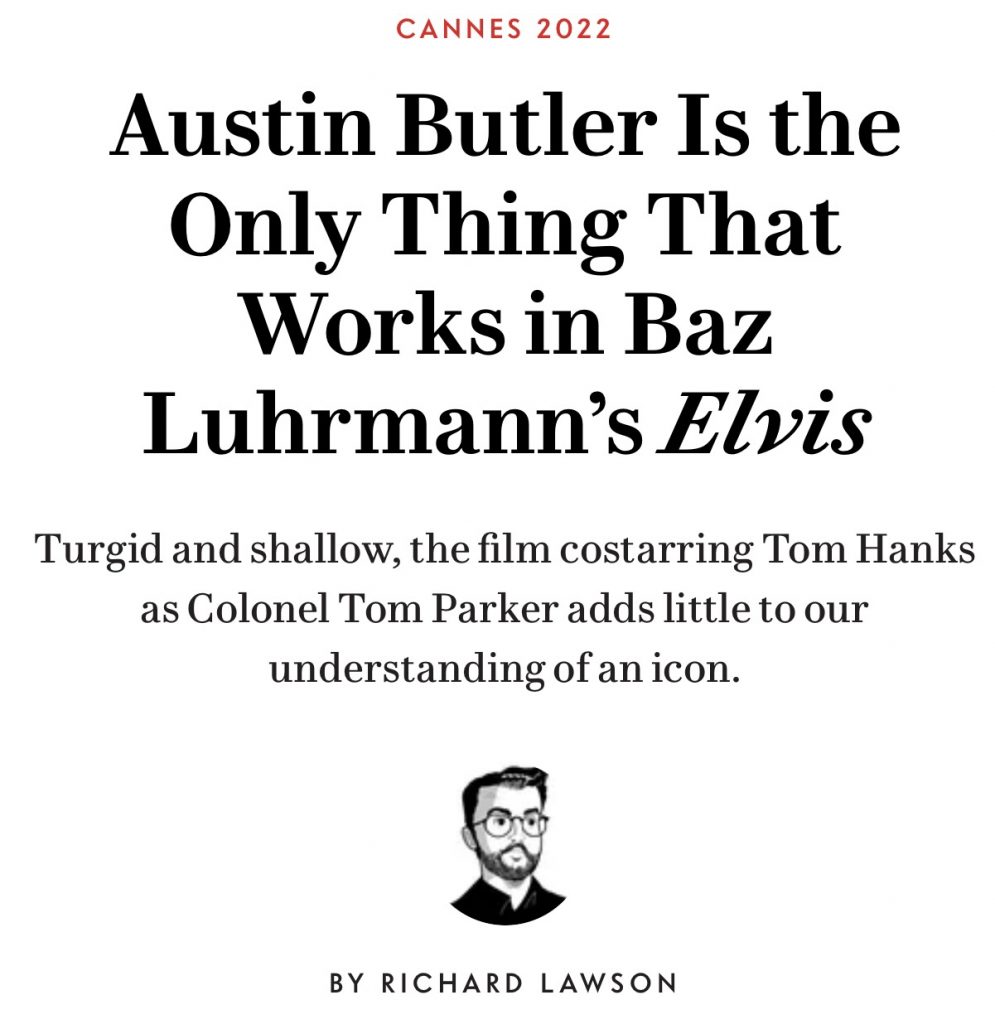
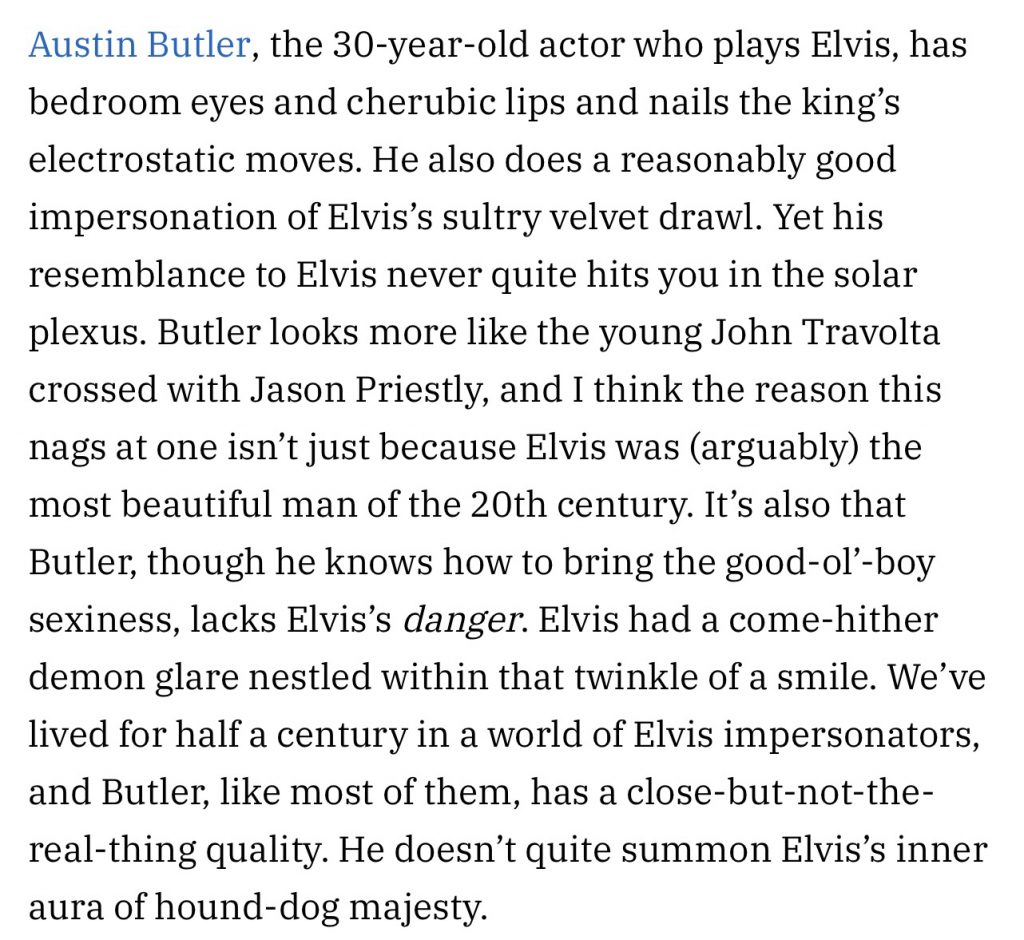
Austin Butler does a good workmanlike job in the title role. He apparently gave everything he had. As Owen Gleiberman has written, Butler looks less like Elvis than the young John Travolta mixed with Jason Priestley. But he worked it hard. Respect.

I adored the moment in which Elvis’s “Memphis mafia” (i.e., the principal parasites) is introduced as if part of a TV show opening-credits sequence. One of Baz’s best moments.

Sidenote: Luhrmann ends it with the famous Las Vegas “Unchained Melody” a capella performance with a sweating Elvis sitting down at the piano, etc.

Going by the online trailers, I’ve been noting all along that the film seems to avoid the “fat Elvis” period, but it doesn’t. Because the “Unchained Melody” sequence is TOTALLY FAT FAT WHITE JUMPSUIT ELVIS…fat, fat, dessicated, dessicated, FAT FAT HEART ATTACK SWEATING SWEATING FAT FAT DEAD. But such a soulful delivery of a song.

It doesn’t seem to be a Butler fatsuit thing as much as a Butler face-paste…footage of the real fat Elvis with the singing, sweating Butler digitally inserted.

“Elvis” Stumbles

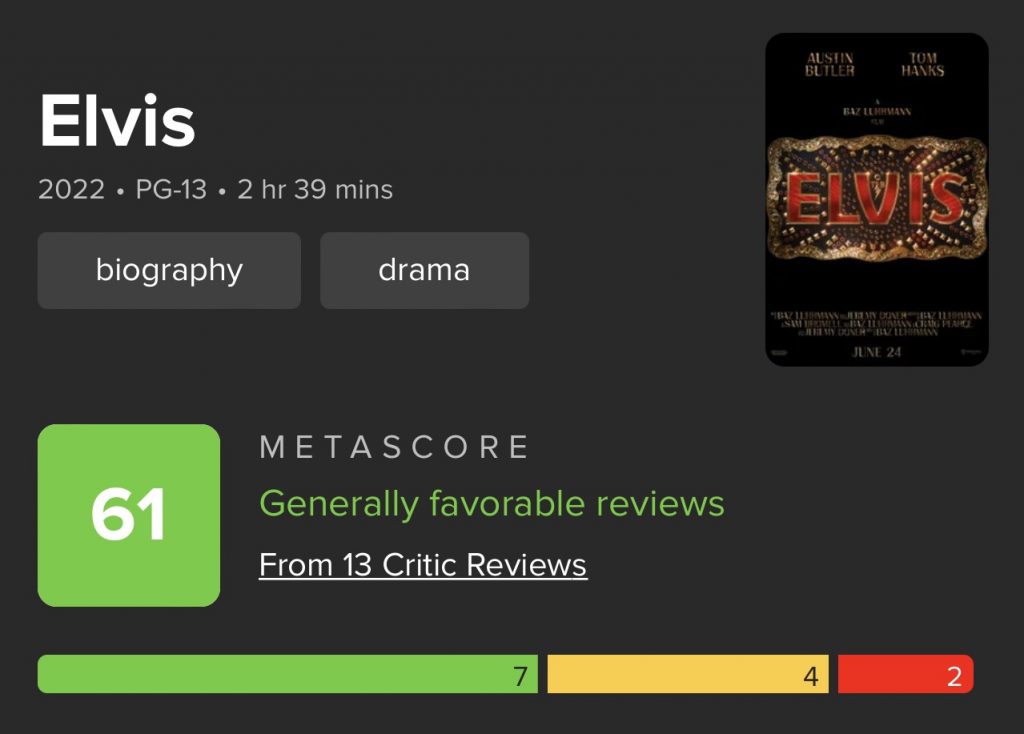
7:40 am: Years of movie-watching have taught me that if a new film’s reviews are on the disappointed, half-shitty side (as they certainly are for Elvis), the best thing to do, if I want to at least half-enjoy this allegedly shallow Baz Luhrmann sparkle-thon, is to swan-dive into the most negative assessments and let them cover me like liquid mud, so when I sit down with it myself (which will happen 50 minutes hence) I’ll emerge saying “hey, it wasn’t as bad as I’d expected!”

From Owen Geliberman’s Variety review:

“A Stone-Cold, Liquid-Nitrogen Classic”

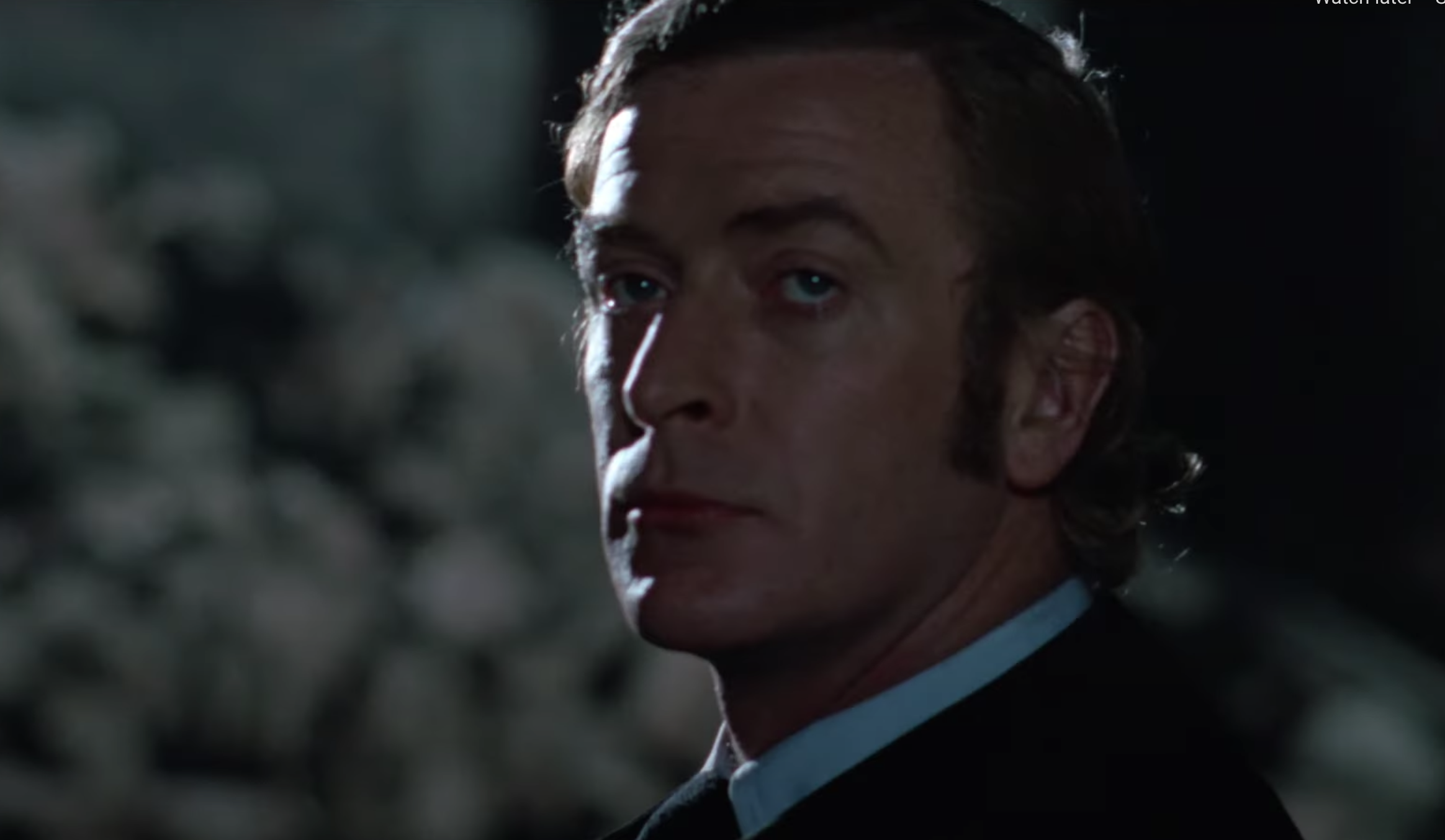
The above quote is from a Peter Bradshaw piece about Mike HodgesGet Carter (’71), which is being theatrically re-released in England. A buffed-up version will also be 4K Bluray’ed on 7.25.22

HE-posted on 8.23.15: One noteworthy thing about Michael Caine‘s icy performance in Get Carter is that he always looks stern, steady and focused. He never blinks an eye.

And yet by his own admission Caine was half in the bag while filming this Mike Hodges gangster flick. During the ’60s and early ’70s Caine was smoking at least 80 cigarettes and “drinking two to three bottles of vodka” a day, he’s said.

Caine reportedly quit cigarettes “following a stern lecture from Tony Curtis at a party in 1971,” and has credited his wife Shakira, whom he married in ’73, for steering him away from vodka.

Read more

God Only Knows

I don’t want to hear a single mention of the words “thoughts,” “prayers” or “God” from anybody on the right after the next mass shooting. Zip those repugnant thoughts and keep ’em zipped tight. Never again.

Hold Your Horses

So that’s a no-go on catching tonight’s 6:45 pm debut screening of Baz Lurhmann‘s Elvis. (About 90 minutes hence.) Press tickets on the Cannes Film Festival’s online booking system have never once been available since I got here ten days ago. Several journos have requested tickets, and the replies from Warner Bros. have been either nonexistent or “we’ll try”.

So we’ve all booked tickets for Thursday morning’s makeup screening at 8:30 am, at the Salle Agnes Varda (formerly the Salle du Soixantieme). Extra-cool, in-like-Flynn journos caught the film in New York and Los Angeles before the festival began.

Trade reviews will presumably pop when the show gets out around 9:30 pm (3:30 pm in NYC, 12:30 pm in Los Angeles).

HE readers are hereby requested to post their capsule reviews right now. That’s right — imagine how it plays and write it up accordingly.

Read more

Hanks-Parker Conversion

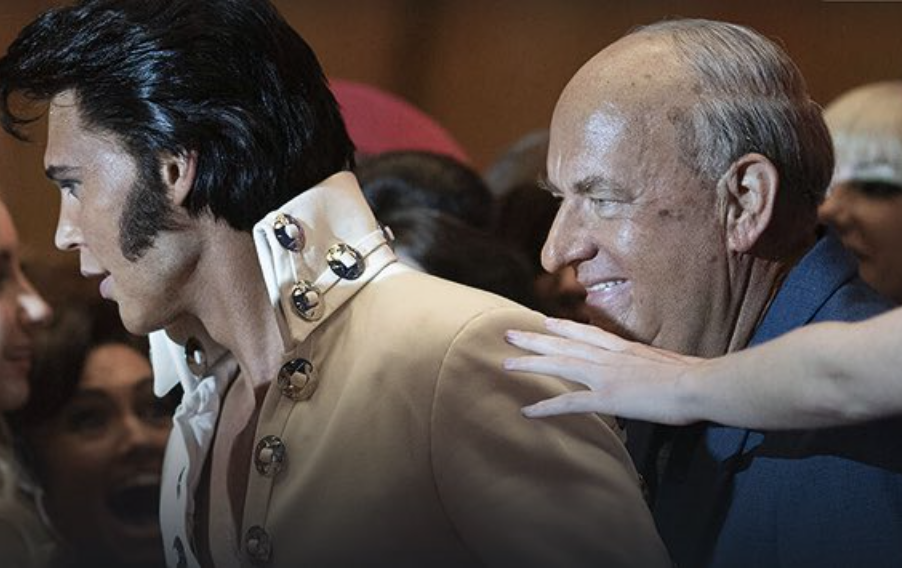
I’m not up on makeup techniques. I don’t know the functional differences between foam latex, gelatin, silicone and gypsum cement. But I’m moderately impressed by the Elvis transformation of Tom Hanks into Colonel Tom Parker, at least as it appears in the below photo.

A guy who’s seen Baz Luhrmann‘s film says that Hanks’ bulky, big-nosed Tom didn’t strike him as wow-level, but sometimes this stuff is in the eye of the beholder. The ears might belong to Hanks or not — I can’t tell. Otherwise I’m impressed by the thinning gray hair, the spray-tan complexion and especially the schnozz.

I understand, by the way, that while the film doesn’t transform Austin Butler into classic “fat Elvis” proportions (which reportedly manifested during the last couple of years, sometime between ’75 and the singer’s death on 8.16.77), Vegas-jump-suit Butler does appear slightly bulkier, or so it seemed to this observer.

Parker died in January 1997, or nearly 20 years after Elvis ascended.