“Respect” Backhands Spooner

How many times have I passed along the story about Spooner Oldham and the recording of Aretha Franklin‘s “I Never Loved A Man (The Way That I Love You)“? That song launched her career as a pop artist, and this magic moment happened during a single day’s session at Muscle Shoals’ FAME studios on 1.24.67.

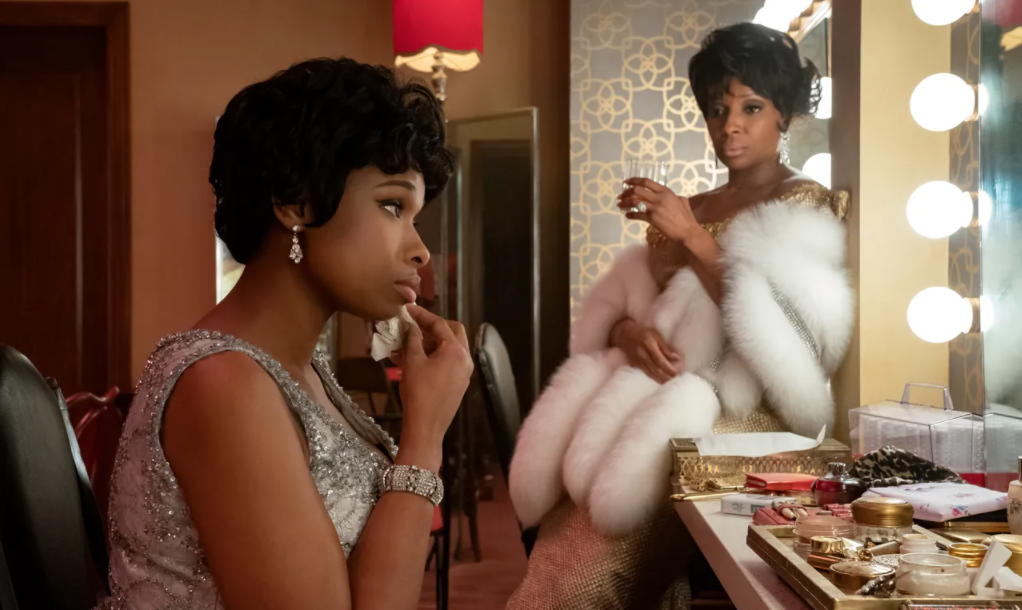
I’ve told this story three or four times at least, but we’re now going to make it five because Respect fudges this little story — it destroys the purity of it. “I Never Loved a Man” was the major turning point in her young life. But in Respect Spooner (played by David Simpson) is no longer the quiet, unassuming session guy who saved the day. He’s now the co-hero because he and Aretha did it together.

I wasn’t in the studio that day so what do I know, right? But according to Muscle Shoals director Greg “Freddy” Camalier it was Spooner who came up with that bluesy Wurlitzer riff that was just right, and everyone knew it.

Bottom line: Muscle Shoals says Spooner did it. Respect says that Aretha and Spooner tag-teamed it.

It would seem that the Respect guys were uncomfortable with a young Alabama white guy being the hero of this particular scene, so they imagined their own version. The movie is called Respect, after all, and not Spooner, and so the Man Who Shot Liberty Valance legend has now been printed.

Apologies to Spooner but them’s the breaks.

“Respect” Didn’t Bother Me That Much

If you’ve heard that a film is underwhelming or mediocre, it will probably play better than expected when you get around to seeing it. If I’ve had this reaction once I’ve had it dozens of times, and this was more or less the shot when I caught Leisl Tommy‘s Respect at the Westside Pavillion last night.

I went in expecting to suffer or at least be bored by what I’d read would be a checklist of musical biopic cliches, delivered in paint-by-numbers fashion. But oddly enough, it didn’t depress me or annoy me or piss me off. I wasn’t knocked out or turned around or brought to tears, but I was more or less okay with it.

Mainly because of Jennifer Hudson‘s lead performance, of course, and her magnificent pipes.

I also knew that Respect is the friendly version of Aretha Franklin‘s story — the one that “the family” likes and supports. The shunned version is National Geographic’s four-part Genius: Aretha, which starred Cynthia Erivo. Experience has taught me to always be wary of a family-approved biopic, and there’s no question that Respect soft-pedals and sidesteps and does its best to make Aretha look as good as possible without totally lying. Respect delivers a few handfuls of “dirt” here and there, but not that much.

The bottom line is that even though I knew I was being sold a semi-sanitized bill of goods, I didn’t mind Respect. I occasionally muttered to myself “hmmm, yeah…not too bad.” I was quite taken by a couple of the musical performance scenes. And I was always seriously impressed by Hudson.

She’ll obviously be nominated for a Best Actress Oscar along with Will Smith as Best Actor. I can just see the two of them holding up their Oscars in front of press-room photographers.

Before she passed in ’18 Aretha said that David Ritz‘s “Respect: The Life of Aretha Franklin” (’14) was lies and trash and blah-dee-blah. That meant that at least some of Ritz’s book was accurate, and perhaps a bit more than that.

On the book’s Amazon page there’s a comment by “Occasional Critic,” to wit: “This book goes to remarkable depth in describing who Aretha really was. She was a wonderful person; she was a terrible person. She was incredibly generous; she was a cheap skinflint. She was a genius; she was dumberthanastump. She was selfless; she was an egomaniacal narcissist. She was all that and more.

“But she was also indisputably one of the very best voices in the history of voices, and very, very human. This is a compelling read. Highly recommended if you want the good, bad & the ugly.”

If Respect had been made in the same spirit with which Ritz’s biography was written, if it had embraced a “tell it all, warts and all and let the chips fall” approach instead of trying to please the family and the fans and remind everyone what a glorious trailblazer she was (which is not an exaggeration), it would have been a better, tougher film.

Respect does acknowledge that Franklin was sexually molested and impregnated as child, and that her marriage to the territorial Ted White (Marlon Wayans) was turbulent, and that she developed an alcohol problem in the late ’60s, and that her relations with family and colleagues were often under strain, etc.

But from what I’ve read, a lot of the gnarlier stuff has been glossed over or flat-out ignored.

As played by Forrest Whitaker, her preacher father, Clarence Franklin, was a pious scold. But according to one biographical account he was a promiscuous hound who hosted orgies, and that Ray Charles allegedly described these orgies as a “sex circus.”

Marc Maron is especially good as legendary producer Jerry Wexler, who put Aretha together with the Muscle Shoals guys, which led to the seminal recording of “I Never Loved A Man (The Way I Love You)” — her first big hit.

Incidentally: A power surge hit the Westside Pavillion about 20 minutes into the film, and the sound totally went out. I rushed out and told management, and learned that each and every theatre had been affected. I went back in and watched the silent version, which has kind of interesting. Then the image froze and we were staring at a still of a couple of supporting players for six or seven minutes. Then a Landmark guy came in and announced that they were working on the problem. (No shit?) The movie finally resumed, and the show was finally over at the three-hour mark.

The Gods Hate Haiti

Why does it seem as if the furies are constantly swarming down upon poor Haiti? Every time you turn around the country is taking it in the neck. Earthquakes, assassinations, hurricanes, Covid 19, criminal gangs, poverty. No sooner does the populace survive and start to weakly recover from one devastating tragedy when another one comes along. The only thing that hasn’t happened to Haiti is an attack by Kaiju monsters.

1297 Haitians are confirmed dead after a 7.2 earthquake rocked the Les Cayes district of Haiti (southwest peninsula) on Saturday morning…”officials in Les Cayes believe there are only about 30 doctors for about 1 million people“…c’mon, man.

N.Y. Times: “[This is a] devastating blow to a country that is still reeling from a presidential assassination last month and that never recovered from a disastrous quake more than 11 years ago. The recovery was being conducted as a tropical storm approaches and in the throes of a political crisis since President Jovenel Moïse was assassinated on July 7.

“The unsolved assassination, a leadership vacuum, severe poverty and systemic gang violence in parts of Haiti, a Caribbean nation of 11 million people, have left the government dysfunctional and ill prepared for a natural calamity.

“The main supermarket and smaller food and supply markets in Les Cayes collapsed, leaving about half a million people with dwindling supplies and worries that eventually there would be looting and fighting over basics like drinking water. The quake snapped the underground pipes of Les Cayes, causing flooding, and triggering some landslides, blocking the main road into Jeremie and complicating relief efforts there.

“Many hospitals and clinics were heavily damaged, and officials in Les Cayes believe there are only about 30 doctors for about 1 million people.

Herve Foucand, a former senator, was using his small propeller plane to ferry people to Haiti’s capital. ‘I have 30 people in serious condition waiting for me,’ he said. ‘But I only have seven seats.'”

“Small towns surrounding Les Cayes were cut off by landslides and are believed to be even harder hit.”

Signature Dialogue Lines

An oldie but goodie…please excuse the laziness. At least I’ve added a few lines:

Posted on 12.21.15: Back in the 20th Century people used to ask actors for autographs instead of selfies. Eccentric as it may sound, fans would actually carry around autograph books for this purpose. It’s been suggested that now and then hardcore fans would ask for more than just a signature — they would ask the celebrity to write a quote he/she is famous for uttering in a film.

If you were an autograph hound and you ran into Gloria Swanson back in the day, you would ask her to write “I am big…it’s the pictures that got small.”

If you bumped into William Holden, you’d ask for “if they move, kill ’em.”

If you walked into an elevator and Warren Oates was standing there, you’d ask for “lighten up, Clarence.”

If you ran into James Cagney when he was vibrant and mobile, you’d ask for “made it, ma!…top of the world!” Or perhaps “I ain’t so tough.”

I would argue that if an alleged movie star doesn’t have a signature line or two, he/she isn’t really a movie star.

Tommy Lee Jones: “And then I woke up.”

What’s Sandra Bullock‘s signature line? Margot Robbie‘s? Emma Stone‘s?

Nic Cage? I strangely can’t think of one off the top.

Meryl Streep: Drawing a blank.

Bette Davis: “Fasten your seatbelts — it’s going to be a bumpy night.”

Warren Beatty (originally suggested by “filmklassik“): “Let’s face it, I fucked ‘em all. I go into that shop and they’re so great looking, you know. And I’m doing their hair and they feel great, and they smell great. Or I could be out on the street, you know, and I could just stop at a stoplight or go into an elevator, or I…there’s a beautiful girl. I don’t know, I mean, that’s it…it makes my day, it makes me feel like I’m gonna live forever. And as far as I’m concerned, with what I’d like to have done at this point in my life, I know I should have accomplished more, but I’ve got no regrets. Maybe that means I don’t love ’em, maybe it means I don’t love you, I don’t know. Nobody’s gonna tell me I don’t like ’em very much.”

Harrison Ford: “I know.” (The Empire Strikes Back)

Jeremy Irons: “You have no idea.” (Reversal of Fortune)

Charles Grodin: “Pecan pie…they’ve got it back there!” (The Heartbreak Kid)

Daily Beast contributor Tom Teodorczuk posted an interview with 45 Years costar Tom Courtenay, and about halfway through Courtenay mentions that he was recently approached by an autograph hunter asking him to sign a piece of paper underneath the words “the personal life is dead” — one of the utterances of Strelnikov, his character in Dr. Zhivago.

Back in the late ’70s I recalled running into In Cold Blood costar Scott Wilson in a West Hollywood bar. Wimp that I am, I stifled an instinct to ask for an autograph along with the words “hair on the walls” — a Dick Hickock line from Truman Capote‘s nonfiction novel.

If I could persuade Brad Pitt to write down a signature line, I’d ask him to write “don’t cry in front of the Mexicans.”

If I’d run into Marlon Brando in the ’70s, I would have asked him to write either “whatta ya got?” (a line from The Wild One) or “Don’t be doin’ her like that” (from One-Eyed Jacks).

If I’d enountered Montgomery Clift I’d ask him to write “nobody ever lies about being lonely” — a Robert E. Lee Prewitt/From Here To Eternity line.

If I saw director-actor Alfonso Arau I would ask him to write “damn gringos!” Further suggestions along these lines?

Robert De Niro: “Are you talkin’ to me?”

Samuel L. Jackson: “I don’t remember askin’ you a goddam thing!”

Seth Rogen: “Heh heh heh heh yuk yuk yuk!”

Bruce Willis: “Yippie-ki-yay, motherfucker!” or “Welcome to the party, pal!”

Al Pacino: “Hoo-hah!”

Jonah Hill: “Are those my only two options?”

Now That CODA Is Playing…

Surely there are a few HE regulars who’ve seen Sian Heder‘s CODA (Apple TV+) over the last couple of days, and are willing to be honest and modify the enthusiasm levels a bit. The critics have gone apeshit for this film, and yet as agreeable and nicely handled as it is, CODA is not my idea of a a 96% Rotten Tomato score. The Metacritic community has given it a more appropriate 75% score.

As far as it goes, CODA is a pleasing, well-made family drama. There’s nothing wrong with this kind of film. It’s just not triple-A level, and that’s not a putdown — it’s merely a qualification.

Peter Rainer: “As effective as it is — and it is an effective tearjerker — it does go down the checklist of things to push your buttons on. It’s almost like a really well-designed Broadway show.”

The Telegraph‘s Tim Robey: “Sian Heder’s film [reduces] far too many of the family dynamics to the level of a bickering sitcom. The film is also obsessed to a fatuous degree with how much hilariously loud and vigorous sex her parents have. The film is way too busy playing things cute.”

CODA especially suffers because of its release four months after Darius Marder’s tremendous Sound of Metal, a genuinely adventurous, formally experimental take on deaf issues which was also directed, written by and principally starred hearing individuals.”

Remember Virus Bros?

I am naturally mindful of the dangers of the Delta variant, but it is also my firm belief that Delta Covid infections are mostly (almost entirely) an anti-vax bumblefuck problem. If you haven’t been vaccinated for reasons of stupidity, you’re vulnerable. Perhaps you or someone in your family will become sick or worse, God forbid. Life is choices and actions have consequences, and there’s just no basis for feeling any sort of sympathy for people who have refused the vaccine. They had a chance to protect themselves, and they blew it off.

I’ve no doubt that with all the safety protocols in place at the 2021 Telluride Film Festival, everything will be more or less cool. And within the bounds of reason and appropriate caution, I’m not sweating day-to-day life in West Hollywood either. When will this nightmare end? God knows. Were it not for the idiots (rural and urban refuseniks) the pandemic could have been over and done with by now.

Anyway, earlier today I happened to re-read a 3.23.20 post called “Introducing the Virusbro.” 17 months ago, give or take. The term “virusbro” came from HE commenter Manwe Sulimo.

“As far as I can assess there are five modes of COVID-19 behavior,” I wrote.

“First are the oblivious assholes who wander all over, take few precautions, don’t wash their hands much, behave as if nothing’s really changed, etc. These people are public enemies.

“Next in line are your casual responders — people who are mindful of the pandemic but are somewhat careless or sloppy-minded…taking walks, talking to friends on the street (I saw a few yesterday and the day before), washing their hands once or twice a day if that, willing to alter their behavior but not that much.

“Then there are your caution freaks who nonetheless yearn to taste a spoonful or two of the life they used to live — people like myself who wash their hands obsessively, never go outside for supplies (local market, CVS) without a face mask and plastic gloves, never stand less than three or four feet from anyone, who wash their hands when they get home and then again for good measure, and who occasionally indulge in modest rumblehogging.” [This was HE’s mode of behavior.]

“Fourth are your strict shut-ins who haven’t left their homes over the last 10 or 12 days due to the usual fears and who order all necessities online — the ideal citizen in this time of nightmare crisis. Tatyana freely admits to being this kind of conservative.

“Last and fifth is your semi-paranoid Howard Hughes-style germaphobe who pads around the house with plastic bags around his/her feet, washes hands frequently (which is good) and constantly wipes down kitchen counters and coffee tables (which is good) and who, when online, shrieks and scolds the fuck out of anyone who admits to careful shopping and taking an occasional breath of fresh air by lowering their face mask while standing on a patch of grass near a parking lot. Or while driving inside a car with all the windows closed.

Read more

Run For The Hills

Update from MSNBC’s Richard Engel: “This city is bracing for a Taliban takeover…the city has collapsed…there is no security…there are signs of looting…a woman’s hair salon is tearing down or painting over posters of women with [upscale] hair styles.”

Earlier: We always knew that when U.S. troops finally leave Afghanistan, a terrible massacre would follow. Joe Biden knew this all along, and of course is bearing the psychological burden of having decided to pull up stakes. Everyone understands the likelihood of coming carnage. Nobody wants to think about it, but there it is all the same.

The Taliban ran Afghanistan with absolute Sharia Law brutality for five years (’96 to ’01). Massacres of Afghan civilians, public whippings and executions, denying UN food supplies to starving civilians, the burning of fertile lands, cultural genocide (banning of paintings, photography, movies, music), preventing women from attending school and working in public places, and requiring women to be accompanied by a male relative and wearing a burqa at all times in public.

In October 2001, a month or so after the 9/11 attacks, U.S. forces invaded Afghanistan and routed the Taliban regime. Taliban forces fled to Pakistan. We’ve been in Afghanistan for just shy of 20 years now, knowing each and every day that we couldn’t win in the end, and that sooner or later all outside invaders retreat to their own shores. We never accomplished anything more than a stalemate situation. U.S. troop levels went way up during the first five years of the Obama administration (’10 and ’11 were the peaks) and to no end.

According to a Brown University study posted on 11.13.19, the U.S. had spent around $978 billion in Afghanistan (including expenditures earmarked for the 2020 fiscal year). The same report says the total expenditure for all anti-terrorist defense campaigns in the Middle East since ’01 comes to $6.4 trillion.

And now, with U.S. forces pulling out for good, Taliban forces are already occupying the vast majority of the country with Kabul sure to fall by sometime very soon. Life will be nothing short of hellish for Afghan women and their children.

How many tens of thousands of South Vietnamese were killed by North Vietnamese forces after Saigon fell in April ’75? How many tens of thousands of Afghan citizens will be put to death when the Taliban takeover is complete?

Read more

Clooney’s “Tender Bar”

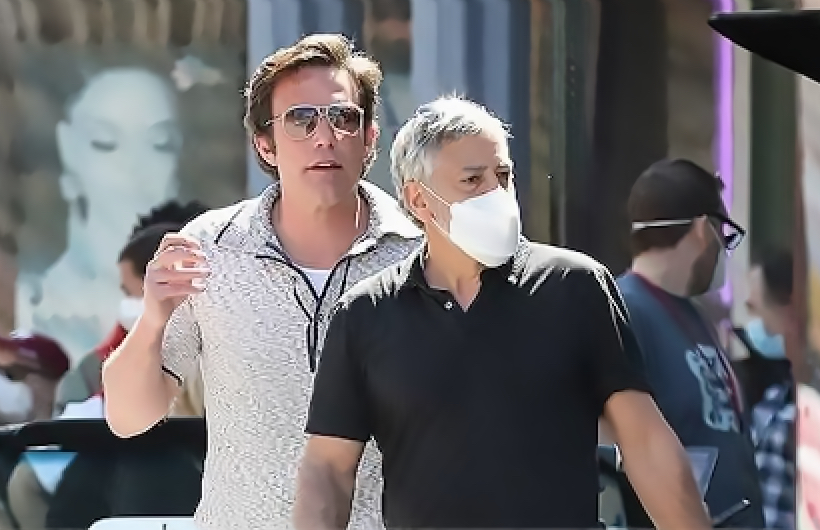
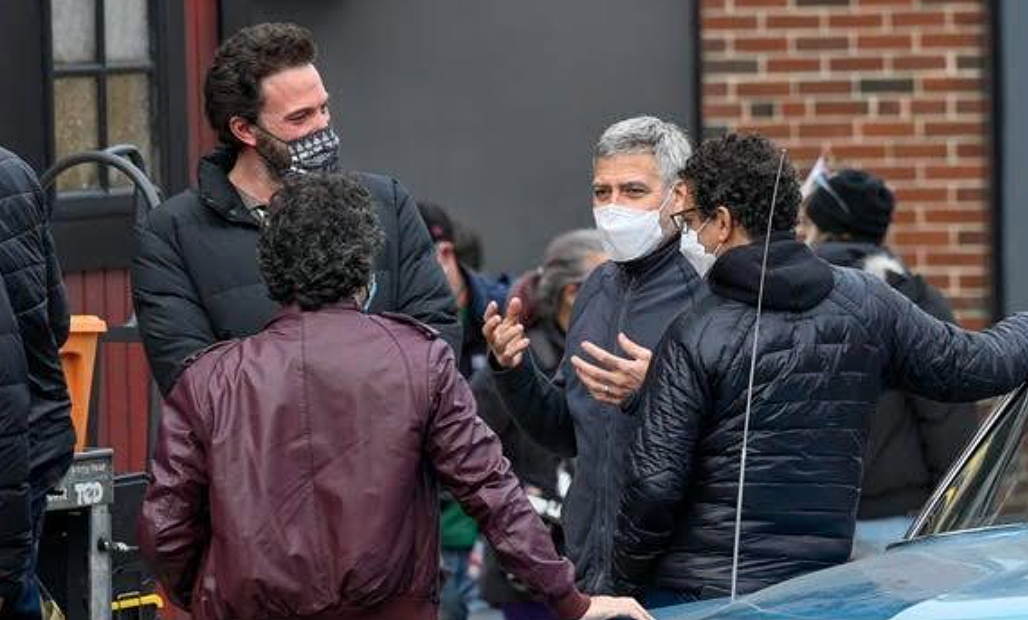
George Clooney‘s The Tender Bar (Amazon), a boozy proletariat community relationship flick (Manhasset) with a father-son, male-role-model current, will presumably begin streaming sometime in the mid-to-late fall season. Ben Affleck, Tye Sheridan, Chris Lloyd and Lily Rabe topline.

I’ll never touch another drop for the rest of my life, but every now and then (and I mean rarely) I’ll say to myself “I kind of miss that warm, boozy, half-in-the-bag camaraderie…stroll into a bar, bend the elbow, get a buzz-on,” etc. But not that much.

Review excerpt of sametitled book: “A Pulitzer-Prize winning writer for the Los Angeles Times, J.R. Moehringer” — played by Sheridan in the film — “grew up fatherless in pub-heavy Manhasset, New York, in a ramshackle house crammed with cousins and ruled by an eccentric, unkind grandfather (Chris Lloyd).

“Desperate for a paternal figure, he turns to his Uncle Charlie (Affleck), and subsequently, Uncle Charlie’s place of employment — a bar called Dickens that soon takes center stage.

Publishers Weekly: “You needn’t be a writer to appreciate the romance of the corner tavern or, for that matter, of the local dive in a suburban strip mall.

“But perhaps it does take a writer to explain the appeal of these places that ought to offend us on any number of levels…[such as] what would we do without them, and what would we do without the companionship of fellow pilgrims whose journey through life requires the assistance of a drop or two?

“More than anything else, Moehringer’s book is a homage to the culture of the local pub. That’s where young J.R. seeks out the companionship of male role models in place of his absent father, where he receives an education that has served him well in his career and where, inevitably, he looks for love, bemoans its absence and mourns its loss.

“Moehringer grew up in Manhasset, a place, he writes, that ‘believed in booze.’ At a young age, he became a regular — not a drinker, of course, for he was far too young. But while still tender of years, he was introduced to the culture, to the companionship and — yes — to the romance of it all.

“‘Everyone has a holy place, a refuge, where their heart is purer, their mind clearer, where they feel close to God or love or truth or whatever it is they happen to worship. For young J.R., that place was a gin mill on Plandome Road where his Uncle Charlie was a bartender and a patron.

The Tender Bar‘s emotional climax comes after its native son has found success as a journalist for the Los Angeles Times. On September 11, 2001, almost 50 souls who lived and loved in Moehringer’s home town of Manhasset were killed in the terrorist attack on the World Trade Center. One was a bartender we’ve met along the way. Another was one of the author’s cousins.

“Moehringer’s lovely evocation of an ordinary place filled with ordinary people gives dignity and meaning to those lost lives, and to his own.”

When Tatum Was The Guy

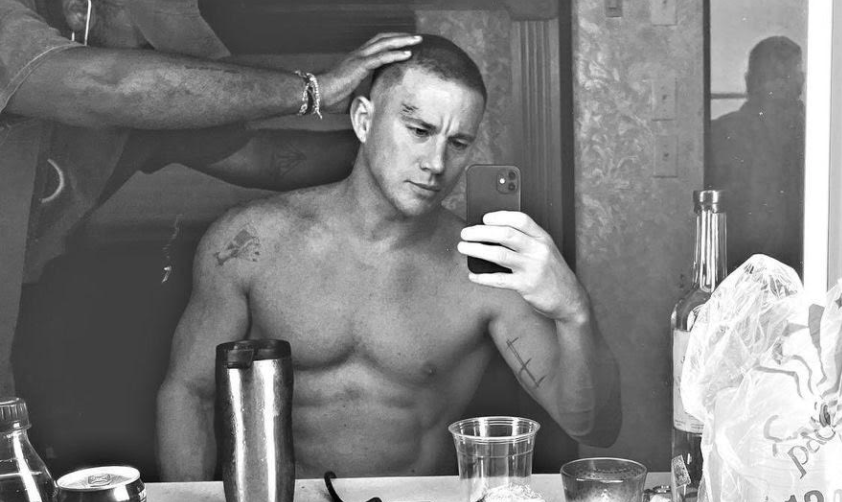
The other day HE commenter Manwe Sulimo asked what had happened to Channing Tatum. The 41-year-old actor hasn’t been in a noteworthy live-action film since Logan Lucky, which opened on 8.18.17.

Four years of flatlining is a long time. It would be one thing if Tatum had been out of circulation due to working on some big, classy prestige project. But his recent credits indicate more of an interest in popcorn realms.

Tatum has been delving into directing and producing over the last three or four. On 2.18.22 Dog (UA Releasing), a comedy that Tatum co-directed (along with Reid Carolin), produced and starred in, will open in some capacity.

Two months after that Tatum will be costarring with Sandra Bullock in The Lost City of D, a “cutthroat jungle adventure” from co-directors Aaron and Adam Nee. Tatum and Carolin are also producers on Spaceman, a sci-fi drama with Adam Sandler, Carey Mulligan and Paul Dano.

The present-tense bottom line is that Tatum apparently sees himself more as a behind-the-cameras creative than a leading-man actor. Cue career review assessments. For my money Tatum’s two best roles were in Steven Soderbergh‘s Haywire (’11) and Magic Mike (’12).

“Field” Finale Rewrite

There are two generally understood concepts of heaven. Concept #1 focuses on material-world stuff…pleasure, happiness, fulfillment, great sex, neck rubs, bags of money, great Italian food. Concept #2 is about a bullshit fairy tale after-realm that religious leaders have been selling to their parishioners for centuries, as in “be good and go to heaven.”

I’ve always said that if there’s a heaven, it certainly doesn’t work on a merit or virtuous behavior system. Upon dying everyone becomes Keir Dullea‘s space fetus at the end of 2001: A Space Odyssey, or nobody does.

At the very end of Field of Dreams, a conversation between Ray Kinsella (Kevin Costner) and the ghost of his dad, John (Dwier Brown), skirts both realms. And what John says is self-contradictory. Here’s how the scene plays:

Ray: “You played a good game.
Dad: “Thank you. (beat, beat) It’s so beautiful here. For me…for me, it’s like a dream come true. (beat) Can I ask you something?”

Slightly agog, Ray nods.

Dad: “Is this…is this heaven?”
Ray: “It’s Iowa.”
Dad: “Iowa?”
Ray: “Yeah.
Dad: “Coulda sworn it was heaven.”

Dad picks up catcher’s glove, Ray walks over…

Ray: “Is there a heaven?”
Dad: “Oh, yeah. It’s the place dreams come true.”

So let’s break this down, shall we?

John is an emissary from some kind of mystical, post-mortal realm (i.e., the same in which 2001‘s Dave Bowman resides, so to speak), and so he asks his son if the cornfield baseball diamond upon which they’re standing is heaven. Because the joy of playing baseball has so lifted and purified his spirits, John is suddenly wondering if this blissful feeling of cosmic radiance is a renewable thing on some level. John believes that Ray’s baseball diamond might be the ultimate OHM place to be.

Ray quietly tells him no, it’s not — that they’re just in Iowa. In response to which John, obviously uncertain which realm is up, replies that he “coulda sworn it was heaven.” In other words, for a dead guy John doesn’t know very much. He has an idea that Ray’s baseball diamond might be the epicenter of God’s perfect universe, but he’s not sure. He was just passing along a thought, a notion.

And then Ray, having been told in so many words that John isn’t exactly a fountain of all-knowing mystical knowledge of the wonders of the universe, and having just heard that John is as fascinated and mystified about where he is (not to mention who or what he is) as anyone else…knowing all this Ray asks John for some very basic dead-guy info: “Is there a heaven?”

And then John immediately switches gears. He is suddenly no longer the uncertain and questioning ghost, no longer the mystical dream-dweller. And so he tells Ray, “Oh, yeah”….as in “oh, son, relax your weary head because of course there’s a heaven…trust me, there is!”

And then he steps down off the cosmic pedestal and reverts to concept #1 as described above — heaven is not only real, he assures, but “the place [where] dreams come true.”

Repeating for clarity: Ghost John doesn’t have clue #1 about what heaven is or even what it might be, and so he asks his mortal son, an agnostic who only knows for certain what the material realm is, if he’s somehow arrived at the perfect cosmic place. But when Ray asks John if heaven is something pulsing and genuine, John does a 180 and tells Ray that, being a dead guy and all, that he’s absolutely certain that heaven is something with definable conditions and perimeters.

Read more

Surely Everyone Understands

…that last night’s Field of Dreams game in Dyersville, Iowa. was NOT played on the modest-sized, cornfield-flanked diamond that sits next to Ray Kinsella‘s (Kevin Costner‘s) Iowa farmhouse — built for the 1989 cult film, and which still stands and thrives today as a tourist attraction.

Last night’s game was played at a nearby (500 feet away) baseball field called the MLB at Field of Dreams, also cornfield-flanked but with stadium seating for 8000 people, according to both Fox Sports and The Sporting News.

In a pre-game press conference, Costner called Field of Dreams “the perfect little movie…the climax, rather than a big car chase, was ‘do you wanna have a catch?'”

Due respect but not quite. Field of Dreams was and is “a perfect little movie,” agreed, but it didn’t end with a father (Dwier Brown‘s John Kinsella) and son playing catch. If it HAD ended with the catch, Field wouldn’t be half the legendary perennial it’s become.

Field of Dreams ends, in fact, with a nighttime helicopter shot of a long stream of cars, lined up on a nearby road leading up to the Costner farmhouse. That shot of…what, 200 cars waiting to see the field and bask in those Shoeless Joe Burt Lancaster vibes…THAT’s what sold the film.

Without that line of cars, without that irrefutable evidence of what people want and need and long for in their lives, the film would’ve basically been a nice pipe dream.

Friendo: “To each his own, but every time Costner says ‘hey, dad, wanna have a catch?’, that chokes me up. That’s the film for me. The line of cars is just icing on the cake.”

HE to Friendo: “I never had a catch with my dad so it doesn’t get me as much. And in a broader sense sentiment doesn’t travel — it doesn’t expand or deepen. It always diminishes over time. Just ask John Ford and Steven Spielberg and the directors of The Bishop’s Wife and A Guy Named Joe. The only sentimental ending that never fails to get me is the Warren Beatty-Julie Christie ending of Heaven Can Wait, and for the worst of reasons.”

Friendo to HE: “It’s A Wonderful Life.”