Harlem Joy In Summer of ’69

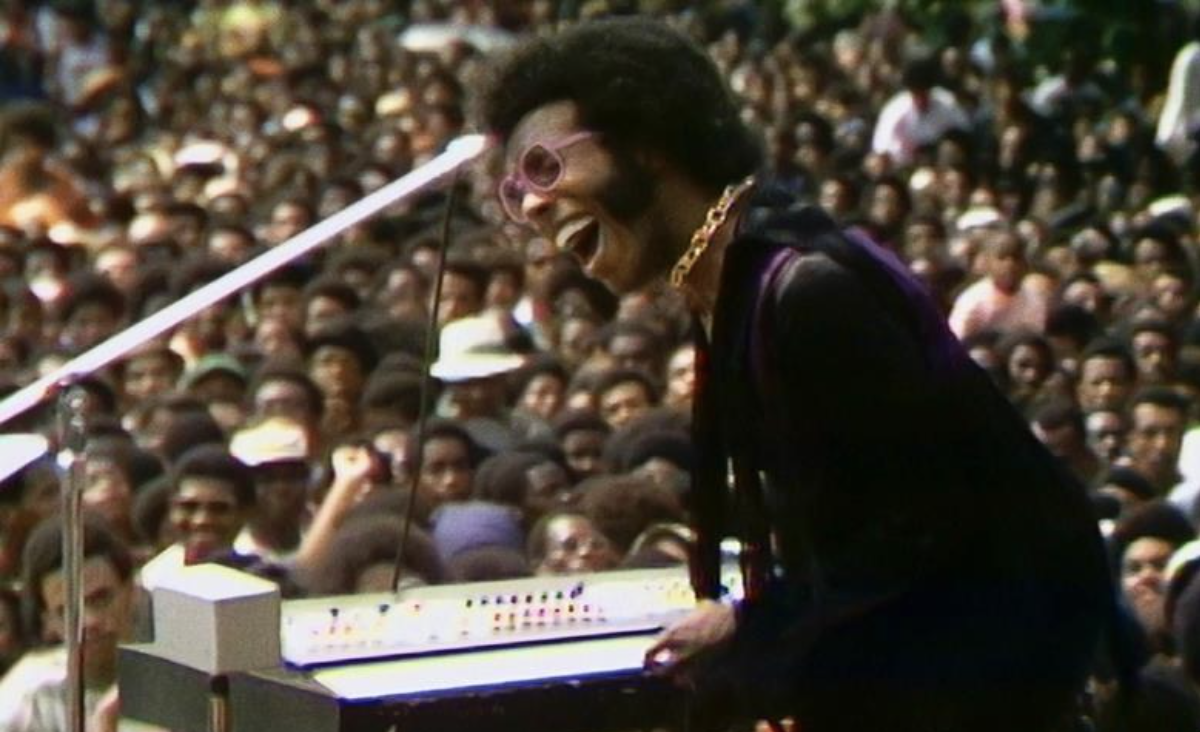
Friendo to HE: So have you watched Questlove‘s Summer of Soul (Searchlight, 7.2) yet?

HE to Friendo: This evening, I guess. Otherwise soon. Performances by major late ‘60s soul acts in Marcus Garvey Park, until the heading of the Harlem Cultural Festival. Cool — everyone loves a top-notch concert film. But what’s so wowser about it? Why all the heat and the awards during last January’s Sundance? Other than the fact that chummy indie guy David Dinerstein is one of the producers?

Friendo to HE: Mostly for the archival footage. The tagline is “this was the black Woodstock.” Same summer, same chapter in history. 300,000 people showed up in a span of six weekly free concerts, Sundays between 6.29 and 8.24.

HE to Friendo: Okay, but what’s the big deal? Other than the virtue signaling aspect?

Friendo to HE: Mostly it’s just about the great music and community aspect of the concerts, and how major media ignored this in favor of the Woodstock festival at Max Yasgur‘s farm. And how cans and cans of footage of the ’69 Harlem Cultural Festival was shot and then placed in a basement, where it sat for a half-century. And how we have a spiffed-up capturing of an historic music festival. Obviously it didn’t have the influence or impact of Woodstock. You can’t just rewrite history and say that these Harlem shows changed the course of history because…well, they didn’t. Nobody really knew about the ’69 Harlem Cultural Festival until recently.

HE to Friendo: Great music, community celebration, surging emotions…terrific. But the Woodstock analogy isn’t analogous.

Friendo to HE: It’s such a 2021 thing. Reframing history according to present-day terms, otherwise known as “presentism.”

The complete title, by the way, is Summer of Soul (…Or, When_ the Revolution Could Not Be Televised). Except hour-long specials of the concert were broadcast by WNEW Metromedia (Channel 5) on Saturday evenings throughout June, July and August — 10:30 to 11:30 pm.

Read more

Everyone Gets “Blue” Now

The opening paragraph in “50 Reasons to Love Joni Mitchell’s ‘Blue’,” a 50-years-later commemorative tribute piece in the 6.20 edition of the N.Y. Times, contains a strange backhand gesture. Written by Lindsay Zoladz, the passage reads as follows:

“Just before embarking on the pivotal intercontinental voyage that would inspire much of her peerless 1971 album “Blue”, Mitchell considered her grandmothers. One ‘was a frustrated poet and musician…she kicked the kitchen door off of the hinges on the farm,’ Mitchell recalled in a 2003 documentary. The other ‘wept for the last time in her life at 14 behind some barn because she wanted a piano and said, ‘Dry your eyes, you silly girl, you’ll never have a piano.’”

That unnamed 2003 documentary is titled Joni Mitchell: A Woman of Heart and Mind. It was directed by Susan Lacy (who also helmed Spielberg, Jane Fonda In Five Acts, Judy Garland: By Myself, Leonard Bernstein: Reaching for the Note, Rod Serling: Submitted for Your Approval and Very Ralph) and aired on PBS’ “American Masters” series.

Given Lacy’s sterling reputation and the commendable chops and perceptions in Joni Mitchell: A Woman of Heart and Mind, why would Zoladz or her Times editor refer to it as “a 2003 documentary” — a reference that indicates a lack of respect or even derision?

What’s Changed Over Last Four Years?

Best Action Flicks of the 21st Century” was posted on 5.9.17. What if anything has changed in the action realm in the four years since?

To most people “action film” means violent, whoop-ass shit with lots of leaping around, automatic rifle fire, squealing tires and non-stop adrenalin. But when it comes to deciding on the best action films, most viewers aren’t that demanding. They love their jizz-whiz and don’t care about the shadings and subtleties. But I am demanding, you see. To really love an action film I have to believe that (a) what I’m watching bears at least some relation to human behavior as most of us have come to know it and is therefore delivering a semi-believable, well-motivated thing, and (b) what I’m watching could actually happen in the real-deal world of physics (i.e., no idiotic swan dives off 50-story office buildings).

I don’t care, by the way, if the action content in a film takes up the first 10 minutes or the last half-hour or the whole damn running time. All I care about is whether or not I believe what I’m seeing, or…you know, whether I’m distracted or dazzled enough so that I don’t pay attention to logic or realism factors. Whatever works. As long as action defines character and vice versa.

If I’m enjoying an action flick it’s because I fucking believe it, and I never believe anything that doesn’t respect some grown-up concept of reality. Fantasy flicks can blow me for the most part. I want an action movie that will plant its feet, look me in the eye and tell the fucking truth.

Very few 21st Century action films live up to HE’s rules and standards, or even give a damn about doing so. The Fast and Furious franchise is notorious for spitting in the face of reality. Almost all superhero comic-book movies revel in the fact that their realm allows them to ignore logic and believability. Once in a great while and in a very blue moon, a first-rate action flick will come along that defies HE rules but gets away with it. One of these was Ang Lee‘s Crouching Tiger, Hidden Dragon (’00), but that’s a very rare occurence. On the other hand Crouching Tiger led to the stars of Charlie’s Angels: Full Throttle flying around on wires, and that was an awful thing to behold.

Here are Hollywood Elsewhere’s choices for the 11 craftiest, best-made, most believable action films of the 21st Century, and in this order:

Read more

“Bourne” Vomit Splat

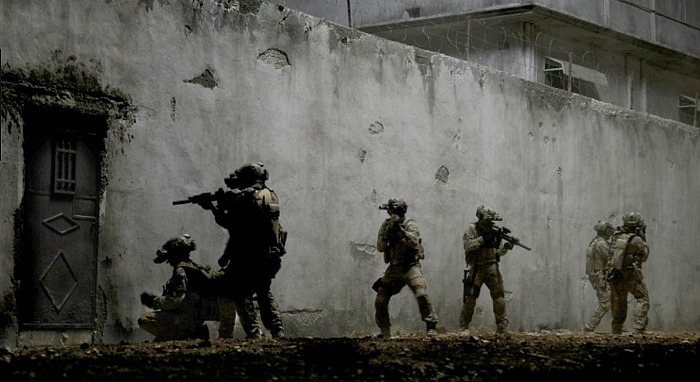
Initially posted on 8.26.07: Paul Greengrass‘s The Bourne Supremacy became notorious in certain circles for the exhausting, hyper-cutting, whip-pan technique that came to be known as “Paul Greengrass shaky-cam“, and which was later explored in a groundbreaking essay titled “Chaos Cinema.” I never felt sick from this technique, but others (I don’t know how many but at least a few) did.

I experienced my first shaky-cam vomit-splatter incident during an early-ish screening of The Bourne Supremacy on 7.12.04.

Sometime during the third act of an Ultimatum showing at the Writers Guild theatre, an older woman sitting on the left side spewed on the floor. It was kind of alphabet soup mixed with pumpkin puree and chopped Spanish peanuts. A few people got up and moved away. A guy who was sitting nearby told me later it smelled pretty awful in that section of the room.

The next day I mentioned the episode to a Universal publicist in an e-mail, not as something that was necessarily caused by Paul Greengrass shakycam but as something funny that had merely “happened.” I really hadn’t put two and two together. I was simply chuckling the way a fifth-grader might chortle with his friends if the really smart girl with the freckles and the pigtails had vomited in arithmetic class.

But the Universal publicist wasn’t in fifth grade — she was coming from the office of Roy Cohn during the Army-McCarthy hearings. Her voice shrill and agitated, and she read me the riot act in order to dissuade me from mentioning the incident in the column. I felt so overwhelmed with bludgeonings and bad vibes that I caved (wimp that I am deep down) and said, “Okay, all right…good God.”

Chaos Cinema Part 1 from matze on Vimeo.

Drinking In Cinemas?

“The Covid epidemic may be subsiding, but the epidemic that preceded it — the anxiety epidemic — is not, and usually when people drink, it’s too alleviate some form of anxiety. As we reenter society half of America has been saying that Covid was so stressful, they worry they’ll never fully recover. We’re using liquor as a crutch…”

Even during my drinking days I never once sipped wine or beer during a film, or prior to watching one. If anything I would down a strong cappuccino or an energy drink. I want to up my alterness levels during a film, not diminish them.

Frankenstein Soul Cancer

A 6.25 interview with F9 costar Jordana Brewster, written by The Hollywood Reporter‘s Aaron Couch, made me want to melt and die.

I don’t give a flying eff how Brewster landed more action scenes in F9…even flirting with such thoughts is tantamount to poisoning my being, my soul, the necessary communion with the fundamentals of life on the planet earth…these people — Couch included — are snarling beasts of the forest. Pardon my French, but they make me want to ralph.

“After playing Mia Toretto onscreen for 20 years dating back to the first The Fast and the Furious movie, Brewster knew she had more to offer, so she lobbied director Justin Lin to up her action this time, texting the filmmaker about the action-chops she was picking up as a guest star on the Lin-produced TV show Magnum P.I. and through doing her own training”…I don’t care and fuck Couch for attempting to inject that shit into my head.

“I’ve heard throughout my career that if you want something done, show you can do it. That’s something that is very difficult for me to do. To advocate for myself, but it paid off”….die a slow, agonizing death! Not Brewster or Couch but those who read this and go “hmm, interesting.”

Brewster: “There is…the opportunity to downsize it and go back to our roots with [the first Fast and Furious], where there is a little less green screen and we don’t have to visit as many cool locations, so maybe it’s less of a risk for the studio and we can just make something awesome and run with it.”

In other words, Brewster would like the franchise to cut the bullshit and become a feminist Drive a la Nicholas Winding Refn. Sounds good to me, but it’ll never happen. Because the Fast franchise it run by animals, and it’s about appealing to the taste buds of animals.

“Those improved action chops will likely come in handy down the road, as Lin has two more Fast films he’s directing to wrap up the main series. There are also rumblings of a female-focused spinoff in the works. Though nothing has been announced officially on that front, Brewster wonders if going back to the basics could be a way forward.

Read more

The Ruptured Duck

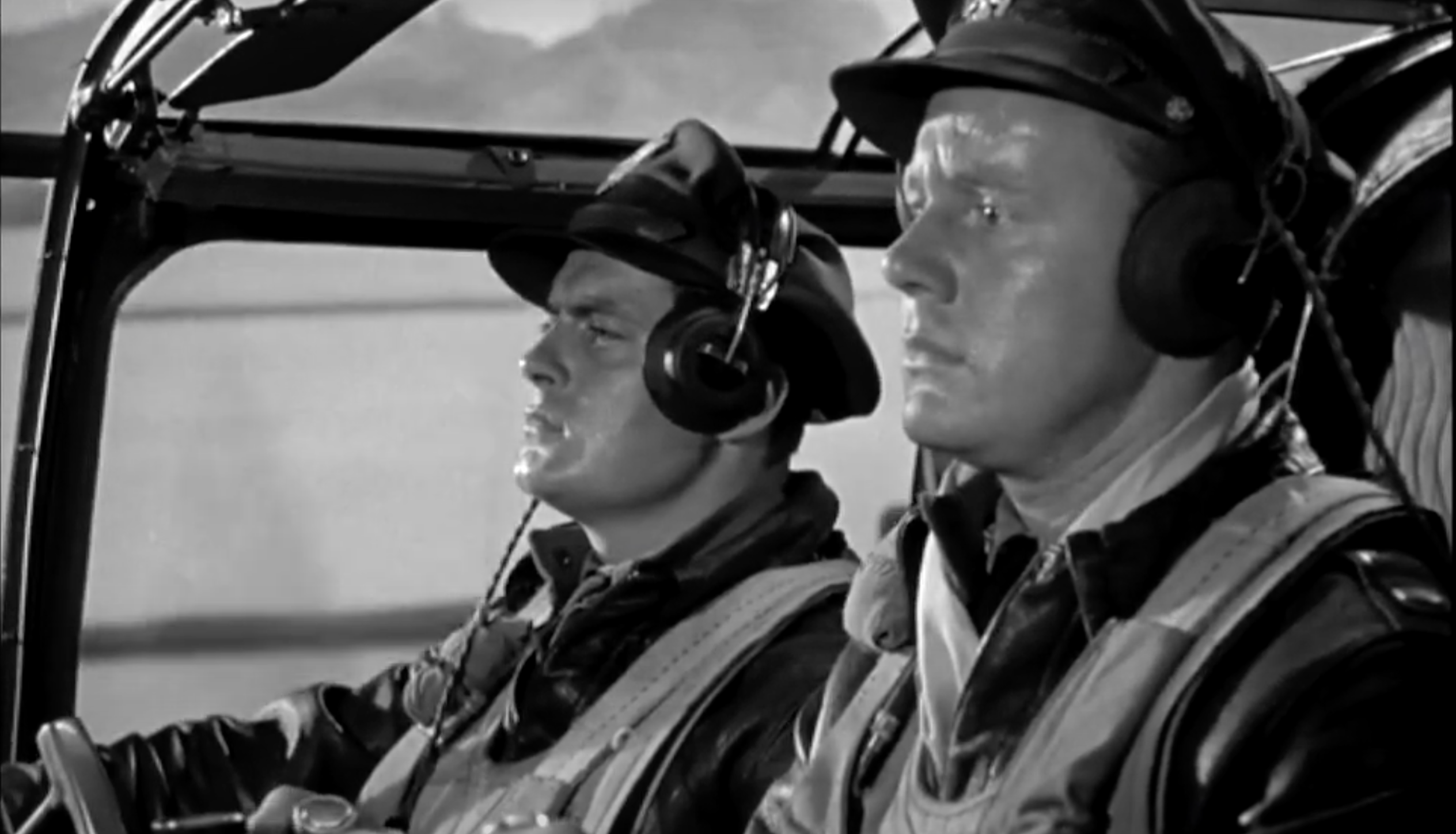
There’s something to be said for Mervyn LeRoy‘s direction of Thirty Seconds Over Tokyo (’44) — steady, workmanlike, no surprises but no potholes either. LeRoy always stayed within his safety zone, but he was a good, reliable “house” director. His best film was They Won’t Forget (’37), a Warner Bros. courtroom drama based on the real-life lynching of Leo Frank in 1915.

Thirty Seconds Over Tokyo was strictly a WWII morale-builder but a better-than-decent one, and a first-rate action film during the final third. You can totally lean on the solid, straightforward performances from Van Johnson (“I lost my ship!”), Robert Walker, Spencer Tracy, Phyllis Thaxter, Robert Mitchum.

I was especially taken by the extra-handsome, perfectly lighted cinematography by Robert Surtees (The Bad and the Beautiful, Ben Hur) and Harold Rosson (The Wizard of Oz, Singin’ In the Rain), and the fleet, finely timed editing by Frank Sullivan. Plus I’d never seen it in HD.

I began watching last night with the idea of being put to sleep. I fast-forwarded through the first half (training, relationships, flyboy camaraderie) but wound up watching the rest. This happens occasionally.

Read more

Affection, Discomfort, Concern

Don Was‘s I Just Wasn’t Made For These Times (LIVE, ’95) remains the best Brian Wilson documentary ever made. Brent Wilson and Jason Fine‘s Brian Wilson: Long Promised Road, which recently played the Tribeca Film Festival and which I saw last night, is okay for what it is but nowhere near as good.

It’s basically footage of Wilson and Fine, a Rolling Stone editor and longtime friend of the 78 year-old musical genius and Beach Boy maestro, driving around Los Angeles and visiting locations from Brian’s past. And what it boils down to is an intimate portrait of a good, gentle soul, but one who is clearly a bit twitchy and beset by unruly currents.

Honestly? Long Promised Road felt a bit exploitive. It made me feel awkward, uncomfortable. I felt sorry for Brian. He’s a good soul but I felt as if he was being subjected to a fair amount of discomfort in speaking to Fine. There was a medium close-up of Brian performing that reminded me that he reads his own lyrics off a teleprompter. It’s good that he gets out and performs, but there’s something creepy about the film. I felt badly for him.

Friendo: “I met Wilson in 1995, and he could barely carry on a conversation — and that’s true in the film as well. And obviously, he can’t sing anymore. But I don’t find any of that creepy. That’s just who Brian Wilson is, and my honest feeling is: It’s good that he survived, and has a life. He hasn’t written a memorable song in decades, but ‘Smile’ — the 2004 version — is one of my all-time favorite records. I think even now, he radiates the energy of a good soul.

HE to Friendo: “Yes, a good soul. A good heart. I’m glad he’s still plugging away. But the doc still felt a bit cruel. Fine is a decent guy but the very act of training a camera lens on poor Brian flirts with heartless exploitation — I was saying to myself, ‘Jesus, they should leave the poor guy alone.’ A gentle soul but quite twitchy. Kid gloves.”

Read more

Top Five So Far

World of Reel‘s Jordan Ruimy is polling critics on the five best films of 2021.

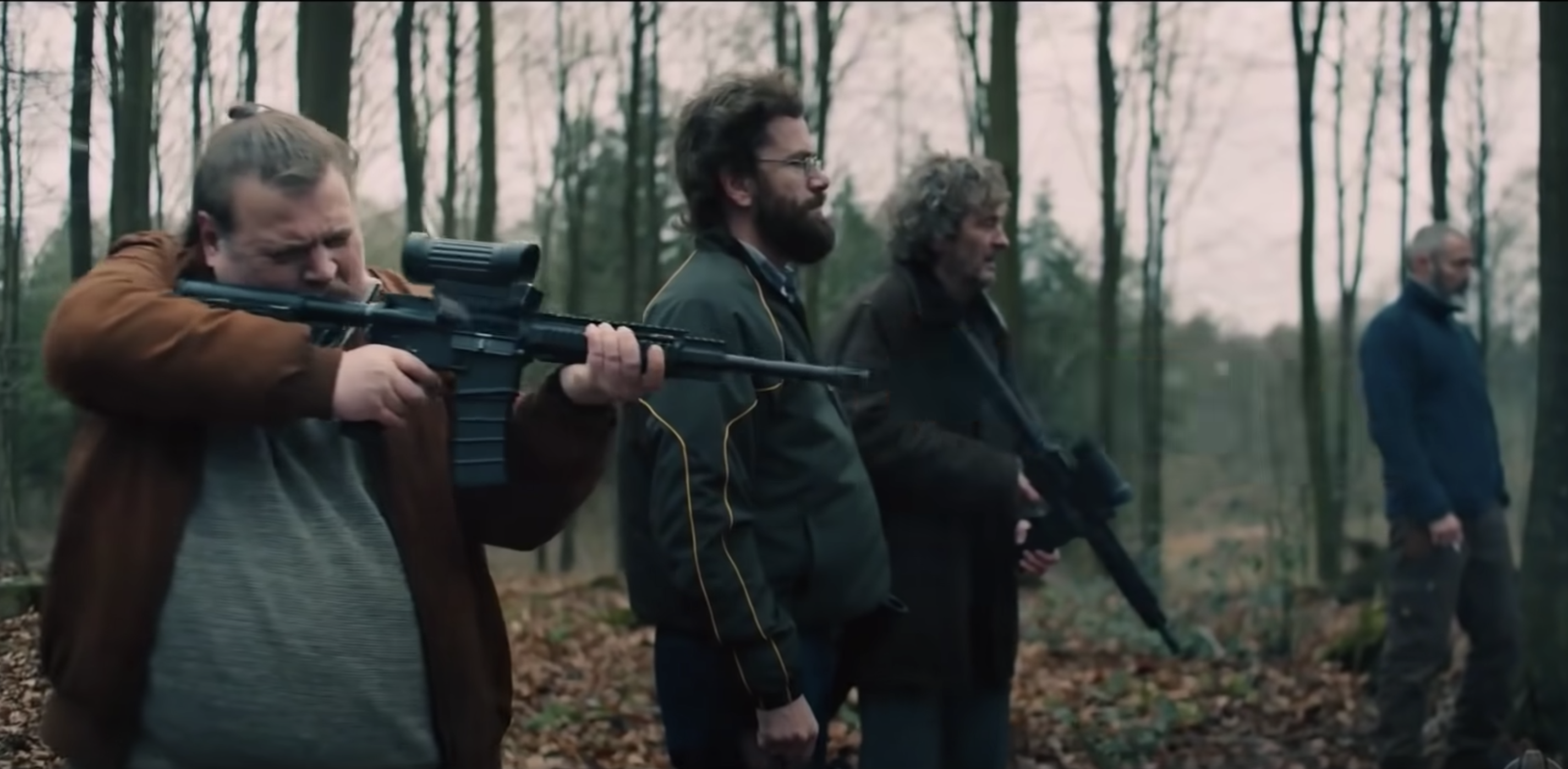
HE’s favorite film of the year thus far, hands down, is Thomas Anders Jensen’s Riders of Justice: A truly original stand-out with a deliciously skewed, deadpan sense of humor. On 5.21 I insisted that violence wasn’t funny or certainly couldn’t be sold as such, and I was dead wrong. Riders’ dry, low-key comic tone is really something. I wasn’t expecting anything as original feeling as this. It’s quite the discovery. I’m actually intending to watch it again this weekend.

My second favorite is Jasmila Zbanić‘s Quo Vadis, Aida?, which played at last year’s Venice and Toronto festivals before opening stateside on 3.15.21. It’s a blistering, horrifying, you-are-there account of the 1995 Srebrenica massacre — 8000 Bosnian men and boys murdered in cold blood by Serbian troops under the command of Ratko Mladic. For me it ranks alongside other Bosnian brutality-of-war dramas like In The Land of Blood and Honey, Welcome to Sarajevo and No Man’s Land. Not a suspense piece or a classic war drama but a mother’s perspective saga that asks “who if anyone will survive the coming massacre?” You can feel it coming from around the corner. Devastating.

Third is Simon Stone‘s The Dig (Netflix, 1.15.21). I called this tale of the famous Sutton Hoo dig of 1939, which uncovered a sixth-century Anglo Saxon burial site, generally pleasing as far as this kind of modest and unassuming British period drama goes. I loved Ralph Fiennes‘ performance as real-life archeological excavator Basil Brown — his gutty working-class accent is note perfect, but the performance is in his eyes…at various times determined, defiant, sad, compassionate. And Carey Mulligan‘s Edith Pretty…talk about a performance at once strong, heartbreaking (as in sadly resigned) and resilient. I admired it despite an idiotic subplot about a married Lily James wanting to schtup the daylights out of a young, good-looking fellow, Rory (Johnny Flynn), whom she meets on the dig.

HE’s #4 is Phillip Noyce‘s Above Suspicion. On 4.1 I called it a jug of classic, grade-A moonshine — a brilliant, tautly paced, perfectly written action thriller (i.e., rednecks, drug deals, criminals, lawmen, murder, car chases, bank robberies) that plays like an emotional tragedy, and is boosted by an ace-level performance from Emilia Clarke. Most people would define ‘redneck film’ as escapist trash in the Burt Reynolds mode, but there have been a small handful that have portrayed rural boondock types and their tough situations in ways that are top-tier and real-deal. My favorites in this realm are John Boorman‘s Deliverance, Billy Bob Thornton‘s Sling Blade, and Lamont Johnson‘s The Last American Hero. Noyce’s entry is the absolute, dollars-to-donuts equal of these, or at least a close relation with a similar straight-cards, no-bullshit attitude. And it revives the strategy of William Holden‘s narration of Sunset Boulevard.

My fifth favorite is, despite its financial failure, Jon Chu and Lin-Manuel Miranda‘s In The Heights. On 6.8 I called it “good, grade-A stuff — engaging, open-hearted, snappy, well-composed, catchy tunes, appealing performances, razor-sharp cutting. One character-driven vignette after another. Dreams, hopes, identity, hip-hop, neighborhood vibes, community, self-respect…all of it earnestly feel-good. There’s no fault in any of it except for the minor fact that I was quietly groaning. Okay, not “groaning” but half-in and half-out. Admiring but disengaged. There isn’t a single moment in which I didn’t appreciate the effort, the professionalism, the heart factor, Alice Brooks‘ vibrant cinematography…all of it is fine and commendable, and I must have checked the time code 10 or 12 times, minimum.”

Cohen Is Likable, Approved Of

Michael Cohen: “[Trump is] in trouble, Allen Weisselberg’s in trouble, Weisselberg’s kids, Matt Calamari, Rudy Giuliani, they’re all in trouble. Why? Because there’s documentary evidence that’s in their [prosecutors’] possession.”

“[And they] don’t really need Weisselberg or Calamari, [because] one of them will flip to save themselves. And once you get Calamari you don’t need Weisselberg, [and] when you get Weisselberg you don’t need Calamari. But the truth is, they don’t need either of them because they have the documents to prove exactly the illegalities done by Trump.”

Kimmel: “Have you ever seen Donald Trump cry?”
Cohen: “No, but I’ve seen him get out of the shower with his hair soaking wet”….yaaahhh!

Read more

Essence to IndieWire: Why So Fearful?

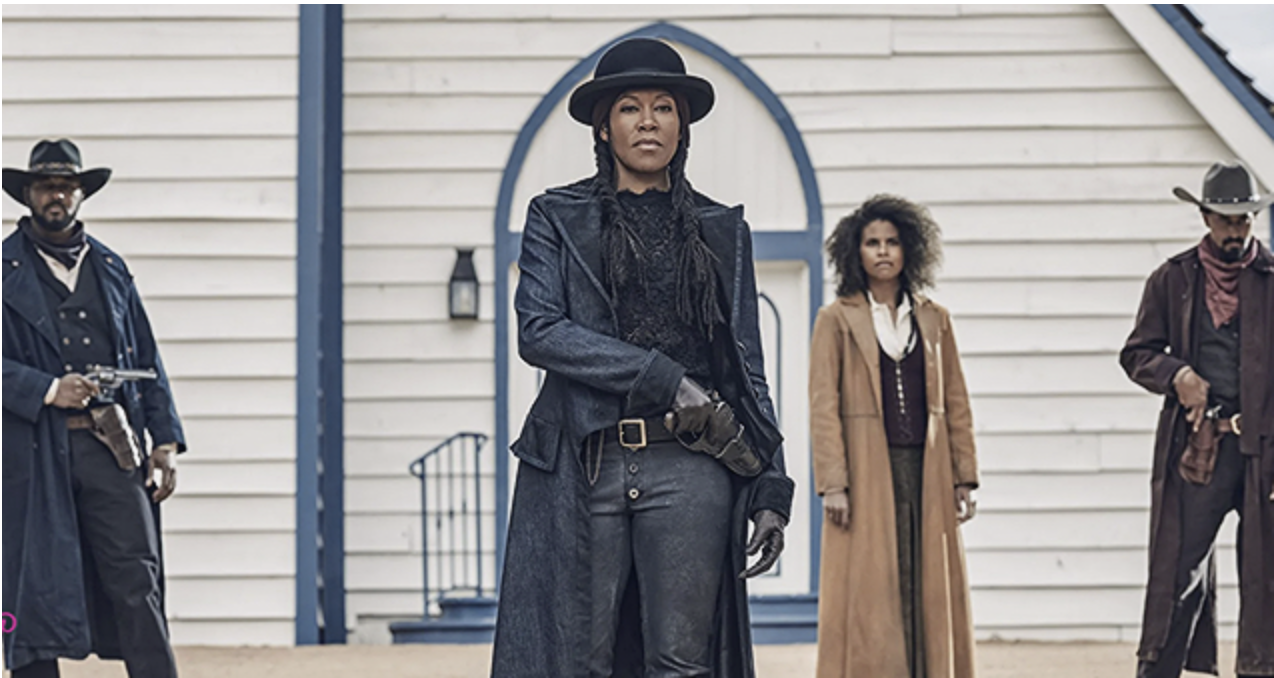
Yesterday I noted how IndieWire‘s Zack Sharf was so terrified of using the term “Black western” that he wouldn’t touch it with a ten-foot pole in his riff about a new trailer for The Harder They Fall. Instead he went with Netflix’s term — a “new school Western.”

The folks at Essence were less intimidated. Their headline for Brande Victorian’s 6.24 article reads as follows: “The First Trailer For The Star-Studded Black Western The Harder They Fall Is Here.” The term “Black Western” is also used in the lede paragraph. Holy shit!