“Dry” Spoilers Ahead

HE to friendo who recommended Robert Connolly‘s The Dry (IFC Films, 5.21): “I have to ask — what was it about The Dry that impressed you so much?

The Dry rehashes every cliche in the quiet, laid-back whodunit book — a dispassionate outsider stirs up local resentment and all kinds of buried business by investigating a killing. ‘Stay out of this if you know what’s good for ya, mate,’ etc.

“It was a big hit earlier this year in Australia so I figured it had to be at least fairly good. Not that much!

“Remove the parched Australian landscape and the heavy accents, and it’s basically another Hercule Poirot ensemble piece, or an episode of Australian Colombo. Ross McDonald’s Lew Archer books used this basic template over and over.

“It was good to visit again with Bruce Spence, whom I first came to know via George Miller‘s The Road Warrior (’82).

Spoilers: “Those swimming hole flashbacks wouldn’t stop! And that hardbound diary and those photographs hidden behind a boulder? And the old flame (Genevieve O’Reilly) reveals an odd secret at the end? And the father of the dead girl killed her way back when? Boy, there sure is a lot of buried history in the little town of Kiewarra.

Read more

Finally Sitting Down With This

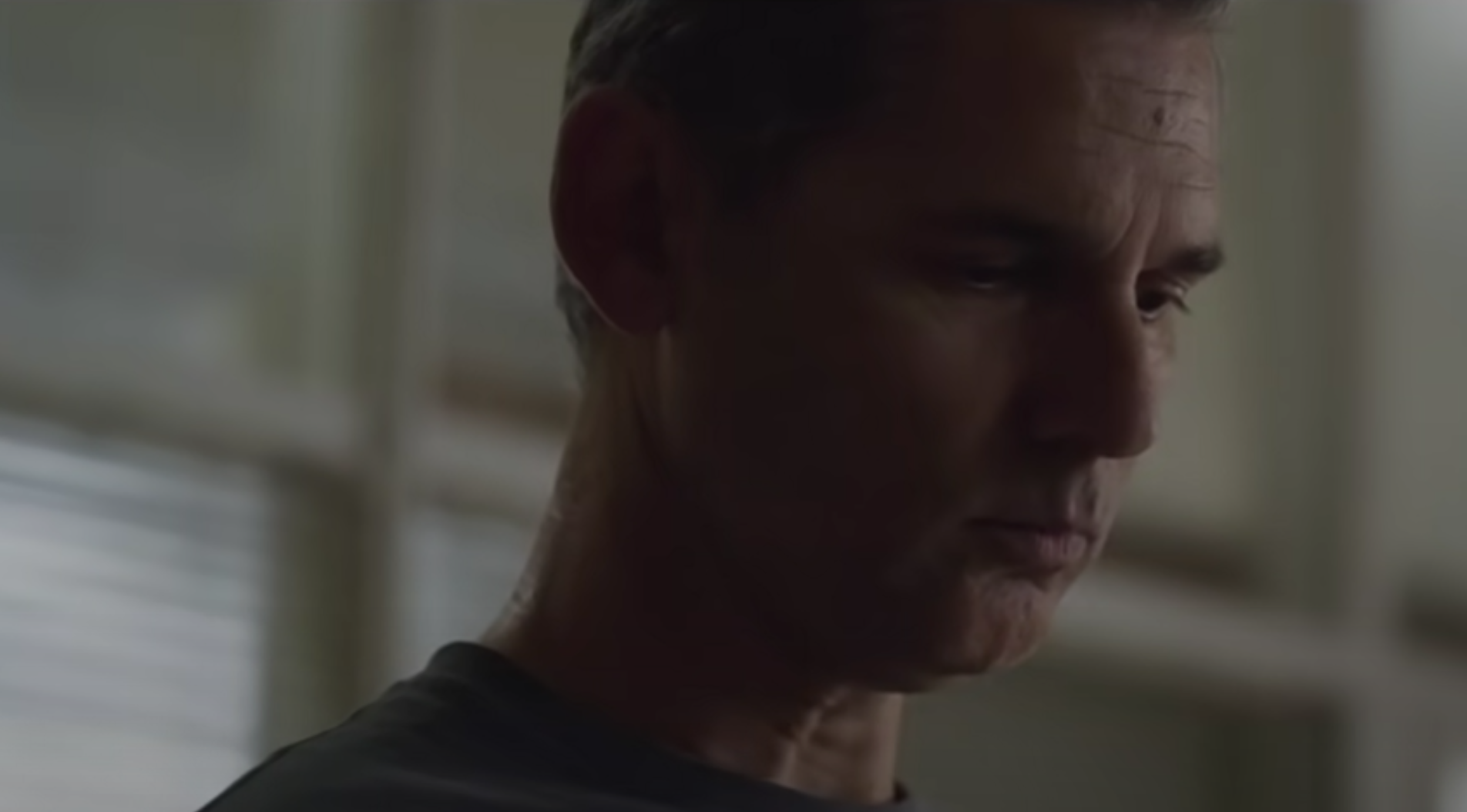
Robert Connolly‘s The Dry (IFC Films), an Australian mystery thriller, opens today. A huge hit in Australia after opening last January (as of 3.23 it had become the 14th-highest-grossing Australian film of all time) and based on a same-titled 2016 book by Jane Harper, pic costars Eric Bana, Genevieve O’Reilly, Keir O’Donnell and John Polson.

Read more

Died of Poor Judgment

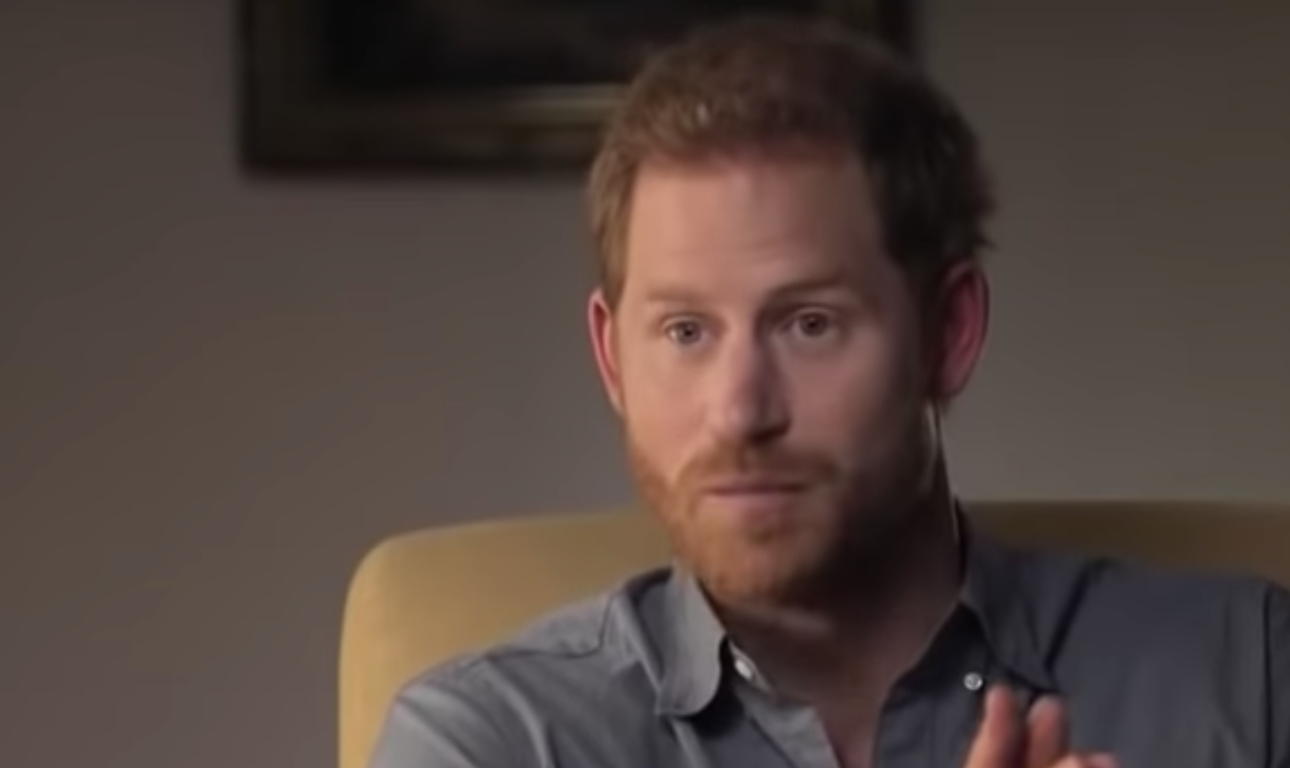
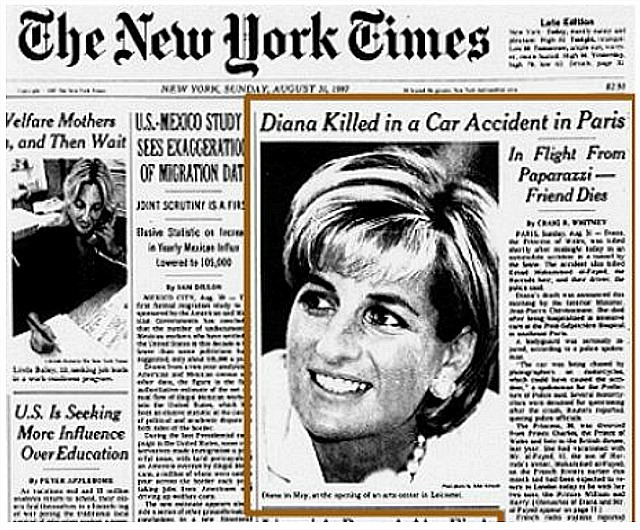
On Oprah Winfrey‘s new doc series “The Me You Can’t See”, Prince Harry says that the death of his late mother, Princess Diana, was essentially caused by unscrupulous media jackals. “The ripple effect of a culture of exploitation and unethical practices ultimately took her life,” he claims.

The predatory media certainly did what it could to make Diana’s life anguished and miserable, and shame on them for that. But as I explained in August 2017, the primary cause of her death was Dodi Fayed, the millionaire asshat whom Diana had been involved with for a few weeks.

Excerpt: “I was working at People when Diana began seeing Fayed in July 1997. Two or three of us were asked to make some calls and prepare a file on the guy. Within three or four hours I’d learned that Fayed was an irresponsible playboy, didn’t pay his bills on occasion, lacked vision and maturity and basically wasn’t a man.

Read more

Just Like Karl Marx

I know most HE readers won’t watch this four-month-old Ryan Chapman anti-wokeness video. Yes, Chapman does go on, but he’s obviously well-informed, and he speaks clearly and concisely.

“Wokeness is a run-away idea that’s not under anyone’s control…why do these woke films that keep coming out, and keep crashing and burning, keep getting made?…the woke playbook is always about abolishing something…to use the force of their movement to bend people or society, against their will but in some kind of direction that will end oppression.”

The same analogy was explained last July in a newdiscourses piece called “The Complex Relationship between Marxism and Wokeness,” by James Lindsay.

The only stylistic speed bump is the way Chapman tilts his head rightward from time to time and in so doing gives the camera a vague come-hither look.

What Would Paul Robeson Say?

According to MSNBC’s Joy Reid in one of her “Absolute Worst” essays, Republican-backed legislation that would ban critical race theory has been introduced in “nearly” a dozen states. Reid says that critical race theory is a “decades old” concept, but in fact it’s a relatively recent education-system additive that explains the history of systemic racism in this country (which no semi-educated, fair-minded person would argue with).

It follows, unfortunately, that CRT has also metastisized into a woke belief system that says white Americans are fundamentally stained and poisoned by their history, and so they need to detoxify themselves by picking up a copy of Robin D’Angelo‘s “White Fragility” and work at cleansing themselves of a shameful past. They also need to absorb and accept the theology of The 1619 Project, which states that racism is the fundamental definer of the American experience.

However enlightened or well-intentioned this kind of re-educational process might be, it is believed in many corners of this country (including the better-educated cities) that critical race theory advances a new form of racism (“bad whitey needs to atone and be strictly schooled”) in order to counter historic racism.

I think we all understand that Average Americans (including liberal parents in big blue cities) are not going to go for this, and that CRT will be flayed as a campaign issue in ’22, you bet. I hate that my own distaste for and discomfort with critical race theory puts me in the same camp as a lot of horrible Republicans, but what can I do? All I can say is, you don’t have to be a crazy Republican to have arguments with CRT.

From a 1.27.21 Bari Weiss column: “Critical race theory is a threat to the most basic foundations of American life, including, but not limited to, equality under the law. It asks us to define ourselves by our immutable characteristics” — i.e., skin color. “It pits us against one another in an endless power struggle. It rejects Enlightenment tools of reason and scientific discovery as tainted. And it undermines our common humanity.

“[It holds that] America was born for the purpose of upholding white supremacy and it remains irredeemably racist. It claims that our founders were not primarily political geniuses but slaveholders who wanted to find a way to hoard their property. And while [last year’s George Floyd] rioters may have gotten a little out of hand, they weren’t wrong to target statues of men like Lincoln.”

I greatly fear the ’22 verdict on this issue from American voters.

Read more

No Longer The Big Cheeses

I’ve almost become accustomed to reading Indiewire articles and reviews for the amusement factor. Because whatever they post, eight times out of ten it’s tainted by skewed or myopic political-cultural attitudes (Indiewire being more or less Woke Central) or extremely supportive, staunchly non-judgmental reviews of any indie film at all with a Sundance imprimatur, a #MeToo, POC or LGBTQ stamp, or a general woke-agenda vibe.

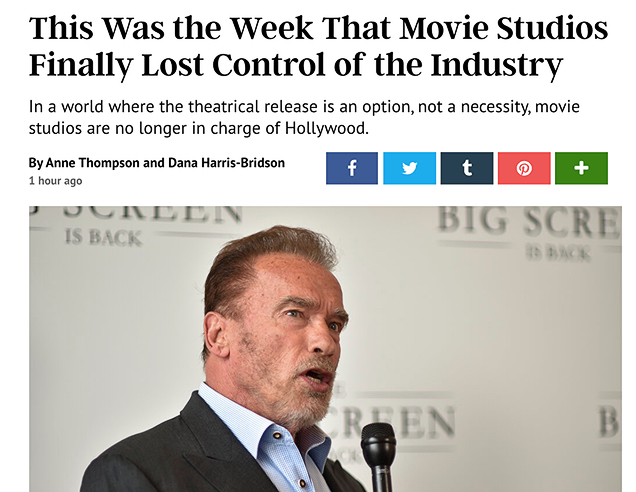
So I was almost startled to read what looked like a tough, declarative, Vanity Fair-sounding piece about how Hollywood is no longer a studio-controlled industry and how the struggling exhibition industry has painted itself into a corner.

Written by Anne Thompson and Dana Harris-Bridson, it’s called “This Was the Week That Movie Studios Finally Lost Control of the Industry.” The ostensible trigger was attending “The Big Screen Is Back”, a Century City gathering intended to promote the the return of theatrical, but the big news was AT&Ts decision to turn tail and abandon the movie distribution business. Last Monday the communications behemoth announced that WarnerMedia (CNN, TBS, TNT, Warner Bros. film and Tv + HBO slash HB0 Max) and Discovery are merging into one, and that head of this new company will be Discovery CEO David Zaslav.

Key paragraph #1: “We have reached a point where ‘major movie studio’ has begun to sound like an anachronism. Certainly, Warners and Universal and Paramount and Disney and Sony remain premier global suppliers of films that generate billions — but the studio bosses occupy a lower position on the power charts because it’s no longer the movie business that drives the industry.”

HE retort: Maybe so, but “the movie business” has always had a river running through it, and that river is know as the Grand Tradition of Movie Catholicism — a current that drives the heart and spirit of this town, at least among people with a soul. The more that unfaithful dilletante product assemblers and marketers ignore this basic spiritual current the less “Hollywood” this community will be.

Key paragraph #2: ‘Slammed by global lockdowns, the biggest theater chains are also the victims of their overspending, debt burdens, real-estate deals, and mostly, denying reality. Before the pandemic, they could have struck better terms with the studios on shorter windows and revenue sharing. They held out too long.”

“I’m Cutting It”

Prano Bailey-Bond‘s Censor, a British horror film that opened at Sundance ’21, costars Niamh Algar, Nicholas Burns, Vincent Franklin, Sophia La Porta, Adrian Schiller and Michael Smiley. HE is interested as Censor appears to be an exercise in elevator horror. Magnet will release it on 6.11.21.

“After a shocking murder brings the censorship team’s work under public scrutiny, shy, slightly awkward Enid (Algar) bares the brunt of the backlash, receiving disturbing phone calls and hounded by reporters. At the same time she encounters the lecherous film producer Doug Smart (Smiley) who drops by with his latest offering: a Video Nasty from infamous director Frederick North. Enid is struck by the lead actress’ shocking resemblance to her missing sister, and becomes obsessed with the idea that Smart and North hold the key to unlocking her past.

“The retro styling is reminiscent of Peter Strickland’s Berberian Sound Studio while the gore and overt weirdness evokes the early work of Ben Wheatley, but Censor has enough personality of its own to avoid slipping too much into pastiche territory.

“Although it’s more of a mood piece than a narrative one, Niamh Algar is excellent in the lead role (having already proved herself one to watch with her supporting turn in Calm with Horses) and there’s yet to be a film not improved by an appearance from Michael Smiley.” — from a 1.30.21 review by Little White LiesHannah Strong.

A Matter of Perspective

Two months ago the intemperate, hyperventilating woke jackal mob did their best to bring about my death. It was partly about HE having posted an insensitive comment — albeit one that might have been mentioned in passing by any half-attuned industry insider who knows how Oscar-voting sentiments tend to work on deep-down levels — but it was mainly a matter of indelicate timing.

I naturally apologized for this transgression, despite (a) my not having actually written a damn thing myself (I’d posted an excerpt of an email chat) and (b) my having quickly removed the post when the Twitter banshees went nuts.

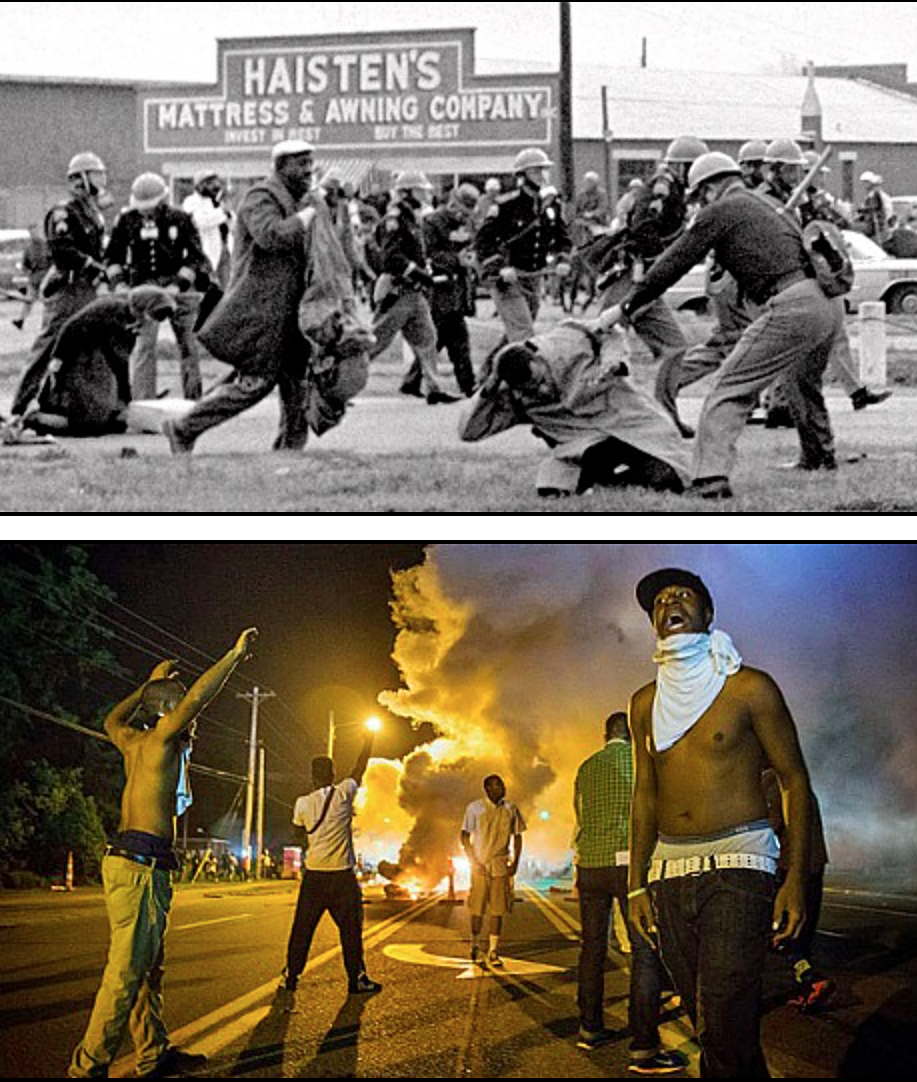
A friend has pointed out that a similar thing happened in late November 2014, in the immediate wake of an announcement by the Ferguson grand jury that no charges would be filed against Officer Darren Wilson in the death of Michael Brown.

Right after the Ferguson Grand Jury verdict was read, and just before a Disney-lot screening of Into The Woods, I tweeted that a possible “strike a match rather than curse the darkness” response to this otherwise tragic event might be a surge of industry Best Picture support for Selma. Yup — another instance of the wrong HE tweet at the wrong time.

But all I said was that symbolically lighting a candle rather than lamenting the ugliness might be a good thing in the end.

I was all but roasted alive for saying this. Many people tweeted that I sounded like an insensitive asshole. How dare I suggest, after all, that there was (or might be) linkage between Ferguson and Selma‘s Oscar chances?

But at heart I had tweeted a positive sentiment. I was thinking, you see, of Martin Luther King’s words about how only love can eradicate hate. I was thinking that standing by a film about human dignity, compassion and human rights would serve as a positive response to the Ferguson situation. Okay, I didn’t say it in quite the right way. But I was trying to suggest that in a roundabout fashion this would be a way of showing love and respect for the right things and the right people.

A couple of days later Selma director Ava DuVernay pointed out a direct connection between her film and what had happened in Ferguson.

She did so in an Eric Kohn Indiewire interview with Selma director Ava DuVernay and Fruitvale Station director-writer Ryan Coogler about their support of the Black Friday Blackout.

For me, the stand-out portion was when Kohn asked DuVernay if she saw “any direct connections between today’s climate in the immediate aftermath of Ferguson in the story of Selma.” DuVernay responded as follows: “Yes, absolutely. It’s the same story repeated. The same exact story.

“An unarmed black citizen is ‎assaulted with unreasonable force and fatal gunfire by a non-black person who is sworn to serve and protect them. A small town that is already fractured by unequal representation in local government and law enforcement begins to crack under the pressure. People of color, the oppressed, take to the street to make their voices heard. The powers that be seek to extinguish those voices.”

In short, a filmmaker can point to parallels and echoes between his/her film and current tragic events, but a columnist who wades into the same (or similar) waters is risking life and limb. Especially if the Oscar race is brought into the equation.

Who would suggest that DuVernay wasn’t thinking about (or at the very least was aware of) how the Ferguson tragedy had lent a certain symbolic, metaphorical heft to her film? Was Selma not in Oscar contention as she spoke?

Rock to Glover: Yeah, Me Too

A little more than a week ago Atlanta creator/star Donald Glover complained that call-out culture is diminishing or dulling down creativity in movies and TV series. “We’re getting boring stuff and not even experimental mistakes because people are afraid of getting cancelled,” Glover tweeted.

Now Chris Rock has said the same thing. In a “Breakfast Club” interview with Angela Yee and DJ Envy, Rock said that fears of being cancelled has left everybody “scared to make a move.” He added that Khmer Rouge mandates are “disrespectful” to the audience and have led to lots of “unfunny” comedians, TV shows and movies in the entertainment industry.

Rock: “What happens is that everybody gets safe and when everyone gets safe and nobody tries anything, things get boring.”

Rock said he understands that some things shouldn’t be said but warned that cancel culture is preventing comedians from doing their jobs. “We should have the right to fail because failure is a part of art. It’s the ultimate cancel. You know what I mean?”

Read more

Horror Horn

Warning to straight women: If an attractive dude you’ve just met mentions that he’s “got this Yale alumni thing [he has] to go to,” run in the opposite direction. Name-dropping a renowned Ivy-League university = a sure sign of insecurity and a possibly sociopathic personality. That goes double if he says he works in hedge funds. Obviously.

If you’ve known the guy for a week or two and then he mentions Yale and hedge funds, okay. But not in the first five minutes.

This is why I’ve no interest in Iliza Schlesinger and Kimmy Gatewood‘s Good On Paper (Netflix, 6.23). Because who wants to hang with a protagonist who’s too dumb to spot an obvious red flag?