Rusty and Rinty

The histories of Kurt Russell and Natalie Wood aside, a significant percentage of child actors haven’t transitioned all that successfully into adult TV and movie careers. By all accounts poor Lee Aaker, the ‘50s star of The Adventures of Rin Tin Tin, was one of Hollywood’s less enterprising (or less lucky) fortunate sons.

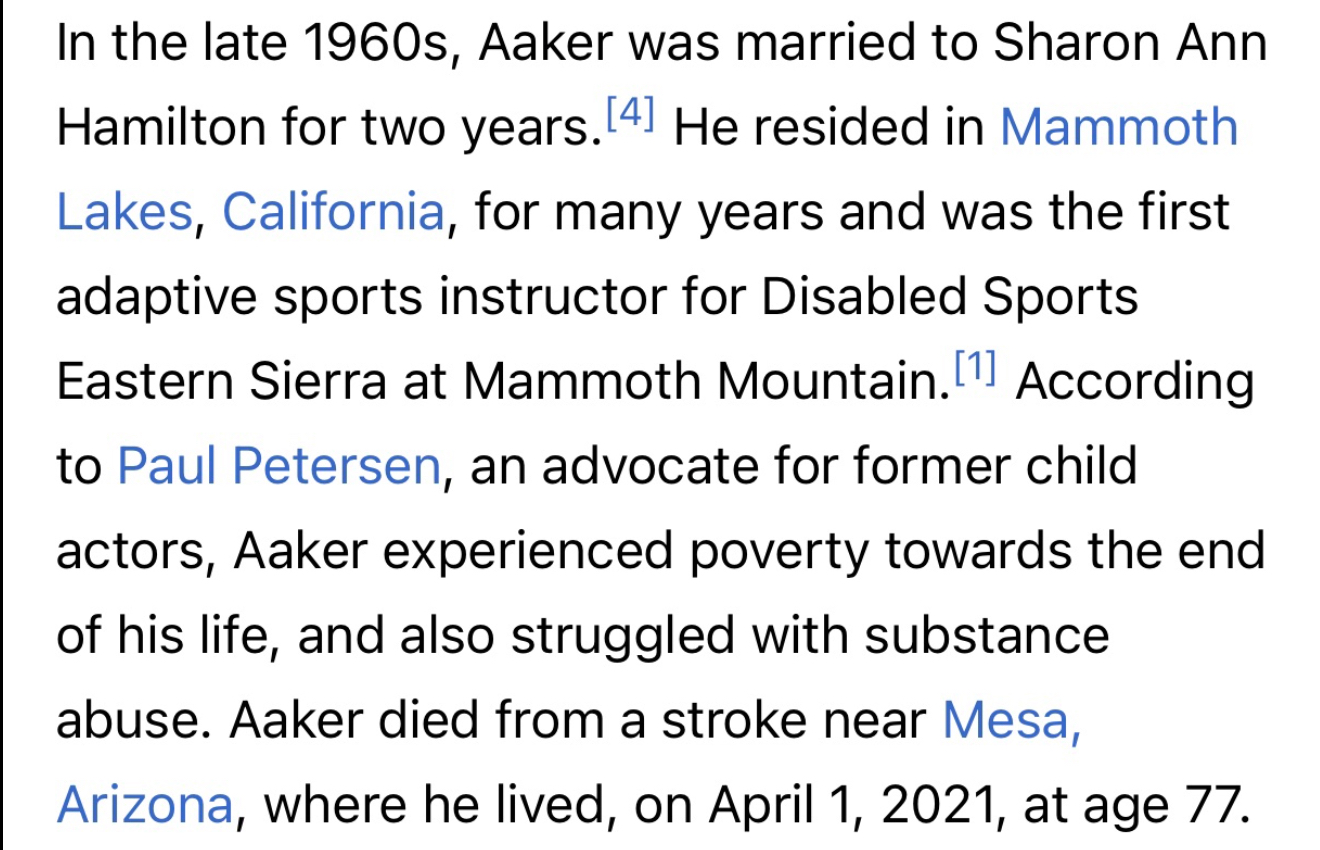
After his career fizzled out in the mid ‘60s Aaker did this and that (including carpentry). The fact that he passed two weeks ago at age 77 and the world is only just hearing about it now is instructive. Ditto the following paragraph from his Wiki page:

Upon The Passing of Bernie Madoff

Bernie Madoff‘s life sentence has been commuted. The most wildly sociopathic, deeply deranged investment manager in the history of homo sapiens (certainly in terms of scale) has left his prison-confined body and is now swirling or backstroking in an infinite cosmic sea of soul particles.

Another way of putting it is that the guy is fucking dead.

Speaking of sociopathic, consider or reconsider an ethically aloof fantasy piece I wrote 12 years ago about Bernie on the lam, called “In His Shoes“:

Unless he somehow manages to commit suicide, Bernie Madoff is going to die in jail. That seems appropriate to me, but I’m wondering why he didn’t just run for it when he had the chance. He knew the Feds were on his tail and it was just a matter of time.

I’m asking because something in me can’t help but sympathize with a caged bird, especially when he/she is looking at life in the slammer.

If I was Madoff I would have prepared for my escape and disappearance during my ponzi-scam days. All criminals need to face the fact that sooner or later they’ll be forced to lam it.

I would have socked away massive amounts of cash in a few Swiss, Cayman Islands and Venezuelan bank accounts under fake names, with debit and credit cards attached to each account. And I would have hired pros to create several sets of first-rate fake IDs and fake passports. And I would have arranged in advance for plastic surgery with a first-rate specialist based in Moscow.

I would have slipped out of Manhattan before the Feds arrested me. I would have taken a private plane from Teterboro to northeastern Canada and then another to Iceland, and then a third to Belgium. I would then enjoy a leisurely car trip to Russia, my pockets and briefcase stuffed with several hundred grand in Euros, ready to bribe whenever necessary. I’d meet my plastic surgeon somewhere in the Ukraine — haven’t decided where.

After the operation I’d move to Tartu in Estonia and recover for six or seven weeks. Then I’d drive down to Moscow and hire myself a team of four elite bodyguards — two guys, two women — and invest in the finest electronic security systems and outfit all my homes with them.

Then I’d make my way to Vietnam. I’d probably build myself a high-security home in the Central Highlands and live in it for two or three months — no more. The eventual plan would be to have several “safe houses” but never stay in any one for very long. Always moving, never sleeping with more than one eye closed, “like Yassir fucking Arafat.”

I’d buy a 100-foot sailing craft and move around from port to exotic port like a wandering character in a Joseph Conrad novel. I’d hire three full-time prostitutes to travel with me, but they’d have to be prostitutes who know how to sail. I might smoke opium from time to time. I’d pay for even more hookers to drop by on weekends, but they’d have to be highly educated and well-read. No booze, no cigarettes. But I’d chill out with quaaludes or Oxy from time to time.

I’d volunteer with Red Cross organizations to help the poor. I’d move to Darfur and try and use my money to try and purchase some level of comfort or protection for the poor who live there. I’d move the operation to the Amazon jungle from time to time. I’d travel to the South Pole and then to South Africa, and then take a ferry to Madagascar.

I’d certainly catch plays in London twice a year. I’d buy a studio in Montmartre that I’d visit every four or five months for a week or two. I’d always stay inside days, reading and watching movies on my 52″ LCD flatscreen, and working out on a treadmill. I’d go out to dinner and for walks in the evenings, wearing shades and a fishing hat.

I’d eventually get pinched, of course. Sooner or later somebody would sell me out or spot me (even with my altered appearance). But I might stay free for two or three years, and at least I’d have a melancholy Conradian adventure under my belt and many things to remember before spending the rest of my life in miserable confinement, which of course I deserve.

2009 comment by “NotImpressedYet”: They would have to be “prostitutes who know how to sail”?

I’m envisioning some kind of high-end prostitute finishing school tucked away in Switzerland where they learn all the proper sailing knots, how to ride English and western saddle styles, learn about 19th and 20th Century art movements, study the histories of ancient Greece and the Roman Empire, write essays about Benjamin Disraeli, etc.

Great Substack vs. Patreon HE Debate

Here it is mid-April and I remain torn between two HE futures — (a) Substack, which is a whole new universe of function and operation, vs. Patreon, which would retain the classic HE look, structure and functionality but on a paywall basis.

In favor of Substack, according to Adviser #1:

(a) I can keep the www.hollywood-elsewhere.com domain and use it for the Substack website; (b) I can import HE’s RSS feed of previous posts into Substack easily, so the historical work is preserved; (c) For every post, I can decide in the settings where or not this post is for paid subscribers or not; (d) I can use Substack as a website AND a newsletter. You determine which posts are for the newsletter and which are for the just basic posts on the website. The posts still combine in the backend.

That said, it’s obviously in my interest to keep the majority of HE behind the subscriber paywall.

Plus there are some cool features in Substack. (1) Substack offers an easy-to-use tool for embedding podcast / audio content. (2) There’s also a community tool called “Threads” which are basically topics for the community to get into vs writing a full post for people to comment on. Example: What is the most hard-to-rewatch Steven Spielberg film ever made? And then it just becomes a comment board on its own. Plus I can determine if it’s a subscriber-only thing or a free-for-all.


Visual representation of how I, Jeffrey Wells, am feeling right now about the Great Substack vs. Patreon Debate at this stage. At times I am of two minds at the very least, and possibly of three. At other times I am all in on Substack. At other times I find the idea of jettisoning HE, which I’ve built up over the last 17 years, upsetting if not shattering. I’m just sittin’ on a fence. You could say I got no sense. Trying’ to make my mind, it really is so hard to find. So I’m sittin’ on a fence.

All in all, Substack “is way more versatile that I gave it credit for,” says Adviser #1. “You can create different types of content with less struggle using code and servers to host image files. All of this is super user-friendly and built-in.”

Plus there’s no cost to using Substack. No server fees. I just pay $50 to use the HE domain for the substack. No Liquid Web speed issues. No upkeep. No maintenance. I’ll save a fortune, I’m told, and stand to gain consistent income through platform that is universally trusted.

Adviser #2 says…

“I think Substack is the best possible pathway forward. I can’t tell you how liberated I feel since being in the subscription realm. I feel like I’ve been set free to do the best work of my career. You have a dedicated readership already…you’ll have to trust they will stick with you.

“I would recommend reaching out to Substack and talking to them about whether they could port your archives and URL over if you made the leap. They did that for me when I moved to them, and it went pretty painlessly. The only downside is that it would entail a change of look to HE…but it’s a season of change. And once you are on Substack, it makes all the backend stuff and the money collection completely painless. Before I was on \Substack, basic administrative stuff was taking up a day and a half a week for me. Now its maybe 15 minutes a week.”

Substack doesn’t support ads, but you can drop them in as image Jpgs, which is what i do and basically, they look the other way on it, They wont help you, but they don’t stop you either.

“Plus I figured out a way to jury-rig the template to put a banner above the logo.

Read more

Sad Submission

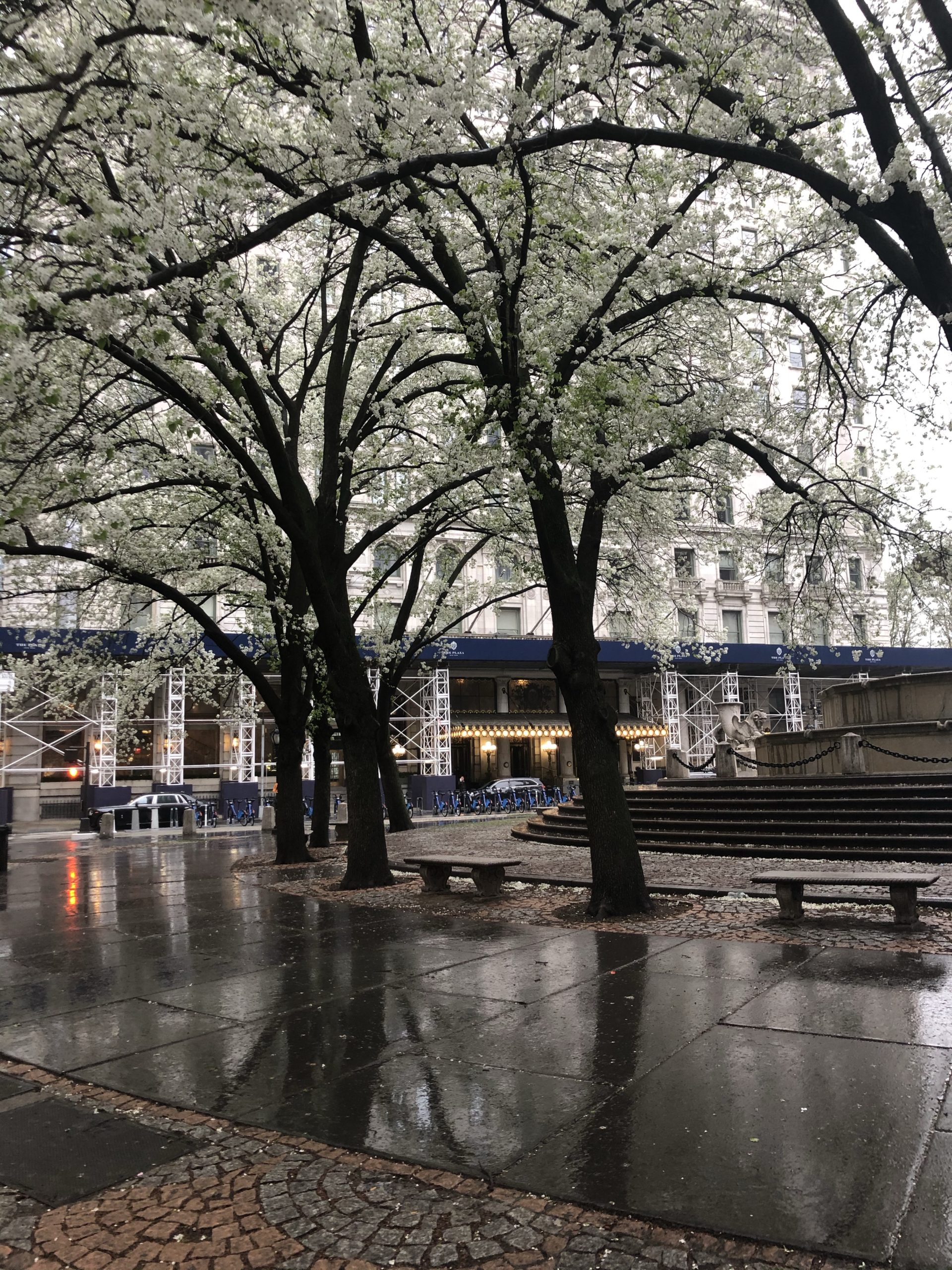
Now that sunny, blue-sky weather has returned to the New York City area after two days of blustery chills and occasional rain, Tatiana and I are sadly returning to Los Angeles. Our United flight leaves Newark around 4:15 or 4:30.

Confession

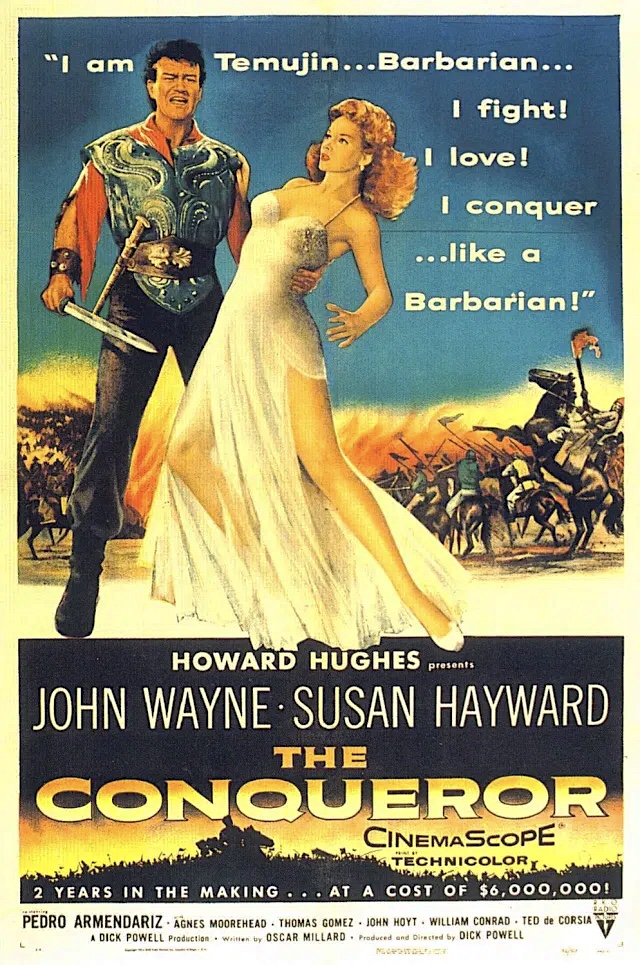
Every so often I’ll post some dismissive remark about Howard Hughes and Dick Powell’s radioactive, cancer-ridden The Conqueror (‘56). But that’s because the basic concept (John Wayne as a Mongolian warlord) and poster art have always seemed so silly on their own terms. The truth is that I’ve never seen this allegedly tiresome film. Has anyone?

Best Actor 20-Teen Preferences

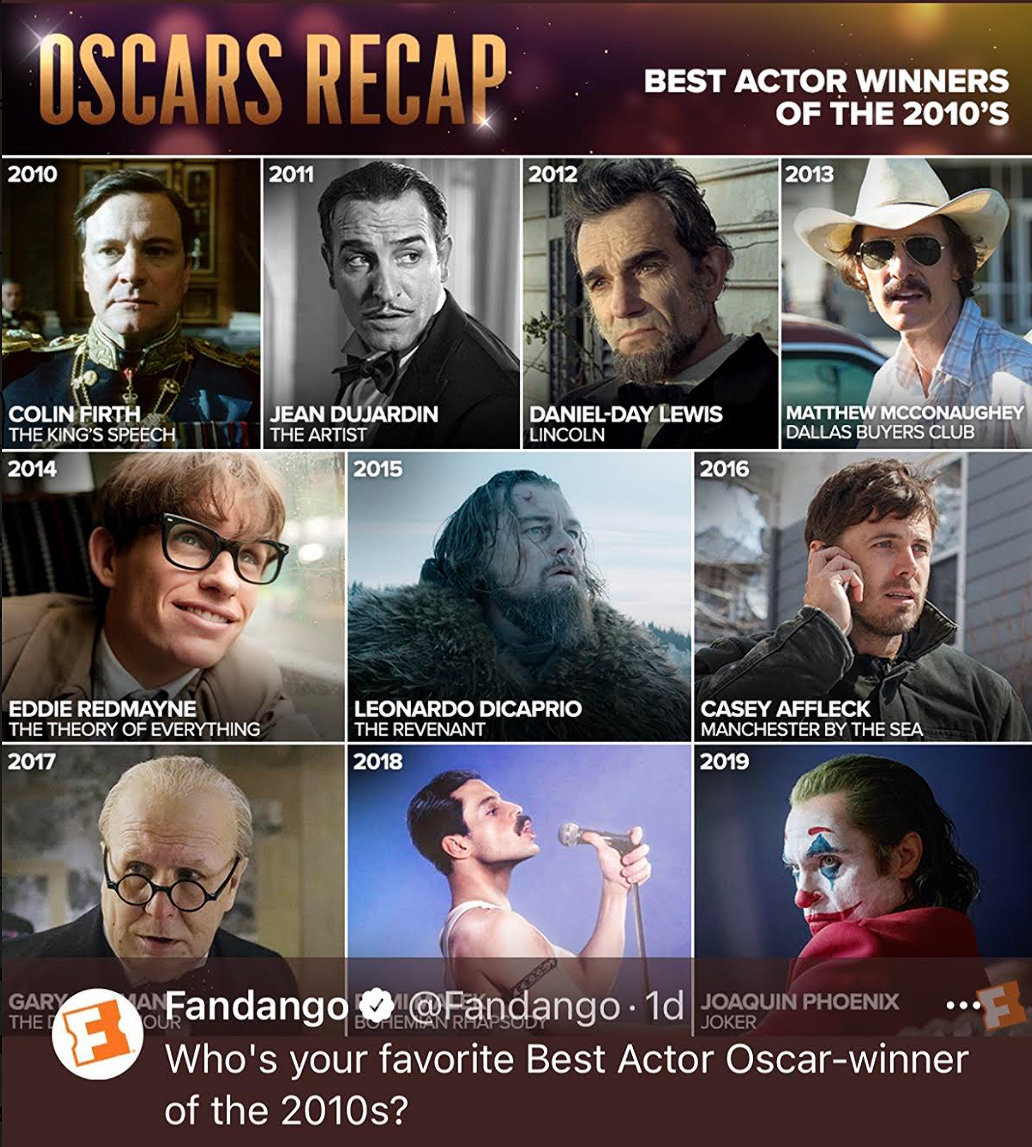
This was batted around on Twitter a couple of days ago by Tomris Laffly, but here goes anyway. I agree that Casey Affleck in Manchester By The Sea and Leonardo DiCaprio in The Revenant (combined with his even-better performance in The Wolf of Wall Street) — two 20teen performances that won the Best Actor Oscar — are truly exceptional and way better than the other eight.

Actually let’s add Joaquin Phoenix‘s Oscar-winner in Joker and make it a triumvirate.

I respect Colin Firth‘s work in The King’s Speech, but I’ll never watch that film again. Ditto Jean Dujardin in The Artist — a film that I begged critics and Oscar handicappers not to embrace so uncritically. Did they listen? Of course not.

Good enough, fine, good job but calm down: Daniel Day Lewis in Lincoln, Matthew McConaughey in Dallas Buyer’s Club, Eddie Redmayne in The Theory of Everything, Gary Oldman in Darkest Hour, Rami Malek in Bohemian Rhapsody.

Hollywood Anonymous Logo Makeover

Last night I asked HE’s Chicago-based design guy Mark Frenden to take a stab at redesigning the logo for Hollywood Anonymous, a new Substack that I announced on 4.6.

The basic concept, as noted, is anonymously written reportage about what Hollywood life is actually like these days in terms of production, distribution, casting, financing, publicity, Hollywood-angled journalism, fleeting social alliances, ferreting out the insufficiently woke and so on. The kind of “this is how things really are these days” articles that people aren’t allowed to write at publications anymore. No names, no hints, no allusions, no nothin’.

Anyway, here’s what Mark delivered in terms of a horizontal banner and a small box-like accompaniment:


I like it — a thematic cousin of HE and operating within the same universe.

Read more

McKay vs. Sorkin: New Political Spectrum

This may sound a bit strange but bear with me, or more precisely with Adam McKay. In a 4.12 N.Y. Times Sunday Magazine interview with David Marchese, the director of The Big Short and the forthcoming Don’t Look Up breaks down some differences between today’s lunatic righties, all-but-extinct classic Republicans, moderate liberals and serious lefties like McKay.

McKay does so by way of a comparison between himself and The Trial of the Chicago 7‘s Aaron Sorkin.

McKay: “For all intents and purposes the Republican Party is no longer a functioning political party with actual policies and ideas” — true. “It’s motivated by pure power, reactionary beliefs. So I would say the real right wing in our country is the moderates” — not true. Left-center moderates like myself are left leaning within reasonable, fair-minded restraints. We’re not righties — we’re sensible lefties (i.e., in favor of $15 an hour minimum wage) minus your woke totalitarian Khmer Rouge cancel-culture mentality.

In other words, McKay is claiming that moderates (center-left or center-right) are the new classic Republicans. Sorry but there’s nothing “Republican” about this horse — I swear by the theology of kindness and humanitarianism, I love who Bernie Sanders and Pete Buttigieg are deep down, I’ve taken LSD and mescaline, I don’t relate to people who play golf or visit Dubai, I occasionally ride a rumblehog, I’ll cross the street to avoid babbling homeless people, I was once immersed in the Bhagavad Gita, I’ve been to Prague for hair treatments, I wear Italian suede lace-ups and high-thread-count T-shirts…don’t call me even vaguely Republican!

McKay: “The right-wing version of me — maybe this isn’t the best example — is an Aaron Sorkin. You’ve got to remember, we just saw seven Democrats vote against raising a minimum wage that is $7.25 an hour. That’s extremely right-wing. Bill Clinton, the policies he pushed through, are right-wing” — what Sorkin means is that policy-wise Clinton was a moderate Eisenhower Republican.

McKay: “The whole definition of right and left in our country is shattered because of this Republican Party that is almost a Ponzi scheme of meaning.

Read more

No Way The H’wood Arclight Disappears

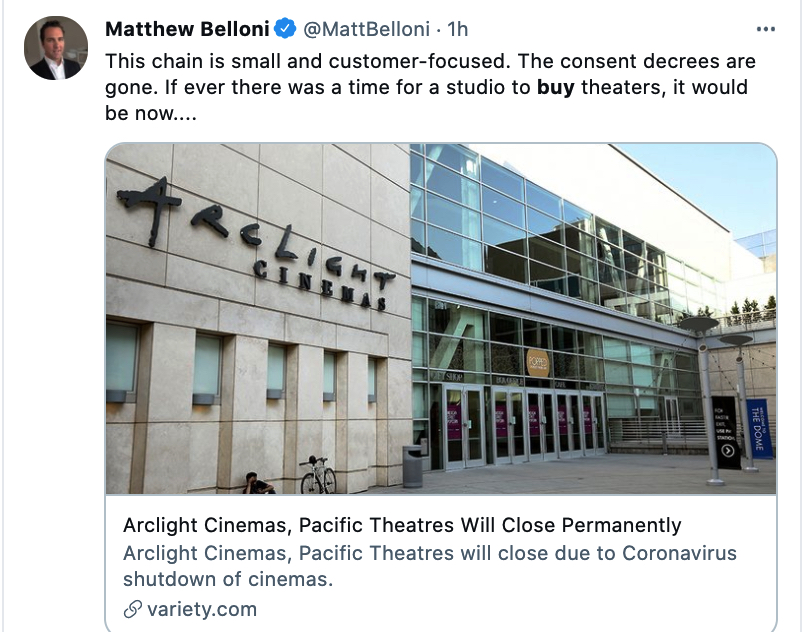
Someone or some entity will step in and save H’wood’s Arclight plex and particularly the Cinerama Dome**. Some wealthy entrepeneur or digital distribution company (Netflix, Amazon, Quentin Tarantino) will save the day. The Arclight cinemas (including the ones in Sherman Oaks and Culver City) are central to the L.A. movie experience. They’re simply not allowed to permanently shutter…out of the question.

** The ultra-curved Cinerama Dome screen distorts the shit out of Scope films (2.39:1), by the way. It distorts the shit out of everything.

Respect for Richard Rush

All hail director Richard Rush, who passed on 4.8.21 at age 91.

I met, interviewed and even hung out with Rush a bit during the 1980 promotion (spring and summer) of The Stunt Man — an audacious, whimsical turn-on that’s partly a sardonic comedy and partly a surreal meditation on the nature of “reality” and filmmaking. It was Rush’s one big triumph, or more precisely as a success d’estime within the community of hip know-it-all critics.

I was flattered to be invited to a special Manhattan Stunt Man gathering that included Rush, costar Steve Railsback and three or four elite journo schmoozer types — a boozy late-night hang that went into the wee hours. Out of this I became friendly (short termish) with Railsback’s wife Jackie (aka Jackie Giroux). Several weeks later I wangled a GQ assignment to interview Peter O’Toole, whose Stunt Man performance as director Eli Cross was one of his best, at his London home**.

Wiki excerpt: “Adapted by Rush and Lawrence B. Marcus from a same-titled 1970 novel by Paul Brodeur, The Stunt Man is about a young fugitive (Railsback) who lucks into a stunt double gig on the set of a World War I movie whose charismatic director (O’Toole) is quite the force of nature. Pic was nominated for three Oscars: O’Toole for Best Actor, Rush for Best Director and also for Best Adapted Screenplay.”

Read more

Chandler Era

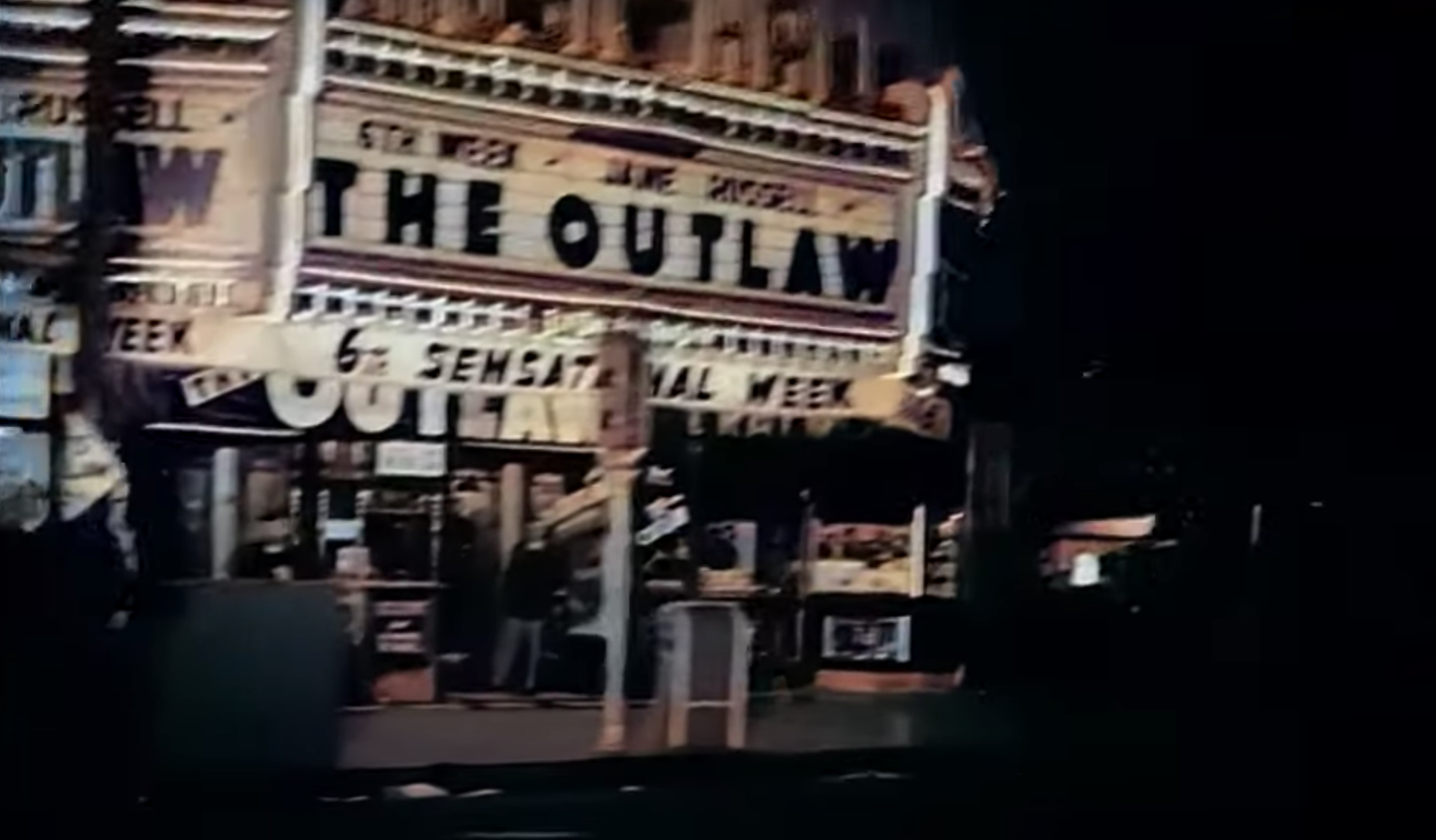
Nocturnal high-def Los Angeles in the early to mid ’40s…Gilda, The Outlaw, The Letter on theatre marquees. Hat stores, fur stores, Atlantic Richfield gas stations. A large spotlight mounted on a flatbed truck. Hundreds upon hundreds of mid ’40s autos parked curbside — a 2021 film set in this era couldn’t hope to deliver this kind of authentic realism. Downtown Los Angeles plus the mean streets of Hollywood. Video-like clarity plus simulated sound…fairly amazing.