Honk If You Still Hate “A.I.”

I hated Steven Spielberg‘s A.I. when I first saw it nearly 20 years ago, and…uhm, that was the last time. But I don’t need to replenish the hate. For years the A.I. remnants have become more and more fragmentary and insignificant, and I’ve been cool with that. All through the Bush, Obama and Trump administrations, it’s been like “A.I. who?”

But sometime earlier today Nick “Action Man” Clement, a man who’s rarely met a film he hasn’t liked, ran a positive looking-back riff about this “robot version of Pinocchio” (a description favored by Stanley Kubrick when he was thinking about directing it in the ’80s), and suddenly a switch flipped and I saw red.
Enough With The Kids,” posted on 3.25.09:

I don’t like movies about kids. Not any more. Exceptions will happen, of course, but I don’t give a damn about coming-of-age movies or learning-a-tough-lesson movies or movies about young kids going through an adventure that changes their life and/or has a profound impact. Really, throw all of that shit out.

I’ll tell you one reason why I’m not the only one thinking this. The Great Recession has been scaring the hell out of people, and with everyone getting down to brass tacks and doing what they can to survive parents are realizing that they haven’t done their kids any favors by funding a cut-off, over-indulged fantasy realm for them to live in. That’s what the Wall Street pirates have been doing in a sense since Bush came in and look what happened.

Kids need to grow up and grim up and learn the basic survival skills and disciplines. So enough with the Spielberg-aping films that portray a child’s world as a magical-fantastical kingdom in and of itself that adults might be able to learn something from.

I loved E.T. at first blush, but the last time I saw it I had a moderately hard time. There’s no filmmaker who’s more sentimental, manipulative and emotionally cloying than Spielberg when it comes to under-age characters, and that doesn’t age well.

It’s taken years to realize this, but I think my profound dislike of kid films initially came from the one-two punch of Spielberg’s Hook (’91) and George Lucas‘s The Phantom Menace (’99). (Jake Lloyd‘s performance as Anakin Skywalker was surely one of the most agonizing ever delivered in motion picture history.) Those two left me doubled-over, and then along came Spielberg’s A.I. and I was really done with kids playing lead roles. A ten-year process, that.

Read more

Hollywood Anonymous (Substack)

Yesterday a certain “friendo “and I decided to launch Hollywood Anonymous — a Substack composed of anonymously written reportage about what Hollywood life is actually like these days in terms of production, distribution, casting, financing, publicity, Hollywood-angled journalism, fleeting social alliances, ferreting out the insufficiently woke and so on.

The kind of “this is how things really are these days” articles that people aren’t allowed to write at publications anymore. No names attached, of course. No hints, no allusions, no nothin’.

“In this, a time of glorious and necessary change, progressive revolutionary terror and threatened wokelisting (i.e., cancellation), the only way that anxious human truths and honest sagas can be fully and unapologetically shared is anonymously, hence this site…”

In addition to the HE paywall thing (the particulars of which I’m still scratching my head over), it’ll be my task to persuade certain parties to submit essays about anything and everything, as long as it has something to do with how this town currently runs. We’ll try and launch within a few weeks, and then we’ll see how it goes.

Son of Robbed at Dawn

Initially posted on 10.12.08: Herewith a story of a wild train-trip drama during my first trip to Prague, which happened a month after the 1992 L.A. Rodney King Riots and six months before the election of Bill Clinton.

I had attended my first Cannes Film Festival that year (reporting for Entertainment Weekly) and would later visit Cortina d’Ampezzo and the outdoor sets of Cliffhanger for a Sylvester Stallone profile for the New York Times.

I took a train from Nice to Genova, Italy, and then switched to another heading for Prague. But a half-hour into the trip I realized the train was headed for Berlin and not Prague — I’d read the sign wrong. So I got off in Leipzig around 10 pm in order to catch a 2:45 am Leipzig-to-Prague sleeper. I was feeling whipped and unclean so I booked a hotel room to use it for three hours, long enough for a shower and a 90-minute nap.

I was back at the Leipzig bahnhof by 2:15 am. I bought a bunk on the Prague train and crashed in a sleeping compartment as soon as the train pulled out. Somebody had told me to be careful about sleeping-car thievery so I put my wallet (which had about $50 in Italian lira plus American Express traveller’s checks) under my pillow.

Right around dawn, or roughly 2 and 1/2 hours after we left Leipzig, I was awakened by sounds of shouting and agitation. Young women’s voices, one of them shrieking. The first thing I noticed after my head cleared was my wallet sitting on the floor — empty, cleaned out. We’d all been hit.

I got up, ran out and began talking with a group of British high-school girls who were travelling to Prague with a couple of male instructors. More people came up to us, alarmed, anxious. A team of thieves, we quickly deduced, had crept into several sleeping compartments (which didn’t lock from the inside) in the dark, one after another, and taken all they could carry. And the poor British girls had been carrying nothing but cash.

But how long ago?, we asked each other. The train was moving so the baddies must still be on board, right? We started running from car to car, looking for help.

Then more shouting. The thieves, we were told, had been hunted down and were now huddled in one of the first-class compartments, protecting themselves from enraged victims who had chased and were now surrounding them, locking them in, taking them prisoner. Everyone in our group began running in that direction. Vigilante justice! Everyone enraged, determined, acting and thinking as one.

We came upon a beefy, pink-faced German train conductor and pounced on him, demanding in a mixture of English, German and Esperanto that he call the authorities and have them meet the train at the next stop so the thieves could be arrested. But the conductor, a lifelong veteran of East German socialism, was terrified at the idea of taking the initiative. I speak no German, but it was obvious from his squealing voice — the guy literally resembled Porky Pig — that he didn’t want to go up against a team of possibly armed thugs. Leave me alone!

Read more

Spielberg, Hanks, Antropova

Four days ago Tatiana mentioned something that sounded like “lion”…something that had arrested her attention and that she might want to watch or read or listen to. Tatiana doesn’t always pronounce the full title of a movie or song or TV show so I had to be careful. I always get yelled at if I misunderstand her so right away I was concerned. Actually I was sweating bullets. If I was Tatiana’s employee at a Russian marketing firm she would probably fire me in less than 72 hours, and certainly within a week.

I suspected she might not have said the word “lion” but possibly “lyin'”…so great was my terror that I dared not speculate. Maybe, I told myself, she’d heard Roy Orbison‘s “Cryin'” and wanted to add it to her iPhone music library.

I summoned all my courage and asked her to clarify, and this time she used the word “Ryan.” Great, I told myself — we’re getting somewhere! I calculated that she probably wasn’t alluding to Rian Johnson or Ryan Reynolds or Robert Ryan or Ryan O’Neal….which Ryan? Then she said something about watching “Ryan” later that evening. I won’t bore you with further particulars but she finally communicated (or Jeff the Stupid Oaf finally understood) that she needed to watch Saving Private Ryan for her film class. So we did.

The following day I posted “Fragging Corporal Upham.”

Last evening Tatiana was taking part in a Zoom discussion of Steven Spielberg’s 1998 war film with her instructor and fellow students, most in their early 20s. Early on a young African-American woman had a question or more precisely a complaint: why did the film not include any African-American soldiers, even in the background? She said she’d understand an all-white cast if Ryan had been made in 1945 or thereabouts, but it’s only 22 and 1/2 years old so she didn’t get Spielberg’s attitude.

The instructor acknowledged her concern and decided against mentioning that aside from troops of color being sent in as replacements during the Battle of the Bulge, U.S. troops were largely segregated during WWII, certainly when it came to infantry combat troops. He knew that wouldn’t fly.

What the student meant was, “I don’t care about the actual WWII history and segregationist policies…what I don’t understand is why Steven Spielberg didn’t cast Saving Private Ryan according to the common practice of presentism — i.e., ‘uncritical adherence to present-day attitudes, especially the tendency to interpret past events in terms of modern values and concepts'”?

In other words, we’re all accustomed to the presentism of Bridgerton, Jodie Turner Smith playing Anne Boleyn and African and Asian actors filling costarring roles in Mary, Queen of Scots. So why wasn’t the socially concerned Spielberg on this train back in the late ’90s?

Read more

Ancient Evenings

Reconsider the Temple of Concordia, the well-preserved main attraction in the Valley of the Temples, a series of Greek-era Doric structures and scattered remnants just south of Agrigento, Sicily. Built between 440 and 430 B.C., it’s the largest and best-preserved Doric temple in Sicily and one of the best-preserved Greek temples period.

The park was closed before we arrived at 8:30 pm so we drove onto the grounds of a swanky hotel located only a couple of hundred yards below the above-named structure, pretending we were guests, in order to get a bit closer. Snapped on Tuesday, 5.25.10 at 8:55 pm.

Friendo Likes Kongo

Southern Journo Pally: “I had zero interest in this until reading your reaction and several reviews which made it sound gloriously wacky. Which it is. A barely comprehensible plot, good direction and editing, amazing FX, plenty of intentional laughs. So over-the-top, it’s utterly enjoyable.

“I also enjoyed a bunch of solid actors spending a good deal of their screen time looking at a blue screen and registering awe, fright, confusion, etc. Demian Bichir made a good, ridiculous villain, but poor Kyle Chandler was totally wasted (I’m sure that paycheck made up for his nothing part.

“Anyway, I’m recommending it to my friends. They won’t believe I saw it, let alone liked it, but…”

Proof in Pudding

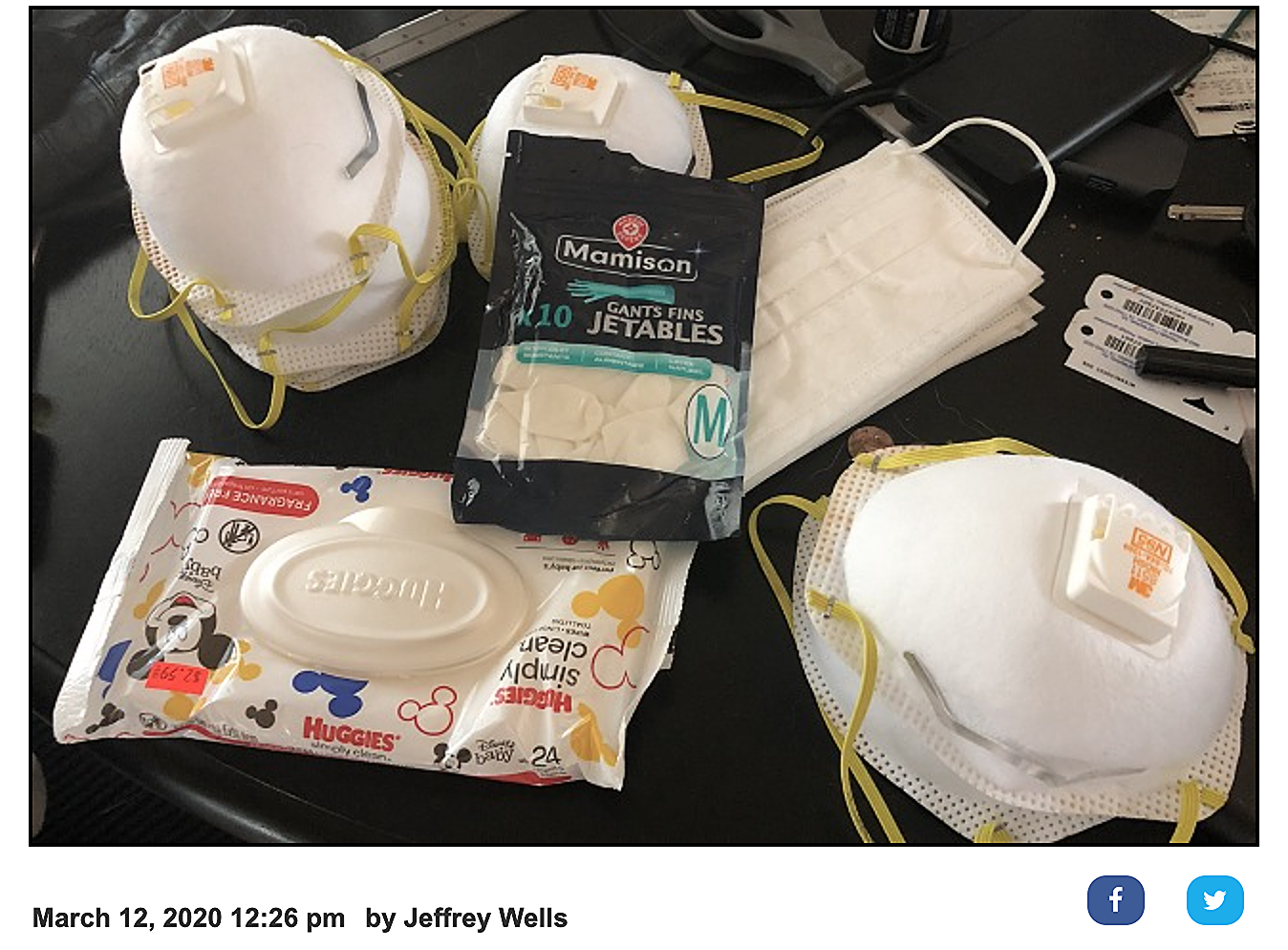
Just for clarity’s sake, I was told the other day that mask-wearing wasn’t really happening in early to mid-March of 2020, and that it didn’t become an established thing until mid-April (and in some areas later than that). Maybe so, but here’s photographic proof that HE was totally masked up as of 3.12.20 — “Each Dawn I Die” and “Logan’s Run“, both posted in Austin. On 3.22.20 I posted about deciding to buy a stylish mask (Jasper Johns American flag or black with white polka dots). You know that certain apparels and behaviors are well embedded when things get to the fashion-sense stage.

Read more

How Much Of A Thing, If At All?

The Serpent = eight hours of my life that I’ll never get back. Yesterday I moaned and groaned about the lukemia-like effect of watching this limited BBC One / Netflix series about notorious serial killer Charles Sobhraj.

But I might not have watched it at all if a certain “friendo”, whom I’ve known for years and whose taste in feature films is roughly at par with my own, hadn’t urged me to do so.

Yesterday “Mister Quiqley, Jr.” wrote that “this is a growing problem I’ve seen, and by now we’ve all been likely burned by it — the ‘friend with great taste in films who recommends bad TV’ dilemma. Or, to coin an acronym, FWGTIFWRBTV.”

In other news, HE is just as intrigued with “letterkenny” as everyone else, but what IS “letterkenny”? Who mentioned it first and for what reason? From what context did it arrive?

Conflating Racially-Tainted Tragedy with Oscar Futures…Yipes!

Last March the intemperate, hyperventilating woke jackal mob did their best to bring about my death. It was partly about HE having posted an insensitive comment — albeit one that might have been mentioned by any half-attuned industry insider who knows how Oscar-voting sentiments tend to work on deep-down levels — but it was mainly a matter of indelicate timing.

I naturally apologized for this transgression, despite (a) my not having actually written a damn thing myself (I’d posted an excerpt of an email chat) and (b) my having quickly removed the post when the Twitter banshees went nuts.

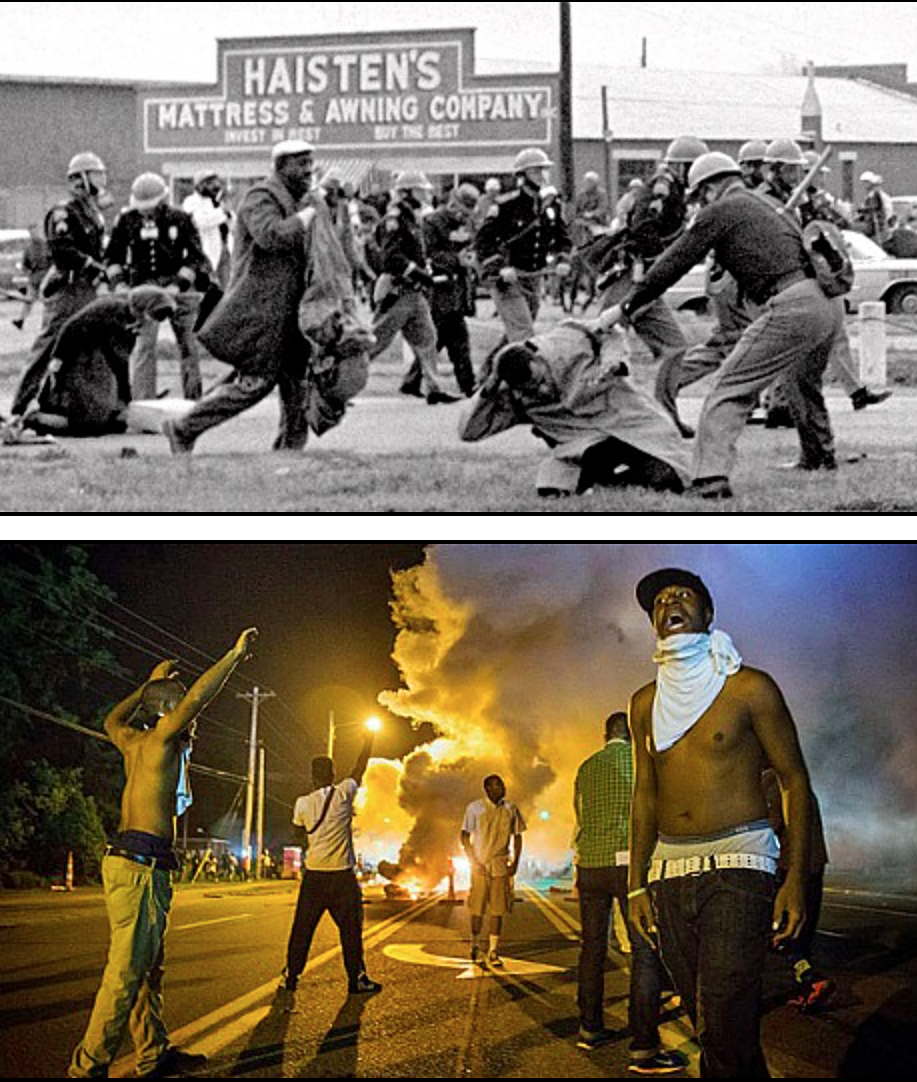
I was reminded a few days ago that a similar thing happened in late November 2014, in the immediate wake of an announcement by the Ferguson grand jury that no charges would be filed against Officer Darren Wilson in the death of Michael Brown.

Right after the Ferguson Grand Jury verdict was read, and just before a Disney-lot screening of Into The Woods, I tweeted that a possible “strike a match rather than curse the darkness” response to this otherwise tragic event might be a surge of industry Best Picture support for Selma. Yup — another instance of the wrong HE tweet at the wrong time. But all I said was that symbolically lighting a candle rather than lamenting the ugliness might be a good thing in the end.

The Twitter community didn’t dig it. I was all but roasted alive for saying this. Many people tweeted that I sounded like an insensitive asshole. How dare I suggest, after all, that there was (or might be) linkage between Ferguson and Selma‘s Oscar chances.

But at heart I had tweeted a positive sentiment. I was thinking, you see, of Martin Luther King’s words about how only love can eradicate hate. I was thinking that standing by a film about human dignity, compassion and human rights would serve as a positive response to the Ferguson situation.

Okay, I didn’t say it in quite the right way. But I was trying to suggest that in a roundabout fashion this would be a way of showing love and respect for the right things and the right people.

A couple of days later Selma director director Ava DuVernay pointed out a direct connection between her film and what had happened in Ferguson.

She did so in an Eric Kohn Indiewire interview with Selma director Ava DuVernay and Fruitvale Station director-writer Ryan Coogler about their support of the Black Friday Blackout.

For me, the stand-out portion was when Kohn asked DuVernay if she saw “any direct connections between today’s climate in the immediate aftermath of Ferguson in the story of Selma.” DuVernay responded as follows: “Yes, absolutely. It’s the same story repeated. The same exact story.

“An unarmed black citizen is ‎assaulted with unreasonable force and fatal gunfire by a non-black person who is sworn to serve and protect them. A small town that is already fractured by unequal representation in local government and law enforcement begins to crack under the pressure. People of color, the oppressed, take to the street to make their voices heard. The powers that be seek to extinguish those voices.”

“The Serpent” Doesn’t Cut It

Over the last two nights I’ve slogged through seven episodes of The Serpent, a limited BBC One / Netflix series about notorious serial killer Charles Sobhraj, who murdered between 20 and 24 young tourists during 1975–1976.

Directed by Tom Shankland and Hans Herbots and co-written by Richard Warlow and Toby Finlay, it’s an annoying, patience-testing, spirit-draining ordeal… it plods along and never ends. It’s an uphill hike.

Tahar Rahim plays Sobhraj, an ice-cold sociopath whose opaque company I immediately didn’t care for. (He lacks that mesmerizing Hannibal Lecter magnetism.) A friend had recommended that I watch this thing, and within the first 20 minutes I was texting him with remarks like “I have to hang out with this asshole for seven more episodes? I’m really not digging this.”

I instantly disliked the whole damn package, although I did find the Asian settings alluring. The show was mostly filmed in Bangkok and Hua Hin, a resort town in Thailand’s Prachuap Khiri Khan Province. At the very least I came away with a fuller appreciation for the look, sounds, aromas and textures of Thailand. That was nice.

Otherwise I felt bruised by the flat, clunky dialogue and particularly by the endless flashbacks and the way it just goes on and on and on. (It should have been a four- or six-hour series.)

The fact that nearly every character was constantly smoking cigarettes drove me nuts.

I was driven up the wall by Jenna Coleman‘s glassy-eyed, impossible-to-read performance as Marie-Andrée Leclerc, who was Sobhraj’s partner and accomplice. (Her final scenes in episode #8 are her best.). Dutch diplomatic staffer Herman Knippenberg, the guy who investigated and hunted down Sobhraj, is played by Billy Howle with the fakest-sounding Dutch accent in the history of filmed drama. I despised Amesh Edireweera‘s performance as Ajay Chowdhury, who was Sobhraj’s sleazy, bushy-haired errand boy.

The only costars I could stand were Ellie Bamber as Knippenberg’s wife Angela, and Tim McInnerny as a Graham Greene-ish Bangkok character named Paul Siemons.

Read more

Cancel Ernest Hemingway?

From Daniel Fienberg’s THR review of Ken Burns’ Hemingway (PBS, airing tonight): “As powerful as the Hemingway mystique was in the first half of the 20th century, it would be impossible to think of a figure less-suited for glorification in the first half of the 21st century.

“Hemingway lived hard, loved hard and worked hard. He was an alcoholic, a philanderer and an abuser. His books celebrated war, or at least a version of heroism that could be expressed through war. They glorified hunting. They mythologized bull-fighting.

“Is 2021 the worst time imaginable for a six-hour documentary about Ernest Hemingway? Maybe.”

So why doesn’t the #MeToo commentariat issue some kind of official statement retroactively cancelling his ass? We all love his pared-to-the-bone sentences, but we all understand the cultural bottom line. Ernest Hemingway roared, wrote, drank, boxed and hunted animals in his heyday, but he just doesn’t belong any more. He doesn’t fit. Corey Stoll played the hell out of him in Midnight in Paris, but Hemingway is not — was never? — a man for all seasons.

And in all seriousness, isn’t it in the best interests of the #MeToo community to make that clear to one and all? In the event that there might be some impressionable young lads out there who, you know, might find the Hemingway thing attractive?

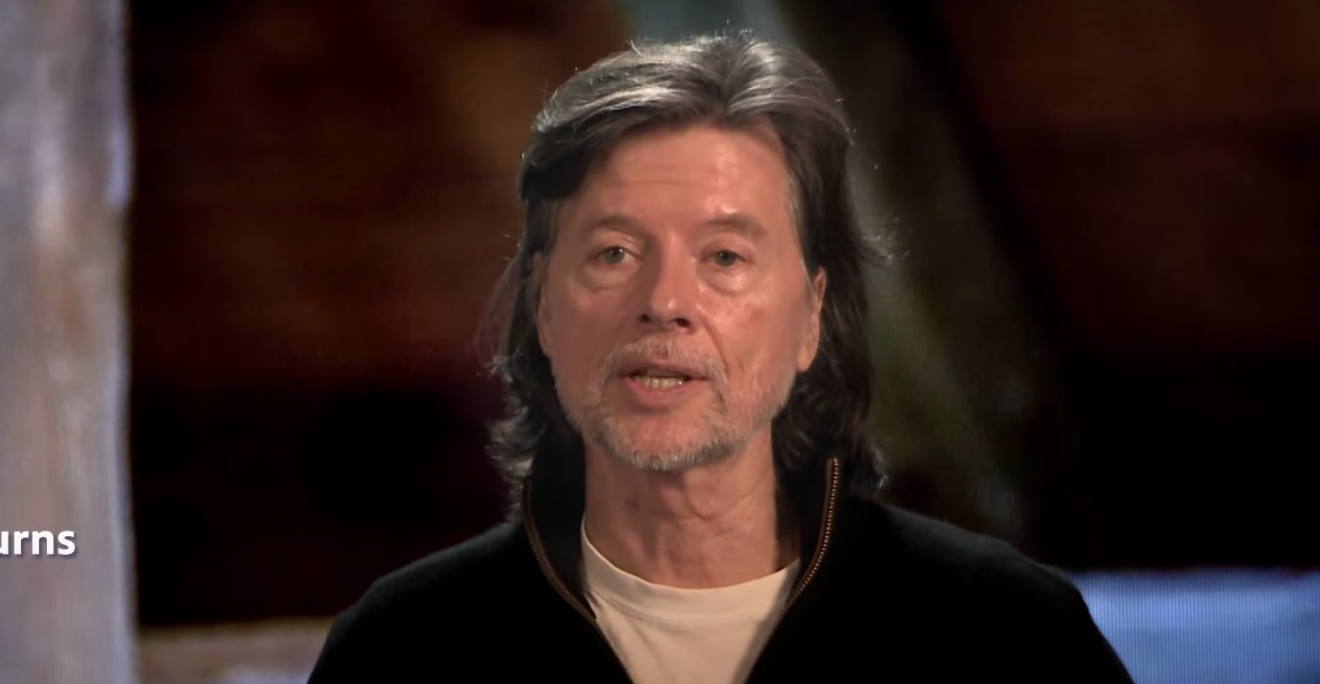
Incidentally: I was asleep at the wheel a few weeks ago when it was revealed that documentarian Ken Burns had abandoned his 1964 Beatles soup-bowl hair style. I finally paid attention as I watched the trailer for Burns’ Hemingway, a three-part, six-hour doc which debuts this evening on PBS stations.

In a 2.19.21 GQ interview by Gabriella Paiella, it was revealed that Burns’ decades-enduring bowl cut was due to his heaving gone to the same hairdresser since 1975. Which makes zero sense, of course. The real reason has more to do with the death of his Burns’ mom, and his wanting to keep the same look he had when his mother was alive.

Read more

Why Did Lean Fudge It?

The first scene in David Lean‘s Lawrence of Arabia (’62) depicts the motorcycle death of T.E. Lawrence (Peter O’Toole). It tells us that Lawrence was speeding so fast that when he saw two wobbly bicyclists that he veered and tire-screeched away and lost control and wiped out. But — I’ve just learned this for the very first time in my life — this Pathe newsreel footage shows that Lawrence crashed into the rear tire of one of the bicyclists, and this is what caused his death. Why did Lean go “naaah” and choose his own accident scenario? Mystifying.

Read more