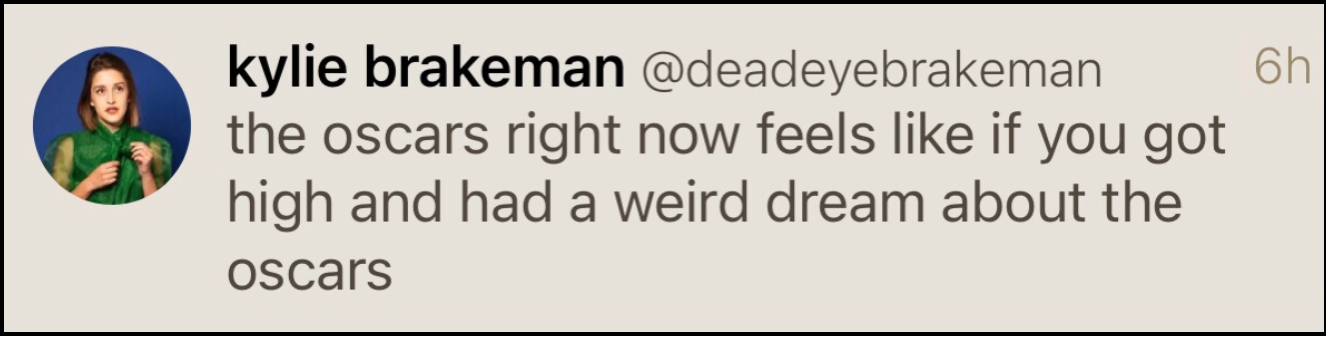
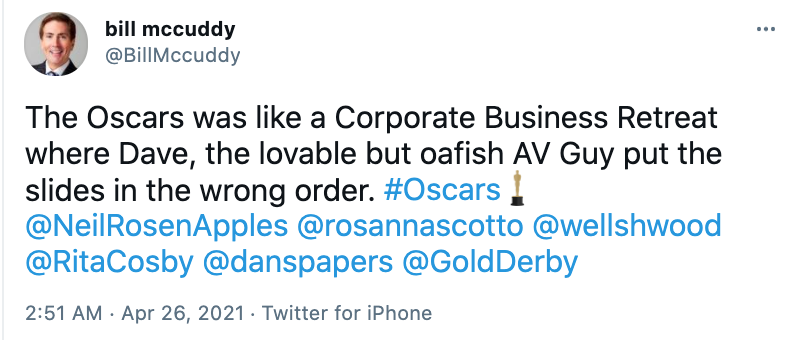
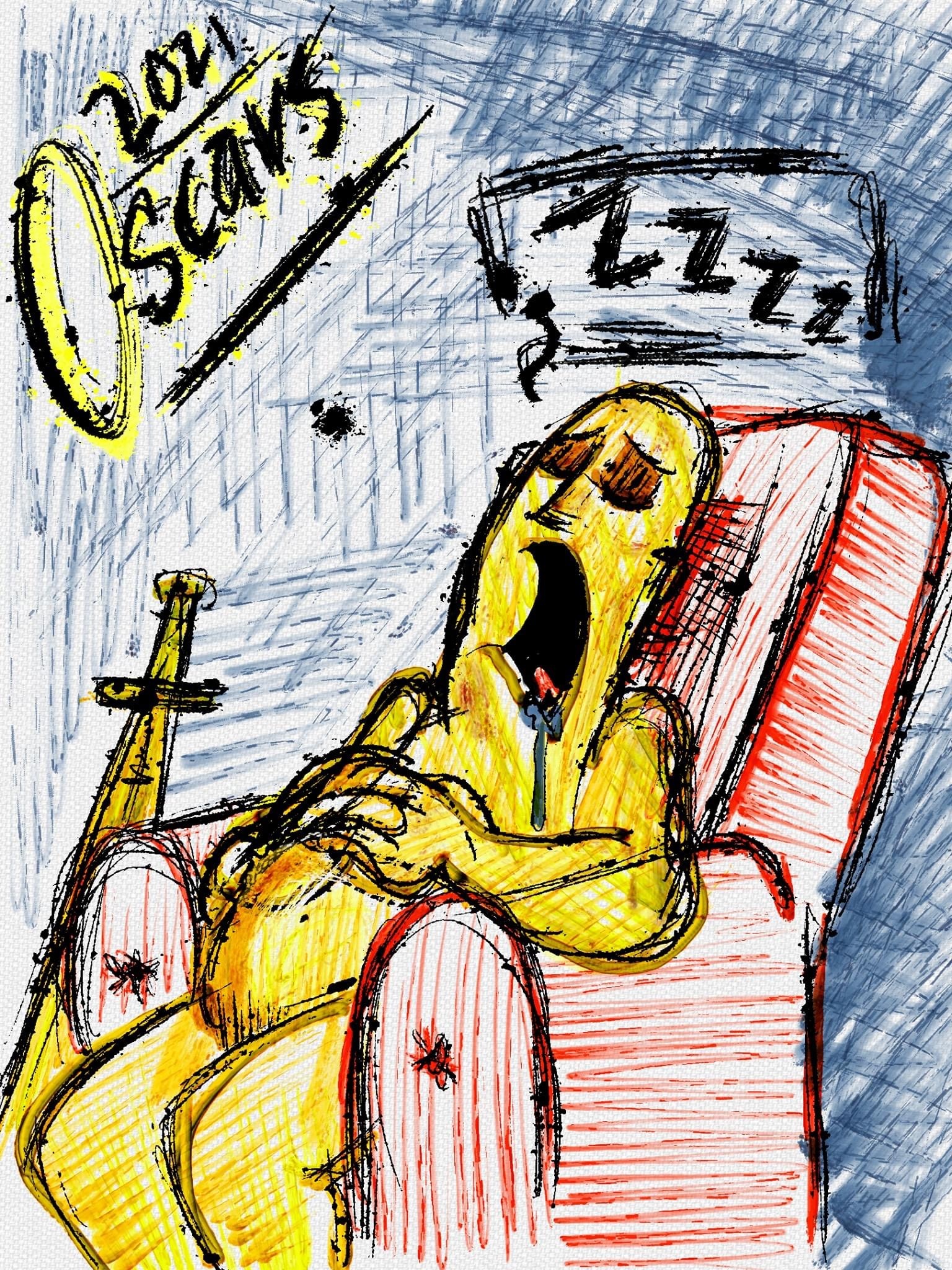
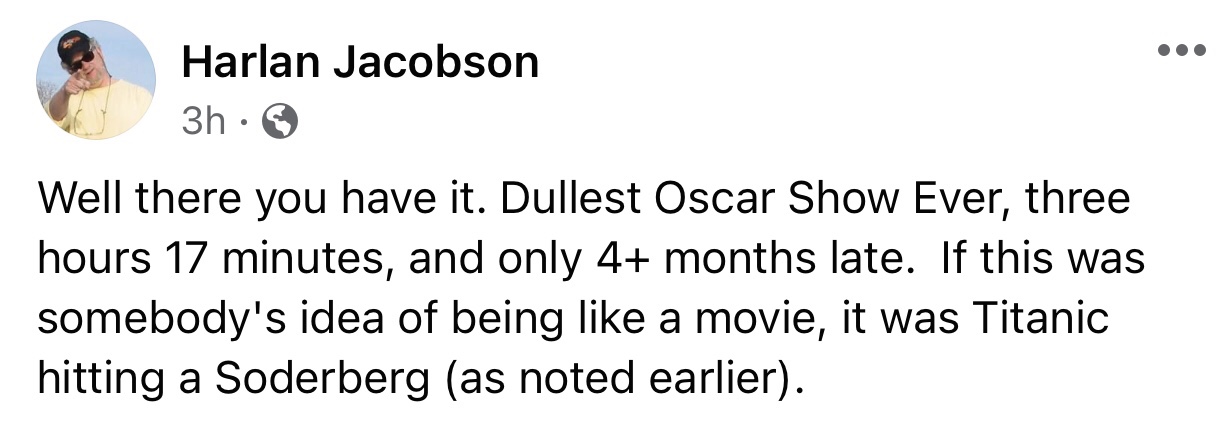
“Meritocracy, gone. Virtue signalling and ‘look at me’ has replaced it. If there ever was a competition about what were the best movies of the year…that’s long gone.
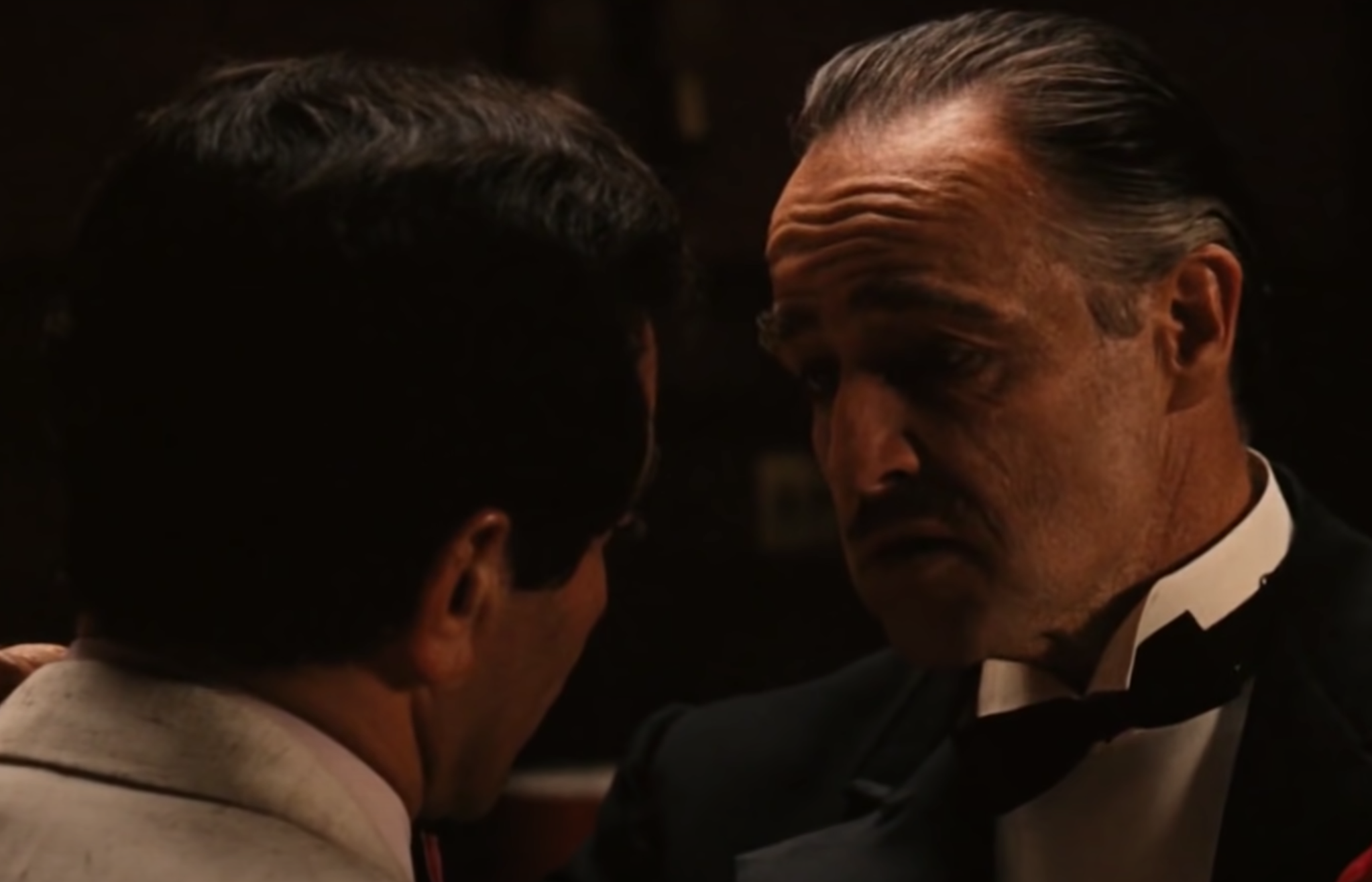
“To give you an idea of how [much] we have changed as a culture, ten years ago the Best Picture [winner] was The King’s Speech, about King George getting over his stutter and going on to give speeches on the radio during World War II. Ten years before that it was Gladiator and Russell Crowe getting [awarded] for Best Actor. And 30 years ago Joe Pesci was getting [an Oscar] for his work in Goodfellas.
“Will anyone remember anything about the movies that won last night, like everyone remembers those three earlier films? Of course not.” — Sky News host Paul Murray.
Does the Academy of Motion Picture Arts & Sciences realize what happened last night? Millions upon millions who’d been at least mildly or half-heartedly interested in the Oscar tradition decided “naah, to hell with it.” They became in effect Bob Strauss, and from the AMPAS perspective that’s a knife in the ribs. Culturally the Oscars used to be in the same realm as the World Series or the Super Bowl. Once again we’ve been reminded that the candle is flickering, and that all it will take to finish them off…I don’t want to think about it.
There’s really no choice any more. The Best Achievement in Popular Film Oscar idea, killed in its infancy by the snooties, doesn’t need to be revived — it needs to be implemented. Really. Another Steven Soderbergh-styled Oscar telecast in ’22 and it’s over. Hell, the brand is on life-support now.
Once again: On 9.10.18 Bloomberg’s Virginia Postrel posted a solution to the Best Picture Oscar problem. Her idea was simply that there are two film industries — one for ticket buyers who tend to prefer mass appeal or FX-driven popcorn flicks, and another for Academy members who prefer to honor movies that are actually good in some kind of profound, refined or zeitgeist-reflecting way.
It’s been understood for years that the vast majority of moviegoers are agnostic regarding the faith of cinema. What faith, you ask? Good point. Postrel’s article isn’t even three years old, and the pandemic has made it seem like an idea from another era. But embracing the Popcorn Oscars (maybe even encompassing the top five categories) would at least represent an attempt to face reality.
The short-lived Best Achievement in Popular Film Oscar idea died three years ago because (a) it was too vaguely defined and (b) it would have essentially denigrated the potential contenders in this category by categorizing them as popular but a bit slovenly — i.e., lower on the cultural totem pole than bona fide nominees.
Postrel’s idea was to not cast indirect shade upon mass-appeal films but simply create two Best Picture categories based on admissions — (1) a Spirit Awards-type Best Picture Oscar for films that have sold less than 10 million tickets and are favored by the wokesters, and (2) a mainstream Best Picture Oscar for films that have sold more than 10 million tickets.
Simple, no shade, and obviously reflective of how the the movie-watching world (or what’s left of it in theatrical terms) is defined these days.
Concurrently there is such a thing as applications of high craft in the making of popular films, and it wouldn’t devalue the smaller good films if the Academy were to acknowledge and celebrate this.
There’s really no choice any more. It’s the admissions, stupid. (Remember admissions?)
Last night’s Oscar telecast was watched by a lousy 9.85 million, with a piss-poor rating of 1.9 among the 18-49 demographic. This amounts to a drop of about 58% from last year’s numbers.
People didn’t want to watch because they didn’t care about the nominated movies, but mainly because it’s become an article of faith that Hollywood and a certain liberal strata in the big cities live on one planet, and the rest of the country lives on another.
The Hollywood community has more or less woked itself into a corner and nothing, trust me, will ever be “done” about this.
Hollywood elite to Average Joes in flyover regions: “Either you guys catch up with our enlightened progressive attitudes and accept that the Oscars are now the Sundance Spirit awards, or you don’t. Either way we’re on a crusade to correct too many decades of harmful or suppressive Hollywood behavior and to change an atmosphere defined for too long by a general lack of interest in socially meaningful films that will help to raise consciousness and lead to a better world.
“If Joe and Jane Popcorn aren’t on board with this, and if all they want is delight and diversion and quality-level escapism and maybe some poignant emotional stuff on the side, fine. But don’t expect us to necessarily supply that. We might make an audience-pleaser or to, but we’re not about that.”
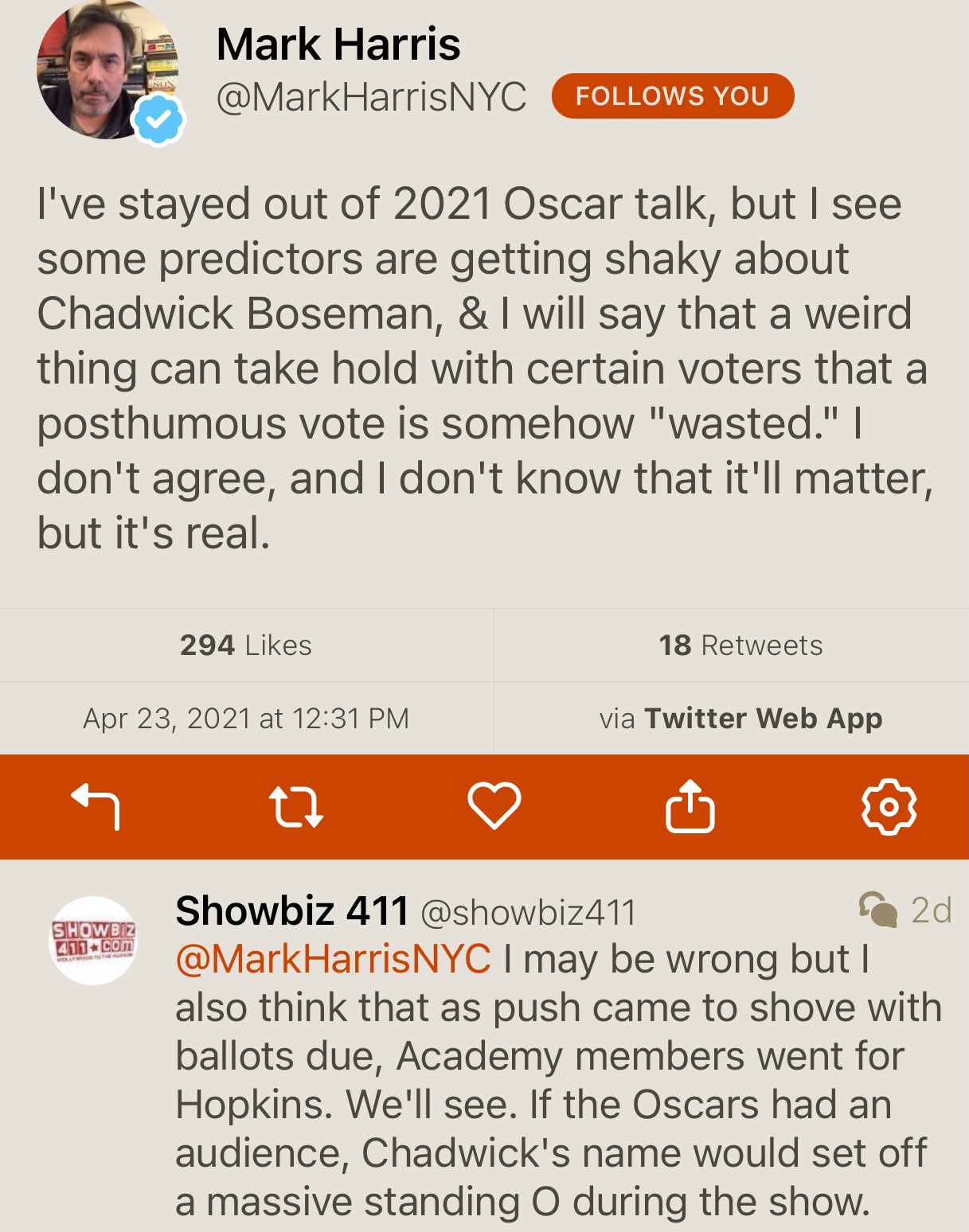
HE to Anthony Hopkins: Variety wokesters (Elizabeth Wagmeister, Clayton Davis, Angelique Jackson, Jenelle Riley) have made it clear they really wanted to experience the “Chadwick Boseman takes Best Actor Oscar” moment last night, and are quite disappointed that it didn’t happen.
So is there any way you could adopt a noblesse oblige attitude and (a) offer an apology for winning the Oscar or (b) say how sorry you are that your win robbed Boseman fans of a great emotional moment…something along these lines? Or maybe give the Oscar back to the Academy and insist that it go to Boseman’s family instead, because in this of all years no white actor wants to violate the wokester narrative that so many were counting on?
Wagmeister: “The major upset at the end was completely avoidable…the late Chadwick Boseman was the front-runner to win an Oscar for his role in Ma Rainey’s Black Bottom. [But] he lost to Anthony Hopkins, but what made the moment more shocking was that the [the] Best Picture [Oscar winner] had already been announced.”
Davis: “I don’t know whose idea it was [to announce Best Actor winner at the very end] but it was the most bizarre thing I had ever seen happen.”
Wagmeister: “From a television perspective it was kinda…I don’t even wanna say ‘good TV’ because I know that we’re all not happy about what happened.”
Jackson: “We were all hoping for something that was gonna shake things up, but I don’t think that [the Hopkins win] was in any way what the Oscar producers intended. There was a lot of hope that we were going to end with this very emotional, heartfelt moment…all these things were pointing toward a great, great emotional catharsis. Instead we had this real kind of catastrophic surprise.”
Wagmeister: “But of course, this is not Anthony Hopkins’ fault…”
Last night’s Glenn Close + Li’l Rel routine might’ve worked better if Glenn’s knowledge about “Da Butt” (a 1988 EU song heard in Spike Lee‘s School Daze) wasn’t so extensive and encyclopedic, and if she pretended to be an older white woman who knew one or two things but not everything, and then broke her moves out.
The following is a rough blend of a riff I wrote this morning along with friendo reactions…it’s a bit of a bumpy ride:
Friendo #3: “Here’s the one thing I’d add, and I think it’s crucial. It’s not going to be like this, year in and year out. We’ll have some of that vibe, but this is a fad, a fetish, a current obsession of WWS (woke white supremacy). It’s really a pure expression of white supremacy. That’s one of the reasons it’s so fucking embarrassing. Last night wasn’t just jaw-dropping — it was high camp. ”
Friendo#1: “The awards attendees reflected the huge number of POC nominations, voted upon by the increasingly diverse membership.
“Even so, the event did seem more like the BET awards. And three Black visitors watching in my home were embarrassed by the over-wokeness of the whole enterprise. ‘Trying way too hard’ was the judgement.
“In short, the white woke Academy is still over-compensating for its recent #OscarsSoWhite past.
“Plus there was no FUN…no entertainment, no clips. The nominees looked like wax figures as they were introduced.”
THR‘s Scott Feinberg: “The Oscar telecast producers also leaned into diversity in their selection of presenters, which is admirable, although one can’t help but wonder what middle-America made of the fact that only four of the 18 presenters — Bryan Cranston, Brad Pitt, Harrison Ford and Joaquin Phoenix — were white males.”
HE: I’m hesitating to share an impression that millions probably had last night. I’m even hesitating to mention it to you guys. The impression (I’m emphasizing the “i” word as opposed to something more specific) is that the Oscars had suddenly become much more diverse, dominantly so, and that the lethal nightmare of police bullets was hovering or massing just outside Union Station.
It wasn’t all that, of course, with a healthy but modest amount of palefaces (Glenn Close, Laura Dern, Reese Witherspoon, Harrison Ford, Brad Pitt, Carey Mulligan) sprinkled into the smallish, Greek amphitheater dinner cafe. But still…
The fact is that for the last 90 years (or since the telecast began appearing on home screens in the early ‘50s) the Oscars have largely reflected an industry that has…well, actually not mirrored but under-represented the racial makeup and character of this country — currently around 61% Anglo, 13% to 14% African American, 18% Latino, 5% or 6% Asian percentage and a smattering of other tribes. The truth of the makeup of the film industry was probably honestly reflected in the mostly-white complexions of those who attended in decades past…
But all in a flash, Americans who watched last night were suddenly contemplating a new mandated reality, and in strikingly visual terms — an African American Oscar community that was happy to be there and to celebrate diversity and achievement but was also grieving over the deaths of so many African Americans by hair-trigger cops.
For those relatively few Americans who watched the show it almost certainly came as a bit of a shock…trust me, for those accustomed to the notion of the 61-39 split and those who live in the suburbs and rural areas where the Anglo percentage is almost certainly higher, and even to those who reside in mostly white and largely gay West Hollywood…
And especially for movie mavens who’ve been watching since the JFK, LBJ and Nixon eras, the visuals in last night’s show said “roll with it, America…this is the progressive vision of 2021 America…of diverse, progressive, inclusive Hollywood and the America it believes in…a culture that is now (to go by visual impressions) half Black — not 13% or 14% African American but seemingly or possibly 50%…a culture in which progressives have decided that the experience of African Americans has been under-represented and under-respected for too long, and that for the best of reasons it’s time to (am I allowed to think this?) over-represent the POC experience (not to mention the #MeToo perspective and the LGBTQ current), in part due to a general urban-liberal consensus that hinterland white folks and especially older alpha white males are bringers and enforcers of evil (racism, murdering cops, Trump supporters, Proud Boys, Oath Keepers, Fox News watchers, U.S. Capitol occupiers, mask refusers, Republican-controlled legislatures that are now conniving to suppress voters of color by passing new-styled Jim Crow laws) and that the stain and toxicity of white privilege has to be trimmed, Twitter-whipped, schooled, diminished, Critical Race Theory’ed and Robin D’Angelo’ed in order to make the US of A into a more just, compassionate, fair-minded society.
All of this came WHOMPING out of TV screens last night, and on top of (a) the decision to emphasize origin stories and warnings of police shootings in the acceptance speeches, (b) the absence of film clips, (c) no red carpet gowns, (d) no sassy humor, (e) no singing or dancing as well as Chloe Zhao wearing Chinese pigtails and white sneakers and the whole odd feeling of alternate Union Station rules and regulations, including Frances McDormand’s vaguely surreal wolf howl…
It was a strange, at times sodden or sad, and even a mildly alienating night of 170 stars or more precisely attendees…I hate to even think this but I fear that if I, an eccentric if reasonable left-center WeHo fellow, felt a teeny bit jarred by the import of last night’s show then many millions of older Joe and Jane Bumblefucks out there also felt a tiny bit “whoa!”-ed out by the Soderbergh Oscars, then I fear that the midterm elections of 2022 will be affected by this impression. I hate to say it, but I fear it.
Friendo #3: “All true, and all brilliantly stated on your part. And, of course, no one else would say it so honestly. Everyone in America saw it the way you described it. Period.
“Yes, McDormand and Hopkins won the top two acting awards, but were the votes that supported them a reflection of the idea that the industry is ‘ambivalent’ about diversity? Or were they a reflection of the fact that their competitors simply didn’t deserve to win?
“Anthony Hopkins in The Father gives a much greater performance than Chadwick Boseman in Ma Rainey.” Frances McDormand in Nomadland gives a performance that’s vastly more accomplished than Viola Davis‘s [huffing and puffing] in Ma Rainey.”
HE: “Except that Frances McDormand wasn’t the best — Day was. So it’s never really about that. It never really has been. It’s about what makes you feel good by voting for this or that nominee. Plus this was the first time since the mid ’90s that the winners of the Globe and SAG didn’t take the Oscar. So you see something was radically different. What’s funny sort of is that the Globe voters were being chased around and called racists and yet their wins were more inclusive — Andra Day (who deserved to win) and Boseman. Tough call with Hopkins, who was very, very good.
Friendo #3: “Yeah, but newcomers like Andra Day never win, and Frances McDormand was much, much better than Viola Davis.”
Jordan Ruimy: “The Oscars overdid the inclusivity portion of the ceremony. My semi-woke sister was complaining to me via text last night about how they were shoving a message down our throats.”
8:40 pm: Nobody expected the 2021 Oscars to be anything too special or riveting, but I was intrigued by what Soderbergh might do with it. Whatever he did, it sure as hell wasn’t like a movie. As the show finally turned out, it was just kinda “meh” and not funny or pizazzy enough and the only big surprise, really, was the Hopkins win. How did Viola Davis manage the Best Actress SAG win while losing the Oscar? The simplest answer is that SAG-AFTRA allegiance is not synonymous with Academy worship.
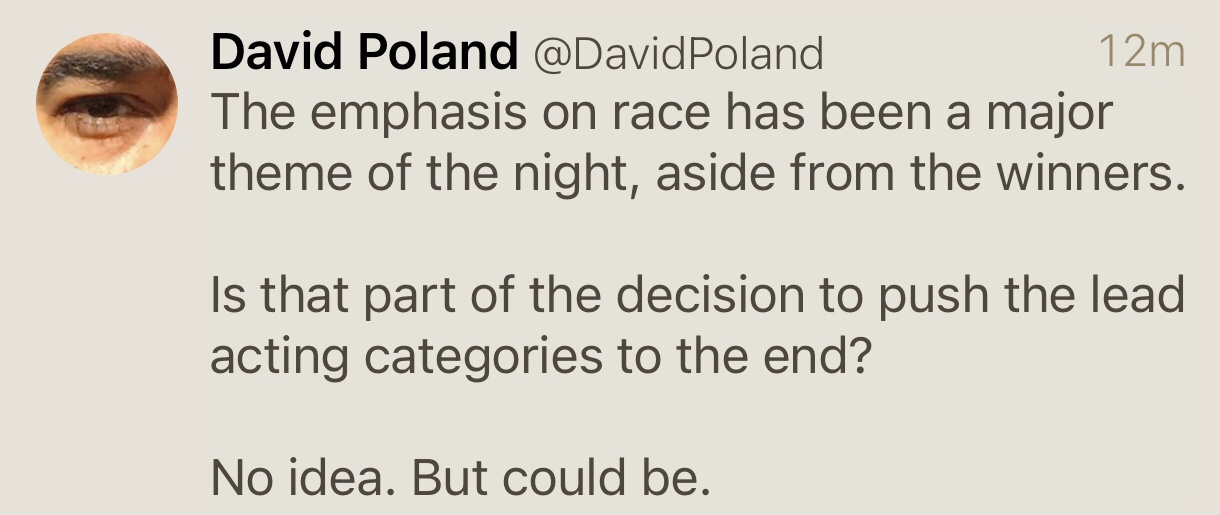
8:10 pm: Time for the keenly awaited Best Actress presentation — the big moment. And the Oscar goes to Frances McDormand! Okay, that’s a wee bit disappointing. But okay — Nomadland‘s third Oscar, and McDormand’s third also. “And I like work…hah-hah! Thank you for that.” And The Father‘s Anthony Hopkins wins for Best Actor! The show was jiggered to end on a big emotional note with Chadwick Boseman winning, and then Hopkins takes it and he doesn’t show up. And the show’s over. They managed to push the running time to 3:17 without songs or dancing or a jokey monologue.
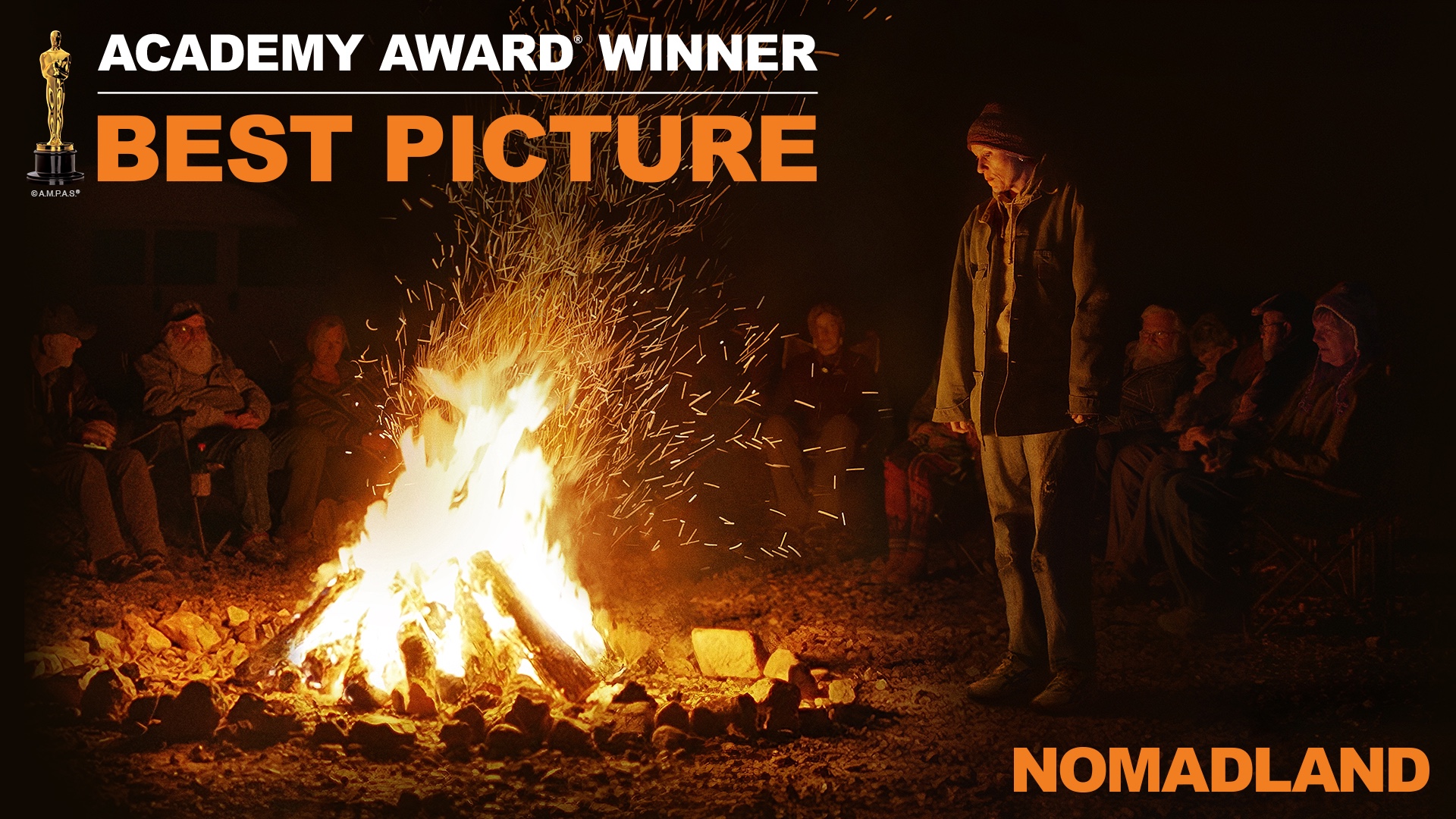
8:01 pm: Wait…Rita Moreno is presenting the Best Picture Oscar now? Before the Best Actor and Best Actress presentations? Okay — the second Nomadland Oscar. I’m fine with this. We all expected it. It’s a well-made film. Fran’s coyote yell worked. That and “see this movie on the biggest screen,” etc. Who expects to see an IMAX version of Nomadland sometime this summer?
7:57 pm: The pace of the death reel was steady at first, then it went faster and faster, and then it slowed down at the end to acknowledge the passings of Sean Connery and Chadwick Boseman. They seemed to include everyone. I guess the show is going to last 3 hours and 15 minutes, something like that. No worries on this end.
7:37 pm: Zendaya presenting the Best Score Oscar, and the winner is Soul. Jon Batiste is cool. H.E.R. wins the Best Song Oscar for Judas and the Black Messiah — “Fight For You.” What’s with all the time-killing chit-chat…the padding? At least Glenn Close is getting into it.
7:27 pm: Tyler Perry accepting the Jean Hersholt Humanitarian Award. “Refuse hate…don’t hate anyone,” he says, “because they’re black or white or Asian,” etc. How about wokesters not hating centrist types? How about not trying to destroy the lives of people who aren’t woke enough, or who might have tweeted the wrong thing ten years ago? Do they count?
7:18 pm: Time for the Best Editing Oscar. How is silvery Harrison Ford going to play Indiana Jones again? He seems a bit frail; sounds wheezy. Wait…Sound of Metal wins! Who saw that coming? Congrats!
7:07 pm: The Best Cinematography Oscar goes to Mank‘s Eric Messerschmidt! That’s a bit of a surprise, no? Friendo: “So now things get interesting. Will Nomadland only win Best Picture and Best Director? Will it win best Editing also? Will McDormand win through?”
7:05 pm: We’re now in the final hour (55 minutes to go), and Mank has won the Best Production Design Oscar…congrats! Why does this show have no clips?
6:56 pm: Brad Pitt hands the Best Supporting Actress Oscar to Yuh-Jung Youn, the spunky Minari grandma who burned the barn down. The first Asian actress to win in this category since Sayonara‘s Miyoshi Umeki, and the first Korean actress ever. She’s going on a bit. An elegant lady, nicely dressed, amusing…class act.
6:51 pm: The Visual Effects Oscar should go to Tenet, I feel, and it does!
6:40 pm: Time for My Octopus Teacher to win the Best Feature Documentary Oscar…right? Correct. What happened to “this show will feel like a movie?” I thought that meant that nominees and winners would perform snappy dialogue with the camera darting in and out. I thought that meant that some kind of light narrative would develop. Something along those lines. The winning Octopus couple is going on and on. Friendo: “Oh, for the days of Joe Pesci when a simple ‘Thank You’ was sufficient.”
6:35 pm: Best Documentary, Short Subject Oscar goes to Colette. I’m sorry but this show is just plodding along…it’s not zippy, funny, nervy, irreverent. The tone of sincerity mixed with “earnest” and “heartfelt” is almost suffocating. It feels like a meeting of kindly, friendly Trotskyites in formal wear.
6:26 pm: Reese Witherspoon reading off the Best Animated Feature nominees. I’m sorry but I hate animation. The Oscar goes to Soul — a film that I didn’t much care for. Excerpt: “Soul betrays its audience by (a) encouraging them to identify with and believe in Joe Gardner‘s long-denied dream about becoming a jazz musician instead of a frustrated middle-school music teacher, only to (b) pull the rug out on Joe’s dream in Act Three and end things with Joe feeling uncertain about what he really wants to do with his remaining time on earth. Possibly jazz, possibly teaching…who knows?”
6:15 pm: Two Distant Strangers wins for Live Action Short. We are reminded that cops will continue to shoot people of color on a disproportionate basis. The Best Animated Short winners (“If Anything Happens I Love you”) also deplore gun deaths at the hands of police.
6:12 pm: This show doesn’t feel “like a movie” at all. It feels like a dud-level Kiwanis Club awards event in a mid-sized restaurant. The vibe is pure Spirit Awards, but without the jokes. The most touching acceptance speech so far has been given by poor Thomas Vinterberg (what a terrible loss) — the others have been (here comes that word again) solemn.
6:08 pm: And the Best Sound Oscar, announced by Riz Ahmed, goes to Sound of Metal….thank you! Fully and completely deserved, if I do say so myself.
5:59 pm: The Best Directing Oscar goes to Nomadland‘s Chloe Zhao. Her hair is quite ungussied and un-styled — middle part, Pocahantas braids, large ears. She’s wearing a somewhat plain gold-champagne colored gown with white sneakers. Where’s the jean jacket?
5:47 pm: I have to be honest — the Soderbergh Oscar atmosphere feels a bit curious. Solemn, doleful, downbeat, no jokes. Emphasis on the solemn. In years and decades past, the Oscar elite (nominees, plus-ones, ticketed guests) were the usual Anglos with a smattering of Black, Latino, Asian, etc. Tonight the visuals are diverse-plus…mostly (am I allowed to notice this?) people of color, it seems, with a smattering of palefaces. Okay, more than a smattering but fewer, for sure. 60-40? Plus the absence of jokes and general mirth…what can I say? The words “fun” and “lively” will not be used to summarize this show after it’s over.
5:42 pm: Best Makeup and Hairstyling goes to Sergio Lopez-Rivera, Mia Neal and Jamika Wilson for Ma Rainey’s Black Bottom. And Ma Rainey‘s Ann Roth wins the Costume Oscar.
5:38 pm: I have to admit that those clips of Steven Spielberg‘s West Side Story (due eight months hence) are alluring. A little Robert Wise-y, but more arthousey. The cinematographer is Janusz Kaminsky, but the default milky desaturated thing has been put aside.
5:28 pm: Dern again, presenting the Oscar for Best Supporting Actor…Daniel Kaluuya, Leslie Odom, Jr., Lakeith Stanfield, Paul Raci, Sascha Baron Cohen…and Kaluuya wins, as predicted. I would’ve chosen Stanfield, as indicated previously. Kaluuya’s thick accent, fast slurring and murmuring, heavyish appearance, etc. He was too old to play the 21 year-old Fred Hampton, and didn’t resemble him otherwise. Nobody minded.
5:21 pm: Laura Dern announcing the winner of the Best International Film Oscar. HE is rooting against Another Round, due respect, and for Quo Vadis, Aida or Collectiv. Thomas Vinterberg‘s Another Round, an underwhelming film, wins. Vinterberg alludes to his (and more particularly his daughter Ida‘s) highway tragedy in 2019. Very sad….”Ida, this is a miracle that has happened, and you’re part of it…this one’s for you.”
5:08 pm: Despite the last-minute Bo Burnham switcheroo at the end of Promising Young Woman, Emerald Fennell wins for Best Original Screenplay. An omen that might indicate a Mullligan win later on? These origin-story speeches are definitely going on a bit. Best Adapted Screenplay Oscar about to be announced…and the Oscar goes to the co-writers of The Father, Christopher Hampton and Florian Zeller. Zeller, speaking from Paris at 2:14 am, is holding an Oscar statuette. Makes logistical sense.
5:04 pm: One Night in Miami‘s Regina King tracking shot through the sparsely attended Union Station festivities, and then up to the stage. First thing out of her mouth — this has been a painful year and people of color are not safe, or words to that effect — “This of this as a movie set…” Friendo: “Mentioning racial anxiety at the very beginning of the telecast…millions of Americans just switched to the other channel.”
2:42 pm: HE’s live-blog commentary on the lowest rated, most who-gives-a-shit? Oscar award ceremony in Hollywood history (although possibly the most inventively staged and written, courtesy of Steven Soderbergh) begins at 5pm Pacific / 8 pm Eastern. Tune in, turn on, check your tweets.
Here’s one reason why Hollywood Elsewhere has such a high regard for Spectrum service:
4:45 update: Signal issues persisted, so I downloaded the Spectrum app on my Apple TV box and am now using this — good to go.
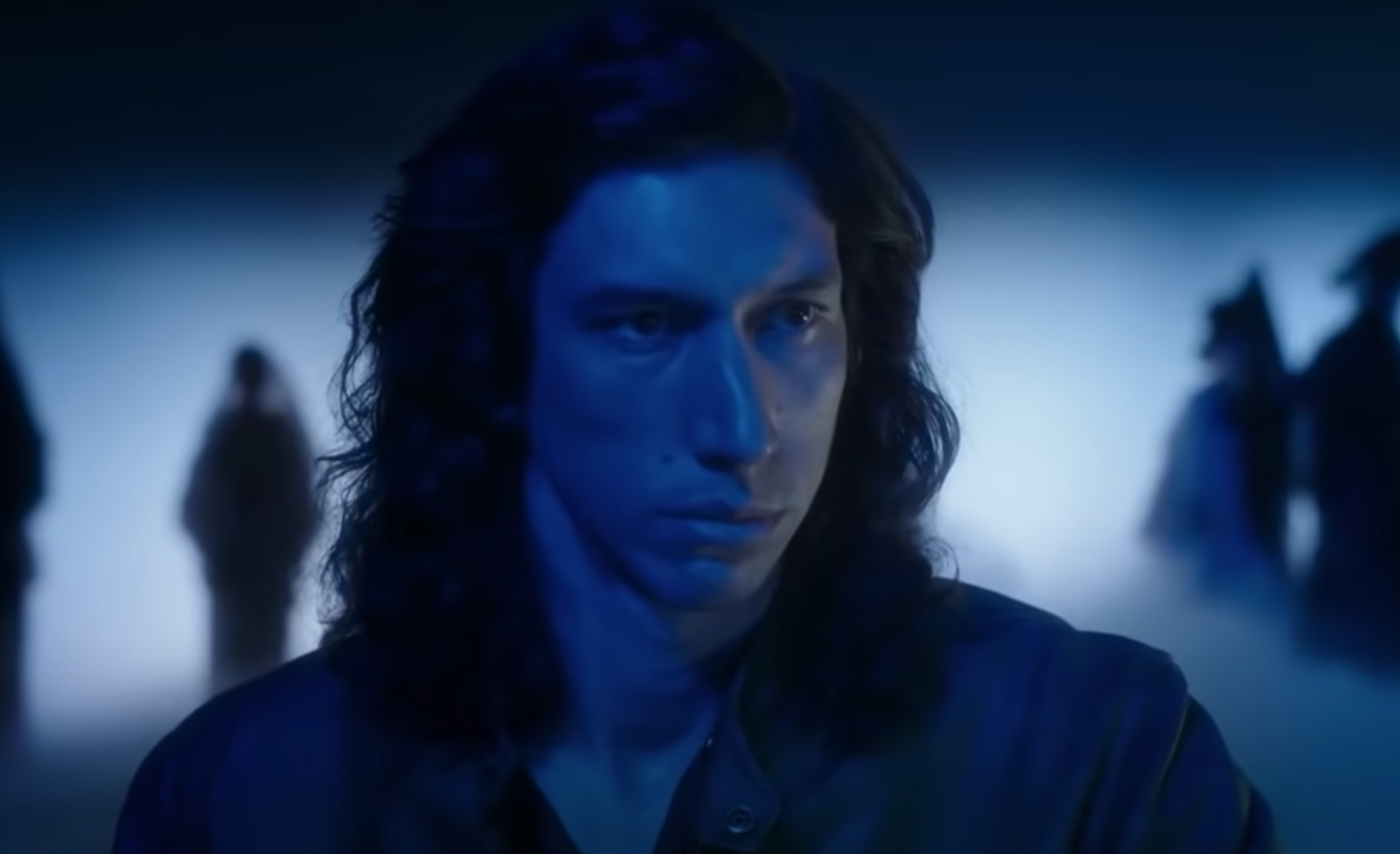
Leo Carax‘s Annette (7.6.21) is about how the lives of a stand-up comedian (Adam Driver) and his world-famous soprano wife (Marion Cotillard) are jarred and turned around when they discover that their daughter Annette has been born with a unique gift.
The trailer doesn’t say what the gift is, but it might have something to do with…you tell me. Nice tease. Great looking film.
Filming began in August 2019 (Los Angeles, Brussels, Bruges, Münster, Cologne, Bonn), and wrapped in November of that year.
“Nomadland is a well-polished, very sly mea culpa for corporate capitalism. Only the daughter of a Chinese billionaire could have made it, and, lo and behold, she did. Style = substance. Watch it again and focus on what it LOOKS like, not what is being said. Focus on the feeling it’s trying to engender in you, not what you think you should be feeling.
“Nomadland is a palliative, made for some of the richest people in the world, and guess what — they’re going to festoon it with awards tonight. Because it pushes the message they want pushed, which is this: Love your servitude, for it is beautiful.” — Posted earlier today by HE commenter “Jak Shoulder.”
So according to Esquire‘s Tom Nicholson, a British writer, the top two Best Picture Oscar winners — the most highly placed, best liked and most revered by today’s standards — are Moonlight and Parasite. This is how things are right now.
I’m telling you right now Nicholson needs to be straightened out and maybe even slapped around. This kind of thinking…words fail. I worship Hitchcock’s Rebecca but it can’t be proclaimed as the fourth-best…stop it! Amadeus and The Shape Of Water in the top 20? Get outta here! And Moonlight at #1? This is almost too asinine to take potshots at. Nicholson’s list is beyond ridiculous — an expression of woke mental illness.
Herewith is my own Best Picture Oscar Winner list, and I’m certainly going to use the criteria that most…okay, a significant percentage of winners have fulfilled or satisfied to some degree, at least in an aspirational sense in addition to the usual political motives and moment-in-time considerations…
Not just (a) films that sought to achieve (and in some cases DID achieve) a stand-alone, movie-craft refinement or at least a kind of declarative, honed-down clarity or wholeness on their own terms, or…
(b) Films that captured or reflected something poignant (at least in passages) about the times in which they were made, but most fundamentally…
(c) Political winners-of-the-moment that hit or touched certain emotional G-spots that moved large swaths of the culture (not just the Hollywood community but moviegoers all over), movies that said “this, to some extent, is a concise, respectable and in some cases profound presentation of who and what we are, or at least what we’ve recently been through or would like to be…this Best Picture winner contains pieces of our saga, shards of our collective soul, elements of who we believe we are or would like to be deep down.”
The difference between then and now, of course, is that the “large swaths of nationwide movie culture” aspect has been removed — today’s Oscar nominees are totally about the uncertainties and preferences of a small community of terrified political sidesteppers who don’t know what to say or think but are totally terrified by what might happen if they say (or even think) the wrong thing. The sentiments of the rest of the country has been a side issue for a good 20 to 25 years…be honest.
Reasons to disagree or tell the Esquire guy to go fuck himself…
In some respects Gone With The Wind is a racist relic, obviously, but it still matters and is, in fact, still great because of the last half of Part One (the agony of battered Atlanta to “I’ll never be hungry again!”) and because it is NOT, in a deep-down sense, a saga of the Civil War but a reflection of the deprivations and terrible hardships of the Great Depression. And so I will certainly include Gone With The Wind somewhere in the top 30….you can beat me with bamboo sticks all you want but Hattie McDaniel‘s Mammy, at least, was a vivid and passionate human being who took no shit from anyone, least of all from Scarlett O’Hara.
Green Book is not a great film, but I will not dismiss or degrade it in any way, shape or form. It also belongs in the top 30.
And I must again remind that the last third of Moonlight (and particularly the casting of Trevante Rhodes) doesn’t work at all (sustained for years by one adolescent handjob on the beach!) and that it won largely if not entirely because of a collective, politically-driven, industry-centric need to refute the #OscarsSoWhite meme.
And I will certainly not give Parasite a high ranking because of the stupidest plot turn in the history of Best Picture winners…because of that drunken family of con artists deciding to admit into the home THE ONE PERSON ON THE FACE OF THE PLANET WHO COULD & ALMOST CERTAINLY WILL BLOW THEIR SCAM OUT OF THE WATER…cut the shit and admit that Parasite won because the industry wanted and needed to celebrate a filmmaker of color as well as a charming genre purveyor (monsters! a giant pig! a runaway train!)…a director who was a much better fit in these times of necessary wokeness than Martin Scorsese and his aging goombahs and his “Wild Strawberrries with handguns”…nope.
“The only difference is that it’s all totally flipped. The fear of Communism and Communist association has become the fear of racism or racist taint or anything offensive to the Left, or even that which seems to argue with Critical Race Theory…anything in that realm. But the methods are exactly, and I mean EXACTLY the same. Except for the absence (so far) of a HUAC-like Congressional examination and indictment committee.