Somebody recently said it would be great if Ridley Scott was on Twitter, because he’d be telling people “say what you like, mate, but otherwise fuck off and get bent” because he knows what he knows after several decades in the business and don’t tell him, etc. It would be so great! Shafts of sunlight piercing down from the clouds!
But of course, one of the reasons Scott has survived as long as he has is because he’s not stupid enough to be on Twitter in the first place.
There are almost certainly thousands of bright, experienced, knowledgable fellows who could transform the Twitterverse into a much more candid, blunt-spoken, less bullied environment, but they all have friends and publicists who’ve told them “good God, are you insane? Don’t even think about having a Twitter account.”
But oh, what a glorious world it could be if there were dozens or hundreds or thousands like Scott on Twitter, telling the jackals to go stuff it because he knows what goes.
Hollywood Elsewhere’s least favorite cinematographer of all time is Bradford Young, a guy who seemingly lives for murky, muddy, under-lighted images (A Most Violent Year, Where Is Kyra?, Arrival), seemingly shot through some kind of muslin scrim.
And I’m saying this as a devoted fan of Gordon Willis, the “prince of darkness” who peaked in the ’70s, ’80s and ’90s. The difference is that Willis’s dark images have always been interesting and Young’s never have been. Young’s cinematography is about being at the bottom of a pond and half-covered in silt.
My first reaction to the new trailer for HBO’s Scenes From A Marriage miniseries (9.12.21) was “did Young shoot this?” And the answer was “no” — it was shot by Andrij Parekh, but clearly in a manner that apes the Young aesthetic, using some sort of natural light or muslin-scrim filter. One look at Parekh’s visual scheme and you’re thinking “oh, no…”
I watched the final episode of The White Lotus last night, and when it ended I texted the following to a friend: “I can now say that I’ve seen a roundly-praised HBO limited series that contained (a) a brief glimpse of male on male analingus and (b) a MCU of a middle-aged guy squatting and dropping two loads into a hotel guest’s suitcase.
It’s safe to say I’ll never forget these two moments. Ever. For the rest of my time on this planet.
The muncher and the seething social resentment shitter are played by 50 year-old Australian actor Murray Bartlett, so he’s definitely earned a place in the annals of cinema history.
Directed, written and exec produced by Mike White (writer of Beatriz at Dinner), The White Lotus focuses on several wealthy guests at a Hawaiian resort along with various staffers tending to their needs and appetites and whatnot. It’s basically a series about social classism or, put plainly, the behavior of self-absorbed, liberal-minded, bubble-residing lefty assholes, as observed by their social lessers.
Put more bluntly, The White Lotus basically says “these people live on their own secular planets, and we’re going to point this out to you over and over and over. And every time we reiterate this observation you can say to yourself ‘Jesus, what a bunch of nice, polite, petty-minded, self-absorbed, etc.”
On 6.15 the great Scott Alexander (co-author of all the great Scott-and-Larry screenplays including Ed Wood, Man on the Moon, The People vs Larry Flynt and the miscast American Crime Story series about O.J. Simpson) posted the following on Facebook:
“I rewatched Moneyball last night. What a great movie!! So smart and hilarious and insightful. It’s one of those perfect grown-up films that we all wish studios still pumped out. I’m not even a sports guy, but I was howling through the whole thing. Bennett Miller, Steven Zaillian and Aaron Sorkin [were] all batting a thousand. Brad Pitt and Jonah Hill are remarkable — understated yet engaging. And those crusty old scouts are a scream.
“Kudos to my pal Francine Maisler, who cast it, and producer Rachel Horovitz.
Rob McFarlane response: “I never knew how much I loved big, glossy, high-craft and character-driven Hollywood dramas until Hollywood stopped making them. Moneyball is a treasure.”
HE comment: The one thing I didn’t like qbout Moneyball was Billy Bean turning down the Boston Red Sox offer. He wants to pay for his daughter’s college education and he turns down a very fat and well-deserved check that will put him on easy street? Okay, so he’d be living in Boston, but his daughter was already air-commuting for visits. Would it have been THAT much of a problem to fly back and forth between LA and Boston? David Frost used to regularly commute between NYC and Londön, and he did that in his stride.
A little more than five years ago I posted a story about a minor Manhattan betrayal between two fellows (i.e., myself and a cartoonist-illustrator friend). It happened sometime in early ’80, give or take. The story alludes to a universally accepted code of behavior among guys worldwide, and a certain kind of deviance that is not accepted.
What follows isn’t so much a repost of the article (“Harold Pinter’s Betrayal“) as a reaction from an old friend to the piece, and a back-and-forth that resulted.
Posted on 6.12.16: Never rat another guy out when it comes to women. To put it more formally, one of the most paramount ethical codes between adult males is that you can never spill the beans on a friend or acquaintance if his girlfriend or wife asks you to reveal the truth about whatever (i.e., usually his deep-down feelings or some past behavior that has come under question).
Determining the factual or emotional truth of things is something that only a couple can sort out for themselves. It’s not yours to get involved. If a guy is lying to his girlfriend or wife about some indiscretion or affair or saying anything out of earshot that might get him in trouble, it’s none of your damn business and you’re obliged to say nothing. Omerta.
The truth will out sooner or later, but even if it doesn’t guys are absolutely honor-bound to protect each other. I’ve never run into a single fellow in my life who would even think of questioning this.
Except for one. He was a cartoonist-illustrator, and his betrayal happened in early ’80 or thereabouts. I’ll call him Saul. We’d met each other in ’79 by way of a fetching lady writer we both felt for and admired (I was the new boyfriend and he was an ex), and then we got to be actual friends.
At some point in the middle of ’80 (i.e., after I’d been dumped by the writer) I began a mild flirtation with an iconoclastic female cartoonist whom Saul also knew. Let’s call her Caroline. She was a respected, highly gifted artist and pretty besides.
By coincidence she and I realized one day over the phone that we had booked seats on the exact same flight to Los Angeles. A day or two later I mentioned to Saul that I’d love to indulge in a mile-high club thing with Caroline. It was just a fantasy, a wisp of a notion that came to mind and that I gave voice to. The anecdotal equivalent of a paper airplane.
Warning to 26 year-old Matt Damon during the 1996 filming of Good Will Hunting: This is going to sound weird, I realize, but the Zoomer generation that your forthcoming daughters will belong to…roughly 20 years hence and certainly within 25 you’re going to be a target, man…Zoomers and Millenials both…they’re going to come for you and club your reputation bloody, and short of getting a personality transplant there isn’t a damn thing you can do about it.
Enjoy your golden-era, do-no-wrong coolness phase (mid ’90s to 2007’s Bourne Ultimatum) while you can. You’ll be fine as the years progress (occasional hits will happen) and you accumulate the bulk of middle age — you’re a first-rate actor and a smart guy as well as a decent human being — but there’s nothing like living a charmed life with the Gods smiling at every single thing you do, including your unintended farts.
Here’s the newest and spiffiest Telluride rundown from World of Reel‘s Jordan Ruimy. There are two or three titles that he hasn’t been able to nail down, but there are fairly safe bets. I remain heartbroken that Clint Eastwood’s Cry Macho isn’t included; ditto The Many Saints of Newark. I mentioned yesterday that I’m jubilant about Dune not playing there. I’ve placed an HE after films of special interest.
It’s a five-day festival this time (9.2 through 9.6) but really four and a half — I usually average about three films per day (you can’t just see them — you also have to write about them) and occasionally four. Out of 30 films I might get around to seeing 16 or 18, depending on the breaks. One of the big titles is screening two or three times over the next few days for hotshot media types. I asked yesterday if I could please attend one of the showings — the rep couldn’t even be bothered to politely decline. Classy.
“C’mon C’mon” (Mike Mills) / HE
“The Power of Dog” (Jane Campion) / HE
“Spencer” (Pablo Larrain) / HE (although I can sense it’s going to be a slog)
“King Richard” (Reinaldo Marcus Green) / HE
“The Card Counter” (Paul Schrader) / HE
“The Hand of God” (Paolo Sorrentino) / HE
“The Lost Daughter” (Maggie Gyllenhaal) / HE
“The Electrical Life of Louis Wain” (Will Sharpe)
“Encounter” (Michael Pearce)
“The French Dispatch” (Wes Anderson) / HE
“The Velvet Underground” (Todd Haynes)…allegedly too enthralled with John Cale.
“Vortex” (Gaspar Noe)
“Passing” (Rebecca Hall) / HE (although the premise is flat-out unbelievable)
“Flee” (Jonas Poher Rasmussen)
”Red Rocket” (Sean Baker) / HE
“Bergman Island” (Mia Hansen-Love)
“A Hero” (Asghar Farhadi) / HE
“Petite Maman” (Celine Sciamma)
“Becoming Cousteau” (Liz Garbus) / HE
“The Rescue” (E. Chai Vasarhelyi, Jimmy Chin)
“A Chiara” (Jonas Carpignano)
“The First 54 Years: An Abbreviated Manual for Military Occupation” (Avi Mograbi)
“Prayers for the Stolen” (Tatiana Huezo)
“Unclenching the Fists” (Kira Kovalenko)
“Julia” (Cohen/West)
“Muhammad Ali” (Ken Burns)…this can wait.
“Three Minutes – A Lengthening” (Bianca Stigter)
It was late in the afternoon in the fall of ’78 when I ran into Chris Walken upon the New York-bound platform of the Westport train station.
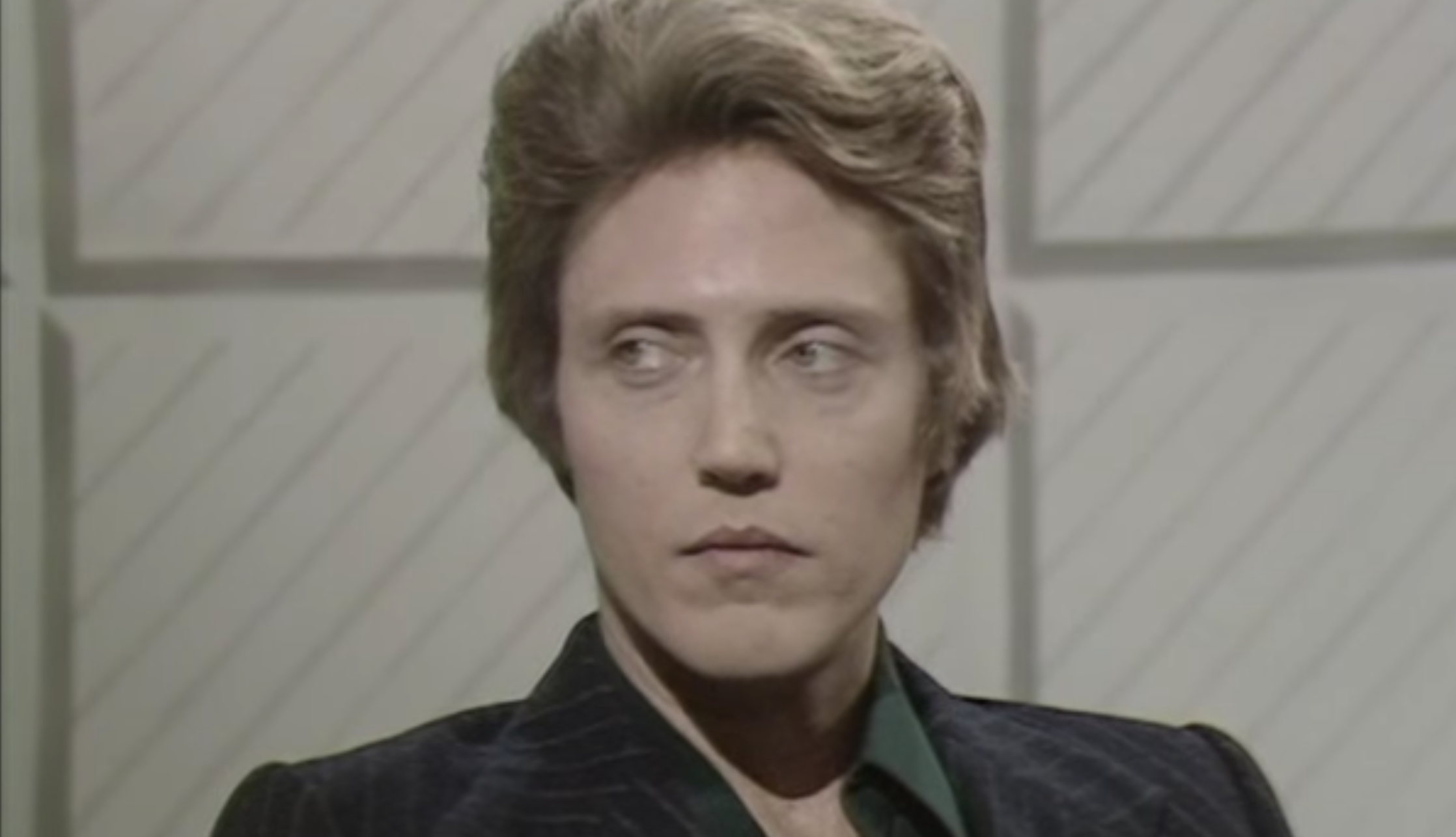
Tall and slender and good-looking in a curious, off-center sort of way, Walken looked that day like he does in the below interview, which was taped in late ’80. He was 35 but could’ve been 29 or 31. Same hair, same calmness of manner, same “waiting for something to happen” watchfulness.
I’m pretty sure it was a Sunday. I’d been visiting my parents (Jim and Nancy) in Wilton. Walken had been in Westport to visit his manager, Bill Treusch.
Our encounter happened two or three months before TheDeerHunter opened. I hadn’t seen that pretentious, wildlyover–praised MichaelCimino film at the time, and it was probably for the better. I was simultaneously taken aback (“Whoa, this movie is up to something!”) and at the same time irritated. Those ridiculous Russian roulette scenes, that interminable Russian wedding celebration and those absurd mountain peaks in rural Pennsylvania drove me insane. I was surprised and moved by the “God Bless America” finale.
At that precise moment in time I knew Walken from only two roles — that “who’s this guy?” performance in Paul Mazursky‘s NextStop, GreenwichVillage (’76) and his bit part as Diane Keaton‘s weird, soft-spoken brother, Dwayne, in AnnieHall (’78).
Anyway I stepped up to the platform, ticket in hand, and there he stood, reading a newspaper. I felt a certain natural kinship with Walken as I resembled him somewhat, and I wasn’t shy back then anyway so I introduced myself. Walken was cool and casual (“I’m Chris”), and we wound up talking all the way into Grand Central Station.
I visited Walken’s Upper West Side apartment twice in ’79, although he wasn’t there. I had an excellent thing going with a lady named Sandra, you see, who was working for Walken and his wife as a kind of au pair girl or house-sitter. I remember the oriental rug on the living room floor, you bet, and the wood-burning fireplace in front of it. I don’t know why Sandra and I didn’t last for more than four or five weeks but it wasn’t for lack of interest on my part. She was quirky and moody, but that was part of the allure.
I spoke to Walken one or two years later (’80 or ’81) when I went backstage at the Public Theatre after a performance of The Seagull. (He played Trigorin, and rather well at that.). He had no recollection of our train-ride discussion. Zip. I could have mentioned Sandra as an ice-breaker but I thought better of it.
The chicken-and-pears video was shot, I’m presuming, at Walken’s home in Wilton, Connecticut, which is where I lived for a few years and where I did my last two high school years. Paul Dano went to high school there also. And Keith Richards has a big home there.
I love, love, love, love the way Chris Walken pronounces “chicken” and “pears.” Certain people says certain words perfectly, and I mean better than anyone else in the world. Walken saying “pears” (“peahrs“) is like Peter O’Toole pronouncing “ecclesiastical.”
Cooper’s character’s story is modeled on that of producer Gary Goetzman, Tom Hanks’ producing partner. Bradley Cooper plays a producer modeled on Jon Peters, the former hairdresser who became Barbra Streisand‘s lover and producer, and who was one of the inspirations for Warren Beatty‘s “George Roundy” character in Shampoo. (Along with Jay Sebring.)
Goetzman was a child actor in the ’70s, costarring in Yours Mine & Ours (Henry Fonda, Lucille Ball) and Divorce American Style (Dick van Dyke, Debbie Reynolds, Jason Robards).”
A 67 or 68-year-old woman, identified in court papers as “J.C.”, has filed a sexual abuse lawsuit against Bob Dylan, alleging that the singer-songwriter sexually abused her in 1965, when she was 12 years old and Dylan was 24.
The suit alleges that Dylan gave her drugs and alcohol 56 years ago, and established an emotional connection that allowed him to sexually abuse her for a six-week period between April and May 1965. It alleges that Dylan used threats of physical violence, “leaving her emotionally scarred and psychologically damaged to this day.” Some of the abuse is alleged to have occurred at the Hotel Chelsea in New York.
Variety‘s Gene Maddaus: “The woman filed suit under New York’s Child Victims Act, the 2019 law that opened a two-year period during which the ordinary statute of limitations was suspended for claims of child sexual abuse.
“The deadline to file such suit fell on Saturday, 8.14, and the suit against Dylan was filed on the evening of Friday, 8.13.
“The suit alleges claims of assault, battery, false imprisonment and intentional infliction of emotional distress. The claim was filed by attorneys Daniel Isaacs and Peter Gleason.”
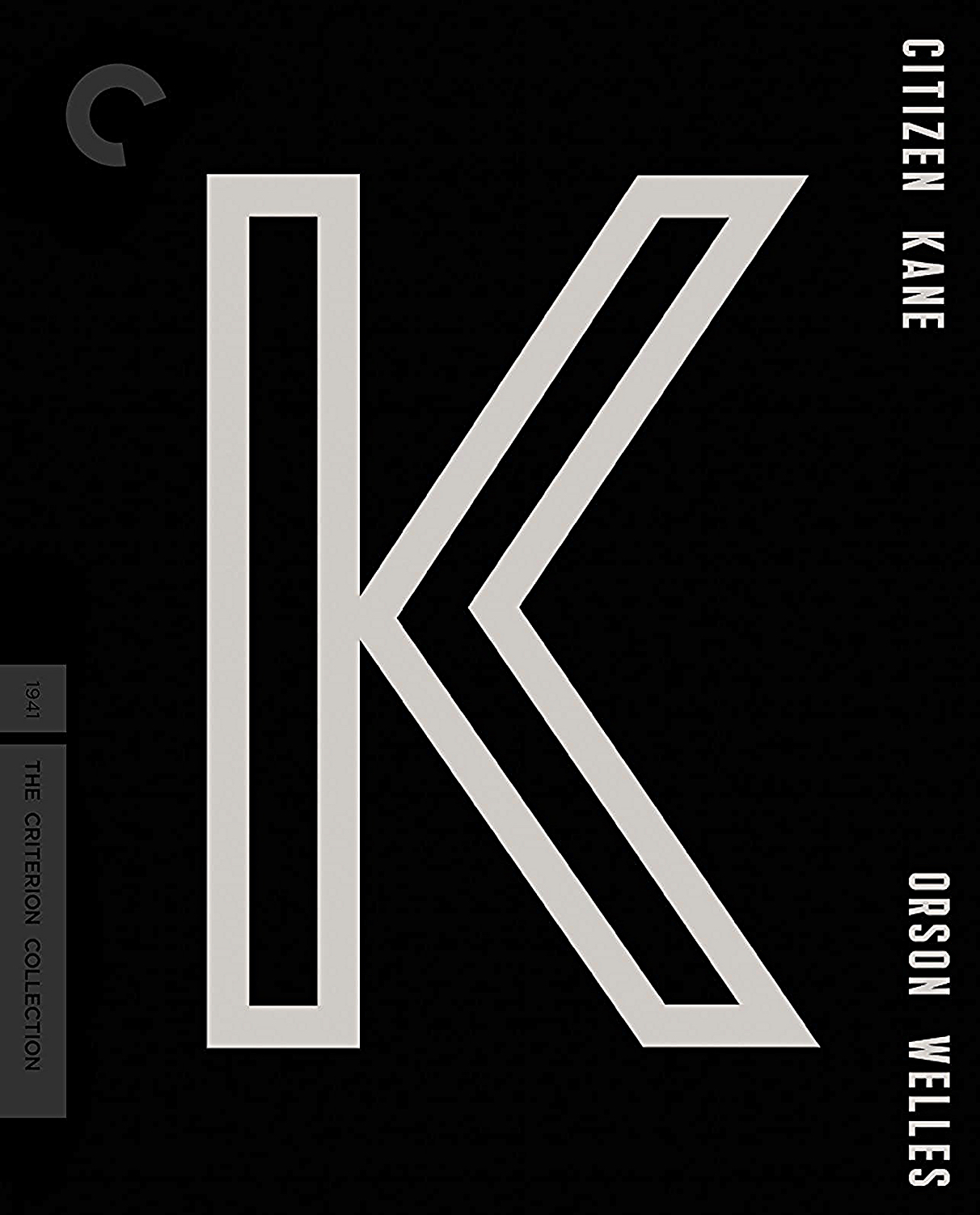
My honest view of the forthcoming K cover for their Citizen Kane 4K disc (11.23.21) is that it’s kinda dull. It certainly isn’t what any honest designer would call “oh, wow.”
Serious question: Which other films could be represented by a single letter on a Bluray cover? Besides Costa Gavras‘ Z, I mean. If Criterion wanted to go minimalist with a North by Northwest 4K disc, they could use a NXNW…right? They could go with a big M for a Manchurian Candidate jacket cover, I suppose. Or a big R for a Raider of the Lost Ark cover.
But you know what? Fuck this idea. You could decide to single-letter anything. It’s a lame concept.
The first minimalist one-letter logo was the trapezoid N for NBC, which was used between ’76 and ’79.