Birthday boy Warren Beatty with Isabella and Ben, snapped yesterday…cheers and salutations!
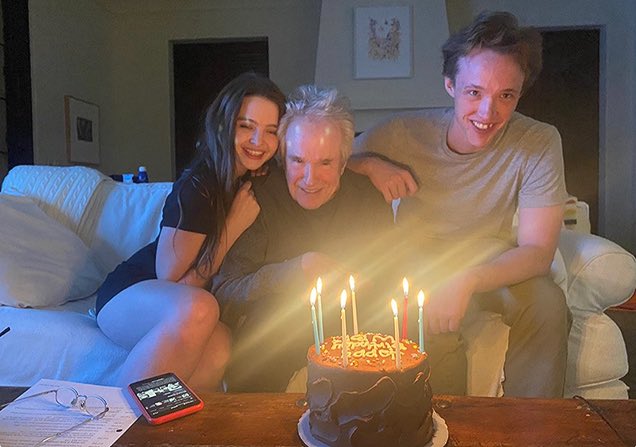

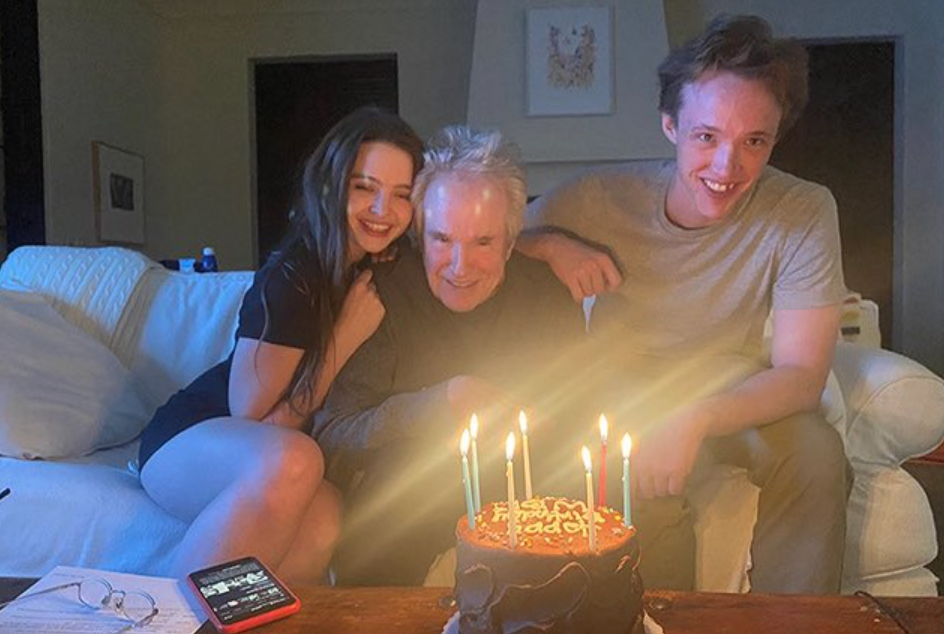
Birthday boy Warren Beatty with Isabella and Ben, snapped yesterday…cheers and salutations!
If you’ve been watching Elizabeth Meriwether‘s The Dropout (Hulu), you know she’s very exacting about strong resemblances between the principal characters and the actors who play them, either naturally or by way of makeup.
Amanda Seyfried (Elizabeth Holmes), Naveen Andrews (Sunny Balwani), William H. Macy (Richard Fuisz), Sam Waterston (George Schulz), Camryn Mi-Young Kim (Erika Cheung), Laurie Metcalf (Phyllis Gardiner), Kurtwood Smith (David Boies) and Kate Burton (Rochelle Gibbon) all generally and in some cases very specifically “look” the part.
A highly significant role is that of Wall Street Journal reporter John Carreyrou (Ebon Moss-Bachrach), who broke the 10.16.15 story about Theranos being a dubious operation regarding its blood-testing technology.
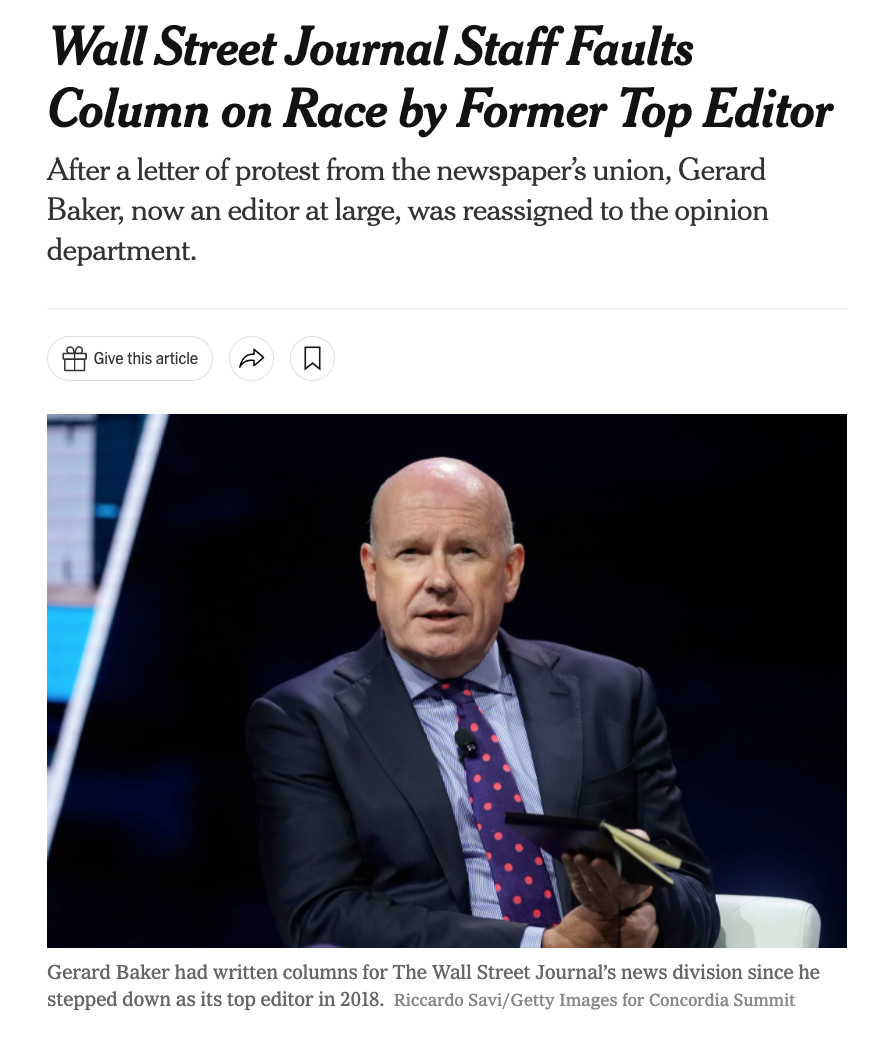
When the Theranos story was being researched, edited and published, the Journal‘s editor-in-chief was the British-born, conservative-minded Gerard Baker, whose tenure was from March 2013 until June 2018.
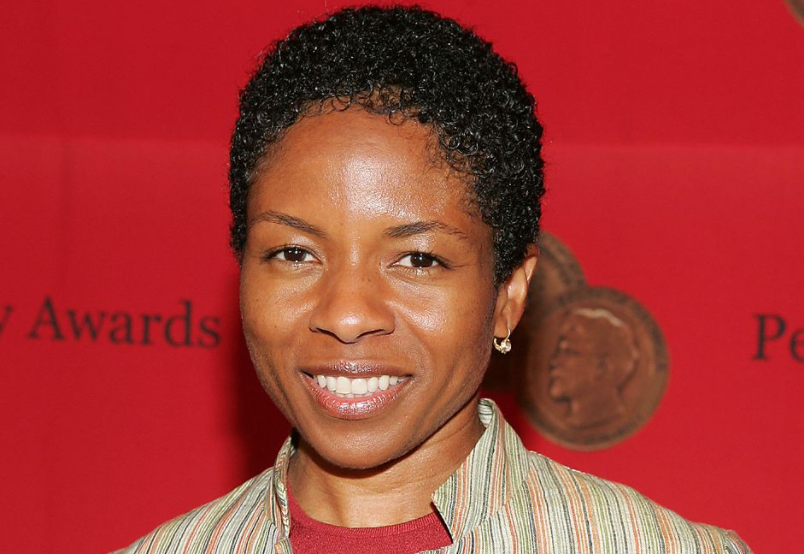
And yet Gerard is absent from The Dropout. In his place is a female editor named “Judith Baker”, who’s played by LisaGay Hamilton, a respected stage and TV actor who’s best known as “Rebecca Washington” on The Practice (1997-2003). She also played “Celia Jones” on the Netflix’s House of Cards (’16).
Why did Meriwether abandon her realistic, life-like casting aesthetic when it came to the Gerard Baker character? Why did she switch genders and hire a woman of color to play a namesake stand-in?
The most likely answer is that Meriwether decided to “woke”-switch Gerard into Judith because it’s expected and politically necessary these days to hire at least two or three (if not more) POCs to avoid looking too Wonder Bread, no matter the time period or what the facts are or were.
Another theory is that four years ago Gerard Baker got into a little trouble at the WSJ for seeming to harbor troubling (i.e., possibly racist) views about the Ahmaud Arbery shooting. So he’s regarded by woke WSJ staffers as a tainted figure to some extent, and perhaps Meriwether felt that casting a woman of color would somehow balance that situation out. Go figure.
Jim Carrey sounds like a blend of Yoda, Bill Maher and Edward R. Murrow in his latest riff on the slap. Very wise, very philosopher king-like…hats off.
"It's just wrong." Jim Carrey says Will Smith had been living "beyond the bandwidth" and cracked under pressure at the #AcademyAwards pic.twitter.com/157ifJ5ibm
— AP Entertainment (@APEntertainment) March 30, 2022
Four days after the Big Slap, the iconic Smith-Rock image has been painted on a large wall in Berlin’s Mauerpark.
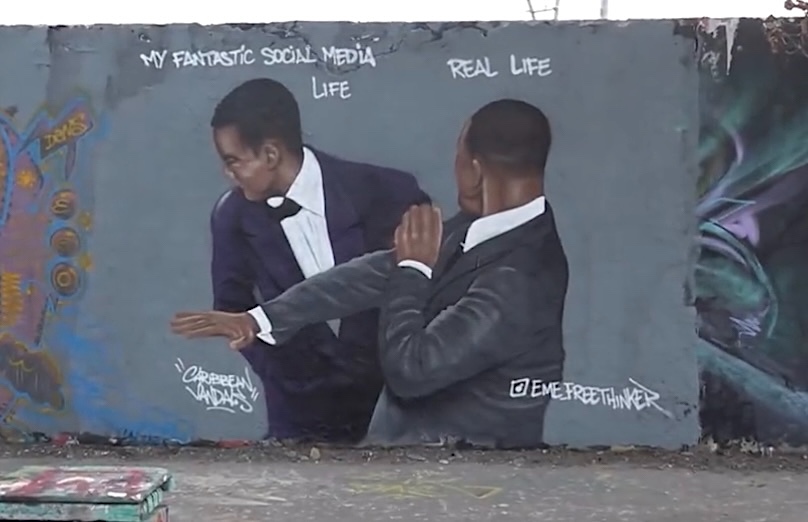
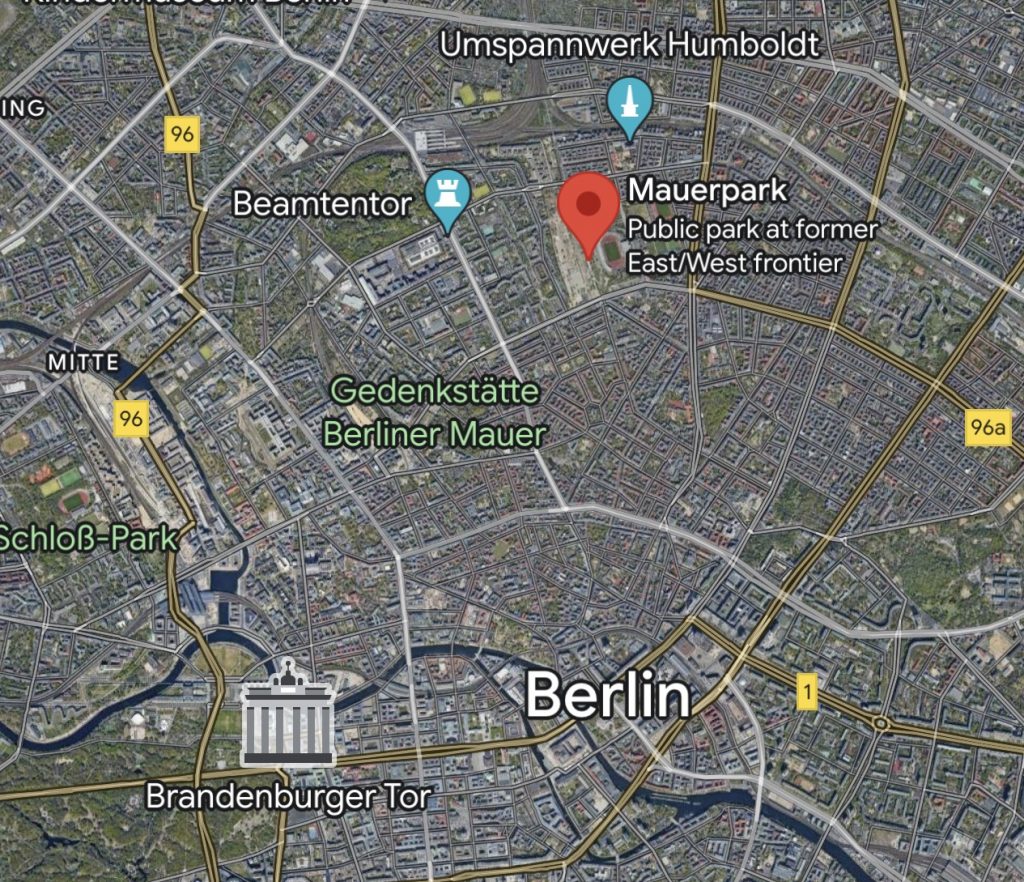
Dominican graffiti artist Jesus Cruz Artiles painted Will Smith slapping Chris Rock at the Oscars on a wall in the Mauer Park in Berlin, Germany pic.twitter.com/GPG5UnlGgS
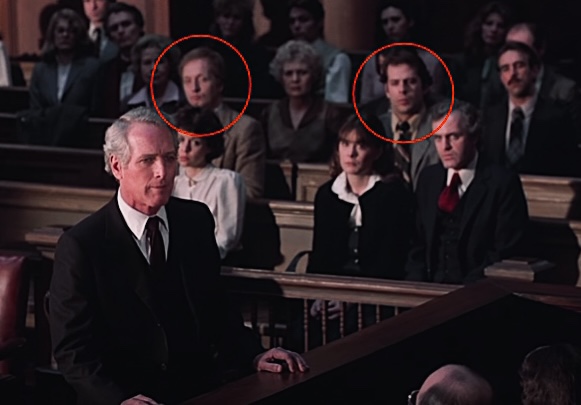
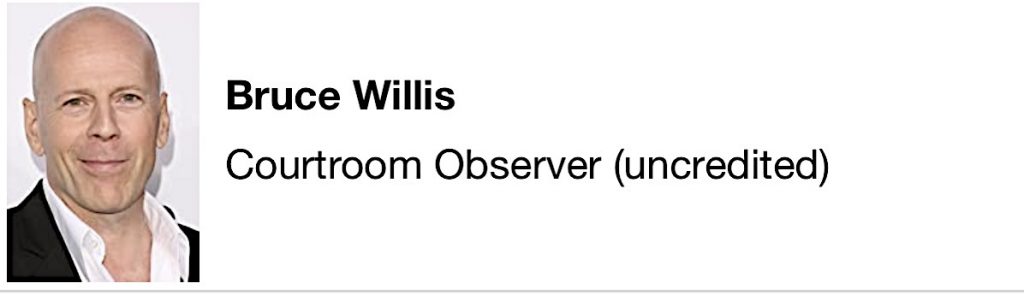
I’ve seen The Verdict several times over the last 40 years, and until ten minutes ago I’d never noticed Bruce Willis sitting right behind the plaintiffs during Paul Newman’s final plea to the jury. (The other red-circle guy is Tobin Bell.)
AMPAS Board of Governors statement [excerpt]: “The Board of Governors today initiated disciplinary proceedings against [Will] Smith for violations of the Academy’s Standards of Conduct, including inappropriate physical contact, abusive or threatening behavior, and compromising the integrity of the Academy.
“Consistent with the Academy’s Standards of Conduct, as well as California law, Mr. Smith is being provided at least 15 days’ notice of a vote regarding his violations and sanctions and the opportunity to be heard beforehand by means of a written response.
“At the next board meeting on April 18, the Academy may take any disciplinary action, which may include suspension, expulsion, or other sanctions permitted by the Bylaws and Standards of Conduct.”
Okay, fine, but what happened to yesterday’s Academy statement about how this matter will take “a few weeks” to resolve? Is two and a half weeks the same thing as “a few weeks”?
“Mr. Smith’s actions at the 94th Oscars were a deeply shocking, traumatic event to witness in-person and on television. Mr. Rock, we apologize to you for what you experienced on our stage and thank you for your resilience in that moment. We also apologize to our nominees, guests and viewers for what transpired during what should have been a celebratory event.
“Things unfolded in a way we could not have anticipated. While we would like to clarify that Mr. Smith was asked to leave the ceremony [during the telecast] and refused, we also recognize we could have handled the situation differently.”
Andrew Sullivan: “The notion of America being a white supremacist country is ‘possibly the most absurd hyperbole I’ve ever heard.’
Today’s America [is] “the most multiracial, multicultural, tolerant, diverse melting pot that has ever existed on planet Earth, and there is no other place on Earth even like it. That’s why 86 percent of our immigrants are non-white. Do you think they want to come to a white supremacist country?”
“The term ‘white supremacy’ is an absurd hyperbole. For most people that means the KKK, it means no rights for minorities. I don’t believe [the wokester definition of white supremacy] exists. I don’t know what these systems are. No one is denying this country’s awful history [in terms of racial oppression and discrimination]. Nor is anyone denying that we don’t all face enormous challenges.
“But we also have a great history, Jon. I think you are not living on the planet that most Americans are. Which is why this kind of extremism, this anti-white extremism, is losing popular support and is creating a backlash, and is going to elect Republicans, and is going to undo a lot of the good that you think you’re doing.”
I hit the roof when Lisa Bond of Race2Dinner, the overweight woman, said to Sullivan “nope, I’m shutting you down”, as if Sullivan, the suspected racist, isn’t worth treating with respect. I found this moment infuriating.
“I’m shutting you down?” Telling people who allegedly hold the wrong kind of opinions that they can’t talk anymore is a default wokester thing…it’s what they do, what they’re about.
On 3.29 Media-ite’s Michael Luciano called Bond a “lunatic” and a race-hustler.
Oh, and fuck Stewart’s audience for laughing at Sullivan.
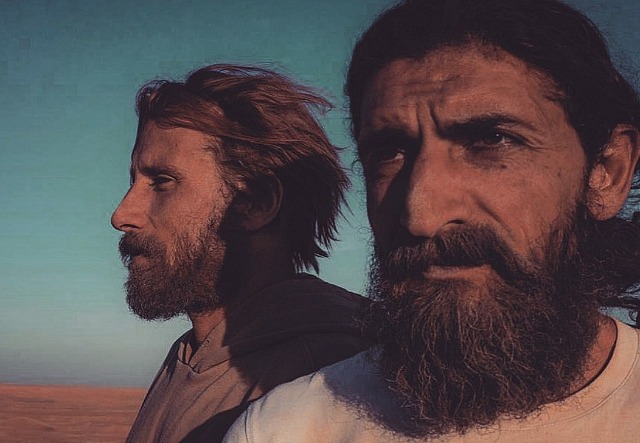
Almost three years after starting principal photography in June 2019, Terrence Malick‘s The Way of the Wind is still shrouded in secrecy with no whispers, much less expectations, about any festival bookings this year.
Definitely not Cannes, of course, and with the warm weather fast approaching you’d think the Venice/Telluride crowd would be hearing about possibly getting a peek at Malick’s film down the road. But no — “big circle of silence.”
Malick tends to spend about two years in post-production on his films. Presuming that The Way of the Wind wrapped sometime in the early fall of ’19, the two years of post-production would have been completed last September or October, or five or six months ago.
“Try It On For Size,” posted on 11.20.20: “In June 2019 Terrence Malick began shooting The Last Planet, which is some kind of Jesus movie. The cast includes Géza Rohrig as Christ, Matthias Schoenaerts as Saint Peter, and Mark Rylance as four versions of Satan. It was announced today that the title has been changed to The Way of the Wind.
“Let me explain something: The Way of the Wind is a nothing title. It’s about as meaningful as Whistle Down The Wind, The Other Side of The Wind, The Wind, Who Has Seen the Wind?, the 1967 Association song “Windy” and Sterling Hayden‘s final line in Bernardo Bertolucci‘s 1900 — ‘I’ve always loved the wind.'”
I then wrote facetiously that “if Malick sticks to his usual post-production timetable, The Way of the Wind should be released by sometime between late ’21 and mid ’22.” I know nothing, but if Malick’s Jesus film doesn’t peek out in the fall it’ll most likely open sometime in ’23.
World of Reel‘s Jordan Ruimy is projecting a few titles for the 2022 Venice Film Festival — Alejandro Gonzalez Inarritu’s Bardo, Luca Guadagnino’s Bones and All, Wes Anderson’s Asteroid City, Jonathan Glazer’s The Zone of Interest, Noah Baumbach’s White Noise, Martin McDonagh’s The Banshees of Inisherin and Paul Schrader’s The Master Gardener.
HE’s heart goes out to poor Bruce Willis, 67, who’s been forced to retire from acting due to aphasia, a degenerative brain ailment that results in a growing inability to remember lines.
We all understand that getting older and coping with the failure of this or that vital organ can be a heartless process, but this is sadistic. In a perfect world Willis would be able to keep making “Bruce Willis movies” at least another dozen years, and then he could shift into odd character parts in his late 70s and 80s.
Now we understand why Willis made so many shitty direct-to-video movies (between 20 and 25) over the last five years. I’m very, very sorry for this extraordinary stroke of bad luck.
Not only well said, but the rapid-fire montage editing (Critical Drinker‘s own hand or someone else’s?) is ace-level.
“In a world in which normal, everyday people can have their ideas go viral overnight with a single, well-written tweet, and where being a big deal in Hollywood doesn’t make you a big deal to the average person any more…the work is what should matter…[these people] are fundamentally entertainers, not pundits.”
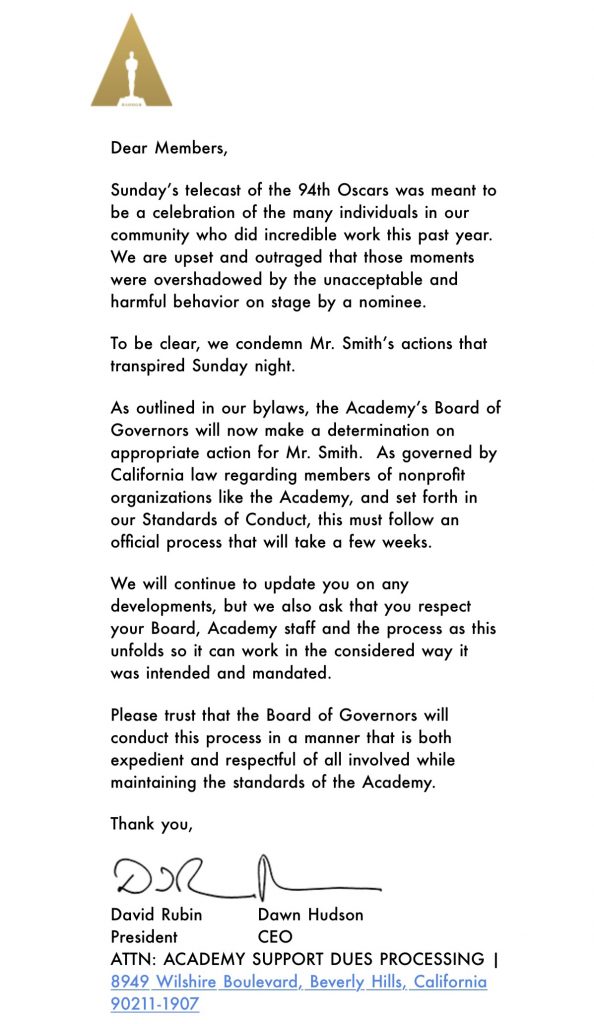
“Unacceptable and harmful behavior” that we need to mull over and reflect upon for…uhm, three or four weeks. Or maybe five. Or six. We will not be rushed.