
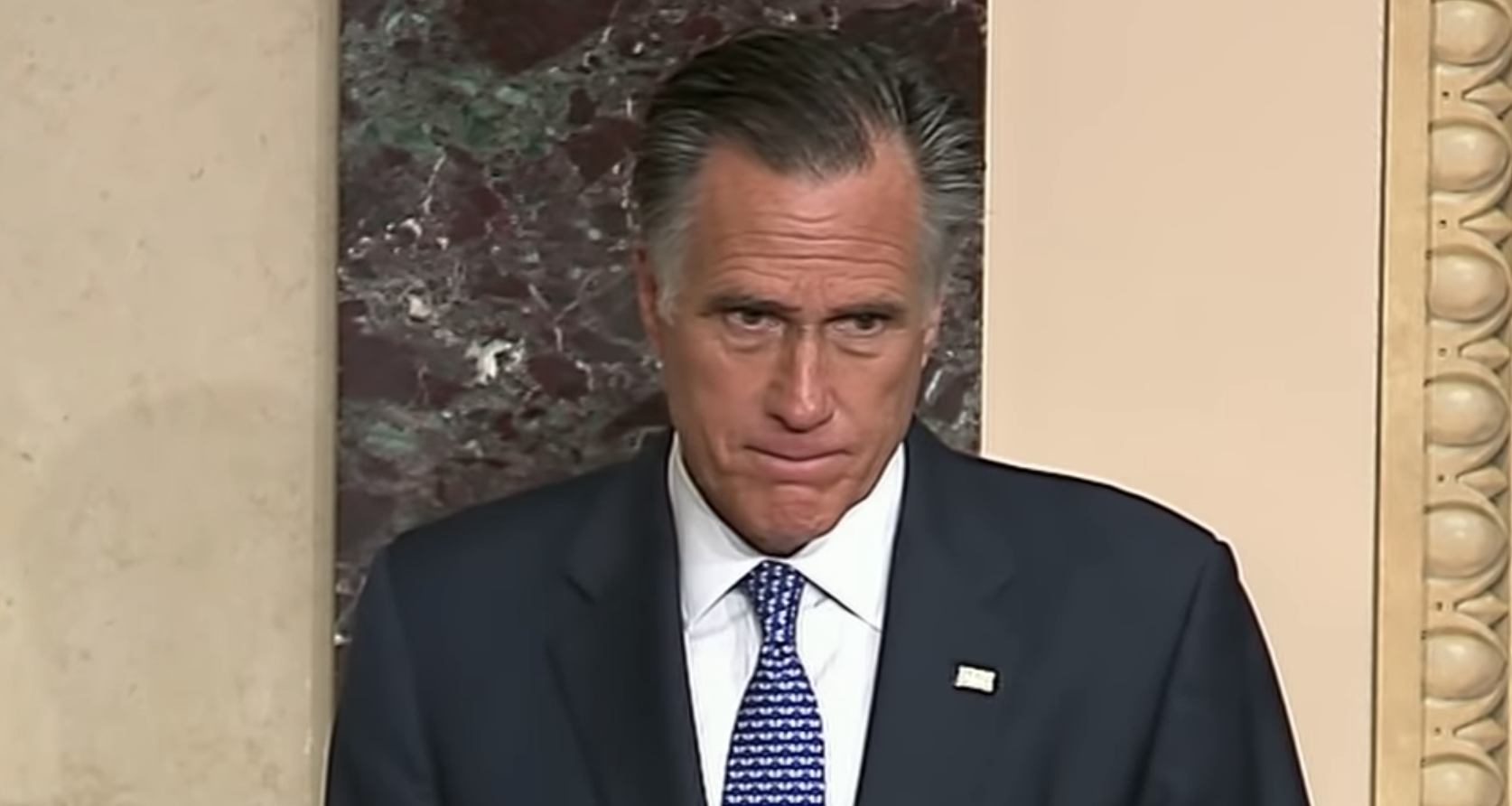
I never thought I’d feel this way about Mitt Romney, but currents of admiration are surging. He’s still “Mitt Romney” and therefore still, in some ways, the contentious dick who ran against Barack Obama in 2012. But he has my vote today. He will, of course, catch hell from the lunatic right for this. A profile in courage.
slider
Saga of Cathy Burns
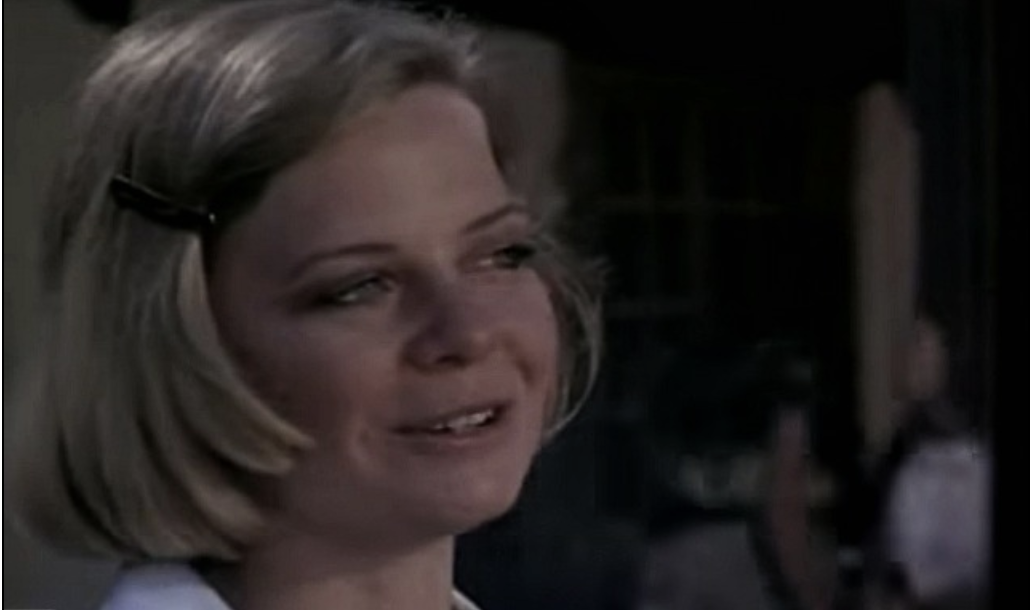
The Hollywood Reporter‘s Scott Feinberg and Scott Johnson have co-authored a 2.3 article titled “Catherine Burns: The Vanishing of an Oscar-Nominated Actress.” It tries to paint a hard-luck portrait of a gifted actress whom Hollywood had given the backhand to, and who hated playing the Hollywood game, and who led a subdued and shrouded life over her last three or four decades.
The 23-year-old Burns delivered an Oscar-nominated supporting performance in Frank Perry‘s Last Summer (’69), but she was never that lucky again. Burns made two more films in the immediate wake (Me, Natalie, Red Sky at Morning) and did some theatre and a lot of television over the next…oh, 15 years or so. She had dabbled in writing and allegedly focused on that entirely in the ’80s. Then she fell off the map.
A longtime Manhattanite, Burns married a non-industry dude named Kenneth Shire in 1989. Sometime in the aughts she and Shire moved into a retirement community in Lynden, Washington. The THR piece discovers that the 73-year-old Burns passed almost exactly a year ago and that cirrhosis (i.e., a drinking problem) was a “contributing factor” in her demise.
When contacted by the Seattle-based Johnson, Shire doesn’t mention her passing. He also lets go with some anti-Hollywood rancor. “She hated [Last Summer] and most everything that came with it,” Shire says. “She wanted to be remembered as a published writer of novels. My wife has been out of the business for decades. She is not old news. She is ancient news. We are in our eighth decade. We left that rotten business a long time ago. It’s time for some peace. Maybe someone else wants this kind of reminder of who they once were, but we do not.”
HE to Feinberg, Johnson: My impression was that the piece tried to inject a certain melancholy or sadness that may not have been warranted by the facts. It tried to make it sound as if Burns wanted to deepen or expand her career but Hollywood and to a lesser extent Broadway said no. In their usual callous way, Hollywood types didn’t think she had the right look.
Many are called, few are chosen. Talented as she was, Cathy Burns was one of the called.
Just because Burns delivered a special moment in Frank Perry‘s Last Summer as well as some noteworthy stage and TV-series performances…that doesn’t mean she had what it took to keep going and going as an actress, She apparently didn’t have that engine, that hunger, that gotta-gotta. We all know that these qualities are as important as talent.
A certain Hollywood columnist was dismissive of her looks, the article reports, and that obviously amounted to a kind of cruelty.
Burns’ looks were okay. She was small and mousey, but it takes all sorts to make a world. If you ask me she looked like a slightly less attractive version of Liza Minnelli‘s “Pookie” in The Sterile Cuckoo, and perhaps with a side order of Susan Oakes‘ “Anybodys” in West Side Story.
The main thing is that she didn’t have that X-factor dynamism that all successful actors seem to have. She had a certain recessiveness and a face that said “whatever” and “maybe you could leave me alone”. She was was hugely turned off by the day-to-day reality of being famous and recognized on the street or whatever.
Basketball Redemption Clouded by Booze

The real-life echoes in Ben Affleck‘s basketball-coach character in Finding The Way Back (Warner Bros., 3.6) are obvious. Affleck has been famously struggling with alcohol issues for years, and so (in the realm of the film) is “Jack Cunningham”, a former basketball star who bends the elbow. The film is obviously self-portraiture to a certain extent.
Director Gavin O’Connor knows how to do sports redemption dramas. I still say Miracle (’04) is his best.
I saw this trailer at the Grove last weekend, and my first reaction (above and beyond the Affleck thing) was that it could be described as Hoosiers but with Dennis Hopper‘s rummy character taking the place of Gene Hackman‘s.
Why call this Finding The Way Back when (a) Nat Faxon and Jim Rash‘s The Way Way Back opened only seven years ago and (b) Peter Weir‘s The Way Back opened ten years ago? Why follow in that path? I can’t think of a decent alternative. All that comes to mind is Fat Bearded Boozer. Don’t laugh — people would pay to see a film with that title.
Son of Taxi Driver
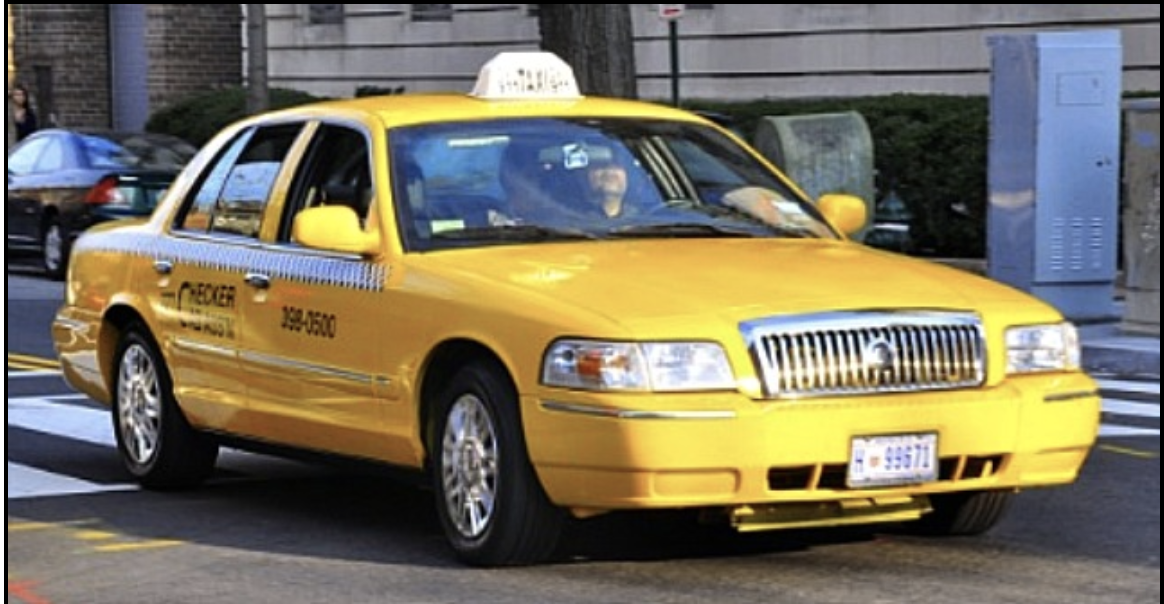
The best gig of my life has been writing Hollywood Elsewhere for the last 15 and 1/2 years. The second best was tapping out two columns per week for Mr. Showbiz, Reel.com and Kevin Smith‘s Movie Poop Shoot (’98 to ’04). General entertainment journalism for major publications (Entertainment Weekly, People, Los Angeles Times, N.Y. Times), which I did from ’78 to ’98 with a five year-break between ’85 and ’90, ranks third. But my fourth all-time favorite job was driving for Checker Cab in Boston. Seriously. The only non-writing gig I ever really liked.
Posted just under three years ago: The gig only lasted eight or nine months. I was canned for driving a regular customer off the meter up in Revere. But God, I felt so connected and throbbing and all the other cliches. Buzzing around one of the greatest cities in the world each night, learning something new every day, meals on the fly, incidents and accidents, hints and allegations.

At the end of every shift I was so revved that it always took a good hour to crash when I got home, which was usually around 1:30 or 2 am. And every night I had a new story to tell my girlfriend, Sherry McCoy, with whom I was sharing a nice little pad at 81 Park Drive.
Back then the Checker garage was on Lansdowne Street, or right next to Fenway Park. I remember to this day my Motorola two-way radio with the cord-attached mike. One of the dispatchers was called Tiny (a tall, white-haired fat guy); there was another older gent with a kindly face and gentle voice. After I had gained a little seniority I was given a slick new Checker cab (#50), which I always kept whistle-clean. At the end of every shift I had a new story to tell.
Story #1: A youngish woman who got into the back seat near Boston Garden found a full wallet with no ID or anything — $400 and change, which was a fortune back then. We split the dough 50-50 — luckiest score of my young life.
Story #2: An attractive, slender, frosty-haired woman in her mid to late 40s started chatting about this and that, and before you knew it were were flirting and talking about erotic chemistry and whatnot. As I was dropping her off she opened the cash slot and we gently kissed goodbye. We never got out of the cab, never shook hands — all in the eyes. I saw her on Newbury Street three or four months later…”Yo!”
Uriah Heep vs. Quasimodo Syndrome
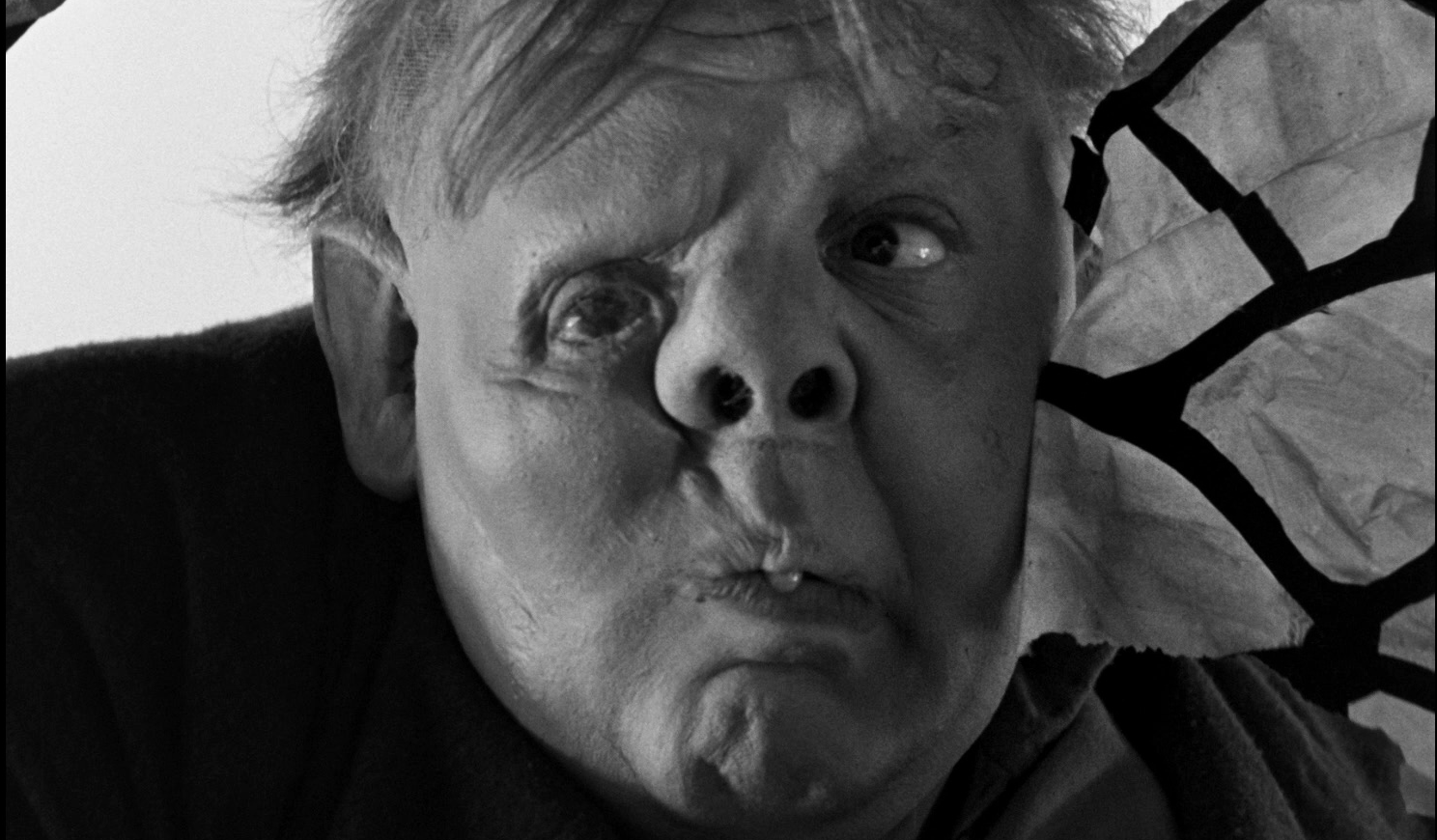
I’ve no idea how much jail time, if any, Harvey Weinstein will wind up serving for the multiple alleged instances of rape and sexual assault he’s currently being prosecuted for. But after yesterday’s grotesque anatomical testimony by alleged sexual assault victim Jessica Mann, Weinstein has certainly gotten a taste of the sexual humiliation that he’s been accused of handing out during his heyday.
Mann, who alleges that Weinstein raped and sexually assaulted her on multiple occasions in 2013, claimed that the first time she saw Harvey buck naked she thought he was (a) “deformed and intersex,” (b) didn’t appear to have testicles, and (c) seemed to have a vagina. She added that he “smelled like shit” and “had a lot of blackheads” on his back. Her description, put bluntly, is that of a deformed and repugnant Uriah Heep.
Mann’s testimony suggests that Harvey may have had an undescended testicle or two, or a condition that resembles what Adolf Hitler reportedly suffered from. I know something about this as I had to have surgery when I was 10 years old to correct a one-ball condition. Without this I wouldn’t be able to have children, my parents were told.
In “Hitler’s Last Day: Minute by Minute”, historians Jonathan Mayo and Emma Craigie wrote that “Hitler [was] believed to have had two forms of genital abnormality: an undescended testicle and a rare condition called penile hypospadias in which the urethra opens on the under side of the penis.”
Life and biology are unfair and some of us are dealt bad cards. The sad fact is that there are hundreds of thousands of people on this planet, perhaps millions, who are regarded as ugly. I myself have never used that word — a decision that came from watching Charles Laughton‘s performance in The Hunchback of Notre Dame (’39) when I was eight or nine.
But most or many people do use it. They regard certain people, fearfully, as deformed or abnormal or otherwise grotesque. Cruel or unfair as this sounds, these unfortunate people arguably have an obligation to prevent others from contemplating or, God forbid, being physically intimate with their biological misfortune. It follows that they should never even think about attempting sexual congress with other people. Better that way.
Think of all the anguish and bruisings that could have been avoided if Harvey had decided that he had no choice but to be sexually inactive in a normal social sense. Without a sex drive he’d probably still be a swaggering film industry hotshot of some kind. All he had to do was accept his biological fate and conclude that onanism, prostitutes and love dolls were his only allowable outlets.
But no — he had to have his way with actresses. And thereby ruined not only his own life but left many of his alleged victims permanently bruised and/or traumatized.
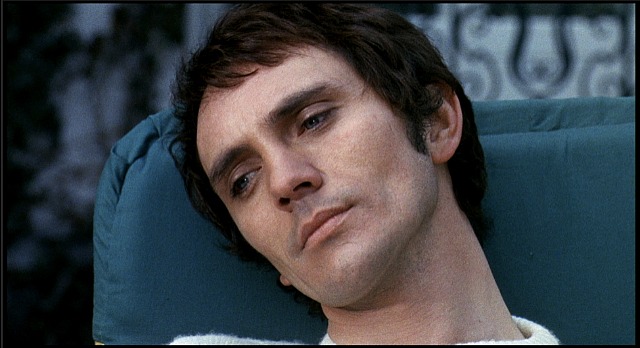
Criterion Teal Disease Infects “Teorema”
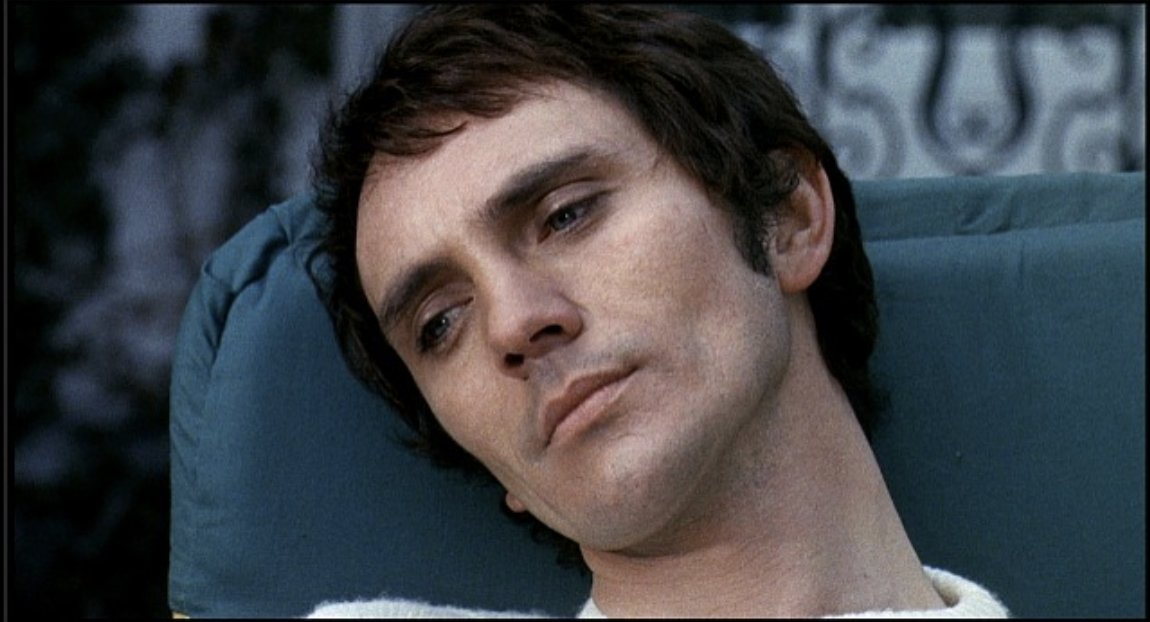
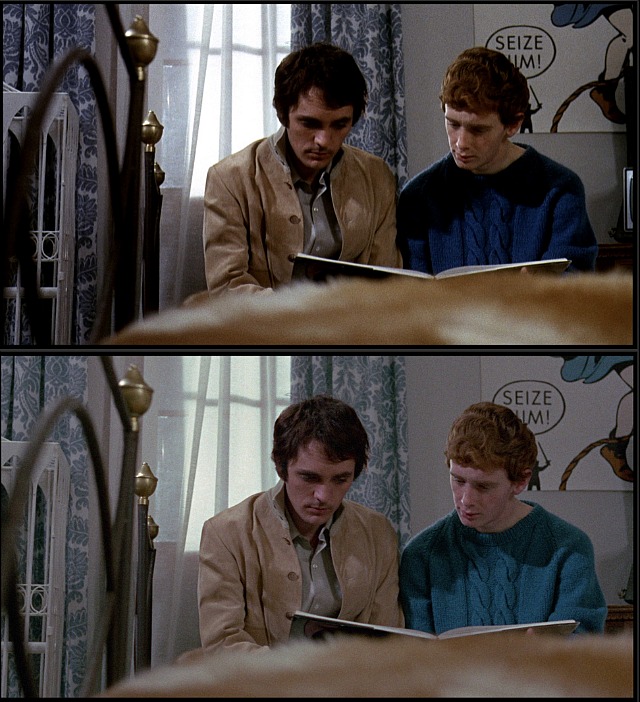
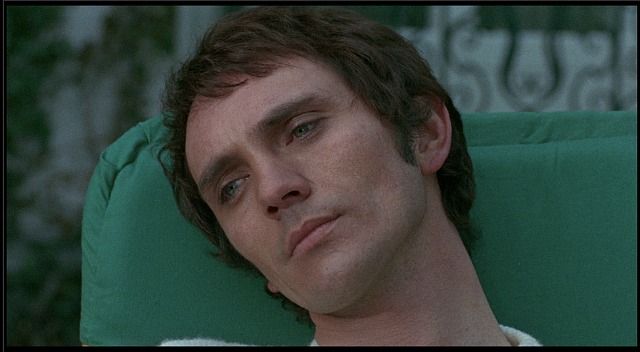
To go by frame captures provided by DVD Beaver’s Gary W. Tooze, the Criterion teal monsters are back, and this time they’ve desecrated Pier Paolo Pasolini‘s Teorema. Once again, natural or subdued blues have apparently been rendered with a garish teal-green tint. Look at the images. A year and a half ago I asked Tooze if there might be something off about the color tuning on his 4K Bluray players or 4K TV, and his emphatic reply was “I’ve been doing this 18 years, and it’s not me.”
So what is wrong with Criterion? This is vandalism, plain and simple. This is organizational derangement. This has happened three times previously with teal-tinted Blurays of John Schlesinger‘s Midnight Cowboy, Ron Shelton‘s Bull Durham and Brian DePalma‘s Sisters. And nobody has complained except for Tooze (half-heartedly), myself and a handful of thread commenters. And now Teorema.
Fred Silverman vs. SNL Satire
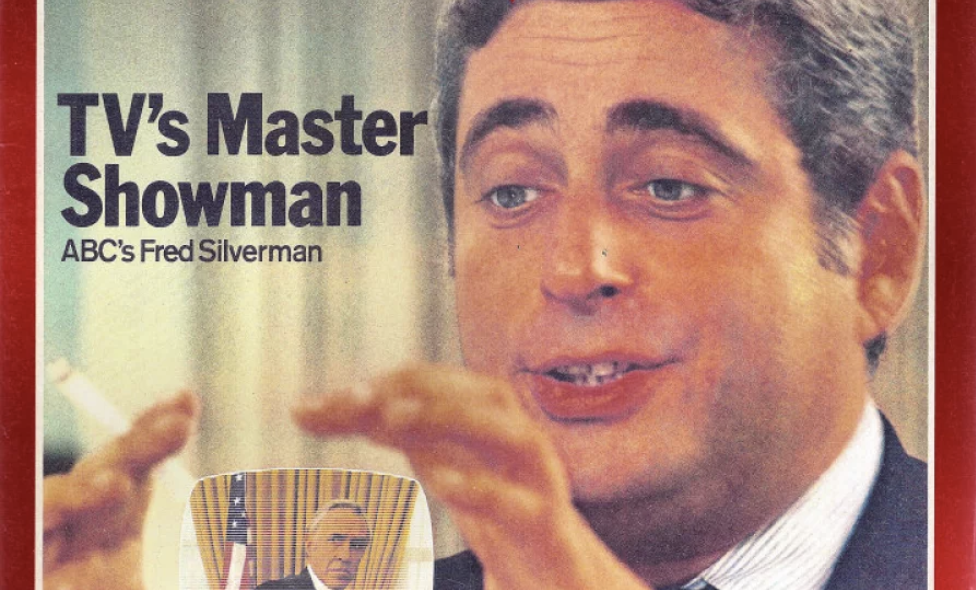
Big-time TV producer and briefly calamitous NBC honcho Fred Silverman has passed at age 82.
Wiki excerpt: “Although Silverman’s tenure at ABC was very successful, he left to become President and CEO of NBC in 1978. In stark contrast with his tenures at CBS and ABC, his three-year tenure at the network proved to be a difficult period, marked by several high-profile failures such as the sitcom Hello, Larry, the variety shows The Big Show and Pink Lady, the drama Supertrain (which also was, at the time, the most expensive TV series produced; its high production costs nearly bankrupted NBC), and the Jean Doumanian era of Saturday Night Live.
Silverman hired Doumanian after Al Franken, the planned successor for outgoing Lorne Michaels, castigated Silverman’s failures on-air in a way that Silverman took very personally.
John Belushi impersonated Silverman on Saturday Night Live at least once if not twice. One of the Silverman bits (a recurring bit, as I recall) happened in ’78, but I can’t find any video. A clip was on this imasportsphile.com page, but it’s been removed or blocked.
Ratman
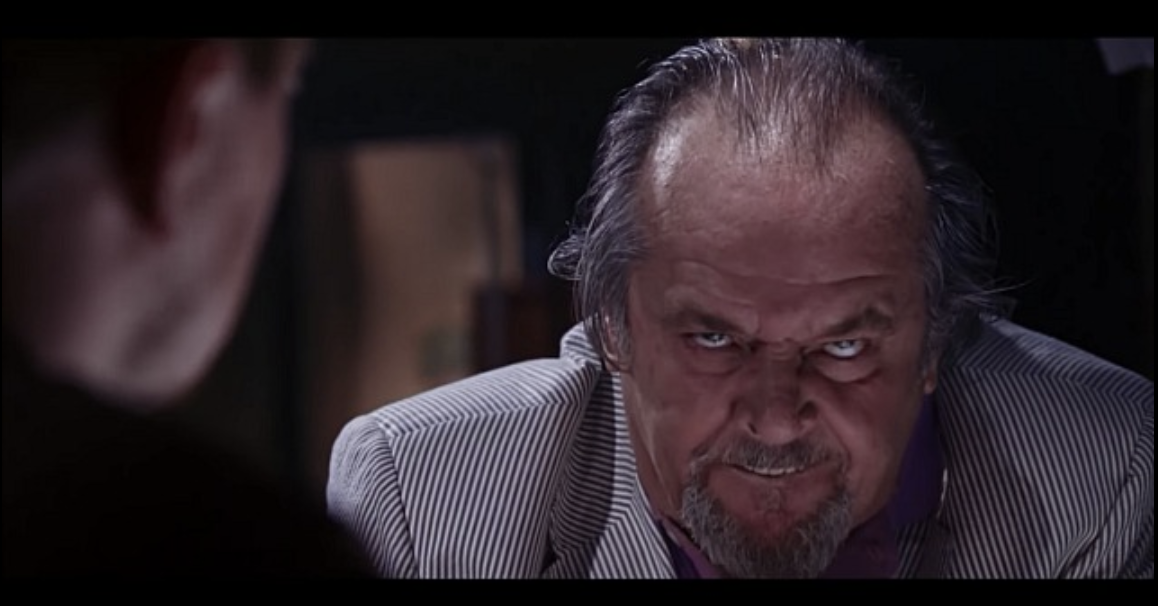
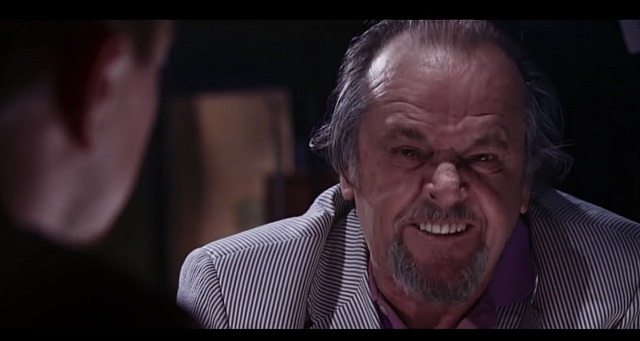
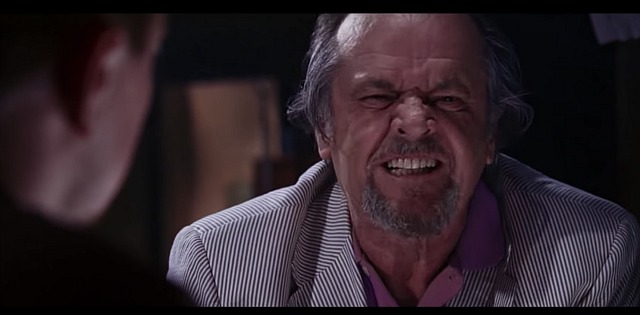
The most indelible moment from The Departed (1:10 to 1:16) arrives by way of Jack Nicholson‘s teeth. I saw Martin Scorsese‘s Best Picture winner four or five times in screenings and commercial showings (imagine that!) and people chuckled and tee-hee’d every time. 13 years ago — feels like eight or nine.
Watch: “A Love Letter to Making Movies”

“Quentin Tarantino’s best, bravest and most confrontationally impudent movie since Pulp Fiction.” — Nigel Andrews, Financial Times.
“I could boil it all down and simply call the last half-hour a ‘happy’ ending, but it’s something more than that. I have my tastes and standards and you all have yours, but by the measuring stick of Hollywood Elsewhere the finale is really, really great. As in laugh-out-loud, hard-thigh-slap, whoo-whoo satisfying. Do I dare use the term good-vibey? And the very end (as in the last two minutes) is…naahh, that’ll do.” — from “Once Upon A Time in Hollywood Is…”, posted from Cannes on 5.21.19.
“Once Upon a Time in Hollywood is the work of a middle-aged director, one who looks back by looking forward, and who eschews the familiar for the new.” — Kirk Beard, Toronto Blade.
SPECIAL HE ADVERTORIAL:

“A compassionate Hollywood fable of yesteryear…a comfort flick for bruhs who buy Blurays at Amoeba after catching a show at the Hollywood Arclight.” — Joe Popcorn.
“Leonardo DiCaprio and Brad Pitt deliver the most emotionally vulnerable performances of their careers as soon-to-be has-beens in 1969 Hollywood” — Dare Daniel.
“If Quentin Tarantino‘s Once Upon A Time in Hollywood winds up taking the Best Picture Oscar on 2.9.20, it’ll be for a simple, sensible reason. Everybody likes it. I haven’t spoken to anyone who’s had anything negative to say about it. Not the slightest, most insignificant thing…zip. I shared a few mild gripes after catching it during last May’s Cannes Film Festival, but they’ve all pretty much evaporated. I’ve seen it three or four times since. I’ve become a follower.” — from”Tarantino’s Oscar Moment Is Nigh,” posted on 1.1.20.
Short Streaming Sundance Bursts

Last night World of Reel‘s Jordan Ruimy shared some fleeting observations about the five Sundance keepers that have emerged over the last few days. Every Sundance festival delivers four, five or six head-turners, and usually during the first weekend (Friday, Saturday, Sunday). It would appear (emphasis on the “a” word) that the only possible Joe Popcorn hit is Max Barbakow‘s Palm Springs, a time-loop romcom a la Groundhog Day with Andy Samberg, Cristin Milioti and J. K. Simmons.
Four days left in the fest (although Tuesday is the last dependable day as things always start to run out of gas on Wednesday) and the hotties are (a) Florian Zeller‘s The Father (a film that puts YOU in the mind of an Alzheimer’s sufferer), (b) Janicza Bravo‘s Zola (a love-hate thang, crazy manic Floridian hijinks, idiot characters), (c) Palm Springs, (d) Lee Isaac Chung‘s Minari (hardscrabble Korean family survival tale, set in rural Arkansas) and (e) Bryan Fogel‘s The Dissident (exacting doc about the Saudi murder of Washington Post journalist Jamal Khashoggi, and a scathing portrait of the Trumpies who looked the other way).
12:30 pm update: A critic friend insists that Emerald Fennell‘s Promising Young Woman (Carey Mulligan revenge flick) belongs with the above. “It takes a little while to settle into a groove but eventually becomes dynamite. How can you ignore a 20-for-20 favorable rating on RT? It’s the one film here that I continue to think about.” HE response: “It sounded unappealing but if you say so, fine. One can never trust Sundance reviews as a whole as the general tendency is to be kind if not celebrative.”
The wipeouts include Dee Rees‘ The Last Thing He Wanted (“disaster”) and Benh Zeitlin‘s Wendy (“Total disappointment…Zeitlin hasn’t grown up as a filmmaker”). Iffies and in-betweeners include Alan Ball‘s Uncle Frank (middle-aged NYC gay guy awkwardly comes out to bumblefuck family) and Sean Durkin‘s The Nest (slow-burn thriller, cultural isolation).
Screening today: Liz Garbus‘s Lost Girls (missing daughter, Long Island serial killer).
Again, the mp3.
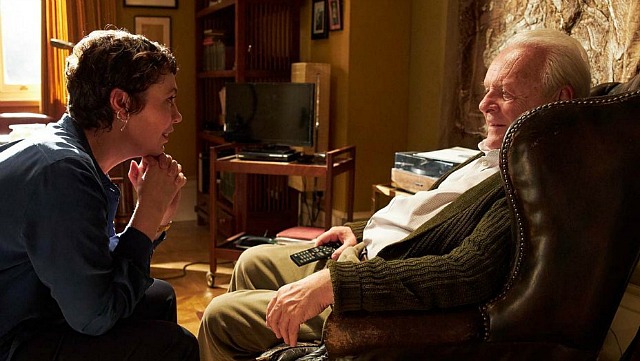
Olivia Colman, Anthony Hopkins in Florian Zeller’s The Father.
Greatest Political Films
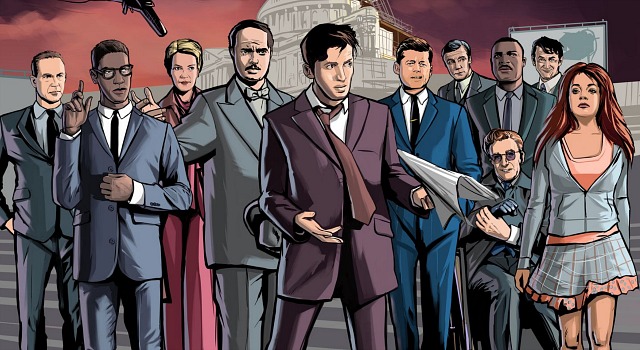
Four days ago the brilliant Washington Post critic Ann Hornaday ran a piece called “The 34 Best Political Movies Ever Made.” Everybody has their own list of such films. I’m good with almost all of Hornaday’s choices, although I would have deleted Mean Girls and Born Yesterday in favor of Franklin J. Schaffner and Gore Vidal‘s The Best Man (’64 — that Lee Tracy performance!) and Michael Ritchie‘s The Candidate (’72).
For the sin of boredom Lincoln doesn’t make the HE chart, but you know what does? Paths of Glory, which is more about politics and class than it is about warfare.
Hornaday explanation: “There are titles not on this list that are sure to launch a million “How could you leave out…?” objections. Not because [this or that political film isn’t] worthy, but to make room for films that may be more obscure but are no less revelatory or fun to watch.
HE to Hornaday #1: “It’s funny and admirable that you decided on 34 films, which you’re not supposed to do, of course. Some say list pieces should only include ten noteworthies, and fewer will say 20. But you MUST use multiples of ten or five, and NEVER, EVER go beyond 25. 34 is hilarious!”
HE to Hornaday #2: “Gabriel Over The White House has faded in my memory, but I recall an actual trumpet (playing some kind of sad, melancholy tune) signaling the moral awakening of Walter Huston.
HE to Hornaday #3: “Don Siegel’s Invasion of the Body Snatchers (’56) is about ‘50s Eisenhower culture in the tidy suburbs — vanilla complacency and conformity, robotically expressed assurances that everything’s fine, and no place for subterranean riffs and reflections from people like Lenny Bruce, Jack Kerouac, Allen Ginsberg, Elvis Presley, Jerry Lee Lewis, Arthur Miller, Chet Baker and Nicholas Ray. It’s about “the bland leading the bland.” In summary, I don’t see how a film about the muffling and narcotizing of the human spirit is political, but I guess it is on some vague level.”
HE to Hornaday #4: “Election‘s Tracy Flick is a resentful, ultra-determined, extra-carnivorous version of Richard Nixon. In ‘08 or thereabouts Hillary Clinton reportedly said to Reese Witherspoon that “everyone’s telling me about Tracy Flick!” She didn’t even realize she was being put down. I don’t think Matthew Broderick has been gradually exposed as the villain, as somebody (Matt Zoller Seitz?) recently wrote. Broderick is playing an angry stifled hypocrite and an overly emotional, sloppy-minded idealist — he finally decides to stop Tracy but unscrupulously. And he doesn’t even think to destroy the ballot that favors Flick but throws it into his own garbage basket!”
HE to Hornaday #5: “Congrats to the great WaPo illustrator Stephen Bliss!”
And Then It Stopped
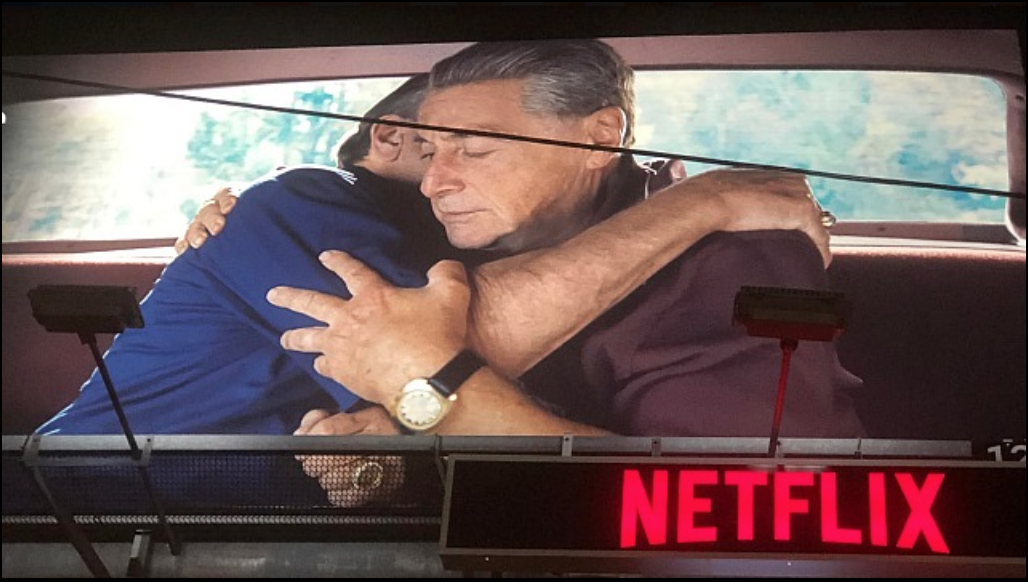
The Irishman is the finest film of the year, and to my mind the most deserving recipient of the Best Picture Oscar. I know this can’t happen but I insist on repeating what I regard as an irrefutable truth. Because I’m shattered by what’s happened to Martin Scorsese‘s film as far as the conversation is concerned. In early December it was the film to beat. Best Film awards from the New York Film Critics Circle, the National Board of Review, New York Online Film Critics. And then it stopped.
[Click through to full story on HE-plus]
