A few years ago I ran a list of the five worst cinematic parents of all time: John Huston‘s Noah Cross from Chinatown, Daniel Day Lewis‘s Daniel Plainview from There Will Be Blood, Chris Walken’s Brad Whitewood from At Close Range, Faye Dunaway‘s Joan Crawford in Mommmie Dearest and Marion Lorne‘s Mrs. Antony (mother of Robert Walker‘s Bruno) in Alfred Hitchcock‘s Strangers on a Train.
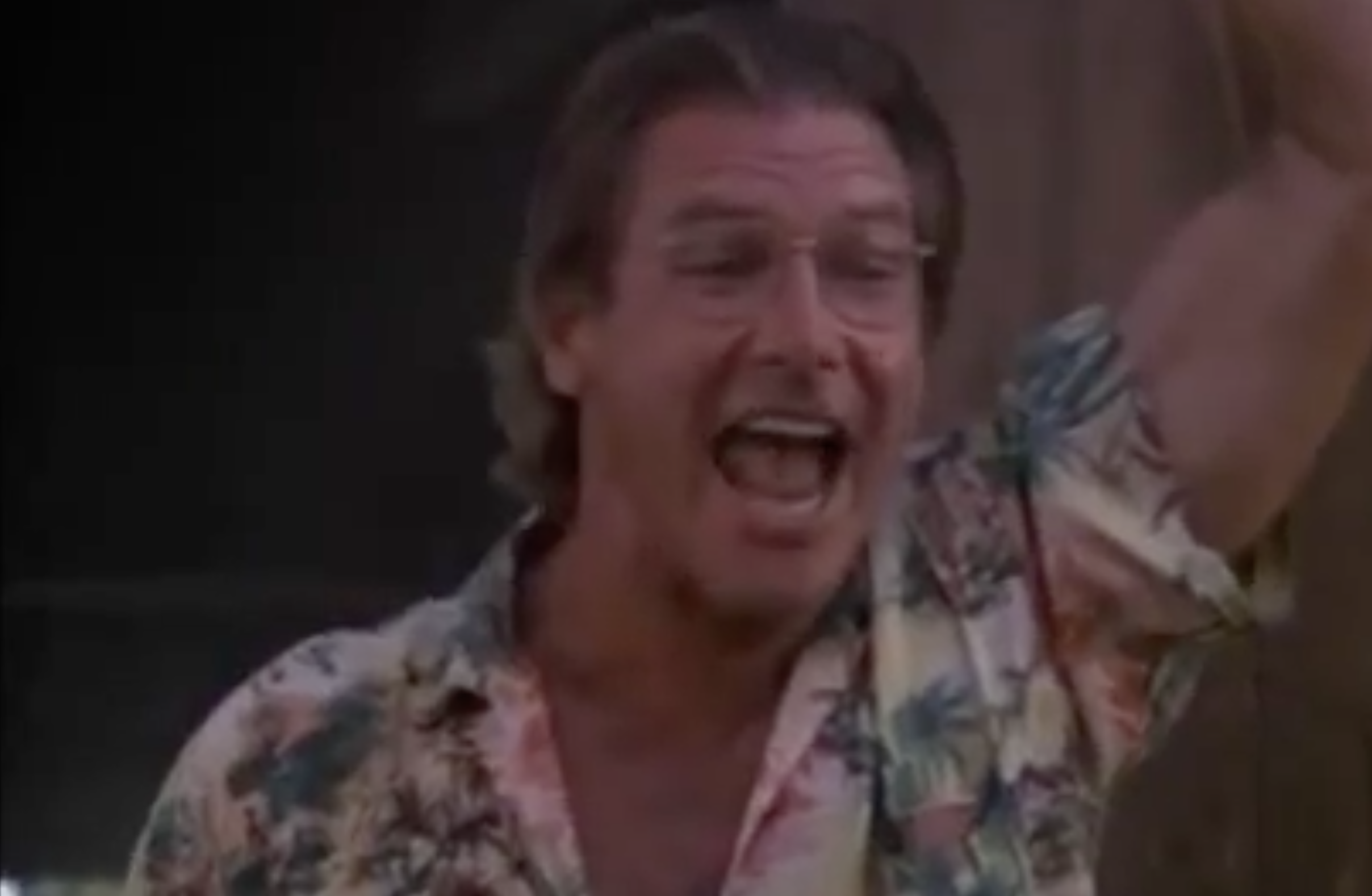
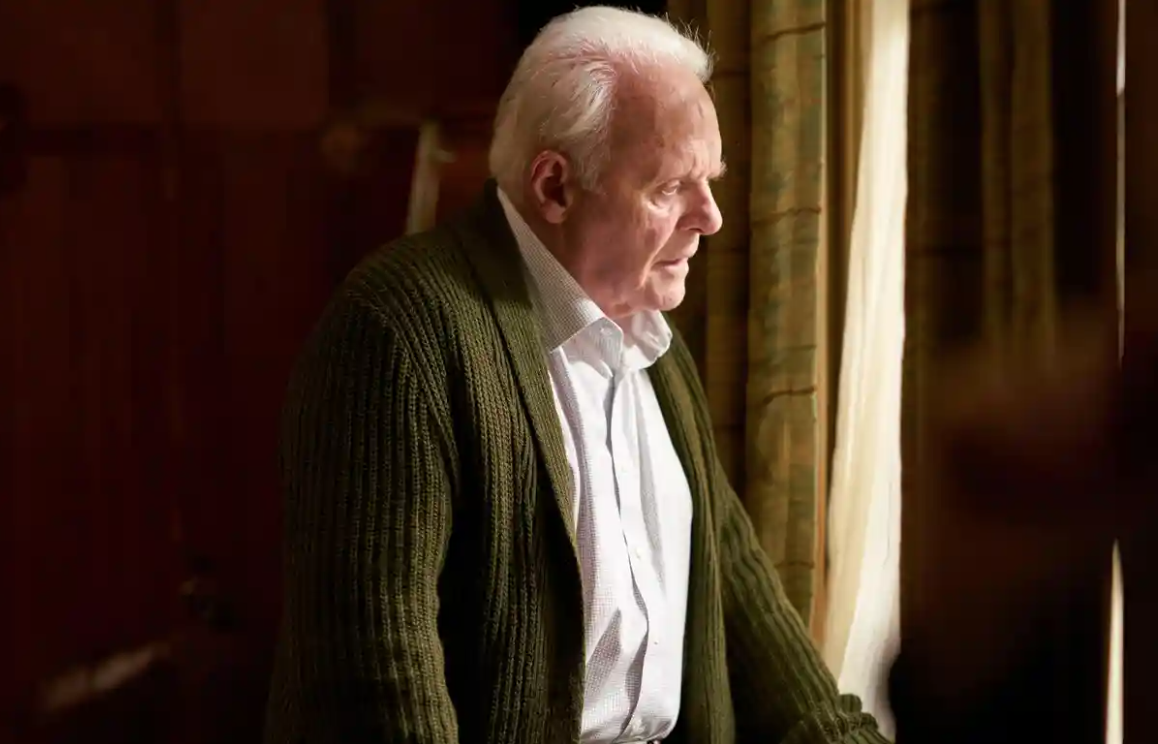
And then a real motherfucker of a dad I hadn’t thought of in a long time popped into my head: Karl Malden‘s oppressively demanding John Piersall, the father of Tony Perkins‘ Jim Piersall, in Robert Mulligan‘s Fear Strikes Out (’57).
I decided to stream an HD version the other night on Amazon, in part because I wanted to savor the detail of a black-and-white film shot in VistaVision. It looked pretty great, but God, Malden played such a fiend I couldn’t believe it. His son’s glories and accomplishments were never enough. The film throws a semi-happy gloss on their relationship at the end, but Malden is the kind of papa you need to keep at a certain distance until he’s dead.
But you know what? The Malden-Perkins relationship is almost exactly the kind of thing I have going on with the little man in my chest who’s never fully satisfied with anything good that I do. He’s always saying “okay, that’s pretty good but don’t get smug and coast on your laurels. You could probably do a little better than you’ve done so far, as you know. Because while you have talent and drive, you could use a bit more of each. And what about tomorrow’s agenda? And don’t forget to buy groceries and call the cleaning lady,” etc.
Please post your favorite dads and moms. The deceased Mrs. Bates in Psycho. Angela Lansbury in The Manchurian Candidate and All Fall Down, for sure. Harrison Ford in The Mosquito Coast. Who else?
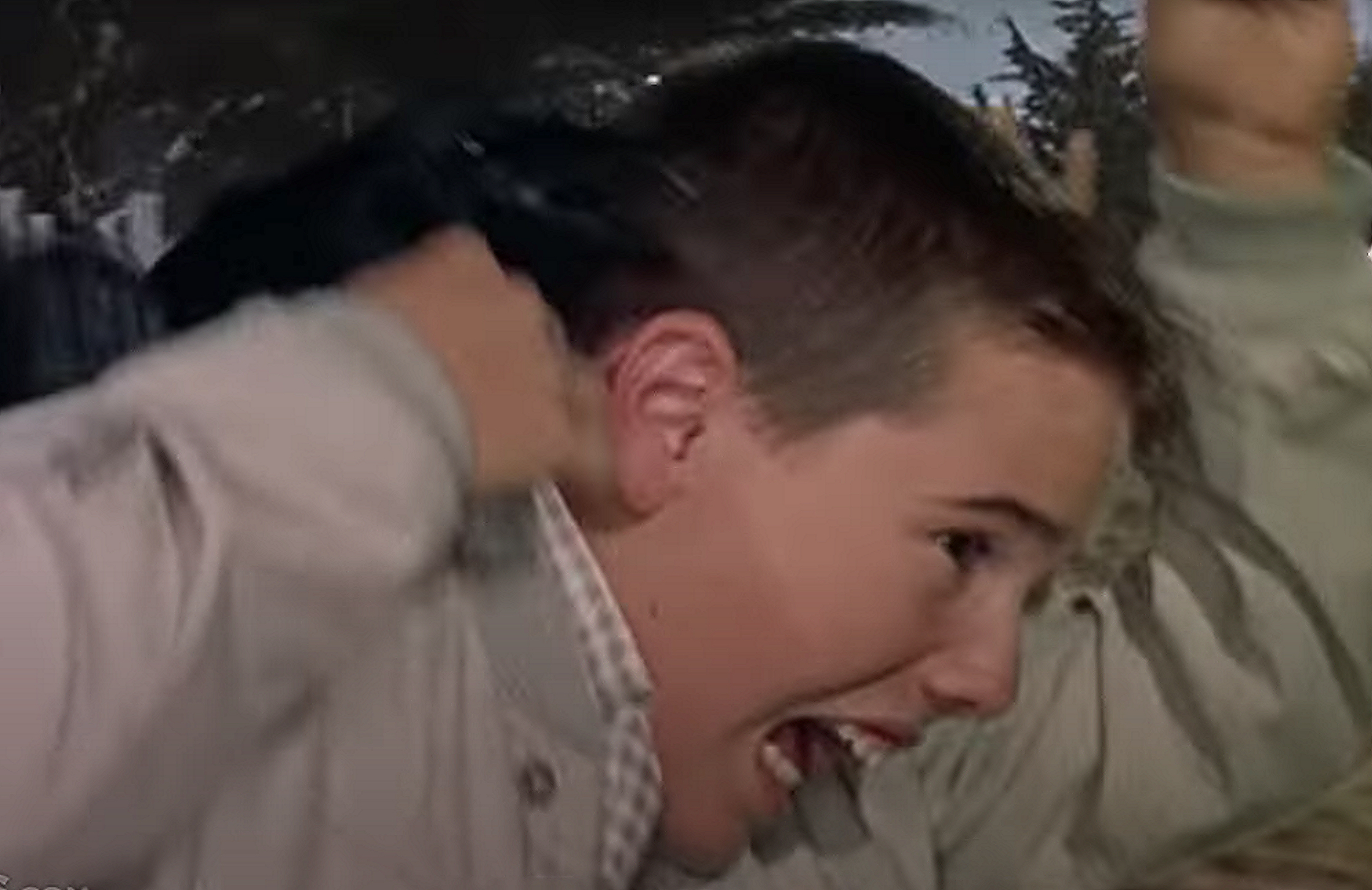
I’ll never forget the first time that my sons (Jett, Dylan) and I watched Alfred Hitchcock‘s The Birds together, and more particularly their reaction to the “homicidal crows attack the fleeing schoolchildren” scene. They were somewhere around 8 or 9 years old, as I recall, and basically found it hilarious. The more the schoolkids cried and screamed and fell to the ground and bloodied their knees, the more J & D laughed. A better word is “cackled.”
This happened, I immediately presumed, because the boys found the absurdly mannered and constricted behavior of the kids ridiculous. (Hitchcock was always terrible with children). They especially couldn’t stand the stilted, formal-sounding dialogue that poor Veronica Cartwright was obliged to say. And who, by the way, who doesn’t loathe that awful, perfectly phrased song the kids were singing inside Suzanne Pleshette‘s schoolhouse just before the attack?
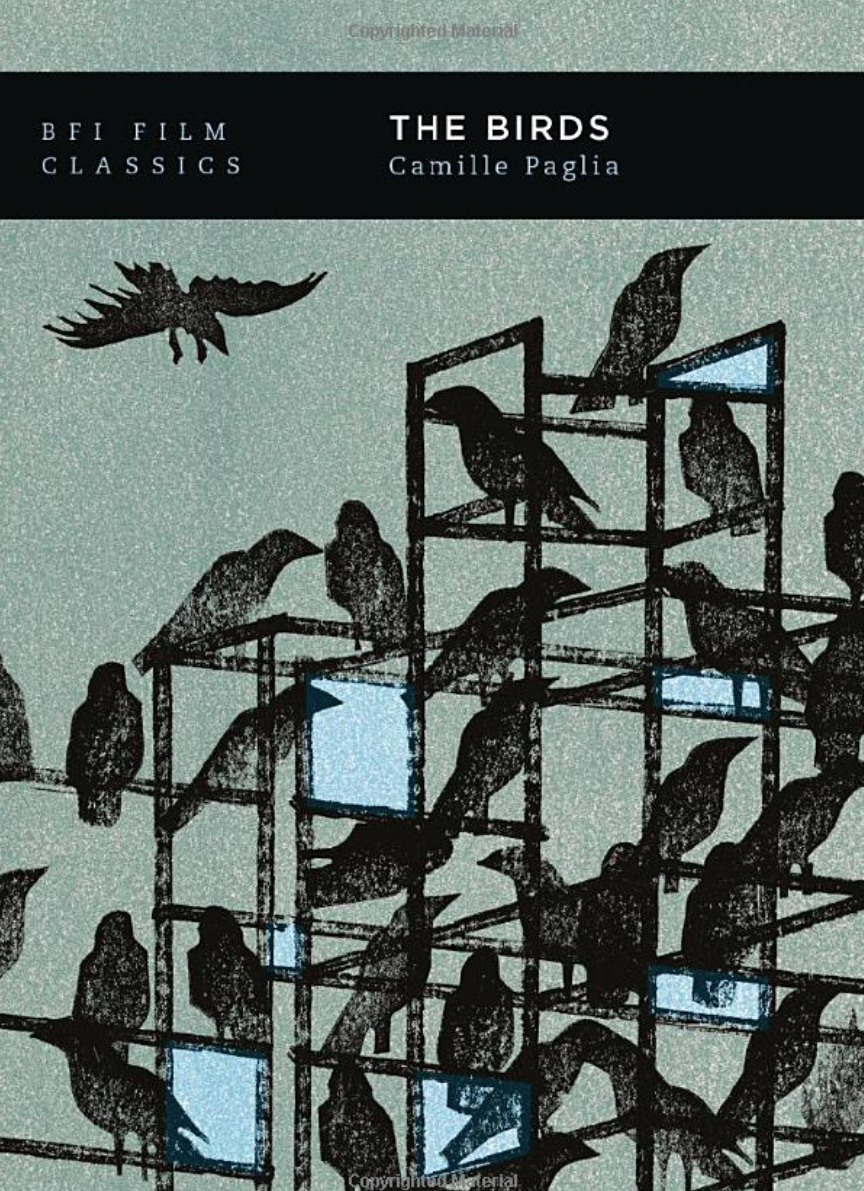
Excerpt from Camille Paglia’s book-length essay about The Birds (BFI Film Classics): “It’s another race, this time foot versus wing. Like Furies, the crows harass the children from behind, nipping their necks and cheeks, as we seem to slide helplessly backward downhill, with the mob about to trample us. There’s a tremendous noise of mingled screams and raucous bird cries.
“After the first flash of real horror, I generally settle down to laughing and applauding the crows, whom I regard as Coleridgean emissaries vandalizing sentimental Wordsworthian notions of childhood. It’s like my idol Keith Richards cuffing about Pollyanna and Beaver Cleaver. There’s an exuberant, Saturnalian, Mad magazine zaniness to the whole grisly business.“
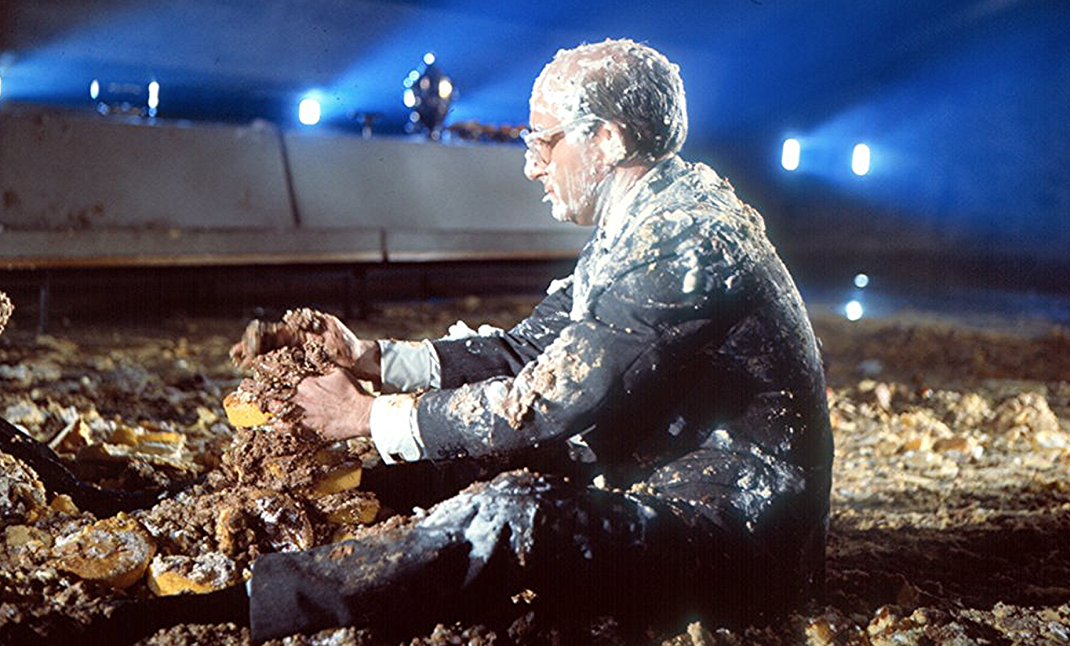
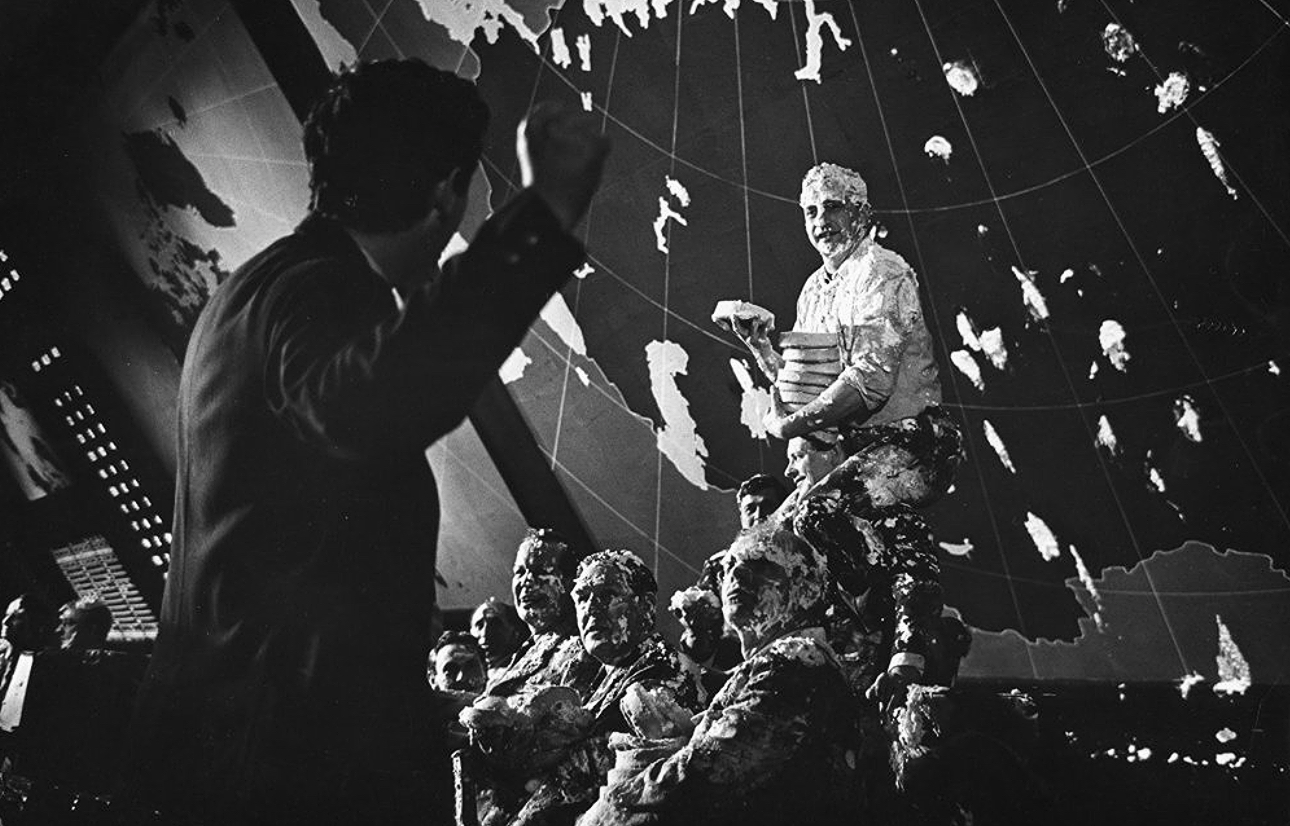
Certain George C. Scott recollections about the never-seen Dr. Strangelove pie-fight sequence were recently posted on Facebook by director-writer Patrick Reade Johnson. Johnson directed Scott in Angus (’95), and presumably got the following from him during shooting.
I’d never read Scott’s story until this morning, and I have to say two things. One, I don’t believe that Strangelove director Stanley Kubrick would have behaved in the petty, wimpy, small-minded way that Scott describes. And two, I’ve found a photo of Kubrick directing Scott during the pie-fight sequence so take the following with a grain:
Johnson: “Scott told me a couple great stories from the Strangelove shoot. One contradicted a popular myth about the film — that the removal of the pie-fight scene was due to concerns over a line in which Scott’s General Buck Turgidson (or someone else in the scene) said, ‘Gentlemen, our beloved president has been struck down in the prime of his life!’ It was deemed insensitive in the wake of JFK’s assassination.
Obviously the rear angle means we can’t be 100% certain this is a shadowed Stanley Kubrick directing the pie-fight sequence, but it sure looks like him.
“Another theory holds that Kubrick just felt the scene didn’t work.
“’Bullshit!’, roared George, when asked about it. ‘The scene was terrific! Which is WHY Stanley CUT it!” George’s eyes narrowed, a big, toothy grin spreading across his face… “Because the sonofabitch didn’t DIRECT it! THE FIRST A.D. DIRECTED IT!”
“I asked George why Stanley would entrust his first A.D. (possibly Eric Rattray) with directing a high comedy scene, featuring most of his leading cast. And why the venerable actors would even agree to that arrangement.
Scott: “We DIDN’T agree to it! But on the day when we all showed up to shoot the fucking scene, including the guy with 500 goddamn pies, Stanley was nowhere to be found! We sat around on our asses for an hour or so, until the 1st A.D. walked in and said Stanley had a terrible cold…ALL OF A SUDDEN…and that he wouldn’t be able to work today.
“But then he added that Stanley had also said that if we didn’t forge on without him, the scene, which everyone LOVED, would NEVER get DONE!”.
Johnson: “So, you just went ahead and…“ Scott: “And SHOT a goddamn SCENE for a fucking STANLEY GODDAMN KUBRICK FILM that was NOT DIRECTED BY STANLEY GODDAMN KUBRICK! Which is WHY the fucking scene never made into the fucking MOVIE!”
Johnson: “But what about JFK and being sensi—“
Scott: “OH, what a load of CRAP! Stanley couldn’t have cared less about that! If ANYTHING, he PROBABLY HATED not having something so GODDAMN IRREVERENT in his FILM! He just didn’t hate it as much as he hated his First A.D.’s goddamn DIRECTING!”
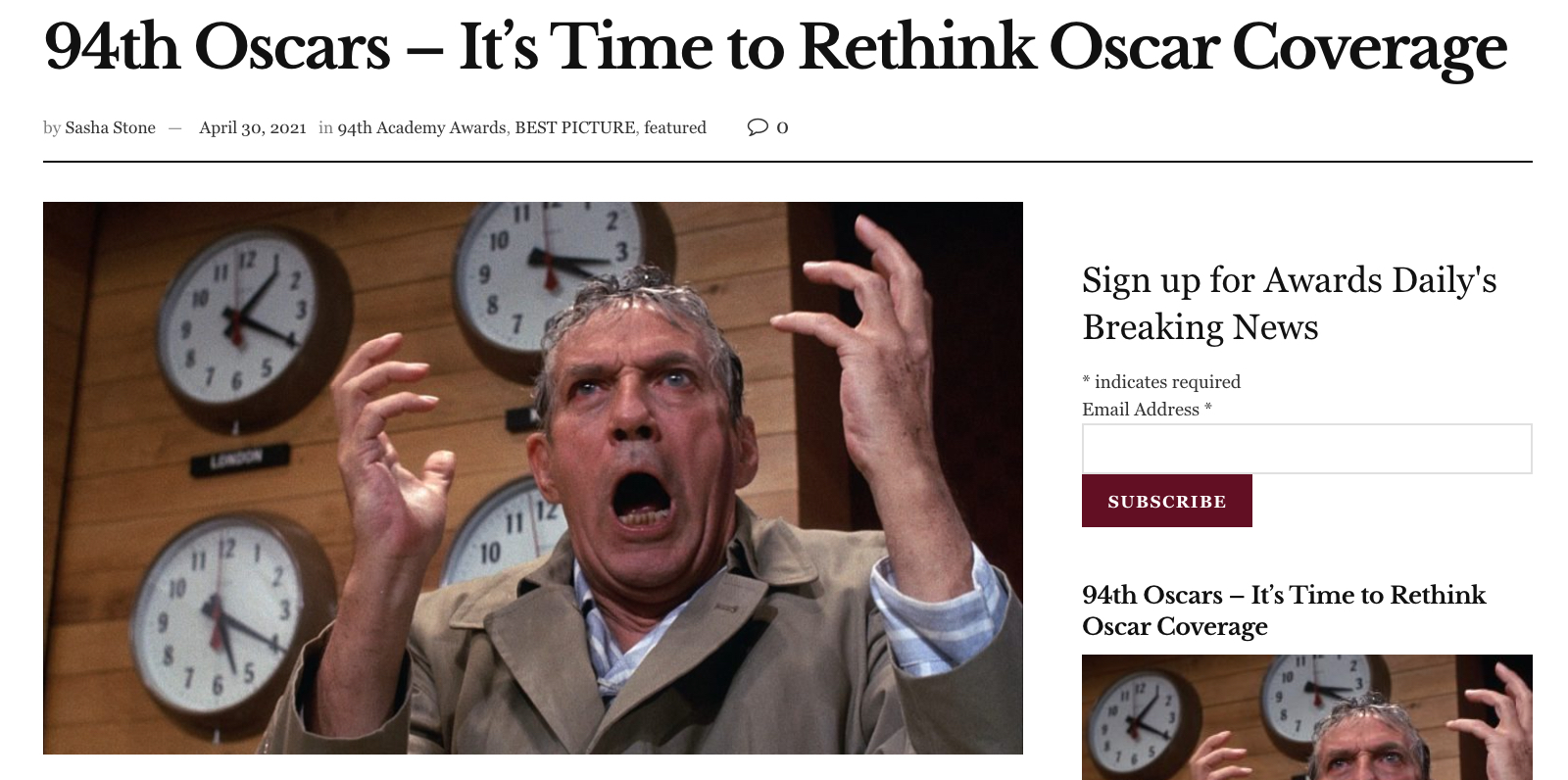
The following excerpt from Sasha Stone‘s “94th Oscars — It’s Time to Rethink Oscar Coverage” (4.30) doesn’t once mention the “w” word. Nor does she mention the legacy of Maximilien Robespierre or allude to new-styled blacklists or HUAC committees, etc. So HE readers who get upset or annoyed or threaten to abandon this site when the concept of woke terror is mentioned can rest easy:
Sasha: “Where bloggers were once the outspoken ones, the ones willing to puncture the status quo and say what couldn’t be said, now they have become hamstrung and silenced out of fear.
“If, say, Scott Feinberg or Kyle Buchanan or even Anne Thompson ever dared speak out about the things that all of us see going on [every day] ** — if they ever started to puncture the status quo the way bloggers used to do way back when — they’d be out of a job by the end of the day. If Next Best Picture’s Matt Neglia or Will Mavity stepped outside of the Twitter ideology for even a minute, both would be viciously attacked and eventually tossed onto the shunned pile.
“No one in the real world cares all that much about their online platform but if you work in any kind of media, content or entertainment you have to. You are under the thumb of the hive mind. You have only one option: total compliance. ‘When you have ’em by the balls, their hearts and minds will follow.’
“Not only is dissent not allowed in film coverage — it isn’t allowed in news either. Even if the regular person out there doesn’t pay attention to Twitter, what they’re seeing around them is shaped by Twitter — CNN, MSNBC, the New York Times, the Washington Post — all of it is under the thumb of the tiny minority of Twitter users who control 80% of the content.
“They are purists, they are strident and they will come for you if you slip up even once. Sure, you can offer the withering apology. That is always an option but in general, they will keep coming at you, scrutinizing your past for any offense and going in for the career kill.
“Even the little bit of pushback I have been doing has essentially blackballed me from Film Twitter. David Poland has been likewise purged and shunned from Film Twitter for having slightly controversial views. Jeff Wells has been stripped of his Broadcast Film Critics membership for posting an anonymous conversation that was deemed offensive. I have to wonder what David Carr would make of today. Would he pander to the hive mind out of fear? Would he be outspoken? Would he be fired?
“Wells and Poland were among the few who helped launch Oscar blogging in the early days” — late ’90s. “It isn’t that they’ve stopped writing what they think — they do. It’s just that Twitter pays little attention to them because what Twitter wants from them is something they can no longer give, and it’s something I can no longer give: total compliance. It’s just not happening for those of us from a different generation who remember what it was like to get noticed for being controversial.”
…and take a nice friendly pass on Physical, a half-hour Apple series set to debut on 6.18? It’s apparently just another self-empowerment saga aimed at women of a certain age, set in the ’80s and starring Rose Byrne, etc.
I’m only saying that the trailer for Perfect (’85) persuades that despite being one of James Bridges‘ lesser efforts, it’s clearly a smarter, sharper, more handsomely produced A-level film than Physical ever dreamt of being. Obviously — you can tell immediately.
(A year earlier Bridges’ Mike’s Murder, a Los Angeles-based love story-slash-drug murder film with a lead performance from Debra Winger that becomes more poignant every time I re-watch it, received a bungled, half-hearted release from Warner Bros.)
I saw Perfect once 36 years ago, and I don’t recall anyone gasping or doing handstands or backflips. I shrugged it off, never gave it a second think. But I’d much rather sit through it again than watch Byrne reinvent herself as a celebrity gymnast while working out to “Video Killed The Radio Star.”
I’ve just watched these two scenes from Brian DePalma‘s Carlito’s Way (’93), and they seemed fresh as a daisy. Here’s the reason: I have excellent recall of the films I like and therefore want to recall. I’ve therefore remembered almost nothing about Carlito’s Way. I didn’t hate it, mind — I was “meh.”
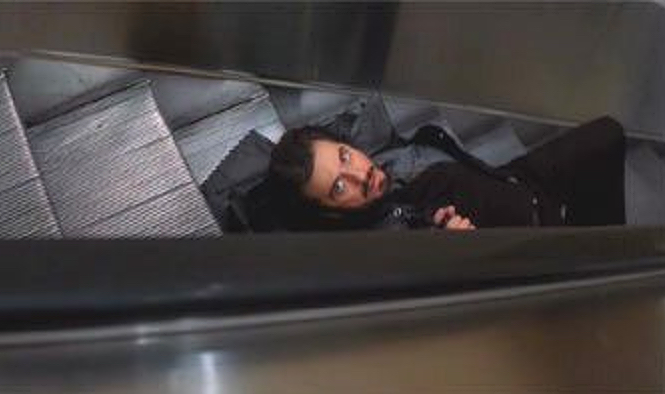
I’ve seen it exactly once, and I remember two things about it — (a) Sean Penn‘s light brown frizzy Jewfro (i.e., Alan Dershowitz) and (b) Al Pacino hiding from the bad guys on an going-down escalator by lying down on a going-up parallel escalator.
From “De Palma Getting Gold-Watch Treatment,” posted on 9.10.15: “DePalma was a truly exciting, must-watch director from the late ’60s to mid ’70s (Greetings to The Phantom of the Paradise to Carrie), and an exasperating, occasionally intriguing director from the late ’70s to mid ’90s (Dressed To Kill, Scarface, The Untouchables, Carlito’s Way, Mission: Impossible, Snake Eyes).
“De Palma is one of the most committed and relentless enemies of logic of all time. For a great director he has an astonishing allegiance to nonsensical plotting and dialogue that would choke a horse. I tried to re-watch Blow Out last year — I couldn’t stand it, turned it off. The Fury drove me crazy when I first saw it, although I love the ending. I found much of Dressed To Kill bothersome when it first came out 35 years ago, and to be honest I haven’t watched it since.”
8:40 pm: Nobody expected the 2021 Oscars to be anything too special or riveting, but I was intrigued by what Soderbergh might do with it. Whatever he did, it sure as hell wasn’t like a movie. As the show finally turned out, it was just kinda “meh” and not funny or pizazzy enough and the only big surprise, really, was the Hopkins win. How did Viola Davis manage the Best Actress SAG win while losing the Oscar? The simplest answer is that SAG-AFTRA allegiance is not synonymous with Academy worship.
8:10 pm: Time for the keenly awaited Best Actress presentation — the big moment. And the Oscar goes to Frances McDormand! Okay, that’s a wee bit disappointing. But okay — Nomadland‘s third Oscar, and McDormand’s third also. “And I like work…hah-hah! Thank you for that.” And The Father‘s Anthony Hopkins wins for Best Actor! The show was jiggered to end on a big emotional note with Chadwick Boseman winning, and then Hopkins takes it and he doesn’t show up. And the show’s over. They managed to push the running time to 3:17 without songs or dancing or a jokey monologue.
8:01 pm: Wait…Rita Moreno is presenting the Best Picture Oscar now? Before the Best Actor and Best Actress presentations? Okay — the second Nomadland Oscar. I’m fine with this. We all expected it. It’s a well-made film. Fran’s coyote yell worked. That and “see this movie on the biggest screen,” etc. Who expects to see an IMAX version of Nomadland sometime this summer?
7:57 pm: The pace of the death reel was steady at first, then it went faster and faster, and then it slowed down at the end to acknowledge the passings of Sean Connery and Chadwick Boseman. They seemed to include everyone. I guess the show is going to last 3 hours and 15 minutes, something like that. No worries on this end.
7:37 pm: Zendaya presenting the Best Score Oscar, and the winner is Soul. Jon Batiste is cool. H.E.R. wins the Best Song Oscar for Judas and the Black Messiah — “Fight For You.” What’s with all the time-killing chit-chat…the padding? At least Glenn Close is getting into it.
7:27 pm: Tyler Perry accepting the Jean Hersholt Humanitarian Award. “Refuse hate…don’t hate anyone,” he says, “because they’re black or white or Asian,” etc. How about wokesters not hating centrist types? How about not trying to destroy the lives of people who aren’t woke enough, or who might have tweeted the wrong thing ten years ago? Do they count?
7:18 pm: Time for the Best Editing Oscar. How is silvery Harrison Ford going to play Indiana Jones again? He seems a bit frail; sounds wheezy. Wait…Sound of Metal wins! Who saw that coming? Congrats!
7:07 pm: The Best Cinematography Oscar goes to Mank‘s Eric Messerschmidt! That’s a bit of a surprise, no? Friendo: “So now things get interesting. Will Nomadland only win Best Picture and Best Director? Will it win best Editing also? Will McDormand win through?”
7:05 pm: We’re now in the final hour (55 minutes to go), and Mank has won the Best Production Design Oscar…congrats! Why does this show have no clips?
6:56 pm: Brad Pitt hands the Best Supporting Actress Oscar to Yuh-Jung Youn, the spunky Minari grandma who burned the barn down. The first Asian actress to win in this category since Sayonara‘s Miyoshi Umeki, and the first Korean actress ever. She’s going on a bit. An elegant lady, nicely dressed, amusing…class act.
6:51 pm: The Visual Effects Oscar should go to Tenet, I feel, and it does!
6:40 pm: Time for My Octopus Teacher to win the Best Feature Documentary Oscar…right? Correct. What happened to “this show will feel like a movie?” I thought that meant that nominees and winners would perform snappy dialogue with the camera darting in and out. I thought that meant that some kind of light narrative would develop. Something along those lines. The winning Octopus couple is going on and on. Friendo: “Oh, for the days of Joe Pesci when a simple ‘Thank You’ was sufficient.”
6:35 pm: Best Documentary, Short Subject Oscar goes to Colette. I’m sorry but this show is just plodding along…it’s not zippy, funny, nervy, irreverent. The tone of sincerity mixed with “earnest” and “heartfelt” is almost suffocating. It feels like a meeting of kindly, friendly Trotskyites in formal wear.
6:26 pm: Reese Witherspoon reading off the Best Animated Feature nominees. I’m sorry but I hate animation. The Oscar goes to Soul — a film that I didn’t much care for. Excerpt: “Soul betrays its audience by (a) encouraging them to identify with and believe in Joe Gardner‘s long-denied dream about becoming a jazz musician instead of a frustrated middle-school music teacher, only to (b) pull the rug out on Joe’s dream in Act Three and end things with Joe feeling uncertain about what he really wants to do with his remaining time on earth. Possibly jazz, possibly teaching…who knows?”
6:15 pm: Two Distant Strangers wins for Live Action Short. We are reminded that cops will continue to shoot people of color on a disproportionate basis. The Best Animated Short winners (“If Anything Happens I Love you”) also deplore gun deaths at the hands of police.
6:12 pm: This show doesn’t feel “like a movie” at all. It feels like a dud-level Kiwanis Club awards event in a mid-sized restaurant. The vibe is pure Spirit Awards, but without the jokes. The most touching acceptance speech so far has been given by poor Thomas Vinterberg (what a terrible loss) — the others have been (here comes that word again) solemn.
6:08 pm: And the Best Sound Oscar, announced by Riz Ahmed, goes to Sound of Metal….thank you! Fully and completely deserved, if I do say so myself.
5:59 pm: The Best Directing Oscar goes to Nomadland‘s Chloe Zhao. Her hair is quite ungussied and un-styled — middle part, Pocahantas braids, large ears. She’s wearing a somewhat plain gold-champagne colored gown with white sneakers. Where’s the jean jacket?
5:47 pm: I have to be honest — the Soderbergh Oscar atmosphere feels a bit curious. Solemn, doleful, downbeat, no jokes. Emphasis on the solemn. In years and decades past, the Oscar elite (nominees, plus-ones, ticketed guests) were the usual Anglos with a smattering of Black, Latino, Asian, etc. Tonight the visuals are diverse-plus…mostly (am I allowed to notice this?) people of color, it seems, with a smattering of palefaces. Okay, more than a smattering but fewer, for sure. 60-40? Plus the absence of jokes and general mirth…what can I say? The words “fun” and “lively” will not be used to summarize this show after it’s over.
5:42 pm: Best Makeup and Hairstyling goes to Sergio Lopez-Rivera, Mia Neal and Jamika Wilson for Ma Rainey’s Black Bottom. And Ma Rainey‘s Ann Roth wins the Costume Oscar.
5:38 pm: I have to admit that those clips of Steven Spielberg‘s West Side Story (due eight months hence) are alluring. A little Robert Wise-y, but more arthousey. The cinematographer is Janusz Kaminsky, but the default milky desaturated thing has been put aside.
5:28 pm: Dern again, presenting the Oscar for Best Supporting Actor…Daniel Kaluuya, Leslie Odom, Jr., Lakeith Stanfield, Paul Raci, Sascha Baron Cohen…and Kaluuya wins, as predicted. I would’ve chosen Stanfield, as indicated previously. Kaluuya’s thick accent, fast slurring and murmuring, heavyish appearance, etc. He was too old to play the 21 year-old Fred Hampton, and didn’t resemble him otherwise. Nobody minded.
5:21 pm: Laura Dern announcing the winner of the Best International Film Oscar. HE is rooting against Another Round, due respect, and for Quo Vadis, Aida or Collectiv. Thomas Vinterberg‘s Another Round, an underwhelming film, wins. Vinterberg alludes to his (and more particularly his daughter Ida‘s) highway tragedy in 2019. Very sad….”Ida, this is a miracle that has happened, and you’re part of it…this one’s for you.”
5:08 pm: Despite the last-minute Bo Burnham switcheroo at the end of Promising Young Woman, Emerald Fennell wins for Best Original Screenplay. An omen that might indicate a Mullligan win later on? These origin-story speeches are definitely going on a bit. Best Adapted Screenplay Oscar about to be announced…and the Oscar goes to the co-writers of The Father, Christopher Hampton and Florian Zeller. Zeller, speaking from Paris at 2:14 am, is holding an Oscar statuette. Makes logistical sense.
5:04 pm: One Night in Miami‘s Regina King tracking shot through the sparsely attended Union Station festivities, and then up to the stage. First thing out of her mouth — this has been a painful year and people of color are not safe, or words to that effect — “This of this as a movie set…” Friendo: “Mentioning racial anxiety at the very beginning of the telecast…millions of Americans just switched to the other channel.”
2:42 pm: HE’s live-blog commentary on the lowest rated, most who-gives-a-shit? Oscar award ceremony in Hollywood history (although possibly the most inventively staged and written, courtesy of Steven Soderbergh) begins at 5pm Pacific / 8 pm Eastern. Tune in, turn on, check your tweets.
Here’s one reason why Hollywood Elsewhere has such a high regard for Spectrum service:
4:45 update: Signal issues persisted, so I downloaded the Spectrum app on my Apple TV box and am now using this — good to go.
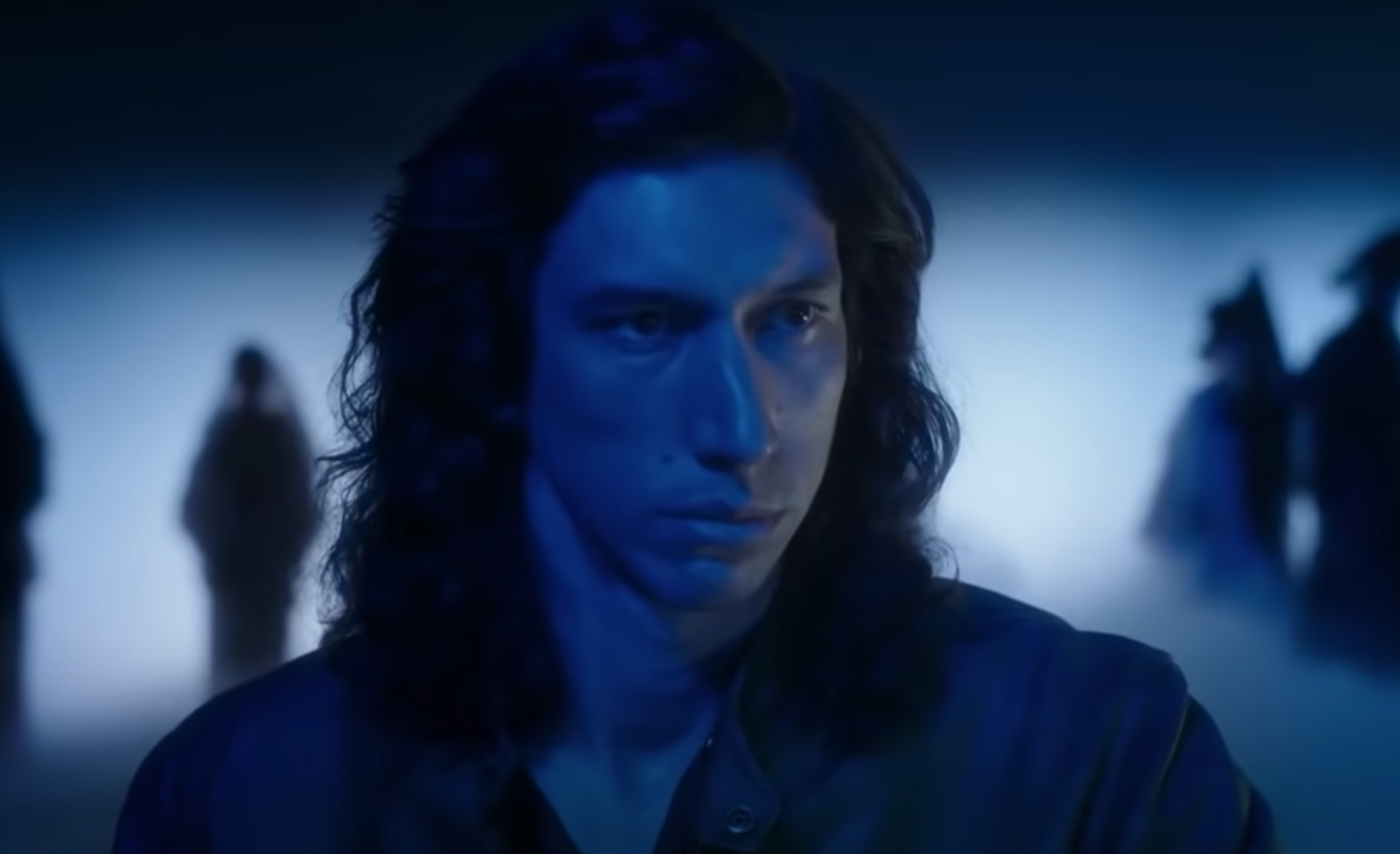
Leo Carax‘s Annette (7.6.21) is about how the lives of a stand-up comedian (Adam Driver) and his world-famous soprano wife (Marion Cotillard) are jarred and turned around when they discover that their daughter Annette has been born with a unique gift.
The trailer doesn’t say what the gift is, but it might have something to do with…you tell me. Nice tease. Great looking film.
Filming began in August 2019 (Los Angeles, Brussels, Bruges, Münster, Cologne, Bonn), and wrapped in November of that year.
So according to Esquire‘s Tom Nicholson, a British writer, the top two Best Picture Oscar winners — the most highly placed, best liked and most revered by today’s standards — are Moonlight and Parasite. This is how things are right now.
I’m telling you right now Nicholson needs to be straightened out and maybe even slapped around. This kind of thinking…words fail. I worship Hitchcock’s Rebecca but it can’t be proclaimed as the fourth-best…stop it! Amadeus and The Shape Of Water in the top 20? Get outta here! And Moonlight at #1? This is almost too asinine to take potshots at. Nicholson’s list is beyond ridiculous — an expression of woke mental illness.
Herewith is my own Best Picture Oscar Winner list, and I’m certainly going to use the criteria that most…okay, a significant percentage of winners have fulfilled or satisfied to some degree, at least in an aspirational sense in addition to the usual political motives and moment-in-time considerations…
Not just (a) films that sought to achieve (and in some cases DID achieve) a stand-alone, movie-craft refinement or at least a kind of declarative, honed-down clarity or wholeness on their own terms, or…
(b) Films that captured or reflected something poignant (at least in passages) about the times in which they were made, but most fundamentally…
(c) Political winners-of-the-moment that hit or touched certain emotional G-spots that moved large swaths of the culture (not just the Hollywood community but moviegoers all over), movies that said “this, to some extent, is a concise, respectable and in some cases profound presentation of who and what we are, or at least what we’ve recently been through or would like to be…this Best Picture winner contains pieces of our saga, shards of our collective soul, elements of who we believe we are or would like to be deep down.”
The difference between then and now, of course, is that the “large swaths of nationwide movie culture” aspect has been removed — today’s Oscar nominees are totally about the uncertainties and preferences of a small community of terrified political sidesteppers who don’t know what to say or think but are totally terrified by what might happen if they say (or even think) the wrong thing. The sentiments of the rest of the country has been a side issue for a good 20 to 25 years…be honest.
Reasons to disagree or tell the Esquire guy to go fuck himself…
In some respects Gone With The Wind is a racist relic, obviously, but it still matters and is, in fact, still great because of the last half of Part One (the agony of battered Atlanta to “I’ll never be hungry again!”) and because it is NOT, in a deep-down sense, a saga of the Civil War but a reflection of the deprivations and terrible hardships of the Great Depression. And so I will certainly include Gone With The Wind somewhere in the top 30….you can beat me with bamboo sticks all you want but Hattie McDaniel‘s Mammy, at least, was a vivid and passionate human being who took no shit from anyone, least of all from Scarlett O’Hara.
Green Book is not a great film, but I will not dismiss or degrade it in any way, shape or form. It also belongs in the top 30.
And I must again remind that the last third of Moonlight (and particularly the casting of Trevante Rhodes) doesn’t work at all (sustained for years by one adolescent handjob on the beach!) and that it won largely if not entirely because of a collective, politically-driven, industry-centric need to refute the #OscarsSoWhite meme.
And I will certainly not give Parasite a high ranking because of the stupidest plot turn in the history of Best Picture winners…because of that drunken family of con artists deciding to admit into the home THE ONE PERSON ON THE FACE OF THE PLANET WHO COULD & ALMOST CERTAINLY WILL BLOW THEIR SCAM OUT OF THE WATER…cut the shit and admit that Parasite won because the industry wanted and needed to celebrate a filmmaker of color as well as a charming genre purveyor (monsters! a giant pig! a runaway train!)…a director who was a much better fit in these times of necessary wokeness than Martin Scorsese and his aging goombahs and his “Wild Strawberrries with handguns”…nope.
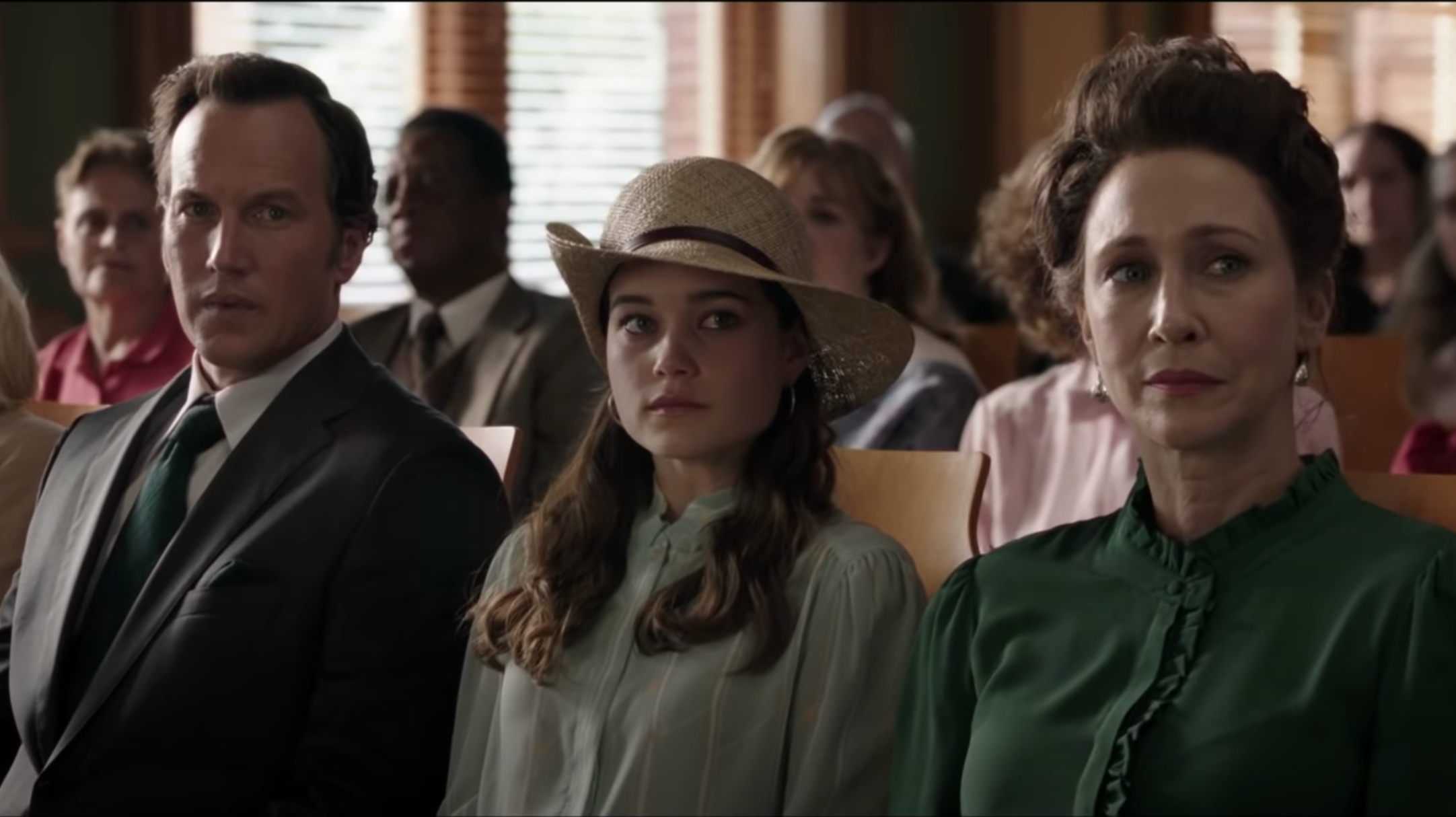
Time to re-invest in the ongoing saga of Ed and Lorraine Warren, who have both passed away in actuality. The Nun, Annabelle: Creation, Annabelle, The Conjuring, Annabelle Comes Home, The Curse of La Llorona, The Conjuring 2, The Conjuring: The Devil Made Me Do It…people keep paying and paying, the Conjuring players keep investing their money wisely, etc.
Patrick Wilson and Vera Farmiga show up, hit their marks, say their lines and people pay. So they do another one and people pay, etc.
The Conjuring Universe franchise “has grossed a combined $1.9 billion against a combined budget of $139.5 million, becoming the second highest-grossing horror franchise ever behind Godzilla.” I’m presuming that Wilson and Farmiga have serious points.
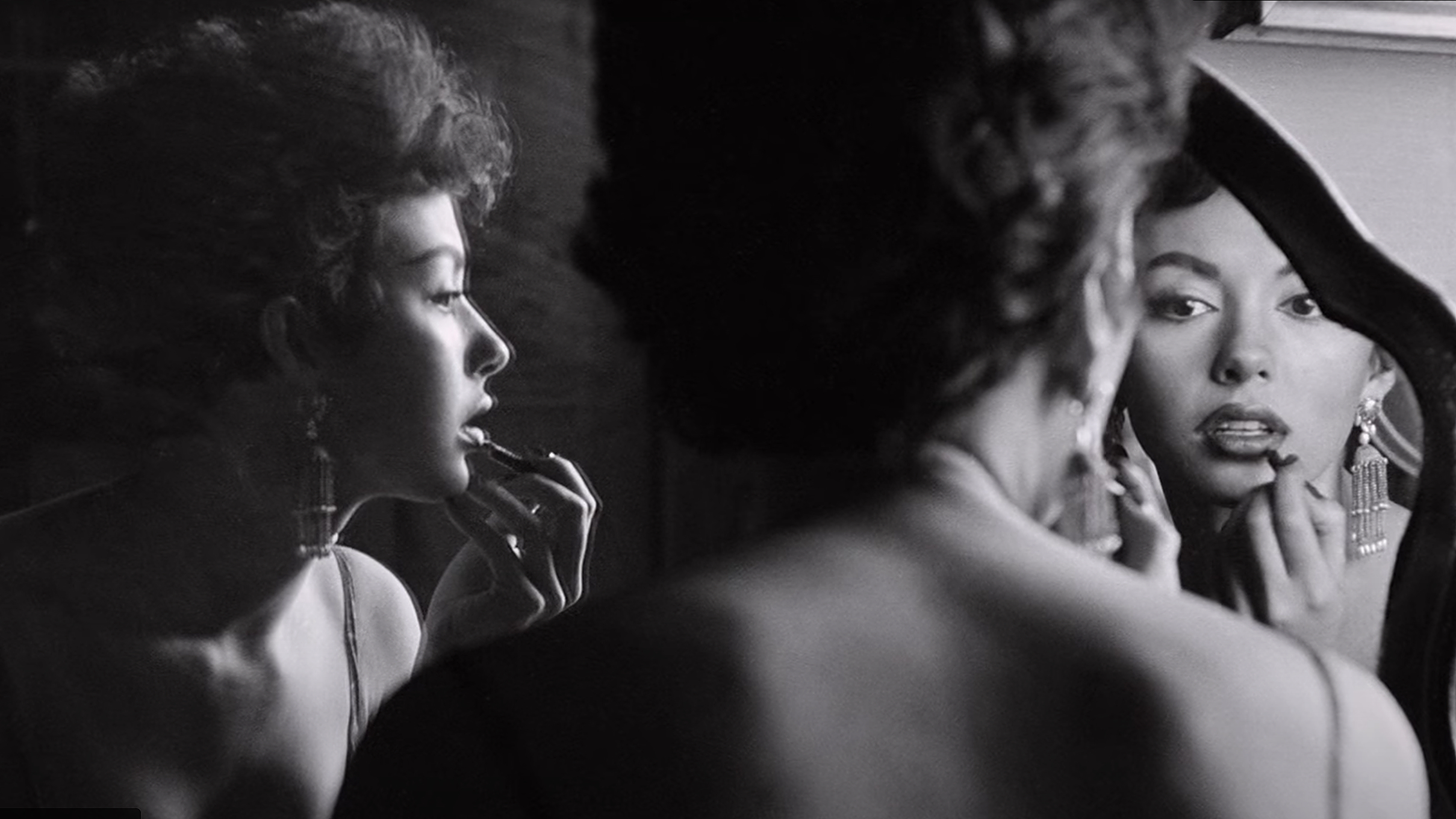
Posted on 2.1.21: The tone of Mariem Pérez Riera‘s Rita Moreno: Just a Girl Who Decided to Go for It is very “go, Rita… we love and cherish you”, etc. Which is great — it’s what every positive-minded doc about a long-haul, never-say-die actress should be like.
But it also plays the victim card over and over. It ignores the way things were when Moreno was coming up in the ’50s, and it tips in the direction of instructional 21st Century progressive feminism. It’s totally infused with “presentism” — judging the past by present-day standards.
It’s not about how Moreno’s life unfolded on a moment-to-moment basis when she was coming up and making her name and building her career, but about how badly she was treated and what assholes the various men were. Which they WERE, of course, but the ’50s were not a time of enlightenment as far as recognizing the full value of women in any realm was concerned. Moreno had a tough time because of that.
Yes, the film industry was sexist, exploitive, insensitive…unable or unwilling to see Moreno as a unique Latina with her own identity and contours. Yes, it was a bad place in many respects, but then again she was close to the top of the industry in the ‘50s.
How many dozens or hundreds of other Latina actress dancers were hungry to be cast in the roles that she landed? How many others were as talented? Or making as much money? (There was a reason that she got the Anita role in West Side Story rather than Chita Rivera, who played the spitfire character on Broadway.) How many Puerto Rican-born actresses were hanging out with Marlon Brando in the ’50s and early ’60s and running in that heavy company? Or attending the 1963 Civil Rights March? And having a side affair with Elvis Presley and rubbing shoulders with almost everyone who mattered back them?
Yes, she really got going as a stage and character actress in the ‘60s, ‘70s and beyond. Yes, she was on The Electric Company and Sesame Street and Oz. Yes, she’s costarring in the Norman Lear reboot of One Day At A Time, etc.
It’s a bit curious, by the way, that Riera has decided to ignore Moreno’s big scene with Jack Nicholson at the end of Mike Nichols‘ Carnal Knowledge (’71). It’s one of her hallmark moments, and yet Riera dismisses it because…you tell me. She also ignores Moreno’s Presley affair, which was basically about making Brando jealous.