“CODA” Confidential

Hollywood Elsewhere saw Sian Heder ‘s much-adored, Sundance award-showered CODA this morning. It’s moderately appealing and nicely made for the most part. Understand, however, that it’s an “audience movie” — aimed at folks who like feel-good stories with heart, humor, romance and charm.

It’s about a shy Gloucester high-school girl named Ruby (Emilia Jones) with a decent if less than phenomenal singing voice. She’d rather attend Boston’s Berklee College of Music than work for her deaf family’s fishing business, we’re told. The film is about the hurdles and complications that she has to deal with in order to realize this dream.

CODA is one of those “real people struggling with life’s changes and challenges” flicks, but given the fishing-off-the-Massachusetts-coast aspect it’s fair to say it’s no Manchester By The Sea — trust me. It’s a wee bit simplistic and schticky and formulaic -— okay, more than a bit — and contains a fair amount of “acting.”


Emilia Jones in Sian Heder’s CODA.

For my money Jones overplays the quiet, withdrawn, still-waters-run-deep stuff, but it’s an honest performance as far as it goes — she has an appealing, unpretentious rapport with the camera. Eugenio Derbez‘s performance as an eccentric, Mexican-born music teacher is probably the film’s best single element. Bearded, baggy-eyed Troy Kotsur and 54 year-old Marlee Matlin are engaging as Ruby’s live-wire parents.

Matlin and Kotsur are the source, actually, of some clunky sexual humor (frisky parents noisily going at it during the late afternoon, randy Kotsur urging chaste Ruby to make her boyfriend wear “a helmet” during coitus, that line of country). Except the jokes don’t really land, or at least they didn’t with me.

In a phrase, CODA is not a Guy Lodge film.

But CODA is an okay film. It works here and there. It didn’t give me a headache. I can understand why some are enthusiastic about it. It deserves a mild pass. Heder is a better-than-decent director.

Friendo: “It’s a by-the-numbers family romcom with an added progressive-minded openness for the deaf.”

(Posted from iPhone while waiting in line at the Tijuana border, heading back into the States.)

Another Sundance Pop-Through

Hollywood Elsewhere won’t be able to stream Rebecca Hall‘s Passing until Wednesday, 2.3. But I’m reading and hearing things. Based on a same-titled 1929 book by Nella Larsen and mostly set in 1920s Harlem, Passing is about a married woman of color — Ruth Negga‘s Claire Kendry, whose blonde hair and half northern-European features allows her to pass for white, which was deemed desirable 90-odd years ago.

Claire’s racist husband Jack Belew (Alexander Sarsgard) believes her to be as white as Calvin Coolidge. This, I’m told by a colleague who’s seen it, is a stumbling block. The story focuses on the reunion of Kendry and Irene Redfield (Tessa Thompson) and a subsequent attraction that kicks in and leads to tragic consequences.

Friendo: We’re supposed to believe that Skarsgard, Negga’s very racist husband who uses the N-word freely, is completely oblivious to the fact that his wife may have some black ancestry. He believes he married a 100% white woman.
HE: But Negga, though light-skinned and wearing a blonde wig in the film, is obviously mixed race to some degree. Just ask those scurvy racist crackers in Loving — they did everything they could to break up her marriage to Joel Edgerton. Oh, and I love that Passing was shot in black and white.
Friendo: The film is very well made, but its biggest flaw is the implausibility I mentioned. There is no way a racist husband would not realize that Negga has at least some African-American blood. He even mentions that he hates “them” even if they have a small fraction of non-white DNA.
HE: Jessica Kiang’s Variety review was unqualified in its praise. In her view, the movie is nothing short of heavenly.
Friendo: I assume Coda, Summer of Soul and Passing will all be winning something by the end of the festival.


Tessa Thompson (l.), Ruth Negga (r.) during filming of Rebeca Hall’s Passing.

HE Respect for “Land”s” Demian Bichir

HE to Demian Bichir (sent on 1.15.21):

Greetings, bruh. Long time, hope you’re good. I was very moved by your sad Deadline essay about poor Stefanie. I’m so sorry for what befell her. Very few of us seem to acknowledge, even privately, how tenuous and fragile our hold on stability or safety is, much less happiness. I’m so sorry.

By the way I liked you a lot in Robin Wright‘s Land, which I saw last night. I’m glad Robin chose you, believed in you. Your humanity came through. I didn’t think it was dramatically satisfying or appropriate for your character to [spoiler info]. I liked your character and valued his presence, and so I felt irked and cheated by [spoiler info].

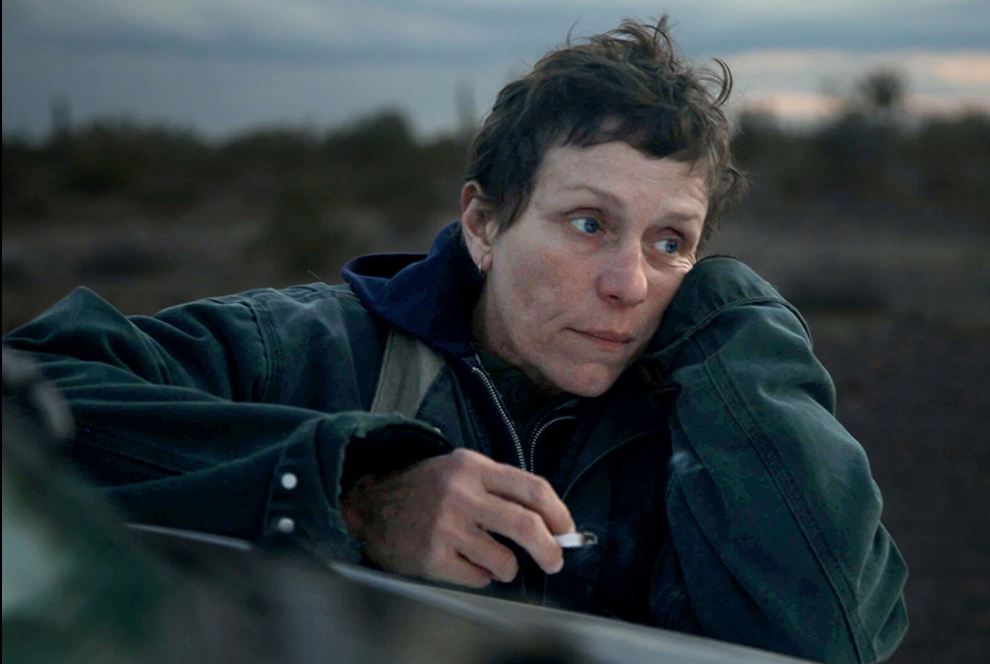
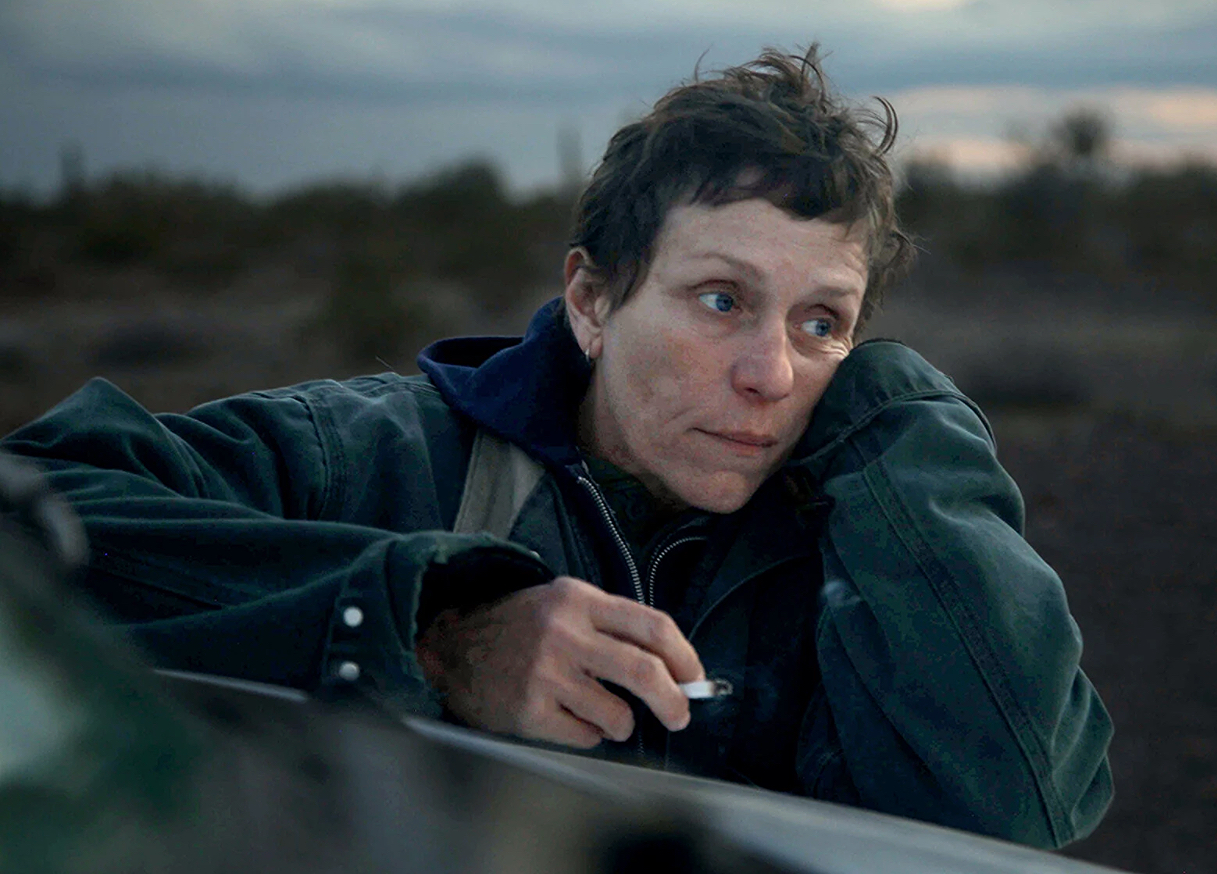
But I also have to say that while I respect Wright’s attempt to offer some kind of comment about soul-cleansing isolation and to carve out some kind of naturalist ethos, I really didn’t care for her character, Edee Mathis, at all. Robert Redford‘s Jeremiah Johnson was human and relatable — Edee isn’t. What a profoundly stupid, self-involved, slow-to-awaken woman…she loves her isolation and her general disdain for other people too much. She doesn’t even keep her SUV near her cabin in case there’s an emergency? Idiot!

When you and your sister (Sarah Dawn Pledge) found Edee lying on the floor of her cabin, starved and half-frozen and near death…I’m sorry to share this but on another level I’m not. When you found her like that I was thinking “this idiot did this to herself out of flat-out stupidity and arrogance, and so by the laws of nature and natural consequence”…I probably shouldn’t say this but I was thinking that if she passed it would be more interesting than if she’d lived.

There’s a moment in which Edee looks at your character and says with a slight tone of suspicion, “Why are you helping me?” After you and your sister have literally saved her form the jaws of death, she looks you right in the eye and asks why, and with a vaguely snippy tone to boot. When a viewer feels this negatively about the central character in a film…well, it’s not a good thing. Even a nominally “bad” character can enlist audience sympathy if the film is handled right. I felt more emotionally supportive of Michael Corleone in The Godfather, Part II than I did for Edee Mathis. I felt more compassion for Boris Karloff‘s monster in The Bride of Frankenstein.

If Edee had died in her cabin I would have said to myself “tough break but just desserts…this is the law of life and survival…now Edee will never have to deal with another human being ever again.”

Read more

Spelled by Severe Snowstorms

Nothing matches the excitement of being half-buried by a perfect white snowscape, and the cozy pleasure of staring at falling snow from inside a warm home. I’m generally less transported when a big snowfall starts melting but until that point, it’s like I’m eight years old again.

Read more

“Appalled” Harvey Finally Responds to Mulligan Kerfuffle

After a period of curious silence, Variety critic Dennis Harvey has finally spoken out about Carey Mulligan’s objection to a portion of Harvey’s 1.26.20 review of Promising Young Woman, which many have interpreted as a disparagement of Mulligan’s attractiveness.

Variety‘x mea culpa: “Variety sincerely apologizes to Carey Mulligan and regrets the insensitive language and insinuation in our review of Promising Young Woman that minimized her daring performance.”

Variety‘s apology didn’t appear until Mulligan complained to the N.Y. Times‘ Kyle Buchanan in a 12.23.20 profile.


Carey Mulligan in Promising Young Woman.

The Guardian‘s Catherine Shooard speaking to Harvey in a 1.28.21 article:

“I did not say or even mean to imply Mulligan is ‘not hot enough’ for the role,” Harvey has told Shoard. “I’m a 60-year-old gay man. I don’t actually go around dwelling on the comparative hotnesses of young actresses, let alone writing about that.”

Harvey added that he has been “appalled to be tarred as misogynist, which is something very alien to my personal beliefs or politics. This whole thing could not be more horrifying to me than if someone had claimed I was a gung-ho Trump supporter.”

Harvey said “he avoided the social media discourse triggered by the fallout on the advice of Variety, who said it would “blow over”, and friends who said nobody commenting appeared to have read the review and that some people had said “I must be advocating rape, was probably a predator like the men in the film.” Good God! There’s no terror like that of the Khmer Rouge. They’ve made plastic suffocation bags fashionable again.

Harvey has also questioned the timing of the controversy, as Hollywood Elsewhere has two or three times. He’s noted that his review “had apparently been found unobjectionable enough to escape complaint for 11 months, “until the film was finally being released, promoted and Oscar-campaigned”. Only then [was] his review was “belatedly labelled ‘insensitive’ and flagged with an official ‘apology’”.

Variety’s editors “had not raised any concerns with the review when he first filed it,” Harvey tells Shoard, “nor in subsequent months until [Buchanan’s New York Times article [appeared].”

Harvey’s professional fate “remains uncertain,” Shoard writes. Harvey: “It’s left in question whether after 30 years of writing for Variety I will now be sacked because of review content no one found offensive until it became fodder for a viral trend piece.”

Read more

Alexander Loves Aroma of Earthy “Tiger”

Hollywood Elsewhere to Scott Alexander: Don’t shit me.

In France they kiss on Main Street, and in India they poop whenever the mood strikes, and right out in the open. And then they laugh about it.

It all started yesterday with HE positive reaction to The White Tiger. Which was followed by the following Alexander post on Facebook:

HE to Alexander: Did you like the “laughing uproariously while squatting and shitting” scene, Scott? I ask because the photo above is from this exact moment in the film. Squatting and shitting is what the main protagonist is laughing about. He and some other laughing, sophisticated fellow.

I thought it was…uhm, mildly appalling. But then I’m a prissy metrosexual dandy type. I wish I could say that the memory of this scene will fade, but it won’t. It’s been burned into my brain. Or smeared, I should say.

When was the last time you, Scott Alexander, defecated in public while enjoying a hearty horse laugh? I myself have never done this. Oh, it’s never done in Los Angeles, you say? It’s a lower-caste Indian culture thing? Okay. Well, it sure was exotic!

Maybe it’s just a matter of cultural conditioning. We all tend to nature on a daily basis — why not do it publicly and laughingly?

What if American cinema had at least acknowledged public shitting as something that happens from time to time? What if, say, Cary Grant had decided to drop a deuce by the side of the road during the crop-dusting scene in North by Northwest? What if Dana Andrews had taken a big steaming dump while inspecting those old dusty WWII bombers near the end of The Best Years of Our Lives? What if Gary Cooper had decided to (heh-heh) mark his territory in the middle of Main Street in High Noon when Grace Kelly and Katy Jurado were clopping by in a horse wagon? “Do not forsake me, oh my darlin’…”

Working Class Hero

“White people are on their way out. This is the century of the brown man and the yellow man. I’ve broken out of the coop.” Translation: Kill your masters and don’t look back.

Based on a 2008 novel by Indian author Aravind Adiga, Ramin Bahrani‘s The White Tiger (Netflix, 1.22) is a Nicholas Nickleby-like saga of a low-born, small-village grinning wannabe, Balram Halwai, who hustles his way into a chauffeur gig in Delhi, and then on to Bangalore, where he launches his own taxi business after [spoiler hide] and stealing his cash.

It’s basically about class divisions In India — appalling poverty, Hindu vs. Muslim, caste, loyalty, corruption, payoffs, outsourcing, hunger.

Notes as I watched: “A hungry, clever, intelligent young man from a lower caste learns the rules of the game, figures out the angles, turns a bit ruthless, makes his way up the ladder, gets what he wants.

“Bahrani is an excellent director. The native Indian atmosphere is rich and fascinating, the film is well-edited and nicely shot. A complex tale of ambition, corruption, hunger and lust for power. Inch by inch, rung by rung, darker and darker. Learn to smile as you kill.

“I know where this film is going. By hook and by crook, Balram is going to make it. Even if it requires the unfortunate murder [spoiler stuff]. It’s a Dickens tale with a touch of O Lucky Man. The long journey, the long road and all the potholes along the way.

“But I have to ask everyone who’s told me that I have to watch this, what’s the big deal exactly? I mean, it’s quite the class-A package, quite the immersion, very good writing, a respectable effort….a window into the real, rough-and-tumble India. But what am I supposed to do with it exactly?

“Nicholas Nickleby as a smiling and obsequious but surprisingly ruthless fellow in the end. Who doesn’t appear to be smart enough to even bury the body. Or bleach his teeth. Much better than Danny Boyle‘s Slumdog Millionaire, but that’s not saying a great deal.

“Only two ways to the top. Crime or politics. Is it that way in your country too?

Friendo: “It’s an engrossing movie. All about the disparity between rich and poor in India. It’s staggering how the poor live. If it has any flaw, it would be that it’s too short. This could have worked even better as an epic, with an additional hour showing his rise to the top. Call it capitalism run amok. They should have showed him going full-on Scarface in the last third.”

Take The Needle Out Of Your Arm

The Cannes Film Festival guys have confirmed that the usual May timeslot has been tossed. This year the 2021 festival will happen between July 6th and 17th, they’re saying. That’s a little more than five months hence. As I’ve already explained, Cannes in July is a fantasy…a child’s dream. We won’t be free of this hellish Covid nightmare for at least another seven or eight months, if that. We may not be completely shorn of masks until early or even mid ’22.

Let’s imagine that the Cannes Film Festival happens anyway, Covid be damned. They’d still have to enforce social distance seating in the Grand Lumiere, and how the hell would that work? There could be no crowding around the ropes in front of the Salle Debussy. Obviously no gatherings at La Pizza, and no parties to speak of. No crowds of diners jammed together and popping bottles of wine in the restaurant district. No press conferences. Forget it. Next year is the best hope.

Finally Saw “Malcolm & Marie”

Sam Levinson, John David Washington and Zendaya meet John Cassevetes, Ingmar Bergman, Ben Gazzara, Peter Falk, Richard Burton and Elizabeth Taylor in a prolonged, soul-draining, “you give me nothing but pain and lethargy and despair” fuck-you argument film, shot inside Carmel’s “Caterpillar house” and captured on luscious black-and-white celluloid.

Malcolm & Marie (Netflix, 1.29) isn’t half bad as a penitentiary exercise yard film — a “we’ve got some money and a cool location and nothing else to do because of Covid so let’s shoot this sucker and hope for the best.”

It isn’t bad for a two-hander in which the combatants piss into each other’s souls for 106 minutes as they say (a) you’re an obnoxious asshole, (b) you don’t sufficiently value who I am or what I’m about, (c) life is struggle and toil and trouble, and you’d better man up and get used to that, (d) you’d do well to get past yourself and your swollen bullshit ego, etc. Bitter pissed-off resentful wake up go to hell oh God you’re stabbing me in the ribs and kicking me in the teeth, etc.

Not to sound petty but I lost interest when Washington sat down at the dining table and began to wolf down a bowl of macaroni and cheese. I hate it when people wolf their food, on-screen or at home or anywhere. I’d like to add a new Hollywood Elsewhere slogan — “no wolfing of any kind of meal and especially macaroni and cheese.”

The general rule of table etiquette is “always eat sparingly”. Always little half bites, if that. In fact don’t eat at all. In fact, I don’t want to see anyone in a movie eat food ever.

If Cary Grant had sat down in the middle of North by Northwest and started wolfing a bowl of macaroni and cheese, the movie would’ve tanked and his career would’ve been over.

HE to journo pally: Do I understand correctly that you believe Zendaya is some kind of Best Actress contender? Did I miss something? Is this “Be Kind to Marginally Talented Actresses Who Began As Dancers'” month?

She tries to act but she can’t strike a match. Ingrid Bergman, she’s not. She has glassy shark eyes. She has three arrows in her quiver, three modes within her range of expression. Sarcastic belittling attitude pout. Frosty, resentful anger pout. And silent weeping in the bathtub.

Plus her hairline is right on top of her eyebrows. You know how they used to say Claudette Colbert had no neck? And the same about Mickey Spillane? Zendaya barely has a forehead. Okay, she has one in the middle section but not on the sides.

She’s a flavor of the month-slash-flash in the pan who lucked out when Levinson cast her as a druggie in Euphoria, and then Levinson got the idea that she could handle a Liz Taylor in Who’s Afraid of Virginia Woolf-level virtuoso performance. Not on this planet.

Honestly? Washington the macaroni wolfer isn’t that great either. Yes, he’s better than Zendaya but that’s not saying all that much. At least he’s energetic. At least he doesn’t pout.

Did I hate Malcolm & Marie? No, I didn’t. It was okay while it lasted, but it’s nothing to jump up and down about. I occasionally texted while I watched it — I’m just being honest.

You’ll Take It and Like It

A couple of days ago Josh Dickey, a respected entertainment and social media realm editor (Mashable, TheWrap, Variety) and veteran journalistic presence around town, announced on Facebook that he’s embarked on a new career path.

Dickey is now specializing in HVAC/R engineering, or the installment and maintenance of heating, ventilation, air conditioning and refrigeration.

Why is he out of the Hollywood racket? The impression I’m getting is that he’s the wrong color and the wrong age, and is assessing the world in the wrong way. It would appear (and I’m stressing the “a” word) that no matter how smart and highly credentialed they might be, straight, middle-aged white guys aren’t being hired much these days. Especially if the white guy in question is more of a discerning, Bari Weiss-leaning centrist or libertarian than a wokester.

The Khmer Rouge wants to more or less eliminate guys like this, or at least seriously thin their ranks. And if you complain you’ll be laughed out of the room and probably end up in an even worse spot for your trouble.

Here’s how Dickey put it: “Everything you hear about media bias is ten times worse when looking out from the inside, [and] the homogeny of the industry’s worldview had become hostile to my center, libertarian, rugged individualist leanings, a dissonance that was manifesting everywhere I went. ‘They’ wanted me to write about social justice [while] I prefer to seek truth, and so something had to give.**


Josh Dickey, formerly of Mashable, TheWrap, Variety, et.al.

“Not that the media, spattering grease fire that it has become, would have me. I’m not the right make, model and year anymore. That’s not something I’m whining about — it’s just a stone fact. Ten years ago I was beating back recruiters. My resume is a garden of journalistic delights and editorial accomplishments, and I’ll always be proud of those.

But during the past couple of years, I have applied for more than 100 media jobs — roles I was uniquely qualified for — and not a single interview or lead has come of it. I mean crickets, folks. Because, let’s face it, HR won’t look past my LinkedIn profile picture. Not in this climate.”

A year or so ago I passed along an anecdote from an east-coast critic friend who said that a job-seeking colleague had been told point blank by Variety critic Peter Debruge that as far as critic stringer postions are concerened, Variety is looking to only (or primarily) hire women and POCs. When I shared this anecdote with a journo colleague his response was “I don’t know that I trust that story” or “that doesn’t sound like Debruge” or words to that effect.

Today I was told that a rep for another entertainment-industry publication had explicitly stated in an email that their unspoken hiring policy is focused more or less entirely upon women and POCS. Because if it got around that this publication isn’t dedicated to hiring these two categories of job applicants or aren’t giving them full and fair consideration, they’d be DEAD in the Twitter water.

And white guys can’t beef about this because they’ll sound wimpy and whiny and…well, lacking a sense of irony. They’d sound ungracious and entitled. The applicable phrase is “a taste of your own medicine, fuckface.”

Khmer Rouge cadres to middle-aged white guy job applicants: “For decades you and your buddies (not to mention your fathers and grandfathers) were at the front of the line…now you’re at the back of it. It’s that simple And if you don’t like it, tough. You’ll take it and like it.”

So combine (a) the earlier, second-hand Debruge anecdote (however accurate it may or may not be) with (b) Dickey’s statement and (c) what I’ve been told about the hiring philosophy at a certain publication, and you’ve got three blades of grass…three blades that suggest there’s a whole lawn’s worth of attitudes out there…attitudes that basically say “older white guys can suck on it.”

We all want a fair and equal playing field when it comes to hiring, but we now seem to be in a phase in which straight white guys appear to have taken on the status of targeted must-to-avoids — actively discriminated against because they’re not black or female. Or are simply too “straight” or aren’t, you know, gay enough. Or because vaguely centrist or conservative-minded fellows just don’t fit in these days. Or some combination of the above.

As Henry Hill said in Act Three of Goodfellas, “These are the bad times.”

There’s no place for White Guys With Opinions anymore. Unless you’re someone like myself, I suppose, but don’t think things aren’t tough in my corner as well. I’ve been grappling with punitive Khmer Rouge backhands and freeze-outs for a solid three years and counting.

There are certain outfits in the industry that aren’t even trying to hide this bias. If (and I say “if”) someone were to present an email from an entertainment or media-related company that said in so many words that they’re only interested in hiring women and POCs these days, a guy could theoretically hire a labor lawyer and sue. Expressly not even considering hiring a job applicant due to gender and/or skin color…that’s about as litigious as it gets.

But white guys can’t do this because people would say “how dare you? You and your kind swaggered around for decades, and now that the tables are turning you’re upset? Man up, you fucking child. Take a course in sensitivity training, read Robin D’Angelo‘s ‘White Fragility’ and shove it up your ass…you’ve had your day and now it’s time for guys like yourself to step aside and wait your turn.”

** For more on this, Dickey wrote, see Bari Weiss’ brilliant resignation letter.

Regarded Askance

Last night the New York Film Critics posted a video that saluted the 2020 awards winners and gave them a forum to say “many thanks, deeply grateful,” etc. Hollywood Elsewhere congratulates all the winners and also-rans. And congratulations to longtime NYFCC member Marshall Fine for shooting and assembling the below video — clean, classy, succinct.

But as long as we’re discussing the NYFCC and last month’s award announcements, it’s fair to repeat an opinion that I posted on 12.18.20.

Starting in ‘18 and concurrent with rising wokeness, the NYFCC awards began to move beyond eccentricity and into knee-jerk virtue signalling. In the same way that everyone in the entertainment industry is currently emphasizing the hiring of women and POCs, the NYFCC’s 2020 award choices were mostly at least partly about kowtowing to sacred p.c. cows.

The Best Picture winner, Kelly Reichardt‘s First Cow, is a respected, finely crafted but rather somber mood trip about a mid 19th Century relationship film that…uhm, was faintly gayish but not acted upon? It bears the Reichardt stamp, you bet — quiet, studied, authentic but radiating a kind of chaste, closed-off feeling. I was mystified stunned when the NYFCC chose it above Nomadland, Mangrove, The Trial of the Chicago 7, The Father, Mank, etc.

I also scratched my head when Sidney Flannigan, star of Never Rarely Sometimes Always, won for Best Actress. Flannigan was playing a sadly damaged, extremely stand-offish character, but she barely emoted except in that one scene in which the abortion clinic lady asked those probing questions. Obviously an emotional keeper — it got to everyone — and I fully believed all of Flannigan’s scenes, but I never even considered the possibility of her winning anything, due respect. The last time I checked Best Actress awards were supposed to be about more than just the emotional impact of a single scene.

And Maria Bakalova won for Best Supporting Actress in the Borat sequel because she and Sascha Baron Cohen punked Rudy Giuliani and because her character stood up for herself as a strong and independent thinker? Out of all the worthy Best Supporting Actress performances to be seen in 2020 they chose Baklava’s? The award belonged to Mank‘s Amanda Seyfried or The Father‘s Olivia Colman.

These and some other calls, due respect, struck me as more than the usual quirky elitism. The 2020 NYFCC awards were about members fortifying their progressive credentials and their progressive vision of life (call it a party platform) in 2021.

Da 5 Bloods costar Delroy Lindo gave a vigorous, blustery, scattershot performance. I respect the first 50% or 60% of Da 5 Bloods, but I believe it’s been celebrated mainly because of last summer’s George Floyd tragedy and the subsequent BLM demonstrations, and because of Spike Lee‘s no-brainer decision to blend his story with issues of POC identity and certain ghosts of the past, and what was happening in the streets.

I’ve been saying this for three or four years, but the NYFCC members seem to live in their own rarified realm, and all they want to do is blow people’s minds (or certainly mine). They’ve almost become as weird as the LAFCA foodies Their awards are almost entirely about choosing the most socially deserving recipients. Feminism because sexism must be defeated, and support for black people any which way because of BLM. It’s all political.

When the NYFCC gave the Best Actress award to Regina Hall in 2018’s Support The Girls instead of Melissa McCarthy in Can You Ever Forgive Me, I threw up my hands. A day after that awards announcement Indiewire‘s Eric Kohn implored me to watch Support The Girls and I did — it’s a decent little film and Hall is very good in it. But good enough to warrant a Best Actress award from the NYFCC?

Read more

The All-But-Buried Boxy Version

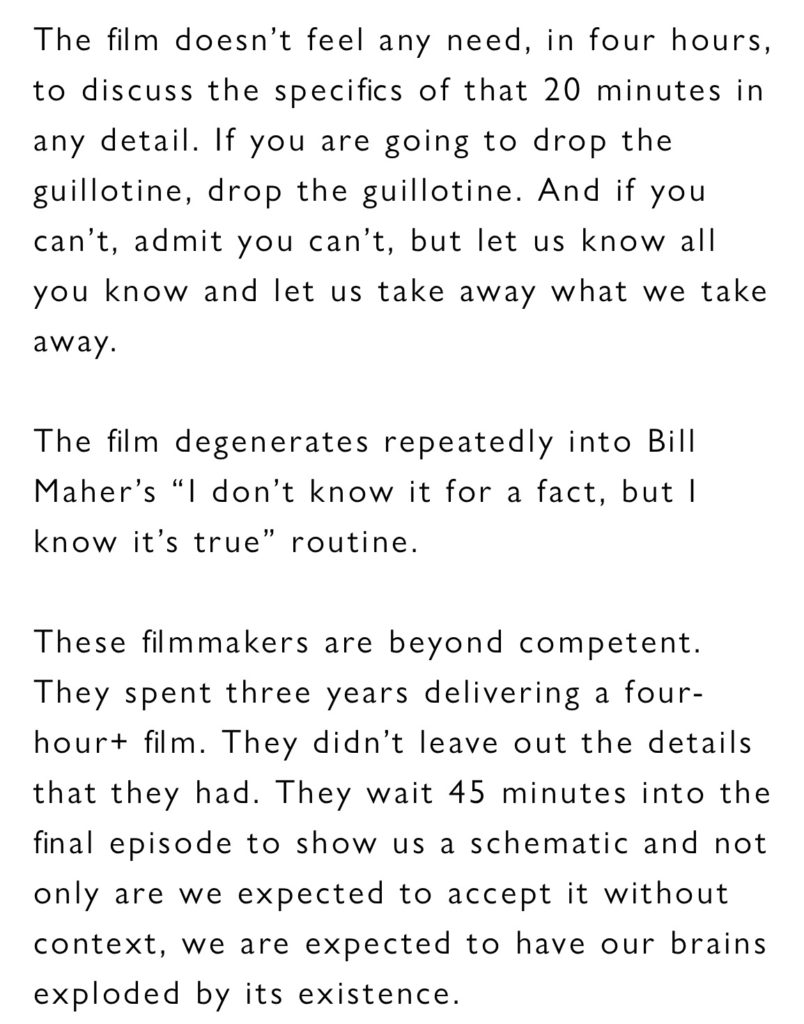
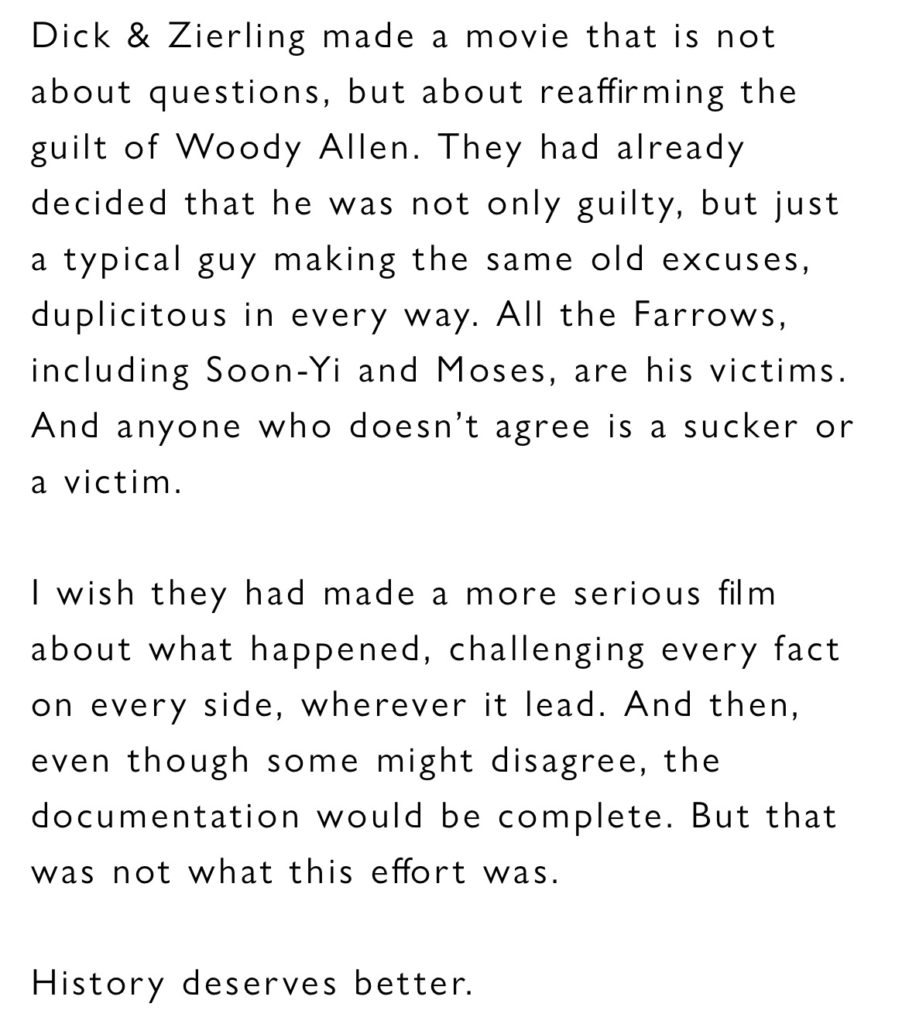
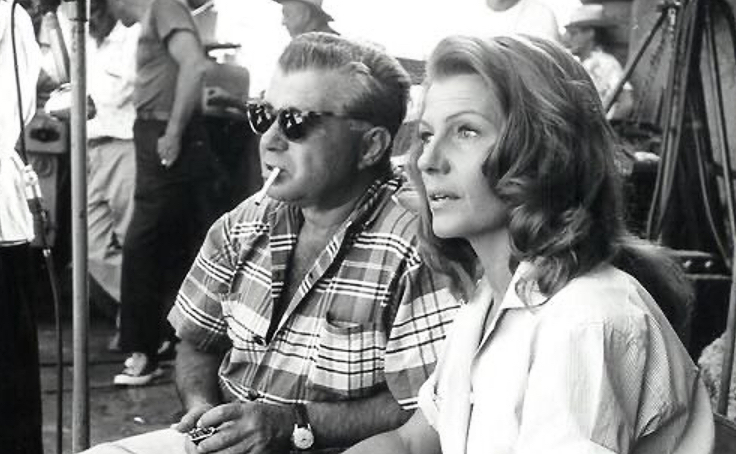
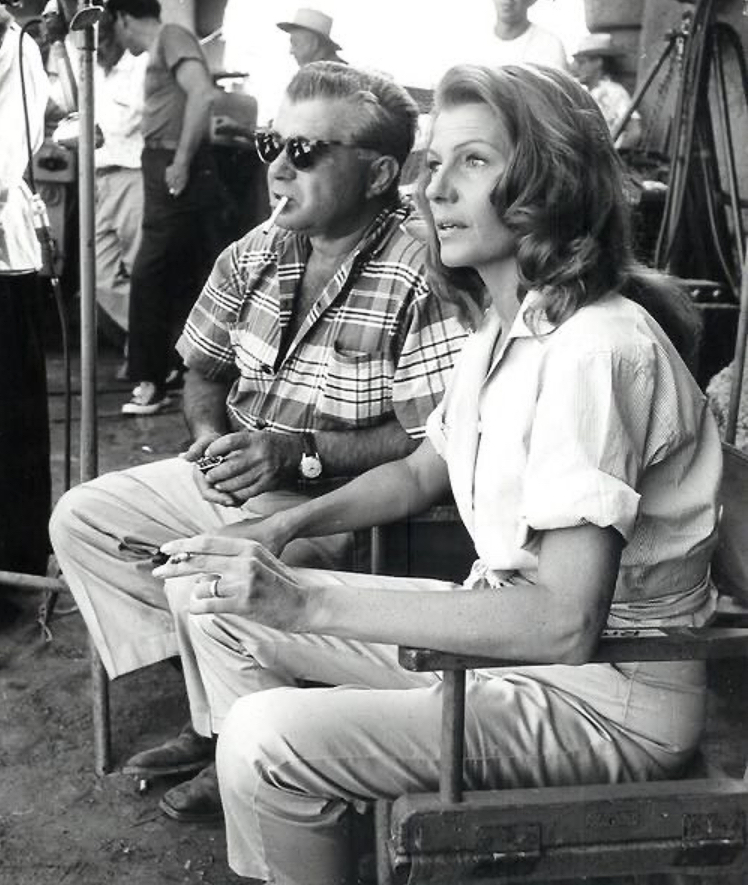
Four days ago Ben Kenigsberg posted a N.Y. Times piece about Otto Preminger‘s Anatomy of a Murder (’59). It praises the Jimmy Stewart courtroom drama, which costarred Ben Gazzara, Lee Remick and George C. Scott. It especially admires Preminger’s willingness to “trust [that] audiences will dwell in gray areas.”

Here’s a passage that made me sit up: “While some other Preminger films of the era (’58’s Bonjour Tristesse, ’59’s Porgy and Bess) used widescreen formats like CinemaScope or Todd-AO, Anatomy of a Murder instead favors claustrophobic compositions that ask viewers to judge several characters’ reactions at once.”

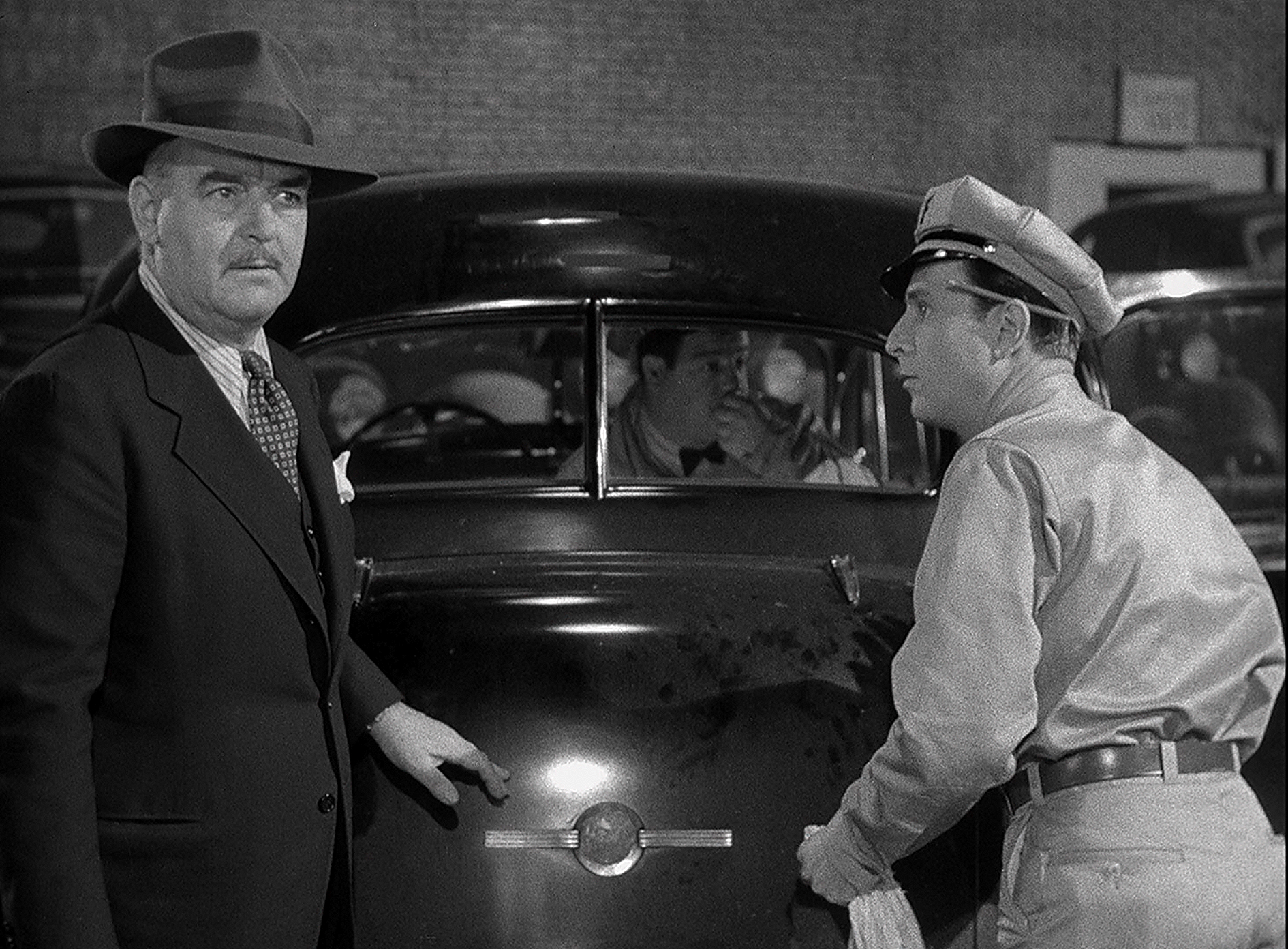
Excuse me but if Kenigsberg had tracked down the boxy (1.37:1) version of Anatomy of a Murder, which is only available on a 21-year-old Sony Home Video 480p DVD, he would have realized that in no way, shape or form is this a claustrophobically-framed film. It’s actually loose and roomy and quite relaxed and laid-back…in my view the exact opposite of cramped and congested. Because it has room to move and room to breathe…because it inhales and exhales that northern Michigan air like a jazz-loving attorney on a fishing trip.

Here’s how I explained it nine years ago:

“Otto Preminger‘s 1959 film looks sublime at 1.37. Needle sharp and comfortable with acres and acres of head space. Plus it’s the version that was shown on TV for decades. It looks stodgy and kind of grandfatherly, true, but that’s fine because it’s your grandfather’s movie in a sense. Boxy is beautiful.

“It is perverse if not diseased for Criterion to deliver their 2012 Bluray version — obviously the best that Anatomy of a Murder has ever looked on home screens — with one third of the originally captured image chopped off. Flip the situation over and put yourself in the shoes of a Criterion bigwig and ask yourself, ‘Where is the harm in going with the airier, boxier version?’ Answer: ‘No harm at all.’ Unless you’re persuaded by the 1.85 fascist cabal that a 1.37 aspect ratio reduces the appeal of a Bluray because the 16 x 9 plasma/LED/LCD screen won’t be fully occupied.”

The above comparison show that cropping the image down to 1.85 from 1.37 doesn’t kill the visual intention. In the 1.85 version Stewart simply has less breathing room above and below his head. But the comparison below makes my case. Consider a scene between Stewart and Gazarra in a small jail cell. The boxier version is clearly the preferred way to go. It feels natural and plain. The 1.85 version delivers a feeling of confinement, obviously, but Otto Preminger wasn’t an impressionist. He was a very matter-of-fact, point-focus-and-shoot type of guy.”