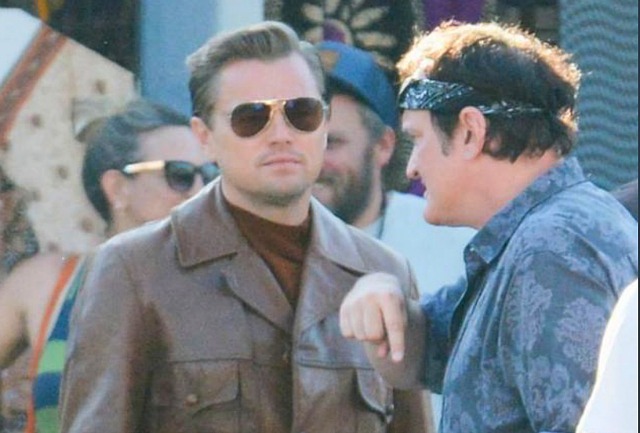
Leonardo DiCaprio, Quentin Tarantino during recent filming of Once Upon A Time in Hollywood. Lensing actually happened on Hollywood Blvd. yesterday, or was it the day before?


Except for Jennifer Kent‘s The Nightingale and Carlos Reygadas‘ Nuestro Tiempo, all 2018 Venice Film Festival picks had been guessed or spitballed by HE. 12 major competition films plus the two Orson Welles features plus Bradley Cooper‘s A Star Is Born = 15 in all, not counting the mid-levels and peripherals:
Major Competition (12): Roma (d: Alfonso Cuaron), First Man, (d: Damien Chazelle); Doubles Vies (aka EBook) (d: Olivier Assayas); The Sisters Brothers (d: Jacques Audiard), The Ballad of Buster Scruggs (d: Ethan and Joel Coen); 22 July (formerly Norway) (d: Paul Greengrass); Suspiria (d: Luca Guadagnino); Work without Author (d: Florian Henkel Von Donnersmark); The Nightingale (d: Jennifer Kent); The Favorite (d: Yorgos Lanthimos); Peterloo (d: Mike Leigh); Sunset (d: Laszlo Nemes).
Mid-Level Competition (8): Vox Lux (d: Brady Corbet); The Mountain (d: Rick Alverson); Capri-Revolution (d: Mario Martone); What You Gonna Do When The World’s On Fire? (d: Roberto Minervini); Freres Ennemis (d: David Oelhoffen); Neustro Tiempo (d: Carlos Reygadas); At Eternity’s Gate (d: Julian Schnabel); Killing (d: Shinya Tsukamoto).
Special Wellesian, Non-Competitive Events (2): The Other Side Of The Wind (d: Orson Welles); They’ll Love Me When I’m Dead (d: Morgan Neville)
Non-Competitive (5): A Star Is Born (d: Bradley Cooper), Mi Obra Maestra (d: Gaston Duprat); A Tramway in Jerusalem (d: Amos Gitai), Dragged Across Concrete (d: Craig Zahler), Shadow (d: Zhang Yimou).
Variety‘s Kris Tapley is proclaiming that Joel and Ethan Coen‘s The Ballad of Buster Scruggs is no longer a six-part Netflix anthology series but a feature film using an anthology structure? Am I reading this right?
So a few months ago the Coens said to Netflix, “Sorry, guys, but that western anthology series we sold you on, that six-segment concept that might’ve run somewhere between three and six hours…sorry but we prefer the idea of a feature film with a six-chapter structure.”
In other words the Coens wrote six segments that would have minimally run a half-hour (or possibly 45 minutes or an hour) each, and then decided to trim each segment down to, what, 20-minute vignettes for a grand narrative total of 120 minutes plus main titles and end credits? And now they’re debuting the feature at the Venice Film Festival with Tapley and others hailing a new potential Best Picture contender?
10:10 pm update: “Actually, it was always a feature script,” a friend informs. “Then they had the idea to cut it up into a six-part series. One assumes that, in the end, this proved easier said than done.”
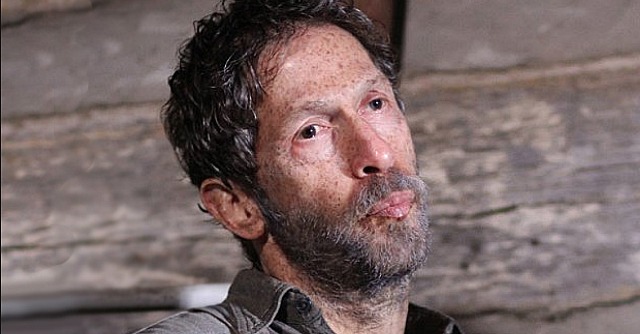
Way back in the summer of ’17, when this here thang was a Netlix anthology series, the six segments were described as follows:
(1) “The Ballad of Buster Scruggs” — The story of a singing cowboy named Buster Scruggs (Tim Blake Nelson);
(2) “Near Algodones” — A high-plains drifter whose own fecklessness dogs his attempts at bank robbery and cattle driving, costarring James Franco, Ralph Ineson and Stephen Root;
(3) “Meal Ticket” — The story of an actor and impresario of a traveling show;
(4) “All Gold Canyon”– A prospector (possibly Tom Waits) happily finds a gold seam but then unhappily finds an evil encroacher;
(5) “The Gal Who Got Rattld” — The story of two trail bosses on the Oregon Trail and a woman on the wagon train who needs the help of one of them and who might be a marriage prospect for the other, w/ Zoe Kazan and Jackamoe Buzzell; and
(6) “The Mortal Remains” — Five very different passengers find themselves on a stagecoach to a mysterious destination w/ Tyne Daly, Saul Rubinek.
Liam Neeson and Brendan Gleeson are also listed as costars.
Here’s the thang: With the exception of Franco and Neeson, none of the Buster Scruggs cast members are leads — they could all be compassionately described as off-center, eccentric, funny-looking character types. So right off the top the film is charisma-challenged. No Josh Brolin, no Javier Bardem, no Frances McDormand, no Tommy Lee Jones, no George Clooney, no Jeff Bridges, no Hailee Steinfeld.
Official Coen statement: “We’ve always loved anthology movies, especially those films made in Italy in the ’60s” — i.e., RoGoPaG — “which set side-by-side the work of different directors on a common theme. Having written an anthology of Western stories we attempted to do the same, hoping to enlist the best directors working today. It was our great fortune that they both agreed to participate.”
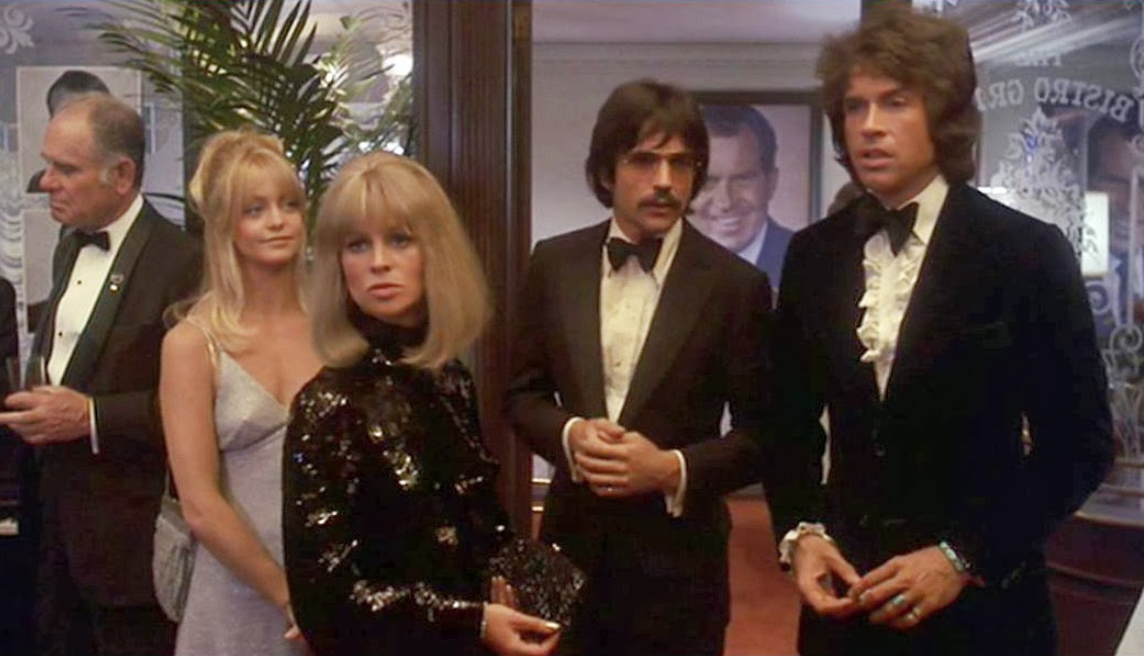
A high-def version of Hal Ashby‘s Shampoo has been streamable on Amazon for about three years, but on 10.16, for the first time, a Criterion Bluray of a “4K digital restoration” will go on sale. Given what’s recently happened with Criterion’s Midnight Cowboy and Bull Durham Blurays, I’m honestly scared that Criterion will add a strong teal tint to the color. Is a brand-new Warren Beatty interview among the extras? Or perhaps with screenwriter Robert Towne? Of course not. It will, however, include a video chat between critics Mark Harris and Frank Rich plus an essay by Rich.

I can’t divulge the location, but Hollywood Elsewhere will be there in spirit if not physically. And I’ll apparently be interviewing director Matt Tyrnauer when he arrives in Manhattan early next week.
Yes, I’m a serious fan of Matt Tyrnauer‘s Scotty and the Secret History of Hollywood (Greenwich, 7.27), in part, I suppose, because I’ve always found good backroom gossip irresistible, but mostly because I really and truly believe Scotty Bowers was a sexual go-between for gay or bisexual Hollywood stars in the 1940s, ’50s, ’60s and ’70s. And because I admire Scotty’s intrepid attitude about everything.
“The sexual proclivities of some of the biggest stars of that era — Cary Grant, in particular — were well known to the town’s insiders,” Tyrnauer told Brooks Barnes in a 7.16 N.Y. Times article. “But people still gasp. That says so much about the enduring power of the Hollywood myth machine.”
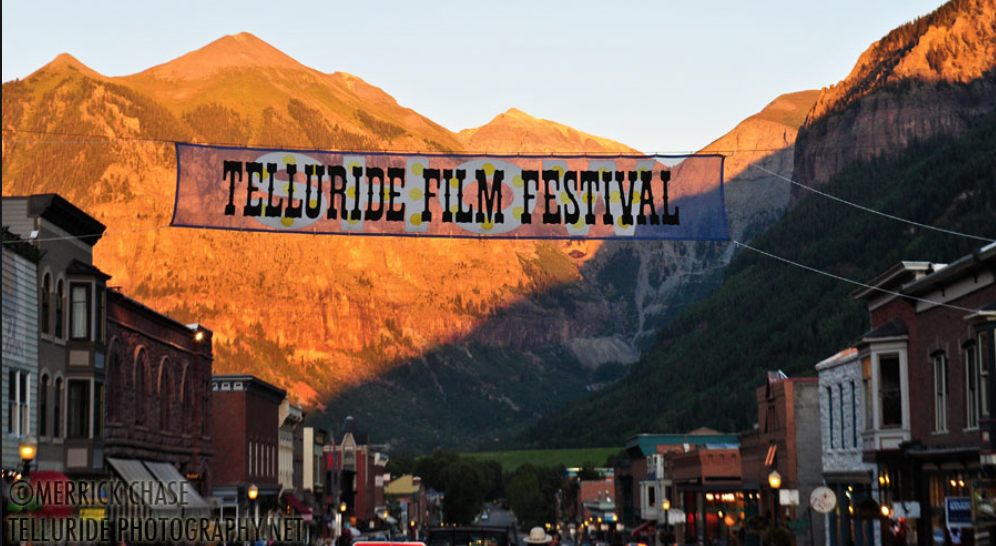
According to the calculations of World of Reel’s Jordan Ruimy, the following Canadian and international premieres at the 2018 Toronto Film Festival are probably Telluride-bound: Alfonso Cuaron‘s Roma, Pawel Pawlikowski‘s Cold War, Damien Chazelle‘s First Man, Olivier Assayas‘ Non-Fiction, Hirokazu Kore-eda‘s Shoplifters, Marielle Heller‘s Can You Ever Forgive Me?, Matteo Garrone‘s Dogman, Jason Reitman‘s The Front Runner, David Lowery‘s The Old Man and the Gun, Elizabeth Chomko‘s What They Had (an international premiere in Toronto because it premiered at Sundance, not because of Telluride) and Yann Demange‘s White Boy Rick.
Apparently not going to Telluride because they’re listed as TIFF world or international premieres: Barry Jenkins‘ If Beale Street Could Talk (a surprise given that Jenkins is a longtime Telluride friend and former volunteer), Steve McQueen‘s Widows (latest pic from the winner of 2013 Best Picture Oscar gets the brushoff), Felix Von Groeningen‘s Beautiful Boy, Bradley Cooper‘s A Star Is Born (Tom Luddy and Julie Huntsinger have reservations?), Lee Chang-dong‘s Burning, Nadine Labaki‘s Capernaum, Asghar Farhadi‘s Everybody Knows, Dan Fogelman‘s Life Itself, Laszlo Nemes‘ Sunset and Jacques Auduiard‘s The Sisters Brothers.
I saw Kevin Kurslake‘s Bad Reputation, a life-and-times-of-Joan Jett doc, during last January’s Sundance Film Festival. It tells her scrappy story in a thorough, relatively straightforward fashion, and therefore earned my admiration. The whole tale, start to finish, warts and all. Eight years ago I saw and mostly liked Floria Sigismondi’s The Runaways; I would classify Bad Reputation as a respectable complement to that film, and an essential sit if you’re any kind of fan.
I had one slight issue, and that’s the decision by Kurslake to sidestep — i.e., not directly address — Jett’s sexuality. It’s not as if her tough, hard-rock, leather-clad butchy persona hadn’t been telegraphed all along, but it still seems odd that it wouldn’t be discussed at all in a wide-open, this-is-me portrait such as this one. In a 1.29.18 review Autostrada’s “Fonseca” wrote that “Jett’s sexuality isn’t relegated to its own very special narrative segment [in the doc], and that’s because it’s everywhere — as it should be for a rock star, and as it should be for all of us.” If you say so, but it still feels like avoidance. To go by Bad Reputation, Jett not only never fell in love — she never even got laid.
BMG Films is releasing the doc sometime in September.
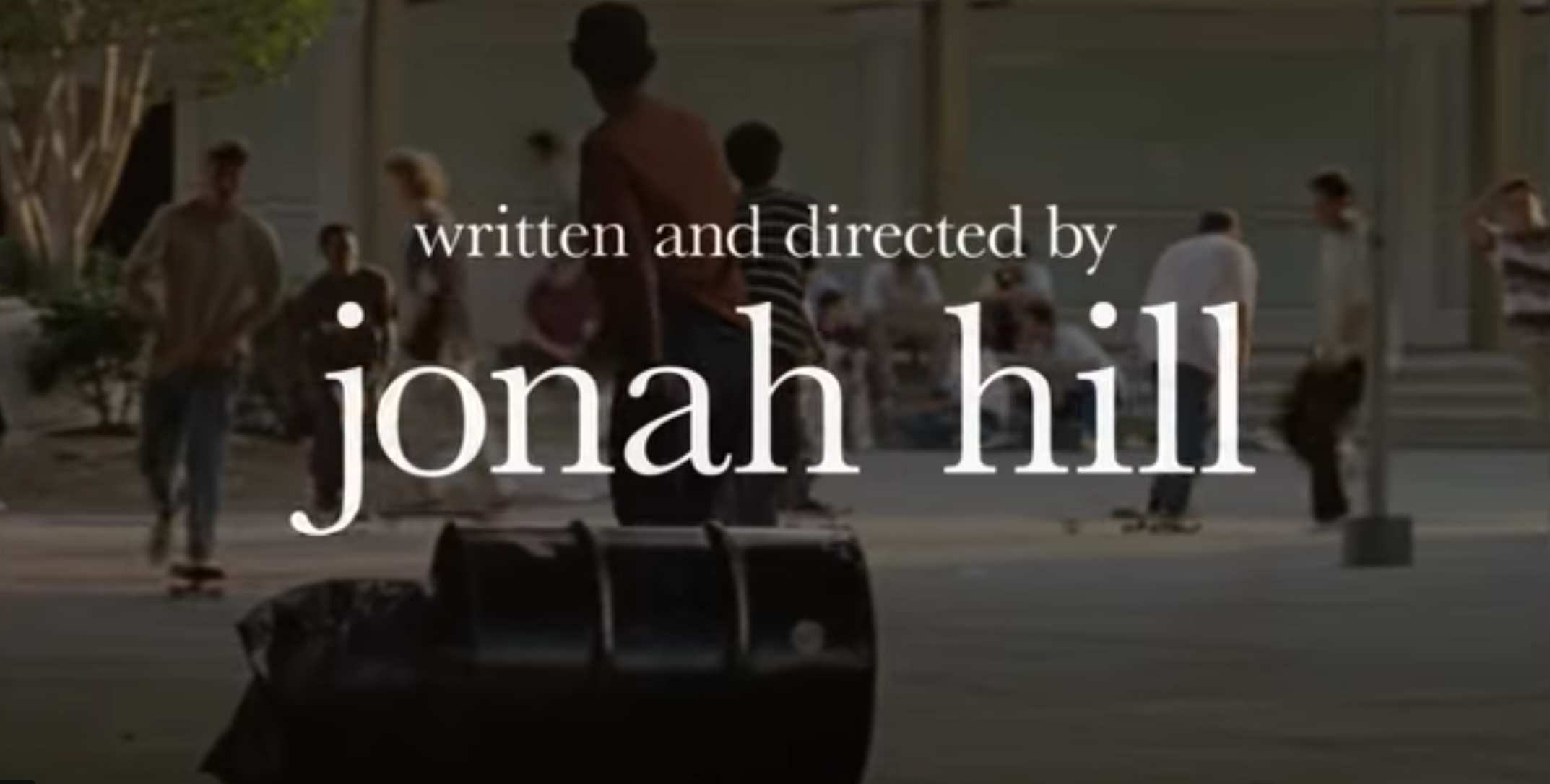
You can tell right off the bat that Jonah Hill‘s Mid ’90s (A24, 10.19) is an exception of one kind or another. It sure doesn’t feel like just another Los Angeles skateboard flick. You can sense a focus on character and kid culture and ’90s minutiae. Fast and loose and raggedy — the rhythms and the atmosphere feel right.
Pic is set in the lower West L.A. region — Palms, Culver City, Venice — and partly focused on a Motor Ave. skateboard shop. (Born in ’83, Hill grew up in the Cheviot Hills neighborhood or just north of these regions.) Sunny Suljic (The Killing of a Sacred Deer) has a certain X-factor thing going, and I love that Hill has Lucas Hedges playing a bit of a domineering-shit older brother instead of the usual gentle-sensitive guy from Lady Bird, Boy Erased and Manchester By The Sea. Katherine Waterston plays Suljic’s somewhat unstable mom.
Directed and written by Hill; shot by Christopher Blauvelt (Indignation) in HE’s own 1.37 aspect ratio (boxy is beautiful) and edited by Nick Houy.
With the British historical drama Peterloo (Amazon, 11.9), director Mike Leigh is veering into the kind of militant political material previously owned by Ken Loach (Land and Freedom, Bread and Roses, The Wind that Shakes the Barley, Jimmy’s Hall). It also feels like an early 19th Century version of Paul Greengrass‘s brilliant Bloody Sunday (’02).
Leigh is recreating the notorious Peterloo Massacre of 1819, in which government troops killed roughly 15 demonstrators and injured hundreds more. 60,000 citizens from Manchester and surrounding towns had assembled in St. Peter’s Field to demand Parliamentary reform and an expansion of voting rights, and local government officials freaked.
The massacre happened a good 20 years before the intensifying of the Industrial Revolution, 26 years before the birth of Eugene Debs, 45 years before the first stirrings of the British Labour movement, and 48 years before the publication of Karl Marx‘s “Das Kapital.”
The 2018 Toronto Film Festival (9.6 through 9.16) has announced the first crop of films under the headings of galas and special presentations. I’ve bunched them all together under my own Hollywood Elsewhere classifications — Oscar bait, high expectations, critically approved in Cannes and “hmmmm.” I’m sure I’ve omitted or mis-classified a title or two.
Oscar bait: Alfonso Cuaron‘s Roma, Damien Chazelle‘s First Man, Bradley Cooper‘s A Star Is Born, Felix van Groeningen‘s Beautiful Boy.
High Expectations: Steve McQueen‘s Widows, Jason Reitman‘s The Front Runner, Olivier Assayas‘ Non-Fiction, László Nemes‘ Sunset, David Lowery‘s The Old Man and the Gun, Marielle Heller‘s Can You Ever Forgive Me?, Wash Westmoreland‘s Colette, Yann Demange‘s White Boy Rick, Mia Hansen-Løve‘s Maya, Eva Husson‘s Girls of the Sun, Jacques Audiard‘s The Sisters Brothers, Peter Hedges‘ Ben Is Back.
Critically approved in Cannes: Pawel Pawlikowski‘s Cold War, Hirokazu Kore-eda‘s Shoplifters, Lee Chang-dong‘s Burning, Nadine Labaki‘s Capernaum, Zhang Yimou‘s Shadow, Matteo Garrone‘s Dogman, Paul Dano‘s Wildlife.
Second-Tier Farhadi Is Good Stuff Nonetheless: Asghar Farhadi‘s Everybody Knows.
Hmmm: Claire Denis‘s High Life, Melanie Laurent‘s Galveston, George Tillman‘s The Hate U Give, Jiang Wen‘s Hidden Man, Anurag Kashyap‘s Husband Material, Sara Colangelo‘s The Kindergarten Teacher, Nicole Holofcener‘s The Land of Steady Habits, Sir Trevor Nunn‘s Red Joan, Elizabeth Chomko‘s Wish They Had, Kwith Behrman‘s Giant Little Ones, Stella Meghie‘s The Weekend, Amma Asante‘s Where Hands Touch, Don McKellar‘s Through Black Spruce, Dan Fogelman‘s Life Itself, Emilio Estevez‘s The Public.
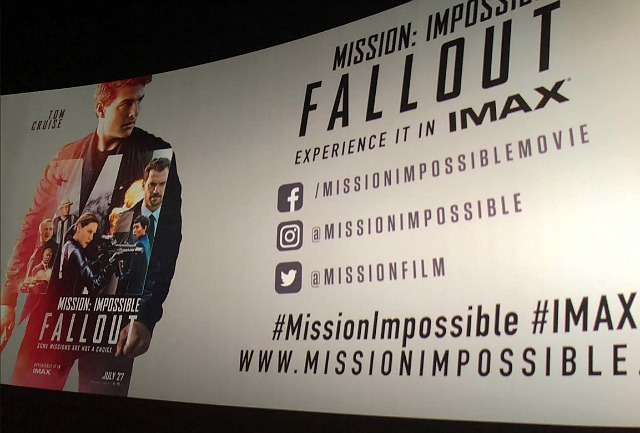
Mission: Impossible — Fallout (Paramount, 7.27) is loads of fun — a big mechanical whambammer with all kinds of plot turnarounds and shifting loyalties and eye-rolls into the forehead. It made me feel like I was ten. I honestly gasped four or five times and laughed out loud six or seven…something like that. And one of the laughs involves Wolf Blitzer.
Try and catch it on a big fat IMAX screen, which I did earlier this evening.
I’m being completely complimentary when I call Fallout grade-A, bucks-up dope, and by that I mean the kind of high-octane, expertly performed, adrenalized nonsense that gives the term “jizz-whizz” a good name (and that’s saying something). It’s the kind of crazy-silly wank that makes you feel good about life — the kind that lifts you up and smells like expensive bar soap, high-grade leather and canvas money bags.
The thing that I really loved was how many of the non-action scenes are flecked with an attitude of dry, underplayed comedy. The kind of humor that says “ya gotta get a little fun out of life, right? Are we full of shit or just lucky-ass boys spending loads of dough or…well, you tell us. We’re half-giggling and half-grimming up and obviously having fun with the priciest toyset in the world, wearing masks and buzzing around Paris on motorcycles and flying helicopters in Kashmir and yadda yadda, and well paid all the while.”
Fallout doesn’t quite tip over into hah-hah comedy but the attitude is definitely jaunty if not jovial. If director-writer Chris McQuarrie had gone a little bolder and embraced a tiny bit more of a “fuck it” attitude and turned up the deadpan Three Stooges dial a bit more, this could have been an amazing piece of action comedy, and I mean like something the world has never experienced before. But Fallout holds itself in check and so it’s just a whole lot of high-grade, Daffy Duck-on-ritalin, state-of-the-art excitement with more than a few bone-dry guffaws.
Tom Cruise fills the bill, of course, but he’s looking older. I’m sorry but he is. A wee bit puffy and fuller of face. Some of the humor is about how Ethan Hunt is still the energizer bunny (always!) but now he’s getting winded a bit sooner, and even limps a bit after an especially traumatic bodyslam. I honestly liked Henry Cavill a bit more. He’s a good, disciplined, straight-dealing actor, and he handles the dry under-playing in just the right way. Some of his reaction shots are quite funny. Hollywood Elsewhere says “Cruise is cool but Cavill is better.”