A Less-Than-Wonderful Life For The Next Four Years

The last half-hour of Frank Capra‘s It’s A Wonderful Life (’46) always gets me deep down. I don’t really like the film (or any Capra creation for that matter) but my throat always tightens when Jimmy Stewart‘s distraught George Bailey begs Clarence the Angel for another chance — “Please, please…I want to live again.”

Movies like It’s A Wonderful Life are good for the heart and soul, no question. It’s a sappy film on one level but a very dark one besides, and I admire the ballsiness that it took to send nice-guy Stewart to a snow-covered bridge in order to commit suicide, and then whip it all around so he ends up in a joyful embrace with his family and friends. (Kudos to screenwriters Frances Goodrich and Albert Hackett, whose work Capra tweaked to some extent.)

That said, there’s a passage in David G. Allan’s CNN.com piece about this much-loved classic that I feel like quibbling with.

“The big life lesson from this eminent Christmas perennial comes late in the film,” Allan writes, “and delivered straight from heaven. ‘Each man’s life touches so many other lives,’ explains Clarence. ‘When he isn’t around, he leaves an awful hole, doesn’t he?‘”

Well, in the scheme of It’s A Wonderful Life, yeah, but in actuality, not really. Or not as much as Capra or Stewart would have us believe.

For no matter how selfless or charitable or open-hearted a person may be, regardless of how many good or noble acts he/she may be responsible for, the churn and swirl of life will always win out. The constant cycle of birth and death and come-what-may happenstance is persistent, inexorable and unstoppable, and whatever lies in store that is good or bad, it will eventually happen on its own steam.

Essentially good, fair-minded, hard-working people will always be balms for their communities and families and whatnot and thank God for that, but no single life has ever been as central and influential as George Bailey’s. One way or another, the shit that may happen or not happen will eventually happen or not happen. Spiritual water always finds its own level. Fates are fulfilled, and chapters need to conclude in order for succeeding chapters to begin.

There is so much more to the cosmic scheme than was ever dreamt or imagined by the philosophy of Frank Capra, it’s not even funny.

Read more

Raging Waters on La Cienega

Last night I went out in the rain to buy a small garbage can at the Beverly Center. Unlike LexG and others of his cowering persuasion, I’m not an infant when it comes to precipitation — if it’s wet outside I simply carry an umbrella. So I was walking back in a traffic lane on La Cienega with a couple of bags, the rain coming down like cats and dogs, and suddenly I realized there was no way to hop to the curb because the drainage system had totally collapsed. The east side gutter area had become the Colorado river — serious rapids, at least a foot deep. So I was standing there with cars beeping and steering their way around me and going “what the fuck?” when I noticed that a cop had stopped ten feet away and was eyeballing me. Am I about to be busted now? “Fuck it,” I muttered, and scampered across to La Cienega’s west side.


Everyone I know (or who has half a brain and isn’t a hinterland dumbshit) is in the grip of the same feeling of dread, the same terrible sense of an oncoming nightmare. This sums it up as concisely as anything I’ve seen or read.

The night before last I had dinner with an old friend at Musso and Frank. (Larry Fishburne was there with a significant someone.) I asked the parking lot guy to snap a shot of his security cam split-screen while I posed just outside his shack.

Read more

Ain’t Over Till It’s Over

Martin Scorsese to BigStory’s Jake Coyle: “Cinema is gone. The cinema I grew up with and that I’m making, it’s gone.”

HE to Scorsese: Grand ornate cinemas showing first-run movies in VistaVision and Super Panavision 70 and at 1.66:1 and via 30-frame-per-second Todd AO…movies made by top-tier, world-class talents and featuring big stars…yes, that era has passed. But cultivated cinema culture is very much a thing, and is definitely still with us in certain regions, within certain theatres — it’s just been marginalized. Adapted and reconfigured into a kind of spiritual sideshow. The popcorn-eating mob that used to show up for sturdy-quality mainstream flicks has moved on to CG-driven fantasy-superhero crapola.


Martin Scorsese, as captured for BigStory piece on 12.9.

Scorsese to Coyle: “The theater will always be there for that communal experience, there’s no doubt. But what kind of experience is it going to be? Is it always going to be a theme-park movie?”

HE to Scorsese: Yeah, pretty much. The big stadium-seating plexes have become animal houses. Except, thank God, when it comes to award-season fare, which will hopefully continue to be a seasonal event (October through January) that will temporarily upgrade the kind of films that people pay to see in a big screen.

Otherwise the action is focused on (a) film festivals, (b) whatever’s streaming on Amazon, Filmstruck, Vudu, et. al., (c) Curated films playing at Hollywood’s American Cinematheque, or Santa Monica’s Aero, or New York’s MOMA, Museum of Moving Image, Film Forum and the Walter Reade plus certain houses in Paris, Berlin and London, (d) the occasional choice Bluray and (e) the even more occasional counter-programmed spring or summer flick that isn’t aimed at idiots.

HE to 20somethings

If you party too much in your 20s, 30s and 40s — if you really become such a slave to louche, pants-around-your-ankles living that partying is pretty much the be-all and end-all, if work and whatnot is regarded as a five-day-per-week slog that you have to submit to in order to afford the lifestyle of a party person…if this is your life in your 20s, 30s and 40s, then you will pay for this when you get older. You will look and feel worse and suffer from various ailments and probably die somewhat earlier (or a lot earlier) than required. Ex-boozers and ex-druggies start dying in their 50s and definitely in their 60s. Unless, of course, you have extraordinary, all-but-bulletproof genes, which I’ve been blessed with, thank God. (And which Peter O’Toole had.) But that’s just luck. One of my biggest regrets is not turning sober in my 40s. Everything would have been that much better if I could’ve done that. Alas, five years before I quit the hard stuff one of my favorite sayings was “life would be unbearable without alcohol.”

What’s Wrong With This Scene?

There’s something about this clip from Full Metal Jacket that is very strange and almost alien-like, or at the very least un-reflective of life on the planet earth. Give up? The entire company is singing on-key — they’re hitting each and every note correctly, and they’re adhering to a steady tempo. Which never, ever happens when any group at a restaurant or party sings “happy birthday.” As I reported last week.

Yes, the image is cropped at 1.37:1, but that’s fine around these parts. As Christmas is a time of great affirmation and rejoicing, there are few things that give me a better feeling than the thought of the dwindling 1.85 fascist crowd (Bob Furmanek, Peter Abbruzzese, et. al.) suffering heart palpitations when they see a boxy image like this one.

Hearing About Silence Walkouts

Yesterday Mike Streeter, a New York-based HE follower, tweeted about “Silence walkouts…ahoy!” It happened, he said, during the first show of the day (11:40 am) at the Regal Union Square 14 — “At least 7 that I counted that didn’t come back.” The mini-exodus began sometime after the halfway mark, he reported.

This morning I noticed a comment about a Silence screening from James Mandell in a Rod Lurie Facebook thread, to wit: “Unbearable. Morose, cruel, relentless, sodden. Had to take a break about two thirds in, stepped outside and found a half-dozen other audience members calculating how much more of the film there was. Was at a SAG/critic screening. By the end, a third of the theater (the crowd was at capacity when it began) was empty.”

Has anyone else noticed this? I ask this question not to bury the film (a trying but highly respectable effort), but simply in hopes of determining how widespread, if at all, the walkout syndrome might be.

I’ve seen and reviewed Silence, of course. It’s a bear to sit through, for sure, but I felt curiously touched at the end, as if a tiny candle inside my chest has been lighted by a thought. Here’s how I explained it on 12.10:

Read more

Children Of Men, One Of 21st Century’s Greatest, Opened A Decade ago

Immediately after catching Alfonso Cuaron‘s Children of Men in mid-November 2006, I called it the year’s best. So did many others. But it wasn’t long because the skeptics and the longfaces were calling it too downish and probably fated to lose money. This same crowd will always chime in whenever a stunningly audacious film comes along with an underlying attitude that isn’t peppy or buoyant enough. Did someone say “solemn”? Children of Men was easily the the most thrilling film of that year, if for nothing else than those three uncut action takes that became instant classics.

In an 11.20.06 HE piece called “Children = Guernica,” I wrote the following:

“While many critics were impressed by Children of Men‘s virtuosity and bravado,” writes Hollywood Reporter/Risky Biz blogger columnist Anne Thompson, “the industry types were seeing a downer film that’s going to lose money. The movie is a brilliant exercise in style, but it’s another grim dystopian look at our future — like Blade Runner or Fahrenheit 451 — that simply cost too much money.”

Wells to thoughtful industry types: (a) Yeah, it’s “grim” but, as you well know, only in a general milieu-ish way; (b) It’s mostly an action-driven chase movie, the story has a clear “maybe things aren’t so bad after all” theme, and the finale is all about relief, reverence and shelter from the storm; (c) When a movie is photographed with as much genius as Children of Men and is so thrillingly well-done, it can’t be called downerish unless you’re a total moron because the whole thing is so exhilarating to sit through.

“Going to Children of Men and calling it a ‘downer’ is like standing in front of Pablo Picasso‘s “Guernica” and complaining that it’s not colorful enough (i.e., Pablo painted it in grays, blacks and whites).

Read more

Dernsy Saves The Day

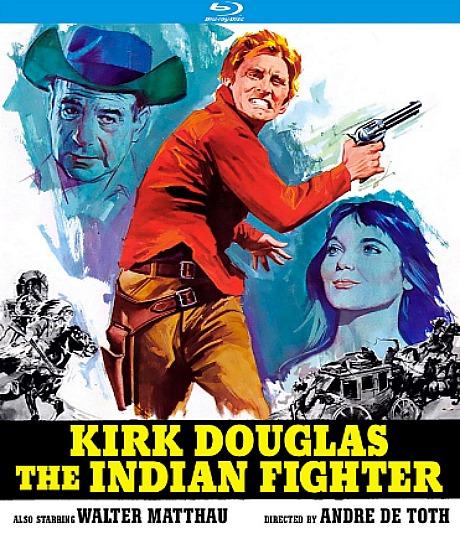
I watched the new Laughing Policeman Bluray last night. The finale is after the jump. Answer me this: You’re Walter Matthau, a San Francisco detective, and you’re on a city bus with a guy you suspect of having massacred several people on a city bus at the beginning of the film, and he may be about to do the same thing. You’ve got your gun in your hand, but you’re just sitting there as the guy is sitting in the rear and up to God knows what. And yet just as the bad guy stands up with an automatic weapon and is about to fire, you’re not even looking in his direction. Thank God for the young Bruce Dern (37 or 38 at the time) and his lightning reflexes.

Read more

Fisher In ICU, “Not Stable”

Update: Carrie Fisher‘s brother has told a reporter that she’s currently in ICU and that her condition is “not stable” following a serious heart attack suffered earlier today. Previously: TMZ is reporting that following a heart attack aboard a London-to-LAX flight, Carrie Fisher was “unresponsive” when they landed. The situation occurred 15 minutes before the plane touched down on the tarmac.  Witnesses have reportedly said that Fisher appeared unconscious as she was rushed through the terminal. Her eyes were closed and she had an oxygen mask on her face.

Passengers Is On The Ropes

Morten Tyldum and Jon SpaihtsPassengers, which cost $110 million to produce, opened Wednesday with a lousy $4.1 million. Divide that figure by 3478 screens and you’ve got an average of $1181, which feels light.

TheWrap reported today that Passengers “grossed another $3.23 million on Thursday, having earned $7.3 million so far. [The film] is tracking for a $26 million three-day weekend and $39 million five-day gross.”

Passengers has a 32% Rotten Tomatoes rating and a “B” CinemaScore, and cost around $110 million to produce sans marketing costs.

Deadline‘s Anthony D’Allesandro: “In regards to Passengers, I’m told that should the movie gross $45 to $50 milllion in its first six days that should be fine, but anything under that would be tough sledding. At this point in time, there are several sources who aren’t impressed with the first day figure [of $4 million]. We really need to let the weekend play out through to see where Christmas takes us. It is a six day-weekend.”

Reactions to Passengers from the HE community? What are the views of the ethics of Chris Pratt waking up Jennifer Lawrence, etc.? “Wake me up, wee-yoo…”

85% of Variety’s Most Anticipated Films of 2017 Will Give You Soul Cancer

Thanks to Variety‘s Jacob Bryant for highlighting 40 of the coming year’s “most anticipated” films. Roughly 70% of these appear to be the usual formulaic, corporate, CG-fortified, franchise-fantasy crap, of course, but that’s entertainment! Seriously, if you want a list of 2017 films with a better-than-reasonable chance of being actually watchable and perhaps even good, consider HE’s List of 65. And the list isn’t quite finished at this stage — the real tally is closer to 70.

Read more

Not The Real McCoy, But As Good As Can Be Hoped For

Yesterday I received and watched Twilight Time‘s Bluray of John Huston‘s Moby Dick (’56). It delivers an excellent simulation of the appearance of the original release prints — not desaturated but the result of three-strip color prints blended with a black-and-white negative. To my eyes the 1080p image delivers the most striking, well-finessed attempt to imitate what the film looked like to first-run audiences a half-century ago.

The Bluray doesn’t provide an actual recreation of the color process created by Huston and dp Oswald Morris, but it makes Moby Dick look as good as it’s ever going to look in this regard. Call it largely satisfying, and that ain’t hay.

Moby Dick‘s color process was restored by Greg Kimble over an eight-month period. The Bluray contains a nice supplemental essay, A Bleached Whale: Recreating the Unique Color of Moby Dick.

Here’s a portion of a 12.3.15 piece that I ran about Kino DVD version:

“It’s a good time to reconsider the fascinating color scheme — subdued grayish sepia tones mixed with a steely black-and-white flavoring — created by Huston and Morris. This special process wasn’t created in the negative but in the release prints, and only those who caught the original run of the film in theatres saw the precise intended look.

“There have been attempts to simulate this appearance, but the Real McCoy visuals were a different, more distinct animal. I saw about three or four minutes worth of an original Moby Dick release print at the Academy’s Samuel Goldwyn theatre sometime in the early to mid ’90s, and I’m telling you there was something spooky about them. I was riveted by how striking and other-worldly the color looked — something that wasn’t really ‘color’ as much a mood painting that came from someone’s (or some lab’s) drizzly damp November soul.

“I’d love to visually convey to HE readers what the 1956 release prints of Moby Dick really looked like — that wonderful silvery overlay, distinctive but muted and mixed with grayish color. But with luscious black levels.

Read more