Nina, Benny and Kevin

Nobody cares about In The Heights any more, but if they did there’d be one more thing for wokesters to gripe about.

The last grenade thrown at Jon Chu and Lin-Manuel Miranda‘s musical (a mostly faithful adaptation of LMM’s 2005 stage musical) was the colorism thing — the film had ignored the presence of Afro-Latinos in Washington Heights and therefore was, after a fashion, guilty of a form of discrimination — i.e., colorism.

I never saw the stage play but a friend of Jordan Ruimy‘s did, and he reports that the film version “cut the plot line about Kevin Rosario, the Puerto Rican dad” — Jimmy Smits in the film — “not wanting his daughter Nina to date Benny” over an ethnic disparity issue. (In the film Nina and Benny are played by Leslie Grace and Corey Hawkins.)

A blunt way of explaining Kevin’s “ethnic disparity” problem is that he doesn’t want his daughter dating a guy who isn’t from their tribe and who doesn’t speak Spanish. A blunter way of putting it is that Kevin may have a problem with his daughter dating a black dude,.

Here’s a portion of the Act 2 play synopsis from Wikipedia’s In The Heights page:

“Nina and Benny spend the night together in Benny’s apartment as Kevin frantically searches for her all night; Benny worries about what Kevin will say about their relationship but is happy to finally be with her (‘Sunrise’). Nina eventually returns home to find her parents worried sick about her, and Kevin grows furious when he learns she was with Benny, disapproving of their relationship due to Benny not being Latino.”

A 6.10.21 Elle piece by Madison Feller discussed several differences between the stage and film versions. Feller didn’t mention Kevin’s problem with Benny in the stage version.

Oh, To Be A Spotter Again

One of my all-time favorite jobs was working as a celebrity-spotter at Cannon Film premieres and after-parties. I had this responsibility was in late ’86 and ’87. I would rank it right below driving for Checker Cab in Boston. It was so easy and so satisfying. All I had to was stand at the door of film premieres and after-parties and make sure that no one of any importance was turned away.

No system is perfect, and every now and then a celebrity will show up uninvited or without a ticket, or with an entourage that he/she hadn’t mentioned when rsvping. I was there to make sure no famous or semi-famous person would ever receive a hard time.

When I was spotting I felt right in my element. I knew exactly how to play it. For I recognized everyone, every old-time actor whose time had passed, every supporting actor who wasn’t working much any more, every well-connected friend, every fringe player, every European actor who most Americans might not recognize, etc. And they all loved me for waving them through, and for knowing their names and their credits.

Remember actress Helena Kallianiotes (Five Easy Pieces, Kansas City Bomber), the vaguely butchy, Greek-born friend of Jack Nicholson‘s? In the mid to late ’80s she ran Helena’s, a super-exclusive celebrity supper club in the Silver Lake area. In October ’87 Helena attended the Barfly premiere with a friend, and for a few seconds the Cannon door girls were giving her shit. I swooped in like Prince Valiant. “It’s okay, she’s cool,” I told the girls. “Hi, Helena…come on in.”

Jesus, Jim and Tammy Faye

Go to the 36-second mark in this scene from Martin Scorsese‘s The Last Temptation of Christ, and particularly the moment when Willem Dafoe‘s Yeshua, sitting on the edge of a rocky cliff, says “I know what God wants…he wants to push me over!”

The question is, what did God say — what kind of taunt or message or challenge did he convey to 21-year-old James Orsen Bakker and his 19-year-old wife Tammy Faye Bakker (formerly LaValley) when they first decided to leave college and become “itinerant” evangelists back in ’61 or thereabouts?

How did God express Himself? What exactly did He say? “Jim and Tammy…we know I am about love and only love, but you can’t spread my message if you’re poor…no one will listen unless you’re flamboyantly wealthy so that’s what you need to do…make money hand over fist…become synonymous with wealth and then and only then with the people listen…”

Ebert, O’Casey, “Blowup”

21 and 1/2 years ago Ronan O’Casey, an uncredited but pivotal Blowup costar, wrote to Roger Ebert to explain some of the odd particulars behind the shooting of Michelangelo Antonioni‘s 1966 London-based classic. Worth reading if you’re any kind of Blowup fan. Here’s the original Ebert posting:

O’Casey to Ebert, dated 2.10.99: A friend recently sent me your column in the Nov. 8, 1998 Denver Post about the movie Blowup. As I actually played the [murder victim] in that fine movie, I thought you might enjoy knowing the behind-the-scenes story of how the film was made (or not made, in fact). Your column proclaims it to be a great film, and I am not trying to discredit that opinion. But it is nonetheless an unfinished work, and it raises the fascinating question of how much of the “art” of a final film is intentional — or accidental.

My name is Ronan O’Casey, and I played Vanessa Redgrave‘s gray-haired lover in the film. The screenplay, by Antonioni, Tonio Guerra, and Edward Bond, told the story of a planned murder. But the scenes depicting the planning of the murder and its aftermath — scenes with Vanessa, Sarah Miles and Jeremy Glover, Vanessa’s new young lover who plots with her to murder me — were never shot because the film went seriously over budget.
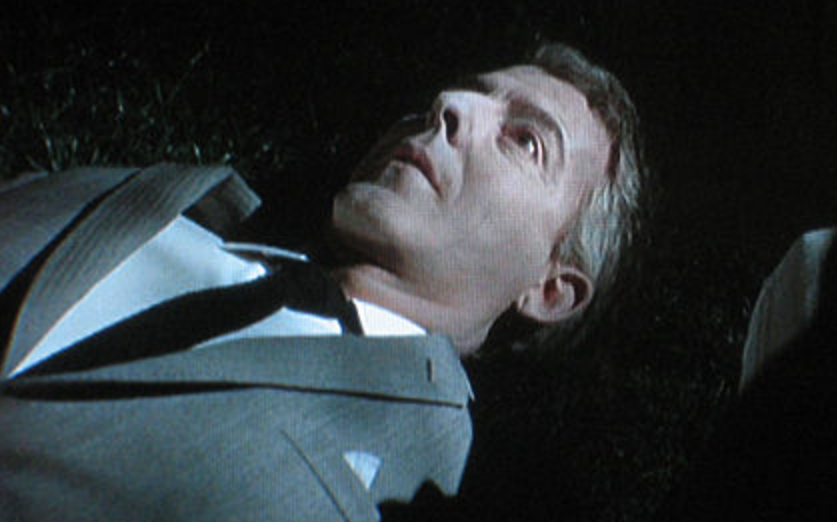
The intended story was as follows: the young lover, armed with a pistol, was to precede Vanessa and me to Maryon Park in London, conceal himself in the bushes and await our arrival. I pick up Vanessa in a nice new dark green Jaguar and we drive through London — giving Antonioni a chance to film that swinging, trendy, sixties city of the Beatles, Mary Quant, the Rolling Stones, and Carnaby Street. We stop and I buy Vanessa a man’s watch, which she wears throughout the rest of the film. We then saunter hand in hand into the park, stopping now and then to kiss (lucky me). In the centre of the park, Vanessa gives me a passionate embrace and prolonged kiss, and glances at the spot where her new lover is hiding. He shoots me (unlucky me), and the two leave the park intending to drive away. Their plans goes awry when she notices Hemmings with his camera and fears that Hemmings has photos of her. As it turns out, he has.

None of this was ever shot. There were other scenes, such as those between Miles and Glover, that also went unrealized. (Sarah tried to get her name off the film because she ended up with so little screen time.) Some of the scenes that were shot pertaining to the murder plot ended up in the film, but are completely puzzling to the audience.

You stated in your article that Antonioni must have been happy while he was making this film. Well, yes, he was, at least while he was overspending his budget lavishly. The crew once spent days making the surfaces of the road a darker gray. And then there’s the famous slow pan along a row of houses and up to an enigmatic, oddly shaped neon sign (designed and built by the art department) on top of the hill. The houses were real inhabited ones, but Antonioni did not like their colors. He had them all repainted, much to their owners’ delight and the producer’s chagrin.

The producer was Carlo Ponti, and he had been supervising another production which delayed his arrival in London. When he got there, he was furious. “Basta, Michelangelo, finito, we are done!” Shooting stopped and the crew went back to Italy. Antonioni took the bits and pieces of the film that had been shot and wove them together in a film since hailed for its “mystery” and “enigma.” Of course it was mysterious — it was never finished!

It is entirely possible that Antonioni could have filmed his entire screenplay and still cut and edited it the same way. Incomplete as it was, it reflects Antonioni’s penchant for toying with illusion and reality. At the time, though, it sure felt that he had put one over on his audiences and critics, who raved about the movie.

There was one exception to the rule in Der Spiegel. A reporter from the magazine interviewed me for an article they called “The Dead Man Speaks.” He kept saying, “But this movie makes no sense — no narrative thread, no plot line!” No Teutonic realism. Totally illogical.

By the way, here is another interesting bit of gossip for you about the movie. You’ll remember the scene in which Hemmings photographs the two models playing around with large rolls of brightly colored paper. This shot predated by some 30 years the famous snatch-shot of Sharon Stone in Basic Instinct. Jane Birkin, one of the models, was wearing no knickers and there is a brief glimpse of her unadorned pudenda. In 1969 this scene generated an enormous amount of publicity. All over America, men and boys lined up to get a glimpse of this sexually explicit shot.

Years later I bumped into Ponti inside Cinecitta, and he told me wryly that when all of the 200-some prints were returned, every one was a few feet shorter than it ought to have been. In every print, Jane Birkin’s pussy had been neatly trimmed by the projectionist. So all the males who were being turned on by that quick glimpse of alleged nudity were seeing it only in their imaginations.

I was thrilled to be offered a part in this film, opposite Vanessa and directed by Antonioni, even if I ended up as a kiss and a corpse. But this letter is not meant to be a vintage whine by a dissatisfied actor. Rather, it is a reflection on how difficult it is to be precise about the meaning of art and the intentions of the artist. Truth is multifaceted, particularly at 24 frames a second. Antonioni was a great director and you are probably right about the greatness of Blowup — I certainly hope nobody ever finishes it.

Postscript: Born in 1922, the prematurely gray O’Casey was only 43 or 44 when Blowup was shot in the fall of ’65. He died in 2012 at age 89.

Tarantino vs. Mainstream Exhibitors

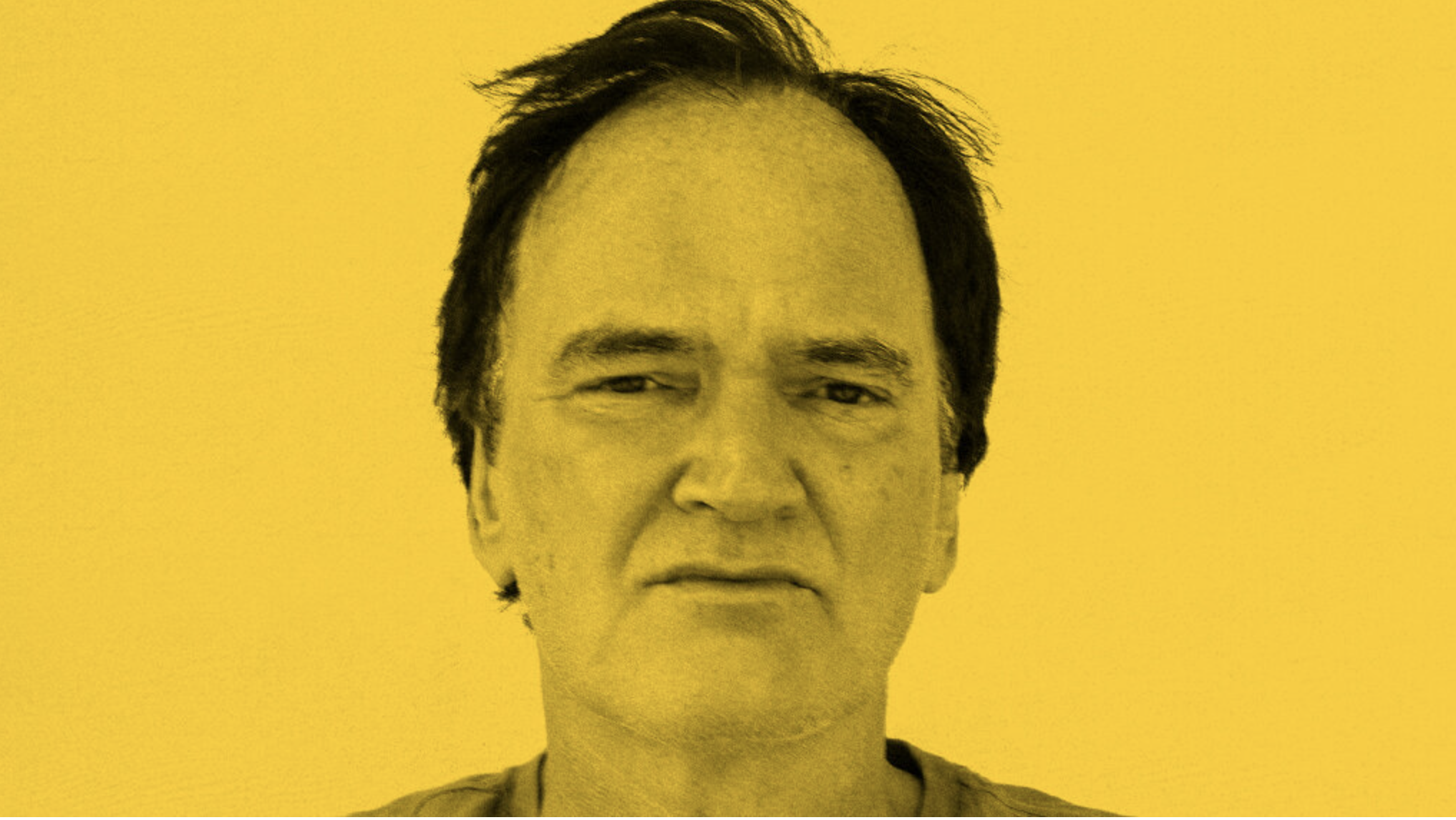
Quentin Tarantino‘s negative opinions about mainstream exhibition, posted earlier today by the Armchair Expert podcast, are, I feel, slightly misplaced.

“Some of these exhibitors who are going, they fucking deserve to go,” Tarantino said. “They have taken all the specialness out of movies anyway. Some of these chains [are] showing commercials all through it, [plus] they don’t turn the lights down [and] everything is stadium seating…plastic shit.”

Whoa, wait…what’s wrong with stadium seating? I hated those old-fashioned, slight-grade theatres in which you’d routinely have to cope with some guy’s big fat head blocking your view.

Tarantino presumably believes, as do I, that movie theatres, at their highest iteration, are churches and cathedrals — places of spiritual communion and emotional uplift. But of course, mainstream movies are no longer in the “touch your soul and persuade viewers to contemplate the deeper, finer or sometimes crazier things in life” business. That idea began to wither and die 10 or 15 years ago. (The death process really began in the ’90s and the rise of guys like Jan De Bont, but we’ll let that go for now.)

Over the last 10 or 15 years theatres have been catering more and more to your low-rent, T-shirt and flip-flop animals who’re mostly into gamer-type action fare — not to your cultivated, somewhat educated cineastes (an all but entombed culture) but to the lowest-common-denominator LexG crowd. Bottom-of-the-barrel types who love F9…bottom feeders, toads, pigs at the trough.

Paul Schrader in November 2018: “There are people who talk about the American cinema of the ‘70s as some halcyon period. It was to a degree but not because there were any more talented filmmakers. There’s probably, in fact, more talented filmmakers today than there was in the ‘70s. What there was in the ‘70s was better audiences.”

Exhibitors have simply tried to adapt to the downscale ballscratch mongrelization of movie culture.

Tarantino: “They have been writing their own epitaph for a long time, but they assumed the business would take you along. It’s been crazy throughout my career to see how the film experience is lessened for the viewer like every five years. However, I do think boutique cinemas actually will thrive in this time. And I am not talking about the La-Z-Boy, order nachos and margaritas…I actually like the Alamo Drafthouse a lot. But I have a living room, [and sometimes] I want to go to the theater.”

Tarantino is right, however, about exhibitors who never turn the lights down all the way. I really hate that. Movies need to be absorbed in complete darkness.

Questions About Tarantino Buying Vista

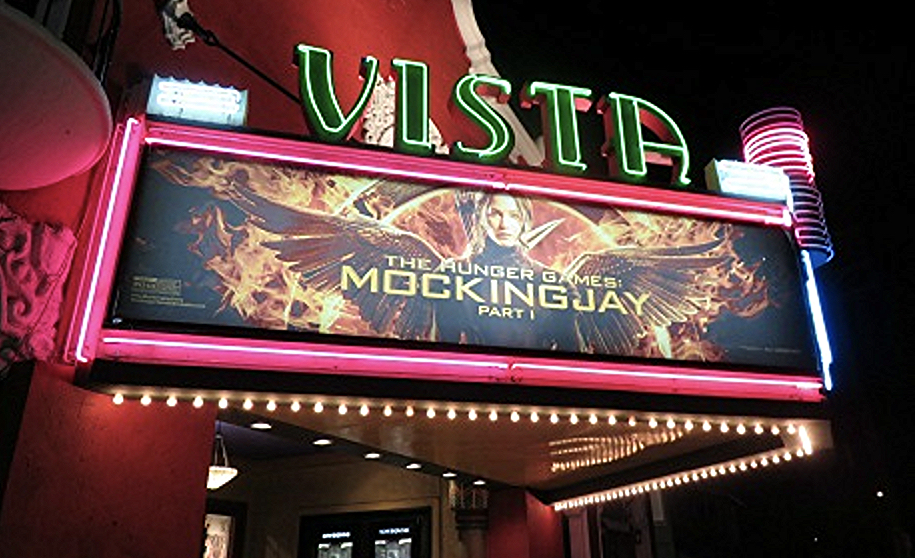
While chatting earlier today on the Armchair Expert podcast, Quentin Tarantino announced that he’s bought the beloved Vista Theatre — an historic 98-year-old venue between the Los Feliz and Silverlake regions of Los Angeles. The single-screen, 400-seat Vista is easily the most attractively designed and aesthetically pleasing commercial theatre in Los Angeles. It’s a work of art.

I’ve just realized I haven’t been to the Vista since catching a special midnight screening of Jennifer Kent‘s The Babadook on 12.7.14, which included a special introduction by William Friedkin.

With the Vista still shuttered by the pandemic, Tarantino said “we’ll probably open it up around Christmas time.”

HE to QT: Why six months from now? Why not Labor Day, which is eight weeks hence? Theatrical is bouncing back — why wait for six months? Failing that, why not October 1st? What do you need to do to the place improvement-wise? It’s been in reasonably good shape for several years now, no?

Tarantino stressed that like The New Beverly, the Vista will show “only film…it won’t be a revival house…we’ll show new movies that come out where they give us a film print. It’s not going to be like the New Beverly [Cinema]. The New Beverly has its own vibe. The Vista is like a crown jewel kind of thing. We’ll show older films, but it will be like you can hold a four-night engagement.”

What he seems to be saying is that The Vista will present films that will combine the aesthetic of (a) the current Westside Pavillion Landmark, but only if the distributor supplies a 35mm print, and (b) the Nuart, which sometimes will show older films along with European or Xtreme indie fare. Yes, 35mm prints of new films are still being made (or so I hear) but Tarantino knows that distributors are more or less out of the 35mm celluloid business, and that it’s

HE to QT: The New Beverly’s film-only policy is cool on one level, but a dying sentimental fetish on another. It’s fine to insist on a pure-celluloid experience, and being able to show (and savor) a mint-condition print can be wonderful thing. But it can just as easily be a drag. Digital is the way of things now, and there’s something needlessly stubborn about insisting that film is the only way to go.

Every time I contemplate going to the New Beverly, I think back to a seven-year-old showing of the ’62 Mutiny on the Bounty. I wrote about this in a 7.16.14 post titled “New Beverly Pits“:

“I imagined that Marlon Brando’s Bounty might look better than I expected, and so, like a moron, I went there tonight and took a seat in the second row. It looked like dogshit. Dupey, brownish tones, substandard projection lighting (I’d say around 8 foot lamberts, or 6 lower than the ASCAP standard) and nowhere near wide enough. The New Beverly doesn’t even present a true Scope aspect ratio (i.e., 2.35:1). It looked to me like 2.25:1.

Read more

“Zola” Shoots Up

Just exited a Zola screening (8:50 pm start) at the Landmark. Stripper saga + road + relationship movie + oddball humor here and there and finessed with absolute assurance…FIRST RATE..all hail director Janicza Bravo.

Pic is an immediate top-tenner. So much more gripping and fascinating than I expected. The focus was constantly “on” and I was fully in the grip — knew it was aces almost immediately. Taylour Paige and Riley Kehoe own this fucking movie. And that tall skinny 20something guy (Nicholas Braun) plus the 50ish pimp (Colman Domingo) + costars Ari’el Stachel, Jason Mitchell, Nasir Rahim, Sophie Hal…all great.

Taut and well honed and short even…86 minutes! No moralizing, no crude impact slams, almost none of the usual cliches, never touches (much less explores) the wallowing realm. An almost perfect film for what is, what it aims at. I’m delighted that it turned out this well. (posted from iPhone)

Friendo: “It sounds like a very 2021 movie…one that no one would ever dare criticize. But yet it does. It has some dissenters on RT:m. Not many, but some.”

One Tasty Burger of a Novelization

Earlier today I spent a few hours reading this and that portion of Quentin Tarantino‘s “Once Upon A Time in Hollywood” paperback. I have to say that I relished almost all of it.

QT’s prose isn’t quite on the level of the great Elmore Leonard, but it reads straight and clean and without a hint of hesitance or snazziness for its own sake. Page by page it doesn’t fuck around, and delivers all kinds of ripe flavor and embroidery in terms of the various characters and their backstories, and overall you just fly through the chapters.

The book, which I bought last night at the New Beverly for $11 and change, is somewhat “better” than the film, to be honest, and the more I read the more I wished that OUATIH had become a ten-part Netflix series, using each and every line in this 400-page novel. Just go for it…just sprawl it all the fuck out.

I was especially taken with a two-page scene between a red-kimono-wearing, half-bombed Rick Dalton and the real Steve McQueen, the latter sitting behind the wheel of his car outside the gate to the Polanski-Tate home and kind of half-dismissing Dalton but at the same time half-listening to him. Then they reminisce how they once played three pool games (okay, two and a half) at Barney’s Beanery back in ’62.

Not in the movie, of course…

I also love a chapter called “The Twinkie Truck” (pgs. 156 to 175). It’s mostly about the adventures, ambitions and psychology of one Charles Manson, who really wanted to be a rich and famous rock star and knew deep down that all of his spiritual guru sermons and posturings were more or less a bullshit side activity.

This is real-deal history according to QT and common knowledge, and it’s fascinating to consider some of the particulars about Manson’s interactions with Dennis Wilson, Terry Melcher, Candice Bergen and Mark Lindsay, and how one night Manson even jammed with Neil Young.

There’s another chapter called “Misadventure”, and it basically focuses on Cliff Booth‘s half-accidental murder of his needling, boozy wife, Billie, with a “shark” gun (whatever the hell that is) and the ins and outs of that episode. Again, you’re asking yourself “why wasn’t some of this material used in the film, and if it couldn’t fit why didn’t Tarantino shoot it anyway and create a 10-hour version down the road?”

Excerpt: “No one really knew for sure if Cliff shot her on purpose. It could have been just a tragic mishandling of diving equipment, which is what Cliff always claimed. But anyone who had ever seen a drunken Billie Booth berate Cliff in public in front of his colleagues didn’t buy that.

“How did Cliff get away with it? Easy — his story was plausible and it couldn’t be disproven. Cliff felt real bad about what he did to Billie. But it never occured to him not to try and get away with murder.”

Excerpt #2, pg. 167, focusing on Sharon Tate: “She liked the bubble-gum hits she heard on KHJ. She liked that song ‘Yummy Yummy Yummy’ and the follow-up song by the same group, ‘Chewy Chewy.’ She liked Bobby Sherman and that ‘Julie’ song. She loved that ‘Snoopy vs. The Red Baron’ song.

Read more

Is This Movie Material?

If you were a Netflix, HBO or Showtime exec in charge of adapting real-life news stories into multi-part melodramas, and you knew that your boss was a fan of Ben Stiller‘s Escape at Dannemora (’18), would you try to make the sordid saga of Tina Gonzalez, the Fresno County Jail prison guard who was recently busted and sentenced for having sex with an inmate, into a two-hour drama or limited miniseries?

Stiller’s seven-part series was an emotional tragedy about a real-life prison employee, Joyce Mitchell (Patricia Arquette), who wound up punished and humiliated for having an intimate affair with a Dannemora prison inmate named Richard Matt (Benicio del Toro). As she was in real life, Mitchell is also punished for helping Matt and a fellow inmate, David Sweat (Paul Dano), pull off a daring escape.

The Gonzalez affair didn’t result in a prison break, but her sexual behavior was a little crazier than Mitchell’s. Plus (and this is a significant factor from a crude audience standpoint) the 26 year-old Gonzalez is seriously attractive, and could realistically be played by Selena Gomez or someone in that realm. Which makes Gonzalez’s wild behind-bars activity seem all the more odd, and yet at the same time more interesting.

From the beginning the general consensus was that Mitchell was on the homely, dumpy, overweight side. Unkind New York Post editors took to calling her “Shawskank”. I for one felt sorry for Arquette’s Mitchell — a lonely and unloved woman in a drab, dead-end marriage. Arquette’s performance was highly praised, and she won Best Actress trophies from the Critics Choice members as well as the Hollywood Foreign Press Association.

Here’s how the Fresno Bee‘s Robert Rodriguez reported Tina’s situation on 6.29:

Tina Gonzalez, a 26 year-old Fresno County correctional officer, was sentenced Tuesday to two years probation and seven months in the county jail for having sex with an inmate.

“Gonzalez was facing up to three years and eight months in prison, but she avoided prison time despite harsh words from her former boss at the jail, Assistant Sheriff Steve McComas.

“McComas said not only did Gonzalez have sex with the inmate, she also supplied him razors [and] gave him inside information about when officers would be inspecting the inmate’s cell.

“Gonzalez allegedly cut a hole in her uniform to make it easier to have sex with the inmate she was involved with. McComas also accused her of having sex inside the jail in full view of 11 inmates. ‘That is something only a depraved mind can come up with,’ McComas said.”

Read more

Three Perfect Sentences

“Someone asked me once where I thought my resilience came from. I hesitated, then said, ‘For women, too often, I think what we mistake as resilience is actually just endurance.’ I don’t know if my endurance has served me well. It takes a special kind of endurance to look at the train barreling down the tracks and say, ‘But what if it doesn’t hit me this time?'”

— from Kelly Sundberg‘s “Some People Flip Real Estate — I Flip Men,” posted in the N.Y. Times on 7.2.21.

Early Bird Catches The Worm

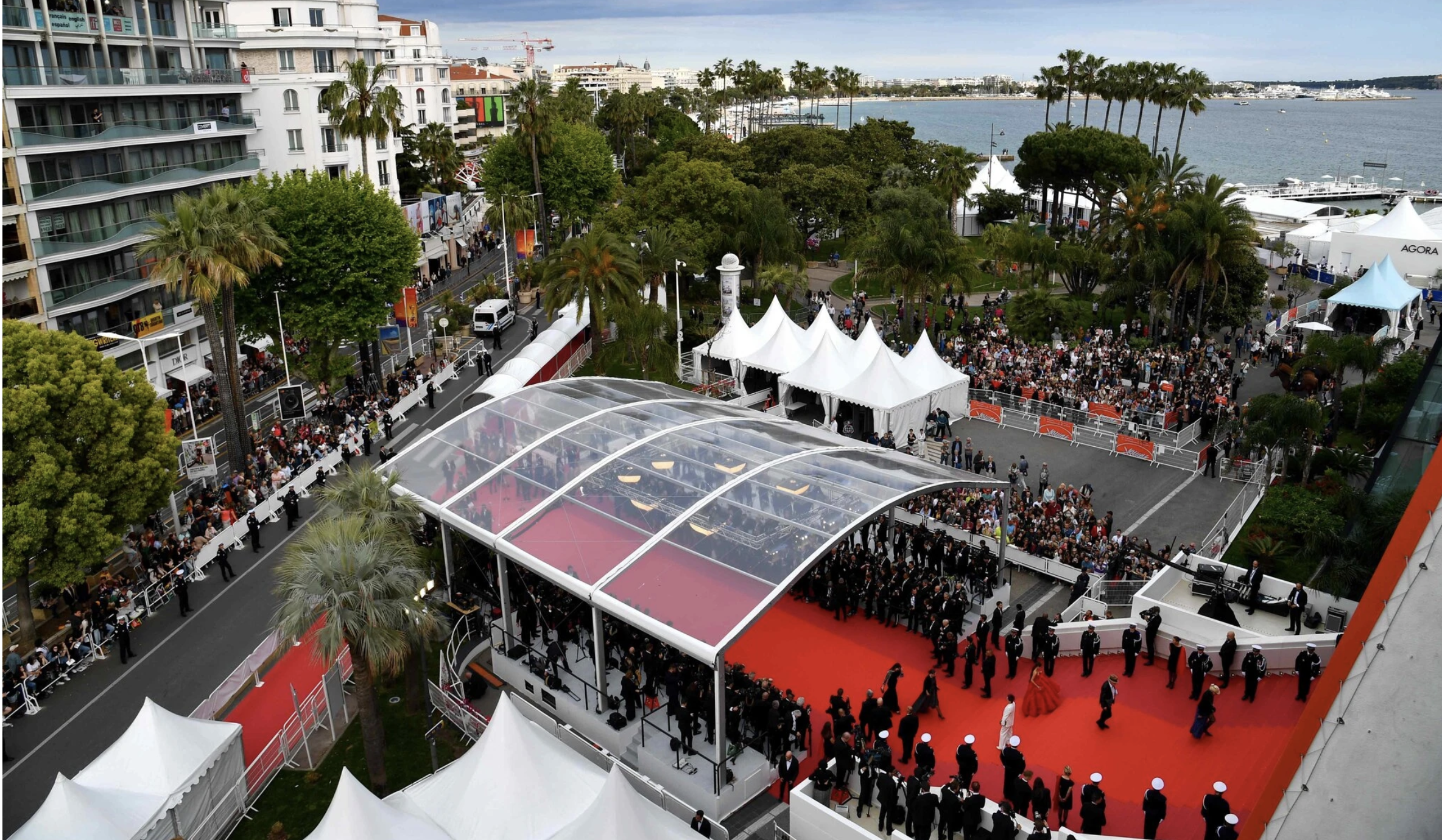
Hollywood Reporter columnist Scott Feinberg has never been one to let grass grow under his feet. The 2021 Cannes Film Festival starts the day after tomorrow — Tuesday, July 6 — and Scott is already shufflin’ up and down the Croisette. That’s because he’s fast on his feet and his middle name is Hopper — hip-hop, hip-hop, hippity-hop, hippity-hop, hippity-hoppity, hippity-hoppity, etc.

If it was my show I’d still be in Paris, man…strollin’ around Montparnasse and through the Jardin du Luxembourg and maybe over to Passy (the Last Tango in Paris building!) and the non-touristy parts of Montmartre, etc. And I’d be there tomorrow (7.5) also, and then I’d catch the Paris-to-Cannes train on Tuesday (7.6) at 7:15 am.

Incidentally: Always pan slowly, and sometimes it works better if you don’t pan at all. Go with a series of static tableaus, blending one into the other.